
1. Search Result
Search Result
Results for "

lipoprotein metabolism

" in MedChemExpress (MCE) Product Catalog:

21

Inhibitors & Agonists

3

Peptides

5

Natural
Products

Cat. No. Product Name Target Research Areas Chemical Structure
  • HY-B0388
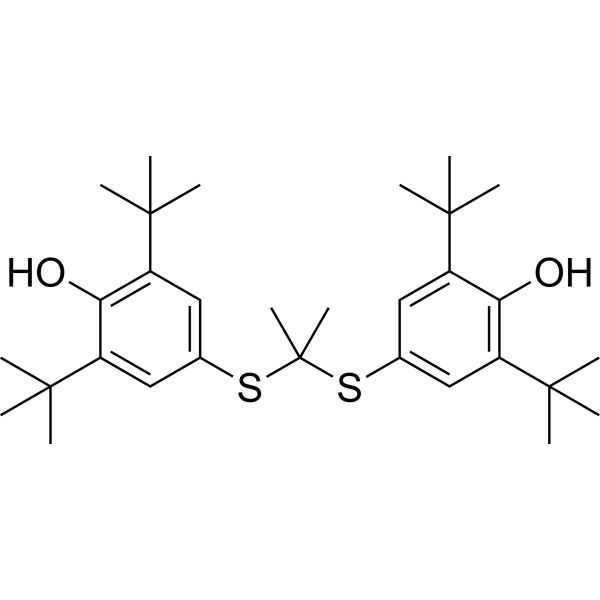
    Probucol
    2 Publications Verification

    DH-581

    Virus Protease Apoptosis Reactive Oxygen Species (ROS) Glutathione Peroxidase Caspase Infection Neurological Disease Metabolic Disease Inflammation/Immunology Cancer
    Probucol (DH-581) is an anti-hyperlipidemic agent. Probucol activates glutathione peroxidase. Probucol promotes low density lipoprotein (LDL) catabolism, inhibits ABCA1-dependent cholesterol efflux, and decreases HDL-C levels. Probucol also has anti-inflammatory, antioxidant and neuroprotective properties. Probucol can be used for researches on bone, cardiovascular, cancer, neurological, and metabolism-related diseases .
    Probucol
  • HY-112540B

    Endogenous Metabolite Metabolic Disease
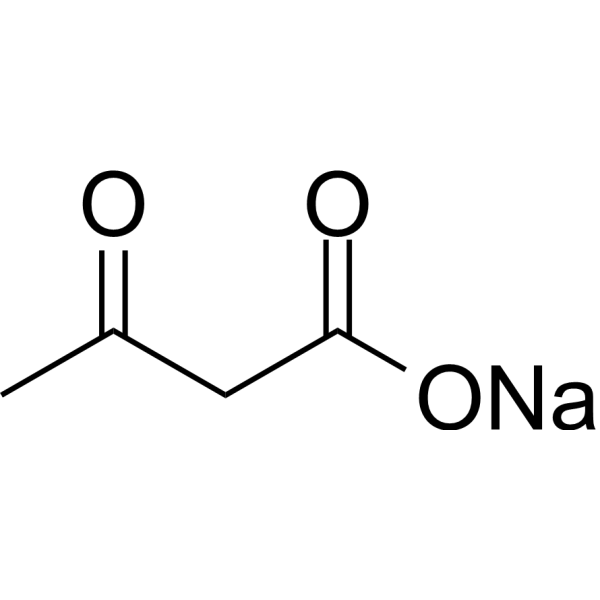
    Acetoacetic acid sodium is an oxidative stress inducer that affects the antioxidant enzyme system and lipoprotein metabolism. Acetoacetic acid sodium induces oxidative stress by decreasing the mRNA expression and activity of superoxide dismutase (SOD), catalase (CAT), and glutathione peroxidase (GSH-Px), increasing MDA content, and inhibiting very low density lipoprotein (VLDL) assembly by downregulating apolipoprotein ApoB100, ApoE, and low density lipoprotein receptor (LDLR), leading to triglyceride (TG) accumulation in hepatocytes. Acetoacetic acid sodium can be used to study metabolic diseases .
    Acetoacetic acid sodium
  • HY-112540
    Acetoacetic acid
    4 Publications Verification

    Endogenous Metabolite Metabolic Disease
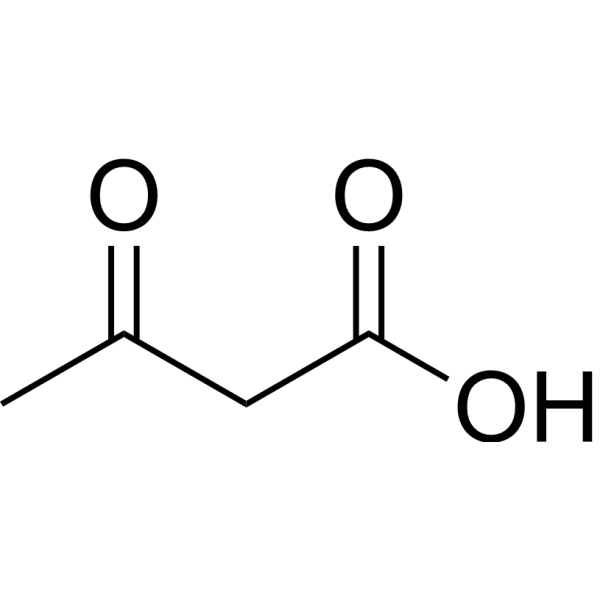
    Acetoacetic acid is an oxidative stress inducer that affects the antioxidant enzyme system and lipoprotein metabolism. Acetoacetic acid induces oxidative stress by decreasing the mRNA expression and activity of superoxide dismutase (SOD), catalase (CAT), and glutathione peroxidase (GSH-Px), increasing MDA content, and inhibiting very low density lipoprotein (VLDL) assembly by downregulating apolipoprotein ApoB100, ApoE, and low density lipoprotein receptor (LDLR), leading to triglyceride (TG) accumulation in hepatocytes. Acetoacetic acid can be used to study metabolic diseases .
    Acetoacetic acid
  • HY-113110

    L-Cysteinylglycine; Cys-Gly; H-Cys-Gly-OH

    Endogenous Metabolite Reactive Oxygen Species (ROS) DNA/RNA Synthesis Cardiovascular Disease Cancer
    Cysteinylglycine (L-Cysteinylglycine; Cys-Gly) is a dipeptide formed by the peptide bond linkage between cysteine (Cysteine) and glycine (Glycine). Cysteinylglycine is an important metabolic intermediate in the human body, mainly derived from the degradation of glutathione (GSH). Cysteinylglycine reduces ferric iron to ferrous iron, drives the redox cycle of iron, generates reactive oxygen species (ROS), stimulates oxidative reactions, induces lipid peroxidation of human plasma LDL lipoproteins, and causes oxidative damage to DNA bases. Cysteinylglycine can be used as a biomarker to evaluate ischemic heart disease, breast cancer and other conditions .
    Cysteinylglycine
  • HY-P6306
    CS-6253
    1 Publications Verification

    Apolipoprotein Amyloid-β Neurological Disease Metabolic Disease
    CS-6253 is an agonist of ABCA1. CS-6253 can regulate lipoprotein metabolism, promote high-density lipoprotein biogenesis, and cellular cholesterol efflux. CS-6253 also has certain neuroprotective effects and can clear from the brain. CS-6253 can be used for research on cholesterol metabolism and diseases such as Alzheimer’s disease .
    CS-6253
  • HY-112540A
    Acetoacetic acid lithium
    4 Publications Verification

    Endogenous Metabolite Metabolic Disease
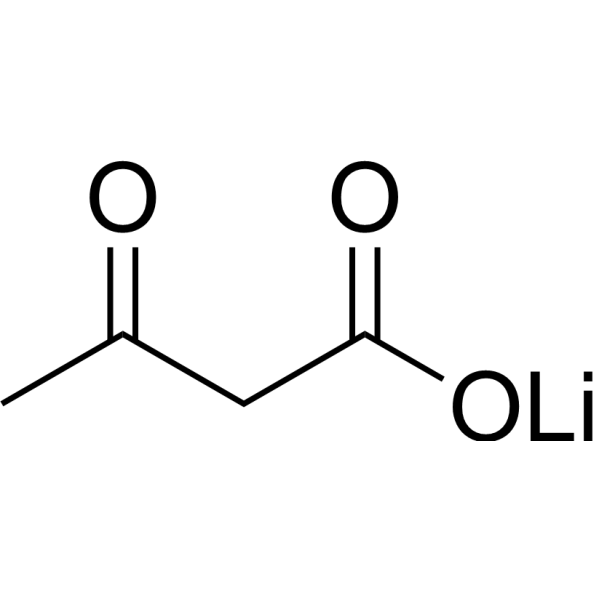
    Acetoacetic acid lithium is an oxidative stress inducer that affects the antioxidant enzyme system and lipoprotein metabolism. Acetoacetic acid lithium induces oxidative stress by decreasing the mRNA expression and activity of superoxide dismutase (SOD), catalase (CAT), and glutathione peroxidase (GSH-Px), increasing MDA content, and inhibiting very low density lipoprotein (VLDL) assembly by downregulating apolipoprotein ApoB100, ApoE, and low density lipoprotein receptor (LDLR), leading to triglyceride (TG) accumulation in hepatocytes. Acetoacetic acid lithium can be used to study metabolic diseases .
    Acetoacetic acid lithium
  • HY-106539

    FXR G protein-coupled Bile Acid Receptor 1 GLP Receptor Metabolic Disease Cancer
    Colesevelam hydrochloride is an orally active bile acid sequestrant, lipid-lowering agent, and glycemic control agent. Colesevelam hydrochloride binds bile acids in the gastrointestinal tract to form nonabsorbable complexes, interrupts enterohepatic recirculation and increases fecal bile acid elimination. Colesevelam hydrochloride modulates FXR, TGR5, and Cyp7a1 activity and triggers cAMP signaling and GLP-1 release. Colesevelam hydrochloride alters hepatic lipid and glucose metabolism, suppresses hepatic glycogenolysis, reduces hepatic triglyceride and cholesterol levels, and increases LDL-C (low-density lipoprotein cholesterol) clearance. Colesevelam hydrochloride can be used for the research of type 2 diabetes mellitus, hypercholesterolemia, and alcohol-related liver disease .
    Colesevelam hydrochloride
  • HY-P2752

    LPL

    Endogenous Metabolite Metabolic Disease Cancer
    Lipoprotein lipase, Pseudomonas sp (LPL) is a multifunctional enzyme from adipose tissue, heart and skeletal muscle, islets and macrophages. Lipoprotein lipase promotes normal lipoprotein metabolism, delivery and utilization of tissue-specific substrates. Lipoprotein lipase catalyzes the rate-limiting step of lipids in blood circulation .
    Lipoprotein lipase, Pseudomonas sp
  • HY-123494

    CaMK Cardiovascular Disease Neurological Disease
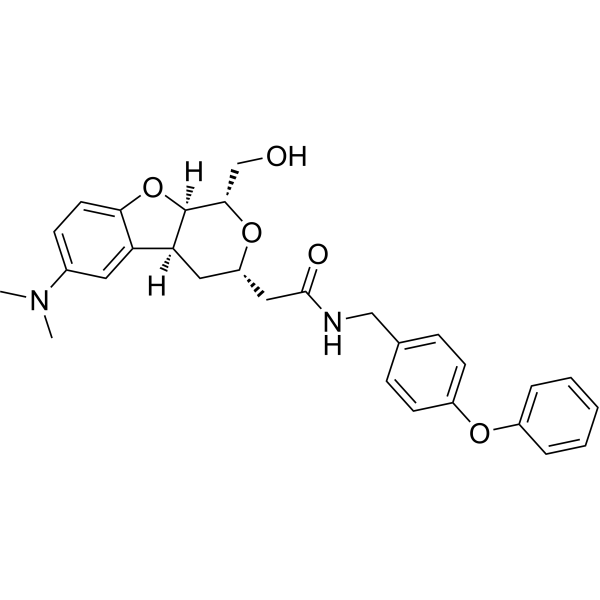
    BRD0418 is a diversity-oriented synthesis (DOS) molecule that regulates the expression of tribbles pseudokinase 1. BRD0418 has the effect of causing hot lipoprotein metabolism from fat production to clearance. BRD0418 can be used in the study of coronary artery disease (CAD) .
    BRD0418
  • HY-163436

    FXR Cytochrome P450 RAR/RXR PPAR ROR Metabolic Disease
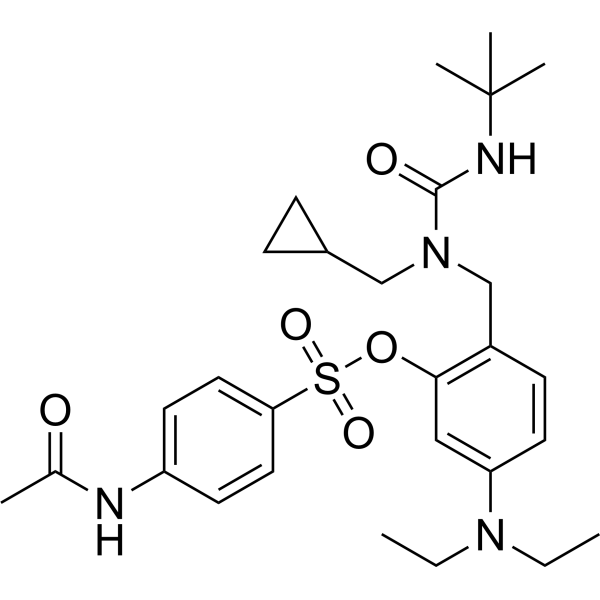
    F44-A13 is an orally active and highly selective farnesoid X receptor (FXR) antagonist with an IC50 value of 1.1 μM. F44-A13 can optimize cholesterol metabolism and reduce its activity by inducing CYP7A1 expression. F44-A13 reduces levels of cholesterol, triglycerides, and low-density lipoprotein cholesterol (LDL-C) in mouse models. F44-A13 can be used in the study of metabolic diseases associated with lipid disorders .
    F44-A13
  • HY-P6306A
    CS-6253 TFA
    1 Publications Verification

    Apolipoprotein Amyloid-β Neurological Disease Metabolic Disease
    CS-6253 TFA is an agonist of ABCA1. CS-6253 TFA can regulate lipoprotein metabolism, promote high-density lipoprotein biogenesis, and cellular cholesterol efflux. CS-6253 TFA also has certain neuroprotective effects and can clear from the brain. CS-6253 TFA can be used for research on cholesterol metabolism and diseases such as Alzheimer’s disease .
    CS-6253 TFA
  • HY-129982

    Apical Sodium-Dependent Bile Acid Transporter Metabolic Disease
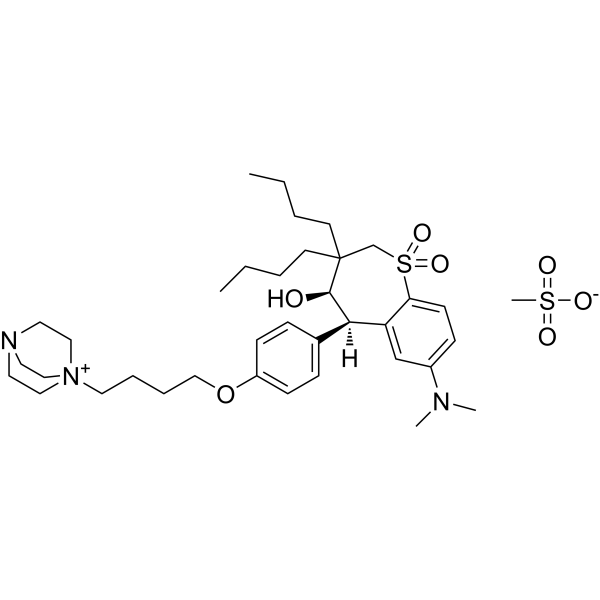
    SC-435 is an orally effective apical sodium codependent bile acid transporter (ASBT) inhibitor. SC-435 effectively removes neurotoxic bile acids and ammonia from the blood by inhibiting intestinal ASBT, thereby alleviating liver and brain damage caused by liver failure. SC-435 can alter hepatic cholesterol metabolism and lower plasma low-density lipoprotein-cholesterol concentrations .
    SC-435
  • HY-P2733C

    GPO, microorganism

    Endogenous Metabolite Metabolic Disease
    Glycerol-3-phosphate oxidase, microorganism is an enzyme that catalyzes the oxidation of glycerol-3-phosphate to dihydroxyacetone phosphate, producing hydrogen peroxide in the process. Glycerol-3-phosphate oxidase is located in the mitochondria of microorganisms and is involved in the glycerol-3-phosphate cycle, regulating cellular energy metabolism. Glycerol-3-phosphate oxidase, microorganism can be used in conjunction with Lipoprotein Lipase and Glycerol Kinase to determine triglyceride levels .
    Glycerol-3-phosphate oxidase, microorganism
  • HY-116977

    SARS-CoV Metabolic Disease
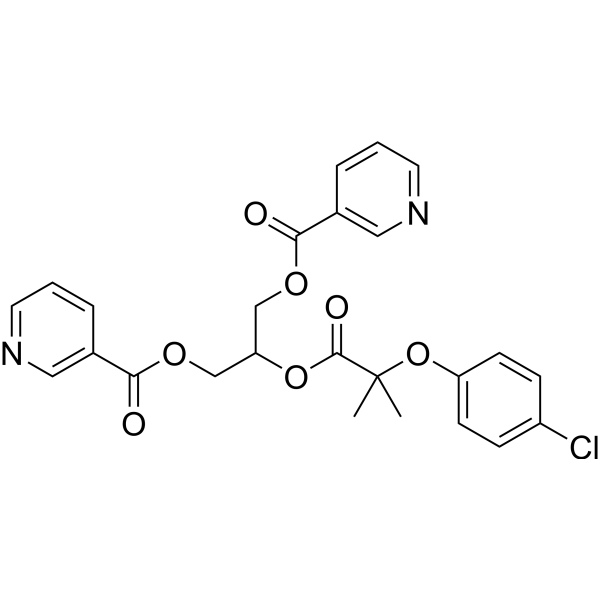
    Binifibrate is an active compound and has a beneficial effect on lipoprotein metabolism. Binifibrate can be used for the research of hyperlipidemia .
    Binifibrate
  • HY-153451

    PCSK9 Metabolic Disease
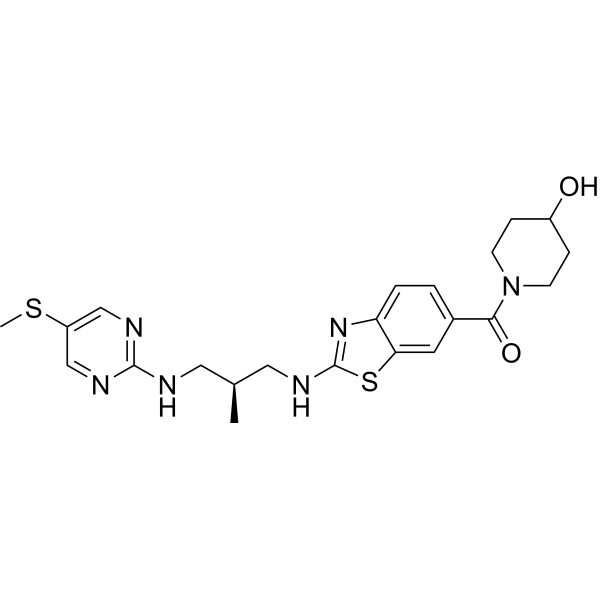
    PCSK9-IN-15 (compound 5) is a potent inhibitor of proprotein convertase subtilisin/kexin 9 (PCSK9, KD <200 nM). PCSK9 is involved in cholesterol metabolism and regulates levels of low-density lipoprotein cholesterol (LDL-C) in the blood. PCSK9- in -15 can be used to study cholesterol-lowering and dyslipidemia .
    PCSK9-IN-15
  • HY-106278A

    PPAR Metabolic Disease
    GW 590735 sodium is a potent and selective PPARα agonist with activity in regulating lipid metabolism. GW 590735 significantly increased high-density lipoprotein (HDL) cholesterol, decreased low-density lipoprotein (LDL) and very low-density lipoprotein (VLDL) cholesterol, and significantly reduced triglycerides. The maximum increases in HDL cholesterol for GW 590735 were 37%, 53% and 84%, respectively, compared with bezafibrate, torcetrapib and GW 590735 .
    GW 590735 sodium
  • HY-112540AR

    Endogenous Metabolite Reference Standards Metabolic Disease
    Acetoacetic acid (lithium) (Standard) is the analytical standard of Acetoacetic acid (lithium). This product is intended for research and analytical applications. Acetoacetic acid lithium is an oxidative stress inducer that affects the antioxidant enzyme system and lipoprotein metabolism. Acetoacetic acid lithium induces oxidative stress by decreasing the mRNA expression and activity of superoxide dismutase (SOD), catalase (CAT), and glutathione peroxidase (GSH-Px), increasing MDA content, and inhibiting very low density lipoprotein (VLDL) assembly by downregulating apolipoprotein ApoB100, ApoE, and low density lipoprotein receptor (LDLR), leading to triglyceride (TG) accumulation in hepatocytes. Acetoacetic acid lithium can be used to study metabolic diseases .
    Acetoacetic acid lithium (Standard)
  • HY-201256

    Bacterial MDM-2/p53 Infection
    UCI-14 is a gltA1/lprQ modulator with in vitro anti-tuberculosis activity against drug-sensitive and multidrug-resistant mycobacteria. UCI-14 upregulates the expression of genes encoding citrate synthase I, downregulates the expression of genes encoding conserved mycobacterial lipoprotein, and alters the carbon metabolism of mycobacteria. UCI-14 reactivates the expression of wild-type p53 target genes in p53-mutated cells. UCI-14 can be used in the research of tuberculosis and cancer .
    UCI-14
  • HY-182014

    LXR Cardiovascular Disease Metabolic Disease
    TLC-2716 is an orally available, gut- and liver-restricted inhibitor against LXRα and LXRβ, with EC50 values of 7 nM and 15 nM, respectively. TLC-2716 represses LXRα/β transcriptional activity, downregulates genes involved in lipogenesis, lipid absorption and lipoprotein metabolism, and preserves peripheral reverse cholesterol transport. TLC-2716 reduces lipid accumulation, suppresses inflammation and fibrotic gene expression, enhances triglyceride-rich lipoprotein clearance, and improves glucose homeostasis and insulin sensitivity. TLC-2716 lowers serum and hepatic triglycerides, plasma cholesterol and other atherogenic lipid profiles in experimental models and humanized liver mice. TLC-2716 can be used for the research of dyslipidemia and related cardiometabolic disorders .
    TLC-2716
  • HY-181876

    FXR Metabolic Disease
    F44-S101 is an orally active, potent, and selective gut-restricted FXR antagonist with an IC50 of 0.48 μM and lipid-lowering activity. F44-S101 selectively antagonizes intestinal FXR, feedback-activates hepatic FXR, promotes cholesterol metabolism and reduces lipid accumulation. F44-S101 decreases total cholesterol, triglyceride and low-density lipoprotein cholesterol levels. F44-S101 can be used in studies related to hyperlipidemia .
    F44-S101
  • HY-130064

    P-OM3

    Endogenous Metabolite Cardiovascular Disease Metabolic Disease
    Omega-3 acid ethyl esters (P-OM3) is a omega-3 polyunsaturated fatty acid. Omega-3 acid ethyl esters can be used for the researches of severe hypertriglyceridemia and cardiovascular diseases .
    Omega-3 acid ethyl esters

Inquiry Online

Your information is safe with us. * Required Fields.

Salutation


Country or Region *

Applicant Name *


Organization Name *

Department *


Email Address *


Product Name *

Cat. No.


Requested quantity *

Phone Number *


Remarks

Inquiry Online

Inquiry Information

Product Name:
Cat. No.:
Quantity:
MCE Japan Authorized Agent:

