12 Results for "

mapping

" in MedChemExpress (MCE) Product Catalog:
Products (12)

12 Results for "mapping" in MCE Product Catalog:

5
5 Cited Publications
Cat. No.: HY-15940
CAS No.: 72088-94-9
Synonyms: 5(6)-FAM; 5-(and-6)-Carboxyfluorescein mixed isomers
5(6)-Carboxyfluorescein (5(6)-FAM) is an amine-reactive pH-sensitive green fluorescent probe. 5(6)-Carboxyfluorescein (5(6)-FAM) can be used to label proteins, peptides and nucleotides. 5(6)-Carboxyfluorescein can be used for the detection of tumour areas in vivo .
loading...
    loading...
1
1 Cited Publications
Cat. No.: HY-D2186
CAS No.: 2095485-22-4
BTD probe-1 is a benzothiazine-based chemoproteomic probe and selective protein S-sulfenic acid (Cys-SOH) labeling agent. BTD probe-1 labels protein S-sulfenic acids in vitro in cell and tissue samples, and in situ in intact cells, enabling detection or enrichment of modified proteins/peptides. BTD probe-1 exhibits no cytotoxicity in cells at concentrations ≤1 mM. BTD probe-1 enables global, site-specific mapping and quantification of cysteine S-sulfenylation in complex proteomes with lower input material .
loading...
    loading...
Cat. No.: HY-44157
CAS No.: 308818-13-5
Research Areas:  

Neurological Disease

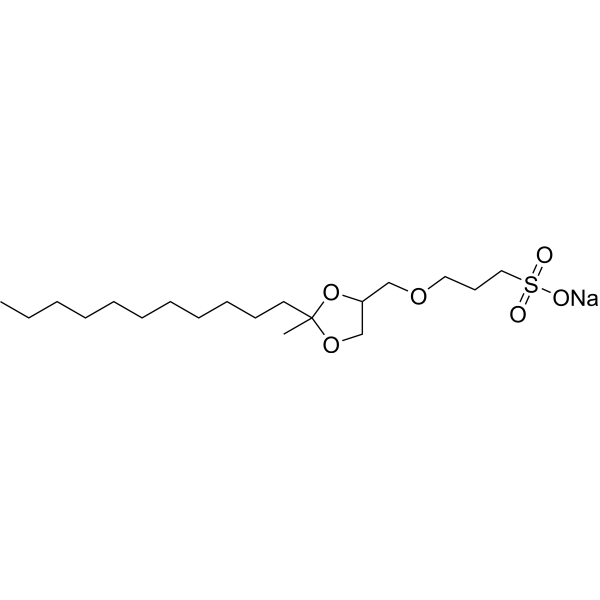
ALS-I, an acid-Liable surfactant, is adopted for in-solution enzymatic digestions, can help to solubilize hydrophobic proteins. ALS-I is significantly enhanced peptide recovery for mass spectrometry (MS) mapping in the study of the proteomes of regenerating rat retina and mouse brain .
loading...
    loading...
Cat. No.: HY-E70564
Research Areas:  

Others

Endoproteinase Arg-C is a serine endoproteinase that hydrolyzes peptide bonds on the carboxyl side of arginyl residues and has esterase and amidase activities. Endoproteinase Arg-C can be isolated from Clostridium histolyticum. Endoproteinase Arg-C is of mass spectrometry grade and can be used for peptide mapping, sequence analysis, cell separation .
loading...
    loading...
Cat. No.: HY-100027A
CAS No.: 127917-66-2
Purity:  99.96%
Research Areas:  

Neurological Disease

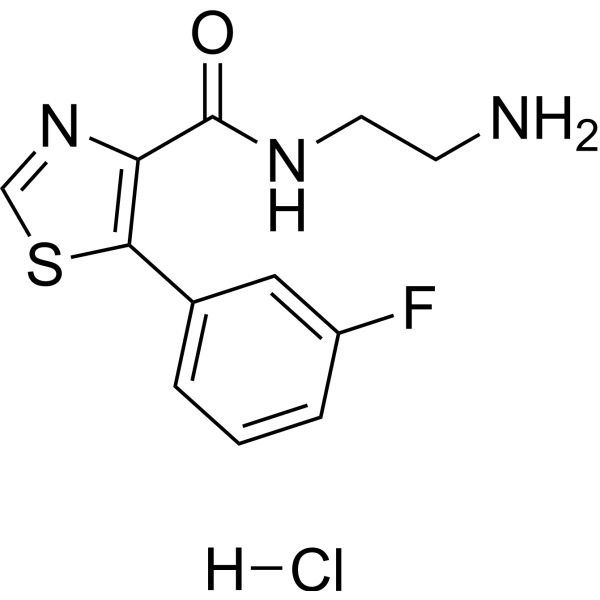
Ro 41-1049 hydrochloride is a highly selective, reversible MAO-A inhibitor. Ro 41-1049 hydrochloride effectively blocks the Quinpirole (HY-B1752)-induced increase in dopamine D2-like receptor density in the nucleus accumbens and alters the pattern of behavioral sensitization, shifting animals' responses from enhanced motor activity to immobile self-directed gaping behavior. Tritium-labeled Ro 41-1049 hydrochloride serves as a high-affinity radioligand, enabling accurate mapping of the distribution and abundance of MAO-A in the central nervous system, peripheral organs, and human brain via quantitative enzyme autoradiography. Ro 41-1049 hydrochloride can be used for basic research on depression and other related diseases .
loading...
    loading...
Cat. No.: HY-131773
CAS No.: 21466-01-3
Research Areas:  

Others

2-Cl-5'-AMP is a 5'-AMP analogue and can be used for receptor mapping research .
loading...
    loading...
Cat. No.: HY-U00180
CAS No.: 155271-17-3
Target:  

Adenosine Receptor

Research Areas:  

Neurological Disease

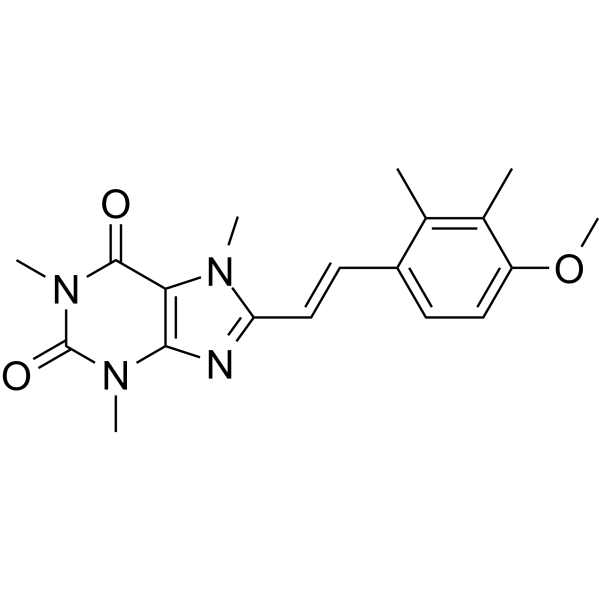
KF21213 is a highly selective ligand for mapping CNS adenosine A2A receptors. KF21213 shows a high affinity for the adenosine A2A receptors (Ki=3.0 nM).
loading...
    loading...
Cat. No.: HY-131766
CAS No.: 40269-29-2
Synonyms: 2'-O-Methyladenosine-3',5'-cyclic monophosphate
Target:  

Ras

Research Areas:  

Others

2'-O-Me-cAMP is an analogue of natural signal molecule cAMP and a selective stimulator of the exchange factors activated by cAMP (Epac) with low membrane permeability .
loading...
    loading...
Cat. No.: HY-126395R
CAS No.: 3536-49-0
Research Areas:  

Others

Patent Blue V (calcium salt) (Standard) is the analytical standard of Patent Blue V (calcium salt). This product is intended for research and analytical applications. Patent Blue V has been widely used in sentinel lymph node mapping. Patent Blue V is also a food coloring agent and an alternative dye for trypan blue (TB) in descemet membrane endothelial keratoplasty (DMEK) .
loading...
    loading...
Cat. No.: HY-L923
9000 compounds

Ion channels are key proteins on the cell membrane that regulate the flow of ions across membranes. They participate in nearly all physiological processes, including nerve conduction, muscle contraction, heart rhythm, and pain perception. Abnormalities in their function can lead to various serious diseases such as arrhythmia, epilepsy, hypertension, neuropathic pain, and cancer. Therefore, ion channels are highly valuable drug targets—over 15% of approved drugs target ion channels currently, demonstrating their irreplaceable therapeutic value in cardiovascular, neurological, and analgesic fields.

MCE has collected a library of over 5,000 reported ion channel-related bioactive compounds targeting major sites such as Na+ channels, K+ channels, Ca2+ channels, GABA receptors, iGluRs, and others. Using AI models, these compounds are characterized through both 2D representations (molecular fingerprints, pharmacophores) and 3D representations (3D conformation) to screen for a collection of lead-like compounds highly similar to known active molecules. Additionally, an hERG channel prediction algorithm integrating XGB and ISE mapping strategy is employed to assess and exclude potential cardiotoxicity in the library.. This step significantly reduces safety risks in subsequent screenings, particularly for ion channel drug development related to cardiovascular systems (e.g., Nav1.5, Cav1.2), effectively minimizing failures due to hERG inhibition and serving as a valuable tool for ion channel drug screening.

Cat. No.: HY-W248120
CAS No.: 1201643-08-4
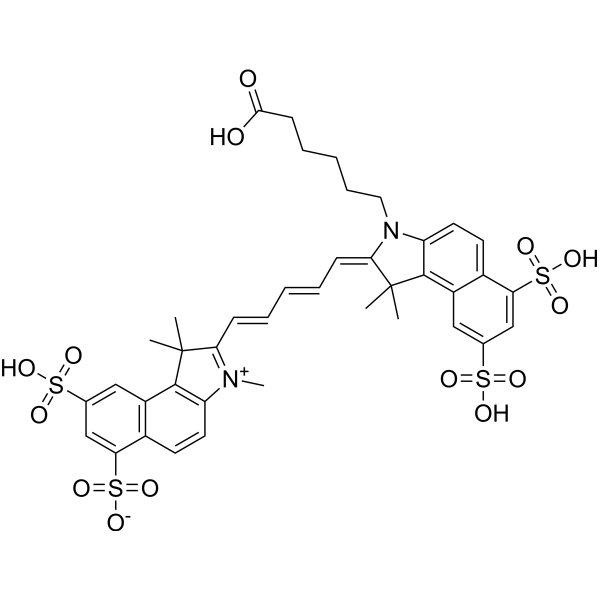
BD140 is a fluorescent probe with a binding affinity Kd of 4.1 μM for binding site 2 of human serum albumin (HSA). BD140 emits activated fluorescence upon binding to the specific HSA binding site 2. BD140 can be combined with dansylamide to form a fluorescent dye mixture, which is used for high-throughput mapping of interaction profiles of HSA drug binding sites (Ex/Em = 356/585 nm) .
loading...
    loading...
Cat. No.: HY-100027
CAS No.: 127500-84-9
Research Areas:  

Neurological Disease

Ro 41-1049 is a highly selective, reversible MAO-A inhibitor. Ro 41-1049 effectively blocks the Quinpirole (HY-B1752)-induced increase in dopamine D2-like receptor density in the nucleus accumbens and alters the pattern of behavioral sensitization, shifting animals' responses from enhanced motor activity to immobile self-directed gaping behavior. Tritium-labeled Ro 41-1049 serves as a high-affinity radioligand, enabling accurate mapping of the distribution and abundance of MAO-A in the central nervous system, peripheral organs, and human brain via quantitative enzyme autoradiography. Ro 41-1049 can be used for basic research on depression and other related diseases .
loading...
    loading...
  • 1

