1. Search Result
Search Result
Results for "

microflora

" in MedChemExpress (MCE) Product Catalog:

14

Inhibitors & Agonists

1

Biochemical Assay Reagents

10

Natural
Products

1

Isotope-Labeled Compounds

Cat. No. Product Name Target Research Areas Chemical Structure
  • HY-N7080

    Hydroferulic acid

    Drug Metabolite Metabolic Disease
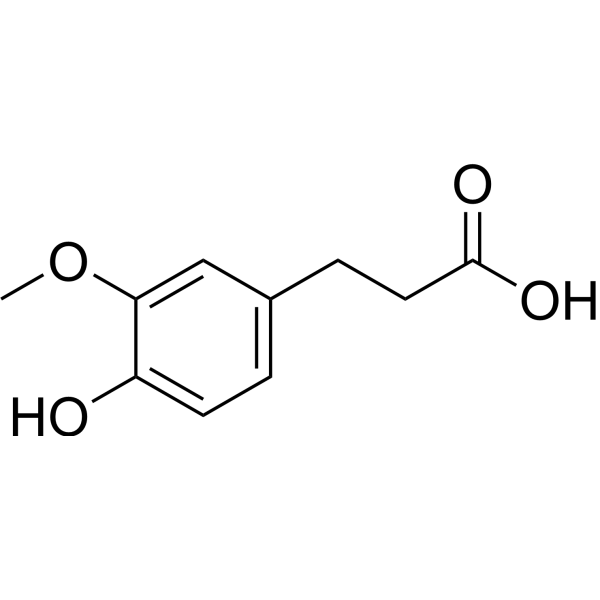
    Dihydroferulic acid (Hydroferulic acid) is one of the main metabolites of curcumin and antioxidant/radical-scavenging properties with an IC50 value of 19.5 μM. Dihydroferulic acid is a metabolite of human gut microflora as well as a precursor of vanillic acid .
    Dihydroferulic acid
  • HY-N7104

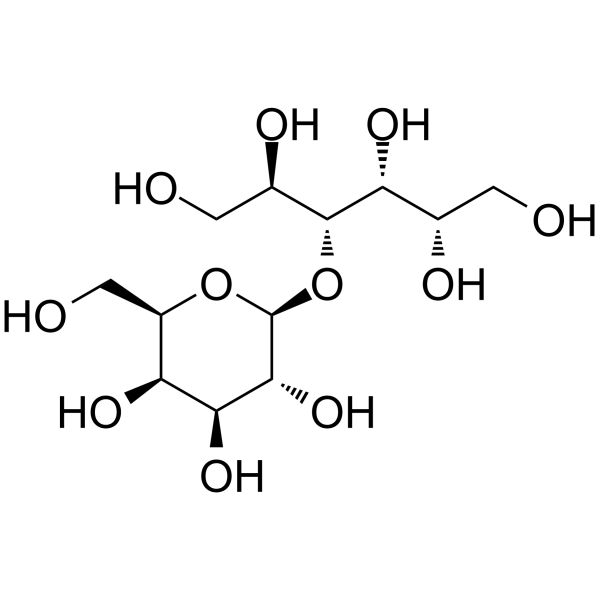
    D-Lactitol

    Bacterial Infection Neurological Disease Endocrinology
    Lactitol (D-Lactitol) is a non-absorbable disaccharide and Bacterial regulator. Lactitol reduces the populations of Bacteroides, Clostridium, coliforms and Eubacterium, while increasing the populations of Lactobacillus and Streptococcus. Lactitol can be used in the research of portosystemic encephalopathy and chronic constipation .
    Lactitol
  • HY-W005255

    Endogenous Metabolite Cardiovascular Disease
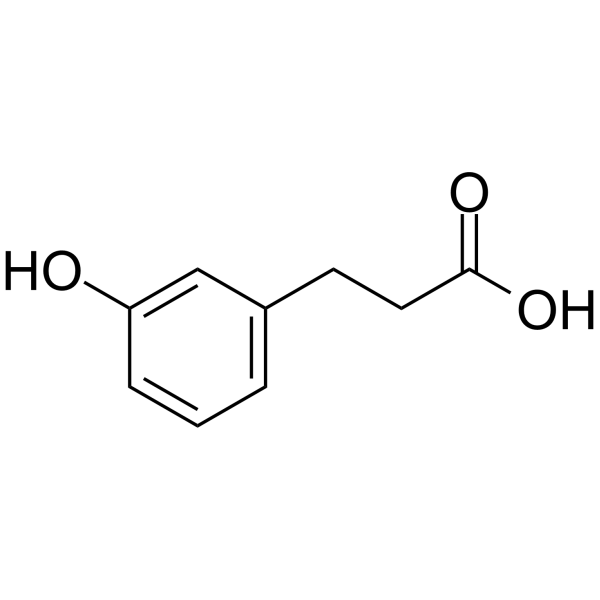
    3-(3-Hydroxyphenyl)propionic acid (3HPPA) is an endothelium-dependent nitric oxide (NO) release promoter and endothelial nitric oxide synthase (eNOS) activator. 3-(3-Hydroxyphenyl)propionic acid activates eNOS to mediate vascular smooth muscle relaxation and enhances endothelial cell NO synthesis, inducing vasodilation and reducing peripheral vascular resistance. 3-(3-Hydroxyphenyl)propionic acid can dose-dependently reduce systolic and diastolic blood pressure in spontaneously hypertensive rats (SHR) without affecting cardiac contractility or heart rate. 3-(3-Hydroxyphenyl)propionic acid has antihypertensive and vascular protective effects and can be used in the prevention and treatment of cardiovascular diseases .
    3-(3-Hydroxyphenyl)propionic acid
  • HY-N6071
    Secoisolariciresinol
    1 Publications Verification

    (-)-Secoisolariciresinol

    Drug Intermediate Cardiovascular Disease Inflammation/Immunology Cancer
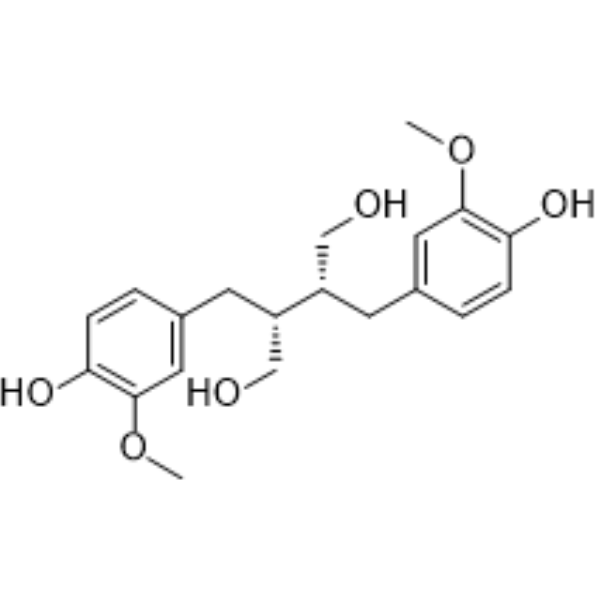
    Secoisolariciresinol ((-)-Secoisolariciresinol) is a plant lignan and a precursor of enterolignans. Secoisolariciresinol can be converted into enterodiol and enterolactone by intestinal microflora. Secoisolariciresinol may reduce the risk of cancer and cardiovascular diseases .
    Secoisolariciresinol
  • HY-113357

    Endogenous Metabolite Neurological Disease Metabolic Disease Inflammation/Immunology
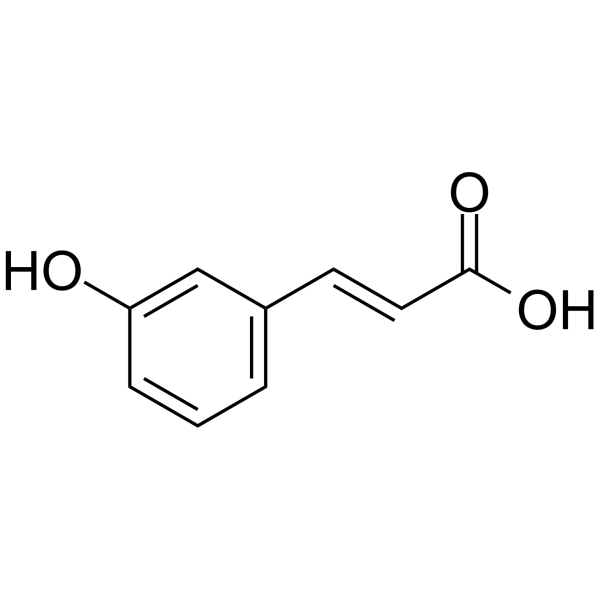
    m-Coumaric acid is a polyphenol metabolite from caffeic acid, formed by the gut microflora and the amount in human biofluids is diet-dependant. m-Coumaric acid is a BBB-penetrant metabolite of chlorogenic acid. m-Coumaric acid stimulates the cerebral nerves in vitro. m-Coumaric acid can evoke neurite outgrowth in hippocampal neuronal cells. m-Coumaric acid can promote neuronal differentiation. m-Coumaric acid increases spontaneous locomotor activity in mice by acting on the central nervous system. m-Coumaric acid inhibits the oxidation of L-dopa by epidermis tyrosinase. m-Coumaric acid attenuates non-catalytic protein glycosylation in retinas of diabetic rats .
    m-Coumaric acid
  • HY-A0158
    Diflorasone
    2 Publications Verification

    Glucocorticoid Receptor Cardiovascular Disease Inflammation/Immunology
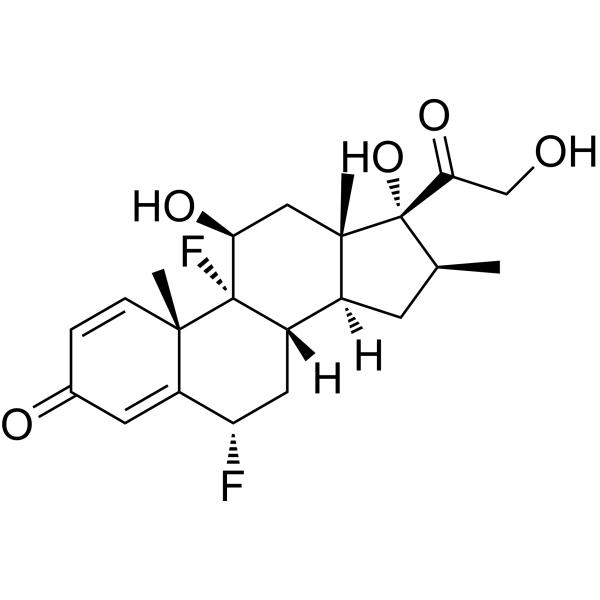
    Diflorasone is a potent topical anti-inflammatory Corticosteroid. Diflorasone induces vasoconstriction when applied topically. Diflorasone can be used in research related to psoriasis, atopic dermatitis/neurodermatitis .
    Diflorasone
  • HY-N2093
    Vicine
    2 Publications Verification

    Drug Metabolite Cardiovascular Disease Metabolic Disease
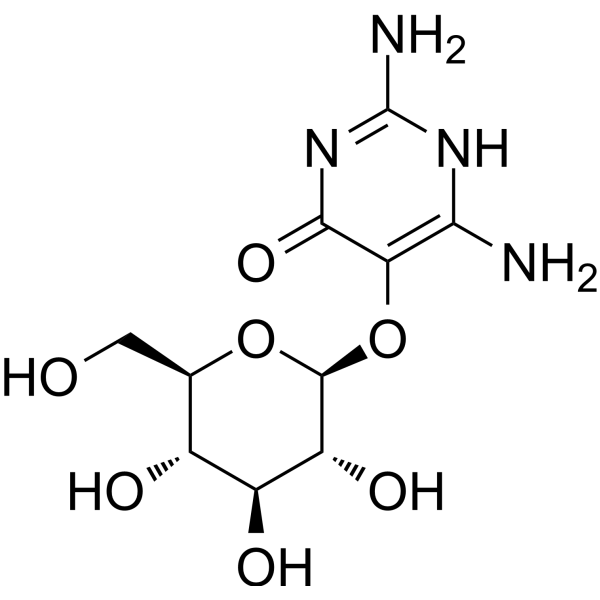
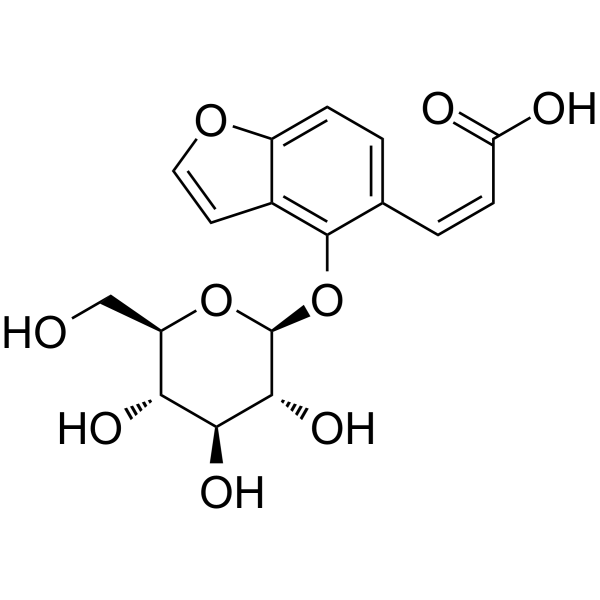
    Vicine, an alkaloid glycoside found mainly in fava beans, is toxic in individuals who have a hereditary loss of the enzyme glucose-6-phosphate dehydrogenase and may cause haemolytic anaemia.Vicine is an inactive compound that is hydrolysed by the intestinal microflora to a highly reactive free radical generating compound, the aglycone divicine when Vicine enters the body through food .
    Vicine
  • HY-Y0317I

    Disodium sulfate, meets analytical specification of Ph. Eur. BP USP

    Biochemical Assay Reagents Cancer
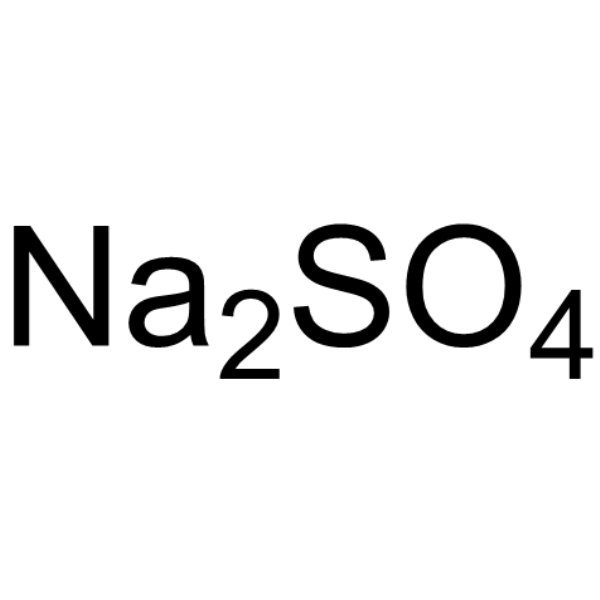
    Sodium sulfate anhydrous (Disodium sulfate), meets analytical specification of Ph. Eur. BP USP is an orally active multifunctional ionic salt that serves as a protein precipitant, collagen fibril bundling inducer, and chlorine-free sodium source. Sodium sulfate anhydrous, meets analytical specification of Ph. Eur. BP USP promotes collagen fibril bundling to increase matrix pore size, alters cancer cell morphology and regulates their migration direction via geometric signals, and separates plasma/serum proteins or concentrates proteins at 37°C without causing thermal denaturation. In poultry farming applications, Sodium sulfate anhydrous, meets analytical specification of Ph. Eur. BP USP improves laying performance and eggshell quality, and is safe and effective at an addition level of 0.3-1.5%, while a high concentration of 3.0% causes negative physiological effects. Sodium sulfate anhydrous, meets analytical specification of Ph. Eur. BP USP can be widely applied in scientific research on cervical cancer and related fields .
    Sodium sulfate anhydrous, meets analytical specification of Ph. Eur. BP USP
  • HY-113357R

    Reference Standards Endogenous Metabolite Neurological Disease Inflammation/Immunology
    m-Coumaric acid (Standard) is the analytical standard of m-Coumaric acid. This product is intended for research and analytical applications. m-Coumaric acid is a polyphenol metabolite from caffeic acid, formed by the gut microflora and the amount in human biofluids is diet-dependant. m-Coumaric acid is a BBB-penetrant metabolite of chlorogenic acid. m-Coumaric acid stimulates the cerebral nerves in vitro. m-Coumaric acid can evoke neurite outgrowth in hippocampal neuronal cells. m-Coumaric acid can promote neuronal differentiation. m-Coumaric acid increases spontaneous locomotor activity in mice by acting on the central nervous system. m-Coumaric acid inhibits the oxidation of L-dopa by epidermis tyrosinase. m-Coumaric acid attenuates non-catalytic protein glycosylation in retinas of diabetic rats .
    m-Coumaric acid (Standard)
  • HY-113158R

    Reference Standards Drug Metabolite Metabolic Disease
    4-Hydroxyhippuric acid (Standard) is the analytical standard of 4-Hydroxyhippuric acid (HY-113158). This product is intended for research and analytical applications. 4-Hydroxyhippuric acid is a metabolite of polyphenols. 4-Hydroxyhippuric acid is generated via medium-chain acyl-CoA dehydrogenase (MCAD)-dependent β-oxidation of microbially-produced 3-(4-hydroxyphenyl)propionic acid, followed by host glycine conjugation. 4-Hydroxyhippuric acid can be simultaneously detected in urine as a biomarker of dietary polyphenol intake .
    4-Hydroxyhippuric acid (Standard)
  • HY-113357S

    Endogenous Metabolite Inflammation/Immunology
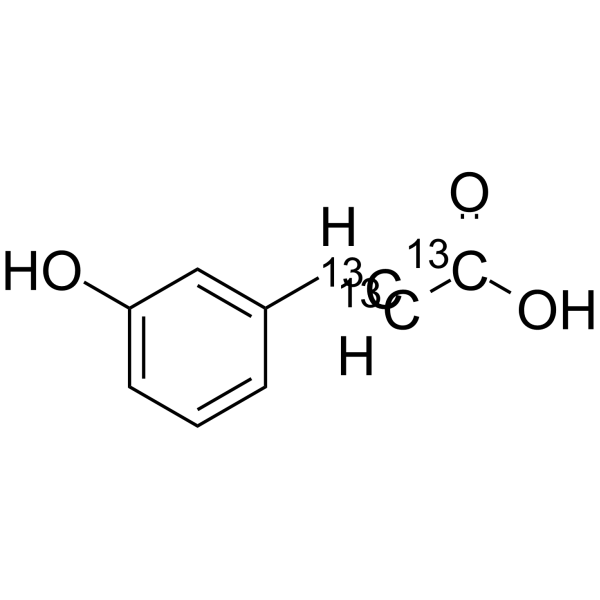
    m-Coumaric acid- 13C3 is the 13C-labeled m-Coumaric acid. m-Coumaric acid is a polyphenol metabolite from caffeic acid, formed by the gut microflora and the amount in human biofluids is diet-dependant.
    m-Coumaric acid-13C3
  • HY-N6071R

    (-)-Secoisolariciresinol (Standard)

    Reference Standards Drug Intermediate Cardiovascular Disease Inflammation/Immunology Cancer
    Artemether (Standard) ((-)-Secoisolariciresinol (Standard)) is the analytical standard of Artemether (HY-N6071). This product is intended for research and analytical applications. Secoisolariciresinol ((-)-Secoisolariciresinol) is a plant lignan and a precursor of enterolignans. Secoisolariciresinol can be converted into enterodiol and enterolactone by intestinal microflora. Secoisolariciresinol may reduce the risk of cancer and cardiovascular diseases .
    Secoisolariciresinol (Standard)
  • HY-N7080R

    Hydroferulic acid (Standard)

    Drug Metabolite Reference Standards Metabolic Disease
    Dihydroferulic acid (Standard) is the analytical standard of Dihydroferulic acid. This product is intended for research and analytical applications. Dihydroferulic acid (Hydroferulic acid) is one of the main metabolites of curcumin and antioxidant/radical-scavenging properties with an IC50 value of 19.5 μM. Dihydroferulic acid is a metabolite of human gut microflora as well as a precursor of vanillic acid[1][2].
    Dihydroferulic acid (Standard)
  • HY-W005255R

    Reference Standards Endogenous Metabolite Cardiovascular Disease
    Citrinin (Standard) is the analytical standard of Citrinin. This product is intended for research and analytical applications. Citrinin (NSC 186) is a mycotoxin that causes food contamination and has different toxic effects. Citrinin is an effective oral anticancer agent. Citrinin has various regulatory effects on mouse immune system, including regulating the number of immune cells, inducing apoptosis and autophagy of immune cells, altering toll-like receptor expression and cytokine production. Citrinin can induce oxidative stress and lead to early apoptosis of oocytes. Low doses of Citrinin have neuroprotective effects against glutamate-induced excitotoxicity in rat cortical neurons. In addition, Citrinin also has antibacterial activity .
    3-(3-Hydroxyphenyl)propionic acid (Standard)

Inquiry Online

Your information is safe with us. * Required Fields.

Salutation


Country or Region *

Applicant Name *


Organization Name *

Department *


Email Address *


Product Name *

Cat. No.


Requested quantity *

Phone Number *


Remarks

Inquiry Online

Inquiry Information

Product Name:
Cat. No.:
Quantity:
MCE Japan Authorized Agent:

