

13 Results for "

neuritis

" in MedChemExpress (MCE) Product Catalog:
Products (13)

13 Results for "neuritis" in MCE Product Catalog:

2
2 Cited Publications
Cat. No.: HY-P2476
CAS No.: 147450-30-4
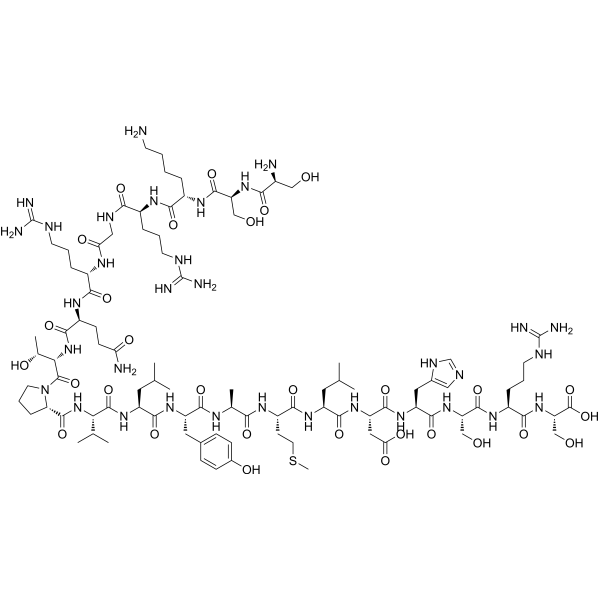
Peripheral Myelin P0 Protein (180-199), mouse is a neuritogenic peptide. Peripheral Myelin P0 Protein (180-199), mouse induces experimental autoimmune neuritis and enhances antibody production. Peripheral Myelin P0 Protein (180-199), mouse can be used in research on Guillain-Barré syndrome and experimental autoimmune neuritis .
loading...
    loading...
Cat. No.: HY-P99780
CAS No.: 1422268-07-2
Synonyms: BIIB033
Opicinumab (BIIB033) is a human IgG1 monoclonal antibody targeting LINGO-1. Opicinumab binds LINGO-1 to block its negative regulatory signaling, suppress axonal degeneration, enhance axonal regeneration, promote remyelination, and exert neuroprotective effects. Opicinumab maintains axonal protective effects during co-administration with methylprednisolone. Opicinumab can be used for the research of multiple sclerosis, acute optic neuritis, and optic neuritis. .
loading...
    loading...
Cat. No.: HY-W017457
CAS No.: 52-66-4
Synonyms: (±)-Penicillamine
Research Areas:  

Neurological Disease

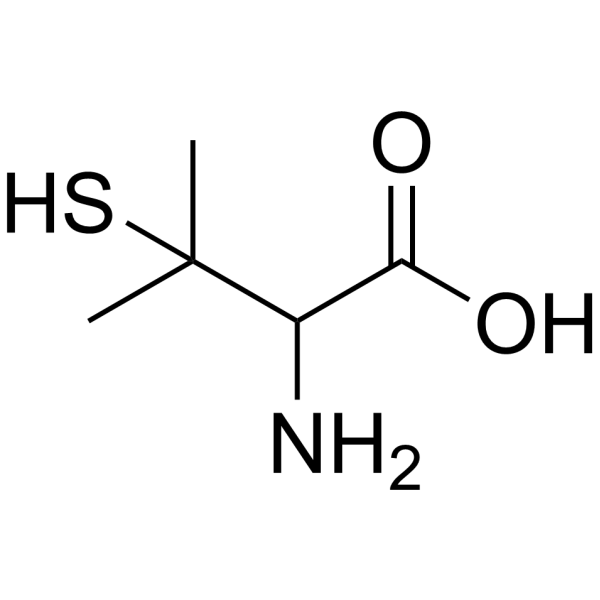
DL-Penicillamine [(±)-Penicillamine] is a copper chelating agent. DL-Penicillamine has antidotal effects in thallotoxicosis rats when co-treated with Prussian blue (HY-106594A). DL-Penicillamine can cause pyridoxine deficiency and then induce optic axial neuritis. DL-Penicillamine can also depress primary immune response .
loading...
    loading...
Cat. No.: HY-P2459
CAS No.: 163158-19-8
Target:  

Inhibitory Antibodies

Research Areas:  

Inflammation/Immunology

MOG (35-55), human is a synthetic encephalitogenic peptide fragment (residues 35-55) of human myelin oligodendrocyte glycoprotein, and also serves as a myelin oligodendrocyte glycoprotein peptide epitope. MOG (35-55), human induces mild central nervous system inflammation in mice, but does not trigger demyelinating lesions, only causing mild clinical neurological symptoms. MOG (35-55) induces experimental autoimmune encephalomyelitis mouse models that recapitulate the features of optic neuritis, multiple sclerosis, myelin oligodendrocyte glycoprotein antibody-associated diseases, and neuromyelitis optica spectrum disorders .
loading...
    loading...
Cat. No.: HY-P2479
CAS No.: 81628-50-4
Target:  

Inhibitory Antibodies

Research Areas:  

Inflammation/Immunology

Peripheral Myelin Protein P2 (53-78), bovine is derived from bovine peripheral myelin P2 protein amino acid residues 53-78. Peripheral Myelin Protein P2 (53-78), bovine is a T cell epitope for the induction of experimental autoimmune neuritis (EAN) in Lewis rats .
loading...
    loading...
Cat. No.: HY-119221
CAS No.: 820240-77-5
AUY954 is an oral active and selective sphingosine-1-phosphate receptor 1 agonist with the EC50 values of 1.2 nM, 0.9 nM >10,000 nM, 1,210 nM, >1,000 nM, and 340 nM for hS1P2, mS1P2, S1P2, S1P3, S1P4, and S1P5 receptors, respectively. AUY954 can be used for study of experimental autoimmune neuritis .
loading...
    loading...
Cat. No.: HY-N1818
CAS No.: 113122-54-6
Synonyms: 3-Deoxysappanone B
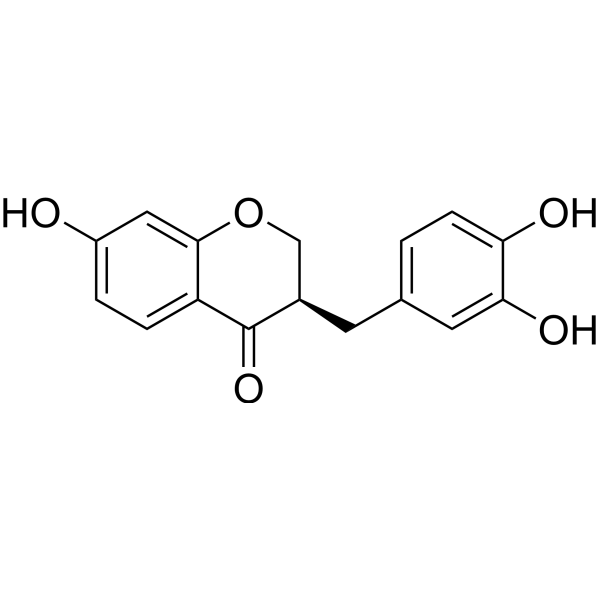
Deoxysappanone B (3-Deoxysappanone B) is a homoisoflavone compound isolated from Caesalpinia sappan L (Lignum Sappan). Deoxysappanone B has anti-neuroinflammatory and neuroprotective effects and inhibits the production of neuroinflammatory mediators by blocking the IκB kinase (IKK)-NF-κB and p38/ERK MAPK pathways. Deoxysappanone B can be used in disease studies of neuritis and inflammation-related neurological damage .
loading...
    loading...
Cat. No.: HY-P2113
CAS No.: 50913-82-1
Target:  

Melanocortin Receptor

Research Areas:  

Neurological Disease

ORG-2766 is an adrenocorticotropic hormone ACTH 4-9 analog and neurotrophic peptide. ORG-2766 affects behavioral processes such as memory and attention in animals, improving symptoms in rats with experimental allergic neuritis. ORG-2766 has a neuroprotective effect .
loading...
    loading...
Cat. No.: HY-P4439
CAS No.: 14486-13-6
Synonyms: Met-Val
Research Areas:  

Neurological Disease

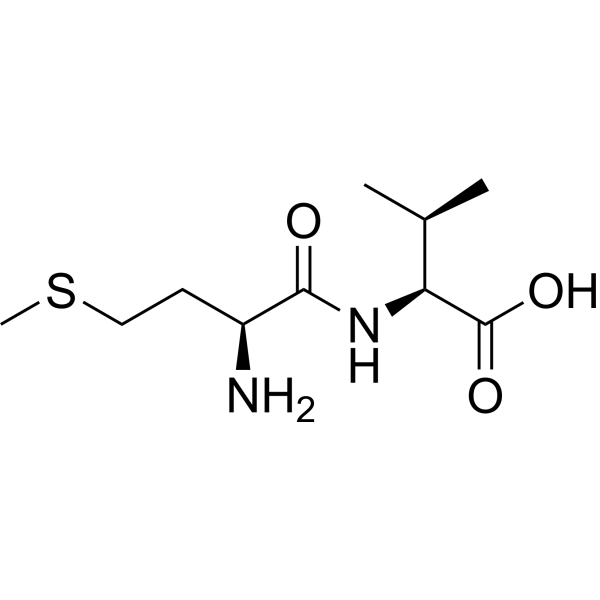
H-Met-Val-OH is a dipeptide containing free N-terminal methionine. H-Met-Val-OH exhibits activity against cDNA expressing Flavin-containing monooxygenase (FMO) 1 and FMO3. H-Met-Val-OH has potential applications in the growth of neuritis .
loading...
    loading...
Cat. No.: HY-P990137

Target:  

CD28

Anti-Rat CD28 Antibody (JJ319) is a mouse-derived IgG1 κ type antibody inhibitor, targeting to rat CD28. Anti-Rat CD28 Antibody (JJ319) activates T cells in the presence of T cell receptor-stimulation. Anti-Rat CD28 Antibody (JJ319) can be used for the researches of inflammation and immunology, such as transplantation and neuritis .
loading...
    loading...
Cat. No.: HY-W017457R
CAS No.: 52-66-4
Synonyms: (±)-Penicillamine (Standard)
Research Areas:  

Others

DL-Penicillamine (Standard) is the analytical standard of DL-Penicillamine. This product is intended for research and analytical applications. DL-Penicillamine [(±)-Penicillamine] is a copper chelating agent. DL-Penicillamine has antidotal effects in thallotoxicosis rats when co-treated with Prussian blue (HY-106594A). DL-Penicillamine can cause pyridoxine deficiency and then induce optic axial neuritis. DL-Penicillamine can also depress primary immune response .
loading...
    loading...
Cat. No.: HY-119221A
CAS No.: 820240-78-6
Target:  

LPL Receptor

Research Areas:  

Neurological Disease

AUY 954 hydrochloride is a potent and selective sphingosine-1-phosphate (S1P(1)) receptor agonist, exhibiting significant immunomodulatory activity. AUY 954 hydrochloride induces a profound and reversible reduction of circulating lymphocytes upon oral administration. AUY 954 hydrochloride has demonstrated efficacy in prolonging cardiac allograft survival when used in combination with RAD001 in a stringent transplantation model. AUY 954 hydrochloride effectively prevents experimental autoimmune neuritis in rats, showcasing its therapeutic potential in autoimmune conditions.
loading...
    loading...
Cat. No.: HY-169103
Neuroprotective agent 5 (compound 28) is a brain permeabilizing agent with anti-neuritis, anti-oxidative damage and neuroprotective effects. Neuroprotective agent 5 exhibits a potent NO inhibitory effect (EC50=0.49 μM), inhibits the release of proinflammatory factors PGE2 and TNF-α, downregulates the expression of iNOS and COX-2 proteins, and promotes the polarization of BV-2 cells from the proinflammatory M1 phenotype to the anti-inflammatory M2 phenotype. In addition, Neuroprotective agent 5 can also inhibit acetylcholinesterase (AChE) activity and Aβ42 aggregation in a dose-dependent manner. Neuroprotective agent 5 can be used for the study of Alzheimer's disease .
loading...
    loading...
  • 1

