20 Results for "

nitro groups

" in MedChemExpress (MCE) Product Catalog:
Products (20)

20 Results for "nitro groups" in MCE Product Catalog:

9
9 Cited Publications
Cat. No.: HY-105129
CAS No.: 70132-51-3
Purity:  99.98%
Research Areas:  

Cancer

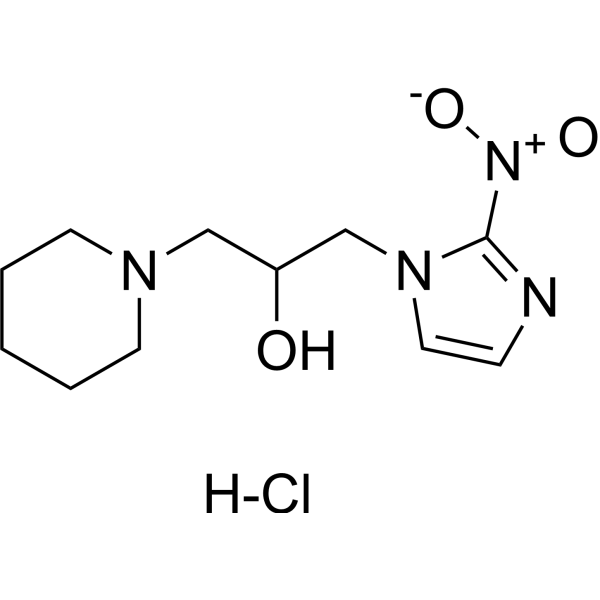
Pimonidazole is a novel hypoxia marker for complementary study of tumor hypoxia and cell proliferation in tumor . Pimonidazole accumulates in hypoxic cells via covalent binding with macromolecules or by forming reductive metabolites after reduction of its nitro group, it can be used for qualitative and quantitative assessment of tumor hypoxia .
loading...
    loading...
9
9 Cited Publications
Cat. No.: HY-105129A
CAS No.: 70132-50-2
Purity:  99.32%
Research Areas:  

Cancer

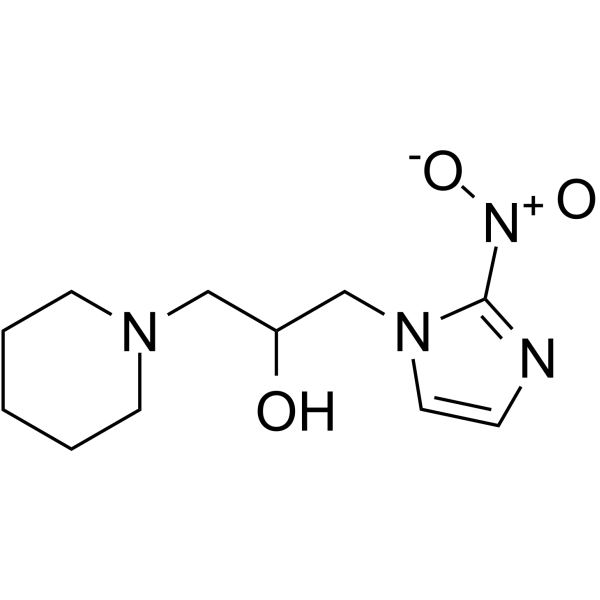
Pimonidazole is a novel hypoxia marker for complementary study of tumor hypoxia and cell proliferation in tumor . Pimonidazole accumulates in hypoxic cells via covalent binding with macromolecules or by forming reductive metabolites after reduction of its nitro group, it can be used for qualitative and quantitative assessment of tumor hypoxia .
loading...
    loading...
Cat. No.: HY-13543
CAS No.: 21919-05-1
Purity:  99.50%
Synonyms: CB 1954
Research Areas:  

Cancer

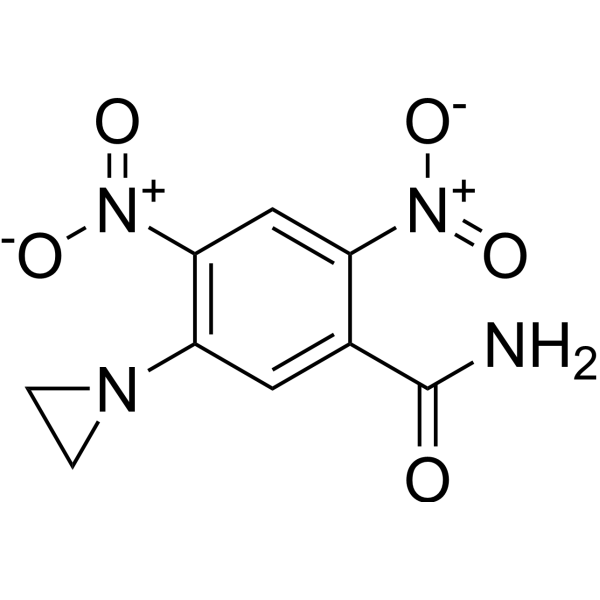
Tretazicar (CB 1954), an antitumor proagent, is highly selective against the Walker 256 rat tumour line. Tretazicar is enzymatically activated to generate a bifunctional agent, which can form DNA-DNA interstrand cross-links. Tretazicar in rat cells involves the reduction of its 4-nitro group to a 4-hydroxylamine by the enzyme NAD(P)H:quinone oxidoreductase 1 (NQO1) .
loading...
    loading...
Cat. No.: HY-137541
CAS No.: 30211-77-9
Purity:  98.44%
Synonyms: NTCB
Research Areas:  

Others

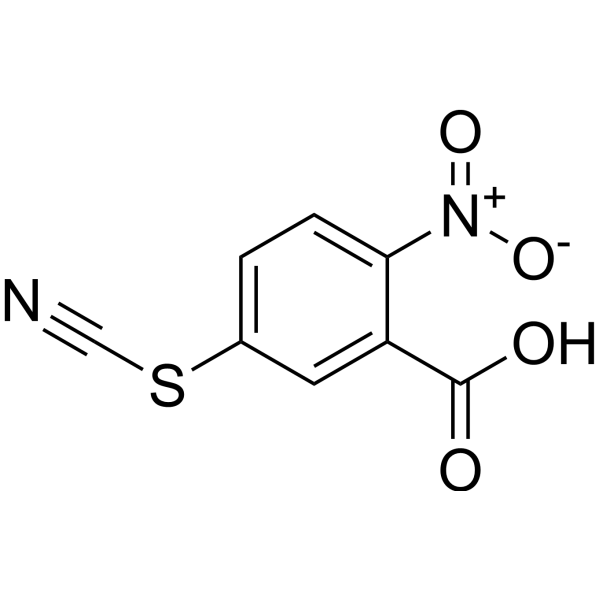
2-Nitro-5-thiocyanatobenzoic acid (NTCB) is a highly reactive reagent that transfers its cyano group rapidly to a nucleophilic thiolate. 2-Nitro-5-thiocyanatobenzoic acid has been proposed as a reagent for converting thiol groups in proteins into their S-cyano derivatives .
loading...
    loading...
Cat. No.: HY-W014316
CAS No.: 30007-47-7
Target:  

Bacterial Fungal

Research Areas:  

Infection

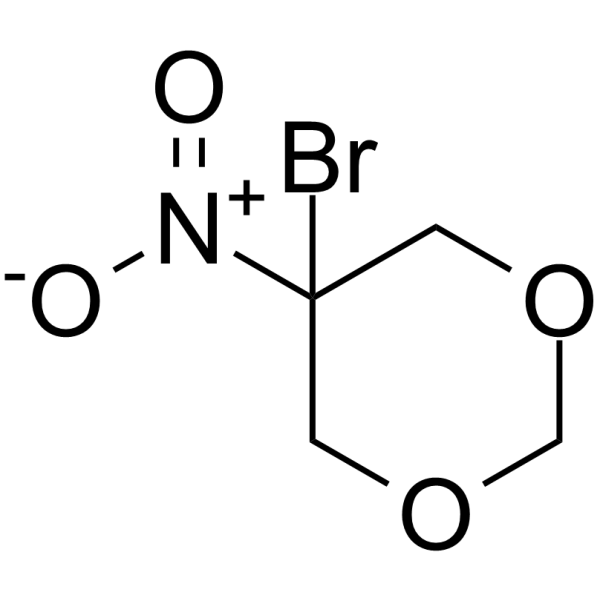
5-Bromo-5-nitro-1,3-dioxane is a broad-spectrum antimicrobial agent active against Gram-positive bacteria, Gram-negative bacteria and fungi. 5-Bromo-5-nitro-1,3-dioxane oxidizes free thiol groups to their corresponding disulfides. 5-Bromo-5-nitro-1,3-dioxane induces intracellular substance leakage in Escherichia coli and Staphylococcus aureus. 5-Bromo-5-nitro-1,3-dioxane modulates the oxygen consumption of Escherichia coli and Staphylococcus aureus .
loading...
    loading...
Cat. No.: HY-W014159
CAS No.: 55289-35-5
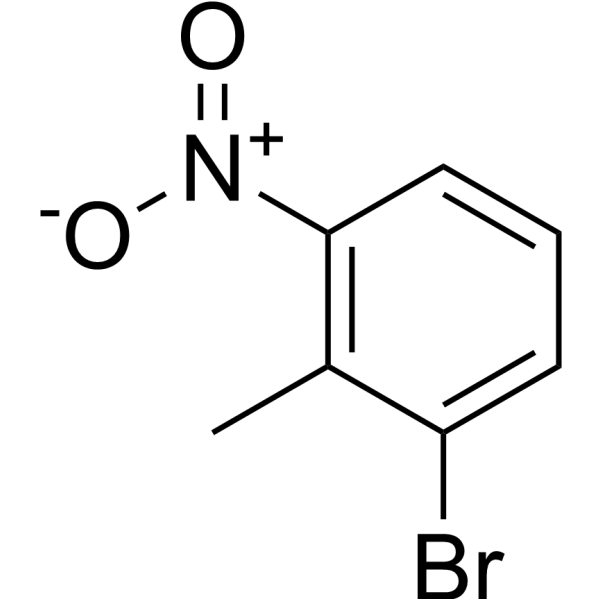
1-Bromo-2-methyl-3-nitrobenzene is an organic synthesis intermediate. 1-Bromo-2-methyl-3-nitrobenzene participates in chemical reactions such as electrophilic substitution and coupling through the bromine atom and nitro group in the molecule, and acts as a synthetic precursor. 1-Bromo-2-methyl-3-nitrobenzene can construct complex molecular structures by relying on the leaving property of bromine and the electron-withdrawing property of nitro group, and can be used in the synthesis of benzimidazole VISTA inhibitors in medicinal chemistry .
loading...
    loading...
Cat. No.: HY-W587874
CAS No.: 730-40-5
Target:  

Fluorescent Dye

Research Areas:  

Others

Disperse Orange 3 is a monoazo dye characterized by a dye content of 90% along with dispersing agents and surfactants; it features two aromatic rings, one of which possesses an amino group while the other is modified with a nitro group, exhibiting a prominent absorption peak at 415 nm.
loading...
    loading...
Cat. No.: HY-W017590
CAS No.: 402-67-5
Synonyms: 1-Fluoro-3-nitrobenzene; 3-Fluoronitrobenzene; m-FNBZ
Target:  

Drug Derivative

Research Areas:  

Others

m-Fluoronitrobenzene (1-Fluoro-3-nitrobenzene) is a meta-substituted benzene derivative bearing fluoro and nitro functional groups. m-Fluoronitrobenzene finds applications in the fields of pharmaceuticals, dyes, pesticides, and synthetic rubber .
loading...
    loading...
Cat. No.: HY-D0316
CAS No.: 1533-78-4
Synonyms: DR 167:1
Research Areas:  

Others

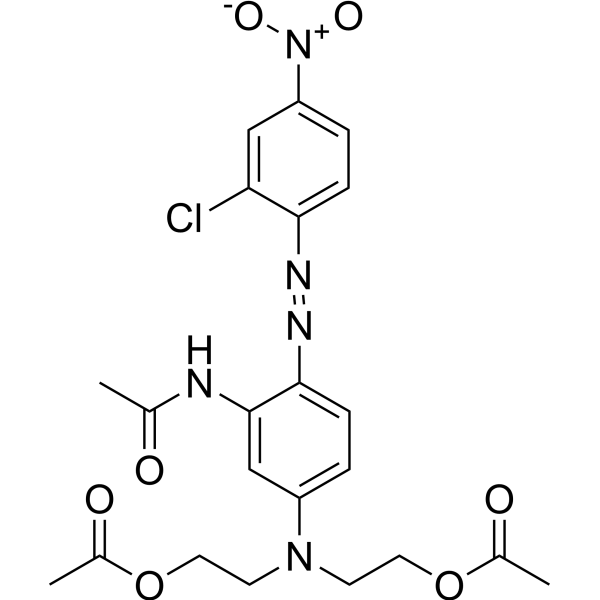
Disperse red 167:1 (DR 167:1) is an azo disperse dye . Disperse red 167:1 interacts with the active site of nitroreductase, leading to the reduction of its nitro group to amine metabolites. Disperse red 167:1 is mainly used for dyeing hydrophobic fibers such as polyester, and is also applicable to dyeing research on plastics, textiles and other materials .
loading...
    loading...
Cat. No.: HY-W325356
CAS No.: 5342-97-2
Target:  

Fluorescent Dye

Research Areas:  

Cancer

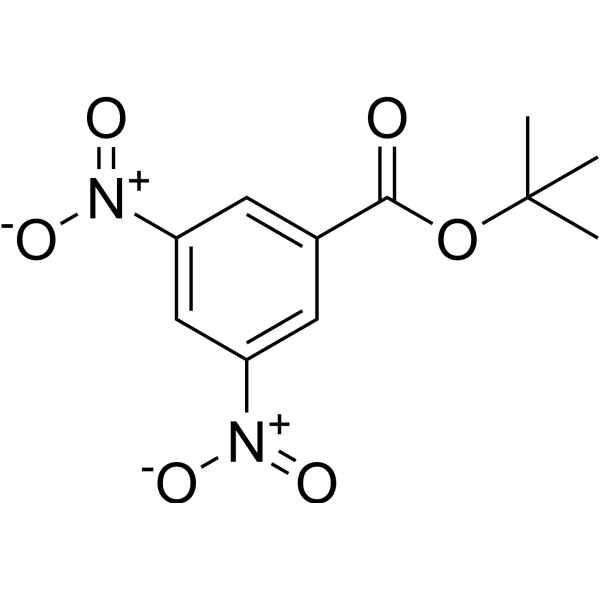
Tert-butyl 3,5-dinitrobenzoate is an intermediate or reactant in organic synthesis and can also play a role in drug synthesis, dye preparation and other chemical fields.The nitro functional group of Tert-butyl 3,5-dinitrobenzoate has certain reactivity in organic chemistry and can participate in various reactions, such as electrophilic substitution, aromatic amine reaction, etc .
loading...
    loading...
Cat. No.: HY-W014316R
CAS No.: 30007-47-7
Research Areas:  

Infection

5-Bromo-5-nitro-1,3-dioxane (Standard) is the analytical standard of 5-Bromo-5-nitro-1,3-dioxane (HY-W014316). This product is intended for research and analytical applications. 5-Bromo-5-nitro-1,3-dioxane is a broad-spectrum antimicrobial agent active against Gram-positive bacteria, Gram-negative bacteria and fungi. 5-Bromo-5-nitro-1,3-dioxane oxidizes free thiol groups to their corresponding disulfides. 5-Bromo-5-nitro-1,3-dioxane induces intracellular substance leakage in Escherichia coli and Staphylococcus aureus. 5-Bromo-5-nitro-1,3-dioxane modulates the oxygen consumption of Escherichia coli and Staphylococcus aureus .
loading...
    loading...
Cat. No.: HY-154146
CAS No.: 2072145-26-5
Research Areas:  

Cancer

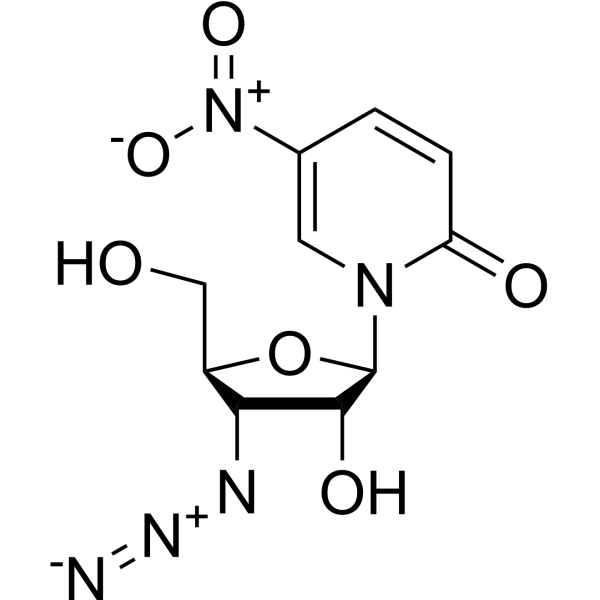
5-Nitro-1-(3-azido-3-deoxy-β-D-ribofuranosyl)-2(1H)-pyridinone is a purine nucleoside analog. Purine nucleoside analogs have broad antitumor activity targeting indolent lymphoid malignancies. Anticancer mechanisms in this process rely on inhibition of DNA synthesis, induction of apoptosis, etc . 5-Nitro-1-(3-azido-3-deoxy-β-D-ribofuranosyl)-2(1H)-pyridinone is a click chemistry reagent, it contains an Azide group and can undergo copper-catalyzed azide-alkyne cycloaddition reaction (CuAAc) with molecules containing Alkyne groups. It can also undergo strain-promoted alkyne-azide cycloaddition (SPAAC) reactions with molecules containing DBCO or BCN groups.
loading...
    loading...
Cat. No.: HY-13543R
CAS No.: 21919-05-1
Synonyms: CB 1954 (Standard)
Research Areas:  

Cancer

Tretazicar (Standard) is the analytical standard of Tretazicar. This product is intended for research and analytical applications. Tretazicar (CB 1954), an antitumor proagent, is highly selective against the Walker 256 rat tumour line. Tretazicar is enzymatically activated to generate a bifunctional agent, which can form DNA-DNA interstrand cross-links. Tretazicar in rat cells involves the reduction of its 4-nitro group to a 4-hydroxylamine by the enzyme NAD(P)H:quinone oxidoreductase 1 (NQO1) .
loading...
    loading...
Cat. No.: HY-D2989
Synonyms: SNAP-NH2-Ac-N3
BG-NH2-Ac-N3 (SNAP-NH2-Ac-N3) is a nitrogen-containing SNAP tag with a nitro group. BG-NH2-Ac-N3 can be used for click chemistry labeling .
loading...
    loading...
Cat. No.: HY-105129AS
CAS No.: 2468639-37-2
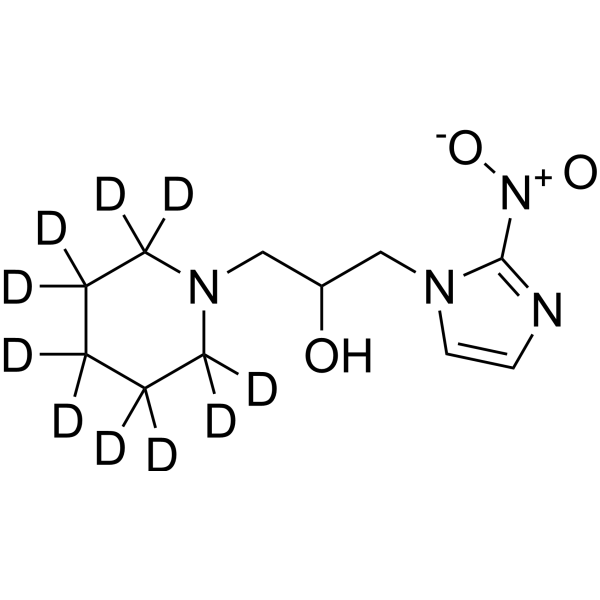
Pimonidazole-d10 is the deuterium labeled Pimonidazole. Pimonidazole is a novel hypoxia marker for complementary study of tumor hypoxia and cell proliferation in tumor . Pimonidazole accumulates in hypoxic cells via covalent binding with macromolecules or by forming reductive metabolites after reduction of its nitro group, it can be used for qualitative and quantitative assessment of tumor hypoxia .
loading...
    loading...
Cat. No.: HY-105129AR
CAS No.: 70132-50-2
Research Areas:  

Cancer

Pimonidazole (Standard) is the analytical standard of Pimonidazole. This product is intended for research and analytical applications. Pimonidazole is a novel hypoxia marker for complementary study of tumor hypoxia and cell proliferation in tumor . Pimonidazole accumulates in hypoxic cells via covalent binding with macromolecules or by forming reductive metabolites after reduction of its nitro group, it can be used for qualitative and quantitative assessment of tumor hypoxia .
loading...
    loading...
Cat. No.: HY-105129R
CAS No.: 70132-51-3
Research Areas:  

Cancer

Pimonidazole (hydrochloride) (Standard) is the analytical standard of Pimonidazole (hydrochloride). This product is intended for research and analytical applications. Pimonidazole is a novel hypoxia marker for complementary study of tumor hypoxia and cell proliferation in tumor . Pimonidazole accumulates in hypoxic cells via covalent binding with macromolecules or by forming reductive metabolites after reduction of its nitro group, it can be used for qualitative and quantitative assessment of tumor hypoxia .
loading...
    loading...
Cat. No.: HY-W591325
CAS No.: 663598-55-8
Research Areas:  

Others

4-((5-Nitropyridin-2-yl)disulfanyl)pentanoic acid is a synthetic building block with terminal nitro and carboxylic acid groups with a disulfide bond in the center.
loading...
    loading...
Cat. No.: HY-18729B
CAS No.: 141968-19-6
Synonyms: NG-nitro-D-arginine methyl ester
D-NAME (NG-Nitro-D-arginine methyl ester) is an orally active enantiomer of L-NAME (HY-18729). D-NAME inhibits Nitric oxide synthase activity in myocardium and aorta (Note: D-NAME was once classified as an inactive substance and used as a negative control in nitric oxide synthase inhibition studies), induces increases in systolic blood pressure and mean arterial blood pressure, reduces mesenteric arterial conductance, elevates the ratio of left ventricular weight to body weight, induces myocardial fibrosis, increases the cross-sectional area of aortic wall, enhances mesenteric vasodilation induced by nitrovasodilators, and releases nitric oxide via its guanidino nitro group. D-NAME has no effect on ovalbumin-induced pulmonary eosinophilia in sensitized mice. D-NAME can be used in hypertension-related research .
loading...
    loading...
Cat. No.: HY-W761397
CAS No.: 117568-28-2
Target:  

COMT

Research Areas:  

Neurological Disease

COMT-IN-3 is a competitive inhibitor of soluble catechol-O-methyltransferase (S-COMT). COMT-IN-3 coordinates with the Mg 2+ ion at the COMT active site via its catechol hydroxyl group, and its nitro group, as a strong electron-withdrawing substituent, further enhances the binding affinity. COMT-IN-3 interacts with the hydrophobic residues Trp38, Met40, and Trp143 at the back of the active site via its neutral nitrile tail, thereby competitively inhibiting COMT activity. COMT-IN-3 can be used in research related to Parkinson's disease .
loading...
    loading...
  • 1

