16 Results for "

ototoxic

" in MedChemExpress (MCE) Product Catalog:
Products (16)

16 Results for "ototoxic" in MCE Product Catalog:

30
30 Publications Verification
Cat. No.: HY-B0509A
CAS No.: 37517-28-5
Synonyms: BAY 41-6551
Target:  

Bacterial Antibiotic

Research Areas:  

Infection Cancer

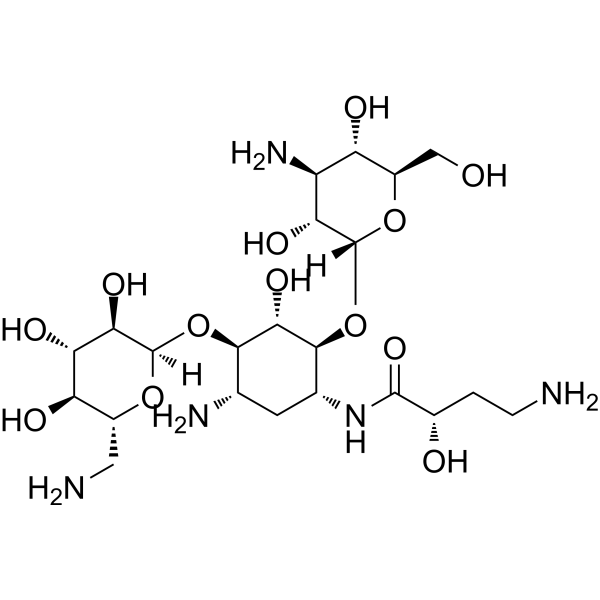
Amikacin (BAY 41-6551) is a semisynthetic kanamycin analog that is active against most Gram-negative bacteria, including gentamicin- and tobramycin-resistant strains. Significant inhibitory effect. Amikacin is ototoxic and nephrotoxic. Amikacin can be used in bacteriostatic, anti-cancer and analgesic studies .
loading...
    loading...
11
11 Cited Publications
Cat. No.: HY-12970A
CAS No.: 2070015-25-5
Purity:  98.15%
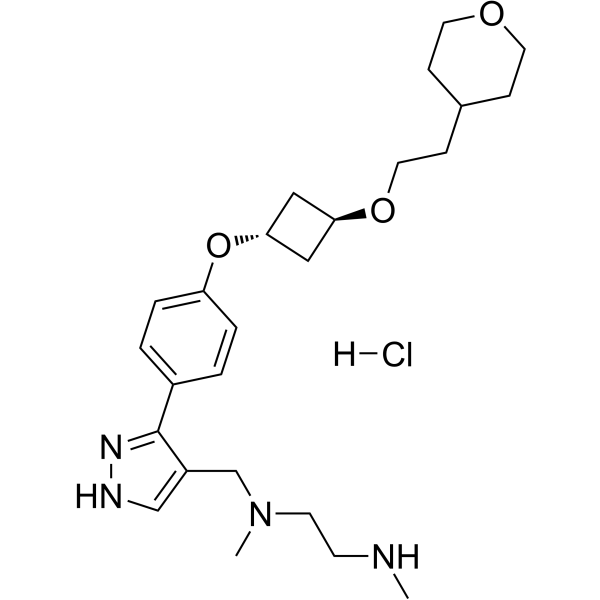
EPZ020411 hydrochloride is a selective, blood-brain barrier-permeable PRMT6 inhibitor with an IC50 of 0.010 μM. EPZ020411 hydrochloride blocks PRMT6-mediated histone H3R2 methylation, reduces ROS production, and inhibits Apoptosis. EPZ020411 hydrochloride is applicable to research related to neuropathic pain, colorectal cancer, ototoxicity, hearing loss and glioblastoma .
loading...
    loading...
11
11 Cited Publications
Cat. No.: HY-12970
CAS No.: 1700663-41-7
Purity:  98.07%
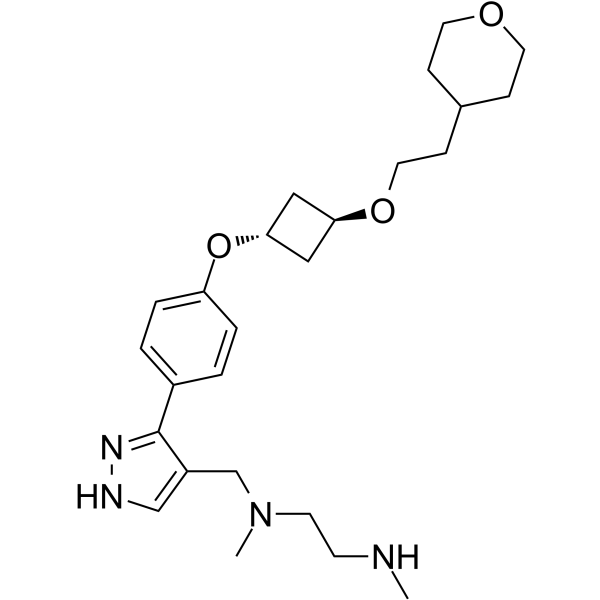
EPZ020411 is a selective, blood-brain barrier-permeable PRMT6 inhibitor with an IC50 of 0.010 μM. EPZ020411 blocks PRMT6-mediated histone H3R2 methylation, reduces ROS production, and inhibits Apoptosis. EPZ020411 is applicable to research related to neuropathic pain, colorectal cancer, ototoxicity, hearing loss and glioblastoma .
loading...
    loading...
1
1 Cited Publications
Cat. No.: HY-128895
CAS No.: 1800405-30-4
Purity:  99.94%
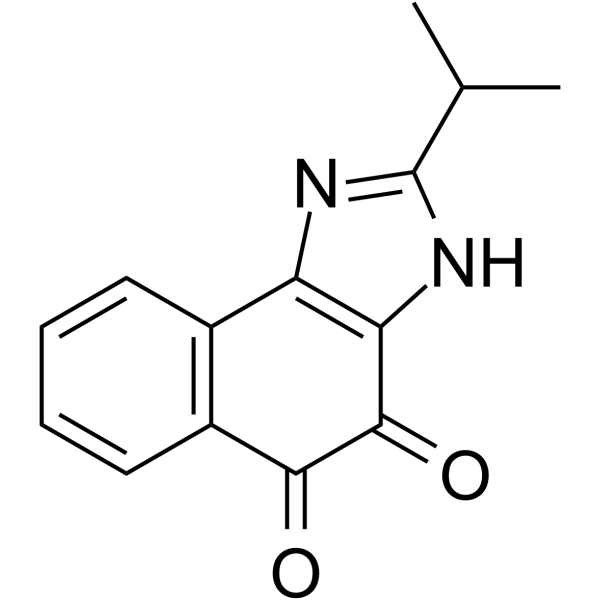
KL1333, a derivative of β-lapachone, is an orally available NAD+ modulator. KL1333 reacts with NAD(P)H:quinone oxidoreductase 1 (NQO1) as a substrate, resulting in increases in intracellular NAD+ levels via NADH oxidation. KL1333 improves energy metabolism and mitochondrial dysfunction in MELAS fibroblasts. KL1333 protects against Cisplatin-induced ototoxicity in mouse cochlear cultures .
loading...
    loading...
Cat. No.: HY-B1241
CAS No.: 5490-27-7
Synonyms: DHSM sulfate
Target:  

Antibiotic Bacterial

Research Areas:  

Infection

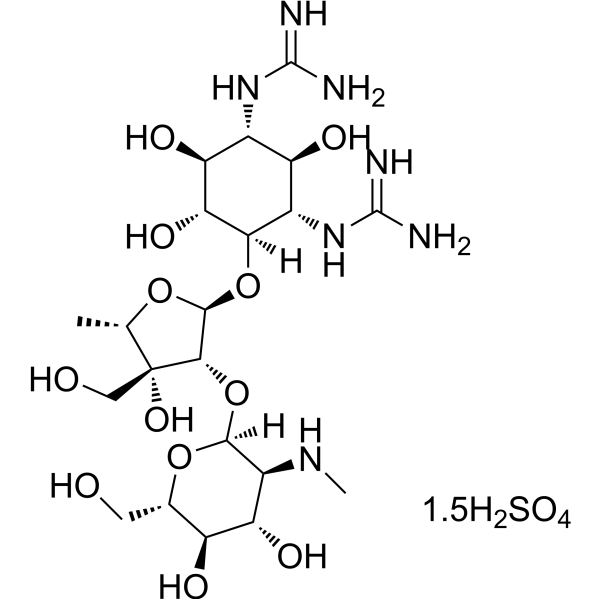
Dihydrostreptomycin sulfate (DHSM sulfate) is the sulfate salt form of Dihydrostreptomycin (HY-B1241A). Dihydrostreptomycin sulfate is an aminoglycoside antibiotic with antibacterial effect against Gram-negative bacteria. Dihydrostreptomycin sulfate exhibits ototoxicity that causes irreversible damage in inner ear hair cells, leading to hearing loss .
loading...
    loading...
Cat. No.: HY-N4102
CAS No.: 2107-76-8
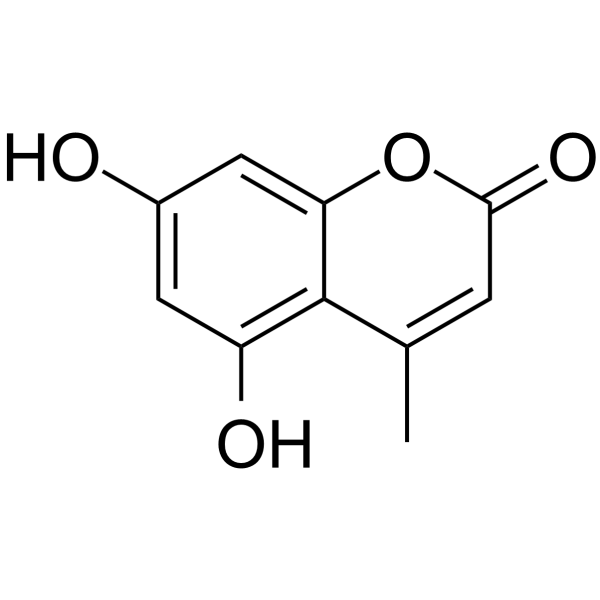
5,7-Dihydroxy-4-methylcoumarin is an antioxidant. 5,7-Dihydroxy-4-methylcoumarin protects mouse cochlear hair cells from Cisplatin-induced damage, enhances cell viability and inhibits apoptosis. 5,7-Dihydroxy-4-methylcoumarin downregulates phosphorylated JNK levels, increases the ratio of phosphorylated FoxO1 to total FoxO1, scavenges free radicals, reduces ROS accumulation, maintains mitochondrial membrane potential and alleviates mitochondrial dysfunction. 5,7-Dihydroxy-4-methylcoumarin downregulates the expression of caspase-3 and improves cell viability. 5,7-Dihydroxy-4-methylcoumarin can be used in studies related to ototoxicity .
loading...
    loading...
Cat. No.: HY-B0509AR
CAS No.: 37517-28-5
Synonyms: BAY 41-6551 (Standard)
Research Areas:  

Infection Cancer

Amikacin (Standard) is the analytical standard of Amikacin. This product is intended for research and analytical applications. Amikacin (BAY 41-6551), a semisynthetic analog of kanamycin, is very active against most gram-negative bacteria including gentamicin- and tobramycin-resistant strains. Amikacin (BAY 41-6551) is ototoxic and nephrotoxic .
loading...
    loading...
Cat. No.: HY-18673
CAS No.: 312951-85-2
Research Areas:  

Others

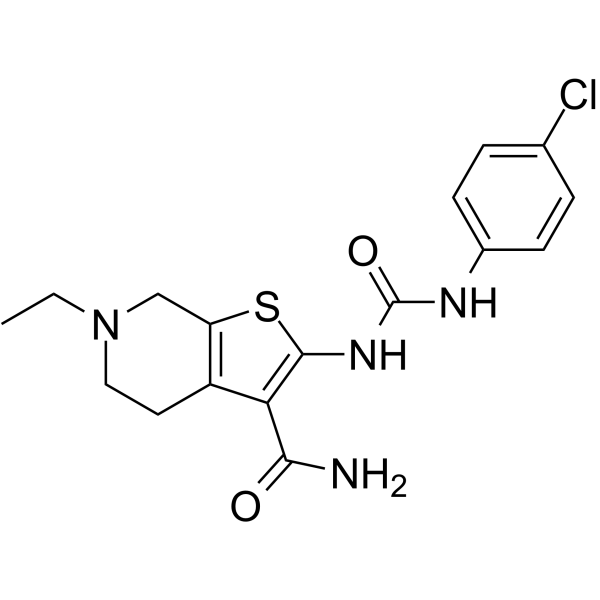
PROTO-1 is a hair cell protector and can be used in studies of ototoxicity-induced hair cell death .
loading...
    loading...
Cat. No.: HY-P11350
Target:  

Inhibitory Antibodies

Research Areas:  

Cancer

A666 peptide is a highly selective prestin ligand. A666 peptide enables active drug delivery (e.g., dexamethasone) to outer hair cells (OHCs). A666 peptide is promising for research of cisplatin-induced ototoxicity protection and sensorineural hearing loss interventions .
loading...
    loading...
Cat. No.: HY-P11350A
Target:  

Inhibitory Antibodies

Research Areas:  

Cancer

A666 peptide TFA is a highly selective prestin ligand. A666 peptide TFA enables active drug delivery (e.g., dexamethasone) to outer hair cells (OHCs). A666 peptide TFA is promising for research of cisplatin-induced ototoxicity protection and sensorineural hearing loss interventions .
loading...
    loading...
Cat. No.: HY-B1241A
CAS No.: 128-46-1
Synonyms: DHSM
Target:  

Antibiotic Bacterial

Research Areas:  

Infection

Dihydrostreptomycin (DHSM) is an aminoglycoside antibiotic with antibacterial effect against Gram-negative bacteria. Dihydrostreptomycin exhibits ototoxicity that causes irreversible damage in inner ear hair cells, leading to hearing loss .
loading...
    loading...
Cat. No.: HY-B0639C
CAS No.: 59178-37-9
Synonyms: WR2721 sodium
Amifostine sodium (WR2721 sodium) is a phosphorus sulfate with radioprotective activity. Amifostine sodium can cause splenic vasodilation and may block autonomic ganglia. Amifostine sodium is clinically used to prevent cisplatin-induced ototoxicity .
loading...
    loading...
Cat. No.: HY-B1241R
CAS No.: 5490-27-7
Synonyms: DHSM sulfate (Standard)
Research Areas:  

Infection

Dihydrostreptomycin (sulfate) (Standard) is the analytical standard of Dihydrostreptomycin (sulfate) (HY-B1241). This product is intended for research and analytical applications. Dihydrostreptomycin sulfate (DHSM sulfate) is the sulfate salt form of Dihydrostreptomycin (HY-B1241A). Dihydrostreptomycin sulfate is an aminoglycoside antibiotic with antibacterial effect against Gram-negative bacteria. Dihydrostreptomycin sulfate exhibits ototoxicity that causes irreversible damage in inner ear hair cells, leading to hearing loss .
loading...
    loading...
Cat. No.: HY-128895A
CAS No.: 1800406-26-1
KL1333 hydrochloride is an orally active NAD + modulator that reacts with NAD(P)H:quinone oxidoreductase 1 (NQO1) as a substrate, leading to increased intracellular NAD + levels through NADH oxidation. Elevated NAD + levels trigger activation of SIRT1 and AMPK, and subsequently activate PGC-1α. KL1333 hydrochloride improves energy metabolism and mitochondrial dysfunction in mitochondrial encephalomyopathy, lactic acidosis, and stroke-like episodes (MELAS) fibroblasts. KL1333 hydrochloride protects against cisplatin-induced ototoxicity in mouse cochlear cultures .
loading...
    loading...
Cat. No.: HY-182622
CAS No.: 59711-96-5
Target:  

Antibiotic Bacterial

Research Areas:  

Infection

Etimicin is a fourth-generation semisynthetic aminoglycoside antibiotic. Etimicin exhibits broad spectrum of activity against gram-positive, gram-negative, and aminoglycoside-resistant bacterial strains, with lower ototoxicity and nephrotoxicity. Etimicin exerts rapid, concentration-dependent bactericidal activity against bacteria. Etimicin can be used for the research of bacterial infections .
loading...
    loading...
Cat. No.: HY-12970B
CAS No.: 2095432-47-4
EPZ020411 dihydrochloride is a selective, blood-brain barrier-permeable PRMT6 inhibitor with an IC50 of 0.010 μM. EPZ020411 dihydrochloride blocks PRMT6-mediated histone H3R2 methylation, reduces ROS production, and inhibits Apoptosis. EPZ020411 dihydrochloride is applicable to research related to neuropathic pain, colorectal cancer, ototoxicity, hearing loss and glioblastoma .
loading...
    loading...
  • 1

