

1. Search Result
Search Result
Results for "

penetration

" in MedChemExpress (MCE) Product Catalog:

302

Inhibitors & Agonists

1

Screening Libraries

6

Fluorescent Dye

11

Biochemical Assay Reagents

24

Peptides

1

Inhibitory Antibodies

11

Natural
Products

12

Isotope-Labeled Compounds

2

Click Chemistry

1

Oligonucleotides

Cat. No. Product Name Target Research Areas Chemical Structure
  • HY-101855

    Anle138b

    Amyloid-β Neurological Disease
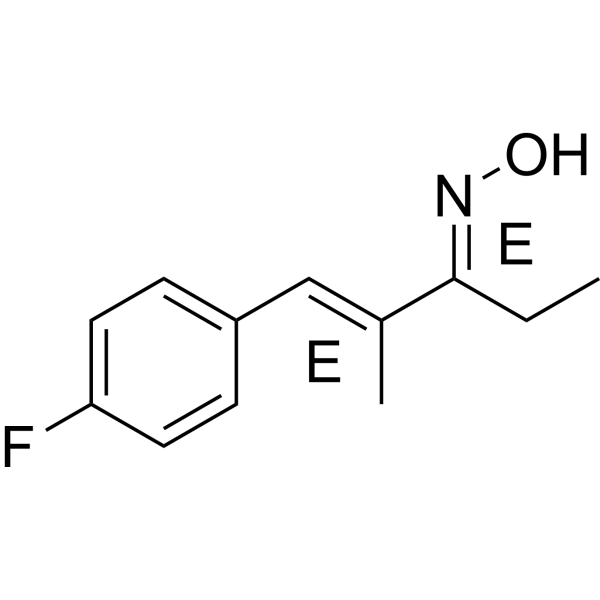
    Emrusolmin (Anle138b), an oligomeric aggregation inhibitor, blocks the formation of pathological aggregates of prion protein (PrPSc) and of α-synuclein (α-syn). Emrusolmin strongly inhibits oligomer accumulation, neuronal degeneration, and disease progression in vivo. Emrusolmin has low toxicity and an excellent oral bioavailability and blood-brain-barrier penetration. Emrusolmin blocks Aβ channels and rescues disease phenotypes in a mouse model for amyloid pathology .
    Emrusolmin
  • HY-P0122
    iRGD peptide
    5+ Cited Publications

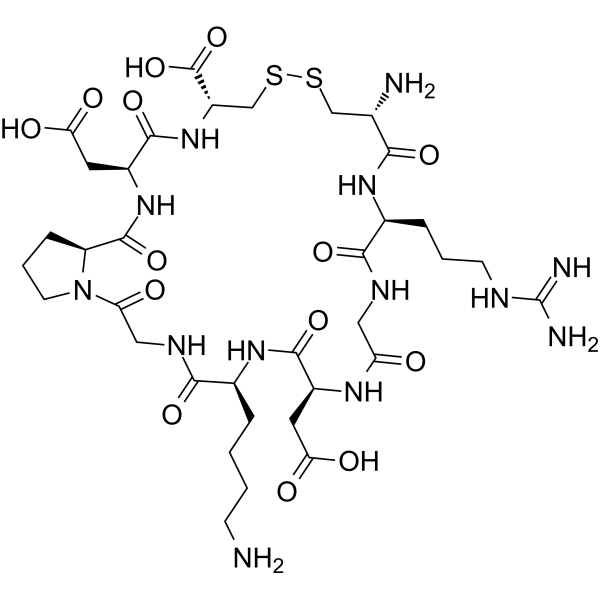
    c(CRGDKGPDC)

    Integrin Cancer
    iRGD peptide is a 9-amino acid cyclic peptide, triggers tissue penetration of agents by first binding to αv-integrins, then proteolytically cleaved in the tumor to produce CRGDK/R to interact with neuropilin-1, and has tumor-targeting and tumor-penetrating properties.
    iRGD peptide
  • HY-P9967

    BIIB037

    Amyloid-β Neurological Disease
    Aducanumab (BIIB037) is a human monoclonal antibody that selectively targets aggregated amyloid-beta (Aβ). Aducanumab shows blood-brain-barrier penetration, and can be used for Alzheimer's disease (AD) research .
    Aducanumab
  • HY-12599
    URMC-099
    5+ Cited Publications

    Mixed Lineage Kinase Autophagy Neurological Disease Cancer
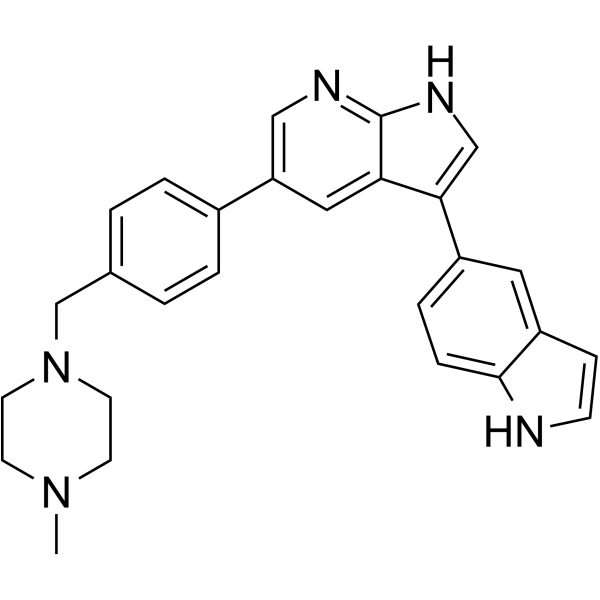
    URMC-099 is an orally bioavailable and potent mixed lineage kinase type 3 (MLK3) (IC50=14 nM) inhibitor with with excellent blood-brain barrier penetration properties.
    URMC-099
  • HY-W009326
    Laurocapram
    1 Publications Verification

    Environmental Pollutants Biochemical Assay Reagents Infection
    Laurocapram is a chemical penetration enhancer that increases the permeability of compounds through the skin and mucous membranes, thereby improving their local or systemic efficacy. Laurocapram improves the skin permeability of a variety of hydrophilic and lipophilic compounds .
    Laurocapram
  • HY-108463
    A-967079
    15+ Cited Publications

    TRP Channel Neurological Disease Inflammation/Immunology
    A-967079 is a selective TRPA1 receptor antagonist with IC50s of 67 nM and 289 nM at human and rat TRPA1 receptors, respectively, and has good penetration into the blood-brain barrier .
    A-967079
  • HY-175715

    Mitochondrial Metabolism Neurological Disease
    NRG1271 is an orally active mitochondrial permeability transition pore (mPTP) inhibitor with blood-brain barrier penetration. NRG1271 can be used for the study of Neurological Disease .
    NRG1271
  • HY-137207
    MK-28
    5+ Cited Publications

    PERK Neurological Disease
    MK-28 is a potent and selective PERK activator. MK-28 exhibits remarkable pharmacokinetic properties and high BBB penetration in mice .
    MK-28
  • HY-111406

    DE-117

    Prostaglandin Receptor Cardiovascular Disease Inflammation/Immunology
    Omidenepag isopropyl is a selective EP2 receptor agonist. Omidenepag isopropyl is converted to the active product Omidenepag during corneal penetration, and Omidenepag is a highly selective EP2 receptor agonist. Omidenepag isopropyl shows only weak affinity for EP1, EP2, and FP receptors. Omidenepag isopropyl is under development for the treatment of glaucoma as an intraocular pressure (IOP)-lowering agent.
    Omidenepag isopropyl
  • HY-12844
    Ro 64-6198
    1 Publications Verification

    Opioid Receptor Neurological Disease
    Ro 64-6198 is a potent, selective, nonpeptide, high-affinity, high cellular permeability and brain penetration N/OFQ receptor (NOP) agonist with an EC50 value of 25.6 nM. Ro 64-6198 is at least 100 times more selective for the NOP receptor over the classic opioid receptors. Ro 64-6198 can be used for stress and anxiety, addiction, neuropathic pain, cough, and anorexia .
    Ro 64-6198
  • HY-N7132

    L-Menthyl acetate

    Biochemical Assay Reagents Drug Derivative Others
    (-)-Menthyl acetate (L-Menthyl acetate) is a derivative of L-menthol and also a skin penetration enhancer for 5-aminolevulinic acid (ALA). (-)-Menthyl acetate exhibits strong ALA skin penetration-enhancing activity .
    (-)-Menthyl acetate
  • HY-130121

    OGA Neurological Disease
    MK-8719 is a highly potent and selective O-GlcNAcase (OGA) inhibitor (Ki=7.9 nM for hOGA) with excellent CNS penetration .
    MK-8719
  • HY-B0848
    Tricyclazole
    2 Publications Verification

    Environmental Pollutants Bacterial Infection Metabolic Disease
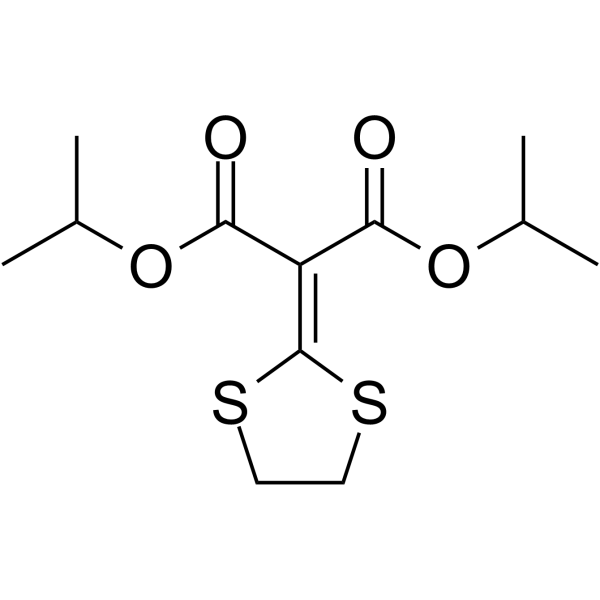
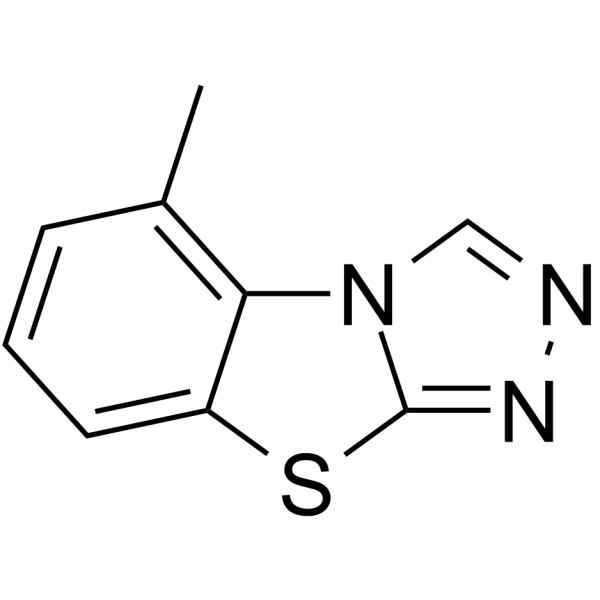
    Tricyclazole is a pentaketone melanin biosynthesis inhibitor and a unique fungicide for controlling rice blast. Tricyclazole alters the structure and function of fungal cell walls, reduces fungal pathogenicity and penetration, and causes dose-dependent liver damage in animals .
    Tricyclazole
  • HY-66015

    Interleukin Related Endocrinology
    Palmitoyl hexapeptide-12 is a bioactive peptide. Palmitoyl hexapeptide-12 reduces IL-6. Palmitoyl hexapeptide-12 has anti-aging effects. Palmitoyl hexapeptide-12 can be used in the research of photoaging and related aging skin problems .
    Palmitoyl hexapeptide-12
  • HY-116016

    L-DOPA ethyl ester; Levodopa ethyl ester

    Dopamine Receptor Drug Metabolite Neurological Disease
    Etilevodopa (L-Dopa ethyl ester), an ethyl-ester proagent of Levodopa, is rapidly hydrolyzed to Levodopa and ethanol by nonspecific esterases in the gastrointestinal tract. Etilevodopa is used for the treatment of Parkinson disease (PD). Levodopa is the direct precursor of dopamine and is a suitable proagent as it facilitates CNS penetration and delivers dopamine .
    Etilevodopa
  • HY-119649

    IKI220

    Environmental Pollutants Parasite Infection
    Flonicamid (IKI220) is a novel systemic insecticide with selective activity against hemipterous pests. The main insecticidal mechanism of flonicamid is starvation based on the inhibition of stylet penetration to plant tissues .
    Flonicamid
  • HY-164782

    HDAC Neurological Disease Metabolic Disease Cancer
    PT3 is a selective inhibitor of HDAC3 with an IC50 value of 0.25 μM. PT3 exhibits good brain penetration ability and bioavailability upon oral administration. PT3 can be used in the research of Alzheimer’s disease .
    PT3
  • HY-120124

    SUVN-G3031

    Histamine Receptor Neurological Disease
    Samelisant (SUVN-G3031) is a potent and selective histamine H3 receptor (H3R) inverse agonist with good brain penetration and oral bioavailability. Samelisant has a similar binding affinity towards human (hH3R; Ki=8.7 nM) and rat (rH3R;Ki=9.8 nM) H3R indicating no inter-species differences. Samelisant can be used for the research of sleep-related disorders .
    Samelisant
  • HY-145313

    Tau Protein Neurological Disease
    TTBK1-IN-2 (compound 29) is a potent Tau-Tubulin kinase (TTBK1) inhibitor with IC50s of 0.24 and 4.22 µM, respectively. TTBK1-IN-2 reveals good brain penetration in vivo and is able to reduce TDP-43 phosphorylation not only in cell cultures but also in the spinal cord of transgenic TDP-43 mice .
    TTBK1-IN-2
  • HY-148825

    iGluR Histamine Receptor Potassium Channel Cytochrome P450 Adrenergic Receptor Metabolic Disease Inflammation/Immunology Cancer
    NP10679 is a selective, pH dependent GluN2B subunit-specific N-methyl-D-aspartate (NMDA) receptor inhibitor with high oral bioavailability and good brain penetration. NP10679 inhibits GluN2B with IC50s of 23 and 142 nM at pH 6.9 and 7.6, respectively. NP10679 is a histamine H1 antagonist and a hERG channel inhibitor with IC50s of 73 and 620 nM, respectively. NP10679 is a reversible inhibitor of human liver CYP enzymes .
    NP10679
  • HY-108340

    mAChR Neurological Disease
    PF-06767832 is a potent muscarinic M1 selective positive allosteric modulator (PAM), with the EC50 of 60 nM. PF-06767832 has good brain penetration .
    PF-06767832
  • HY-101789

    Sodium Channel Neurological Disease
    Nav1.7-IN-3 is a selective, orally bioavailable voltage-gated sodium channel Nav1.7 inhibitor with an IC50 of 8 nM. Pain relief. Limited CNS penetration .
    Nav1.7-IN-3
  • HY-160410

    Drug Derivative Neurological Disease Inflammation/Immunology
    Ceramide 3B is a ceramide 3 lipid class with aggregation behavior. Ceramide 3B has a variety of physiological functions and can serve as a penetration enhancer and auxiliary emulsifier, playing an important role in barrier function stability .
    Ceramide 3B
  • HY-129060
    Flutrimazole
    1 Publications Verification

    Fungal Infection
    Flutrimazole is an imidazole antifungal with dual anti-inflammatory and antifungal activity. Flutrimazole shows scarce transdermal penetration. Flutrimazole has the advantageous in the research of topical fungal infections with an inflammatory component .
    Flutrimazole
  • HY-A0147A

    OPC-17116 hydrochloride; dl-Grepafloxacin hydrochloride

    Antibiotic Bacterial Infection
    Grepafloxacin (OPC-17116) hydrochloride is an oral actively fluoroquinolone antibiotic with potent activity against community-acquired respiratory pathogens including Streptococcus pneumonia. Grepafloxacin hydrochloride has high tissue penetration and a promising pharmacodynamic profile .
    Grepafloxacin hydrochloride
  • HY-101281

    mAChR Neurological Disease
    VU 6008667 is a selective negative allosteric modulator of M5 NAM with IC50s of 1.2 μM and 1.6 μM for human M5 and rat M5, respectively. High CNS penetration .
    VU 6008667
  • HY-116625

    GHSR Neurological Disease
    PF-04628935 (compound 10n) is a potent ghrelin receptor inverse agonist, with an IC50 of 4.6 nM. PF-04628935 exhibits oral bioavailability of 43% in rats and shows reasonable penetration into the brain. PF-04628935 can be used for stress and anxiety research .
    PF-04628935
  • HY-10096

    GSK-3 Neurological Disease
    TCS2002 (Compound 9b) is a highly selective, orally bioavailable and potent GSK-3β inhibitor with the IC50 of 35 nM. TCS2002 shows good pharmacokinetic profiles including favorable BBB penetration. TCS2002 can be used for the research of Alzheimer’s disease .
    TCS2002
  • HY-108460

    TRP Channel Neurological Disease
    A-784168 is a potent and orally active inhibitor of vanilloid receptor type 1 (TRPV1). Vanilloid receptor type 1 (TRPV1) is a ligand-gated nonselective cation channel that is considered to be an important integrator of various pain stimuli such as endogenous lipids, capsaicin, heat, and low pH. A-784168 has good CNS penetration .
    A-784168
  • HY-B2119

    Tauroglycocholic acid sodium salt

    Biochemical Assay Reagents Metabolic Disease
    Sodium tauroglycocholate (Tauroglycocholic acid sodium salt) is a multifunctional surfactant and penetration enhancer that can serve as a cholegraphic contrast agent. In organic solvents, Sodium tauroglycocholate embeds and stabilizes invertase by forming reverse micelles, and prolongs its active lifespan. In terms of transdermal absorption, Sodium tauroglycocholate effectively regulates the flux of aminophylline through snake slough by binding to keratin filaments, disrupting keratinocytes and altering lipid components of the stratum corneum. It exhibits rapid penetration characteristics without lag time at a concentration of 100 μg/mL. Sodium tauroglycocholate does not interfere with the hepatic uptake of Gd-EOB-DTPA by the bile acid transport system in rat hepatocytes .
    Sodium tauroglycocholate
  • HY-N12614

    SHP1 Phosphatase Metabolic Disease
    Diorcinol is a potent SHP1 inhibitor with an IC50 value of 0.96 μM. Diorcinol can be isolated from Aspergillus sydowii. Diorcinol has good blood-brain barrier penetration and can be used for diabetes research .
    Diorcinol
  • HY-164066

    Biochemical Assay Reagents Others
    Sodium Acetylated Hyaluronate is an acetylated hyaluronic acid derivative with anti-wrinkle and deep skin penetration properties, which can be used in skin aging research and cosmetic development .
    Sodium Acetylated Hyaluronate
  • HY-112809

    Syk Src LRRK2 GSK-3 JAK VEGFR Aurora Kinase Inflammation/Immunology
    GSK2646264 (Compound 44) is a potent and selective spleen tyrosine kinase (SYK) inhibitor with a pIC50 of 7.1. GSK2646264 also inhibits other kinases with pIC50 values of 5.4, 5.4, 5.3, 5, 4.5, <4.6 and <4.3 against LCK, LRRK2, GSK3β, JAK2, VEGFR2, Aurora B and Aurora A, respectively. GSK2646264 is penetrable into the epidermis and dermis of the skin .
    GSK2646264
  • HY-W278021

    Amyloid-β Others
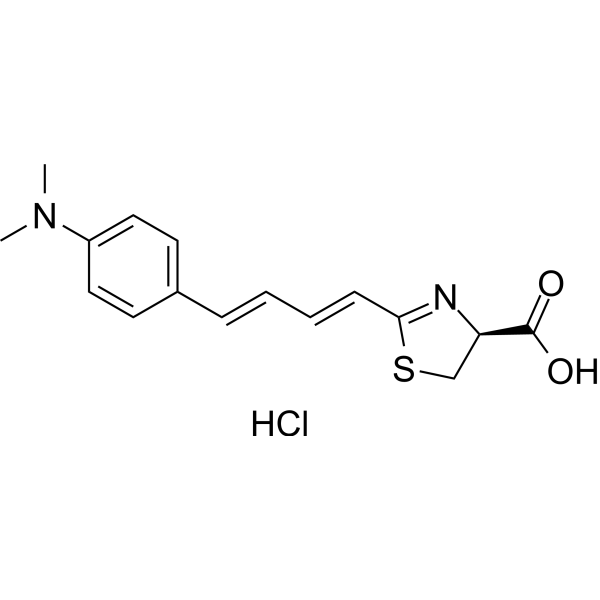
    BTA-1 is an uncharged derivative of thioflavin-T. BTA-1 has a high affinity for Aβ fibrils and shows very good brain penetration and clearance .
    BTA-1
  • HY-101281A

    mAChR Neurological Disease
    (Rac)-VU 6008667 is a selective negative allosteric modulator of muscarinic acetylcholine receptor subtype 5 (M5 NAM) (IC50=1.8 μM, pIC50= 5.75), has high CNS penetration .
    (Rac)-VU 6008667
  • HY-102032

    Adrenergic Receptor Endocrinology
    Butyryltimolol, an effective precursor of Timolol, improves the corneal penetration of Timolol . Butyryltimolol is a β-adrenergic blocker .
    Butyryltimolol
  • HY-139322

    Biochemical Assay Reagents Others
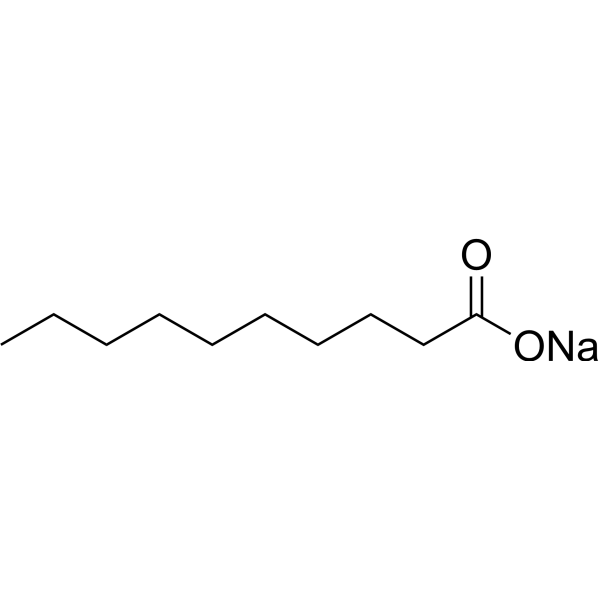
    PEG-8 laurate is a single chain surfactant. PEG-8 laurate reduces the skin barrier, and acts as a penetration enhancer. PEG-8 laurate can be used to synthesize elastic vesicles .
    PEG-8 laurate
  • HY-W250300

    Ethylene glycol monododecyl ether

    Biochemical Assay Reagents Others
    2-(Dodecyloxy) ethanol (Ethylene glycol monododecyl ether) is a nonionic ether monohydroxy C12 surfactant with a fragrance-like odor similar to jasmone and gardenia. 2-(Dodecyloxy) ethanol acts as a phase transition inducer and micelle-forming agent. 2-(Dodecyloxy) ethanol also serves as a skin penetration enhancer .
    2-(Dodecyloxy)ethanol
  • HY-116016A

    L-DOPA ethyl ester hydrochloride; Levodopa ethyl ester hydrochloride

    Dopamine Receptor Drug Metabolite Neurological Disease
    Etilevodopa (L-Dopa ethyl ester) hydrochloride, an ethyl-ester proagent of Levodopa, is rapidly hydrolyzed to Levodopa and ethanol by nonspecific esterases in the gastrointestinal tract. Etilevodopa hydrochloride is used for the treatment of Parkinson disease (PD). Levodopa is the direct precursor of dopamine and is a suitable proagent as it facilitates CNS penetration and delivers dopamine .
    Etilevodopa hydrochloride
  • HY-139300A

    HMPL-813 succinate

    EGFR Cancer
    Epitinib succinate is an orally active and selective epidermal growth factor receptor tyrosine kinase inhibitor (EGFR-TKI) designed for optimal brain penetration. Epitinib succinate can be used for the research of cancer . Epitinib (succinate) is a click chemistry reagent, it contains an Alkyne group and can undergo copper-catalyzed azide-alkyne cycloaddition (CuAAc) with molecules containing Azide groups.
    Epitinib succinate
  • HY-155672

    5-HT Receptor Neurological Disease
    JPC0323 is a dual 5-HT2C/5-HT2A receptor positive allosteric modulator. JPC0323 has on-target properties, acceptable plasma exposure and brain penetration. JPC0323 can be used for the research of neurological disease .
    JPC0323
  • HY-144389

    Cholinesterase (ChE) Amyloid-β Neurological Disease
    hAChE/Aβ1-42-IN-1 (Compound 16) is a potent inhibitor of hAChE and Aβ1-42 aggregation. hAChE/Aβ1-42-IN-1 shows acceptable relative safety upon hepG2 cell line and excellent BBB penetration with wide safety margin. hAChE/Aβ1-42-IN-1 has the potential for the research of Alzheimer disease (AD) .
    hAChE/Aβ1-42-IN-1
  • HY-105860

    BGG 492

    iGluR Neurological Disease
    Selurampanel (BGG 492) is an orally active and competitive AMPA receptor antagonist with an IC50 of 190 nM. Selurampanel has reasonable blood-brain barrier penetration. Selurampanel can be used for epilepsy research .
    Selurampanel
  • HY-A0147

    OPC-17116; dl-Grepafloxacin

    Antibiotic Bacterial Infection
    Grepafloxacin (OPC-17116) is an oral actively fluoroquinolone antibiotic with potent activity against community-acquired respiratory pathogens including Streptococcus pneumonia. Grepafloxacin has high tissue penetration and a promising pharmacodynamic profile .
    Grepafloxacin
  • HY-123410

    Cannabinoid Receptor Cancer
    KM-233 is a classical cannabinoid with good blood brain barrier penetration. KM-233 possesses a selective affinity for the CB2 receptors relative to THC. KM-233 is effective at reducing U87 glioma tumor burden, and can be used for glioma research .
    KM-233
  • HY-111141

    Free Fatty Acid Receptor Metabolic Disease
    AM-3189 is an orally active and selective GPR40 agonist with EC50 values in buffer solution and in 100% human serum of 33 nM and 10 μM respectively. AM-3189 shows no significant activity on GPR41 and GPR43, and no agonistic activity on PPAR-α, -δ, and -γ. AM-3189 enhances glucose-stimulated insulin secretion by activating GPR40 on pancreatic β cells. AM-3189 has extremely low penetration into the central nervous system and significantly reduces blood glucose levels in two humanized GPR40 mouse models. AM-3189 can be used for the study of type 2 diabetes .
    AM-3189
  • HY-156717

    Drug Isomer Inflammation/Immunology
    RE-33 is an analgesic compound. RE-33 has blood brain barrier penetration ability .
    RE-33
  • HY-167927

    CVL218

    PARP Cancer
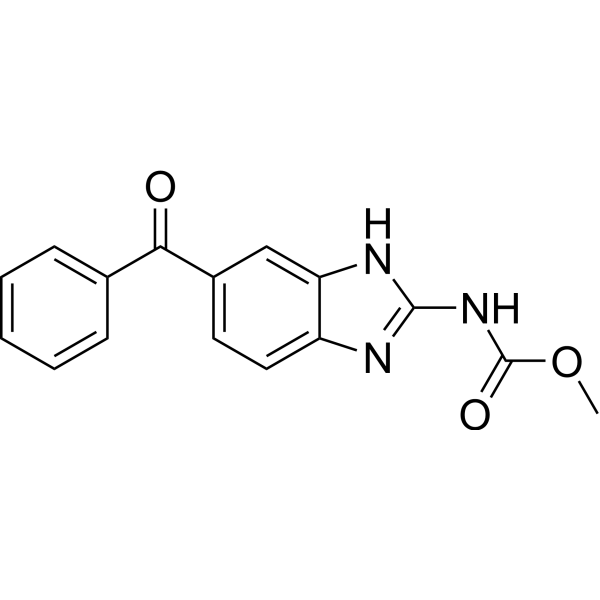
    Mefuparib (CVL218) is a poly ADP-ribose polymerase (PARP) inhibitor used in cancer research that exhibits potent brain penetration due to its high protein binding.
    Mefuparib
  • HY-B0250A

    BCH-189 salicylate

    HIV Reverse Transcriptase HBV Infection Cancer
    Lamivudine (BCH-189) salicylate is an orally active nucleoside reverse transcriptase inhibitor (NRTI). Lamivudine salicylate can inhibit HIV reverse transcriptase 1/2 and also the reverse transcriptase of hepatitis B virus. Lamivudine salicylate can penetrate the CNS .
    Lamivudine salicylate
  • HY-16617

    VU0424238

    mGluR Neurological Disease
    Auglurant (VU0424238) is a novel and selective mGlu5 antagonist with an IC50 value of 11 nM (rat) and an IC50 value of 14 nM (human). Auglurant (VU0424238) has an acceptable CNS penetration .
    Auglurant

Inquiry Online

Your information is safe with us. * Required Fields.

Salutation


Country or Region *

Applicant Name *


Organization Name *

Department *


Email Address *


Product Name *

Cat. No.


Requested quantity *

Phone Number *


Remarks

Inquiry Online

Inquiry Information

Product Name:
Cat. No.:
Quantity:
MCE Japan Authorized Agent:

