


1. Search Result
Search Result
Results for "

primary Raynaud's phenomenon patients

" in MedChemExpress (MCE) Product Catalog:

1612

Inhibitors & Agonists

30

Screening Libraries

89

Fluorescent Dyes

173

Biochemical Assay Reagents

99

Peptides

34

MCE Kits

81

Inhibitory Antibodies

198

Natural
Products

7

Recombinant Proteins

81

Isotope-Labeled Compounds

8

Antibodies

23

Click Chemistry

38

Oligonucleotides

3

GMP Molecules

Cat. No. Product Name Target Research Areas Chemical Structure
  • HY-109120
    Odevixibat
    4 Publications Verification

    A4250

    Apical Sodium-Dependent Bile Acid Transporter Metabolic Disease
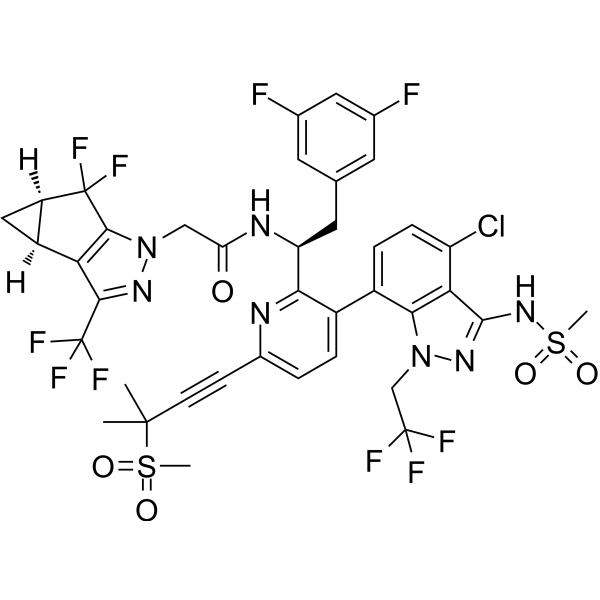
    Odevixibat (A4250) is a selective and orally active ileal apical sodium-dependent bile acid transporter (ASBT) inhibitor. Odevixibat decreases cholestatic liver and bile duct injury in mice model. Odevixibat has the potential for the treatment of primary biliary cirrhosis .
    Odevixibat
  • HY-126793

    DCFH2-DA

    Fluorescent Dye Reactive Oxygen Species (ROS) Others
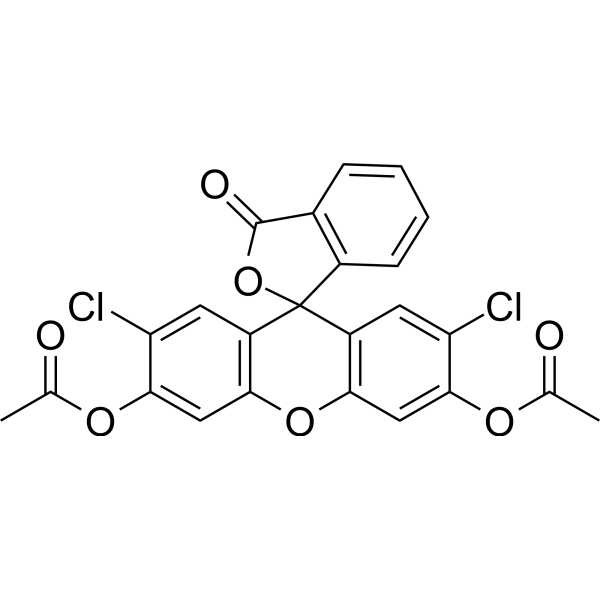
    2′,7′-Dichlorofluorescein diacetate (DCFH2-DA) is a cell-permeable fluorescent probe. 2′,7′-Dichlorofluorescein diacetate can be used to detect the generation of reactive oxygen intermediates and for assessing the overall oxidative stress in toxicological phenomenon .
    2′,7′-Dichlorofluorescein diacetate
  • HY-116374
    Glycolithocholic acid
    2 Publications Verification

    Lithocholylglycine

    Endogenous Metabolite Inflammation/Immunology
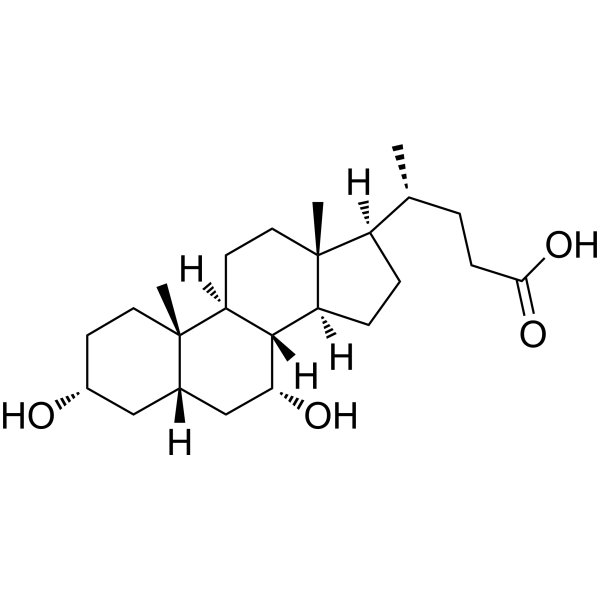
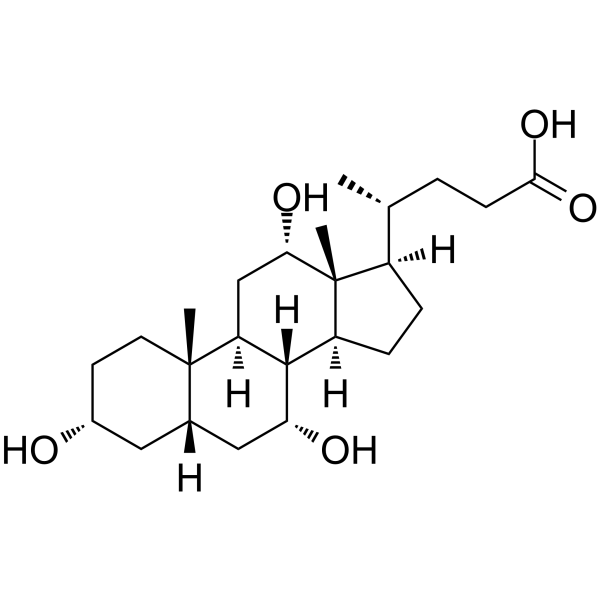
    Glycolithocholic acid (Lithocholylglycine), an endogenous metabolite, is a glycine-conjugated secondary bile acid. Glycolithocholic acid can be used to diagnose ulcerative colitis (UC), non-alcoholic steatohepatitis (NASH) and primary sclerosing cholangitis (PSC) .
    Glycolithocholic acid
  • HY-117695
    AQC
    5+ Cited Publications

    6-Aminoquinolyl-N-hydroxysccinimidyl carbamate

    Fluorescent Dye Others
    AQC (6-Aminoquinolyl-N-hydroxysccinimidyl carbamate) is a reagent used for amino acid or protein sequence analysis by HPLC with fluorescence detection. AQC reacts with primary and secondary amino acids to yield fluorescent derivates, allowing amino acid detection at under-picomolar levels .
    AQC
  • HY-P0265A
    β-Amyloid (1-40) (human) TFA
    5+ Cited Publications

    Amyloid β-Peptide (1-40) (human) TFA; Aβ40 (human) TFA; Aβ(1-40) (human) TFA

    Amyloid-β Neurological Disease
    β-Amyloid (1-40) TFA is a primary protein in plaques found in the brains of patients with Alzheimer's disease .
    β-Amyloid (1-40) (human) TFA
  • HY-173158

    PROTACs Histone Acetyltransferase Cancer
    AUR1545 is a selective KAT2A/KAT2B ((GCN5/PCAF)) PROTAC degrader that induces monocyte differentiation and inhibits the growth of acute myeloid leukemia cells. AUR1545 inhibits cell growth, induces epithelial differentiation and suppresses tumor growth in small cell lung cancer models. AUR1545 inhibits cell growth and induces differentiation in neuroendocrine prostate cancer cells and primary patient-derived organoids. AUR1545 is applicable to research related to acute myeloid leukemia, small cell lung cancer and neuroendocrine prostate cancer .
    AUR1545
  • HY-130603
    DCZ0415
    5 Publications Verification

    NF-κB Apoptosis Cancer
    DCZ0415, a potent TRIP13 inhibitor, impairs nonhomologous end joining repair and inhibits NF-κB activity. DCZ0415 induces anti-myeloma activity in vitro, in vivo, and in primary cells derived from drug-resistant myeloma patients .
    DCZ0415
  • HY-16643
    Linerixibat
    10+ Cited Publications

    GSK2330672

    Apical Sodium-Dependent Bile Acid Transporter Infection Metabolic Disease Inflammation/Immunology
    Linerixibat (GSK2330672) is a highly potent, nonabsorbable and orally active apical sodium-dependent bile acid transporter (ASBT) inhibitor with an IC50 of 42 nM human ASBT. Linerixibat can be used as lipid-lowering agent. Linerixibat has the potential for type 2 diabetes and Primary Biliary Cholangitis treatment .
    Linerixibat
  • HY-115433
    α-Muricholic acid
    1 Publications Verification

    Endogenous Metabolite Metabolic Disease Endocrinology
    α-Muricholic acid is the most abundant primary bile acid in rodents .
    α-Muricholic acid
  • HY-W130610

    Liposome Akt mTOR Others
    Stearamide is a primary fatty acid amide. Stearamide displays cytotoxic and ichthytoxic activity .
    Stearamide
  • HY-13680
    Meisoindigo
    2 Publications Verification

    Dian III; N-Methylisoindigotin; Natura-α

    Apoptosis Cancer
    Meisoindigo (Dian III), a derivative of Indirubin (HY-N0117), halts the cell cycle at the G0/G1 phase and induces apoptosis in primary acute myeloid leukemia (AML) cells. Meisoindigo exhibits high antitumor activity .
    Meisoindigo
  • HY-P0265C

    Amyloid-β Neurological Disease
    β-Amyloid (1-40), HFIP-treated is a β-Amyloid (1-40) (HY-P0265A) treated with HFIP. β-Amyloid (1-40) is a primary protein in plaques found in the brains of patients with Alzheimer's disease .
    β-Amyloid (1-40), HFIP-treated TFA
  • HY-P9983

    SGN-33; HuM-195; GLK-33 Antibody

    Transmembrane Glycoprotein Radionuclide-Drug Conjugates (RDCs) Inflammation/Immunology
    Lintuzumab (HUM-195) is an anti-CD33 humanized monoclonal antibody. Lintuzumab reduces the production of TNFα-induced pro-inflammatory cytokines and chemokines by AML cells. Lintuzumab promotes tumor cell killing through antibody-dependent cellular cytotoxicity (ADCC) and phagocytosis (ADCP) activities against MDR and MDR+ AML cell lines and primary AML patient samples. Lintuzumab enhances survival and reduces tumor burden in mice .
    Lintuzumab
  • HY-W087960

    Drug Intermediate Others
    3-Aminopentane is a monoalkylamine compound containing a primary aliphatic amine group. 3-Aminopentane is a building block in the chemical synthesis .
    3-Aminopentane
  • HY-138207

    Mitochondrial Metabolism Drug Metabolite Inflammation/Immunology
    N-Oleoyl-L-phenylalanine is a long-chain N-acyl-L-phenylalanine and also a mitochondrial uncoupler. N-Oleoyl-L-phenylalanine uncouples UCP1-independent respiration in mitochondria, thereby helping to regulate glucose homeostasis. As an endogenous metabolite, the level of N-Oleoyl-L-phenylalanine increases in patients with ulcerative colitis after a high-fat diet. N-Oleoyl-L-phenylalanine can be used in studies related to ulcerative colitis .
    N-Oleoyl-L-phenylalanine
  • HY-153450

    Protein Arginine Deiminase Cancer
    JBI-589 is a non-covalent PAD4 isoform-selective inhibitor with oral bioavailability. JBI-589 reduces CXCR2 expression and blocks neutrophil chemotaxis. JBI-589 reduces primary tumor and metastases, and enhances the anti-tumor effect of checkpoint inhibitors. JBI-589 can be used in cancer research .
    JBI-589
  • HY-19694

    Insulin Receptor Endocrinology
    BRD7552, a potent PDX1 transcription factor inducer, upregulates PDX1 expression in both primary human islets and ductal cells, and induces epigenetic changes in the PDX1 promoter consistent with transcriptional activation. BRD7552 increases insulin expression. PDX1 is a key transcription factor involved in pancreas development and β cell function .
    BRD7552
  • HY-177022

    HBV Infection
    ALG-001075, a capsid assembly modulator (CAM), is an orally active HBV inhibitor. ALG-001075 effectively blocks not only HBV DNA production but also extracellular HBsAg/HBeAg and intracellular HBV RNA in primary human hepatocytes. ALG-001075 shows pronounced reductions of circulating HBV DNA in the AAV-HBV mouse model. ALG-001075 can be used for the study of Chronic hepatitis B (CHB) .
    ALG-001075
  • HY-160719

    Peptide-Drug Conjugates (PDCs) Inflammation/Immunology
    NHS-activated 2-octynoic acid-BSA is an immunogen used to establish a mouse model of primary biliary cholangitis (PBC). When used in combination with Complete Freund's Adjuvant (HY-153808), NHS-activated 2-octynoic acid-BSA stimulates the body's immune system, which recognizes it as a foreign antigen and triggers an immune response against autologous biliary epithelial cells. This leads to the production of anti-PDC-E2 antibodies, causing bile duct damage and inflammation. NHS-activated 2-octynoic acid-BSA is promising for use in primary biliary cholangitis research .
    2-octynoic acid-BSA
  • HY-B1309

    AMAP

    Drug Derivative Mitochondrial Metabolism Infection Cancer
    Metacetamol (AMAP) is an analog of Acetaminophen (HY-66005). Metacetamol induces dose-dependent necrosis in primary hepatocytes via glutathione depletion, mitochondrial damage, and formation of mitochondrial protein adducts. Metacetamol derivatives act as anticancer and antibacterial agents. Metacetamol can be used in studies related to breast cancer, bacterial infections, and fungal infections (candidiasis) .
    Metacetamol
  • HY-W011654

    4-Aminophenyl-beta-D-galactopyranoside, 98%

    Glycosidase Inflammation/Immunology Cancer
    4-Aminophenyl-β-D-galactopyranoside, 98% is a highly efficient substrate for β-galactosidase. It is specifically hydrolyzed by this enzyme to release galactose and electroactive p-aminophenol. 4-Aminophenyl-β-D-galactopyranoside, 98% is widely used in colorimetric and electrochemical assays for detecting β-galactosidase activity and determining enzyme kinetics, such as in biosensing fields including cellular senescence, pathogen and contaminant detection. In addition, since β-galactosidase is often overexpressed in primary ovarian cancer, 4-Aminophenyl-β-D-galactopyranoside, 98% can also be applied to related research on primary ovarian cancer .
    4-Aminophenyl-β-D-galactopyranoside, 98%
  • HY-N1867

    PPAR Metabolic Disease
    trans-Cinnamyl alcohol is a trans-isomer of Cinnamyl alcohol. Cinnamyl Alcohol is an active component from chestnut flower, inhibits increased PPARγ expression, with anti-obesity activity. trans-Cinnamyl alcohol, belongs to the class of organic compounds known as cinnamyl alcohols, is a primary metabolite .
    trans-Cinnamyl alcohol
  • HY-B1170

    3,5,5-Trimethylcyclohexyl mandelate

    Calcium Channel Cardiovascular Disease
    Cyclandelate is a vasodilator that can be used in the study of claudication, arteriosclerosis, Raynaud's disease, nocturnal leg cramps, and migraines.
    Cyclandelate
  • HY-P4882A

    Amyloid-β Neurological Disease
    (Pyr3)-Amyloid β-Protein (3-42) TFA is the predominant amyloid β-peptide structure deposited in human brain of Alzheimer's disease and Down's syndrome patients. (Pyr3)-Amyloid β-Protein (3-42) TFA is suggested to accumulate in the brain and to trigger the formation of insoluble amyloid β-peptide deposits .
    (Pyr3)-Amyloid β-Protein (3-42) TFA
  • HY-134338

    Environmental Pollutants Parasite Others
    Ipflufenoquin is an insecticide with the potential to control primary infection with apple scab. Ipflufenoquin should be applied between half an inch of green and fruit set .
    Ipflufenoquin
  • HY-116374A
    Glycolithocholic acid sodium
    2 Publications Verification

    Lithocholylglycine sodium

    Endogenous Metabolite Metabolic Disease
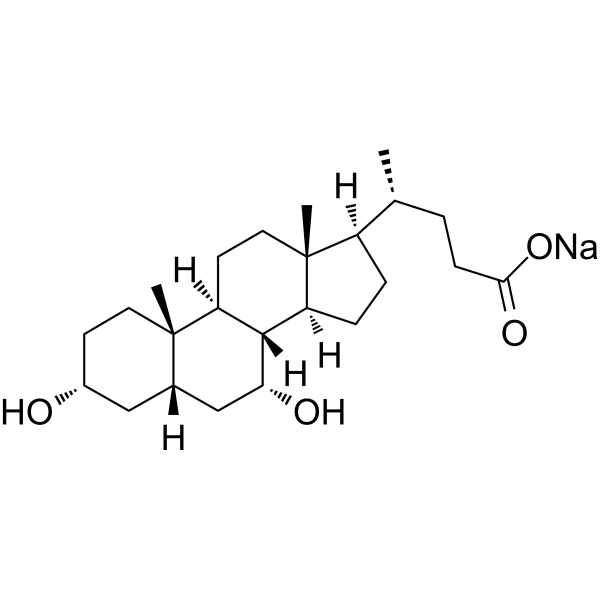
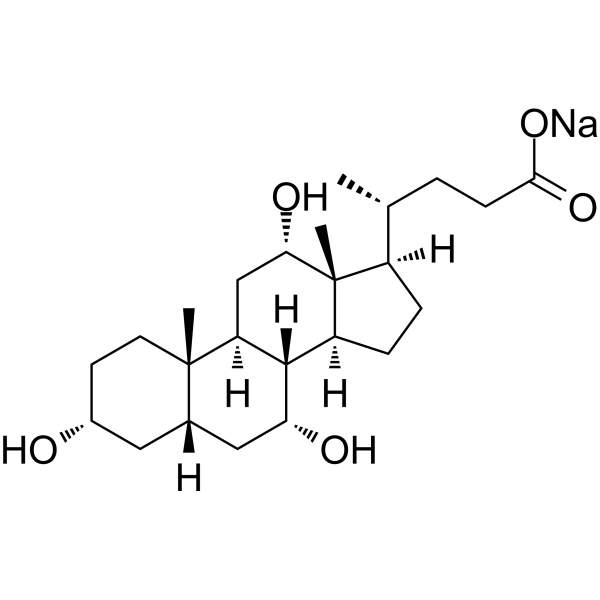
    Glycolithocholic acid (Lithocholylglycine) sodium is the sodium salt of Glycolithocholic acid. Glycolithocholic acid is a glycine-conjugated secondary bile acid. Glycolithocholic acid can be used to diagnose ulcerative colitis (UC), non-alcoholic steatohepatitis (NASH) and primary sclerosing cholangitis (PSC) .
    Glycolithocholic acid sodium
  • HY-W010380

    AMPK Apoptosis Metabolic Disease
    Methyl succinate is a mitochondrial complex II substrate. Methyl succinate can bypass the inhibition of complex I by Metformin (HY-B0627), restore mitochondrial electron transfer, and reduce AMPK phosphorylation. Methyl succinate is capable of protecting MIN6 β-cells and primary rat β-cells from biguanide-induced toxicity and apoptosis in vitro. Methyl succinate can be used in the research of diseases such as diabetes mellitus .
    Methyl succinate
  • HY-121660

    Drug Derivative Cardiovascular Disease
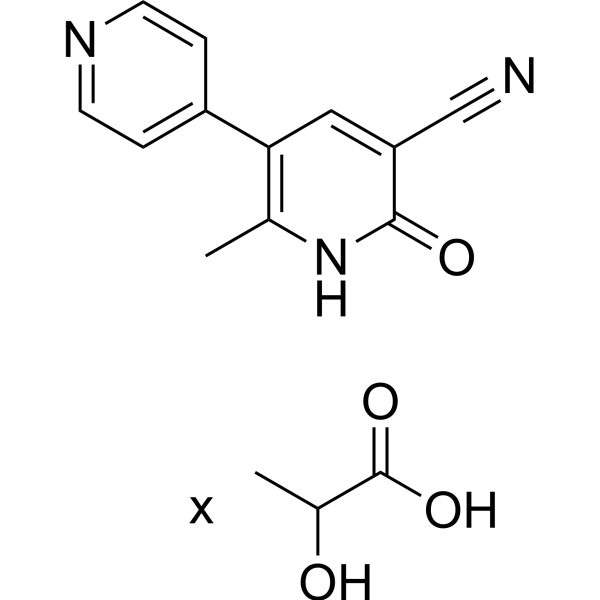
    Hexyl nicotinate is a lipid-soluble nicotinic acid ester and cutaneous vasodilator. Hexyl nicotinate induces localized cutaneous vasodilation and increases blood flow. Hexyl nicotinate can be used for the research of Raynaud's phenomenon .
    Hexyl nicotinate
  • HY-D2776

    Biochemical Assay Reagents Others
    Primary antibody and secondary antibody eluent, specially for mIHC experiments is an eluent used for mIHC (multiple immunohistochemistry).
    Primary antibody and secondary antibody eluent, specially for mIHC experiments
  • HY-106007

    INO-8875

    Adenosine Receptor Inflammation/Immunology
    Trabodenoson (INO-8875), an adenosine mimetic, is a highly selective Adenosine A1 receptor agonist. Trabodenoson (INO-8875) is used in the study for Primary Open-Angle Glaucoma .
    Trabodenoson
  • HY-137397

    8-OH-EFV

    Apoptosis JNK Cancer
    8-Hydroxyefavirenz (8-OH-EFV) is a primary metabolite of (HY-10572). 8-Hydroxyefavirenz induces apoptosis via a JNK- and BimEL-dependent mechanism in primary human hepatocytes. 8-Hydroxyefavirenz can be used in research of cancer . 8-Hydroxyefavirenz is a click chemistry reagent, it contains an Alkyne group and can undergo copper-catalyzed azide-alkyne cycloaddition (CuAAc) with molecules containing Azide groups.
    8-Hydroxyefavirenz
  • HY-144670
    ALDH3A1-IN-1
    1 Publications Verification

    Aldehyde Dehydrogenase (ALDH) Cancer
    ALDH3A1-IN-1 (Compound 18) is a potent inhibitor of ALDH3A1 with an IC50 of 1.61 μM. ALDH3A1-IN-1 is more potent than DEAB against patient-derived primary prostate tumor epithelial cells, as single agents or in combination research with docetaxel .
    ALDH3A1-IN-1
  • HY-149056

    MAP4K Interleukin Related Cancer
    GNE-6893 is an orally active, selective HPK1 inhibitor with a Ki < 0.02 nM. GNE-6893 enhances T cell receptor signaling in primary human T cells. GNE-6893 increases IL2 production in stimulated primary human T cells. GNE-6893 can be used for the research of chronic refractory cancers .
    GNE-6893
  • HY-160610A

    Drug Derivative Others
    Carbamoyl phosphate dilithium salt is an antisickling agent and plays a significant role in the urea cycle. Carbamoyl phosphate dilithium salt carbamylates the amino-terminal valine residues of hemoglobin S in erythrocytes, which interferes with the sickling phenomenon. Carbamoyl phosphate dilithium salt exhibits toxicity due to the lithium cation .
    Carbamoyl phosphate dilithium salt
  • HY-DY1070

    Fluorescent Dye Others
    AQC (6-Aminoquinolyl-N-hydroxysccinimidyl carbamate) (solution) is a reagent used for amino acid or protein sequence analysis by HPLC with fluorescence detection. AQC reacts with primary and secondary amino acids to yield fluorescent derivates, allowing amino acid detection at under-picomolar levels .
    Solvent and concentration: DMSO: 10 mM
    The 1 mL volume is defined as the base specification. All larger sizes correspond to incremental volumes of this base.
    AQC (solution)
  • HY-W856375A

    Fluorescent Dye Others
    BSPOTPE is the mixture of (E)-BSPOTPE (HY-W856375) and (Z)-BSPOTPE. BSPOTPE binds Human serum albumin (HSA) (HY-P1956), exhibits aggregation-induced emission (AIE) phenomenon. BSPOTPE shows selectivity for albumin (such as HSA and BSA), but has no obvious fluorescence response to other proteins and DNA. BSPOTPE can be used as fluorescent probe for HSA .
    BSPOTPE
  • HY-131479

    Drug Metabolite Neurological Disease
    Threo-dihydrobupropion hydrochloride is a primary metabolite of Bupropion. Threo-dihydrobupropion hydrochloride can be used for the research of the depression, behavioral, and biochemistry .
    Threo-dihydrobupropion hydrochloride
  • HY-133994

    Drug Intermediate Others
    Octakis-(6-bromo-6-deoxy)-γ-cyclodextrin is a perbrominated γ-cyclodextrin at the primary side. Octakis-(6-bromo-6-deoxy)-γ-cyclodextrin is also a commonly used intermediate in the modification of cyclodextrin .
    Octakis-(6-bromo-6-deoxy)-γ-cyclodextrin
  • HY-139070A

    Endogenous Metabolite Metabolic Disease
    D-Glyceric acid sodium is the sodium form of D-Glyceric acid (HY-139070A). D-Glyceric acid is an endogenous metabolite present in urine that can be used for the research of primary hyperoxaluria type I and glutaric acidemia type 2 .
    D-Glyceric acid sodium
  • HY-D1692

    Fluorescent Dye Others
    BODIPY 650/665 NHS ester is bright, far-red fluorescent dye that can be used to label the primary amines (R-NH2) of proteins, amine-modified oligonucleotides, and other amine-containing molecules . Ex / Em = 646 / 660 nm
    BODIPY 650/665 NHS ester
  • HY-D1372

    Fluorescent Dye Others
    Cyanine3 amine hydrochloride, an analog of Cyanine3 amine, is a potent green fluorescent dye. Cyanine3 amine hydrochloride has the primary amine group and is covalently coupled with reactive groups such as NHS esters, carboxy groups (after carbodiimide activation), and epoxides. (λex=555 nm, λem=570 nm) .
    Cyanine3 amine hydrochloride
  • HY-D1372A

    Fluorescent Dye Others
    Cyanine3 amine (TFA), an analog of Cyanine3 amine, is a potent green fluorescent dye. Cyanine3 amine (TFA) has the primary amine group and is covalently coupled with reactive groups such as NHS esters, carboxy groups (after carbodiimide activation), and epoxides. (λex=555 nm, λem=570 nm) .
    Cyanine3 amine TFA
  • HY-N15352

    Liposome Neurological Disease
    C20 Sphingomyelin (d18:1/20:1) is a sphingomyelin substance. The level of C20 Sphingomyelin (d18:1/20:1) is associated with amyotrophic lateral sclerosis and primary lateral sclerosis .
    C20 Sphingomyelin (d18:1/20:1)
  • HY-P1258
    PSI
    2 Publications Verification

    Proteasome Inhibitor 1; Z-Ile-Glu(OtBu)-Ala-Leu-CHO

    Proteasome Infection Cancer
    PSI (Proteasome Inhibitor 1) is a potent proteasome inhibitor. PSI inhibits the proliferation of primary effusion lymphoma (PEL) cells. PSI has the potential for the research of Kaposi’s sarcoma-associated herpesvirus (KSHV) infection and KSHV-associated lymphomas .
    PSI
  • HY-170446

    MyD88 Inflammation/Immunology
    MyD88-IN-2 (compound A5S) is a Myeloid differentiation primary response 88 (MyD88) inhibitor with the Kd of 15 μM. MyD88-IN-2 shows protective effects on LPS (HY-D1056)-induced and sepsis-induced ALI mouse models .
    MyD88-IN-2
  • HY-W767164

    Biochemical Assay Reagents Cardiovascular Disease
    Deferiprone O-β-D-glucuronide sodium is a novel orally active iron chelator. Deferiprone O-β-D-glucuronide sodium can be used to investigate its ability to reduce iron burden in patients with β-thalassemia .
    Deferiprone O-β-D-glucuronide sodium
  • HY-P5309

    Biochemical Assay Reagents Inflammation/Immunology
    IgA1 Peptide GN5 is a synthetic glycopeptide and can be used for detection of gender difference and epitope specificity of IgG antibody activity against IgA1 hinge portion in IgA nephropathy patients .
    IgA1 Peptide GN5
  • HY-P4882

    Amyloid-β Neurological Disease
    (Pyr3)-Amyloid β-Protein (3-42) is the predominant amyloid β-peptide structure deposited in human brain of Alzheimer's disease and Down's syndrome patients. (Pyr3)-Amyloid β-Protein (3-42) is suggested to accumulate in the brain and to trigger the formation of insoluble amyloid β-peptide deposits .
    (Pyr3)-Amyloid β-Protein (3-42)
  • HY-175212

    PDGFR Cancer
    PDGFRA-IN-1 (Compound 4p) is a Platelet-derived growth factor receptor A (PDGFRA) inhibitor with an IC50 of 1.25  μM. PDGFRA-IN-1 has a significant anticancer activity and potently kills cancer cells including primary patient-derived glioma cells .
    PDGFRA-IN-1
  • HY-A0178

    AY 56012

    Histamine Receptor Endogenous Metabolite Inflammation/Immunology
    Isothipendyl (AY 56012), an azaphenothiazine derivative, is a potent histamine 1 (H1) receptor antagonist. Isothipendyl is a primary metabolite .
    Isothipendyl

Inquiry Online

Your information is safe with us. * Required Fields.

Salutation


Country or Region *

Applicant Name *


Organization Name *

Department *


Email Address *


Product Name *

Cat. No.


Requested quantity *

Phone Number *


Remarks

Inquiry Online

Inquiry Information

Product Name:
Cat. No.:
Quantity:
MCE Japan Authorized Agent:

