31 Results for "

primary mouse hepatocytes

" in MedChemExpress (MCE) Product Catalog:
Products (31)

31 Results for "primary mouse hepatocytes" in MCE Product Catalog:

2
2 Cited Publications
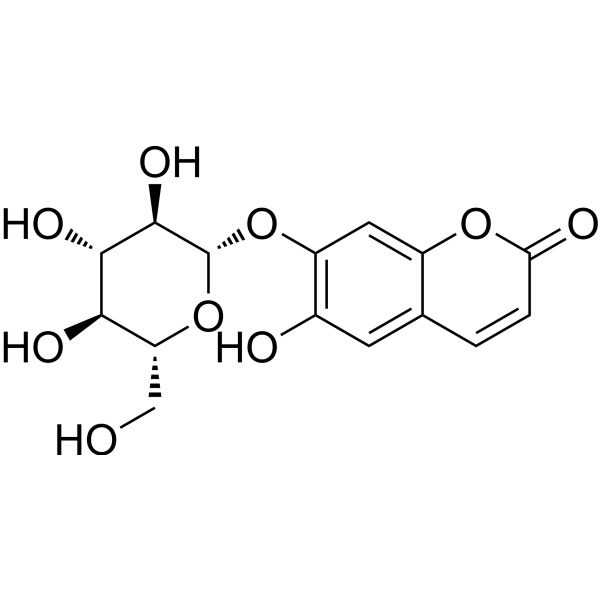
Cat. No.: HY-N8599
CAS No.: 531-58-8
Cichoriin is an orally active coumarin glycoside with broad biological activities. Cichoriin exhibits inhibitory activities against α-amylase, α-glucosidase, pancreatic lipase and DPP-IV, with IC50 values of 5.76, 2.94, 16.83 and 9.16 μg/mL, respectively. Cichoriin significantly improves metabolic dysfunction-associated steatohepatitis (MASH) in mice by activating the AMPK signaling pathway. Cichoriin upregulates PPAR-γ in adipose tissue and alleviates obesity and associated cardiorenal injury in rats. Cichoriin blocks monosodium urate crystal-induced activation of the NLRP3 inflammasome and cell pyroptosis by inhibiting P2Y14R (IC50 = 8.47 nM). In silico virtual screening reveals that Cichoriin has a strong binding affinity for SARS-CoV-2 .
loading...
    loading...
2
2 Cited Publications
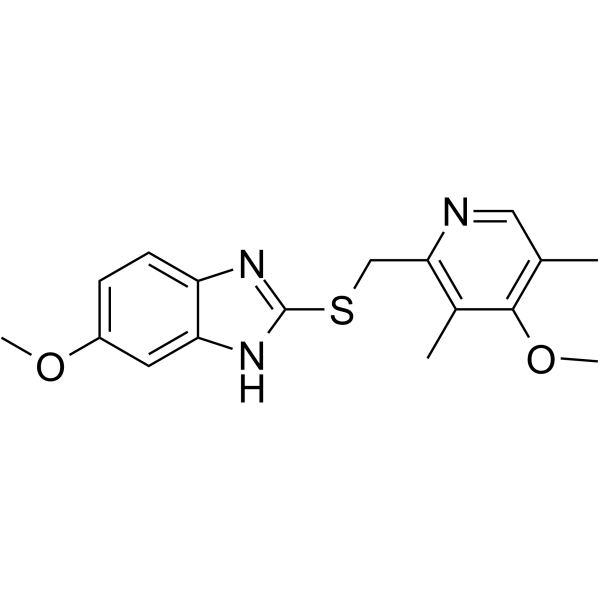
Cat. No.: HY-G0006
CAS No.: 73590-85-9
Synonyms: Ufiprazole
Omeprazole sulfide (Ufiprazole) is a metabolic degradation product of Omeprazole (HY-B0113). Omeprazole sulfide acts as a modulator of AhR. Omeprazole sulfide in cells with low CYP3A4 expression, functions as an AhR antagonist; however, in cells with high CYP3A4 expression, it is rapidly metabolized to Omeprazole, thereby acting as an AhR agonist. Omeprazole sulfide exhibits antibacterial activity when conjugated with silver nanoparticles (AgNPs). Omeprazole sulfide can be used in research on acid suppression and bacterial infections .
loading...
    loading...
2
2 Cited Publications
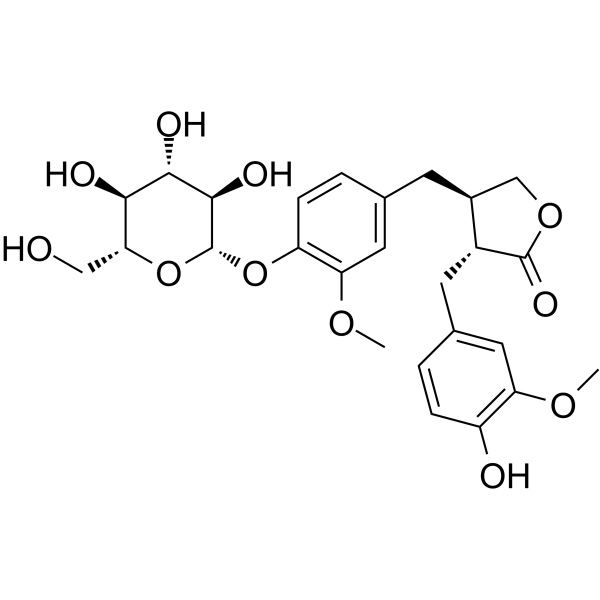
Cat. No.: HY-N8107
CAS No.: 34446-06-5
Matairesinol monoglucoside is a STING activator. Matairesinol monoglucoside modulates the STING-TBK1-IRF3 signaling axis, promotes STING transcriptional expression, increases TBK1 and IRF3 phosphorylation. Matairesinol monoglucoside induces IFN-α and IFN-β production, reduces HBV DNA, HBsAg, and HBeAg expression. Matairesinol monoglucoside can be used for the research of hepatitis b virus (hbv) infection .
loading...
    loading...
Cat. No.: HY-W017982
CAS No.: 55965-84-9
Synonyms: CMI/MI
CMIT/MIT (14.5% in water) (CMI/MI) is a mixture of CMIT and MIT, and is also a preservative and skin sensitizer. CMIT/MIT (14.5% in water) increases the levels of phosphorylated ERK1/2, p38, JNK1/2, p53, p21 and Bax, decreases the level of Bcl-2, and activates the Nrf-2/HO-1 signaling pathway. CMIT/MIT (14.5% in water) increases LDH release and lipid peroxidation levels, impairs antioxidant defense capacity, promotes pro-inflammatory cytokine release, induces apoptosis, triggers cell cycle arrest, exhibits neurotoxicity in neuroblastoma cells, and causes dysregulation of Th2/Th17 immune responses. CMIT/MIT (14.5% in water) can be used in studies related to allergy, atopic dermatitis and lung injury .
loading...
    loading...
Cat. No.: HY-159078
CAS No.: 2607139-80-8
Purity:  98.42%
Target:  

DNA/RNA Synthesis

Research Areas:  

Cancer

PolQi1 is a selective inhibitor targeting the Polθ domain of DNA polymerase. PolQi1 inhibits the Polθ-mediated microhomology end joining (TMEJ/alt-EJ) pathway, reducing insertion/deletion (Indels) and imprecise editing events during DNA repair. PolQi1 can enhance the efficiency and accuracy of homology-directed repair (HDR) or Prime editing, and reduce off-target effects; and in combination with DNA-PK inhibitor AZD-7648 (HY-111783), exert efficient genome editing capabilities with dual pathway regulation. PolQi1 can be mainly used in gene editing research (such as CRISPR-Cas9 or Prime editing system optimization) to improve the precision editing efficiency of difficult-to-edit cells (such as primary hepatocytes and mouse embryos) .
loading...
    loading...
Cat. No.: HY-177022
CAS No.: 2495324-66-6
Target:  

HBV

Research Areas:  

Infection

ALG-001075, a capsid assembly modulator (CAM), is an orally active HBV inhibitor. ALG-001075 effectively blocks not only HBV DNA production but also extracellular HBsAg/HBeAg and intracellular HBV RNA in primary human hepatocytes. ALG-001075 shows pronounced reductions of circulating HBV DNA in the AAV-HBV mouse model. ALG-001075 can be used for the study of Chronic hepatitis B (CHB) .
loading...
    loading...
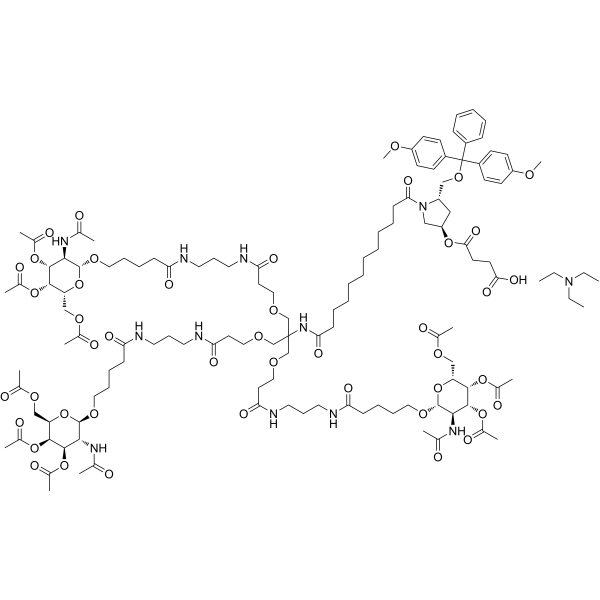
Cat. No.: HY-147012
CAS No.: 1159408-62-4
Purity:  ≥97.0%
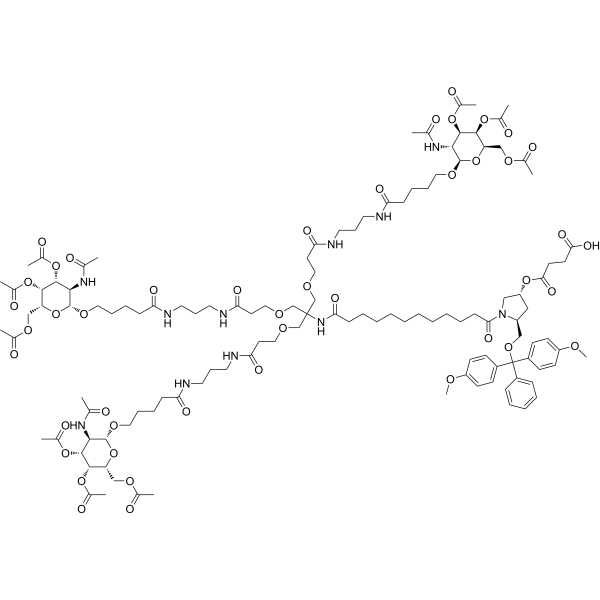
GalNAc-L96 is a conjugate of GalNAc and its ligand L96. When conjugated with the A-rich HCV sequence (H12), GalNAc-L96 binds potently to ASGPR, with a Ki value of 10.4 nM. GalNAc-L96 promotes siRNA delivery to hepatocytes .
loading...
    loading...
Cat. No.: HY-B1309
CAS No.: 621-42-1
Synonyms: AMAP
Metacetamol (AMAP) is an analog of Acetaminophen (HY-66005). Metacetamol induces dose-dependent necrosis in primary hepatocytes via glutathione depletion, mitochondrial damage, and formation of mitochondrial protein adducts. Metacetamol derivatives act as anticancer and antibacterial agents. Metacetamol can be used in studies related to breast cancer, bacterial infections, and fungal infections (candidiasis) .
loading...
    loading...
Cat. No.: HY-110390
CAS No.: 263890-70-6
Purity:  99.61%
GR148672X is an inhibitor of carboxylesterase 1 (CES1) and hepatic microsomal triglyceride hydrolase (TGH). GR148672X blocks the catalytic activity of CES1, impairs the functions of triglyceride and cholesteryl ester lipase, reduces triglyceride mobilization and secretion, and decreases apolipoprotein B-100 secretion in primary rat hepatocytes. Under low-glucose conditions, GR148672X inhibits the survival of colorectal cancer cells by reducing free fatty acid availability, inducing toxic triglyceride accumulation, ROS production, mitochondrial damage, ferroptosis and apoptosis. GR148672X can be used in studies related to colorectal cancer and atherosclerosis .
loading...
    loading...
Cat. No.: HY-141578
CAS No.: 5966-28-9
Purity:  99.93%
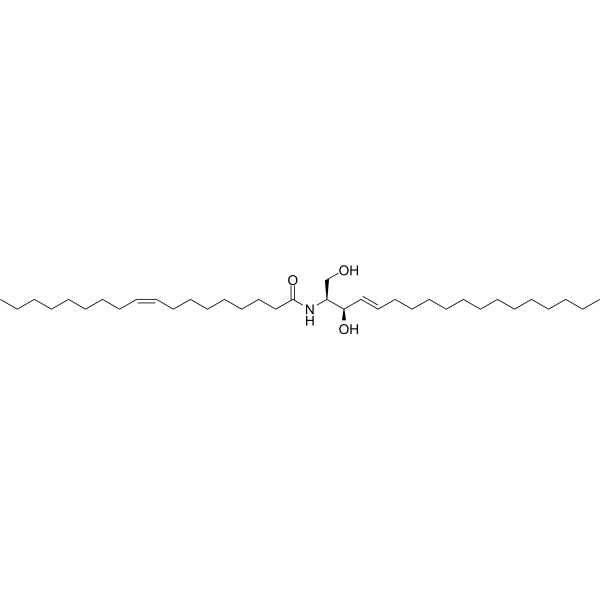
C18:1-Ceramide is a ceramide subspecies belonging to bioactive lipids. C18:1-Ceramide exhibits activities of inducing skeletal muscle insulin resistance and affecting metabolism. C18:1-Ceramide can be used in the research of obesity, type 2 diabetes (T2D), insulin resistance and other related metabolic diseases .
loading...
    loading...
Cat. No.: HY-147645
CAS No.: 127143-25-3
Target:  

FBPase

Research Areas:  

Metabolic Disease

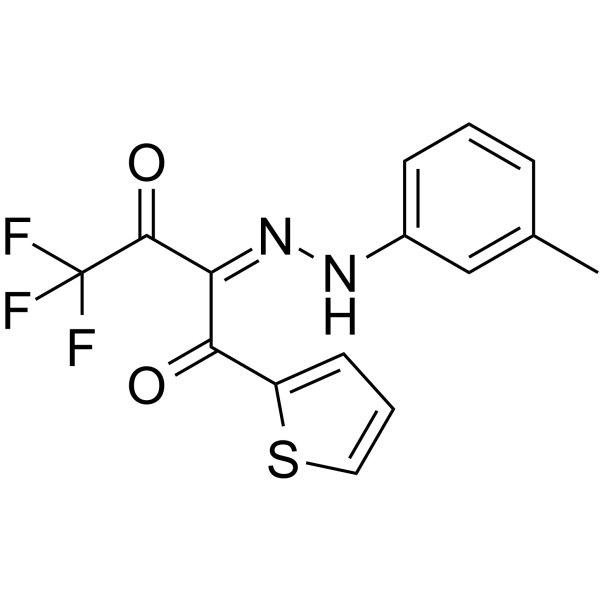
FBPase-IN-2 (Compound HS36) is a covalent FBPase inhibitor with an IC50 value of 0.15 μM for wild-type FBPase. FBPase-IN-2 inhibits glucose production in primary mouse hepatocytes via gluconeogenesis modulation. FBPase-IN-2 can be used for the research of type 2 diabetes mellitus .
loading...
    loading...
Cat. No.: HY-P2040
CAS No.: 118399-22-7
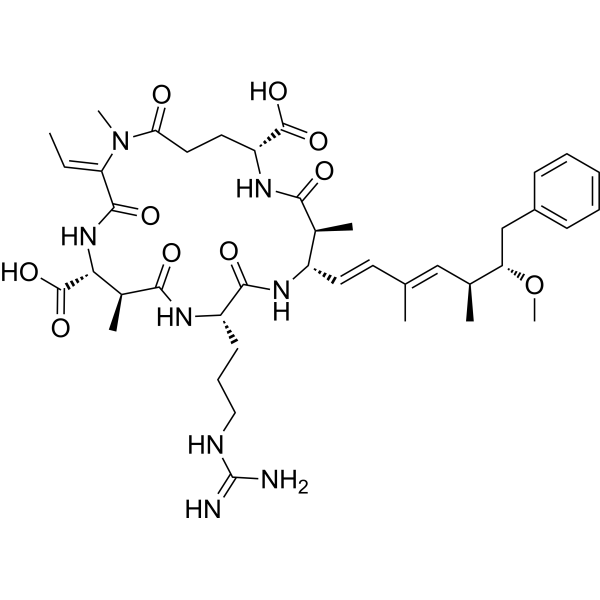
Nodularin is a hepatotoxin, tumor promoter, and protein phosphatase inhibitor. Nodularin induces apoptosis (apoptosis) in normal cells (including caspase activation, upregulation of Bcl-XS, and upregulation of BAX/P53), triggers hyperphosphorylation of the MAPK/ERK, mTOR/S6K and p38 MAPK signaling pathways, and induces oxidative stress, endoplasmic reticulum membrane instability, peroxisome proliferation and increased lysosomal enzyme activity. Nodularin promotes DEN (HY-N7434)-initiated hepatocyte proliferation and adenoma formation, and inhibits proliferation, phagocytosis and chemotaxis of normal lymphocytes, oocyte maturation and vitellogenesis, as well as angiogenesis. Nodularin exhibits hepatotoxicity, reproductive and endocrine toxicity, and embryonic developmental toxicity in various animal models. Nodularin can be used in studies related to liver cancer, hepatotoxicity and reproductive endocrine toxicity .
loading...
    loading...
Cat. No.: HY-P991674
CAS No.: 3033337-14-0
Synonyms: BJT-778

Target:  

HBV

Research Areas:  

Infection Inflammation/Immunology

Brelovitug (BJT-778) is a humanized IgG1 neutralizing monoclonal antibody targeting hepatitis B surface antigen (HBsAg). Brelovitug binds with high affinity to HBsAg purified from HBV serotypes ad and ay, with Kd values of 0.22 nM and 0.39 nM, respectively. Brelovitug binds with high affinity to HBsAg of HBV genotypes A, B, C and D, with IC50 values of 0.07, 0.02, 0.02 and 0.07 nM, respectively. Brelovitug can be used in research related to chronic hepatitis B and chronic hepatitis D .
loading...
    loading...
Cat. No.: HY-153184
CAS No.: 1159408-61-3
GalNAc-L96 free base is a conjugate of GalNAc and its ligand L96. When conjugated with the A-rich HCV sequence (H12), GalNAc-L96 free base binds potently to ASGPR, with a Ki value of 10.4 nM. GalNAc-L96 free base promotes siRNA delivery to hepatocytes .
loading...
    loading...
Cat. No.: HY-141578S
Purity:  97.0%
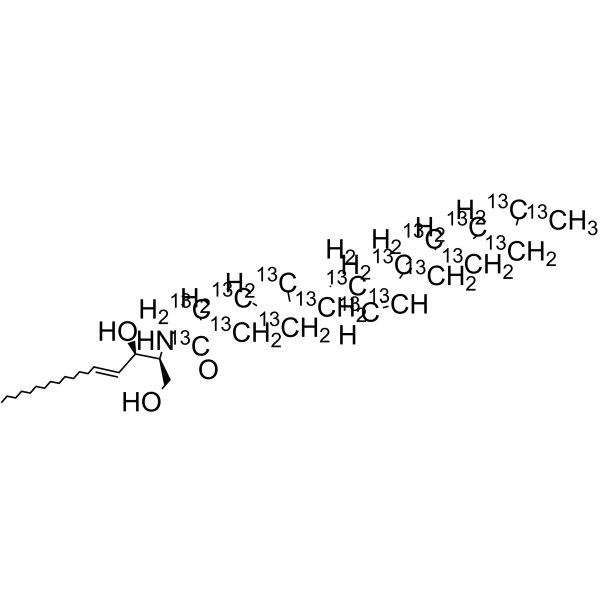
C18:1-Ceramide- 13C18 is the 13C-labeled C18:1-Ceramide (HY-141578). C18:1-Ceramide is a ceramide subspecies belonging to bioactive lipids. C18:1-Ceramide exhibits activities of inducing skeletal muscle insulin resistance and affecting metabolism. C18:1-Ceramide can be used in the research of obesity, type 2 diabetes (T2D), insulin resistance and other related metabolic diseases .
loading...
    loading...
Cat. No.: HY-176274
CAS No.: 3063509-61-2
FASN/SCD-IN-1 is a Silybin (HY-N0779A) derivative, an orally active inhibitor of Fatty Acid Synthase (FASN)/Stearoyl-CoA Desaturase (SCD). FASN/SCD-IN-1 has shown in vitro activity in inhibiting lipid deposition, reducing FASN and SCD transcriptional levels, and exhibiting antioxidant, anti-inflammatory, and anti-fibrotic activities. FASN/SCD-IN-1 has demonstrated significant hepatoprotective effects in a rat model of acute liver injury. FASN/SCD-IN-1 ameliorates the pathological features of MASH liver, including steatosis, inflammation, and fibrosis in a mouse model of myeloproliferative steatohepatitis (MASH). FASN/SCD-IN-1 can be used to study MASH .
loading...
    loading...
Cat. No.: HY-136855
CAS No.: 652968-37-1
Purity:  95.00%
MitoPBN is a AMPK/SIRT3/PGC-1α axis modulator, reactive oxygen species scavenger and mitochondrial function enhancer. MitoPBN increases the phosphorylation level of AMPK, restores SIRT3 expression and reverses the down-regulation of PGC-1α, thereby promoting mitochondrial biogenesis. MitoPBN regulates glucose metabolism, reduces blood glucose by inhibiting hepatic gluconeogenesis and increasing hepatic glucose uptake, while scavenging mitochondrial superoxide anion/hydrogen peroxide, maintaining membrane potential and increasing ATP production. MitoPBN also reduces cell apoptosis, improves sperm motility, survival rate and membrane integrity, but may induce reductive stress in cryopreserved sperm at high concentrations. MitoPBN is widely applicable to research related to diabetes and type 2 diabetes .
loading...
    loading...
Cat. No.: HY-W017982A
CAS No.: 55965-84-9
Synonyms: CMI/MI (2.0-2.5% in water)
CMIT/MIT (2.0-2.5% in water) (CMI/MI (2.0-2.5% in water)) is a mixture of CMIT and MIT, and is also a preservative and skin sensitizer. CMIT/MIT (2.0-2.5% in water) increases the levels of phosphorylated ERK1/2, p38, JNK1/2, p53, p21 and Bax, decreases the level of Bcl-2, and activates the Nrf-2/HO-1 signaling pathway. CMIT/MIT (2.0-2.5% in water) increases LDH release and lipid peroxidation levels, impairs antioxidant defense capacity, promotes pro-inflammatory cytokine release, induces apoptosis, triggers cell cycle arrest, exhibits neurotoxicity in neuroblastoma cells, and causes dysregulation of Th2/Th17 immune responses. CMIT/MIT (2.0-2.5% in water) can be used in studies related to allergy, atopic dermatitis and lung injury .
loading...
    loading...
Cat. No.: HY-158160
CAS No.: 2918263-09-7
Target:  

Sodium Channel

Research Areas:  

Metabolic Disease

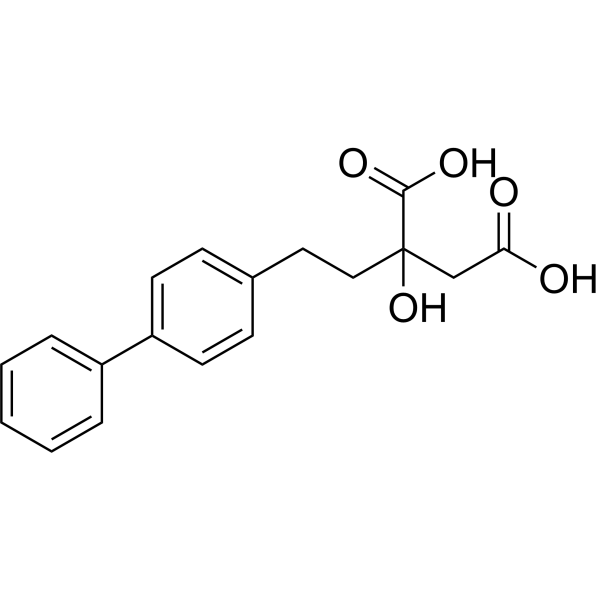
LBA-3 is a selective, orally active inhibitor for sodium-coupled citrate transporter SLC13A5, with an IC50 of 67 nM. LBA-3 decreases levels of triglyceride and total cholesterol in oleic and palmitic acid (OPA)-stimulated AML12 cells, PCN-stimulated primary mouse hepatocytes and in mouse models, without detectable toxicity. LBA-3 is blood-brain barrier permeable .
loading...
    loading...
Cat. No.: HY-141578R
CAS No.: 5966-28-9
C18:1-Ceramide (Standard) is the analytical standard of C18:1-Ceramide (HY-141578). This product is intended for research and analytical applications. C18:1-Ceramide is a ceramide subspecies belonging to bioactive lipids. C18:1-Ceramide exhibits activities of inducing skeletal muscle insulin resistance and affecting metabolism. C18:1-Ceramide can be used in the research of obesity, type 2 diabetes (T2D), insulin resistance and other related metabolic diseases .
loading...
    loading...

