1. Search Result
Search Result
Results for "

rRNA substrate

" in MedChemExpress (MCE) Product Catalog:

10

Inhibitors & Agonists

1

Natural
Products

5

Isotope-Labeled Compounds

1

Oligonucleotides

Targets Recommended:
Cat. No. Product Name Target Research Areas Chemical Structure
  • HY-113225

    GTP

    Endogenous Metabolite DNA/RNA Synthesis Apoptosis Mitosis Cancer
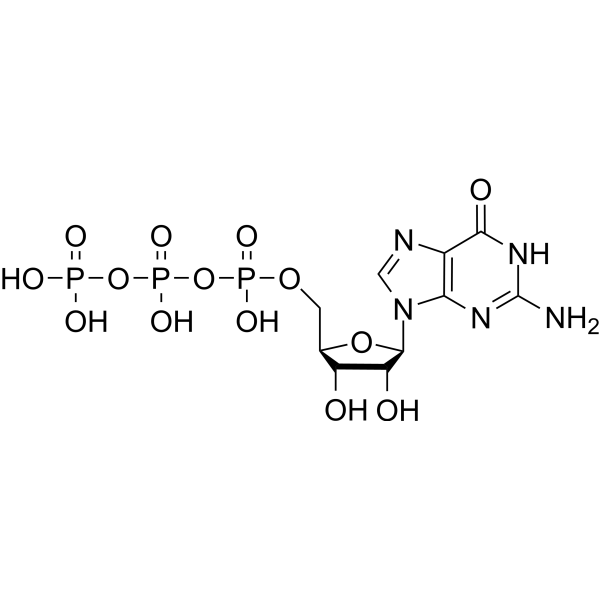
    Guanosine triphosphate (GTP) is a critical nucleotide and regulator of cellular metabolism. Guanosine triphosphate promotes ribosomal DNA localization, pre-rRNA transcription and ribosome biogenesis by binding to RNA polymerase I and GPN proteins (GPN1/3). Guanosine triphosphate links MYC-dependent ribosome biogenesis to nucleotide sufficiency, acts as a metabolic gatekeeper supporting protein synthesis, DNA/RNA synthesis and cellular signal transduction, while also participating in the physiological activities of pancreatic β-cells and serving as an oxidative substrate for reactive oxygen species. In small cell lung cancer with high MYC expression, Guanosine triphosphate accumulates through the IMPDH-driven synthetic pathway, thereby affecting apoptosis and mitotic processes. Guanosine triphosphate is used in the research of small cell lung cancer, hepatoblastoma and cellular metabolism .
    Guanosine triphosphate
  • HY-113225S2

    GTP-13C dilithium

    Isotope-Labeled Compounds Endogenous Metabolite Mitosis Apoptosis DNA/RNA Synthesis Infection Cancer
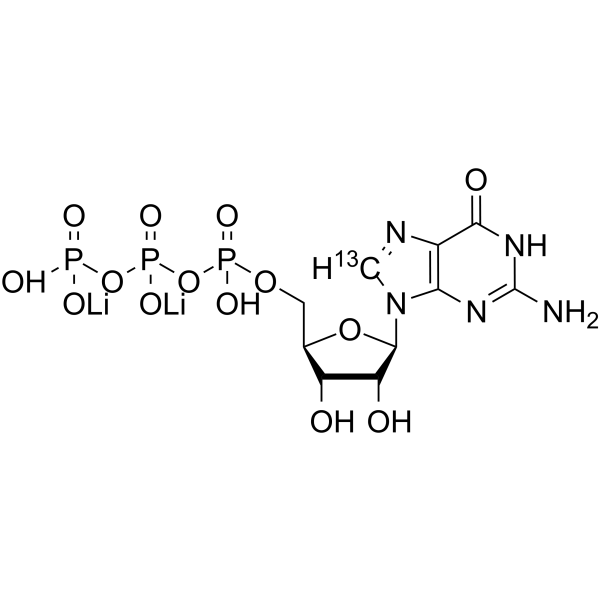
    Guanosine triphosphate- 13C (GTP- 13C) dilithium is 13C-labeled Guanosine triphosphate (HY-113225). Guanosine triphosphate (GTP) is a critical nucleotide and regulator of cellular metabolism. Guanosine triphosphate promotes ribosomal DNA localization, pre-rRNA transcription and ribosome biogenesis by binding to RNA polymerase I and GPN proteins (GPN1/3). Guanosine triphosphate links MYC-dependent ribosome biogenesis to nucleotide sufficiency, acts as a metabolic gatekeeper supporting protein synthesis, DNA/RNA synthesis and cellular signal transduction, while also participating in the physiological activities of pancreatic β-cells and serving as an oxidative substrate for reactive oxygen species. In small cell lung cancer with high MYC expression, Guanosine triphosphate accumulates through the IMPDH-driven synthetic pathway, thereby affecting apoptosis and mitotic processes. Guanosine triphosphate is used in the research of small cell lung cancer, hepatoblastoma and cellular metabolism .
    Guanosine triphosphate-13C dilithium
  • HY-113225S3

    GTP-15N5 dilithium

    Isotope-Labeled Compounds Endogenous Metabolite Mitosis Apoptosis DNA/RNA Synthesis Infection Cancer
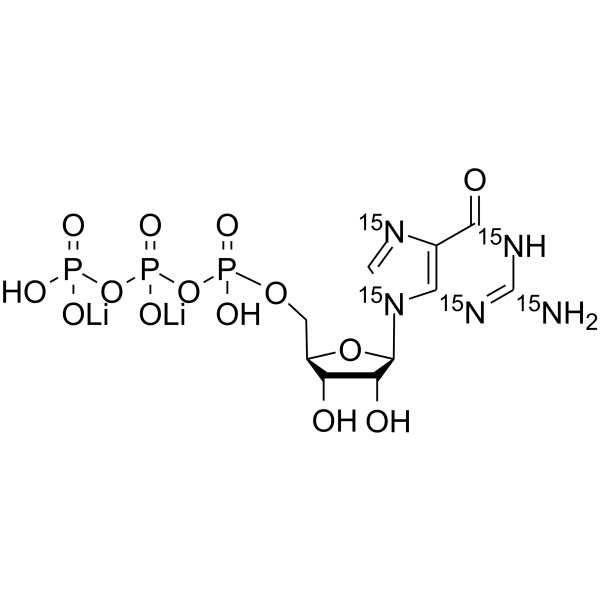
    Guanosine triphosphate- 15N5 (GTP- 15N5) dilithium is 15N labeled Guanosine triphosphate (HY-113225). Guanosine triphosphate dilithium (GTP) is a critical nucleotide and regulator of cellular metabolism. Guanosine triphosphate dilithium promotes ribosomal DNA localization, pre-rRNA transcription and ribosome biogenesis by binding to RNA polymerase I and GPN proteins (GPN1/3). Guanosine triphosphate dilithium links MYC-dependent ribosome biogenesis to nucleotide sufficiency, acts as a metabolic gatekeeper supporting protein synthesis, DNA/RNA synthesis and cellular signal transduction, while also participating in the physiological activities of pancreatic β-cells and serving as an oxidative substrate for reactive oxygen species. In small cell lung cancer with high MYC expression, Guanosine triphosphate dilithium accumulates through the IMPDH-driven synthetic pathway, thereby affecting apoptosis and mitotic processes. Guanosine triphosphate dilithium is used in the research of small cell lung cancer, hepatoblastoma and cellular metabolism .
    Guanosine triphosphate-15N5 dilithium
  • HY-113225S5

    GTP-13C10 dilithium

    Isotope-Labeled Compounds Endogenous Metabolite Mitosis Apoptosis DNA/RNA Synthesis Infection Cancer
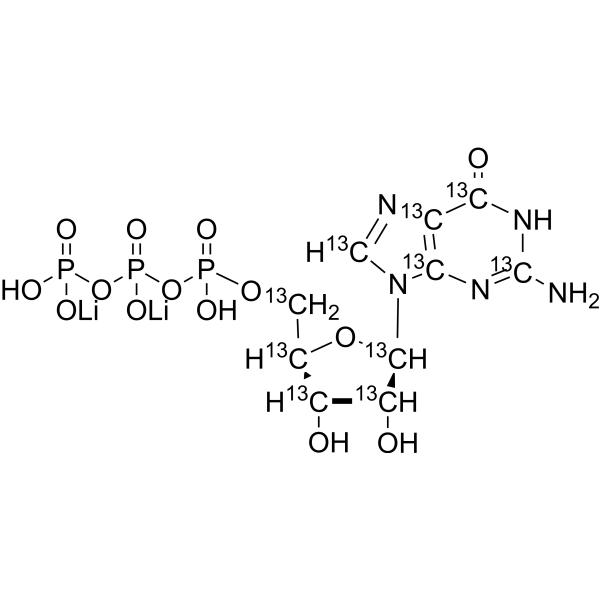
    Guanosine triphosphate- 13C10 (GTP- 13C10) dilithium is 13C-labeled Guanosine triphosphate (HY-113225). Guanosine triphosphate dilithium (GTP) is a critical nucleotide and regulator of cellular metabolism. Guanosine triphosphate dilithium promotes ribosomal DNA localization, pre-rRNA transcription and ribosome biogenesis by binding to RNA polymerase I and GPN proteins (GPN1/3). Guanosine triphosphate dilithium links MYC-dependent ribosome biogenesis to nucleotide sufficiency, acts as a metabolic gatekeeper supporting protein synthesis, DNA/RNA synthesis and cellular signal transduction, while also participating in the physiological activities of pancreatic β-cells and serving as an oxidative substrate for reactive oxygen species. In small cell lung cancer with high MYC expression, Guanosine triphosphate dilithium accumulates through the IMPDH-driven synthetic pathway, thereby affecting apoptosis and mitotic processes. Guanosine triphosphate dilithium is used in the research of small cell lung cancer, hepatoblastoma and cellular metabolism .
    Guanosine triphosphate-13C10 dilithium
  • HY-113225S1

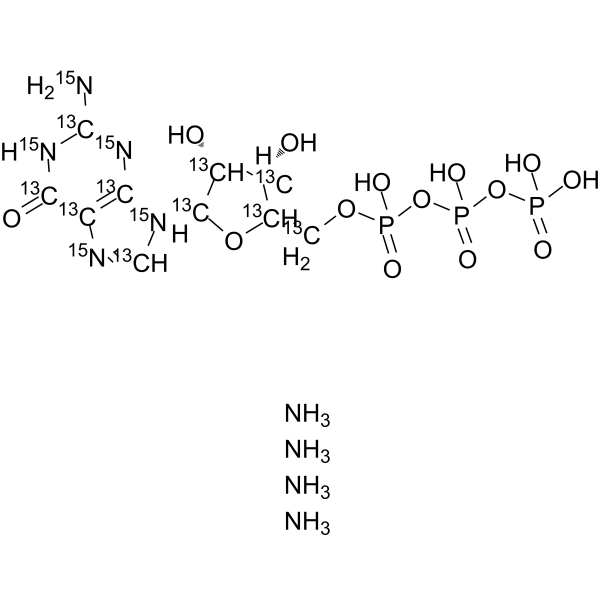
    GTP-13C10,15N5 tetraammonium

    Endogenous Metabolite Mitosis Apoptosis DNA/RNA Synthesis Cancer
    Guanosine triphosphate- 13C10, 15N5 tetraammonium is the 13C and 15N labeled Guanosine triphosphate tetraammonium. Guanosine triphosphate tetraammonium (GTP) is a critical nucleotide and regulator of cellular metabolism. Guanosine triphosphate tetraammonium promotes ribosomal DNA localization, pre-rRNA transcription and ribosome biogenesis by binding to RNA polymerase I and GPN proteins (GPN1/3). Guanosine triphosphate tetraammonium links MYC-dependent ribosome biogenesis to nucleotide sufficiency, acts as a metabolic gatekeeper supporting protein synthesis, DNA/RNA synthesis and cellular signal transduction, while also participating in the physiological activities of pancreatic β-cells and serving as an oxidative substrate for reactive oxygen species. In small cell lung cancer with high MYC expression, Guanosine triphosphate tetraammonium accumulates through the IMPDH-driven synthetic pathway, thereby affecting apoptosis and mitotic processes. Guanosine triphosphate tetraammonium is used in the research of small cell lung cancer, hepatoblastoma and cellular metabolism .
    Guanosine triphosphate-13C10,15N5 tetraammonium solution (100 mM)
  • HY-113225S4

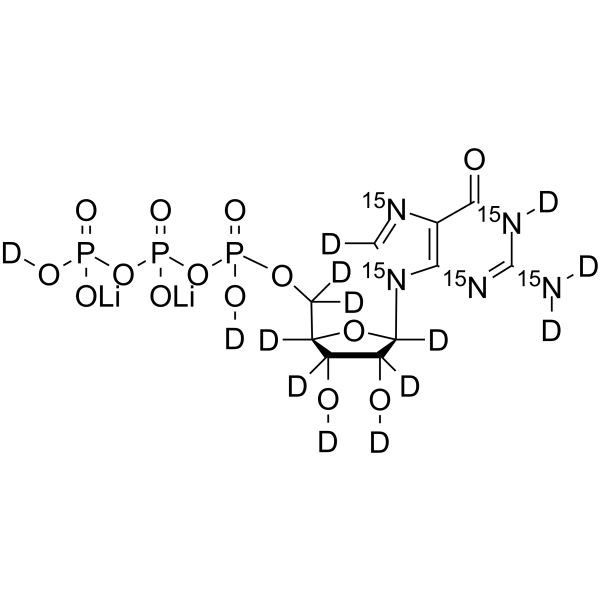
    GTP-15N5,d14 dilithium

    Isotope-Labeled Compounds Endogenous Metabolite Mitosis Apoptosis DNA/RNA Synthesis Infection Cancer
    Guanosine triphosphate- 15N5,d14 (GTP- 15N5,d14) dilithium is deuterium and 15N labeled Guanosine triphosphate (HY-113225). Guanosine triphosphate dilithium (GTP) is a critical nucleotide and regulator of cellular metabolism. Guanosine triphosphate dilithium promotes ribosomal DNA localization, pre-rRNA transcription and ribosome biogenesis by binding to RNA polymerase I and GPN proteins (GPN1/3). Guanosine triphosphate dilithium links MYC-dependent ribosome biogenesis to nucleotide sufficiency, acts as a metabolic gatekeeper supporting protein synthesis, DNA/RNA synthesis and cellular signal transduction, while also participating in the physiological activities of pancreatic β-cells and serving as an oxidative substrate for reactive oxygen species. In small cell lung cancer with high MYC expression, Guanosine triphosphate dilithium accumulates through the IMPDH-driven synthetic pathway, thereby affecting apoptosis and mitotic processes. Guanosine triphosphate dilithium is used in the research of small cell lung cancer, hepatoblastoma and cellular metabolism .
    Guanosine triphosphate-15N5,d14 dilithium
  • HY-135189

    Others Others
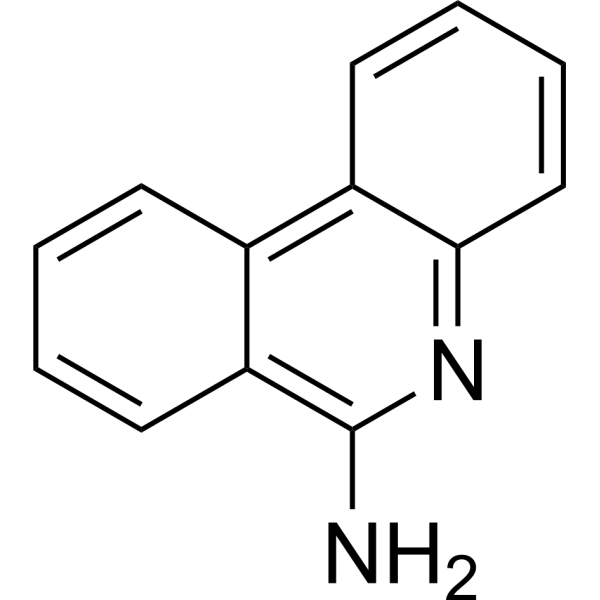
    6-Aminophenanthridine inhibits the protein folding activity of the ribosome (PFAR). 6-Aminophenanthridine competitively occludes the protein substrates from binding to rRNA and thereby inhibits PFAR .
    6-Aminophenanthridine
  • HY-E71201

    Biochemical Assay Reagents Others
    16S rRNA Pseudouridine516 synthase (EC 5.4.99.19) is specific for uridine516 in 16S rRNA. In vitro, the enzyme does not modify free 16S rRNA. The preferred substrate is a 5'-terminal fragment of 16S rRNA complexed with 30S ribosomal proteins.
    16S rRNA Pseudouridine516 synthase
  • HY-E71200M

    Biochemical Assay Reagents Others
    16S rRNA (guanine966-N2)-Methyltransferase (EC 2.1.1.171) efficiently methylates guanine966 of the assembled 30S subunits in vitro. Protein-free 16S rRNA is not a substrate for RsmD. The enzyme specifically methylates guanine966 at N2 in 16S rRNA.
    16S rRNA (guanine966-N2)-Methyltransferase
  • HY-181064

    Epigenetic Reader Domain Cancer
    FWG-33B is an activator of TRMT112:METTL5 complex with an IC50 value of 0.47 μM. FWG-33B can be used for the research of breast carcinoma, hepatocellular carcinoma, nasopharyngeal carcinoma .
    FWG-33B

Inquiry Online

Your information is safe with us. * Required Fields.

Salutation


Country or Region *

Applicant Name *


Organization Name *

Department *


Email Address *


Product Name *

Cat. No.


Requested quantity *

Phone Number *


Remarks

Inquiry Online

Inquiry Information

Product Name:
Cat. No.:
Quantity:
MCE Japan Authorized Agent:

