
1. Search Result
Search Result
Results for "

rat liver mitochondria

" in MedChemExpress (MCE) Product Catalog:

25

Inhibitors & Agonists

1

Fluorescent Dyes

2

Biochemical Assay Reagents

9

Natural
Products

1

Isotope-Labeled Compounds

Targets Recommended:
Cat. No. Product Name Target Research Areas Chemical Structure
  • HY-D1736

    Fluorescent Dye Others
    BODIPY FL-C16 is a BODIPY-labeled analog of Palmitic acid (HY-N0830), which serves as a fluorescent lipid tracer. BODIPY FL-C16 also acts as a ligand for liver fatty acid-binding protein (L-FABP) and intestinal fatty acid-binding protein (I-FABP) , with Kd values of 270 nM and 330 nM, respectively. BODIPY FL-C16 is rapidly taken up by cells, and after metabolic conversion to phospholipids, it is incorporated into the membrane structures of intracellular organelles and extracellular vesicles .
    BODIPY FL-C16
  • HY-N7056
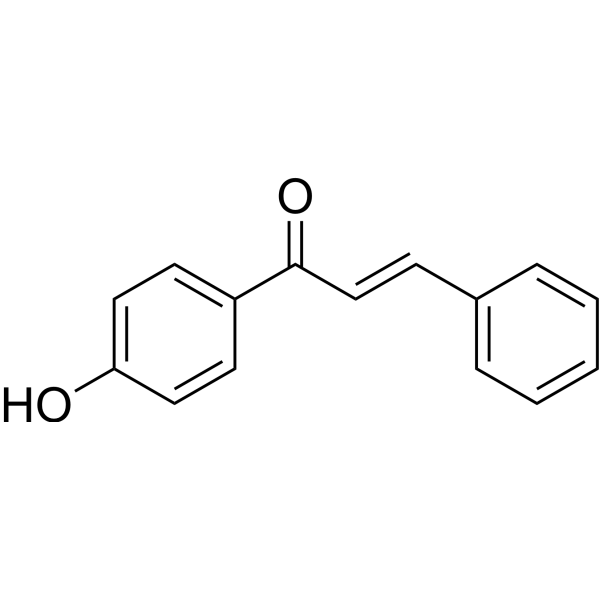
    4'-Hydroxychalcone
    3 Publications Verification

    Oxidative Phosphorylation Proteasome Inflammation/Immunology Cancer
    4'-Hydroxychalcone is a chalcone isolated from licorice root, with hepatoprotective activity. 4'-Hydroxychalcone inhibits TNFα-induced NF-κB activation via proteasome inhibition. 4'-Hydroxychalcone induces a rapid potassium release from mitochondrial vesicles and causes deterioration of respiratory control and oxidative phosphorylation of isolated rat liver mitochondria .
    4'-Hydroxychalcone
  • HY-154831

    N-Behenoyl-D-erythro-sphingosine; C22-Ceramide; Cer d18:1/22:0

    Liposome Metabolic Disease
    C22-Ceramide (d18:1/22:0) (Cer d18:1/22:0) is an endogenous bioactive sphingolipid. C22-Ceramide (d18:1/22:0) reduces the propensity of C16-ceramide channel formation in isolated rat liver mitochondria and in liposomes .
    C22-Ceramide (d18:1/22:0)
  • HY-N7114A
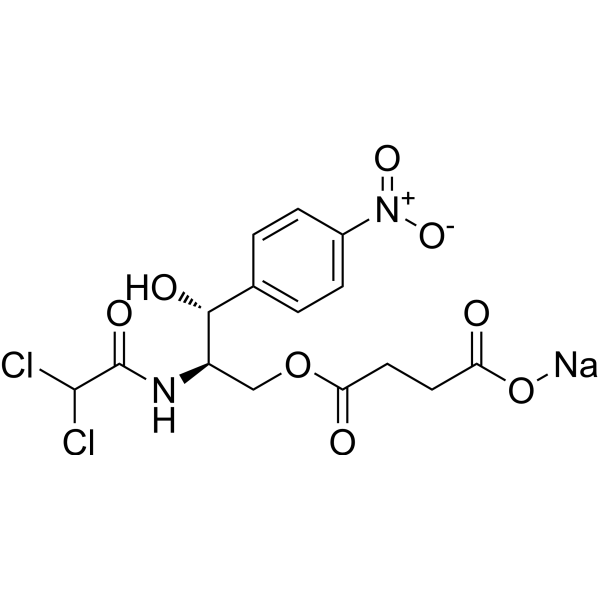
    Chloramphenicol succinate sodium
    3 Publications Verification

    Bacterial P2Y Receptor Succinate Dehydrogenase Drug Intermediate Infection Inflammation/Immunology
    Chloramphenicol succinate sodium is a prodrug of Chloramphenicol (HY-B0239), acting as a P2Y14R inhibitor with an IC50 of 1.585 nM. Chloramphenicol succinate sodium serves as a competitive substrate and inhibitor of succinate dehydrogenase (SDH), which may account for its toxicity. Chloramphenicol succinate sodium exerts a significant inhibitory effect on colitis. Chloramphenicol succinate sodium can be used in research related to myelosuppression, gray baby syndrome, aplastic anemia, bacterial meningitis and inflammatory bowel disease .
    Chloramphenicol succinate sodium
  • HY-B0817
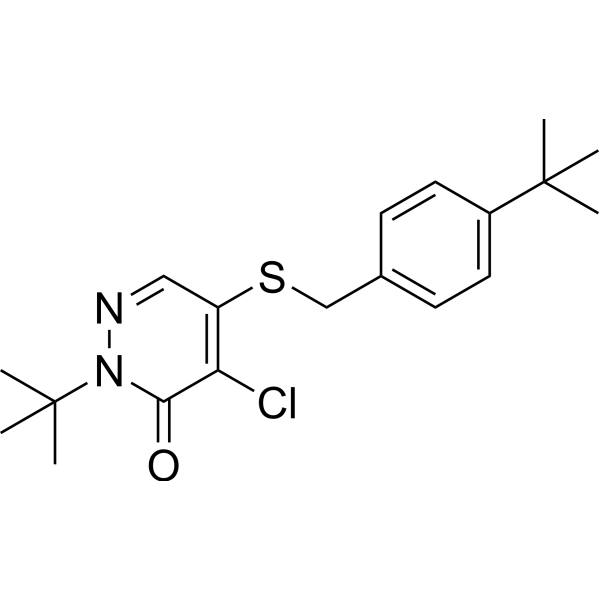
    Pyridaben
    1 Publications Verification

    Environmental Pollutants Parasite Infection
    Pyridaben is a mitochondrial electron transport inhibitor (METI) acaricide that promotes the formation of damaging oxygen and nitrogen radicals. Pyridaben selectively inhibits complex I (NADH dehydrogenase) with an IC50 value of 2.4 nM (assay sites: rat liver and bovine heart mitochondria). Pyridaben also significantly inhibits rat mitochondrial mtNOS function .
    Pyridaben
  • HY-164093

    Isovaleryl-coenzyme A

    Acetyl-CoA synthetase Metabolic Disease
    Isovaleryl-CoA sodium is a branched-chain acyl-CoA and an inhibitor of succinate-CoA ligase (SCL), with an IC50 of 273 μM in rat liver mitochondria .
    Isovaleryl-CoA
  • HY-W009706

    Allopydin; W-7320

    Prostaglandin Receptor Neurological Disease Inflammation/Immunology
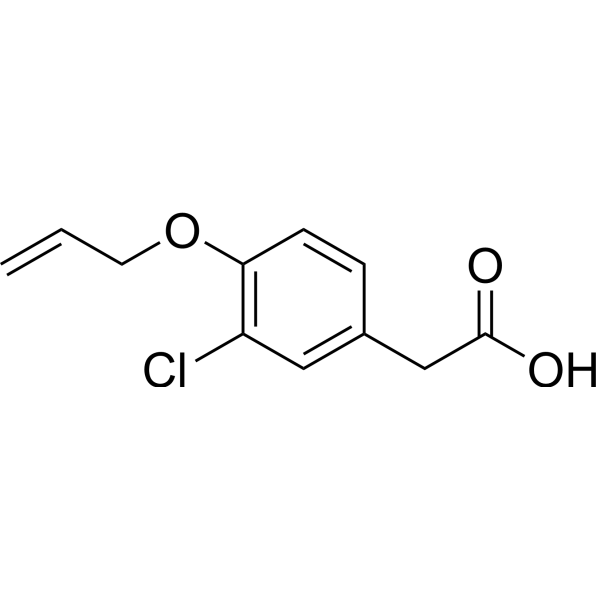
    Alclofenac (Allopydin) is an orally active prostaglandin synthase inhibitor with anti-inflammatory, analgesic and antipyretic activities. Alclofenac irreversibly inhibits platelet aggregation. Alclofenac can be used in research related to rheumatoid arthritis, osteoarthritis, ankylosing spondylitis, low back pain and sciatica .
    Alclofenac
  • HY-W015806

    Endogenous Metabolite Metabolic Disease
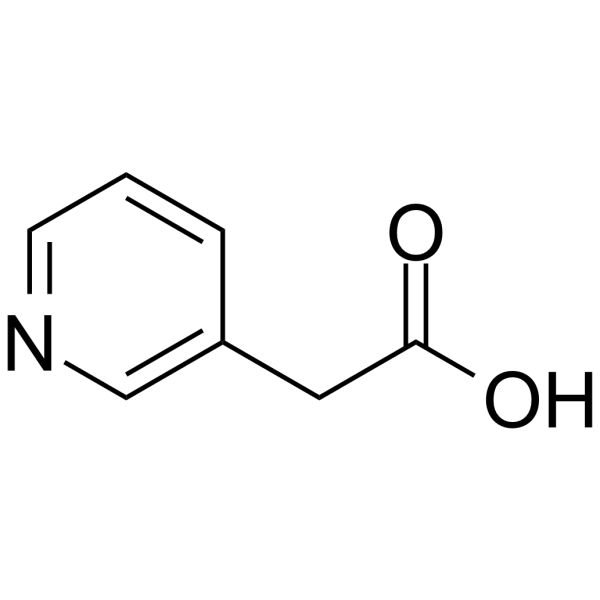
    3-Pyridineacetic acid is an orally active nicotinic acid analog. 3-Pyridineacetic acid enhances cholesterol oxidation in rat liver mitochondria. 3-Pyridineacetic acid inhibits Triton-induced hypercholesterolemia in rats. 3-Pyridineacetic acid can be used in research related to hypercholesterolemia .
    3-Pyridineacetic acid
  • HY-164093A

    Acetyl-CoA synthetase Others
    Isovaleryl-CoA sodium, a branched-chain acyl CoA, is a succinate:CoA ligase (SCL) inhibitor with an IC50 of 273 μM in rat liver mitochondria .
    Isovaleryl-CoA sodium
  • HY-W020784

    Biochemical Assay Reagents Others
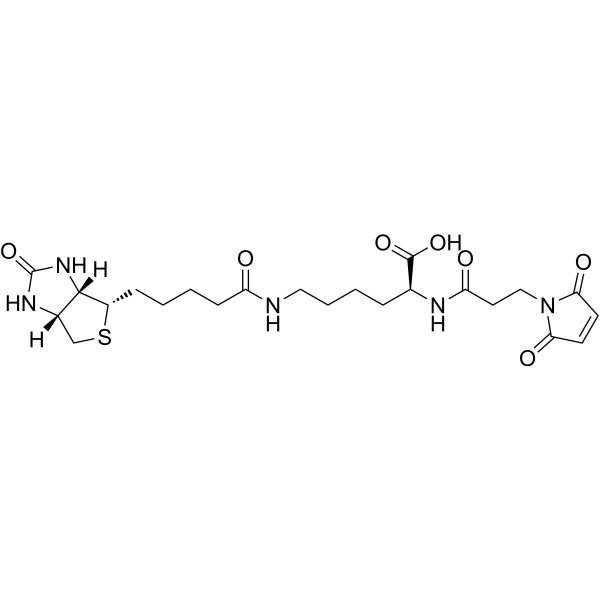
    3-(N-Maleimidopropionyl)biocytin is a cysteine-specific labeling reagent and non-membrane-permeable probe. 3-(N-Maleimidopropionyl)biocytin covalently modifies the exposed cysteine residues of yeast Tim44, conjugating the biotin moiety to the polypeptide chain. 3-(N-Maleimidopropionyl)biocytin determines the topology of membrane proteins by modifying the exposed cysteine residues on the outer side of the inner mitochondrial membrane .
    3-(N-Maleimidopropionyl)biocytin
  • HY-N9279

    Monocrotaline pyrrole; MCTP; 3,8-Didehydromonocrotaline

    Endogenous Metabolite Cardiovascular Disease Cancer
    Dehydromonocrotaline is a mitochondrial respiratory chain complex I NADH oxidase inhibitor, with a IC50 of 62.06 μM and a Ki of 8.1 μM in rats. Dehydromonocrotaline exerts non-competitive inhibitory effects by modifying cysteine thiol groups on complex I, and does not bind to the NADH-binding site. Dehydromonocrotaline dissipates mitochondrial membrane potential and reduces ATP levels. Dehydromonocrotaline can be used in studies related to hepatotoxicity, pulmonary hypertension and liver tumors .
    Dehydromonocrotaline
  • HY-157343

    Apoptosis Mitochondrial Metabolism Caspase Neurological Disease Cancer
    GD3 Ganglioside is an Apoptosis inducer and a biomarker for mouse neural stem cells. GD3 Ganglioside expresses in neural stem cells and the subventricular zone of the adult mouse brain. GD3 Ganglioside targets the mitochondrial permeability transition pore complex, induces pore opening, dissipates mitochondrial transmembrane potential, triggers Mitochondrial swelling, releases pro-apoptotic factors, and activates Caspase-9. GD3 Ganglioside is applicable to research related to glioblastoma .
    GD3 Ganglioside
  • HY-N15640

    (-)-Filiformin

    Bacterial Infection Inflammation/Immunology Cancer
    Filiformin ((-)-Filiformin) is a sesquiterpene compound that can be isolated from Laurencia filiformis forma heteroclada. Filiformin exhibits certain cytotoxicity against P388 and BSC-1 cells. Filiformin has antimicrobial activity against Bacillus subtilis, Trichophyton mentagrophytes and Candida albicans. In addition, Filiformin can inhibit oxygen uptake in isolated rat liver mitochondria at a concentration of 150 μM .
    Filiformin
  • HY-N10272

    Fungal Bacterial Infection
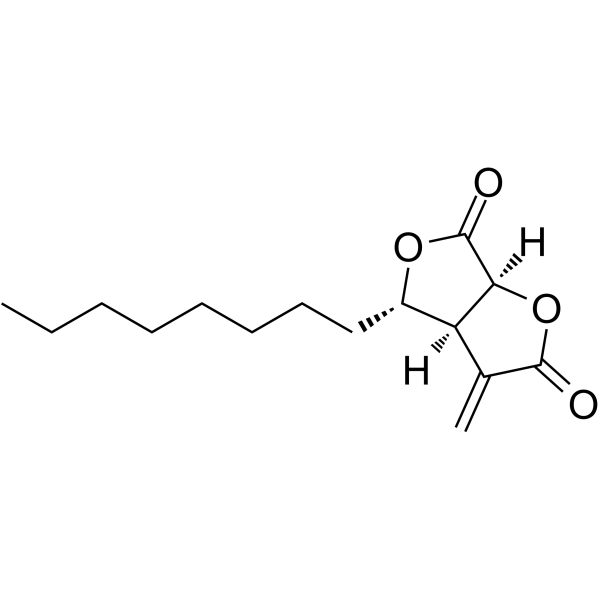
    Avenaciolide is an antifungal bis-γ-lactone found in Aspergillus avenaceus. Avenaciolide has also antibacterial action. Avenaciolide is a specific inhibitor of glutamate transport in rat liver mitochondria. Avenaciolide interferes with the ability of ADP to stimulate the rate of glutamate oxidation .
    (±)-Avenaciolide
  • HY-106808

    IOS-1.1212

    Calcium Channel Chloride Channel Neurological Disease
    Cerebrocrast (IOS-1.1212) is a 1,4-dihydropyridine (DHP) derivative. Cerebrocrast has a high affinity for the membrane lipid bilayer and it can easily penetrate the blood-brain barrier and incorporate into the plasma and organelle membranes, including those of mitochondria. Cerebrocrast promotes the cotransport of H+ and Cl- in rat liver mitochondria. Cerebrocrast also exhibits neuroprotective and cognition enhancer properties .
    Cerebrocrast
  • HY-E70252

    S-1-Pyrenebutanoate-CoA; Coenzyme A,S-1-pyrenebutanoate

    Endogenous Metabolite Cardiovascular Disease
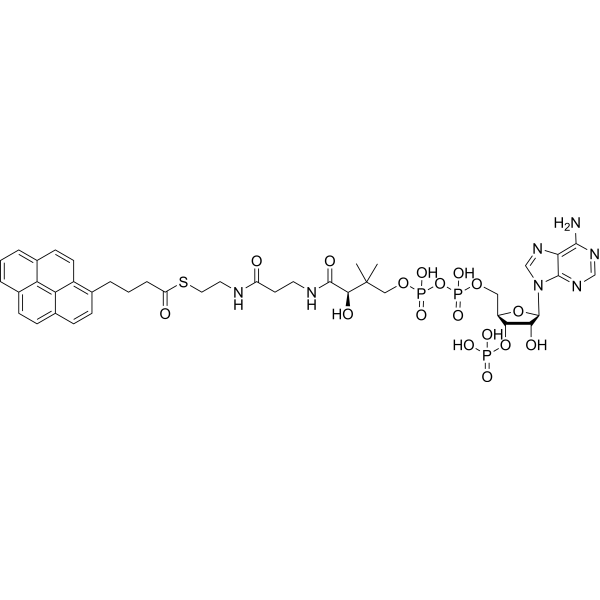
    1-Pyrenebutanoyl-CoA is a type of coenzyme A that can non-competitively inhibit (Ki = 2 μM) phosphorylating (ADP-stimulated) respiration in rat liver mitochondria, and competitively inhibit (Ki = 2.1 μM and 15 μM) carnitine palmitoyl-CoA transferase and octanoyl-CoA transferase .
    1-Pyrenebutanoyl-CoA
  • HY-B0817S

    Parasite Infection
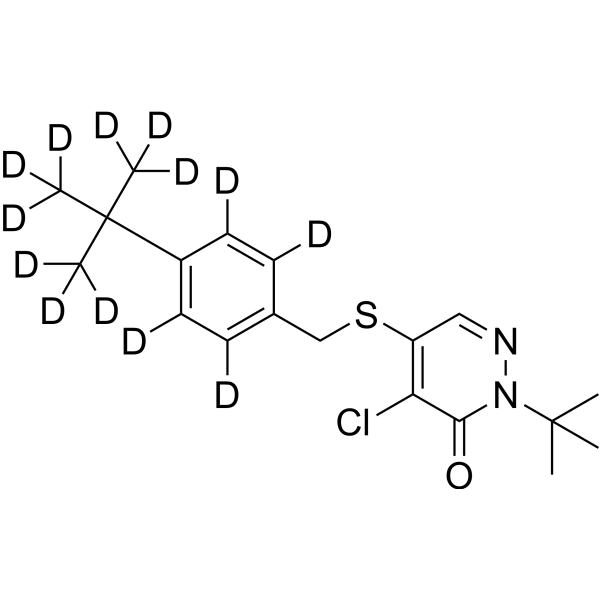
    Pyridaben-d13 is the deuterium labeled Pyridaben . Pyridaben is a mitochondrial electron transport inhibitor (METI) acaricide that promotes the formation of damaging oxygen and nitrogen radicals. Pyridaben selectively inhibits complex I (NADH dehydrogenase) with an IC50 value of 2.4 nM (assay sites: rat liver and bovine heart mitochondria). Pyridaben also significantly inhibits rat mitochondrial mtNOS function .
    Pyridaben-d13
  • HY-122076

    Antibiotic Bacterial Fungal Infection
    A-26771B is an antibiotic can be obtained from Penicillium turbatum. A-26771B exhibits moderate antimicrobial activity against Gram-positive bacteria, mycoplasma, and fungi. A-26771B also inhibits potassium-dependent ATPase in rat liver mitochondria .
    A-26771B
  • HY-B0817R

    Reference Standards Parasite Infection
    Pyridaben (Standard) is the analytical standard of Pyridaben. This product is intended for research and analytical applications. Pyridaben is a mitochondrial electron transport inhibitor (METI) acaricide that promotes the formation of damaging oxygen and nitrogen radicals. Pyridaben selectively inhibits complex I (NADH dehydrogenase) with an IC50 value of 2.4 nM (assay sites: rat liver and bovine heart mitochondria). Pyridaben also significantly inhibits rat mitochondrial mtNOS function .
    Pyridaben (Standard)
  • HY-165154

    Desdanine; Pyracrimycin A

    Antibiotic Bacterial Fungal Pyruvate Kinase Oxidative Phosphorylation Infection Inflammation/Immunology
    Cyclamidomycin (Desdanine) is an acrylamide antibiotic with antibacterial activity. Cyclamidomycin inhibits nucleoside diphosphate kinase and pyruvate kinase (in E. coli) and oxidative phosphorylation in rat liver mitochondria. Cyclamidomycin is active against S. aureus, M. flavus, S. lutea, B. subtilis, E. coli, S. flexneri, S. typhosa, P. vulgaris, and K. pneumoniae (MICs=3.12-25 mg/ml) .
    Cyclamidomycin
  • HY-W015806R

    Reference Standards Endogenous Metabolite Metabolic Disease
    3-Pyridineacetic acid (Standard) is an analytical standard for 3-Pyridineacetic acid (HY-W015806). This product is for research and analytical applications. 3-Pyridineacetic acid is an orally active nicotinic acid analog. 3-Pyridineacetic acid enhances cholesterol oxidation in rat liver mitochondria. 3-Pyridineacetic acid inhibits Triton-induced hypercholesterolemia in rats. 3-Pyridineacetic acid can be used in research related to hypercholesterolemia.
    3-Pyridineacetic acid (Standard)
  • HY-182248

    ST1326 chloride

    Carnitine Palmitoyltransferase (CPT) Acyltransferase Metabolic Disease
    Teglicar chloride (ST1326 chloride) is an orally active, reversible, mixed-type, selective inhibitor of hepatic carnitine palmitoyltransferase I (L-CPT I), with an IC50 of 1.1 μM against rat L-CPT I. Teglicar chloride reduces serum glucose levels. Teglicar chloride exhibits antiketotic activity in normal fasted rats. Teglicar chloride can be used in research related to type 2 diabetes and ketoacidosis .
    Teglicar chloride
  • HY-182481

    Monoamine Oxidase Neurological Disease
    MD-230254 is a reversible, competitive and selective inhibitor inhibitor of MAO-B with an IC50 value of 1.8 nM. MD-230254 can be used for the study of MAO-B-related neurodegenerative diseases including Parkinson’s disease and Alzheimer’s disease .
    MD-230254
  • HY-N7056R

    Reference Standards Proteasome Oxidative Phosphorylation Inflammation/Immunology Cancer
    4'-Hydroxychalcone (Standard) is the analytical standard of 4'-Hydroxychalcone (HY-N7056). This product is intended for research and analytical applications. 4'-Hydroxychalcone is a chalcone isolated from licorice root, with hepatoprotective activity. 4'-Hydroxychalcone inhibits TNFα-induced NF-κB activation via proteasome inhibition. 4'-Hydroxychalcone induces a rapid potassium release from mitochondrial vesicles and causes deterioration of respiratory control and oxidative phosphorylation of isolated rat liver mitochondria .
    4'-Hydroxychalcone (Standard)
  • HY-182303

    CATR

    Methionine Adenosyltransferase (MAT) Neurological Disease
    Carboxyatractyloside (CATR) is a tight-binding inhibitor of adenine nucleotide translocase, and represents the major toxic component of Xanthium sibiricum. Carboxyatractyloside competes with ADP for binding to the translocase, blocks the translocation of ADP/ATP across the inner mitochondrial membrane, and thereby inhibits ADP-stimulated respiration. In the presence of Cyclosporin A (HY-B0579), Carboxyatractyloside still induces permeability transition in liver mitochondria of aged rats, exhibiting significant hepatotoxicity and nephrotoxicity. Carboxyatractyloside is widely used in studies related to hepatotoxicity, nephrotoxicity and Alzheimer's disease .
    Carboxyatractyloside

Inquiry Online

Your information is safe with us. * Required Fields.

Salutation


Country or Region *

Applicant Name *


Organization Name *

Department *


Email Address *


Product Name *

Cat. No.


Requested quantity *

Phone Number *


Remarks

Inquiry Online

Inquiry Information

Product Name:
Cat. No.:
Quantity:
MCE Japan Authorized Agent:

