



1. Search Result
Search Result
Results for "

rat receptors

" in MedChemExpress (MCE) Product Catalog:

1083

Inhibitors & Agonists

2

Fluorescent Dyes

5

Biochemical Assay Reagents

175

Peptides

29

Inhibitory Antibodies

53

Natural
Products

31

Isotope-Labeled Compounds

3

Click Chemistry

2

Oligonucleotides

1

GMP Molecules

Cat. No. Product Name Target Research Areas Chemical Structure
  • HY-106224
    Orexin A (human, rat, mouse)
    Maximum Cited Publications
    11 Publications Verification

    Hypocretin-1 (human, rat, mouse)

    Orexin Receptor (OX Receptor) Neurological Disease
    Orexin A (human, rat, mouse) (Hypocretin-1 (human, rat, mouse)), a 33 amino acid excitatory neuropeptide, orchestrates diverse central and peripheral processes. Orexin A (human, rat, mouse) binds and activates two types of G protein-coupled receptors, the orexin-1 receptor (OX1R) and the orexin-2 receptor (OX2R). Orexin A (human, rat, mouse) has a role in the regulation of feeding behavior. Orexin A (human, rat, mouse) is an effective anti-nociceptive and anti-hyperalgesic agent in mice and rats .
    Orexin A (human, rat, mouse)
  • HY-18347A
    Conivaptan hydrochloride
    10+ Cited Publications

    YM 087

    Vasopressin Receptor Cardiovascular Disease Endocrinology
    Conivaptan (hydrochloride) is a non-peptide antagonist of vasopressin receptor, with Ki values of 0.48 and 3.04 nM for rat liver V1A receptor and rat kidney V2 receptor respectively.
    Conivaptan hydrochloride
  • HY-P0221
    PACAP (1-38), human, ovine, rat
    5 Publications Verification

    Pituitary Adenylate Cyclase Activating Polypeptide 38

    PACAP Receptor ERK EGFR Reactive Oxygen Species (ROS) Calcium Channel Infection Neurological Disease
    PACAP (1-38), human, ovine, rat is a PAC1 receptor agonist. PACAP (1-38), human, ovine, rat binds to PACAP type I receptor, PACAP type II receptor VIP1, and PACAP type II receptor VIP2 with IC50s of 4 nM, 2 nM, and 1 nM, respectively. PACAP (1-38), human, ovine, rat increases the α-secretase activity. PACAP (1-38), human, ovine, rat elevates cytosolic Ca 2+, increases proliferation and increases phosphorylation of extracellular regulates kinase (ERK) and the epidermal growth factor receptor (EGFR). PACAP (1-38), human, ovine, rat demonstrates potent, efficacious, and sustained stimulatory effects on sympathetic neuronal NPY and catecholamine production. PACAP (1-38), human, ovine, rat can be used for neurotrophic and neuroprotective research .
    PACAP (1-38), human, ovine, rat
  • HY-P1464

    Amylin (rat)

    Amylin Receptor Metabolic Disease
    Amylin, amide, rat is a potent and high affinity ligand of Amylin receptor AMY1 and AMY3 receptors and variably of AMY2 receptors; binding studies are generally used for the latter receptor.
    Amylin, amide, rat
  • HY-P0209
    Rat CGRP-(8-37)
    5+ Cited Publications

    CGRP Receptor Cardiovascular Disease Neurological Disease
    Rat CGRP-(8-37) (VTHRLAGLLSRSGGVVKDNFVPTNVGSEAF) is a highly selective CGRP receptor antagonist.
    Rat CGRP-(8-37)
  • HY-P1656
    (D-Pro7)-Angiotensin I/II (1-7)
    1 Publications Verification

    Angiotensin Receptor Mas-related G-protein-coupled Receptor (MRGPR) Cardiovascular Disease
    (D-Pro7)-Angiotensin I/II (1-7) is a potent Mas receptor inhibitor with a Ki of 0.001 μM for rat receptors. (D-Pro7)-Angiotensin I/II (1-7) competitively blocks the binding of Angiotensin-(1-7) to the Mas receptor and attenuates the vasodilatory effect of rat aortas under physiological and hypertensive conditions. (D-Pro7)-Angiotensin I/II (1-7) can be used for studies on the function of the renin-angiotensin system and the pathological mechanisms of hypertension .
    (D-Pro7)-Angiotensin I/II (1-7)
  • HY-P5766

    nAChR
    AChRα(97-116) is a synthetic peptide corresponding to the 97-116 region of the rat acetylcholine receptor α-subunit, and also an inducer of autoimmune diseases. AChRα(97-116) can be used in studies related to experimental autoimmune myasthenia gravis .
    AChRα(97-116)
  • HY-B0199A

    RS 61443 hydrochloride; TM-MMF hydrochloride

    Interleukin Related Inflammation/Immunology
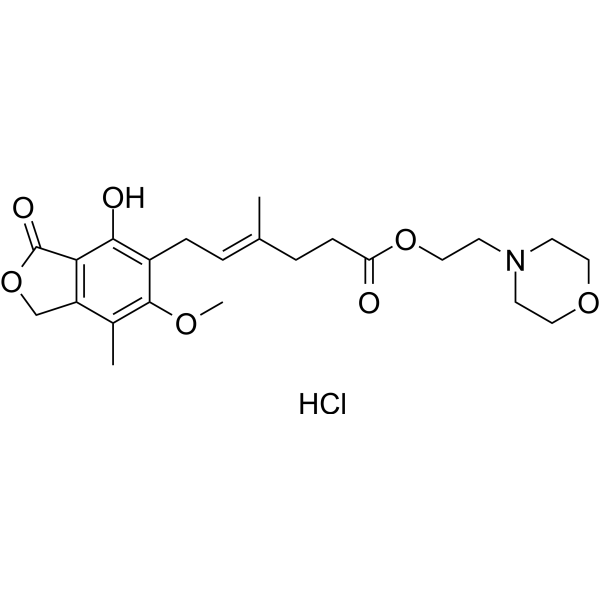
    Mycophenolate mofetil (RS 61443; TM-MMF) hydrochloride is an orally active antimetabolic immunosuppressant with antiproliferative and anti-inflammatory properties. Mycophenolate mofetil hydrochloride significantly inhibits the production of B, T lymphocytes and the proliferation of smooth muscle cells by selectively blocking the de novo purine synthesis pathway. Mycophenolate mofetil hydrochloride effectively reduces adventitial inflammation, medial necrosis and intimal thickening in rat aortic allografts, and decreases the number of lymphocytes expressing the IL-2 receptor, thereby delaying xenograft rejection. Mycophenolate mofetil hydrochloride shows certain toxicity in a hamster-to-rat limb xenotransplantation model when used in combination with FK506 (HY-13756). Mycophenolate mofetil hydrochloride is widely used in studies related to allograft arteriosclerosis (chronic rejection) .
    Mycophenolate mofetil hydrochloride
  • HY-106224B
    Orexin A (human, rat, mouse) acetate
    Maximum Cited Publications
    11 Publications Verification

    Hypocretin-1 (human, rat, mouse) acetate

    Orexin Receptor (OX Receptor) Neurological Disease
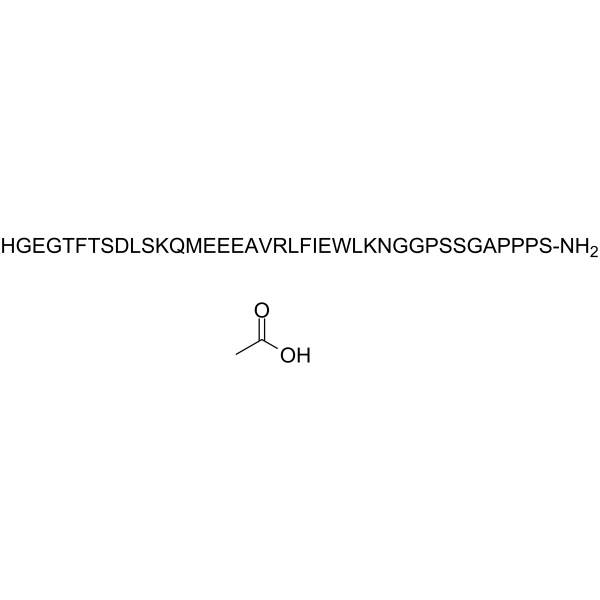
    Orexin A (Hypocretin-1) (human, rat, mouse) acetate is a hypothalamic neuropeptide with analgesic properties (crosses the blood-brain barrier). Orexin A (human, rat, mouse) acetate binds and activates two types of G protein-coupled receptors, the orexin-1 receptor (OX1R) and the orexin-2 receptor (OX2R). Orexin A (human, rat, mouse) acetate can be used in studies of appetite regulation, neurodegenerative diseases and modulation of injurious messaging .
    Orexin A (human, rat, mouse) acetate
  • HY-121119
    MRS 1523
    5 Publications Verification

    Adenosine Receptor Calcium Channel Cardiovascular Disease Neurological Disease Inflammation/Immunology
    MRS 1523 is a potent and selective adenosine A3 receptor antagonist with Ki values of 18.9 nM and 113 nM for human and rat A3 receptors, respectively. In rat this corresponds to selectivities of 140- and 18-fold vs A1 and A2A receptors, respectively. MRS 1523 can exert antihyperalgesic effect through N-type Ca channel block and action potential inhibition in isolated rat dorsal root ganglion (DRG) neurons .
    MRS 1523
  • HY-134353B

    Adenosine 5'-β-thiodiphosphate trilithium

    P2Y Receptor NF-κB Interleukin Related Caspase Neurological Disease Inflammation/Immunology Cancer
    ADP-β-S (Adenosine 5'-(β-thiodiphosphate)) trilithium is a non-hydrolyzable ADP analog and a P2Y12 receptor agonist. ADP-β-S trilithium activates the P2Y12 receptor in microglia, thereby triggering downstream inflammatory signaling pathways. ADP-β-S trilithium activates P2Y purinergic receptors in rat pancreatic β cells and enhances glucose-induced insulin secretion. ADP-β-S trilithium can be used in the research of diseases such as inflammation and diabetes .
    ADP-β-S trilithium
  • HY-P1248

    NPFF

    Neuropeptide FF Receptor Cardiovascular Disease Neurological Disease
    Neuropeptide FF (NPFF), an octapeptide belonging to the RF-amide family of peptides, is a NPFF1 and NPFF2 receptors agonist with Ki values of 2.82 nM and 0.21 nM, respectively. Neuropeptide FF induces abstinence syndrome, exerts antiopioid and analgesic effects, releases via calcium-dependent mechanisms from rat spinal cord, regulates memory, autonomic function, and neuroendocrine function, modulates pain and opioid antinociception, reduces food intake, stimulates water intake, alters cardiovascular parameters, and shows differential activity in hypothalamic paraventricular nucleus neurons. Neuropeptide FF is present in mammalian central nervous system and periphery, with NPFF-immunoreactivity increases in rat cerebrospinal fluid during opiate tolerance, and its NPFF gene and NPFF-R2 gene are up-regulated in rat spinal cord and dorsal root ganglia during peripheral inflammation. Neuropeptide FF can be used for the research of opioid tolerance, morphine-induced analgesia, abstinence syndrome, pain, hypertension, nociception, inflammatory pain, and neuropathic pain .
    Neuropeptide FF
  • HY-16751

    APD811

    Prostaglandin Receptor Cardiovascular Disease Endocrinology
    Ralinepag is a potent, orally bioavailable and non-prostanoid prostacyclin (IP) receptor agonist, with EC50s of 8.5 nM, 530 nM and 850 nM for human and rat IP receptor and human DP1 receptor, respectively.
    Ralinepag
  • HY-125931

    DM232

    iGluR Neurological Disease Inflammation/Immunology
    Unifiram (DM232) is a AMPA receptor activator and cognitive enhancer. Unifiram activates the AMPA-mediated neurotransmission system. Unifiram reverses NBQX-induced amnesia in the passive avoidance test in mice. Unifiram reverses the antagonistic effect of kynurenic acid on NMDA-mediated [ 3H]NA release in rat hippocampal slices. Unifiram enhances excitatory synaptic transmission in the rat hippocampus in vitro. Unifiram can be used in studies related to amnesia and cognitive dysfunction, including age-related memory decline, neurodegenerative diseases such as Alzheimer's disease or Parkinson's disease, multiple sclerosis, schizophrenia, and attention deficit hyperactivity disorder .
    Unifiram
  • HY-11095

    mGluR CaSR PI3K Akt mTOR Autophagy Apoptosis Bcl-2 Family Caspase Cardiovascular Disease Neurological Disease
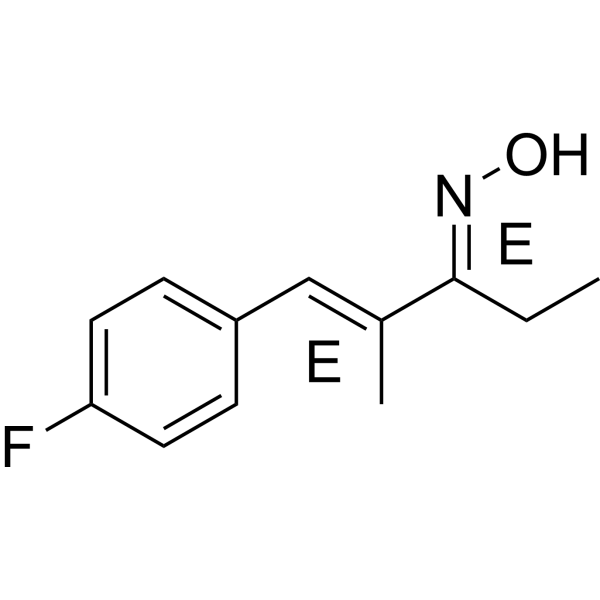
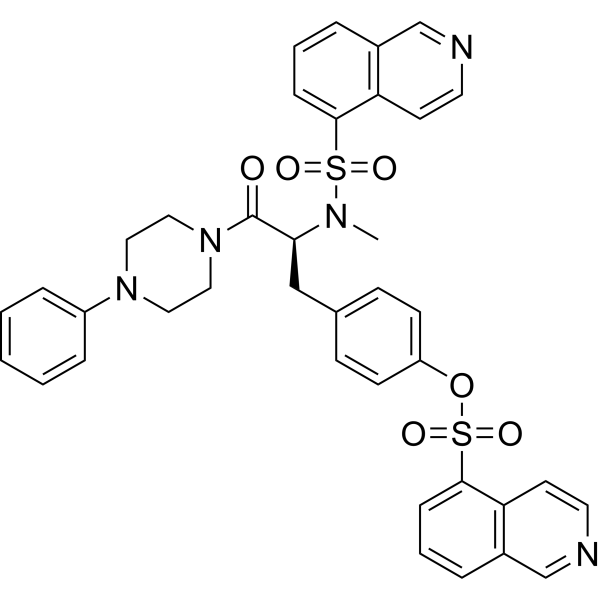
    NPS 2390 is an allosteric antagonist of calcium-sensing receptor (CaSR) and mGluR1/5. NPS 2390 inhibits the PI3K/Akt/mTOR signaling pathway, reduces hypoxia-induced intracellular calcium elevation, decreases the expression of autophagy (autophagy) proteins, regulates the expression of phenotypic marker proteins, and inhibits the proliferation of pulmonary artery smooth muscle cells. NPS 2390 attenuates the endogenous apoptosis (apoptosis) pathway, increases the expression level of Bcl-2, downregulates the expression levels of Bax, cytochrome c and caspase-3, alleviates cerebral edema and improves neurological function in rat models. NPS 2390 can be used in studies related to hypoxic pulmonary hypertension, traumatic brain injury, stroke and pain .
    NPS 2390
  • HY-110000

    Dopamine Receptor Neurological Disease
    (+)-PD 128907 hydrochloride is a selective dopamine D2/D3 receptor agonist, with Kis of 1.7, 0.84 nM for human and rat D3 receptors, 179, 770 n M for human and rat D3 receptors, respectively.
    (+)-PD 128907 hydrochloride
  • HY-50675

    GCGR Metabolic Disease
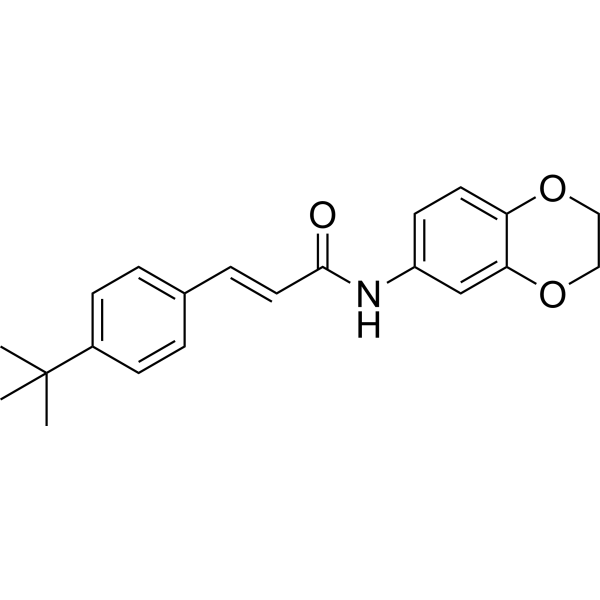
    GRA Ex-25 is an inhibitor of glucagon receptor, with IC50 of 56 and 55 nM for rat and human glucagon receptors, respectively.
    GRA Ex-25
  • HY-P1349
    Orexin B, rat, mouse
    1 Publications Verification

    rat orexin B; Orexin B (mouse)

    Orexin Receptor (OX Receptor) Neurological Disease Endocrinology
    Orexin B, rat, mouse (Rat orexin B) is an endogenous agonist at Orexin receptor with Kis of 420 and 36 nM for OX1 and OX2, respectively.
    Orexin B, rat, mouse
  • HY-15404

    Lu-135252

    Endothelin Receptor Cardiovascular Disease Endocrinology
    Darusentan (Lu-135252) is a selective endothelin receptor A (ET-A) receptor antagonist, which binds with a Ki of 1.4 nM to the ET-A receptor and a Ki of 184 nM to ET-B receptor, respectively with a 100-fold selectivity for ETA rather than ETB receptors . Darusentan competes for radiolabeled endothelin binding in rat aortic vascular smooth muscle cells (RAVSMs) membranes with single-site kinetics, exhibiting a Ki of 13 nM .
    Darusentan
  • HY-168366

    Opioid Receptor Neurological Disease
    R-6890 is a Brorphine-related opioid receptor antagonist that exhibits differential binding activities toward rat opioid receptors (IC50=4.6 nM (0.05 M Tris; pH 7.4) and 170 nM (0.05 M Tris+0.1 M NaCl)). R-6890 displaces bound labeled opioids from receptors, and its binding affinity is affected by environmental factors, decreasing in the presence of NaCl. R-6890 crosses the blood-brain barrier (BBB) and exerts analgesic effects in the warm water-induced tail-flick reflex model of male Wistar rats .
    R-6890
  • HY-106584

    Clospipramine

    Drug Derivative Dopamine Receptor 5-HT Receptor Neurological Disease
    Mosapramine (Clospipramine) is an orally active antipsychotic agent and one of the metabolites of Clocapramine (HY-B2073) after oral absorption. Mosapramine exerts its effects by specifically binding to striatal dopamine D2 receptors and frontal lobe 5-HT2 receptors, with a D2/5-HT2 receptor occupancy ratio of 7.4. Mosapramine induces typical neuropharmacological responses in rat brain regions, including extrapyramidal symptoms, hyperprolactinemia, increased salivation, constipation, and upregulated Fos protein expression. Mosapramine also features a reduced incidence of weight loss. Mosapramine is applicable to research related to schizophrenia .
    Mosapramine
  • HY-P1212

    CST-14 (mouse, rat)

    Somatostatin Receptor Neurological Disease
    Cortistatin 14, mouse, rat (CST-14, human, rat), a neuropeptide with neuronal depressant and sleep modulating properties, can bind to all five cloned somatostatin receptors (SSTRs) and ghrelin receptor to exert its biological activities and co-exists with GABA within the cortex and hippocampus .
    Cortistatin 14 (mouse, rat)
  • HY-W004425

    3,7-Dimethyl-1-propargylxanthine

    Adenosine Receptor Neurological Disease
    DMPX (3,7-Dimethyl-1-propargylxanthine) is a selective A2A adenosine receptor (A2A AR) antagonist that crosses the blood-brain barrier, with a Ki of 11 μM for rat A2 adenosine receptor and a Ki of 45 μM for rat A1 adenosine receptor. By blocking A2A receptors in specific brain regions, DMPX protects dopaminergic and GABAergic neurons from mitochondrial dysfunction. DMPX is applicable to research related to depression, Parkinson's disease and Huntington's disease .
    DMPX
  • HY-117694

    CGRP Receptor Neurological Disease Inflammation/Immunology
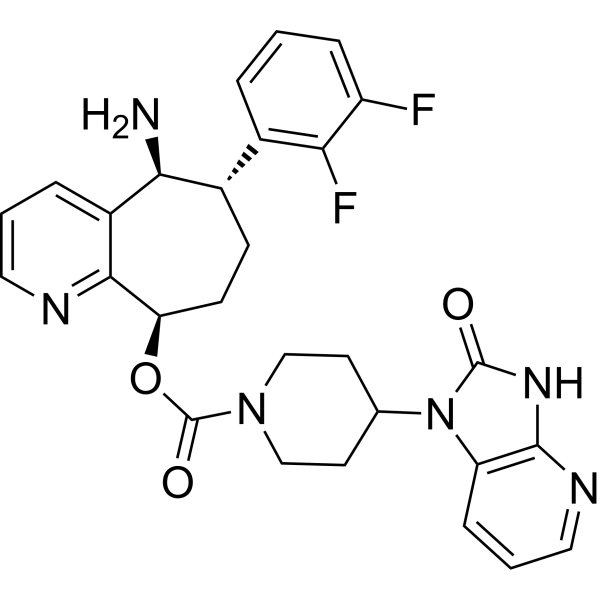
    MK-8825 is an orally active, selective CGRP receptor antagonist with a Ki value of 47 pM for human CGRP receptors and 17 nM for rat CGRP receptors. MK-8825 blocks CGRP-stimulated cAMP responses and exhibits competitive-like antagonism. MK-8825 can be used in the research of migraine and temporomandibular joint disorders .
    MK-8825
  • HY-P1065

    Apelin Receptor (APJ) HIV Infection Cardiovascular Disease Metabolic Disease
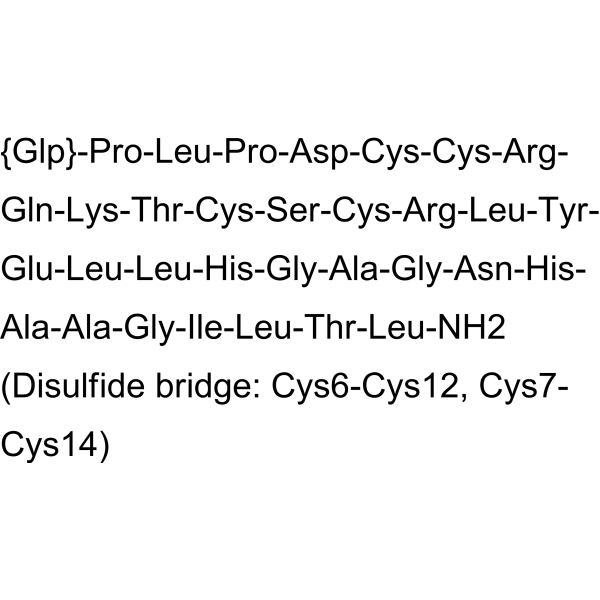
    Apelin-36(rat, mouse) is an endogenous orphan G protein-coupled receptor APJ agonist. Apelin-36(rat, mouse) binds to APJ receptors with an IC50 of 5.4 nM, and potently inhibits cAMP production with an EC50 of 0.52 nM. Apelin-36(rat, mouse) blocks entry of some HIV-1 and HIV-2 strains into NP-2/CD4 cells expressing APJ .
    Apelin-36(rat, mouse)
  • HY-106224A
    Orexin A (human, rat, mouse) TFA
    Maximum Cited Publications
    11 Publications Verification

    Hypocretin-1 (human, rat, mouse) TFA

    Orexin Receptor (OX Receptor) Neurological Disease
    Orexin A (human, rat, mouse) (Hypocretin-1 (human, rat, mouse)) TFA, a 33 amino acid excitatory neuropeptide, orchestrates diverse central and peripheral processes. Orexin A (human, rat, mouse) TFA binds and activates two types of G protein-coupled receptors, the orexin-1 receptor (OX1R) and the orexin-2 receptor (OX2R). Orexin A (human, rat, mouse) TFA has a role in the regulation of feeding behavior. Orexin A (human, rat, mouse) TFA is an effective anti-nociceptive and anti-hyperalgesic agent in mice and rats .
    Orexin A (human, rat, mouse) TFA
  • HY-101420

    Histamine Receptor Inflammation/Immunology Endocrinology
    VUF10460 is a non-imidazole histamine H4 receptor agonist; binds to rat H4 receptor with a pKi of 7.46.
    VUF10460
  • HY-P1349A
    Orexin B, rat, mouse TFA
    1 Publications Verification

    rat orexin B TFA; Orexin B (mouse) TFA

    Orexin Receptor (OX Receptor) Neurological Disease Endocrinology
    Orexin B, rat, mouse (Rat orexin B) TFA is an endogenous orexin receptor agonist. Orexin B, rat, mouse TFA binds and activates two closely related orphan G protein-coupled receptors OX1-R and OX2-R. Orexin B, rat, mouse TFA stimulates food intake and energy expenditure and plays a significant role in sleep-wakefulness regulation .
    Orexin B, rat, mouse TFA
  • HY-B1277A

    mAChR Cholinesterase (ChE) Cardiovascular Disease Neurological Disease
    Trihexyphenidyl is a selective and orally active M1 muscarinic receptor antagonist with an IC50 of 3.7 nM for rat cerebral cortex M1 muscarinic receptors. Trihexyphenidyl modulates cholinergic activity, countering acetylcholine supersensitivity in neural pathways. Trihexyphenidyl improves movement disorder, inhibits McN-A-343 (HY-107648)-induced pressor responses, vagally-induced bradycardia and vasodilatation. Trihexyphenidyl can be used for the research of Parkinson's disease. .
    Trihexyphenidyl
  • HY-107534

    GnRH Receptor Endocrinology
    AG-045572 is a GnRH receptor antagonist with Kis of 6.0 nM and 3.8 nM for human and rat GnRH receptor, respectively. AG-045572 is metabolized by CYP3A and ressuppresses testosterone .
    AG-045572
  • HY-103172

    P2Y Receptor Metabolic Disease
    8-Aminoadenine is an adenine receptor 1 (rAde1R) inhibitor with a Ki of 6.51 μM in rat and 0.0341 μM in human. 8-Aminoadenine inhibits isoprenaline-induced cAMP accumulation and adenine uptake in astrocytoma cells expressing rAde1R. 8-Aminoadenine serves as a lead structure for the development of adenine receptor ligands to elucidate the functions of the adenine receptor family .
    8-Aminoadenine
  • HY-P10405A

    Dopamine Receptor Neurological Disease
    TAT-D1 peptide acetate is a dopamine D1-D2 receptor heterodimer inhibitor. TAT-D1 peptide acetate disrupts the function of dopamine D1-D2 receptor heteromers, enhances subchronic amphetamine-induced locomotor activity, and exacerbates the expression of amphetamine-induced locomotor sensitization. TAT-D1 peptide acetate produces rapid anxiolytic and antidepressant-like effects in rat models of depression and anxiety, and inhibits c-fos expression in the nucleus accumbens of rats. TAT-D1 peptide acetate can be used in the research of psychostimulant addiction, depression and anxiety disorders .
    TAT-D1 peptide acetate
  • HY-B2058

    Fungal Androgen Receptor Infection
    Triticonazole is an orally active triazole fungicide and androgen receptor antagonist. Triticonazole inhibits testosterone-induced androgen receptor activation and reduces basal testosterone secretion. Prenatal exposure to Triticonazole causes shortened anogenital distance in male rat fetuses and induces organ-specific histopathological changes in pigs. Triticonazole can be used for detoxification of seeds contaminated with fungal pathogens, but there is a risk of animal poisoning if the treated seeds are used as animal feed .
    Triticonazole
  • HY-P4856

    PTHR PKC Endocrinology
    pTH-Related Protein (1-40) (human, mouse, rat) stimulates calcium uptake in rat intestinal cells through PTHR1 receptor and PKCα/β signaling pathways. pTH-Related Protein (1-40) up-regulates parathyroid hormone 1 receptor (PTHR1) protein, four transcellular calcium transporters, potential vanillin member 6 (TRPV6), calcium-binding protein-D9K (CaBP-D9k), sodium-calcium Exchanger 1 (NCX1) and plasma membrane calcium ATPase 1 (PMCA1) .
    pTH-Related Protein (1-40) (human, mouse, rat)
  • HY-P3852

    SPR393-407

    Neurokinin Receptor Neurological Disease Inflammation/Immunology
    Neurokinin Receptor (393-407), rat (SPR393–407) is a rat neurokinin 1 receptor (NK1R) fragment. NK1R is rapidly internalized by endocytosis and recycled to the plasma membrane when binding to substance P (SP). Neurokinin Receptor (393-407), rat can be used in the research of neurogenic inflammation .
    Neurokinin Receptor (393-407), rat
  • HY-P1532

    rat pancreatic polypeptide

    Neuropeptide Y Receptor Metabolic Disease Endocrinology
    Pancreatic Polypeptide, rat is an agonist of NPY receptor, with high affinity at NPYR4.
    Pancreatic Polypeptide, rat
  • HY-160076

    Apelin Receptor (APJ) Cardiovascular Disease
    APJ receptor agonist 8 (compound 99) is an agonist of APJ receptor. APJ receptor agonist 8 increases the load independent cardiac contractility of isolated perfused rat hearts .
    APJ receptor agonist 8
  • HY-W982195

    Adrenergic Receptor 5-HT Receptor Neurological Disease
    Napamezole hydrochloride is an orally active α-2 adrenergic receptor antagonist and serotonin (5-HT Receptor) reuptake inhibitor, with Ki values of 28 nM and 93 nM for rat α-2 and α-1 adrenergic receptors, respectively. Napamezole hydrochloride can be used for the research of depression .
    Napamezole hydrochloride
  • HY-114732

    Adrenergic Receptor Others
    Procaterol is an oral selective β2 adrenergic receptor agonist. Procaterol inhibits eosinophil migration and the release of eosinophil chemotactic factor from BEAS-2B cells through a cyclic AMP-dependent mechanism. Procaterol has a large dose difference existing between the bronchodilator effect and the anabolic effect in rat, can be used for asthma research in athletes .
    Procaterol
  • HY-P10405

    Dopamine Receptor Neurological Disease
    TAT-D1 peptide is a dopamine D1-D2 receptor heterodimer inhibitor. TAT-D1 peptide disrupts the function of dopamine D1-D2 receptor heteromers, enhances subchronic amphetamine-induced locomotor activity, and exacerbates the expression of amphetamine-induced locomotor sensitization. TAT-D1 peptide produces rapid anxiolytic and antidepressant-like effects in rat models of depression and anxiety, and inhibits c-fos expression in the nucleus accumbens of rats. TAT-D1 peptide can be used in the research of psychostimulant addiction, depression and anxiety disorders .
    TAT-D1 peptide
  • HY-W794785

    5-HT Receptor Neurological Disease
    WAY 208466 is a selective 5-HT6 receptor agonist with an EC50 of 7.3 nM. WAY-208466 increases GABA levels following both acute and chronic administration in the dorsolateral frontal cortex of rat models with stereotaxic surgery. WAY 208466 can be used for anxiety-related disorders like obsessive compulsive disorder (OCD) research .
    WAY 208466
  • HY-137608

    UDP-β-S

    P2Y Receptor DNA/RNA Synthesis Cardiovascular Disease Inflammation/Immunology
    Uridine 5'-O-thiodiphosphate (UDP-β-S) is a P2Y6 receptor agonist with an EC50 of 25 nM. Uridine 5'-O-thiodiphosphate resists degradation by extracellular nucleotidases and stimulates the accumulation of inositol phosphates. Uridine 5'-O-thiodiphosphate stimulates contractile responses in endothelium-denuded rat mesenteric arteries. As a mitogen, Uridine 5'-O-thiodiphosphate stimulates DNA synthesis, [ 3H] thymidine incorporation, protein synthesis, [ 3H]leucine incorporation, and increases the number of vascular smooth muscle cells. Uridine 5'-O-thiodiphosphate can be used in the research of cardiovascular diseases such as atherosclerosis .
    Uridine 5'-O-thiodiphosphate
  • HY-137608A

    UDP-β-S trisodium

    P2Y Receptor DNA/RNA Synthesis Cardiovascular Disease Inflammation/Immunology
    Uridine 5'-O-thiodiphosphate trisodium (UDP-β-S trisodium) is a P2Y6 receptor agonist with an EC50 of 25 nM. Uridine 5'-O-thiodiphosphate trisodium resists degradation by extracellular nucleotidases and stimulates the accumulation of inositol phosphates. Uridine 5'-O-thiodiphosphate trisodium stimulates contractile responses in endothelium-denuded rat mesenteric arteries. As a mitogen, Uridine 5'-O-thiodiphosphate trisodium stimulates DNA synthesis, [ 3H] thymidine incorporation, protein synthesis, [ 3H]leucine incorporation, and increases the number of vascular smooth muscle cells. Uridine 5'-O-thiodiphosphate trisodium can be used in the research of cardiovascular diseases such as atherosclerosis .
    Uridine 5'-O-thiodiphosphate trisodium
  • HY-173083

    Cannabinoid Receptor Neurological Disease
    MDA7 is the selective agonist for cannabinoid receptor 2 with EC50 of 128 nM and 67.4 nM in human CB2 receptor and rat CB2 receptor. MDA7 exhibits good affinity to human CB2 receptor and rat CB2 receptor with Ki of 422 nM and 238 nM. MDA7 exhibits analgesic activity in rats models .
    MDA7
  • HY-P1438
    Neuropeptide S(Rat)
    1 Publications Verification

    Neuropeptide Y Receptor Neurological Disease
    Neuropeptide S (Rat) is an endogenous ligand of a previously orphan G-protein-coupled receptor now named NPS receptor. Neuropeptide S (Rat) can be used for the research of nervous system disease .
    Neuropeptide S(Rat)
  • HY-P1766

    CGRP Receptor Cardiovascular Disease
    Adrenomedullin (11-50), rat is the C-terminal fragment (11-50) of rat adrenomedullin. Rat adrenomedullin induces a selective arterial vasodilation via CGRP1 receptors .
    Adrenomedullin (11-50), rat
  • HY-106224AS1

    Hypocretin-1-13C18,15N3 (human, rat, mouse) TFA

    Isotope-Labeled Compounds Orexin Receptor (OX Receptor) Neurological Disease
    Orexin A- 13C18, 15N3 (human, rat, mouse) ((Hypocretin-1- 13C18, 15N3 (human, rat, mouse)) TFA is the 13C- and 15N-labeled Orexin A (human, rat, mouse) (HY-106224). Orexin A (human, rat, mouse) (Hypocretin-1 (human, rat, mouse)), a 33 amino acid excitatory neuropeptide, orchestrates diverse central and peripheral processes. Orexin A (human, rat, mouse) binds and activates two types of G protein-coupled receptors, the orexin-1 receptor (OX1R) and the orexin-2 receptor (OX2R). Orexin A (human, rat, mouse) has a role in the regulation of feeding behavior. Orexin A (human, rat, mouse) is an effective anti-nociceptive and anti-hyperalgesic agent in mice and rats .
    Orexin A-13C18,15N3 (human, rat, mouse) TFA
  • HY-P1276

    Neurokinin-2 receptor antagonist

    Neurokinin Receptor Endocrinology
    Men 10376 is a selective tachykinin NK-2 receptor antagonist, with a Ki of 4.4 μM for rat small intestine NK-2 receptor.
    Men 10376
  • HY-P1578

    Neuropeptide Y Receptor Neurological Disease Endocrinology
    Galanin (1-16), mouse, porcine, rat is an agonist of the hippocampal galanin receptor, with a Kd of 3 nM.
    Galanin (1-16), mouse, porcine, rat
  • HY-105346

    Neurokinin Receptor Neurological Disease
    WIN 51708 is a nonpeptide antagonist of neurokinin (NK)-1 receptor. WIN 51708 has a higher affinity for the rat NK-1 receptor compared to the human NK-1 receptor .
    WIN 51708

Inquiry Online

Your information is safe with us. * Required Fields.

Salutation


Country or Region *

Applicant Name *


Organization Name *

Department *


Email Address *


Product Name *

Cat. No.


Requested quantity *

Phone Number *


Remarks

Inquiry Online

Inquiry Information

Product Name:
Cat. No.:
Quantity:
MCE Japan Authorized Agent:

