1. Search Result
Search Result
Results for "

reaction

" in MedChemExpress (MCE) Product Catalog:

2860

Inhibitors & Agonists

18

Screening Libraries

276

Fluorescent Dye

505

Biochemical Assay Reagents

61

Peptides

11

MCE Kits

11

Inhibitory Antibodies

219

Natural
Products

71

Isotope-Labeled Compounds

1007

Click Chemistry

122

Oligonucleotides

1

GMP Molecules

Cat. No. Product Name Target Research Areas Chemical Structure
  • HY-W021042

    THPTA

    Biochemical Assay Reagents Others
    Tris(3-hydroxypropyltriazolylmethyl)amine (THPTA) is an accelerating ligand in the copper-catalyzed azide-alkyne cycloaddition reaction (CuAAC) and protects cells from oxidants generated by copper-catalyzed reduction of oxygen by ascorbate. In addition, Tris(3-hydroxypropyltriazolylmethyl)amine can also protect the histidine moiety of biomolecules in a manner proportional to the ligand concentration .
    Tris(3-hydroxypropyltriazolylmethyl)amine
  • HY-151851

    ADC Linker Others
    3-Azidopropanol is an azide-containing alcohol and a click reaction substrate. 3-Azidopropanol undergoes Cu-catalyzed addition reaction with propargyl alcohol .
    3-Azidopropanol
  • HY-126399

    BTP

    Biochemical Assay Reagents Others
    Bis-tris propane (BTP) is a water-soluble buffer substance. Bis-tris propane can be used as a suitable buffer for polymerase chain reaction (PCR). Bis-tris propane can enhance the stability or activity of restriction enzymes .
    Bis-tris propane
  • HY-145442

    Adenosine Deaminase Others
    8-Azanebularine, a compound with hydrogen in place of the C6 amino group, inhibits the ADAR2 reaction at high concentrations (IC50=15 mM). 8-Azanebularine is incorporated into an RNA structure recognized by human ADAR2 results in high-affinity binding (KD=2 nM). 8-Azanebularine can be used for the research of ADAR-catalyzed RNA-editing reaction .
    8-Azanebularine
  • HY-D0832
    CY5-N3
    1 Publications Verification

    Sulfo-Cyanine5-azide

    DNA Stain Fluorescent Dye Infection
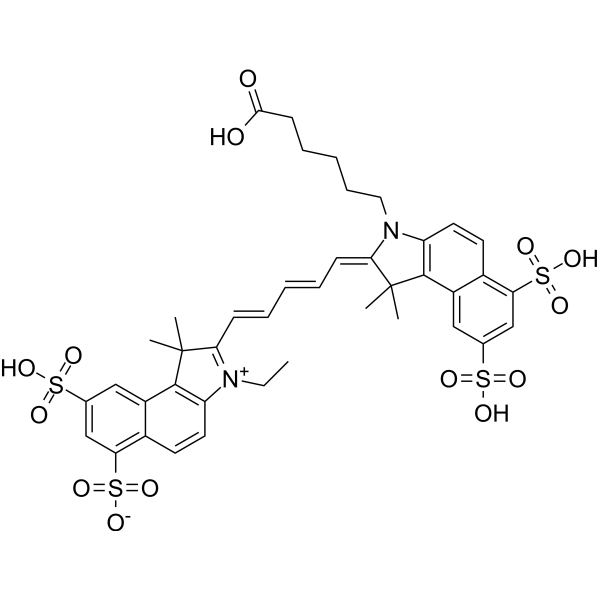
    CY5-N3 (Sulfo-Cyanine5-azide) is a Cy5-azide, which is a fluorescent dye (ex/em: 646/662 nm). CY5-N3 is cell membrane permeable and can be used for live cell imaging. CY5-N3 can be used in cell imagine by Click reaction .
    CY5-N3
  • HY-139338
    Erlose
    1 Publications Verification

    Glycosidase Others
    Erlose is a trisaccharide sucrose derivative and low-calorie sweetener synthesized from glucose and sucrose via an α-glucosidase-mediated transglycosylation reaction. Erlose is often used as a marker to identify whether honey is adulterated with artificial sucrose. Erlose has approximately half the sweetness of sucrose but a similar taste, and it effectively inhibits crystal formation and browning reactions during food heat treatment .
    Erlose
  • HY-139078
    Furosine dihydrochloride
    1 Publications Verification

    Amino Acid Derivatives Metabolic Disease
    Furosine dihydrochloride, an amino acid derivative, is an important chemical marker of early-stage Maillard reactions. Furosine dihydrochloride is closely related to a variety of diseases such as diabetes .
    Furosine dihydrochloride
  • HY-W015450

    D-Alanyl-D-alanine; H-D-Ala-D-Ala-OH

    Endogenous Metabolite Others
    D-Ala-D-Ala is a bacterial endogenous metabolite. D-Ala-D-Ala constitutes the terminus of the peptide part of the peptidoglycan monomer unit and is involved in the transpeptidation reaction as the substrate. D-Ala-D-Ala is catalyzed by D-Alanine-D-Alanine ligase .
    D-Ala-D-Ala
  • HY-W694629

    Biochemical Assay Reagents Others
    Triethylammonium bicarbonate is a biochemical reagent that can be used to prepare buffer solutions that maintains the stable pH environment required for processes such as enzyme-catalyzed reactions .
    Triethylammonium bicarbonate buffer (1.0M pH 8.5)
  • HY-W097899
    Vanillylamine
    1 Publications Verification

    JNK Cancer
    Vanillylamine is an immediate precursor for capsaicinoids. Vanillylamine is a derivative of Vanillin (HY-N0098) is synthesized through a transaminase reaction in the phenylpropanoid pathway of capsaicinoid synthesis. Vanillylamine significantly alleviates myelosuppression caused by abdominal and pelvic tumor chemotherapy .
    Vanillylamine
  • HY-107967

    Fluorescent Dye Cancer
    Isosulfan blue is a blue dye for the identification of lymph vessels during lymphangiography. Isosulfan blueis is used during sentinel lymph node biopsies in breast cancer. Isosulfan blue is possible to have an allergic reaction during breast cancer operations .
    Isosulfan blue
  • HY-W127776

    Ethylenediaminetetraacetic acid zinc disodium tetrahydrate

    Biochemical Assay Reagents Others
    Zn(II)-EDTA (Ethylenediaminetetraacetic acid zinc) disodium tetrahydrate is a coordinating agent. Zn(II)-EDTA disodium tetrahydrate coordinates with Zn 2+ to modify its solvated structure, provides pre-synthesized EDTA-Zn complexes that release Zn 2+ to repair zinc anode defects under interfacial electric field, adsorbs onto zinc anode surface to block oxygen and water molecules, inhibits corrosion and hydrogen evolution reactions, promotes uniform Zn 2+ deposition, suppresses zinc dendrite formation, and modulates the hydrogen bonding network within the electrolyte. Zn(II)-EDTA disodium tetrahydrate acts as an electrolyte additive to enhance reversibility and stability of zinc anodes in aqueous zinc-ion batteries .
    Zn(Ⅱ)-EDTA disodium tetrahydrate
  • HY-18761

    Cobalt(II) phthalocyanine; Cobaltous phthalocyanine; Phthalocyanine cobalt complex

    MOFs Others
    Cobalt phthalocyanine is a catalyst of redox reaction, catalyzes aerobic regenerations of aldehydes and ketones from aldoximes and ketoximes. Cobalt phthalocyanine can be used in the development of electrocatalysts .
    Cobalt phthalocyanine
  • HY-W800705

    Fluorescent Dye Others
    Tamra azide is an azide-terminated fluorescent dye and click reaction partner. Tamra azide undergoes Cu I-catalyzed cycloaddition click reaction with alkyne-functionalized nanodiamonds. After conjugation with nanodiamonds, Tamra azide serves as a fluorescent label that can be excited at a specific wavelength to exhibit characteristic luminescence (Ex/Em=555/580 nm) .
    Tamra azide
  • HY-W590989

    GPhos Pd G6 TES

    Drug Intermediate Others
    GPhos Pd G6 (GPhos Pd G6 TES) is a palladium catalyst. GPhos Pd G6 catalyzes the Buchwald-Hartwig amination reaction and promotes C-N bond formation between aryl chlorides and amines. GPhos Pd G6 is a pharmaceutical intermediate used for the synthesis of various active compounds .
    GPhos Pd G6
  • HY-D1321
    Cy 5 amine hydrochloride
    1 Publications Verification

    Cyanine5 amine hydrochloride

    Fluorescent Dye Others
    Cyanine5 amine hydrochloride is a potent fluorescent dye. Cyanine5 amine hydrochloride can be reacted with terminal alkynes via a copper-catalyzed click reaction (CuAAC). (λex=646 nm, λem=662 nm) .
    Cy 5 amine hydrochloride
  • HY-78727

    IBT4A

    Drug Intermediate Btk Inflammation/Immunology Cancer
    Ibrutinib deacryloylpiperidine (IBT4A) is a derivative of an Ibrutinib (HY-10997) intermediate and an Ibrutinib impurity. Ibrutinib deacryloylpiperidine serves as a starting material and is used in the synthesis of a modified BTK inhibitor derivative via the Mitsunobu reaction .
    Ibrutinib deacryloylpiperidine
  • HY-W019358

    Biochemical Assay Reagents Drug Intermediate Others
    2-Hydroxymethyl benzoic acid serves as an effective water substitute in the Passerini reaction. 2-Hydroxymethyl benzoic acid can be used for the synthesis of α-hydroxyamides, which are molecular building blocks for the synthesis of bioactive compounds .
    2-Hydroxymethyl benzoic acid
  • HY-W005485

    2,3,4,6-Tetra-O-benzyl-D-glucono-1,5-lactone

    Biochemical Assay Reagents Others
    Tetra-O-benzyl-δ-D-Gluconolactone (2,3,4,6-Tetra-O-benzyl-D-glucono-1,5-lactone) is a 1,5-sugar lactone and protected D-glucono-1,5-lactone, which serves as a synthetic intermediate in the field of carbohydrate chemistry. Tetra-O-benzyl-δ-D-Gluconolactone acts as a model substrate for zinc-mediated Barbier allylation, crotylation and propargylation reactions .
    Tetra-O-benzyl-δ-D-Gluconolactone
  • HY-D1320

    Fluorescent Dye Others
    Cyanine5 azide chloride is a potent fluorescent dye. Cyanine5 azide chloride can be reacted with terminal alkynes via a copper-catalyzed click reaction (CuAAC). (λex=646 nm, λem=662 nm) . It contains an azide group and can undergo copper-catalyzed azide-alkyne cycloaddition (CuAAc) with molecules containing alkyne groups. It can also undergo ring strain-promoted alkyne-azide cycloaddition (SPAAC) with molecules containing DBCO or BCN groups.
    Cyanine5 azide chloride
  • HY-151672

    ADC Linker Others
    Biotin-TEG-ATFBA is a click chemistry reagent containing a perfluorophenylazide group. Biotin-TEG-ATFBA forms a highly stable azene intermediate that undergoes insertion and addition reactions (non-intermolecular rearrangement) in moderate to good yields after photolysis. It contains an azide group and can undergo copper-catalyzed azide-alkyne cycloaddition (CuAAc) with molecules containing alkyne groups. It can also undergo ring strain-promoted alkyne-azide cycloaddition (SPAAC) with molecules containing DBCO or BCN groups.
    Biotin-TEG-ATFBA
  • HY-B1008A
    4-Aminobenzoic acid potassium
    1 Publications Verification

    PABA potassium; p-Aminobenzoic acid potassium

    Endogenous Metabolite Cardiovascular Disease Neurological Disease
    4-Aminobenzoic acid (PABA) potassium is a modifier of catecholamine oxidation reactions. 4-Aminobenzoic acid potassium is promising for research of Parkinson's disease and hypertension .
    4-Aminobenzoic acid potassium
  • HY-W250126

    Poly(ethylene-co-vinyl acetate)

    Environmental Pollutants Biochemical Assay Reagents Others
    Ethylene-vinyl acetate copolymer (Poly(ethylene-co-vinyl acetate)) is an encapsulant. Ethylene-vinyl acetate copolymer is cross-linked by a thermally activated reaction with peroxides. Ethylene-vinyl acetate copolymer can be used for encapsulation of photovoltaic modules .
    Ethylene-vinyl acetate copolymer
  • HY-W015912

    2-Furyl methyl ketone

    Drug Intermediate Infection
    2-Acetylfuran (2-Furyl methyl ketone), an important flavour compound or intermediate in foods, is isolated from essential oils, sweet corn products, fruits and flowers. 2-Acetylfuran also can be formed from glucose and glycine by Maillard reaction. 2-Acetylfuran can be used to synthesis Cefuroxime. 2-acetylfuran can be used in the synthesis of reagents with antiamoebic activity .
    2-Acetylfuran
  • HY-W017831

    Biochemical Assay Reagents Drug Intermediate Others
    2-Maleimido acetic acid is a maleimide-containing carboxylic acid ligand used to prepare Pt(IV) complexes capable of undergoing Diels-Alder reaction with furan derivatives for drug targeting and delivery applications .
    2-Maleimido acetic acid
  • HY-W039724

    Biochemical Assay Reagents Others
    Thioxanthone is a powerful photocatalyst for organic reactions. Thioxanthone is a heterocyclic compound with the ability to participate successfully in merger reactions with metal complexes .
    Thioxanthone
  • HY-E70026

    Biochemical Assay Reagents Others
    L-fucokinase/GDP-fucose pyrophos-phorylase (FKP) is an enzyme that catalyzes the chemical reaction. L-fucokinase/GDP-fucose pyrophos-phorylase (FKP) has substrate of L-fucose. L-fucokinase/GDP-fucose pyrophos-phorylase (FKP) induces L-fucose phosphorylation to form L-fucose-L-phosphate .
    L-fucokinase/GDP-fucose pyrophos-phorylase (FKP)
  • HY-151746

    ADC Linker Others
    N3-Gly-Gly-Gly-OH is a oligo-Gly click chemistry reagent containing an azide group. Oligo-Gly also has been used as linker to combine different subunits of dimeric or oligomeric proteins or to create artificial multi-domain proteins. By modification into Gly-Gly-Gly-Ser motifs high solubility can be achieved . N3-Gly-Gly-Gly-OH is a click chemistry reagent, it contains an Azide group and can undergo copper-catalyzed azide-alkyne cycloaddition reaction (CuAAc) with molecules containing Alkyne groups. It can also undergo strain-promoted alkyne-azide cycloaddition (SPAAC) reactions with molecules containing DBCO or BCN groups.
    N3-Gly-Gly-Gly-OH
  • HY-164911

    Potassium Channel Endocrinology
    VU0546110 is a selective inhibitor of the sperm-specific potassium channel SLO3, with IC50s of 1.287 μM (SLO3) and 59.80 μM (SLO1) in HEK293 cells, respectively. VU0546110 blocks heterologous SLO3 currents and endogenous K + currents in human sperm. VU0546110 halts sperm hyperpolarization, induced acrosome reaction, and hyper-activated motility. VU0546110 has contraceptive potential .
    VU0546110
  • HY-30014
    4-Bromo-7-azaindole
    1 Publications Verification

    Drug Intermediate Others
    4-Bromo-7-azaindole is a brominated derivative of 7-azaindole. 4-Bromo-7-azaindole serves as a substrate for palladium-catalyzed C-N and C-O cross-coupling reactions, reacting with amides, amines, amino acid esters and phenols .
    4-Bromo-7-azaindole
  • HY-173396

    VU319

    mAChR Neurological Disease
    VU0467319 (Compound VU319) is a highly selective and blood-brain-permeable, orally active M1 positive allosteric modulator (PAM) (EC50: 492 nM). VU0467319 is selective (EC50 > 30 μM) versus M2-5 for both human and rat. VU0467319 improves cognitive impairment in Alzheimer's disease (AD) through central M1 muscarinic receptors. VU0467319 does not induce cholinergic adverse reactions and has potential in AD research .
    VU0467319
  • HY-B2241A

    Aluminum potassium sulfate dodecahydrate, for cell culture

    Biochemical Assay Reagents Inflammation/Immunology
    Potassiumalum, for cell culture (Aluminum potassium sulfate dodecahydrate, for cell culture) is an egg white adjuvant. Potassiumalum, for cell culture acts as a mordant to help dyes bind to tissue components, enhancing the staining effect and stability during staining. Potassiumalum, for cell culture can induce allergic reactions in mice. Potassium alum, for cell culture can be used in research for bacterial and tissue staining .
    Potassiumalum, for cell culture
  • HY-W039915

    Glycosidase Others
    Allyl α-D-galactopyranoside is an α-galactoside and acceptor/donor substrate for transgalactosylation reactions. Allyl α-D-galactopyranoside acts as an acceptor substrate in α-galactosidase-catalyzed transgalactosylation, and serves as a donor substrate to form longer α-galactosyl-containing oligosaccharides. Allyl α-D-galactopyranoside serves as a model compound for investigating the catalytic mechanism and substrate specificity of glycoside hydrolases and glycosyltransferases .
    Allyl α-D-galactopyranoside
  • HY-W190824

    Biochemical Assay Reagents Others
    Biotin-PEG8-azide is a bioconjugation reagent. Biotin-PEG8-azide consists of biotin, PEG8 linker and azide group and serves as a modifying linker in click reactions. Biotin-PEG8-azide can be used for research related to click chemistry .
    Biotin-PEG8-azide
  • HY-151759

    Fluorescent Dye Cancer
    Sulfo-Cy5-TCO is a water-soluble sulfonated Cy5 fluorescent reagent containing trans-cyclooctene (TCO). Sulfo-Cy5-TCO undergoes an inverse electron demand Diels‑Alder reaction with tetrazine-labeled fixed breast cancer cells to achieve cell labeling. Sulfo-Cy5-TCO is used for fluorescent labeling and imaging of biological samples such as proteins and cells .
    Sulfo-Cy5-TCO
  • HY-W013264A

    Biochemical Assay Reagents Others
    Tetrabutylammonium chloride monohydrate, a quaternary ammonium cation, is a catalyst in a chemical reaction .
    Tetrabutylammonium chloride monohydrate
  • HY-130544

    5-Azidovaleric acid

    Biochemical Assay Reagents PROTAC Linkers Others
    5-Azidopentanoic acid (5-Azidovaleric acid) is a organic acid that can be used in click chemistry reactions .
    5-Azidopentanoic acid
  • HY-137337

    Fluorescent Dye Others
    Suc-Ala-Ala-Phe-AMC is a fluorogenic chymotrypsin substrate, can be hydrolyzed by endopeptidase. Suc-Ala-Ala-Phe-AMC has been used in both in vivo assays of the acrosome reaction and in vitro enzyme assays .
    Suc-Ala-Ala-Phe-AMC
  • HY-W184893

    Others Inflammation/Immunology
    Atranol is a strong contact allergen found in oak moss absolute (OMA). Atranol causes contact dermatitis by inducing immune system allergic reactions. Atranol is promising for research of etiology of contact dermatitis and cosmetic allergens .
    Atranol
  • HY-118813

    Endogenous Metabolite Others
    3-Deoxy-galactosone is a 1,2-dicarbonyl compound originating from the degradation of galactose. 3-Deoxy-galactosone is formed in food during Maillard and caramelization reactions .
    3-Deoxy-galactosone
  • HY-P990208

    Interleukin Related NF-κB Parasite Infection Inflammation/Immunology Cancer
    Anti-Mouse IL-9 Antibody (9C1) is an anti-mouse IL-9 IgG2a monoclonal antibody. Anti-Mouse IL-9 Antibody (9C1) can reduce the activation of NF-κB signaling pathway and decrease the infiltration of inflammatory cells. Anti-Mouse IL-9 Antibody (9C1) effectively reduces Th9 cell-mediated allergic reactions and anti-tumor effects. Anti-Mouse IL-9 Antibody (9C1) can be used for researches on inflammation, infection conditions and cancer such as parasitic infections, allergic reactions, breast cancer and osteosarcoma .
    Anti-Mouse IL-9 Antibody (9C1)
  • HY-Y0038

    Trk Receptor Cancer
    2-Bromo-6-methoxynaphthalene is an active intermediate in the production of anti-inflammatory agents like Naproxen and Nabumetone by Heck reaction. 2-Bromo-6-methoxynaphthalene has potential anti-inflammatory properties and Tyrosine-protein inhibitor properties. 2-Bromo-6-methoxynaphthalene can be used for the research of cancer .
    2-Bromo-6-methoxynaphthalene
  • HY-160958

    Biochemical Assay Reagents Others
    Cap B (Acetonitrile/N-methylimidazole /pyridine, 50/20/30 v/v/v) is a biochemical reagent, which contains 50% Acetonitrile, 20 N-methylimidazole and 30% pyridine. Cap B (Acetonitrile/N-methylimidazole /pyridine, 50/20/30 v/v/v) is utilized as capping agent in oligonucleotide synthesis .
    Cap B Acetonitrile/N-methylimidazole /pyridine, 50/20/30 v/v/v
  • HY-160258

    GDP-Fucose-Am-Tz

    Biochemical Assay Reagents Others
    GDP-Fucose-Tz (GDP-Fucose-Am-Tz) is a non-natural GDP-fucose analog bearing a Tetrazine group. As a precursor, GDP-Fucose-Tz enables the synthesis of GDP-fucose-ssDNA probes via inverse electron demand Diels-Alder reaction. GDP-Fucose-Tz participates in chemoenzymatic reactions to prepare GDP-fucose-Herceptin derivatives through conjugation with TCO-Herceptin .
    GDP-Fucose-Tz
  • HY-151682

    Amino Acid Derivatives Others
    H-L-Lys(Norbornene-methoxycarbonyl)-OH is a Norbornene (HY-W013021)-derivatized lysine that can be click-functionalized. H-L-Lys(Norbornene-methoxycarbonyl)-OH can be used for the mild and selective modification of proteins in a copper-free click reaction .
    H-L-Lys(Norbornene-methoxycarbonyl)-OH
  • HY-151794

    ADC Linker Others
    DACN(Ms) hydrochloride (compound 1ba) is a click chemistry reagent containing cyclononyne alkyne. DCN(Ms) hydrochloride has high thermal stability, chemical stability, water solubility, and high reactivity for cycloaddition reactions .
    DACN(Ms) hydrochloride
  • HY-B1699
    Metrizoic acid
    1 Publications Verification

    Metrizoate

    Biochemical Assay Reagents Others
    Metrizoic acid (Metrizoate) is an ionic contrast medium. Metrizoic acid (Metrizoate) shows high osmolality and has a risk of inducing allergic reactions .
    Metrizoic acid
  • HY-D2289

    Fluorescent Dye Others
    CalFluor 647 azide is a fluorogenic azide probe that is activated by Cu-catalyzed or metal-free click reaction. CalFluor 647 azide is not fluorescent until it is reacted with alkynes .
    CalFluor 647 azide
  • HY-136100

    ADC Linker Cancer
    TCO-PEG1-Val-Cit-PABC-PNP is a cleavable 1 unit PEG ADC linker used in the synthesis of antibody-drug conjugates (ADCs). TCO-PEG1-Val-Cit-PABC-PNP is a click chemistry reagent, which contains a TCO group that can undergo an inverse electron demand Diels-Alder reaction (iEDDA) with molecules containing Tetrazine groups .
    TCO-PEG1-Val-Cit-PABC-PNP
  • HY-136100A

    ADC Linker Cancer
    TCO-PEG1-Val-Cit-PABC-PNP TFA is a cleavable 1 unit PEG ADC linker used in the synthesis of antibody-drug conjugates (ADCs). TCO-PEG1-Val-Cit-PABC-PNP TFA is a click chemistry reagent, which contains a TCO group that can undergo an inverse electron demand Diels-Alder reaction (iEDDA) with molecules containing Tetrazine groups .
    TCO-PEG1-Val-Cit-PABC-PNP TFA

Inquiry Online

Your information is safe with us. * Required Fields.

Salutation


Country or Region *

Applicant Name *


Organization Name *

Department *


Email Address *


Product Name *

Cat. No.


Requested quantity *

Phone Number *


Remarks

Inquiry Online

Inquiry Information

Product Name:
Cat. No.:
Quantity:
MCE Japan Authorized Agent:

