14 Results for "

retinal pigment epithelial cells

" in MedChemExpress (MCE) Product Catalog:
Products (14)

14 Results for "retinal pigment epithelial cells" in MCE Product Catalog:

4
4 Cited Publications
Cat. No.: HY-N0428
CAS No.: 751-03-1
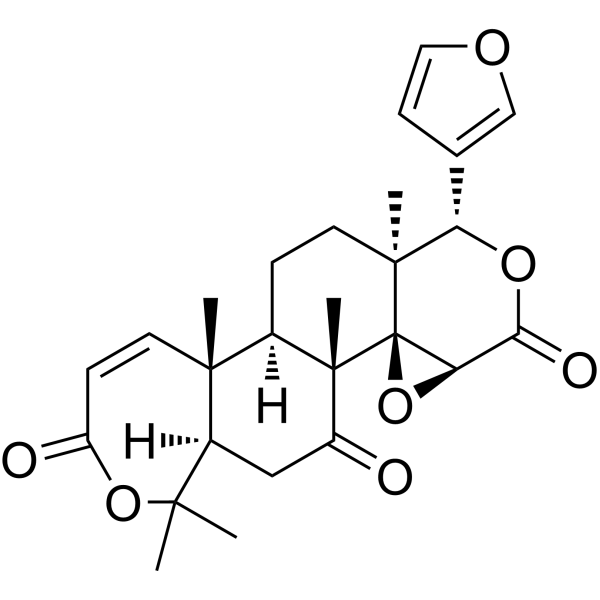
Obacunone is a highly oxidized triterpenoid limonoid isolated from citrus plants. Obacunone exerts its anticancer effects by inducing apoptosis. Obacunone also protects retinal pigment epithelial (RPE) cells from ultraviolet (UV) radiation (UVR)-induced oxidative damage .
loading...
    loading...
2
2 Cited Publications
Cat. No.: HY-W040045
CAS No.: 18466-51-8
Synonyms: Pelargonidin-3-O-glucoside chloride
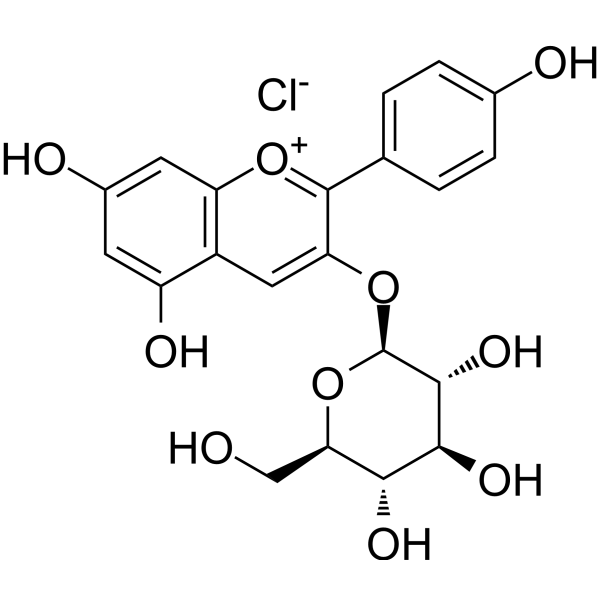
Callistephin (Pelargonidin 3-O-glucoside) chloride is an anthocyanin. Callistephin chloride regulates the expression of inflammatory (reducing iNOS/TNF-α/COX-2) and apoptosis-related proteins by inhibiting p38 phosphorylation, and enhances the protective effect of Isoflurane (HY-A0134) on microglial cell damage. Callistephin chloride significantly reduces ROS levels, eliminates DPPH free radicals, protects retinal pigment epithelial cells, and inhibits lipid peroxidation. Callistephin chloride can alleviate glutamate excitotoxicity, reduce neuronal apoptosis, and protect cerebellar granule neurons. Callistephin chloride can inhibit the proliferation and metastasis of breast cancer cells by inducing apoptosis .
loading...
    loading...
Cat. No.: HY-164926
CAS No.: 2640677-68-3
Target:  

PARP

Research Areas:  

Neurological Disease

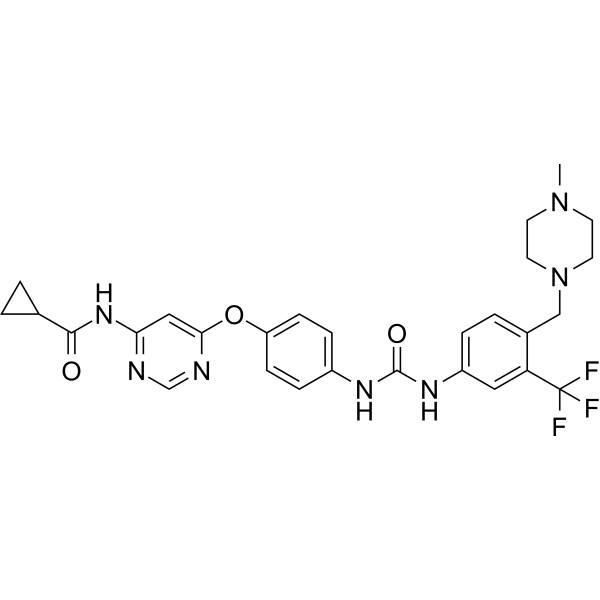
PARP1-IN-33 (Example 6) is a PARP1 inhibitor (IC50: 0.41 nM). PARP1-IN-33 has retinal cytoprotective effect, with an EC50 of 0.02 nM (inhibition on MTS activity of H2O2 induced human retinal pigment epithelial cell) .
loading...
    loading...
Cat. No.: HY-12462
CAS No.: 1421227-52-2
Purity:  98.00%
WS3 is an allosteric inhibitor of 14-3-3 (14-3-3ζ: Kd = 2.29 μM). WS3 activates GSK3β by disrupting the binding of 14-3-3-pGSK3β, promotes the ubiquitination and degradation of NRF2, and inhibits the NRF2-ARE signaling pathway (IC50 = 135 nM). It exerts antioxidant inhibition and chemotherapeutic/ferroptosis sensitizing effects in tumors with hyperactivated NRF2. WS3 binds to EBP1/IKKε and promotes the proliferation of β cells and retinal pigment epithelial (RPE) cells, which can be applied to islet regeneration and RPE expansion transplantation . WS3 is applicable to research related to age-related macular degeneration, retinal degeneration and non-small cell lung cancer .
loading...
    loading...
Cat. No.: HY-145628
CAS No.: 1121931-70-1
Purity:  99.85%
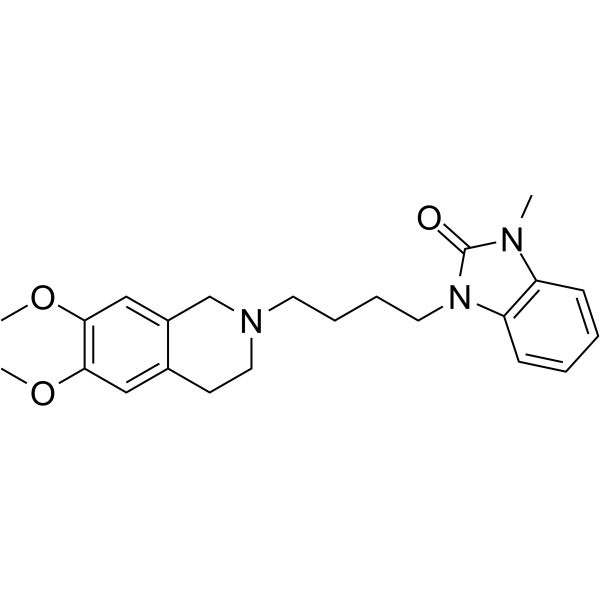
CM398 is a highly selective, orally active Sigma-2 receptor ligand with a Ki value of 0.43 nM. CM398 ameliorates age-related macular degeneration. CM398 exerts analgesic effects on visceral pain, inflammatory pain and neuropathic pain. CM398 can be used in research related to age-related macular degeneration, neuropathic pain and inflammatory pain .
loading...
    loading...
Cat. No.: HY-113127
CAS No.: 20696-57-5
Target:  

Apoptosis

Research Areas:  

Others

L-Tryptophanamide is a compound discovered in wet age-related macular degeneration research, which has activities related to affecting retinal cell proliferation, apoptosis, necrosis and angiogenesis. In in vitro experiments, L-Tryptophanamide affects the proliferation, apoptosis and necrosis of human retinal pigment epithelial cells, and promotes tube formation and migration of human retinal endothelial cells.
loading...
    loading...
Cat. No.: HY-162904
CAS No.: 2198977-68-1
Research Areas:  

Cardiovascular Disease

BPU17 binds to PHB1 and causes mild defects in mitochondrial function by defects in the PHB1-PHB2 interaction. This impairment inhibits the SRF/CArG-box-dependent transcription, resulting in the suppression of epithelial-mesenchymal transition (EMT) of retinal pigment epithelial cells (RPEs). BPU17 exhibits antifibrotic activity in vivo. BPU17 is promising for research of anti-neovascular age-related macular degeneration (nAMD) agent .
loading...
    loading...
Cat. No.: HY-N0428R
CAS No.: 751-03-1
Obacunone (Standard) is the analytical standard of Obacunone. This product is intended for research and analytical applications. Obacunone is a highly oxidized triterpenoid limonoid isolated from citrus plants. Obacunone exerts its anticancer effects by inducing apoptosis. Obacunone also protects retinal pigment epithelial (RPE) cells from ultraviolet (UV) radiation (UVR)-induced oxidative damage .
loading...
    loading...
Cat. No.: HY-W587784
CAS No.: 542-40-5
Norbixin is an orally active natural product with multiple activities such as retinal protection and oxidative stress regulation. Norbixin scavenges ROS, chelates metal ions, regulates plasmid and genomic DNA breakage, inhibits H2O2-induced mutagenesis, activates PPAR-α, modulates lipid levels, restores or regulates antioxidant enzyme activity, and alters NO levels. Norbixin prevents A2E accumulation and protects photoreceptor cells and retinal pigment epithelial cells. Norbixin is a derivative of Bixin (HY-N6884). Norbixin can be used in research related to diseases such as macular degeneration and diabetes, and also serves as a natural textile dye .
loading...
    loading...
Cat. No.: HY-W040045R
CAS No.: 18466-51-8
Synonyms: Pelargonidin-3-O-glucoside chloride (Standard)
Callistephin (Pelargonidin 3-O-glucoside) chloride (Standard) is the analytical standard of Callistephin chloride (HY-W040045). This product is intended for research and analytical applications. Callistephin chloride is an anthocyanin. Callistephin chloride regulates the expression of inflammatory (reducing iNOS/TNF-α/COX-2) and apoptosis-related proteins by inhibiting p38 phosphorylation, and enhances the protective effect of Isoflurane (HY-A0134) on microglial cell damage. Callistephin chloride significantly reduces ROS levels, eliminates DPPH free radicals, protects retinal pigment epithelial cells, and inhibits lipid peroxidation. Callistephin chloride can alleviate glutamate excitotoxicity, reduce neuronal apoptosis, and protect cerebellar granule neurons. Callistephin chloride can inhibit the proliferation and metastasis of breast cancer cells by inducing apoptosis.
loading...
    loading...
Cat. No.: HY-W888515
Research Areas:  

Neurological Disease

mPEG-PCL is an amphiphilic biodegradable block copolymer composed of hydrophilic methoxy poly (ethylene glycol) (mPEG) and hydrophobic poly (ε-caprolactone) (PCL). mPEG-PCL possesses excellent biocompatibility and can form delivery carriers such as micelles and nanoparticles. Through its amphiphilic block structure, mPEG-PCL forms nanocarriers and encapsulates hydrophobic molecules, thereby enhancing the loading capacity of hydrophobic molecules, reducing burst release, and achieving sustained release. mPEG-PCL can be used in research on nanodelivery, tissue engineering, and ocular delivery systems related to age-related macular degeneration (AMD) .
loading...
    loading...
Cat. No.: HY-151872
CAS No.: 3031411-05-6
Target:  

HDAC Ferroptosis

Research Areas:  

Cancer

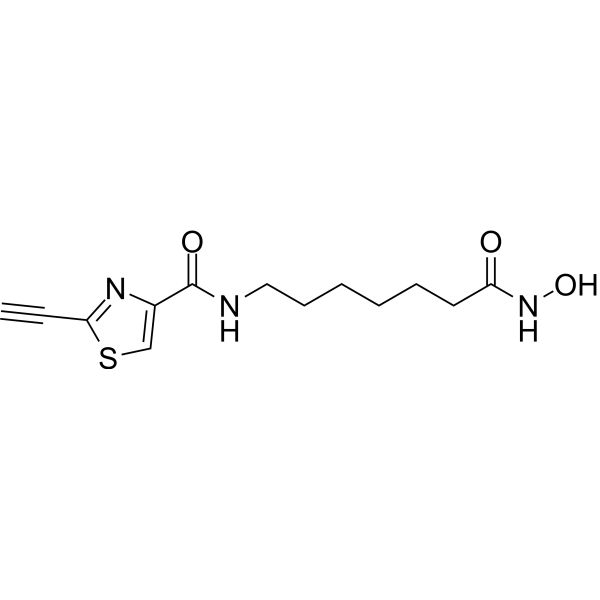
HDAC-IN-48 is a potent HDAC inhibitor. HDAC-IN-48 is a hybrid molecule with great cytotoxic profile (GI50~20 nM). HDAC-IN-48 consists of harmacophores of SAHA and CETZOLE molecules. HDAC-IN-48 induces ferroptosis and inhibits HDAC proteins . HDAC-IN-48 is a click chemistry reagent, it contains an Alkyne group and can undergo copper-catalyzed azide-alkyne cycloaddition (CuAAc) with molecules containing Azide groups.
loading...
    loading...
Cat. No.: HY-W319295
CAS No.: 3637-10-3
TEMPOL-H is the reduced hydroxylamine form of the stable nitroxide radical Tempol (HY-100561), and serves as the active metabolite of OT-551 (HY-W556870). TEMPOL-H acts as a potent antioxidant and free radical scavenger. TEMPOL-H protects retinal pigment epithelial cells from acute light-induced damage, and protects mice from lethal whole-body radiation. TEMPOL-H inhibits lens opacification in mice, prevents glutathione loss in rat lenses under stress, blocks protein leakage in rhesus monkey lenses under stress, and maintains the 3H-choline accumulation capacity of the lens. TEMPOL-H can be used in studies related to light-induced retinal pigment epithelial degeneration and age-related cataract .
loading...
    loading...
Cat. No.: HY-182385
CAS No.: 1628945-93-6
Target:  

Lipocalin Family

Research Areas:  

Metabolic Disease

BPN-14136 is an orally effective retinol-binding protein 4 (RBP4) inhibitor. BPN-14136 inhibits the binding of retinol to RBP4 with an IC50 of 12.8 nM. BPN-14136 inhibits retinol-dependent RBP4-transthyretin interaction (IC50 = 43.6 nM) and reduces circulating plasma RBP4 levels in vivo. BPN-14136 decreases the formation of cytotoxic bisretinoids in retinal pigment epithelial cells. BPN-14136 can be used for the research of atrophic age-related macular degeneration and Stargardt disease .
loading...
    loading...
  • 1

