1. Search Result
Search Result
Results for "

semi-synthetic

" in MedChemExpress (MCE) Product Catalog:

206

Inhibitors & Agonists

1

Screening Libraries

1

Fluorescent Dyes

1

Biochemical Assay Reagents

2

Peptides

16

Natural
Products

24

Isotope-Labeled Compounds

1

Click Chemistry

1

GMP Molecules

Cat. No. Product Name Target Research Areas Chemical Structure
  • HY-17412
    Minocycline hydrochloride
    60+ Cited Publications

    Bacterial Antibiotic HIF/HIF Prolyl-Hydroxylase Apoptosis MDM-2/p53 Potassium Channel Calcium Channel Infection Cardiovascular Disease Neurological Disease Metabolic Disease Inflammation/Immunology Cancer
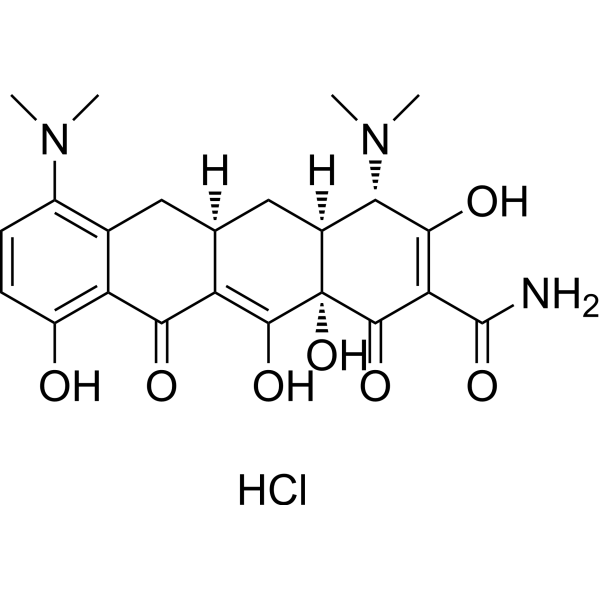
    Minocycline hydrochloride is an orally active, potent and BBB-penetrated semi-synthetic tetracycline antibiotic. Minocycline hydrochloride is a hypoxia-inducible factor (HIF)-1α inhibitor. Minocycline hydrochloride shows anti-cancer, anti-inflammatory, and glutamate antagonist effects. Minocycline hydrochloride reduces glutamate neurotransmission and shows neuroprotective properties and antidepressant effects. Minocycline hydrochloride inhibits bacterial protein synthesis through binding with the 30S subunit of the bacterial ribosome, resulting in a bacteriostatic effect .
    Minocycline hydrochloride
  • HY-B0525A
    Carbenicillin disodium
    5+ Cited Publications

    Sodium carbenicillin

    Antibiotic Bacterial Infection
    Carbenicillin disodium (Sodium carbenicillin) is a broad-spectrum semi-synthetic penicillin antibiotic for gram-negative bacteria. Carbenicillin disodium can interfere the cell wall synthesis while displaying low toxicity to plant tissue .
    Carbenicillin disodium
  • HY-15459
    Cabazitaxel
    20+ Cited Publications

    XRP6258; RPR-116258A; taxoid XRP6258

    Microtubule/Tubulin Autophagy Cancer
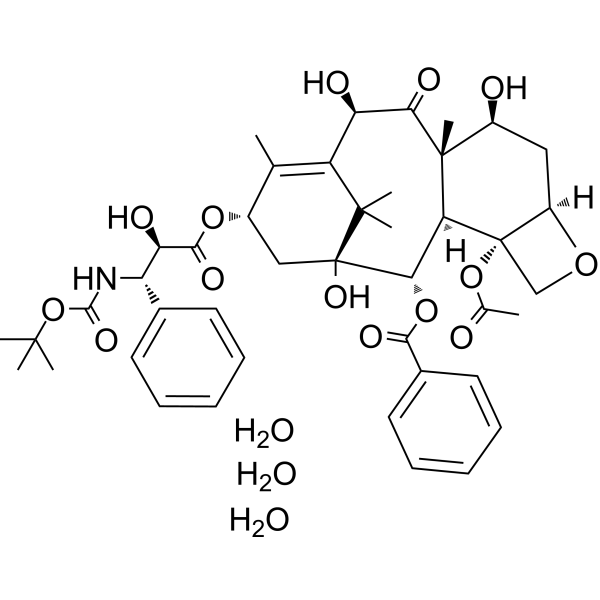
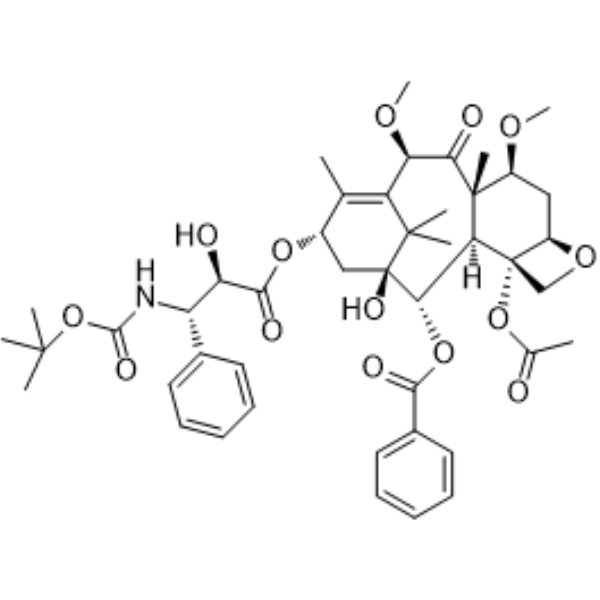
    Cabazitaxel is a semi-synthetic derivative of the natural taxoid 10-deacetylbaccatin III with potential antineoplastic activity.
    Cabazitaxel
  • HY-B0974
    Methicillin sodium salt
    5+ Cited Publications

    Meticillin sodium

    Penicillin-binding protein (PBP) Bacterial Antibiotic Infection
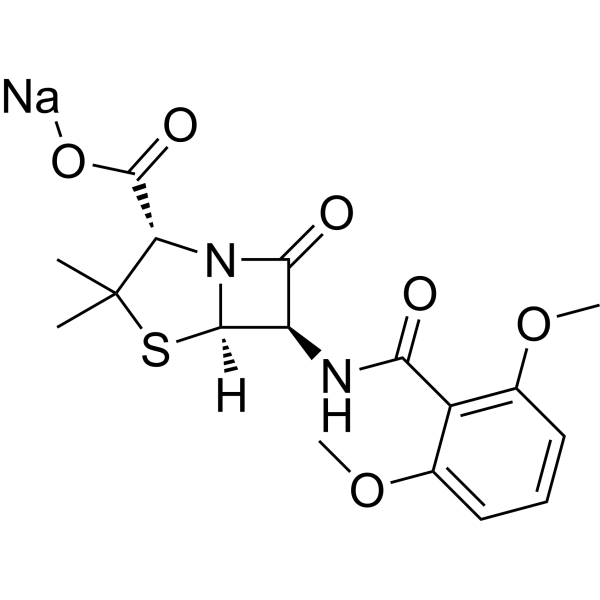
    Methicillin sodium salt (Meticillin sodium) is a β-lactam, semi-synthetic antibiotic related to penicillin antibiotic. Methicillin sodium salt inhibits penicillin-binding proteins involved in the synthesis of peptidoglycan. Methicillin sodium salt inhibits S. aureus with a MIC value of 2.1 μg/mL. Methicillin sodium salt can be used for the research of inflammation .
    Methicillin sodium salt
  • HY-13553
    Anidulafungin
    5+ Cited Publications

    LY303366

    Fungal Antibiotic Infection Cancer
    Anidulafungin is a new semisynthetic echinocandin with antifungal potency.
    Anidulafungin
  • HY-17025
    Rifabutin
    5+ Cited Publications

    Ansamycin; LM-427

    DNA/RNA Synthesis Bacterial Antibiotic Infection
    Rifabutin (Ansamycin) is a semisynthetic ansamycin antibiotic with potent antimycobacterial properties. Rifabutin inhibits DNA-dependent RNA polymerase.
    Rifabutin
  • HY-B0210
    Cefoperazone
    5+ Cited Publications

    Bacterial Antibiotic Infection
    Cefoperazone, a semisynthetic cephalosporin, has a broad spectrum of antibacterial activity .
    Cefoperazone
  • HY-B0408A
    Clindamycin hydrochloride
    10+ Cited Publications

    Bacterial Antibiotic Infection Cancer
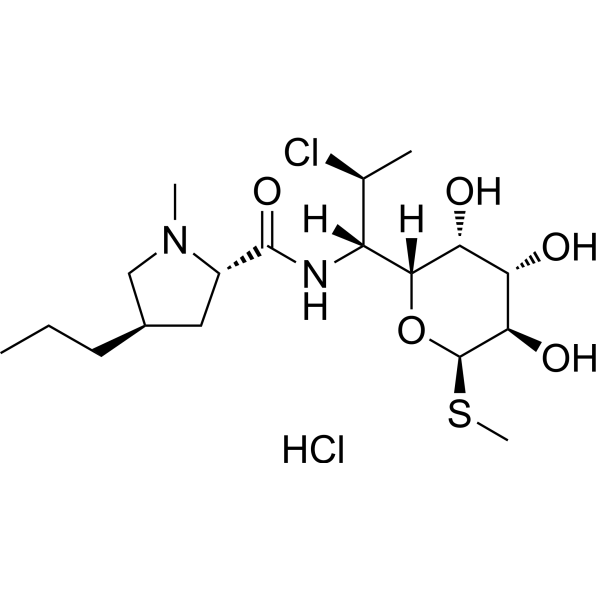
    Clindamycin (hydrochloride) is a semisynthetic lincosamide antibiotic, which inhibits protein synthesis by acting on the 50S ribosomal.
    Clindamycin hydrochloride
  • HY-107212

    Parasite Chloride Channel P-glycoprotein Bacterial Infection
    Selamectin, a semi-synthetic macrocyclic lactone, is a potent parasiticide and anthelminthic. Selamectin activates glutamate-gated chloride channels in neurons and pharyngeal muscles to prevent heartworm, Lymphatic filariae, and nematode infection. Selamectin is also a potent P-glycoprotein substrate and a P-glycoprotein inhibitor with an IC50 of 120 nM .
    Selamectin
  • HY-17412A
    Minocycline
    60+ Cited Publications

    Antibiotic Bacterial HIF/HIF Prolyl-Hydroxylase Apoptosis MDM-2/p53 Potassium Channel Calcium Channel Infection Cardiovascular Disease Neurological Disease Metabolic Disease Inflammation/Immunology Cancer
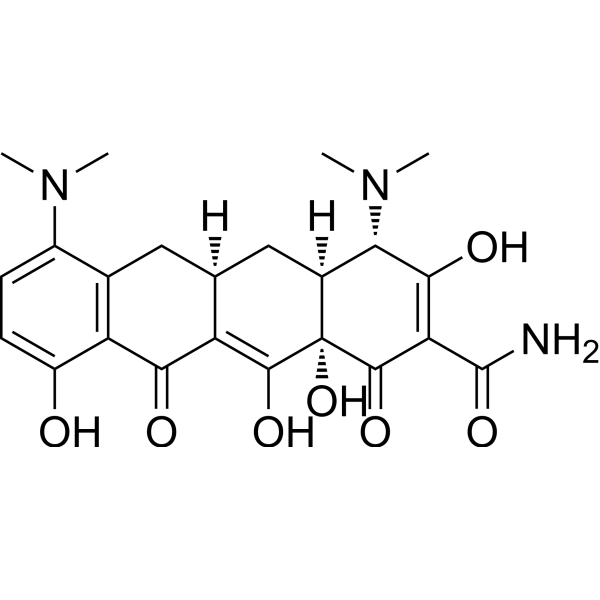
    Minocycline is an orally active, potent and BBB-penetrated semi-synthetic tetracycline antibiotic. Minocycline is a hypoxia-inducible factor (HIF)-1α inhibitor. Minocycline shows anti-cancer, anti-inflammatory, and glutamate antagonist effects. Minocycline reduces glutamate neurotransmission and shows neuroprotective properties and antidepressant effects. Minocycline inhibits bacterial protein synthesis through binding with the 30S subunit of the bacterial ribosome, resulting in a bacteriostatic effect .
    Minocycline
  • HY-A0203A
    Pentosan Polysulfate Sodium (W/W 43%)
    2 Publications Verification

    HIV Infection Inflammation/Immunology Cancer
    Pentosan Polysulfate Sodium is an orally bioavailable, semi-synthetic medication with anti-inflammatory and pro-chondrogenic properties. Pentosan Polysulfate Sodium also is a potent and selective anti-HIV agent. Pentosan Polysulfate Sodium is used for the treatment of interstitial cystitis .
    Pentosan Polysulfate Sodium (W/W 43%)
  • HY-148286

    Antibiotic Bacterial Infection
    Gentamicin C1a is the precursor of the semi-synthetic antibiotic Etimicin, and has antibacterial activity. Gentamicin C1a is the major component of the Gentamicin complex .
    Gentamicin C1a
  • HY-B0136
    Cefdinir
    4 Publications Verification

    FK-482; CI-983

    Bacterial Antibiotic Infection
    Cefdinir (FK-482) is a semi-synthetic, broad-spectrum antibiotic in the third generation of the cephalosporin class, which is proved to be effective for infections caused by several Gram-negative and Gram-positive bacteria. Cefdinir can be used for the research of common bacterial infections of the ear, sinus, throat, and skin .
    Cefdinir
  • HY-17466

    Bonomycin; 6-Demethyl-6-deoxytetracycline

    Bacterial Antibiotic Metabolic Disease Inflammation/Immunology
    Sancycline (6-Demethyl-6-deoxytetracycline) acts by reversibly binding to the 30 S ribosomal subunit and inhibiting protein translation by blocking entry of aminoacyl-tRNA into the ribosome a site similar to tetracycline (HY-A0107). Sancycline, four linearly fused six-membered rings with four stereocenters, is a rare semi-synthetic tetracycline (HY-A0107) prepared by hydrogenolysis of the chloro and benzylic hydroxy moieties of Declomycin .
    Sancycline
  • HY-B0837
    Emamectin Benzoate
    1 Publications Verification

    MK-244

    Environmental Pollutants Parasite Apoptosis Reactive Oxygen Species (ROS) GABA Receptor Infection Neurological Disease
    Emamectin Benzoate (MK-244) is an orally active nervoussystem toxicant by binding g-aminobutyric (GABA) receptor in insects. Emamectin Benzoate is one of semi-synthetic derivative of Avermectin (HY-15311) with a broadspectrum of insecticidal and acaricidal activity. Emamectin Benzoate induces ROS-mediated DNA damage and cell apoptosis. Emamectin Benzoate, a mixture of the natural Emamectin B1a benzoate and Emamectin B1b benzoate, has the main component of Emamectin B1a benzoate .
    Emamectin Benzoate
  • HY-B0210A
    Cefoperazone sodium salt
    5+ Cited Publications

    CP 52640-2

    Bacterial Antibiotic Infection
    Cefoperazone sodium salt (CP 52640-2), a semisynthetic cephalosporin, has a broad spectrum of antibacterial activity .
    Cefoperazone sodium salt
  • HY-15459S

    XRP6258-d6; RPR-116258A-d6; taxoid XRP6258-d6

    Microtubule/Tubulin Autophagy Cancer
    Cabazitaxel-d6 is the deuterium labeled Cabazitaxel. Cabazitaxel is a semi-synthetic derivative of the natural taxoid 10-deacetylbaccatin III with potential antineoplastic activity .
    Cabazitaxel-d6
  • HY-P2834

    PGA

    Biochemical Assay Reagents Others
    Penicillin amidase, E. coli (Immobilized) (PGA) is an amidohydrolase commonly used in industrial biocatalysis. Penicillin amidase, E. coli (Immobilized) serves as a starting material in the synthesis of semi-synthetic penicillins. Penicillin amidase, E. coli (Immobilized) promotes the production of semi-synthetic β-lactam antibiotics, participates in peptide synthesis, and catalyzes the formation of chiral compounds. Penicillin amidase, E. coli (Immobilized) is regulated by temperature and phenylacetic acid in E. coli. In free E. coli, it participates in the assimilation of aromatic compounds as a carbon source. Penicillin amidase, E. coli (Immobilized) is hypothesized to act as a scavenging enzyme for phenylacetyl-containing compounds in microbial metabolism and is associated with bacterial quorum sensing .
    Penicillin amidase, E. coli (Immobilized)
  • HY-15459S1

    XRP6258-d9; RPR-116258A-d9; taxoid XRP6258-d9

    Isotope-Labeled Compounds Microtubule/Tubulin Autophagy Cancer
    Cabazitaxel-d9 is deuterium labeled Cabazitaxel. Cabazitaxel is a semi-synthetic derivative of the natural taxoid 10-deacetylbaccatin III with potential antineoplastic activity.
    Cabazitaxel-d9
  • HY-W008923
    Doxycycline monohydrate
    Maximum Cited Publications
    173 Publications Verification

    MMP Parasite Bacterial Antibiotic Apoptosis Akt PI3K Infection Neurological Disease Inflammation/Immunology Cancer
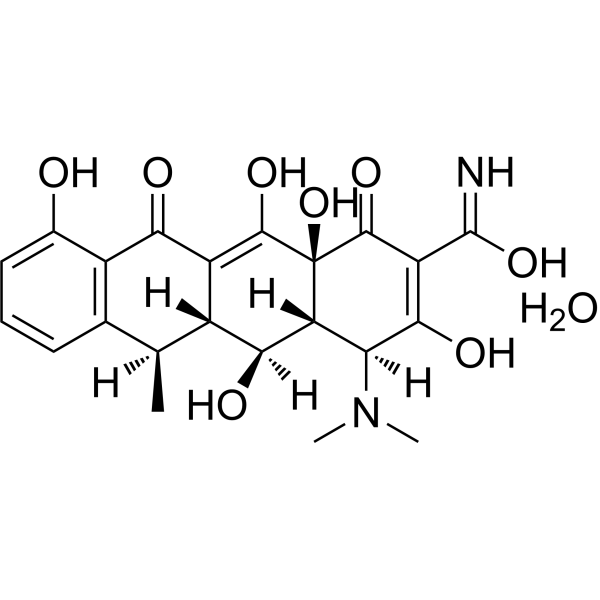
    Doxycycline monohydrate is an orally active highly lipophilic, tissue-permeable MMP inhibitor with broad-spectrum antibacterial activity. Doxycycline monohydrate is also a semi-synthetic antibiotic with chelating properties, which blocks bacterial protein synthesis and inhibits extracellular matrix degradation through interactions with zinc and calcium atoms. Doxycycline monohydrate also inhibits mitochondrial biogenesis, translation, and the expression of respiratory chain proteins. Doxycycline monohydrate induces apoptosis, inhibits autophagy and EMT, downregulates stem cell markers, and activates the PI3K-AKT pathway, thereby effectively inhibiting the viability and proliferation of cancer cells such as breast cancer cells. Doxycycline monohydrate also promotes the survival and self-renewal of embryonic stem cells and neural stem cells, and reduces the frequency of medium changes in culture. Doxycycline monohydrate has been applied in studies related to breast cancer, prostate cancer, bladder cancer, and other cancers .
    Doxycycline monohydrate
  • HY-B1275
    Cephalothin sodium
    3 Publications Verification

    Cefalotin sodium

    Beta-lactamase Bacterial Antibiotic Infection
    Cephalothin (Cephalotin) sodium is a semi-synthetic cephalosporin antibiotic and beta-lactam antibiotic. Cephalothin inhibits class C β-lactamase AmpC, with an Ki of 0.32 µM. Cephalothin sodium binds to penicillin-binding proteins, interfering with the cross-linking of peptidoglycan in the cell wall and thus hindering the normal synthesis of the bacterial cell wall. Cephalothin sodium shows antibacterial activity against a variety of bacteria. Cephalothin sodium can be used in hematological and nephrotoxicity studies .
    Cephalothin sodium
  • HY-B1275A
    Cephalothin
    3 Publications Verification

    Cephalotin

    Beta-lactamase Bacterial Antibiotic Infection Cardiovascular Disease
    Cephalothin (Cephalotin) is a semi-synthetic cephalosporin antibiotic and beta-lactam antibiotic. Cephalothin inhibits class C β-lactamase AmpC, with an Ki of 0.32 µM. Cephalothin binds to penicillin-binding proteins, interfering with the cross-linking of peptidoglycan in the cell wall and thus hindering the normal synthesis of the bacterial cell wall. Cephalothin shows antibacterial activity against a variety of bacteria. Cephalothin can be used in hematological and nephrotoxicity studies .
    Cephalothin
  • HY-17412R

    Reference Standards Antibiotic Bacterial HIF/HIF Prolyl-Hydroxylase Apoptosis MDM-2/p53 Potassium Channel Calcium Channel Infection Cardiovascular Disease Neurological Disease Metabolic Disease Inflammation/Immunology Cancer
    Minocycline (hydrochloride) (Standard) is the analytical standard of Minocycline (hydrochloride). This product is intended for research and analytical applications. Minocycline hydrochloride is an orally active, potent and BBB-penetrated semi-synthetic tetracycline antibiotic. Minocycline hydrochloride is a hypoxia-inducible factor (HIF)-1α inhibitor. Minocycline hydrochloride shows anti-cancer, anti-inflammatory, and glutamate antagonist effects. Minocycline hydrochloride reduces glutamate neurotransmission and shows neuroprotective properties and antidepressant effects. Minocycline hydrochloride inhibits bacterial protein synthesis through binding with the 30S subunit of the bacterial ribosome, resulting in a bacteriostatic effect .
    Minocycline hydrochloride (Standard)
  • HY-B0525

    Antibiotic Bacterial Infection
    Carbenicillin is a broad-spectrum semi-synthetic penicillin antibiotic for gram-negative bacteria. Carbenicillin can interfere the cell wall synthesis while displaying low toxicity to plant tissue .
    Carbenicillin
  • HY-B0643
    Dirithromycin
    1 Publications Verification

    LY237216

    Bacterial Antibiotic Infection
    Dirithromycin (LY237216), a derivative of Erythromycin, is a potent and orally active semi-synthetic macrolide antibiotic. Dirithromycin is active against gram-positive bacteria, Legionella spp., Helicobacter pylori, and Chlamydia trachomatis .
    Dirithromycin
  • HY-B1299
    Cephalosporin C
    1 Publications Verification

    Bacterial Infection
    Cephalosporin C has weak resistance to Gram-positive and negative bacteria, is stable to penicillinase, and can be broken down by cephalosporin enzyme. Hydrolysis and removal of side chains to obtain 7-amino-cefenoic acid (7-ACA) is an important raw material for the preparation of semi-synthetic cephalosporin .
    Cephalosporin C
  • HY-B1149A

    Drug Derivative Bacterial Antibiotic Infection
    Bacampicillin hydrochloride is an orally active semi-synthetic aminopenicillin derivative, prodrug and bactericide that is readily inactivated by β-lactamases. Bacampicillin hydrochloride is hydrolyzed by carboxylester hydrolases and non-specific esterases in the gastrointestinal wall and plasma to form Ampicillin (HY-B0522), and produces higher levels of Ampicillin in rodents in vivo. Bacampicillin hydrochloride exhibits bactericidal activity against Gram-positive and Gram-negative bacteria. Bacampicillin hydrochloride can be used in studies related to bacterial infections .
    Bacampicillin (hydrochloride)
  • HY-B2091

    Antibiotic Bacterial Infection
    Azidocillin, a semi-synthetic Penicillin, is an orally active β-lactam antibiotic. Azidocillin bears an azide functionality and retains on-target activity within bacteria. Azidocillin can be used to research osteitis caused by dental surgery, otitis media, enterococcal septicemia and other bacterial infectious diseases . Azidocillin is a click chemistry reagent, it contains an Azide group and can undergo copper-catalyzed azide-alkyne cycloaddition reaction (CuAAc) with molecules containing Alkyne groups. It can also undergo strain-promoted alkyne-azide cycloaddition (SPAAC) reactions with molecules containing DBCO or BCN groups.
    Azidocillin
  • HY-B1128A

    Cephamandole sodium

    Antibiotic Bacterial Infection
    Cefamandole (Cephamandole) sodium is a semi-synthetic second-generation cephalosporin antibiotic with broad-spectrum antimicrobial activity. Cefamandole sodium is resistant to hydrolysis by β-lactamases produced by some Gram-negative bacteria. Cefamandole sodium kills Gram-positive cocci and various Gram-negative bacilli mainly by inhibiting cell wall synthesis, but it is inactive against Pseudomonas, Proteus vulgaris and Providencia stuartii, and its efficacy is affected by inoculum size. The plasma elimination half-life of Cefamandole sodium in rats is only 0.4 h, it is mainly excreted in urine in biologically active form, and it hardly penetrates the non-inflamed blood-brain barrier. Cefamandole sodium is widely used in studies related to bacterial infections .
    Cefamandole sodium
  • HY-N0565S1

    Isotope-Labeled Compounds MMP Parasite Bacterial Antibiotic Apoptosis Akt PI3K Infection Neurological Disease Inflammation/Immunology Cancer
    Doxycycline-d3 hyclate (major) is the deuterium labeled Doxycycline hyclate (HY-N0565B). Doxycycline hyclate is an orally active highly lipophilic, tissue-permeable MMP inhibitor with broad-spectrum antibacterial activity. Doxycycline hyclate is also a semi-synthetic antibiotic with chelating properties, which blocks bacterial protein synthesis and inhibits extracellular matrix degradation through interactions with zinc and calcium atoms. Doxycycline hyclate also inhibits mitochondrial biogenesis, translation, and the expression of respiratory chain proteins. Doxycycline hyclate induces apoptosis, inhibits autophagy and EMT, downregulates stem cell markers, and activates the PI3K-AKT pathway, thereby effectively inhibiting the viability and proliferation of cancer cells such as breast cancer cells. Doxycycline hyclate also promotes the survival and self-renewal of embryonic stem cells and neural stem cells, and reduces the frequency of medium changes in culture. Doxycycline hyclate has been applied in studies related to breast cancer, prostate cancer, bladder cancer, and other cancers .
    Doxycycline-d3 (hyclate) (major)
  • HY-19502
    Artemisone
    1 Publications Verification

    Artemifone; BAY 44-9585

    Parasite CMV Infection
    Artemisone (Artemifone) is a potent and semi-synthetic antimalarial, inhibits P. falciparum strains, with a mean IC50 of 0.83 nM . Artemisone is also a potent inhibitor of human CMV .
    Artemisone
  • HY-B0435S

    RU-28965-d7

    Isotope-Labeled Compounds Antibiotic Bacterial Others
    Roxithromycin-d7 (RU-28965-d7) is the deuterium labeled Roxithromycin (HY-B0435) . Roxithromycin (RU-28965) is a semi-synthetic macrolide antibiotic .
    Roxithromycin-d7
  • HY-16955A
    Plazomicin sulfate
    1 Publications Verification

    ACHN 490 sulfate

    Antibiotic Bacterial Infection
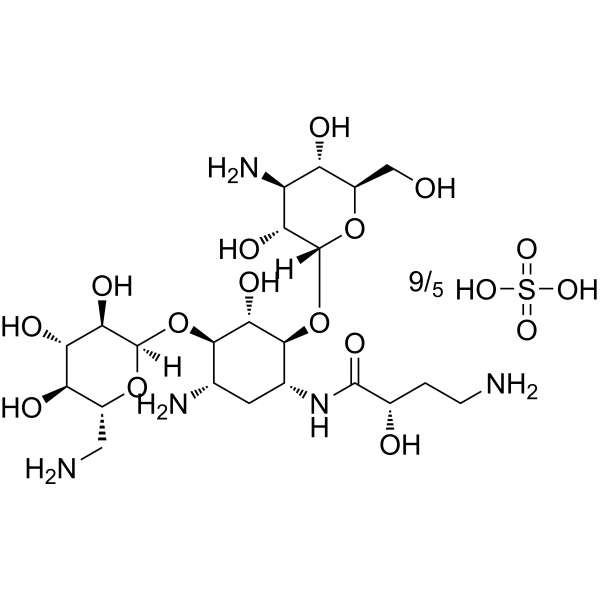
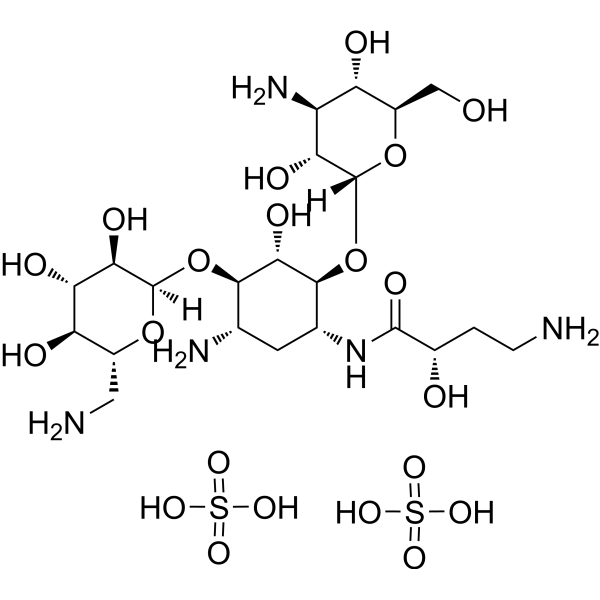
    Plazomicin (ACHN 490) sulfate is a semi-synthetic aminoglycoside Antibiotic. Plazomicin sulfate acts as a substrate for Aminoglycoside acetyltransferase and Aminoglycoside phosphotransferase. Plazomicin sulfaten is not modified by various common aminoglycoside-modifying enzymes. Plazomicin sulfate selectively inhibits MATE2-K. Plazomicin sulfate exhibits activity against multidrug-resistant bacteria, including carbapenem-resistant Enterobacterales .
    Plazomicin sulfate
  • HY-N0565AR

    Reference Standards MMP Parasite Bacterial Antibiotic Apoptosis Akt PI3K Infection Neurological Disease Inflammation/Immunology Cancer
    Doxycycline hydrochloride (Standard) is the analytical standard of Doxycycline hydrochloride (HY-N0565A). This product is intended for research and analytical applications. Doxycycline hydrochloride is an orally active highly lipophilic, tissue-permeable MMP inhibitor with broad-spectrum antibacterial activity. Doxycycline hydrochloride is also a semi-synthetic antibiotic with chelating properties, which blocks bacterial protein synthesis and inhibits extracellular matrix degradation through interactions with zinc and calcium atoms. Doxycycline hydrochloride also inhibits mitochondrial biogenesis, translation, and the expression of respiratory chain proteins. Doxycycline hydrochloride induces apoptosis, inhibits autophagy and EMT, downregulates stem cell markers, and activates the PI3K-AKT pathway, thereby effectively inhibiting the viability and proliferation of cancer cells such as breast cancer cells. Doxycycline hydrochloride also promotes the survival and self-renewal of embryonic stem cells and neural stem cells, and reduces the frequency of medium changes in culture. Doxycycline hydrochloride has been applied in studies related to breast cancer, prostate cancer, bladder cancer, and other cancers .
    Doxycycline (hydrochloride) (Standard)
  • HY-N0565R

    Reference Standards MMP Parasite Bacterial Antibiotic Apoptosis Akt PI3K Infection Neurological Disease Inflammation/Immunology Cancer
    Doxycycline (Standard) is the analytical standard of Doxycycline (HY-N0565). This product is intended for research and analytical applications. Doxycycline is an orally active highly lipophilic, tissue-permeable MMP inhibitor with broad-spectrum antibacterial activity. Doxycycline is also a semi-synthetic antibiotic with chelating properties, which blocks bacterial protein synthesis and inhibits extracellular matrix degradation through interactions with zinc and calcium atoms. Doxycycline also inhibits mitochondrial biogenesis, translation, and the expression of respiratory chain proteins. Doxycycline induces apoptosis, inhibits autophagy and EMT, downregulates stem cell markers, and activates the PI3K-AKT pathway, thereby effectively inhibiting the viability and proliferation of cancer cells such as breast cancer cells. Doxycycline also promotes the survival and self-renewal of embryonic stem cells and neural stem cells, and reduces the frequency of medium changes in culture. Doxycycline has been applied in studies related to breast cancer, prostate cancer, bladder cancer, and other cancers .
    Doxycycline (Standard)
  • HY-N0565BR

    Doxycycline (hydrochloride hemiethanolate hemihydrate) (Standard); WC2031 (Standard)

    Reference Standards MMP Parasite Bacterial Antibiotic Apoptosis Akt PI3K Infection Neurological Disease Inflammation/Immunology Cancer
    Doxycycline hyclate (Standard) is the analytical standard of Doxycycline hyclate (HY-N0565B). This product is intended for research and analytical applications. Doxycycline hyclate is an orally active highly lipophilic, tissue-permeable MMP inhibitor with broad-spectrum antibacterial activity. Doxycycline hyclate is also a semi-synthetic antibiotic with chelating properties, which blocks bacterial protein synthesis and inhibits extracellular matrix degradation through interactions with zinc and calcium atoms. Doxycycline hyclate also inhibits mitochondrial biogenesis, translation, and the expression of respiratory chain proteins. Doxycycline hyclate induces apoptosis, inhibits autophagy and EMT, downregulates stem cell markers, and activates the PI3K-AKT pathway, thereby effectively inhibiting the viability and proliferation of cancer cells such as breast cancer cells. Doxycycline hyclate also promotes the survival and self-renewal of embryonic stem cells and neural stem cells, and reduces the frequency of medium changes in culture. Doxycycline hyclate has been applied in studies related to breast cancer, prostate cancer, bladder cancer, and other cancers .
    Doxycycline hyclate (Standard)
  • HY-128872

    EHP-101; VCE-​004.8

    PPAR Cannabinoid Receptor HIF/HIF Prolyl-Hydroxylase Metabolic Disease Inflammation/Immunology
    Etrinabdione (EHP-101; VCE-004.8) is an orally active, specific PPARγ and CB2 receptor dual agonist. Etrinabdione inhibits prolyl-hydroxylases (PHDs) and activates the HIF pathway. Etrinabdione, a semi-synthetic multitarget cannabinoquinoid, has potent anti-inflammatory activity. Etrinabdione attenuates adipogenesis and prevents diet-induced obesity .
    Etrinabdione
  • HY-17412AS

    Isotope-Labeled Compounds Antibiotic Bacterial HIF/HIF Prolyl-Hydroxylase Apoptosis MDM-2/p53 Potassium Channel Calcium Channel Infection Cardiovascular Disease Neurological Disease Metabolic Disease Inflammation/Immunology Cancer
    Minocycline-d6 is deuterium labeled Minocycline (HY-17412A). Minocycline is an orally active, potent and BBB-penetrated semi-synthetic tetracycline antibiotic. Minocycline is a hypoxia-inducible factor (HIF)-1α inhibitor. Minocycline shows anti-cancer, anti-inflammatory, and glutamate antagonist effects. Minocycline reduces glutamate neurotransmission and shows neuroprotective properties and antidepressant effects. Minocycline inhibits bacterial protein synthesis through binding with the 30S subunit of the bacterial ribosome, resulting in a bacteriostatic effect .
    Minocycline-d6
  • HY-N0565AS

    Isotope-Labeled Compounds MMP Parasite Bacterial Antibiotic Apoptosis Akt PI3K Infection Neurological Disease Inflammation/Immunology Cancer
    Doxycycline-d3 hydrochloride is deuterium labeled Doxycycline hydrochloride (HY-N0565A). Doxycycline hydrochloride is an orally active highly lipophilic, tissue-permeable MMP inhibitor with broad-spectrum antibacterial activity. Doxycycline hydrochloride is also a semi-synthetic antibiotic with chelating properties, which blocks bacterial protein synthesis and inhibits extracellular matrix degradation through interactions with zinc and calcium atoms. Doxycycline hydrochloride also inhibits mitochondrial biogenesis, translation, and the expression of respiratory chain proteins. Doxycycline hydrochloride induces apoptosis, inhibits autophagy and EMT, downregulates stem cell markers, and activates the PI3K-AKT pathway, thereby effectively inhibiting the viability and proliferation of cancer cells such as breast cancer cells. Doxycycline hydrochloride also promotes the survival and self-renewal of embryonic stem cells and neural stem cells, and reduces the frequency of medium changes in culture. Doxycycline hydrochloride has been applied in studies related to breast cancer, prostate cancer, bladder cancer, and other cancers .
    Doxycycline-d3 (hydrochloride)
  • HY-N0565S3

    Isotope-Labeled Compounds MMP Parasite Bacterial Antibiotic Apoptosis Akt PI3K Infection Neurological Disease Inflammation/Immunology Cancer
    Doxycycline- 13C,d3 is 13C and deuterium labeled Doxycycline (HY-N0565). Doxycycline is an orally active highly lipophilic, tissue-permeable MMP inhibitor with broad-spectrum antibacterial activity. Doxycycline is also a semi-synthetic antibiotic with chelating properties, which blocks bacterial protein synthesis and inhibits extracellular matrix degradation through interactions with zinc and calcium atoms. Doxycycline also inhibits mitochondrial biogenesis, translation, and the expression of respiratory chain proteins. Doxycycline induces apoptosis, inhibits autophagy and EMT, downregulates stem cell markers, and activates the PI3K-AKT pathway, thereby effectively inhibiting the viability and proliferation of cancer cells such as breast cancer cells. Doxycycline also promotes the survival and self-renewal of embryonic stem cells and neural stem cells, and reduces the frequency of medium changes in culture. Doxycycline has been applied in studies related to breast cancer, prostate cancer, bladder cancer, and other cancers .
    Doxycycline-13C,d3
  • HY-B0435R

    RU-28965 (Standard)

    Reference Standards Bacterial Antibiotic Infection
    Roxithromycin (Standard) is the analytical standard of Roxithromycin. This product is intended for research and analytical applications. Roxithromycin (RU-28965) is a semi-synthetic macrolide antibiotic.
    Roxithromycin (Standard)
  • HY-16955

    ACHN 490

    Antibiotic Bacterial Infection Inflammation/Immunology
    Plazomicin (ACHN 490) is a semi-synthetic aminoglycoside Antibiotic. Plazomicin acts as a substrate for Aminoglycoside acetyltransferase and Aminoglycoside phosphotransferase. Plazomicin is not modified by various common aminoglycoside-modifying enzymes. Plazomicin selectively inhibits MATE2-K. Plazomicin exhibits activity against multidrug-resistant bacteria, including carbapenem-resistant Enterobacterales .
    Plazomicin
  • HY-113640

    Bacterial Infection
    BC-7013 is a novel semi-synthetic pleuromutilin derivative. BC-7013 has excellent activity against Gram-positive pathogenic bacteria. BC-7013 exhibits potent antibacterial properties against both Staphylococcus, Streptococcus and penicillin-resistant Streptococcus pneumoniae. BC-7013 has activity against Gram-positive pathogenic bacteria, BC-7013 is useful in the research of acute bacterial skin and skin structure infection (ABSSSI) .
    BC-7013
  • HY-B1128

    Cephamandole

    Antibiotic Bacterial Infection
    Cefamandole (Cephamandole) is a semi-synthetic second-generation cephalosporin antibiotic with broad-spectrum antimicrobial activity. Cefamandole is resistant to hydrolysis by β-lactamases produced by some Gram-negative bacteria. Cefamandole kills Gram-positive cocci and various Gram-negative bacilli mainly by inhibiting cell wall synthesis, but it is inactive against Pseudomonas, Proteus vulgaris and Providencia stuartii, and its efficacy is affected by inoculum size. The plasma elimination half-life of Cefamandole in rats is only 0.4 h, it is mainly excreted in urine in biologically active form, and it hardly penetrates the non-inflamed blood-brain barrier. Cefamandole is widely used in studies related to bacterial infections .
    Cefamandole
  • HY-111533

    Drug Derivative HIV Cancer
    Ingenol 3-Hexanoate, an ingenol semi-synthetic derivative, is a potent anticancer agent. Ingenol 3-Hexanoate can be used in research of cancer .
    Ingenol 3-Hexanoate
  • HY-B0525AR

    Sodium carbenicillin (Standard)

    Reference Standards Antibiotic Bacterial Infection
    Carbenicillin (disodium) (Standard) is the analytical standard of Carbenicillin (disodium). This product is intended for research and analytical applications. Carbenicillin disodium (Sodium carbenicillin) is a broad-spectrum semi-synthetic penicillin antibiotic for gram-negative bacteria. Carbenicillin disodium can interfere the cell wall synthesis while displaying low toxicity to plant tissue .
    Carbenicillin disodium (Standard)
  • HY-137054

    NSC-631570

    Drug Intermediate Cancer
    Ukrain (NSC-631570) is an anticancer agent. Ukrain is a semi-synthetic compound derived from the common weed, greater celandine (Chelidonium majus L.) .
    Ukrain
  • HY-13234S

    Isotope-Labeled Compounds Bacterial Antibiotic Infection
    Rifaximin-d6 is the deuterium labeled Rifaximin. Rifaximin is an orally administered, semi-synthetic, nonsystemic antibiotic derived from rifamycin SV with antibacterial activity .
    Rifaximin-d6
  • HY-B1149

    Drug Derivative Bacterial Antibiotic Infection
    Bacampicillin is an orally active semi-synthetic aminopenicillin derivative, prodrug and bactericide that is readily inactivated by β-lactamases. Bacampicillin is hydrolyzed by carboxylester hydrolases and non-specific esterases in the gastrointestinal wall and plasma to form Ampicillin (HY-B0522), and produces higher levels of Ampicillin in rodents in vivo. Bacampicillin exhibits bactericidal activity against Gram-positive and Gram-negative bacteria. Bacampicillin can be used in studies related to bacterial infections .
    Bacampicillin
  • HY-17466A

    Bonomycin hydrochloride; 6-Demethyl-6-deoxytetracycline hydrochloride

    Antibiotic Bacterial Metabolic Disease Inflammation/Immunology
    Sancycline (6-Demethyl-6-deoxytetracycline) hydrochloride acts by reversibly binding to the 30 S ribosomal subunit and inhibiting protein translation by blocking entry of aminoacyl-tRNA into the ribosome a site similar to tetracycline (HY-A0107). Sancycline hydrochloride, four linearly fused six-membered rings with four stereocenters, is a rare semi-synthetic tetracycline (HY-A0107) prepared by hydrogenolysis of the chloro and benzylic hydroxy moieties of Declomycin .
    Sancycline hydrochloride

Inquiry Online

Your information is safe with us. * Required Fields.

Salutation


Country or Region *

Applicant Name *


Organization Name *

Department *


Email Address *


Product Name *

Cat. No.


Requested quantity *

Phone Number *


Remarks

Inquiry Online

Inquiry Information

Product Name:
Cat. No.:
Quantity:
MCE Japan Authorized Agent:

