13 Results for "

single-step blinking

" in MedChemExpress (MCE) Product Catalog:
Products (13)

13 Results for "single-step blinking" in MCE Product Catalog:

Cat. No.: HY-D2222
CAS No.: 2996108-30-4
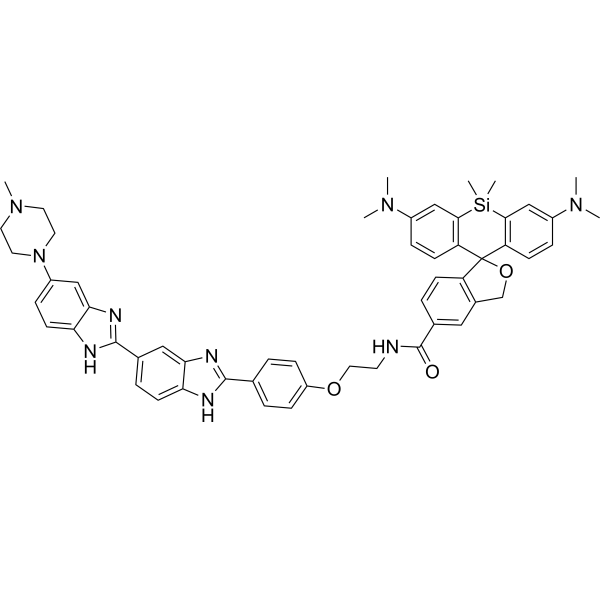
5-HMSiR-Hoechst is a DNA probe. 5-HMSiR-Hoechst comprises Hoechst 33258 and spontaneously blinking far-red hydroxymethyl silicon-rhodamine (HMSiR). 5-HMSiR-Hoechst can stain living cells. Ex/Em=640 nm/675 nm .
loading...
    loading...
Cat. No.: HY-145512
CAS No.: 259143-19-6
Synonyms: NLT
Target:  

Dopamine Receptor

Research Areas:  

Neurological Disease

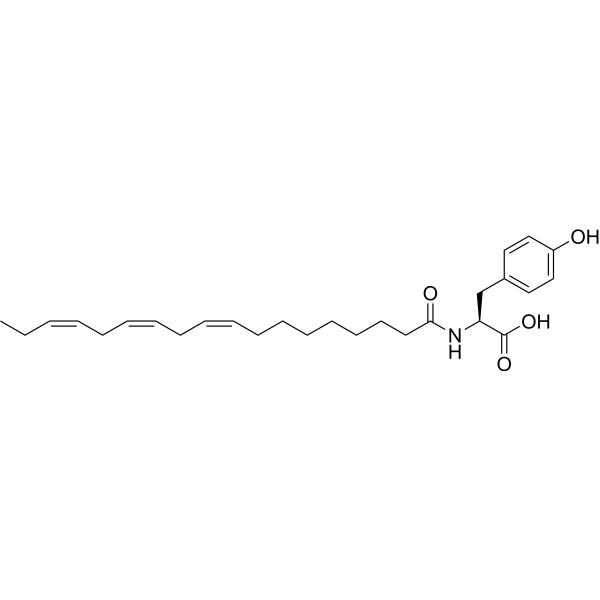
N-(α-Linolenoyl) tyrosine (NLT) is a dopaminergic agonist capable of crossing the blood-brain barrier. N-(α-Linolenoyl) tyrosine increases the level, turnover rate and release amount of dopamine in the striatum. N-(α-Linolenoyl) tyrosine modulates rotational behavior in a rat model with unilateral striatal injury and alleviates excessive blinking symptoms in models induced by dopamine-depleting agents. N-(α-Linolenoyl) tyrosine can be used for research on Parkinson's disease and idiopathic blepharospasm .
loading...
    loading...
Cat. No.: HY-D1991
CAS No.: 906664-68-4
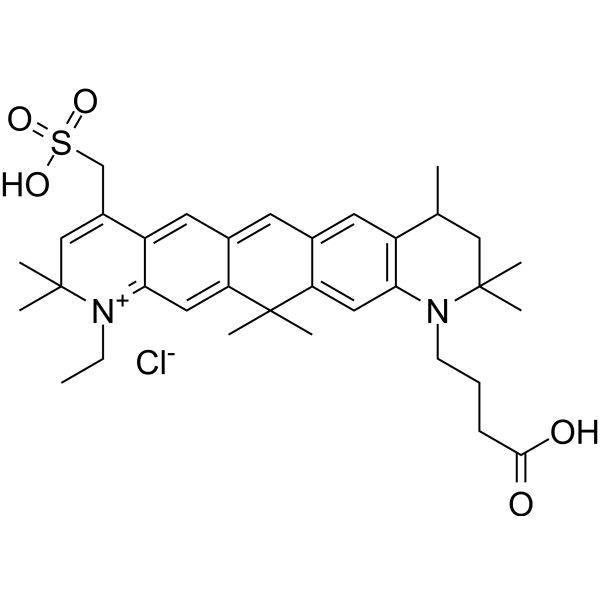
ATTO 647 is a carborhodamine fluorophore and imaging tracer with photostable properties. ATTO 647 serves as a fluorescent probe to investigate cell membrane structure and diffusion characteristics. When conjugated with wheat germ agglutinin, ATTO 647 specifically binds to N-acetyl-β-D-glucosamine and sialic acid residues on membrane glycoproteins, enabling single-molecule tracing of glycoprotein diffusion. ATTO 647 exhibits highly stable fluorescence properties with significantly reduced blinking in mounting media such as ROXS (AA/MV) and ROXS (TX/TQ), whereas its brightness properties vary in Ibidi-MM and Vectashield. ATTO 647 can also be used to label histone H2B-GFP in fixed cells for confocal microscopy photobleaching experiments .
loading...
    loading...
Cat. No.: HY-131030
CAS No.: 2127150-20-1
Synonyms: JF669, SE; JF669, NHS
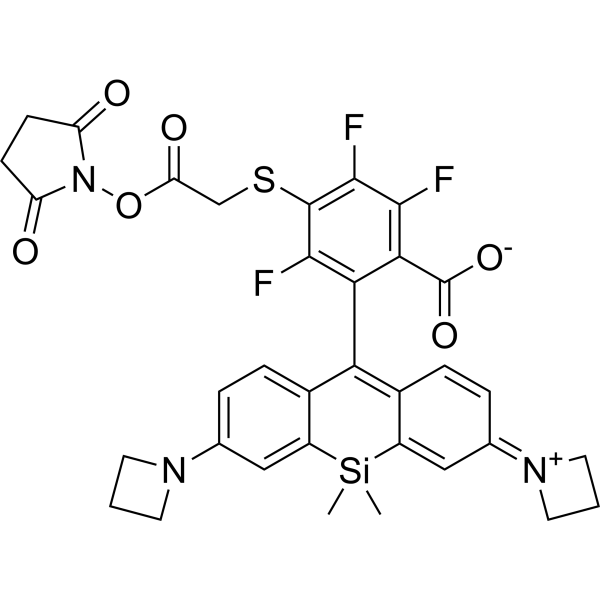
Janelia Fluor 669, SE (JF669, SE), a red fluorescent dye, can be directly reacted with the available thiol-containing HaloTag ligand under mild conditions (DIEA, DMF) to afford a JF669HaloTag ligand in a single step (Ex = 669 nm; Em = 682 nm) . Janelia Fluor fluorescent dyes can be chemically conjugated to the specific HaloTag substrate (a chloroalkane ligand) to form a fluorescent ligand, rather than binding directly to the HaloTag protein itself. Janelia Fluor products are licensed under U.S. Pat. Nos. 9,933,417, 10,018,624 and 10,161,932 and other patents from Howard Hughes Medical Institute.
loading...
    loading...
Cat. No.: HY-D1386
CAS No.: 2410613-93-1
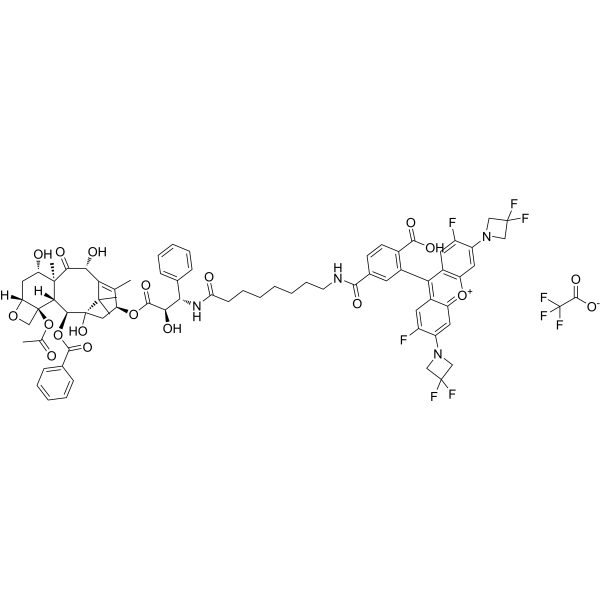
JF526-Taxol (TFA) is a versatile scaffold for fluorogenic probes including ligands for self-labeling tags, stains for endogenous structures, and spontaneously blinking labels for super-resolution immunofluorescence .
loading...
    loading...
Cat. No.: HY-D1545
CAS No.: 6252-76-2
Synonyms: Acid Violet 9
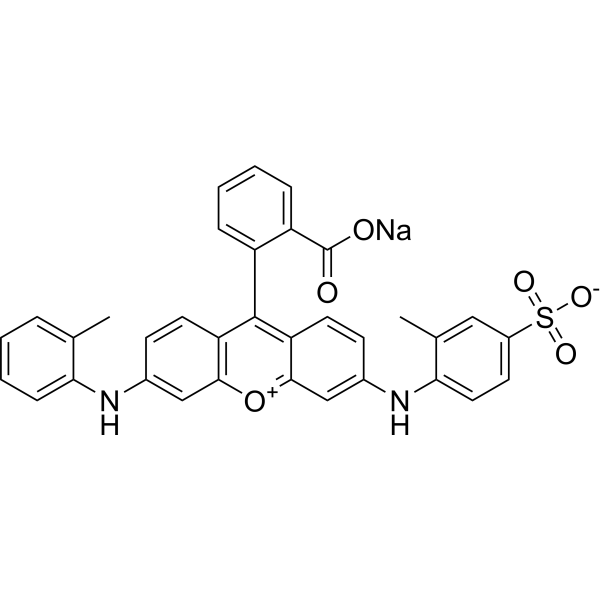
Violamine R (Acid Violet 9) is a potent fluorophore. Violamine R shows environment and temperature-dependent photoluminescence (PL) intermittency in poly(vinyl alcohol) (PVOH) and potassium acid phthalate (KAP). Violamine R can be used to measure the temperatures spanning the glass-transition temperature (Tg) of the polymer host by the fluorescence intermittency or blinking in poly(vinyl alcohol) (PVA) .
loading...
    loading...
Cat. No.: HY-138660
CAS No.: 2376841-30-2
Synonyms: HM-JF526 NHS
Target:  

Fluorescent Dye

Research Areas:  

Others

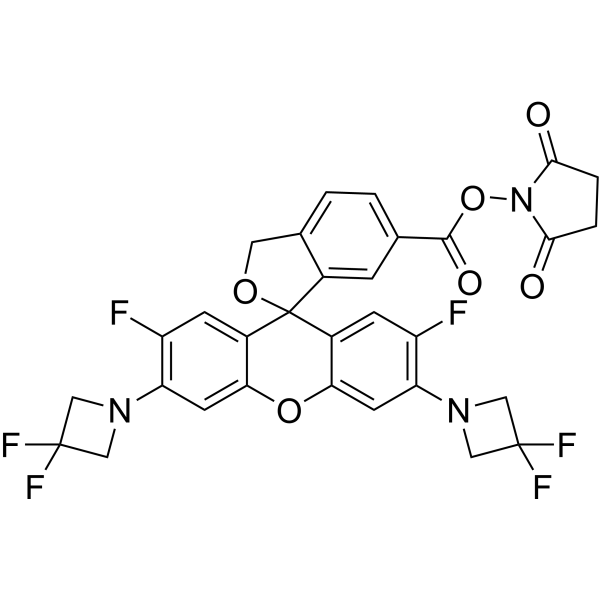
HM Janelia Fluor 526, SE (HM-JF526 NHS) is a derivative of hydroxymethyl JF526 (HM-JF526). SMLM (single-molecule localization microscopy) imaging in standard phosphate-buffered saline (pH 7.4) revealed that the HM-JF526 label showed spontaneous blinking behavior throughout the imaging session and did not require short-wavelength activation light . Janelia Fluor fluorescent dyes can be chemically conjugated to the specific HaloTag substrate (a chloroalkane ligand) to form a fluorescent ligand, rather than binding directly to the HaloTag protein itself. Janelia Fluor products are licensed under U.S. Pat. Nos. 9,933,417, 10,018,624 and 10,161,932 and other patents from Howard Hughes Medical Institute.
loading...
    loading...
Cat. No.: HY-19895
CAS No.: 1356918-39-2
Target:  

Bacterial

Research Areas:  

Infection

DS-8587 is a new fluoroquinolone with significant antibacterial activity. The MIC value of DS-8587 against clinically isolated amoxicillin-resistant Bacillus strains is superior to ciprofloxacin and levofloxacin. The antibacterial activity of DS-8587 is less affected by adeA/adeB/adeC or abeM efflux pumps, and has more advantages than ciprofloxacin. DS-8587 has a lower single-step mutation frequency than ciprofloxacin. DS-8587 may be an effective drug for inhibiting amoxicillin-resistant Bacillus infections .
loading...
    loading...
Cat. No.: HY-119174
CAS No.: 66537-55-1
Research Areas:  

Neurological Disease

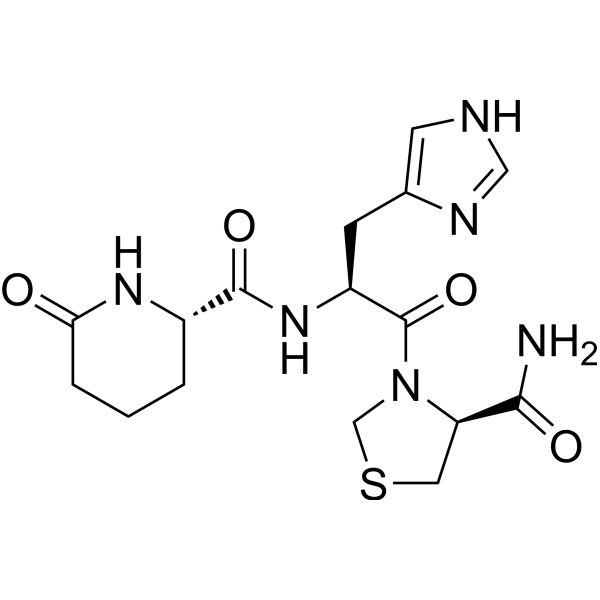
MK771 is a thyrotrophin-releasing hormone analog. MK771 induces blinking and forepaw licking. MK771 has the potential for the research of morphine abstinence syndrome .
loading...
    loading...
Cat. No.: HY-184642
Titanium dioxide magnetic beads are magnetic microparticle carriers whose surface is coated with titanium dioxide nanoparticles. This material is commonly used in protein digests of biological samples for the simple, convenient, efficient, highly specific, and reproducible enrichment of phosphorylated peptides. The surface properties of titanium dioxide magnetic beads make them show no significant preference for monophosphorylated or polyphosphorylated peptides, making them ideal for single-step enrichment of phosphorylated peptides in mass spectrometry-based proteomics analysis.
loading...
    loading...
Cat. No.: HY-K0539

MCE Plant Tissue Direct PCR Kit (with Dye) is specifically designed for direct amplification from various plant leaf samples. The kit enables rapid release of genomic DNA from plant tissues (such as rice, maize, tobacco, rapeseed, etc.) in a single step. The resulting lysate can be directly used for downstream PCR amplification without the need for conventional DNA extraction and purification, thereby significantly simplifying the experimental workflow.

loading...
    loading...
Cat. No.: HY-K0538

MCE Animal Tissue Direct PCR Kit (with Dye) is specifically designed for direct amplification from a variety of animal tissue samples. It enables rapid release of genomic DNA from animal tissues (such as insect legs/wings, mouse tails, ears, toes, skin, and internal organs) in a single step, allowing the lysate to be used directly for downstream PCR amplification without the need for conventional DNA extraction and purification procedures, thereby significantly simplifying the workflow.

loading...
    loading...
Cat. No.: HY-LD002
100 billion compounds

The discovery of hit molecule is a cornerstone of drug development. Among the diverse tools available, DNA-encoded libraries have emerged a revolutionary platform for high-throughput screening. Compared with traditional HTS, DEL features shorter screening processes, lower costs, simpler assays, and larger library capacities.

DEL Construction utilizes split-and-pool synthesis, a combinatorial chemistry approach that involves iterative splitting, reaction, and pooling. This strategy enables rapid, exponential assembly of fragments in minimal steps without the need for individual compound synthesis andassoicicated isolation or purification steps, thus greatly reducing overall costs. The technology enables simultaneous affinity screeningof massive compound collections to target proteins in a single step. By coupling chemical structures with unique DNA barcodes, each compound is tagged with a distinct DNA sequence for convenient tracking and decoding.DELs readily enable the construction and efficient screening of libraries containing millions to billions of compounds. As a result, DEL screening combines the dual advantages of high efficiency and low cost, making DEL a transformative technology in modern drug discovery.

The DEL kit consists of 50 independent libraries with a total scale of 100 billion compounds. It is constructed through stepwise combinatorial chemistry strategies involving 2-, 3-, and 4-round synthesis. By employing diverse scaffolds and flexible linking strategies, it encompasses various ring systems, linear frameworks, and heterocyclic structures. Screening can be achieved solely through affinity, independent of target-specific activity detection methods. This library is suitable for DEL screening against a wide range of targets.

  • 1

