Search Result
Results for "
soap
" in MedChemExpress (MCE) Product Catalog:
14
Biochemical Assay Reagents
10
Isotope-Labeled Compounds
| Cat. No. |
Product Name |
Target |
Research Areas |
Chemical Structure |
-
- HY-Y0016
-
|
Basic Violet 10; Brilliant Pink B; Rhodamine O; Tetraethylrhodamine
|
Environmental Pollutants
Fluorescent Dye
|
Others
|
|
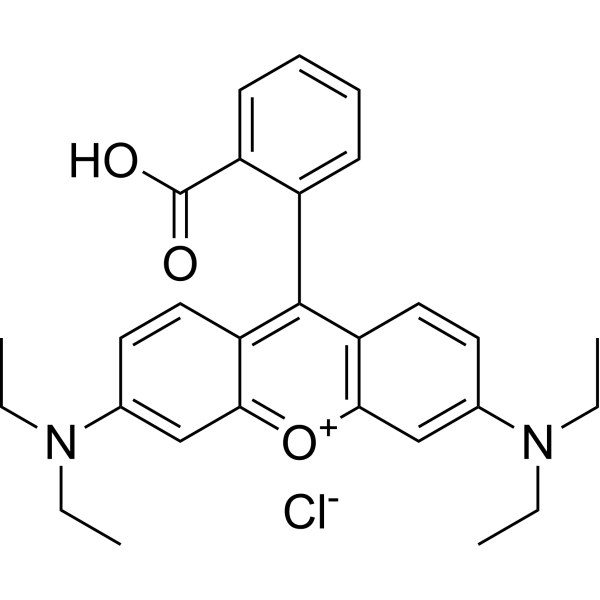
Rhodamine B is a staining fluorescent dye, commonly used for dyeing textiles, paper, soap, leather, and agents.
|
-
-
- HY-W009938
-
|
Anthracen-9(10H)-one
|
Biochemical Assay Reagents
|
Others
|
|
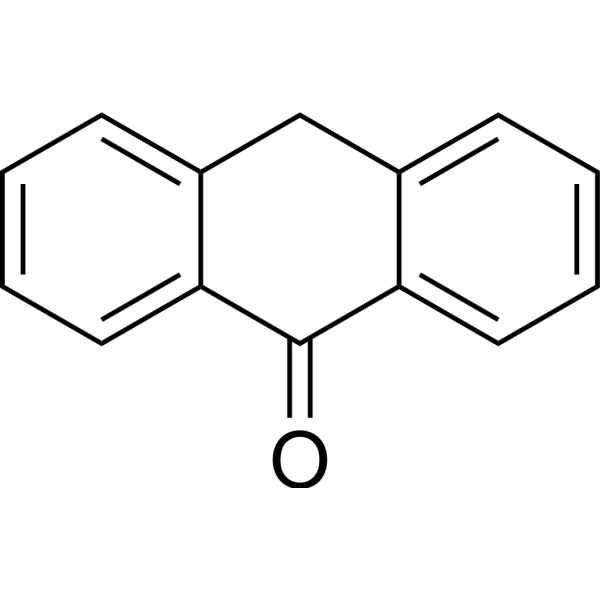
Anthrone is an organic compound commonly used as a dye and intermediate. It can be used to make products such as pigments, dyes and fluorescent whitening agents, and is widely used in certain industrial production fields such as textile manufacturing, soap making and paper making. In addition, this compound is also used as a reagent and catalyst in some organic synthesis reactions.
|
-
-
- HY-B1119S
-
|
|
Bacterial
Fungal
Autophagy
Antibiotic
|
Infection
Cancer
|
|
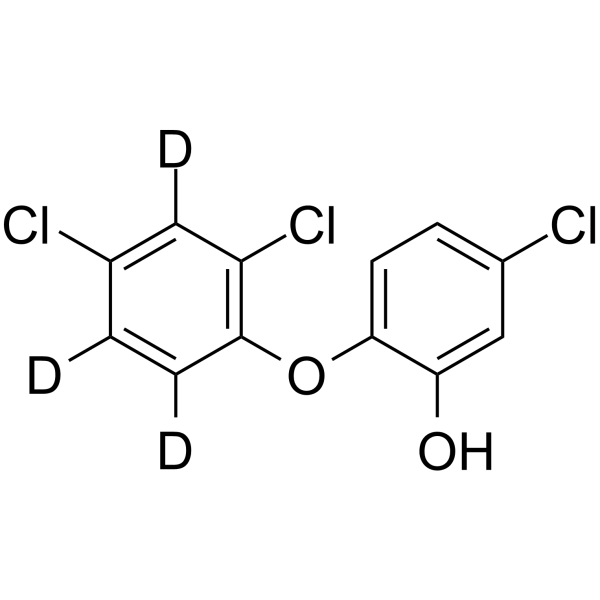
Triclosan-d3 is the deuterium labeled Triclosan. Triclosan is an antibacterial and antifungal agent found in consumer products, including soaps, detergents, toys, and surgical cleaning treatments .
|
-
-
- HY-B1805
-
|
3,4,4′-Trichlorocarbanilide
|
Environmental Pollutants
Bacterial
|
Infection
|
|
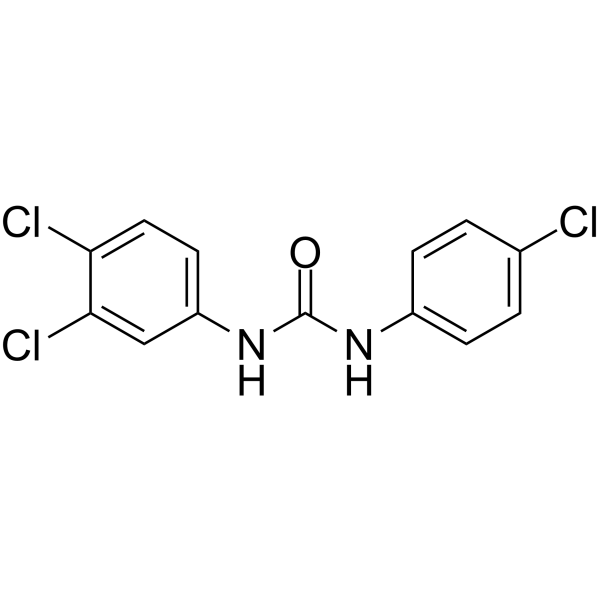
Triclocarban (3,4,4′-Trichlorocarbanilide), a broad spectrum antibacterial compound, is widely used in a broad range of applications such as the production of soaps, skin creams, toothpastes and deodorants. Triclocarban is a potential endocrine-disrupting chemical with the capacity to modulate androgen and estrogen activities as well as other hormone-mediated biological processes .
|
-
-
- HY-W127604
-
|
Myristic acid sodium
|
Biochemical Assay Reagents
|
Others
|
|
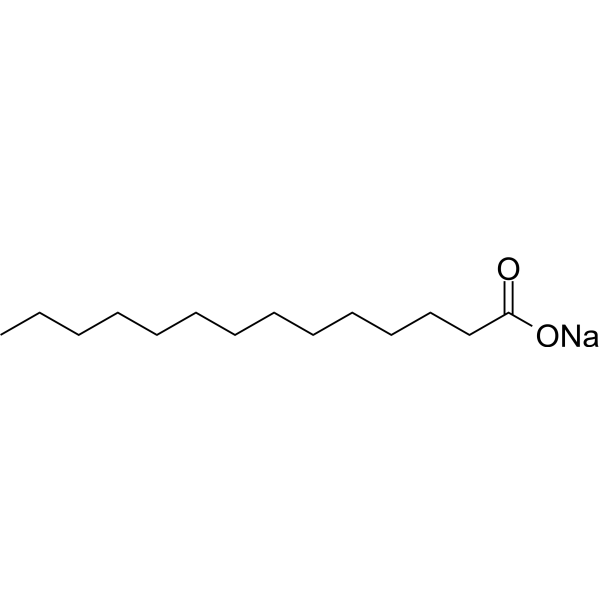
Sodium myristate is a salt-like compound commonly used as a surfactant or emulsifier in a variety of industrial applications, including the production of detergents, soaps, and personal care products. In addition, it can be used as an intermediate in the synthesis of various organic compounds, including fragrances and pharmaceuticals. Its unique chemical properties make it an important ingredient in a variety of industrial processes, especially in the manufacture of textiles and paper products.
|
-
-
- HY-N7124
-
|
|
Environmental Pollutants
|
Others
|
|
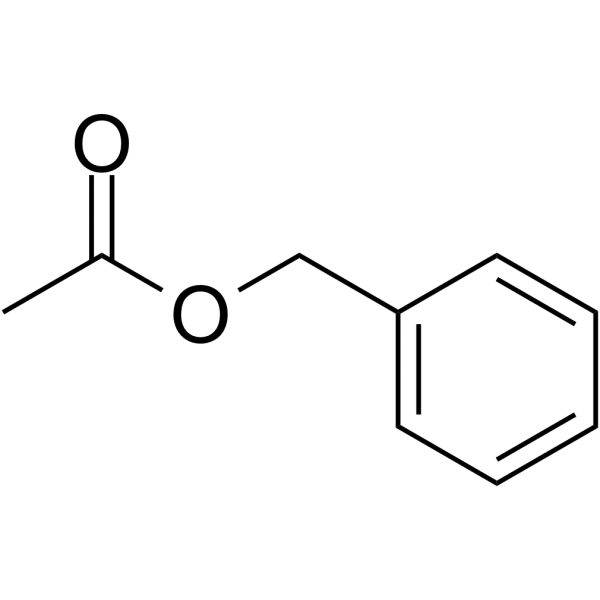
Benzyl acetate is an aromatic ester with a jasmine scent. Benzyl acetate found in plants and is commonly used as a base fragrance ingredient in perfumes, cosmetics, and soap fragrances. Benzyl acetate is also one of the largest varieties in the synthetic fragrance industry .
|
-
-
- HY-W099601
-
|
Lauric acid sodium salt, 99-100%
|
Environmental Pollutants
Biochemical Assay Reagents
|
Others
|
|
Sodium LaurateIt is an organic compound belonging to fatty acids. It is the sodium salt of lauric acid, a medium-chain saturated fatty acid found in various animal and vegetable fats. Sodium LaurateCommonly used as surfactants, emulsifiers and cleaning agents in various industries such as cosmetics, personal care and detergent industries. It's found in a variety of products, including soaps, shampoos, toothpaste, and laundry detergent. Furthermore, it also has applications in the food industry where it is used as a food additive to improve texture and stability.
|
-
-
- HY-DY1077
-
|
|
Fluorescent Dye
|
Others
|
Rhodamine B (solution) is a staining fluorescent dye, commonly used for dyeing textiles, paper, soap, leather, and agents. Solvent and concentration: DMSO: 10 mM
|
-
-
- HY-W009544
-
|
3-Hydroxymyristic acid
|
Biochemical Assay Reagents
|
Others
|
|
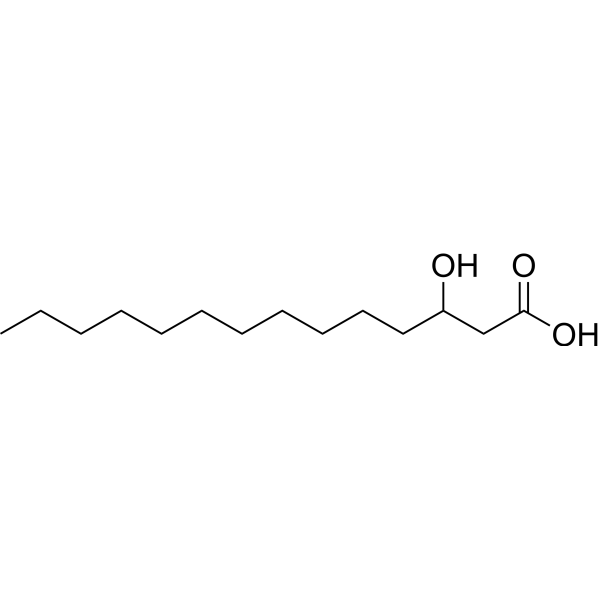
3-Hydroxytetradecanoic acidis a saturated fatty acid. 3-Hydroxytetradecanoic acidOccurs naturally in various animal and plant sources such as butter and milk fat. 3-Hydroxytetradecanoic acidIt has various uses in industry, especially in the production of soaps, detergents and other surfactants. 3-Hydroxytetradecanoic acidIt is also used as a precursor for the synthesis of other bioactive compounds such as antibiotics and anticancer drugs.
|
-
-
- HY-W115789
-
|
|
Environmental Pollutants
Reactive Oxygen Species (ROS)
|
Others
|
|
Sodium silicate is a water-soluble silicate. Sodium silicate is widely used as a binder, particularly in the production of detergents, soaps, and cleaners. Sodium silicate promotes the deposition of suberin polyphenols and lignin at wound sites of potato tubers, accelerates callus structure formation, enhances ROS production, and induces the synthesis of total phenols and flavonoids. Sodium silicate reduces the weight loss rate and disease index of wounded potato tubers during storage .
|
-
-
- HY-W105359
-
|
ω-Decen-1-ol
|
Environmental Pollutants
Biochemical Assay Reagents
|
Others
|
|
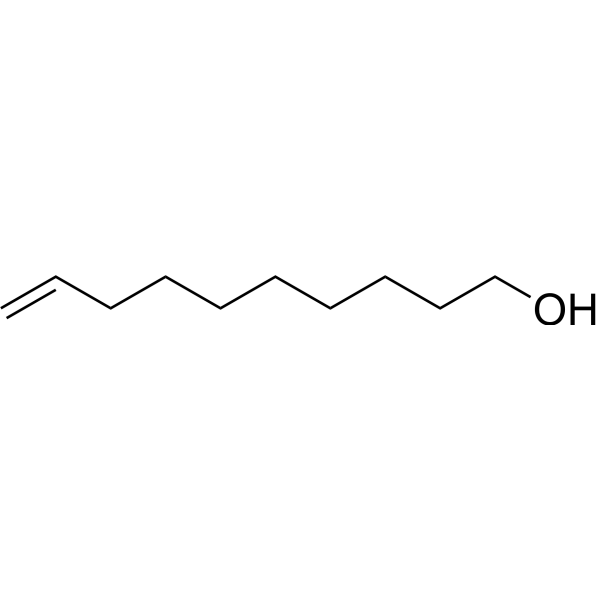
9-Decen-1-ol has a fatty odour. This compound is used in the flavor and fragrance industry for its pleasant smell, which is often described as sweet, floral and fruity. It can also be used as an intermediate in the synthesis of various organic compounds, including medicine, agricultural chemicals and polymer materials. Its unique chemical properties make it an important ingredient in many commercial products, including soaps, detergents and cosmetics.
|
-
-
- HY-W008814
-
|
Benzylphenyl
|
Environmental Pollutants
Drug Intermediate
|
Others
|
|
Diphenylmethane (Benzylphenyl) is an aromatic compound used as a drug intermediate. Diphenylmethane in the fragrance industry is used as an oxidizing agent and in soaps; in pesticides, as a synergist; and in dyes, as a plasticizer .
|
-
-
- HY-Y0016R
-
|
Basic Violet 10 (Standard); Brilliant Pink B (Standard); Rhodamine O (Standard); Tetraethylrhodamine (Standard)
|
Fluorescent Dye
Reference Standards
|
Others
|
|
Rhodamine B (Standard) is the analytical standard of Rhodamine B. This product is intended for research and analytical applications. Rhodamine B is a staining fluorescent dye, commonly used for dyeing textiles, paper, soap, leather, and agents.
|
-
-
- HY-W127624
-
|
|
Biochemical Assay Reagents
|
Others
|
|
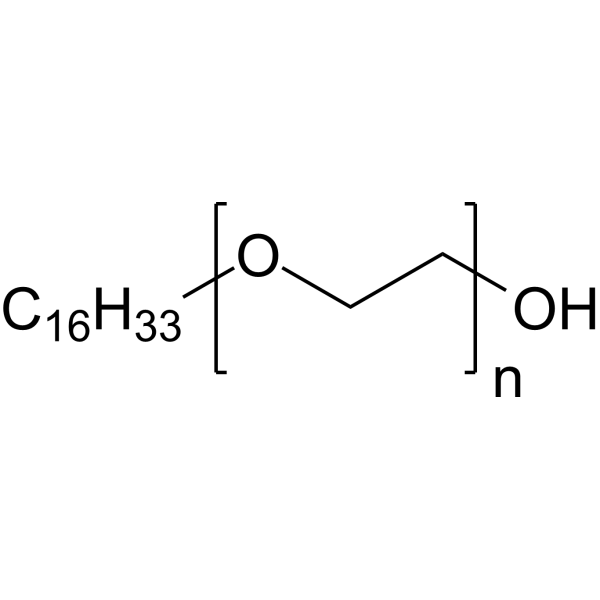
Polyoxyethylene monocetyl ether (n=approx. 23) is a nonionic surfactant and can be used to manufacture hand sanitizer, laundry detergent, body wash, laundry powder, dish soap, metal cleaning agents and other products .
|
-
-
- HY-N8446
-
|
6,10-Dimethylundeca-5,9-dien-2-one; Dihydropseudoionone
|
Environmental Pollutants
Biochemical Assay Reagents
|
Others
|
|
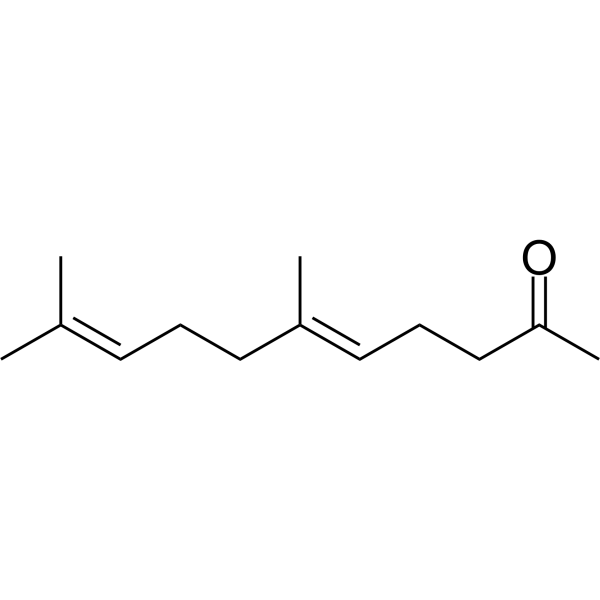
(E/Z)-Geranylacetone is an organic compound commonly used as an ingredient in fragrances and fragrances. It can be used in some products such as perfumes, soaps and cosmetics, and can bring a fresh aromatic smell. In addition, the compound is used in some foods and pharmaceuticals, for example in candy, chewing gum and herbal remedies.
|
-
-
- HY-W099570
-
|
|
Environmental Pollutants
Biochemical Assay Reagents
|
Others
|
|
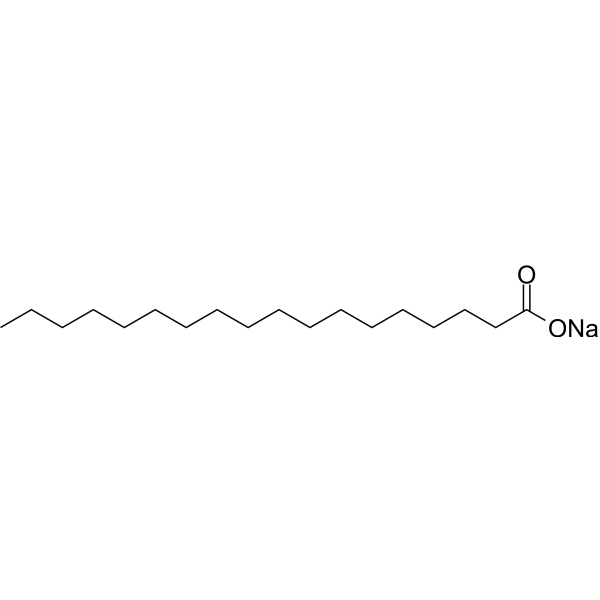
Stearate sodiumIt is an organic compound belonging to fatty acids. It is the sodium salt of stearic acid, a saturated fatty acid commonly found in various animal and vegetable fats. Stearate sodiumCommonly used as surfactants, emulsifiers and detergents, it is widely used in the cosmetics, personal care and detergent industries. It's found in a variety of products, including soaps, shampoos, toothpaste, and laundry detergent. Also, it has applications in the food industry where it is used as a food additive to improve texture and shelf life.
|
-
-
- HY-116587
-
|
Cloflucarban
|
Bacterial
|
Infection
|
|
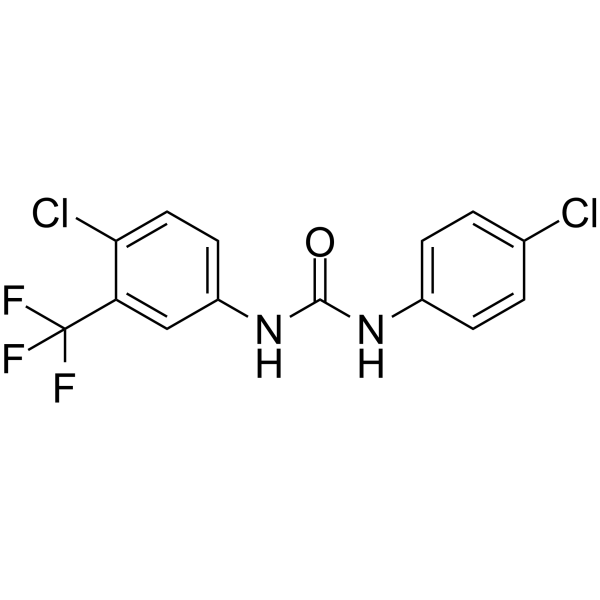
Halocarban is a chemical with antibacterial properties sometimes used in deodorant and soap .
|
-
-
- HY-113146
-
|
Oct-2-enal
|
Biochemical Assay Reagents
|
Others
|
|
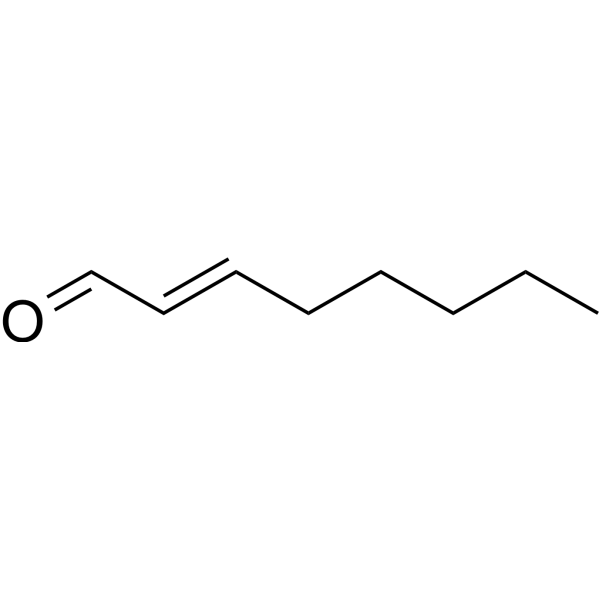
2-Octenal is an unsaturated aldehyde commonly found in essential oils of various plants, especially citrus fruits. 2-Octenal has unique chemical properties that make it an important ingredient in many applications where a strong, sweet and fruity aroma is desired. It is commonly used as a flavoring agent in food and beverages, and as a fragrance in perfumes, soaps, and cosmetics.
|
-
-
- HY-118547
-
|
2-Benzyl-4-chlorophenol
|
Bacterial
|
Infection
|
|
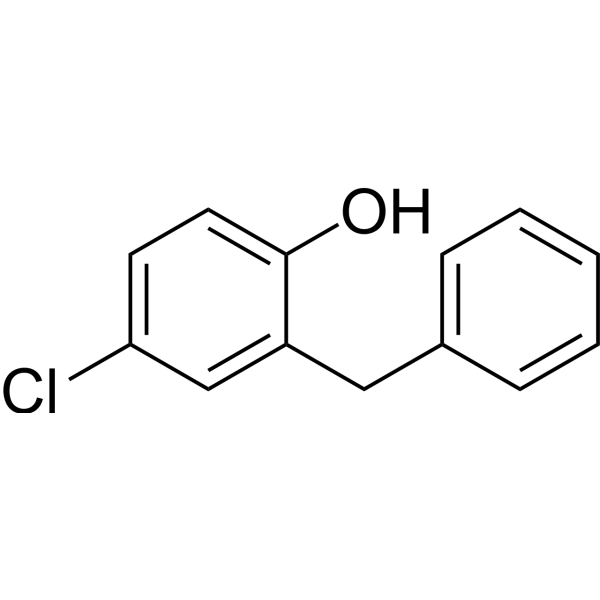
Clorofene (2-Benzyl-4-chlorophenol) is an aryl halide fungicide widely used in hospitals and homes as a broad-spectrum fungicide in general cleaning and disinfection disinfectant solutions and in soap formulations. Clorofene has antibacterial and carcinogenic activity .
|
-
-
- HY-W127375
-
|
Sodium pelargonate
|
Biochemical Assay Reagents
|
Others
|
|
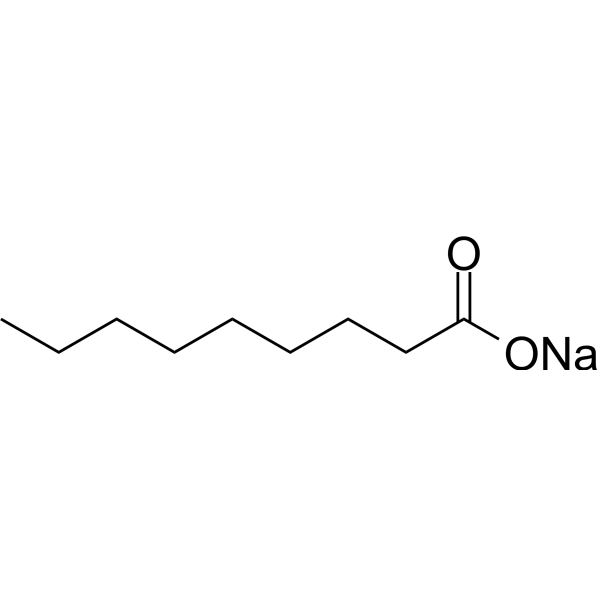
Sodium nonanoate is a salt-like compound commonly used as a surfactant or emulsifier in a variety of industrial applications, including the production of detergents, soaps and personal care products. In addition, it can be used as an intermediate in the synthesis of various organic compounds, including pharmaceuticals and agrochemicals. Its unique chemical properties make it an important ingredient in a variety of industrial processes, especially in the manufacture of textiles and paper products.
|
-
-
- HY-W585956
-
|
3,4,4′-Trichlorocarbanilide-13C6
|
Isotope-Labeled Compounds
|
Others
|
|
Triclocarban- 13C6 is the 13C labeled isotope of Triclocarban (HY-B1805). Triclocarban (3,4,4′-Trichlorocarbanilide), a broad spectrum antibacterial compound, is widely used in a broad range of applications such as the production of soaps, skin creams, toothpastes and deodorants. Triclocarban is a potential endocrine-disrupting chemical with the capacity to modulate androgen and estrogen activities as well as other hormone-mediated biological processes .
|
-
-
- HY-B1290S2
-
|
Phenylethyl alcohol-d5; Phenethyl alcohol-d5; Benzyl carbinol-d5
|
Bacterial
Virus Protease
Antibiotic
|
Infection
|
|
2-Phenylethanol-d5 is the deuterium labeled 2-Phenylethanol . 2-Phenylethanol (Phenethyl alcohol), extracted from rose, carnation, hyacinth, Aleppo pine, orange blossom and other organisms, is a colourless liquid. It has a pleasant floral odor and also an autoantibiotic produced by the fungus Candida albicans . It is used as an additive in cigarettes and also used as a preservative in soaps due to its stability in basic conditions.
|
-
-
- HY-B1805R
-
|
3,4,4′-Trichlorocarbanilide (Standard)
|
Reference Standards
Bacterial
|
Infection
Endocrinology
|
|
Triclocarban (Standard) (3,4,4′-Trichlorocarbanilide (Standard)) is the analytical standard of Triclocarban (HY-B1805). This product is intended for research and analytical applications. Triclocarban, a broad spectrum antibacterial compound, is widely used in a broad range of applications such as the production of soaps, skin creams, toothpastes and deodorants. Triclocarban is a potential endocrine-disrupting chemical with the capacity to modulate androgen and estrogen activities as well as other hormone-mediated biological processes .
|
-
-
- HY-W013466
-
|
Sebacic acid dimethyl ester
|
Biochemical Assay Reagents
|
Others
|
|
Dimethyl decanedioate belongs to the class of diesters and consists of a sebacic acid backbone (also known as sebacic acid) esterified with two methyl groups. This compound has a fruity smell and is commonly used as a flavor and fragrance ingredient in a variety of products, including perfumes, soaps and cosmetics. It can also be used as a plasticizer in the production of polymers and as a neutralizer in the synthesis of certain drugs.
|
-
-
- HY-B1146R
-
|
THS-839 (Standard)
|
Insecticide
Reference Standards
|
Others
|
|
Denatonium (benzoate) (Standard) is the analytical standard of Denatonium (benzoate). This product is intended for research and analytical applications. Denatonium benzoate (THS-839) is the most bitter compound known, commonly used as an aversion agent (bitter agent) to prevent inappropriate ingestion, used in denatured alcohol, antifreeze, nail biting prevention, respirator mask fit testing , animal repellents, liquid soaps and shampoos.
|
-
-
- HY-B1290S1
-
|
Phenylethyl alcohol-d9; Phenethyl alcohol-d9; Benzyl carbinol-d9
|
Bacterial
Virus Protease
Antibiotic
|
Infection
|
|
2-Phenylethanol-d9 is the deuterium labeled 2-Phenylethanol . 2-Phenylethanol (Phenethyl alcohol), extracted from rose, carnation, hyacinth, Aleppo pine, orange blossom and other organisms, is a colourless liquid. It has a pleasant floral odor and also an autoantibiotic produced by the fungus Candida albicans . It is used as an additive in cigarettes and also used as a preservative in soaps due to its stability in basic conditions.
|
-
-
- HY-B1290S
-
|
Phenylethyl alcohol-d4; Phenethyl alcohol-d4; Benzyl carbinol-d4
|
Bacterial
Virus Protease
Antibiotic
|
Infection
|
|
2-Phenylethanol-d4 is the deuterium labeled 2-Phenylethanol . 2-Phenylethanol (Phenethyl alcohol), extracted from rose, carnation, hyacinth, Aleppo pine, orange blossom and other organisms, is a colourless liquid. It has a pleasant floral odor and also an autoantibiotic produced by the fungus Candida albicans . It is used as an additive in cigarettes and also used as a preservative in soaps due to its stability in basic conditions.
|
-
-
- HY-W128313
-
|
2,2,2-Trichloro-1-phenylethyl acetate
|
Biochemical Assay Reagents
|
Others
|
|
Alpha-(trichloromethyl)benzyl acetate (2,2,2-Trichloro-1-phenylethyl acetate) can be used as a fixative in soap fragrances, especially suitable for soap and cosmetic perfume formulations, acting as a harmonizer in formulations. Alpha-(trichloromethyl)benzyl acetate is a kind of biological materials or organic compounds that are widely used in life science research .
|
-
-
- HY-136441
-
|
|
Bacterial
|
Infection
|
|
Triclosan-methyl is a transformation product of triclosan. Triclosan is a bactericide in personal care products such as toothpaste, shampoos, and soaps. Triclosan is also a stabilizing agent in a multitude of detergents and cosmetics .
|
-
-
- HY-136441S
-
|
|
Bacterial
|
Infection
|
|
Triclosan-methyl-d3 is the deuterium labeled Triclosan-methyl. Triclosan-methyl is a transformation product of triclosan. Triclosan is a bactericide in personal care products such as toothpaste, shampoos, and soaps. Triclosan is also a stabilizing agent in a multitude of detergents and cosmetics .
|
-
-
- HY-W008814S
-
|
Benzylphenyl-d2
|
Isotope-Labeled Compounds
Drug Intermediate
|
Others
|
|
Diphenylmethane-d2 (Benzylphenyl-d2) is the deuterium labeled Diphenylmethane (HY-W008814). Diphenylmethane (Benzylphenyl) is an aromatic compound used as a drug intermediate. Diphenylmethane in the fragrance industry is used as an oxidizing agent and in soaps; in pesticides, as a synergist; and in dyes, as a plasticizer.
|
-
-
- HY-N7124R
-
|
|
Reference Standards
Others
|
Others
|
|
Benzyl acetate (Standard) is the analytical standard of Benzyl acetate (HY-N7124). This product is intended for research and analytical applications. Benzyl acetate is an aromatic ester with a jasmine scent. Benzyl acetate found in plants and is commonly used as a base fragrance ingredient in perfumes, cosmetics, and soap fragrances. Benzyl acetate is also one of the largest varieties in the synthetic fragrance industry.
|
-
-
- HY-N7124S
-
|
|
Isotope-Labeled Compounds
|
Others
|
Benzyl acetate-d5 is the deuterium labeled Benzyl acetate (HY-N7124) . Benzyl acetate is an aromatic ester with a jasmine scent. Benzyl acetate found in plants and is commonly used as a base fragrance ingredient in perfumes, cosmetics, and soap fragrances. Benzyl acetate is also one of the largest varieties in the synthetic fragrance industry .
|
-
-
- HY-B1805S
-
|
3,4,4′-Trichlorocarbanilide-d4
|
Bacterial
|
Infection
|
|
Triclocarban-d4 is the deuterium labeled Triclocarban. Triclocarban (3,4,4′-Trichlorocarbanilide), a broad spectrum antibacterial compound, is widely used in a broad range of applications such as the production of soaps, skin creams, toothpastes and deodorants. Triclocarban is a potential endocrine-disrupting chemical with the capacity to modulate androgen and estrogen activities as well as other hormone-mediated biological processes .
|
-
-
- HY-B1805S1
-
|
3,4,4'-Trichlorocarbanilide-13C13
|
Isotope-Labeled Compounds
Bacterial
|
Infection
|
|
Triclocarban- 13C13 (3,4,4'-Trichlorocarbanilide- 13C13) is 13C labeled Triclocarban. Triclocarban (3,4,4′-Trichlorocarbanilide), a broad spectrum antibacterial compound, is widely used in a broad range of applications such as the production of soaps, skin creams, toothpastes and deodorants. Triclocarban is a potential endocrine-disrupting chemical with the capacity to modulate androgen and estrogen activities as well as other hormone-mediated biological processes .
|
-
-
- HY-N17554
-
-
-
- HY-N18805
-
|
|
Others
|
Inflammation/Immunology
|
|
Tansy oil has the properties of anti-inflammatory, calming and cleaning the skin, and deodorizing. It can used in daily essentials such as soap.
|
-
-
- HY-N18787
-
|
|
Others
|
Others
|
|
Almond Oil, for its stability and high level of the skin-nourishing, can be used as an important raw material for advanced paints, cosmetics and premium soaps.
|
-
-
- HY-N18811
-
|
|
Bacterial
|
Infection
|
|
Thyme extract is one of the most preservative essential oils. It has antibacterial and antiviral properties. And it can be used in daily essentials such as detergents, hand sanitizers and soaps.
|
-
-
- HY-N18833
-
|
|
Bacterial
|
Infection
|
|
Lavender oil can clean skin, control oil content, remove freckles, rejuvenate, disinfect, antibacterial and deodorize. Lavender oil has a wildly application in cosmetics and daily essentials such as soap.
|
-
-
- HY-W099995
-
|
|
Environmental Pollutants
Biochemical Assay Reagents
|
Others
|
|
2-Phenylethyl propionate is an aromatic compound with sweet, fruity and floral notes, which acts as an insect attractant. 2-Phenylethyl propionate is widely used in cosmetics such as perfumes, shampoos and soaps, as well as non-cosmetic products including detergents and household cleaners. 2-Phenylethyl propionate has been granted GRAS (Generally Recognized As Safe) certification by the U.S. Food and Drug Administration .
|
-
-
- HY-N8446R
-
|
6,10-Dimethylundeca-5,9-dien-2-one (Standard); Dihydropseudoionone (Standard)
|
Biochemical Assay Reagents
Reference Standards
|
Others
|
|
(E/Z)-Geranylacetone (Standard) (6,10-Dimethylundeca-5,9-dien-2-one (Standard)) is the analytical standard of (E/Z)-Geranylacetone (HY-N8446). This product is intended for research and analytical applications. (E/Z)-Geranylacetone is an organic compound commonly used as an ingredient in fragrances and fragrances. It can be used in some products such as perfumes, soaps and cosmetics, and can bring a fresh aromatic smell. In addition, the compound is used in some foods and pharmaceuticals, for example in candy, chewing gum and herbal remedies.
|
-
| Cat. No. |
Product Name |
Type |
-
- HY-Y0016
-
|
Basic Violet 10; Brilliant Pink B; Rhodamine O; Tetraethylrhodamine
|
Fluorescent Dyes
|
|
Rhodamine B is a staining fluorescent dye, commonly used for dyeing textiles, paper, soap, leather, and agents.
|
-
- HY-DY1077
-
|
|
Fluorescent Dyes
|
Rhodamine B (solution) is a staining fluorescent dye, commonly used for dyeing textiles, paper, soap, leather, and agents. Solvent and concentration: DMSO: 10 mM
|
-
- HY-Y0016R
-
|
Basic Violet 10 (Standard); Brilliant Pink B (Standard); Rhodamine O (Standard); Tetraethylrhodamine (Standard)
|
Fluorescent Dyes
|
|
Rhodamine B (Standard) is the analytical standard of Rhodamine B. This product is intended for research and analytical applications. Rhodamine B is a staining fluorescent dye, commonly used for dyeing textiles, paper, soap, leather, and agents.
|
| Cat. No. |
Product Name |
Type |
-
- HY-W009938
-
|
Anthracen-9(10H)-one
|
Biochemical Assay Reagents
|
|
Anthrone is an organic compound commonly used as a dye and intermediate. It can be used to make products such as pigments, dyes and fluorescent whitening agents, and is widely used in certain industrial production fields such as textile manufacturing, soap making and paper making. In addition, this compound is also used as a reagent and catalyst in some organic synthesis reactions.
|
-
- HY-W127604
-
|
Myristic acid sodium
|
Biochemical Assay Reagents
|
|
Sodium myristate is a salt-like compound commonly used as a surfactant or emulsifier in a variety of industrial applications, including the production of detergents, soaps, and personal care products. In addition, it can be used as an intermediate in the synthesis of various organic compounds, including fragrances and pharmaceuticals. Its unique chemical properties make it an important ingredient in a variety of industrial processes, especially in the manufacture of textiles and paper products.
|
-
- HY-W099601
-
|
Lauric acid sodium salt, 99-100%
|
Biochemical Assay Reagents
|
|
Sodium LaurateIt is an organic compound belonging to fatty acids. It is the sodium salt of lauric acid, a medium-chain saturated fatty acid found in various animal and vegetable fats. Sodium LaurateCommonly used as surfactants, emulsifiers and cleaning agents in various industries such as cosmetics, personal care and detergent industries. It's found in a variety of products, including soaps, shampoos, toothpaste, and laundry detergent. Furthermore, it also has applications in the food industry where it is used as a food additive to improve texture and stability.
|
-
- HY-W009544
-
|
3-Hydroxymyristic acid
|
Biochemical Assay Reagents
|
|
3-Hydroxytetradecanoic acidis a saturated fatty acid. 3-Hydroxytetradecanoic acidOccurs naturally in various animal and plant sources such as butter and milk fat. 3-Hydroxytetradecanoic acidIt has various uses in industry, especially in the production of soaps, detergents and other surfactants. 3-Hydroxytetradecanoic acidIt is also used as a precursor for the synthesis of other bioactive compounds such as antibiotics and anticancer drugs.
|
-
- HY-W115789
-
|
|
Biochemical Assay Reagents
|
|
Sodium silicate is a water-soluble silicate. Sodium silicate is widely used as a binder, particularly in the production of detergents, soaps, and cleaners. Sodium silicate promotes the deposition of suberin polyphenols and lignin at wound sites of potato tubers, accelerates callus structure formation, enhances ROS production, and induces the synthesis of total phenols and flavonoids. Sodium silicate reduces the weight loss rate and disease index of wounded potato tubers during storage .
|
-
- HY-W105359
-
|
ω-Decen-1-ol
|
Biochemical Assay Reagents
|
|
9-Decen-1-ol has a fatty odour. This compound is used in the flavor and fragrance industry for its pleasant smell, which is often described as sweet, floral and fruity. It can also be used as an intermediate in the synthesis of various organic compounds, including medicine, agricultural chemicals and polymer materials. Its unique chemical properties make it an important ingredient in many commercial products, including soaps, detergents and cosmetics.
|
-
- HY-W008814
-
|
Benzylphenyl
|
Biochemical Assay Reagents
|
|
Diphenylmethane (Benzylphenyl) is an aromatic compound used as a drug intermediate. Diphenylmethane in the fragrance industry is used as an oxidizing agent and in soaps; in pesticides, as a synergist; and in dyes, as a plasticizer .
|
-
- HY-W127624
-
|
|
Biochemical Assay Reagents
|
|
Polyoxyethylene monocetyl ether (n=approx. 23) is a nonionic surfactant and can be used to manufacture hand sanitizer, laundry detergent, body wash, laundry powder, dish soap, metal cleaning agents and other products .
|
-
- HY-N8446
-
|
6,10-Dimethylundeca-5,9-dien-2-one; Dihydropseudoionone
|
Biochemical Assay Reagents
|
|
(E/Z)-Geranylacetone is an organic compound commonly used as an ingredient in fragrances and fragrances. It can be used in some products such as perfumes, soaps and cosmetics, and can bring a fresh aromatic smell. In addition, the compound is used in some foods and pharmaceuticals, for example in candy, chewing gum and herbal remedies.
|
-
- HY-113146
-
|
Oct-2-enal
|
Biochemical Assay Reagents
|
|
2-Octenal is an unsaturated aldehyde commonly found in essential oils of various plants, especially citrus fruits. 2-Octenal has unique chemical properties that make it an important ingredient in many applications where a strong, sweet and fruity aroma is desired. It is commonly used as a flavoring agent in food and beverages, and as a fragrance in perfumes, soaps, and cosmetics.
|
-
- HY-W127375
-
|
Sodium pelargonate
|
Biochemical Assay Reagents
|
|
Sodium nonanoate is a salt-like compound commonly used as a surfactant or emulsifier in a variety of industrial applications, including the production of detergents, soaps and personal care products. In addition, it can be used as an intermediate in the synthesis of various organic compounds, including pharmaceuticals and agrochemicals. Its unique chemical properties make it an important ingredient in a variety of industrial processes, especially in the manufacture of textiles and paper products.
|
-
- HY-W013466
-
|
Sebacic acid dimethyl ester
|
Biochemical Assay Reagents
|
|
Dimethyl decanedioate belongs to the class of diesters and consists of a sebacic acid backbone (also known as sebacic acid) esterified with two methyl groups. This compound has a fruity smell and is commonly used as a flavor and fragrance ingredient in a variety of products, including perfumes, soaps and cosmetics. It can also be used as a plasticizer in the production of polymers and as a neutralizer in the synthesis of certain drugs.
|
-
- HY-W128313
-
|
2,2,2-Trichloro-1-phenylethyl acetate
|
Biochemical Assay Reagents
|
|
Alpha-(trichloromethyl)benzyl acetate (2,2,2-Trichloro-1-phenylethyl acetate) can be used as a fixative in soap fragrances, especially suitable for soap and cosmetic perfume formulations, acting as a harmonizer in formulations. Alpha-(trichloromethyl)benzyl acetate is a kind of biological materials or organic compounds that are widely used in life science research .
|
-
- HY-N8446R
-
|
6,10-Dimethylundeca-5,9-dien-2-one (Standard); Dihydropseudoionone (Standard)
|
Biochemical Assay Reagents
|
|
(E/Z)-Geranylacetone (Standard) (6,10-Dimethylundeca-5,9-dien-2-one (Standard)) is the analytical standard of (E/Z)-Geranylacetone (HY-N8446). This product is intended for research and analytical applications. (E/Z)-Geranylacetone is an organic compound commonly used as an ingredient in fragrances and fragrances. It can be used in some products such as perfumes, soaps and cosmetics, and can bring a fresh aromatic smell. In addition, the compound is used in some foods and pharmaceuticals, for example in candy, chewing gum and herbal remedies.
|
| Cat. No. |
Product Name |
Category |
Target |
Chemical Structure |
-
- HY-N7124
-
-
-
- HY-N8446
-
-
-
- HY-N7124R
-
-
-
- HY-N17554
-
-
-
- HY-N18805
-
-
-
- HY-N18787
-
|
|
Structural Classification
Extract
|
Others
|
|
Almond Oil, for its stability and high level of the skin-nourishing, can be used as an important raw material for advanced paints, cosmetics and premium soaps.
|
-
-
- HY-N18811
-
|
|
Structural Classification
Extract
|
Bacterial
|
|
Thyme extract is one of the most preservative essential oils. It has antibacterial and antiviral properties. And it can be used in daily essentials such as detergents, hand sanitizers and soaps.
|
-
-
- HY-N18833
-
|
|
Structural Classification
Extract
|
Bacterial
|
|
Lavender oil can clean skin, control oil content, remove freckles, rejuvenate, disinfect, antibacterial and deodorize. Lavender oil has a wildly application in cosmetics and daily essentials such as soap.
|
-
-
- HY-N8446R
-
|
6,10-Dimethylundeca-5,9-dien-2-one (Standard); Dihydropseudoionone (Standard)
|
Structural Classification
Natural Products
Nicotiana tabacum L.
Solanaceae
Plants
Source Classification
|
Biochemical Assay Reagents
Reference Standards
|
|
(E/Z)-Geranylacetone (Standard) (6,10-Dimethylundeca-5,9-dien-2-one (Standard)) is the analytical standard of (E/Z)-Geranylacetone (HY-N8446). This product is intended for research and analytical applications. (E/Z)-Geranylacetone is an organic compound commonly used as an ingredient in fragrances and fragrances. It can be used in some products such as perfumes, soaps and cosmetics, and can bring a fresh aromatic smell. In addition, the compound is used in some foods and pharmaceuticals, for example in candy, chewing gum and herbal remedies.
|
-
| Cat. No. |
Product Name |
Chemical Structure |
-
- HY-B1119S
-
|
|
|
Triclosan-d3 is the deuterium labeled Triclosan. Triclosan is an antibacterial and antifungal agent found in consumer products, including soaps, detergents, toys, and surgical cleaning treatments .
|
-
-
- HY-W585956
-
|
|
|
Triclocarban- 13C6 is the 13C labeled isotope of Triclocarban (HY-B1805). Triclocarban (3,4,4′-Trichlorocarbanilide), a broad spectrum antibacterial compound, is widely used in a broad range of applications such as the production of soaps, skin creams, toothpastes and deodorants. Triclocarban is a potential endocrine-disrupting chemical with the capacity to modulate androgen and estrogen activities as well as other hormone-mediated biological processes .
|
-
-
- HY-B1290S2
-
|
|
|
2-Phenylethanol-d5 is the deuterium labeled 2-Phenylethanol . 2-Phenylethanol (Phenethyl alcohol), extracted from rose, carnation, hyacinth, Aleppo pine, orange blossom and other organisms, is a colourless liquid. It has a pleasant floral odor and also an autoantibiotic produced by the fungus Candida albicans . It is used as an additive in cigarettes and also used as a preservative in soaps due to its stability in basic conditions.
|
-
-
- HY-B1290S1
-
|
|
|
2-Phenylethanol-d9 is the deuterium labeled 2-Phenylethanol . 2-Phenylethanol (Phenethyl alcohol), extracted from rose, carnation, hyacinth, Aleppo pine, orange blossom and other organisms, is a colourless liquid. It has a pleasant floral odor and also an autoantibiotic produced by the fungus Candida albicans . It is used as an additive in cigarettes and also used as a preservative in soaps due to its stability in basic conditions.
|
-
-
- HY-B1290S
-
|
|
|
2-Phenylethanol-d4 is the deuterium labeled 2-Phenylethanol . 2-Phenylethanol (Phenethyl alcohol), extracted from rose, carnation, hyacinth, Aleppo pine, orange blossom and other organisms, is a colourless liquid. It has a pleasant floral odor and also an autoantibiotic produced by the fungus Candida albicans . It is used as an additive in cigarettes and also used as a preservative in soaps due to its stability in basic conditions.
|
-
-
- HY-136441S
-
|
|
|
Triclosan-methyl-d3 is the deuterium labeled Triclosan-methyl. Triclosan-methyl is a transformation product of triclosan. Triclosan is a bactericide in personal care products such as toothpaste, shampoos, and soaps. Triclosan is also a stabilizing agent in a multitude of detergents and cosmetics .
|
-
-
- HY-W008814S
-
|
|
|
Diphenylmethane-d2 (Benzylphenyl-d2) is the deuterium labeled Diphenylmethane (HY-W008814). Diphenylmethane (Benzylphenyl) is an aromatic compound used as a drug intermediate. Diphenylmethane in the fragrance industry is used as an oxidizing agent and in soaps; in pesticides, as a synergist; and in dyes, as a plasticizer.
|
-
-
- HY-N7124S
-
|
|
Benzyl acetate-d5 is the deuterium labeled Benzyl acetate (HY-N7124) . Benzyl acetate is an aromatic ester with a jasmine scent. Benzyl acetate found in plants and is commonly used as a base fragrance ingredient in perfumes, cosmetics, and soap fragrances. Benzyl acetate is also one of the largest varieties in the synthetic fragrance industry .
|
-
-
- HY-B1805S
-
|
|
|
Triclocarban-d4 is the deuterium labeled Triclocarban. Triclocarban (3,4,4′-Trichlorocarbanilide), a broad spectrum antibacterial compound, is widely used in a broad range of applications such as the production of soaps, skin creams, toothpastes and deodorants. Triclocarban is a potential endocrine-disrupting chemical with the capacity to modulate androgen and estrogen activities as well as other hormone-mediated biological processes .
|
-
-
- HY-B1805S1
-
|
|
|
Triclocarban- 13C13 (3,4,4'-Trichlorocarbanilide- 13C13) is 13C labeled Triclocarban. Triclocarban (3,4,4′-Trichlorocarbanilide), a broad spectrum antibacterial compound, is widely used in a broad range of applications such as the production of soaps, skin creams, toothpastes and deodorants. Triclocarban is a potential endocrine-disrupting chemical with the capacity to modulate androgen and estrogen activities as well as other hormone-mediated biological processes .
|
-
Your information is safe with us. * Required Fields.
Inquiry Information
- Product Name:
- Cat. No.:
- Quantity:
- MCE Japan Authorized Agent:

