1. Search Result
Search Result
Results for "

stereospecificity

" in MedChemExpress (MCE) Product Catalog:

17

Inhibitors & Agonists

1

Oligonucleotides

Cat. No. Product Name Target Research Areas Chemical Structure
  • HY-12483

    PPAR Metabolic Disease
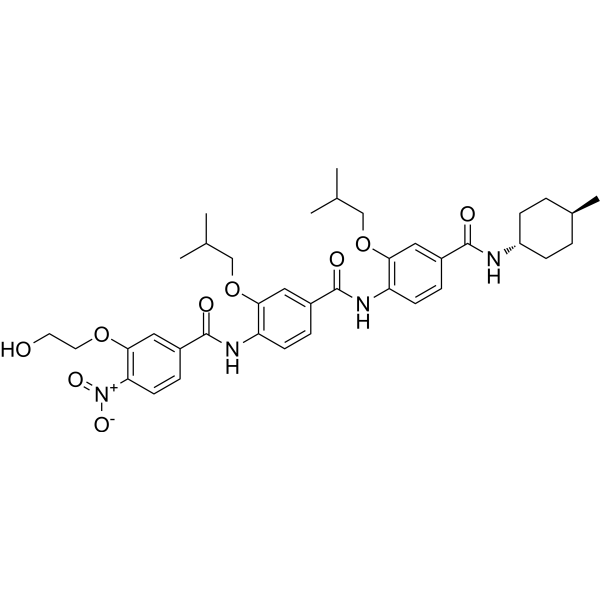
    SR1664 is a PPARγ antagonist. SR1664 binds to PPARγ and potently inhibits Cdk5-mediated PPARγ phosphorylation (IC50=80 nM; Ki= 28.67 nM) .
    SR1664
  • HY-15314
    Ranirestat
    1 Publications Verification

    AS-3201

    Aldose Reductase Neurological Disease Metabolic Disease
    Ranirestat (AS-3201) potent and orally active aldose reductase (AR) inhibitor with IC50s of 11 nM and 15 nM for rat lens AR and recombinant human AR, respectively, and a Ki of 0.38 nM for recombinant human AR. Ranirestat has the potential for diabetic sensorimotor polyneuropathy treatment. Ranirestat also has a neuroprotective effect on diabetic retinas .
    Ranirestat
  • HY-148755

    Lipase Cancer
    ERX-41 is an orally active and stereospecific small molecule targeting to lysosomal acid lipase A (LIPA). ERX-41 induces endoplasmic reticulum (ER) stress resulting in cell death, indicating a function independent of LIPA but dependent on its ER localization. ERX-41 involves in a targeted strategy for solid tumors .
    ERX-41
  • HY-P2987

    Endogenous Metabolite Amino Acid Oxidase Metabolic Disease
    L-Amino acid oxidase is a homodimeric proteins containing flavin adenine dinucleotide. L-Amino acid oxidase can catalyze the stereospecific oxidative deamination of L-amino acids to α-keto acids and ammonia .
    L-Amino acid oxidase
  • HY-W353804

    Nucleoside Antimetabolite/Analog Infection
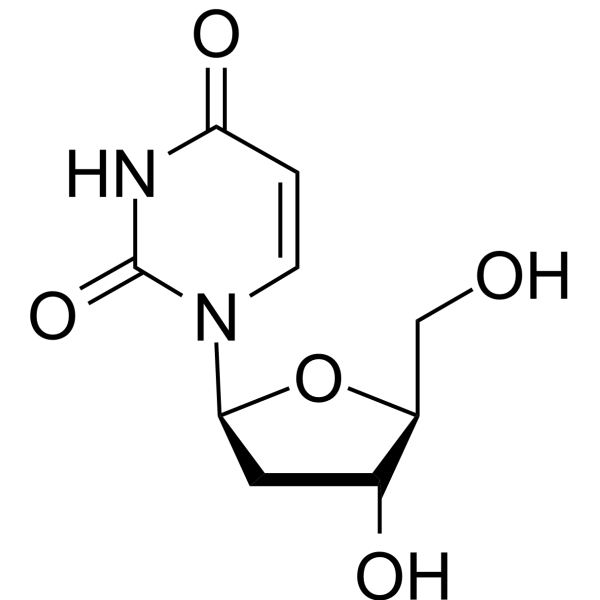
    2'-Deoxy-β-L-uridine is a nucledside analogue and a specific substrate for the viral enzyme, shows no stereospecificity against herpes simplex 1 (HSV1) thymidine kinase (TK). 2′-Deoxy-β-L-uridine exerts antiviral activity via the interation of 5'-triphosphates with the viral DNA polymerase .
    2′-Deoxy-β-L-uridine
  • HY-W010554

    Drug Intermediate Others
    1,4-Cyclohexanedione is a drug intermediate. 1,4-Cyclohexanedione is an accepted substrate of EryKR1 domain which takes on a certain biocatalyst activity and stereospecificity .
    1,4-Cyclohexanedione
  • HY-160431

    PPAR NF-κB COX Drug Metabolite Metabolic Disease
    8(9)-EET is one of the main metabolites produced by the metabolism of arachidonic acid (HY-109590) through the cytochrome P450 epoxide pathway. 8(9)-EET is an effective substrate for COX-1 and COX-2. 8(9)-EET activates PPARα in HEK293 cells and inhibits the activity of NF-κB induced by IL-1β in a PPARα-dependent and -independent manner. The (8S,9R)-isomer of 8(9)-EET ([(8S,9R)-EET]) causes vasoconstriction, thereby reducing renal plasma flow and glomerular filtration rate .
    8(9)-EET
  • HY-128599

    PARP Cancer
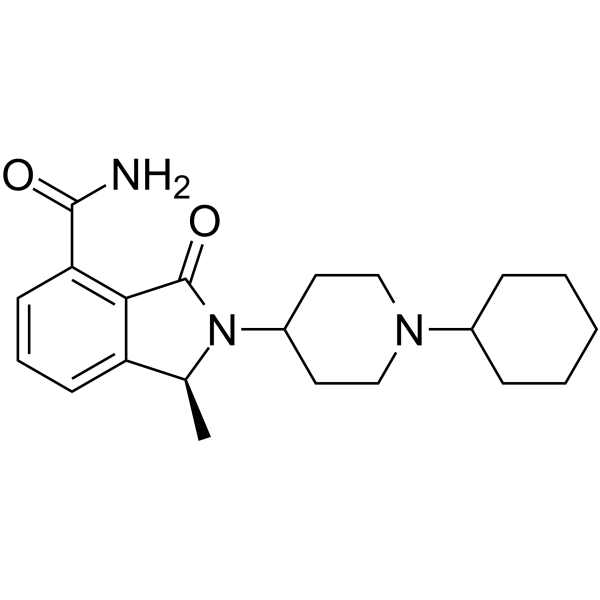
    NMS-P515 is a potent, orally active and stereospecific PARP-1 inhibitor, with a Kd of 16 nM and an IC50 of 27 nM (in Hela cells). Anti-tumor activity .
    NMS-P515
  • HY-118833

    Calcium Channel Cardiovascular Disease
    RAC 109 is a local anesthetic. RAC 109 reduces ventricular conduction velocity and myocardial contractility in rabbits in a stereospecific manner (EC50=30 μM) .
    RAC 109
  • HY-W351380

    HBV Biochemical Assay Reagents
    (-)-Anicyphos is a chiral catalyst with the activity of promoting the selectivity of specific reactions. (-)-Anicyphos is often used to synthesize complex chiral molecules in organic synthesis and shows excellent catalytic performance. By adjusting the reaction conditions, (-)-Anicyphos can significantly improve the stereospecificity of the product, providing an effective strategy for compound development.
    (-)-Anicyphos
  • HY-120777

    Bacterial Others
    GSK729 is a THPP inhibitor with the activity of inhibiting EchA6 and inhibiting Mycobacterium tuberculosis. GSK729 can selectively pull down EchA6 in a stereospecific manner, inhibit its activity, inhibit fatty acid synthesis of Mycobacterium tuberculosis, and has a bactericidal effect in a mouse chronic tuberculosis infection model.
    GSK729
  • HY-116284A

    Methyl β-D-glucoside hemihydrate

    Drug Intermediate Others
    Methyl β-D-glucopyranoside (Methyl β-D-glucoside) hemihydrate is a model glycosyl acceptor for enzymatic glycosylation reactions. Methyl β-D-glucopyranoside hemihydrate participates in glycoside synthesis and can react with acyl donors such as caffeic acid esters under the catalysis of specific enzymes (such as Lipozyme TL IM) to achieve acylation modification. Methyl β-D-glucopyranoside hemihydrate can be used in organic synthesis and biocatalysis research, especially the efficient enzymatic preparation of medicinal glycosides (such as Robustaside B (HY-N2720), 6-O-caffeoyl salidroside) .
    Methyl β-D-glucopyranoside hemihydrate
  • HY-P2854A

    Biochemical Assay Reagents Metabolic Disease
    L-Alanine Dehydrogenase, Bacillus subtilis (EC 1.4.1.1) is an A-stereospecific dehydrogenase that catalyzes the reversible deamination of L-alanine to pyruvate and ammonium.
    L-Alanine Dehydrogenase, Bacillus subtilis
  • HY-182543

    CaSR Others
    NPS-467 is a calcium-sensing receptor (CaR) activator and stereospecific agent with only its R-enantiomer active. NPS-467 increases the sensitivity of the CaR to activation by extracellular calcium. NPS-467 stimulates stanniocalcin (STC) secretion in trout and induces inhibition of gill calcium transport in trout. NPS-467 has no effect on serum calcitonin levels in trout .
    NPS-467
  • HY-170623

    Biochemical Assay Reagents Metabolic Disease
    1-Palmitoyl-2-stearoyl-3-butyryl-rac-glycerol is a triacylglycerol containing Palmitic acid (HY-N0830), Stearic acid (HY-B2219), and Butyric acid (HY-B0350) at the sn-1, sn-2, and sn-3 positions, respectively. It has been used to determine the stereospecificity and typoselectivity of lipases.1
    1-Palmitoyl-2-stearoyl-3-butyryl-rac-glycerol
  • HY-180898

    DGK ERK IFNAR Interleukin Related Molecular Glues Inflammation/Immunology
    AHL-7160 is a covalent DGKα inhibitor that possesses dual functions of enzyme activity inhibition (IC₅₀ ≈ 12 nM) and molecular gel-mediated degradation. AHL-7160 can rapidly recruit endogenous DGKα to the cell membrane (EC₅₀ = 39 nM), and this effect has isozyme selectivity. AHL-7160 can stereospecifically block phosphatidylcholine acid (PA) production mediated by DGKα (IC₅₀ = 340 nM). AHL-7160 enhances T cell activation and promotes anti-tumor immune responses. AHL-7160 can be used for research on immunotherapy .
    AHL-7160
  • HY-W787758

    4-yn-VPA

    HDAC P-glycoprotein Neurological Disease Cancer
    2-Propylpent-4-ynoic acid (4-yn-VPA) is a HDAC inhibitor (with an IC50 of 0.5 mM against human HDAC). 2-Propylpent-4-ynoic acid also induces P-glycoprotein function, and exhibits teratogenicity, fetal growth inhibition and neurotoxicity. 2-Propylpent-4-ynoic acid shows significant stereospecific teratogenic effects, with the S-enantiomer being more teratogenic than the R-enantiomer and other analogs. The neurotoxicity of 2-Propylpent-4-ynoic acid is independent of its stereochemical structure. 2-Propylpent-4-ynoic acid has been used in studies related to the pathogenesis of colon cancer and neural tube defects such as exencephaly .
    2-Propylpent-4-ynoic acid

Inquiry Online

Your information is safe with us. * Required Fields.

Salutation


Country or Region *

Applicant Name *


Organization Name *

Department *


Email Address *


Product Name *

Cat. No.


Requested quantity *

Phone Number *


Remarks

Inquiry Online

Inquiry Information

Product Name:
Cat. No.:
Quantity:
MCE Japan Authorized Agent:

