38 Results for "

supercapacitor electrodes

" in MedChemExpress (MCE) Product Catalog:
Products (38)

38 Results for "supercapacitor electrodes" in MCE Product Catalog:

11
11 Publications Verification
Cat. No.: HY-W074143
CAS No.: 36309-88-3
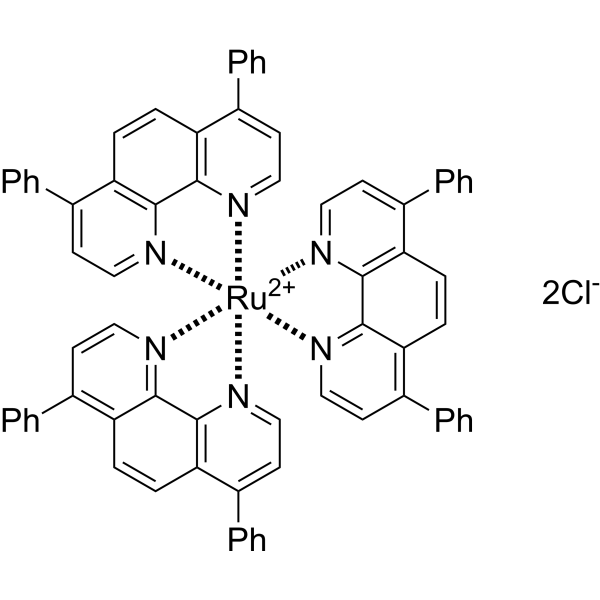
Synonyms: [Ru(DPP)3]Cl2
Tris(4,7-diphenyl-1,10-phenanthroline)ruthenium(II) dichloride ([Ru(dpp)3] 2+) is an electrochemiluminescent (ECL) probe and oxygen-sensitive sensor. Tris(4,7-diphenyl-1,10-phenanthroline)ruthenium(II) dichloride can be used to modify electrode surfaces for the detection of sulfates (S2O8 2-) and oxalates, based on electrochemical reactions that generate excited-state species, releasing photons through irreversible redox reactions. Tris(4,7-diphenyl-1,10-phenanthroline)ruthenium(II) dichloride utilizes the oxygen quenching of fluorescence mechanism, where fluorescence intensity reflects the metabolic rate of living microorganisms or oxygen levels within cells/tumors, allowing for real-time detection. Tris(4,7-diphenyl-1,10-phenanthroline)ruthenium(II) dichloride's main applications include microbial detection, antibacterial activity studies, and tumor microenvironment research .
loading...
    loading...
2
2 Cited Publications
Cat. No.: HY-D0175
CAS No.: 919-30-2
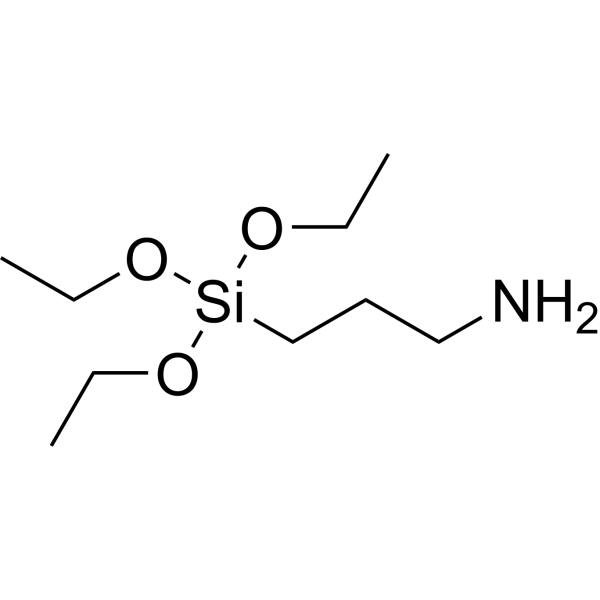
Synonyms: γ-Aminopropyltriethoxysilane; APTES
3-Aminopropyltriethoxysilane (APTES) acts as a strong glue to immobilize biomolecules such as antibodies and enzymes to silicon and silicon derivatives such as silicon nitride (Si3N4 )) on. 3-Aminopropyltriethoxysilane also acts as a spacer, providing biomolecules with more spatial freedom during immobilization for higher specific activity. 3-Aminopropyltriethoxysilane can form a more stable, sensitive, and highly biocompatible bioanalytical platform by immobilizing biomolecules onto some solid materials, electrode materials, nanomaterials, and nanocomposites .
loading...
    loading...
1
1 Cited Publications
Cat. No.: HY-E70005I
CAS No.: 9001-12-1
Synonyms: Type VI collagenase
Target:  

MMP

Research Areas:  

Cancer

Collagenase, Type VI (EC 3.4.24.3) is a collagenase that can degrade type VI collagen. Type VI collagen is a component of cell membranes in various tissues (such as skin, heart, blood vessels, cartilage, and synovial fluid). Excessive collagenase can cause extracellular matrix lesions. Collagenase is also a biomarker for tumor invasion and metastasis. Collagenase, Type VI can specifically act on the peptide bond between proline and glycine. This feature can be used to quickly and sensitively detect its concentration level in experiments using corresponding modified electrodes .
loading...
    loading...
1
1 Cited Publications
Cat. No.: HY-W077680
CAS No.: 1126-58-5
Research Areas:  

Others

Girard's P reagent is a reagent used in organic chemistry. Girard's P reagent is used to react with vanillin to form a hydrazone derivative, which is then combined with an ion selective electrode (ISE) to develop a potentiometric method for the determination of vanillin. Girard's P reagent can be used in the development of ion selective electrodes and in the study of organic analysis .
loading...
    loading...
Cat. No.: HY-W015816
CAS No.: 527-61-7
Synonyms: 2,6-DMBQ
Target:  

Photosystem II

Research Areas:  

Others

2,6-Dimethylbenzoquinone (2,6-DMBQ) is a benzoquinone derivative. 2,6-Dimethylbenzoquinone promotes Photosystem II-mediated photoelectrochemical water oxidation via electron transfer between spinach chloroplast Photosystem II membranes and carbon paste electrodes, and accepts electrons from Photosystem II during oxygen evolution assays. 2,6-Dimethylbenzoquinone undergoes direct photolysis in aqueous solution under 365 nm conditions, producing 2,6-dimethylhydroquinone and 3-hydroxy-2,6-dimethylbenzoquinone .
loading...
    loading...
Cat. No.: HY-126061
CAS No.: 33868-03-0
Purity:  99.82%
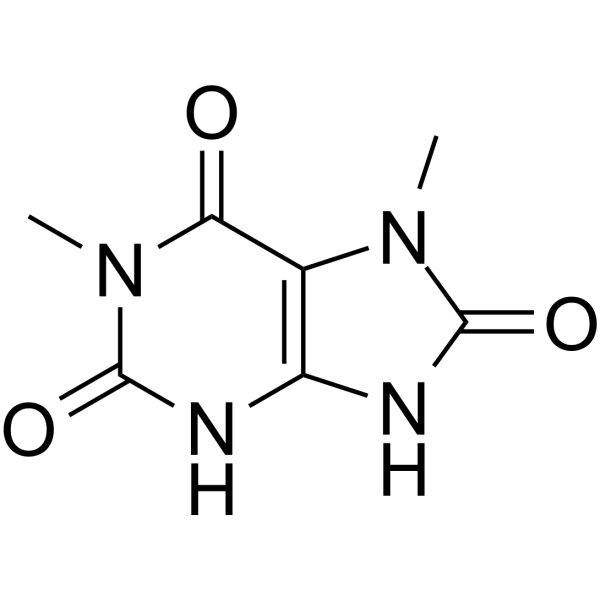
1,7-Dimethyluric acid is an N-methylated uric acid and purine derivative, as well as a caffeine metabolite. When 1,7-Dimethyluric acid is acted upon by peroxidase in the presence of H2O2, it follows the same oxidation pathway to generate a UV-absorbing intermediate, which decays via first-order kinetics. 1,7-Dimethyluric acid can adsorb onto pyrolytic graphite electrodes, but not onto glassy carbon electrodes or platinum electrodes. The N-methylation modification of its pyrimidine ring prevents ring contraction of the diol intermediate, and no NMR evidence of O-alkylation is observed during propylation under the test conditions .
loading...
    loading...
Cat. No.: HY-D0808
CAS No.: 7057-57-0
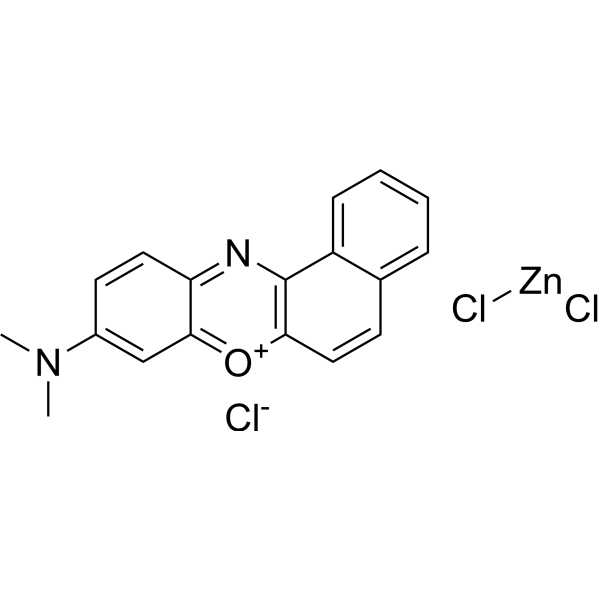
Meldola blue is a biosensor for measuring lactate in serum based on screen-printed carbon electrodes modified with Meldola's Blue-Reinecke salt (MBRS-SPCE) coated with lactate dehydrogenase NAD+-dependent enzyme (from pig heart) and NAD+.
loading...
    loading...
Cat. No.: HY-W127790
CAS No.: 52746-49-3
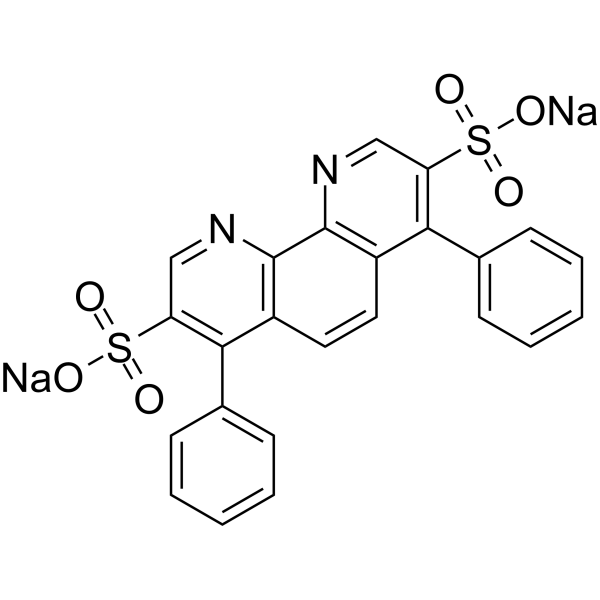
Bathophenanthrolinedisulfonic acid disodium is an iron ion chelator that serves as a colorimetric reagent for iron ion detection. Bathophenanthrolinedisulfonic acid disodium forms stable, strong complexes with Fe 2+ and Fe 3+, and each complex exhibits reversible redox behavior. Bathophenanthrolinedisulfonic acid disodium can act as a ligand to form water-soluble ruthenium catalysts, which promote the hydrogenation of the ketone group in levulinic acid to produce γ-valerolactone. When Bathophenanthrolinedisulfonic acid disodium and its iron complex are incorporated into a polymer-modified electrode, rapid color change from red to transparent occurs during potential cycling .
loading...
    loading...
Cat. No.: HY-W092533
CAS No.: 7730-20-3
Research Areas:  

Neurological Disease

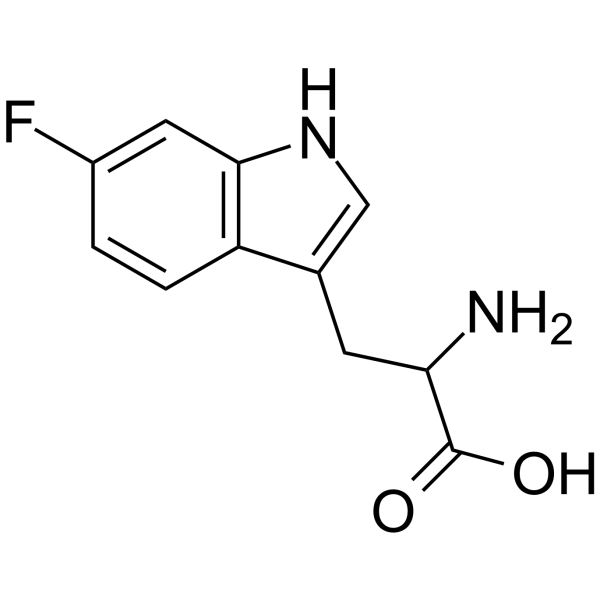
6-Fluorotryptophan, a competitive inhibitor of tryptophan hydroxylase, produced a transient disruption of sleep in rats chronically implanted with EEG recording electrodes .
loading...
    loading...
Cat. No.: HY-139728
CAS No.: 74267-27-9
Purity:  99.36%
Synonyms: Calcium ionophore II
Research Areas:  

Others

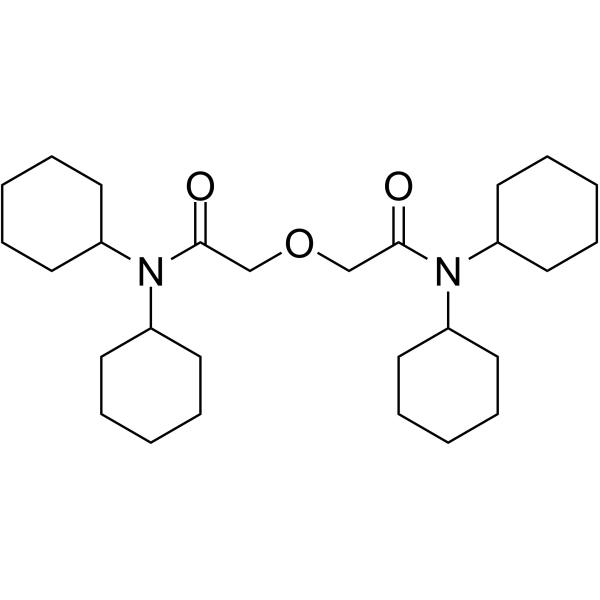
N,N,N′,N′-Tetracyclohexyl-3-oxapentanediamide (Calcium ionophore II) is a lipophilic ionophore that can be used in preparing calcium ion-selective electrode .
loading...
    loading...
Cat. No.: HY-W010488
CAS No.: 79-40-3
Dithiooxamide (Rubeanic Acid) is a selective chelating agent and sulfur-containing analog of Oxamide. Dithiooxamide forms stable chelates with various metal ions (such as lead, iron, cadmium, manganese, and aluminum), which can be separated, enriched, and detected by adsorption on solid adsorbents or electrode surfaces .
loading...
    loading...
Cat. No.: HY-91018
CAS No.: 35141-36-7
Synonyms: N-[3-(Trimethoxysilyl)propyl]-N,N,N-trimethylammonium chloride, 50% in methanol
Trimethyl[3-(trimethoxysilyl)propyl]ammonium (N-[3-(Trimethoxysilyl)propyl]-N,N,N-trimethylammonium) chloride (50% in methanol) is a functional organic silane coupling agent and quaternary ammonium salt cationic functional monomer, which can be used for functionalizing mesoporous silica with electrochemical modified electrodes or surface chemical modification .
loading...
    loading...
Cat. No.: HY-W008954
CAS No.: 78-42-2
Tris(2-ethylhexyl) phosphate is an organophosphorus flame retardant analog with considerable ecological toxicity. Tris(2-ethylhexyl) phosphate can be used as neutral carriers to make organic ammonium ion-selective membrane electrodes. Tris(2-ethylhexyl) phosphate is widely applied in furniture, textiles, building materials, electronics, and other chemicals .
loading...
    loading...
Cat. No.: HY-W674112
CAS No.: 75513-72-3
Synonyms: ETH 1117
Target:  

Endogenous Metabolite

Research Areas:  

Others

Magnesium ionophore I (ETH 1117) serves as the primary component for the development of calcium-magnesium selective electrodes.
loading...
    loading...
Cat. No.: HY-W033573
CAS No.: 15305-72-3
Research Areas:  

Others

Hexaammineruthenium(II) chloride is a non-corrosive redox probe. Hexaammineruthenium(II) chloride avoids gold electrode corrosion and degradation to enable stable electrochemical impedance spectroscopy measurements. Hexaammineruthenium(II) chloride supports detection of human-IgG with a defined diagnostic concentration range .
loading...
    loading...
Cat. No.: HY-157914
CAS No.: 106868-21-7
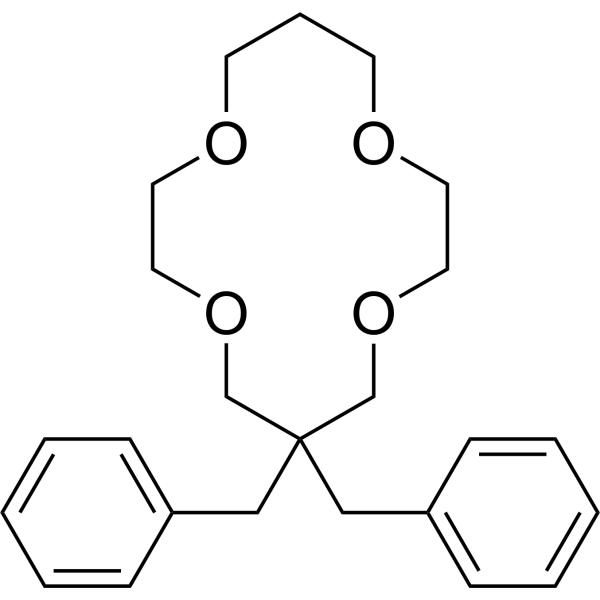
Synonyms: 6,6-Dibenzyl-1,4,8,11-tetraoxacyclotetradecane
Dibenzyl-14-crown-4 (6,6-Dibenzyl-1,4,8,11-tetraoxacyclotetradecane) is a crown ether derivate, which serves as neutral carrier in PVC ion-selective electrode, improves the Li + selectivity against Na + and K + .
loading...
    loading...
Cat. No.: HY-131142
CAS No.: 28636-21-7
Purity:  99.18%
Target:  

Drug Derivative

Research Areas:  

Others

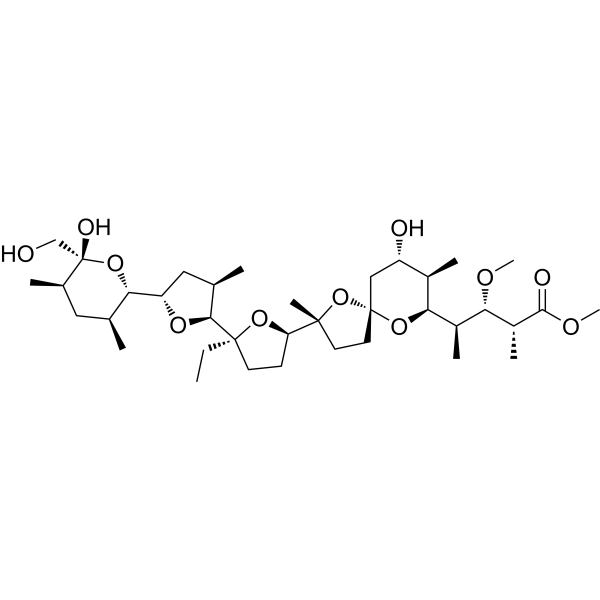
Monensin methyl ester, a neutral analog of Monensin (HY-N4302), is an ion active component for Na + selective disk electrodes .
loading...
    loading...
Cat. No.: HY-Y0607S1
CAS No.: 117868-95-8
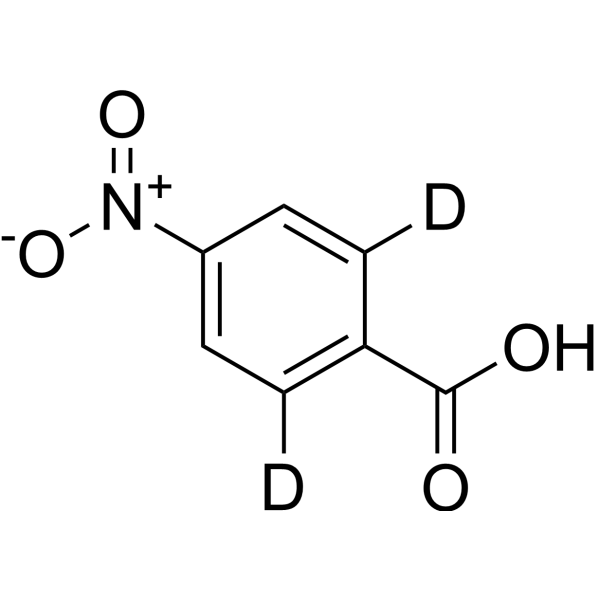
4-Nitrobenzoic acid-d2 is the deuterium labeled 4-Nitrobenzoic acid (HY-Y0607). 4-Nitrobenzoic acid acts as a redox mediator and electron transfer promoter. 4-Nitrobenzoic acid accepts electrons from reduced glucose oxidase and transfers them to the electrode to facilitate the glucose oxidation reaction, while minimizing the formation of protonated amino groups .
loading...
    loading...
Cat. No.: HY-Y1810
CAS No.: 112-36-7
Diethylene glycol diethyl ether is a glycol dimethyl ether-structured ether electrolyte solvent used in non-aqueous lithium-air batteries. As a reaction promoter, Diethylene glycol diethyl ether facilitates reversible oxygen reduction and oxygen evolution reactions on porous carbon electrodes without the need for a catalyst, and supports the formation and complete decomposition of crystalline Li2O2 during the cycling of lithium-air batteries .
loading...
    loading...
Cat. No.: HY-131829
CAS No.: 59587-50-7
Synonyms: 6-AE-NAD+
Target:  

Lactate Dehydrogenase

Research Areas:  

Others

N6-(2-Aminoethyl)-NAD+ (6-AE-NAD+) is an adenine-modified NAD analog with coenzyme activity and the property of targeting lactate dehydrogenase (LDH). N6-(2-Aminoethyl)-NAD+ undergoes transient affinity binding with LDH, thereby crosslinking the enzyme monolayer into an integrated electrode. N6-(2-Aminoethyl)-NAD + is a component of the PQQ (HY-100196)-NAD + binary interface, and supports the bioelectrocatalytic oxidation of lactate through PQQ-mediated immobilized NADH oxidation .
loading...
    loading...