1. Search Result
Search Result
Results for "

toxic marker

" in MedChemExpress (MCE) Product Catalog:

13

Inhibitors & Agonists

1

Screening Libraries

1

Biochemical Assay Reagents

2

Natural
Products

1

Click Chemistry

Cat. No. Product Name Target Research Areas Chemical Structure
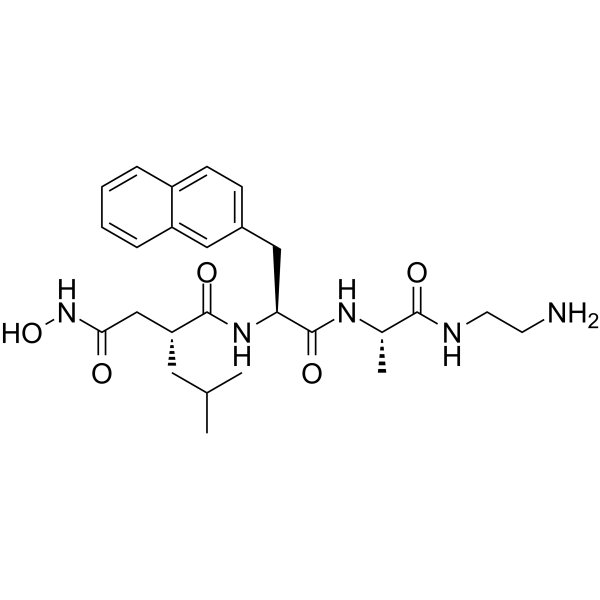
  • HY-16657
    TAPI-1
    10+ Cited Publications

    MMP NF-κB Apoptosis TNF Receptor Inflammation/Immunology Cancer
    TAPI-1 is a broad-spectrum MMP inhibitor and NF-κB p65 inhibitor that targets ADAM17/TACE, ADAM10 and other proteins. TAPI-1 reduces the proteolytic cleavage of membrane-bound TNF-α, decreases TNF-α levels, inhibits NF-κB pathway activation, and downregulates profibrotic markers. TAPI-1 reduces the proportion of proinflammatory immune cells, alleviates cardiac and airway fibrosis, and improves cardiac function after myocardial infarction. Meanwhile, TAPI-1 inhibits the viability, migration and invasion of esophageal squamous cell carcinoma cells, enhances the chemosensitivity of Cisplatin (HY-17394), induces apoptosis, and shows low toxicity to normal esophageal epithelial cells. TAPI-1 can be widely used in studies related to myocardial infarction-induced heart failure, severe traumatic tracheal stenosis, esophageal squamous cell carcinoma and other conditions .
    TAPI-1
  • HY-149136

    Integrin TGF-beta/Smad Inflammation/Immunology
    MORF-627 is a highly selective, orally active integrin αvβ6 inhibitor. By blocking TGF-β1 activation and pSMAD2 signaling, MORF-627 significantly reduces collagen deposition, epithelial-mesenchymal transition markers, and structural changes in fibrotic cells. MORF-627 exhibits significant antifibrotic efficacy without genotoxicity in idiopathic pulmonary fibrosis models. However, MORF-627 induces bladder epithelial proliferation and early invasive urothelial carcinoma in cynomolgus monkeys and human cells, and this toxic effect can be reversed by exogenous TGF-β. MORF-627 can be used for studying the pathological mechanisms of pulmonary fibrosis and evaluating drug safety .
    MORF-627
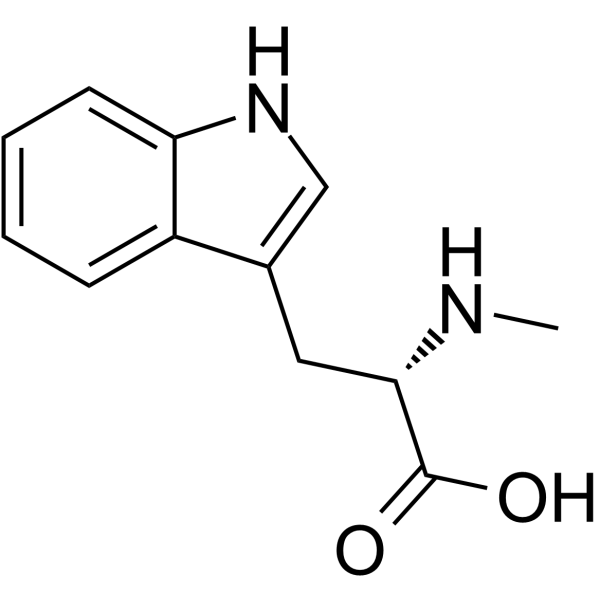
  • HY-N1436

    L-Abrine; L-N-Methyltryptophan; N-α-Methyl-L-tryptophan

    Others Inflammation/Immunology
    L-(+)-Abrine, a lethal albumin found in Abrus precatorius seeds, is an acute toxic alkaloid and chemical marker for abrin.
    L-(+)-Abrine
  • HY-P3394

    CTB, from vibrio cholerae

    Biochemical Assay Reagents Others
    Cholera toxin B subunit, from vibrio cholerae (CTB, from vibrio cholerae) is non-toxic to cells and possesses no intrinsic adenylate cyclase activity. Cholera toxin B subunit, from vibrio cholerae attaches to cells by binding to ganglioside GM1.8 CTB has been shown to be a good label for microglial cells (due to the enrichment of ganglioside GM1 on their cell surface), but not for oligodendrocytes or astrocytes. Cholera toxin B subunit, from vibrio cholerae has been reported to be an excellent tracer for the study of axonal transport using immunohistochemical methods. Cholera toxin B subunit, from vibrio cholerae has been widely used as a marker of membrane lipid rafts .
    Cholera toxin B subunit, from vibrio cholerae
  • HY-W002199

    6:2 FTOH; 1H,1H,2H,2H-Perfluoro-1-octanol; 2-(Perfluorohexyl)ethanol

    Bacterial Apoptosis ERK TNF Receptor Infection Neurological Disease
    6:2 Fluorotelomer alcohol (6:2 FTOH) is an orally active, blood-brain barrier-permeable modulator of cyclin D1 and ETS1. 6:2 Fluorotelomer alcohol downregulates cyclin D1 expression, upregulates ETS1 via the TNF-α/ERK 1/2 pathway, impairs mitochondrial membrane potential and respiratory function, increases reactive oxygen species levels, disrupts calcium homeostasis and activates endoplasmic reticulum stress markers, and induces cell proliferation inhibition and endothelial-mesenchymal transition. Furthermore, 6:2 Fluorotelomer alcohol induces morphological abnormalities in zebrafish embryos and liver developmental damage, while disrupting the brain immune microenvironment in mice, causing systemic toxicity and delayed pup maturation in CD-1 mice. 6:2 Fluorotelomer alcohol also induces cortical neuron apoptosis, glial cell activation, synaptic abnormalities, colonic barrier damage, intestinal dysbiosis and autism spectrum disorder-like symptoms in mice. 6:2 Fluorotelomer alcohol shows no mutagenic, clastogenic, primary skin/eye irritation or skin sensitizing effects, exhibits no selective reproductive toxicity in CD-1 mice, and is classified as GHS Category 4 for acute oral toxicity. 6:2 Fluorotelomer alcohol can be used in studies of neurodevelopmental disorders and autism spectrum disorders .
    6:2 Fluorotelomer alcohol
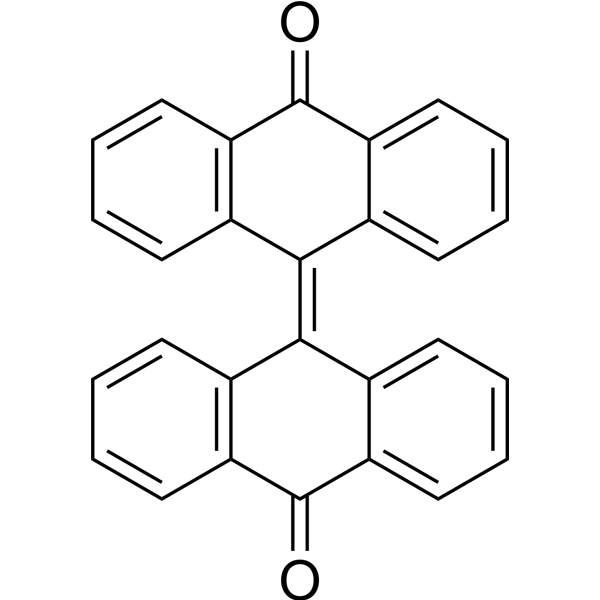
  • HY-136504

    Dianthrone

    Others Others
    Bianthrone (Dianthrone) is a natural product that can be isolated from Rheum officinale Baill. Bianthrone is a potential toxic marker of Polygonum multiflorum Thunb .
    Bianthrone
  • HY-W704973

    DNA/RNA Synthesis Cancer
    F-ara-EdU is a low-toxic, highly stable probe for DNA synthesis that is used as a marker for cell proliferation and DNA replication by binding to DNA or RNA in cells. F-ara-EdU can also be used to detect the rate of DNA synthesis within cells, as well as to study the mechanisms of DNA repair and damage .
    F-ara-EdU
  • HY-169940

    HDAC Inflammation/Immunology
    Fibrostat (Compound 5n) is a selective HDAC6 inhibitor that exerts antifibrotic effects by inhibiting HDAC6 activity, with an IC50 value of 63 nM. It also exhibits good selectivity over HDAC1, HDAC3, HDAC5, HDAC8, HDAC10, and HDAC11. Fibrostat significantly downregulates fibrotic markers (fibronectin and collagen 1) in fibroblasts. Additionally, Fibrostat demonstrated no toxicity in rat-perfused heart and zebrafish larvae models. Fibrostat shows potential for research into fibrosis-related diseases .
    Fibrostat
  • HY-N15717

    Drug Metabolite Others
    (erythro) 1′,2′-Dihydroxyasarone is a metabolite of Beta-asarone (HY-N1501) and can also be isolated from the roots of Acorus tatarinowii. (erythro) 1′,2′-Dihydroxyasarone can form glucuronic acid conjugates in vivo and be excreted in urine. (erythro) 1′,2′-Dihydroxyasarone can serve as a marker for the metabolism and toxic risk assessment of Beta-asarone .
    (erythro) 1′,2′-Dihydroxyasarone
  • HY-B2041

    Insecticide Infection
    Benfuracarb is a broad-spectrum carbamate insecticide with crop protection activity. Benfuracarb is used to control springtails, aphids, and other pests, typically on sugar beet crops. Benfuracarb exhibits toxicity to humans and aquatic organisms. Benfuracarb exposure to zebrafish embryos resulted in a reduction in the body length of zebrafish larvae. Superoxide dismutase (SOD) activity was significantly increased after Benfuracarb treatment. Benfuracarb also interfered with the transcriptional levels of marker genes associated with early embryonic development .
    Benfuracarb
  • HY-W099331R

    MEGX hydrochloride (Standard); Norlidocaine hydrochloride (Standard)

    Reference Standards Drug Metabolite Metabolic Disease Inflammation/Immunology
    Benfuracarb (Standard) is the analytical standard of Benfuracarb. This product is intended for research and analytical applications. Benfuracarb is a broad-spectrum carbamate insecticide with crop protection activity. Benfuracarb is used to control springtails, aphids, and other pests, typically on sugar beet crops. Benfuracarb exhibits toxicity to humans and aquatic organisms. Benfuracarb exposure to zebrafish embryos resulted in a reduction in the body length of zebrafish larvae. Superoxide dismutase (SOD) activity was significantly increased after Benfuracarb treatment. Benfuracarb also interfered with the transcriptional levels of marker genes associated with early embryonic development .
    Monoethylglycinexylidide hydrochloride (Standard)
  • HY-B2041R

    Parasite Reference Standards Infection
    Benfuracarb (Standard) is the analytical standard of Benfuracarb. This product is intended for research and analytical applications. Benfuracarb is a broad-spectrum carbamate insecticide with crop protection activity. Benfuracarb is used to control springtails, aphids, and other pests, typically on sugar beet crops. Benfuracarb exhibits toxicity to humans and aquatic organisms. Benfuracarb exposure to zebrafish embryos resulted in a reduction in the body length of zebrafish larvae. Superoxide dismutase (SOD) activity was significantly increased after Benfuracarb treatment. Benfuracarb also interfered with the transcriptional levels of marker genes associated with early embryonic development .
    Benfuracarb (Standard)
  • HY-170561

    Cholinesterase (ChE) Neurological Disease
    AChE/BuChE-IN-6 (Compound 11f) is an inhibitor of AChE and BuChE, with IC50 values of 1.24 and 1.85 μg/mL, respectively. AChE/BuChE-IN-6 also exhibits strong DPPH free radical scavenging activity (IC50 = 3.15 μg/mL). In vivo toxicity studies indicate that AChE/BuChE-IN-6 is safe, showing no significant differences in blood and biochemical markers compared to the control group after long-term administration, and no abnormalities were observed in liver and kidney tissues. AChE/BuChE-IN-6 holds promise for research into Alzheimer's disease .
    AChE/BuChE-IN-6

Inquiry Online

Your information is safe with us. * Required Fields.

Salutation


Country or Region *

Applicant Name *


Organization Name *

Department *


Email Address *


Product Name *

Cat. No.


Requested quantity *

Phone Number *


Remarks

Inquiry Online

Inquiry Information

Product Name:
Cat. No.:
Quantity:
MCE Japan Authorized Agent:

