Search Result
Results for "
tricyclic
" in MedChemExpress (MCE) Product Catalog:
20
Isotope-Labeled Compounds
| Cat. No. |
상품명 |
Target |
연구분야 |
Chemical Structure |
-
- HY-B1490
-
|
|
Serotonin Transporter
Apoptosis
Autophagy
|
Neurological Disease
Inflammation/Immunology
Cancer
|
|
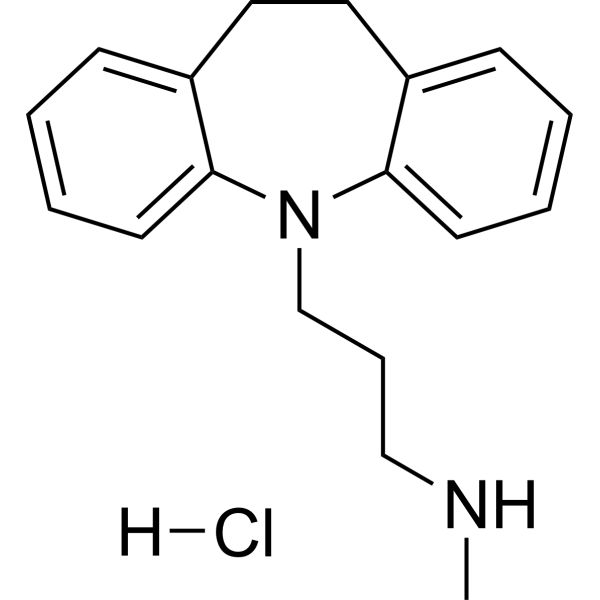
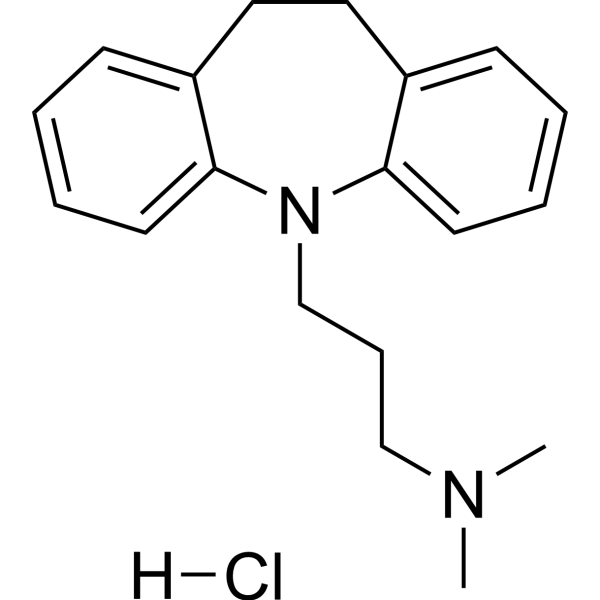
Imipramine hydrochloride is an orally active tertiary amine tricyclic antidepressant. Imipramine hydrochloride is a Fascin1 inhibitor with antitumor activities. Imipramine hydrochloride also inhibits serotonin transporter with an IC50 value of 32 nM. Imipramine hydrochloride stimulates U-87MG glioma cells autophagy and induces HL-60 cell apoptosis. Imipramine hydrochloride shows neuroprotective and immunomodulatory effects .
|
-
-
- HY-B1490A
-
|
|
Serotonin Transporter
Autophagy
Apoptosis
|
Neurological Disease
Inflammation/Immunology
Cancer
|
|
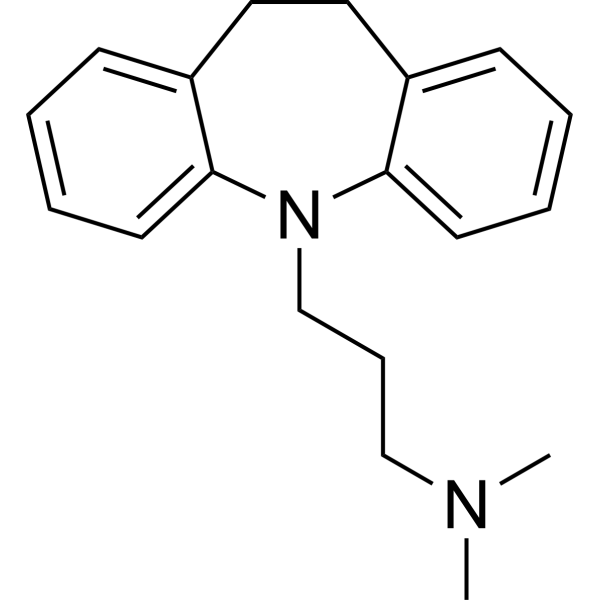
Imipramine is an orally active tertiary amine tricyclic antidepressant. Imipramine is a Fascin1 inhibitor with antitumor activities. Imipramine also inhibits serotonin transporter with an IC50 value of 32 nM. Imipramine stimulates U-87MG glioma cells autophagy and induces HL-60 cell apoptosis. Imipramine shows neuroprotective and immunomodulatory effects .
|
-
-
- HY-B0457A
-
|
Chlorimipramine; G-34586; NSC-169865
|
Serotonin Transporter
|
Neurological Disease
|
|
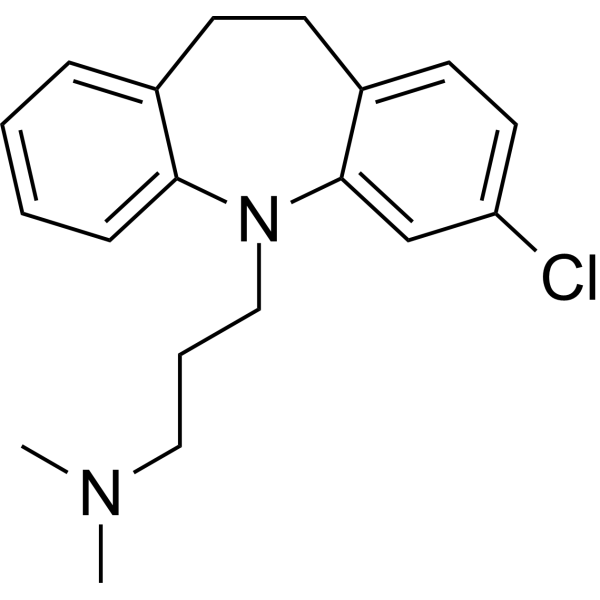
Clomipramine (Chlorimipramine) is a potent 5-HT reuptake blocker with the IC50 value of 1.5 nM. Clomipramine is a tricyclic antidepressant that can be used for the research of depression and obsessive compulsive disorder (OCD) .
|
-
-
- HY-B0457
-
|
Chlorimipramine hydrochloride; G-34586 hydrochloride; NSC-169865 hydrochloride
|
Serotonin Transporter
|
Neurological Disease
|
|
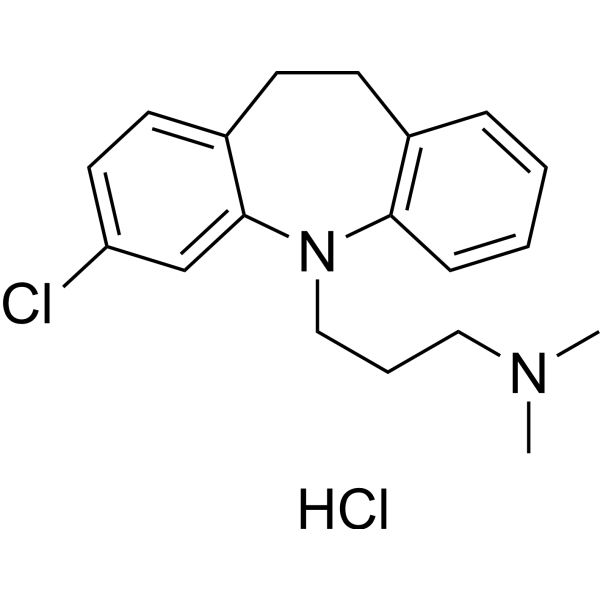
Clomipramine (Chlorimipramine) hydrochloride is a potent 5-HT reuptake blocker with the IC50 value of 1.5 nM. Clomipramine hydrochloride is a tricyclic antidepressant that can be used for the research of depression and obsessive compulsive disorder (OCD) .
|
-
-
- HY-B0725
-
|
|
Histamine Receptor
Cytochrome P450
|
Neurological Disease
Cancer
|
|
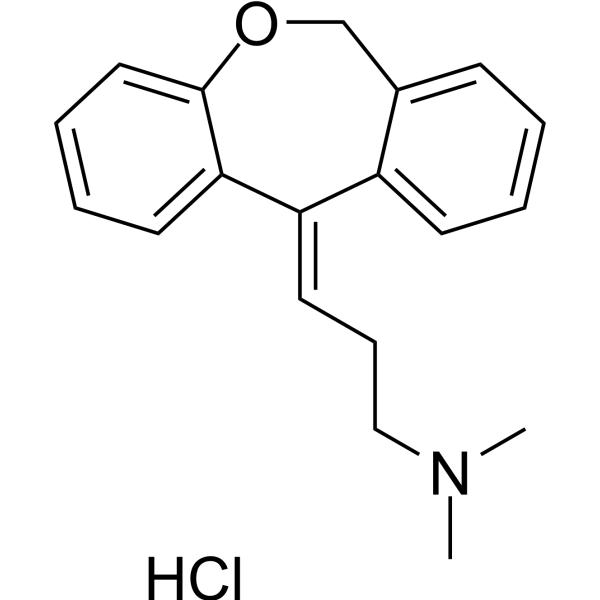
Doxepin hydrochloride is an orally active tricyclic antidepressant agent. Doxepin hydrochloride is a potent and selective histamine receptor H1 antagonist. Doxepin hydrochloride is also a potent CYP450 inhibitor and significantly inhibits CYP450 2C19 and 1A2 . Doxepin inhibits reuptake of serotonin and norepinephrine as a tricyclic antidepressant .. Doxepin has therapeutic effects in atopic dermatitis,chronic urticarial,can improve cognitive processes, protect central nervous system .. Doxepin has also been proposed as a protective factor against oxidative stress ..
|
-
-
- HY-118620
-
|
Desmethylamitriptyline; Desitriptilina
|
Autophagy
Drug Metabolite
Apoptosis
|
Neurological Disease
Cancer
|
|
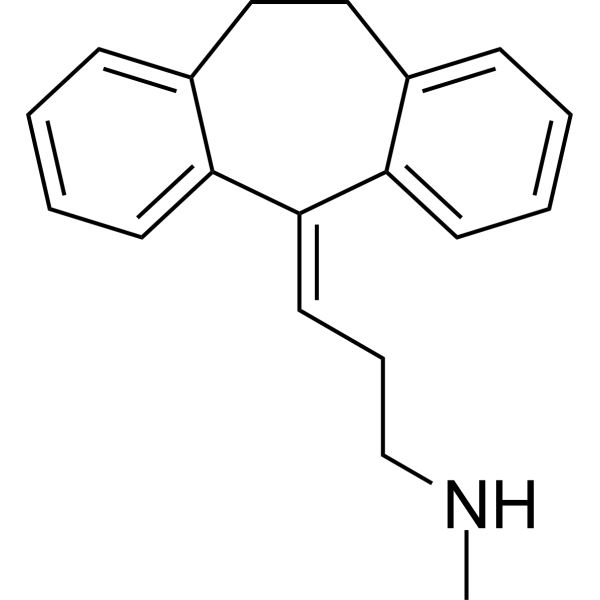
Nortriptyline (Desmethylamitriptyline), the main active metabolite of Amitriptyline, is a tricyclic antidepressant. Nortriptyline is a potent autophagy inhibitor and has anticancer effects .
N
|
-
-
- HY-B1417
-
|
Desmethylamitriptyline hydrochloride; Desitriptilina hydrochloride
|
Autophagy
Drug Metabolite
Apoptosis
|
Neurological Disease
Cancer
|
|
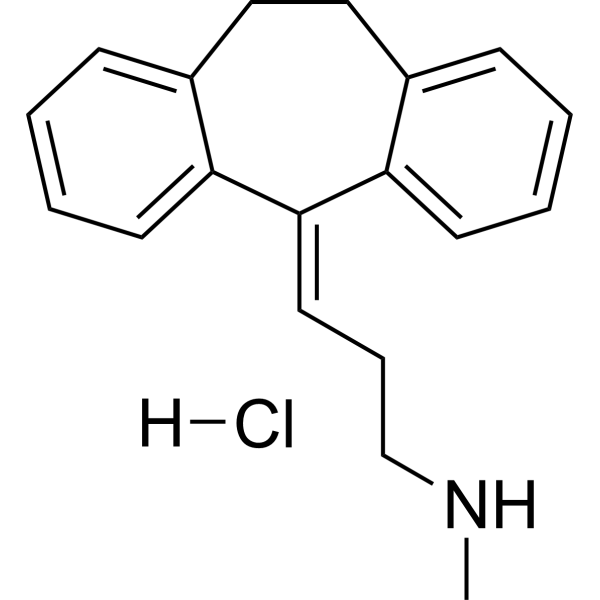
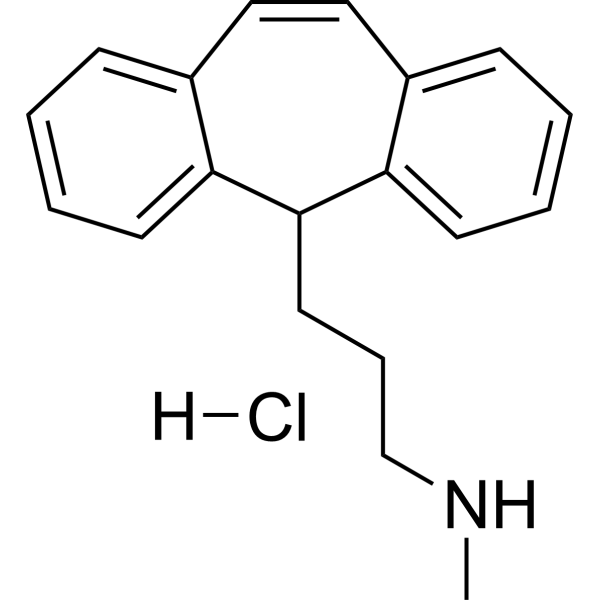
Nortriptyline (Desmethylamitriptyline) hydrochloride, the main active metabolite of Amitriptyline, is a tricyclic antidepressant. Nortriptyline hydrochloride is a potent autophagy inhibitor and has anticancer effects .
|
-
-
- HY-P10033
-
|
|
Ser/Thr Protease
|
Others
|
|
SFTI-1 is a cyclic peptide trypsin inhibitor consisting of 14 amino acid residues. SFTI-1 belongs to the Bowman-Birk class of inhibitors. Characterized by its small size, high stability, and potent activity, SFTI-1 can be used for research on peptide drug design platforms .
|
-
-
- HY-118901
-
|
Ensidon; G-33040
|
Sigma Receptor
|
Neurological Disease
|
|
Opipramol (Ensidon) is an atypical tricyclic antidepressant (TCA). Opipramol acts primarily as a sigma (σ) receptor agonist and can potently interact with sigma recognition sites with a Ki value of 50 nM. Opipramol can be used for the research of generalized anxiety disorder (GAD) .
|
-
-
- HY-136645
-
|
|
Prostaglandin Receptor
|
Cancer
|
|
EP4 receptor antagonist 2 (Compound 8) is a tricyclic spiro-based EP4 receptor antagonist with microsomal stability .
|
-
-
- HY-137239
-
-
-
- HY-B0949
-
|
|
Cholinesterase (ChE)
Amyloid-β
|
Neurological Disease
|
|
Protriptyline hydrochloride is a potent tricyclic antidepressant (TCA). Protriptyline hydrochloride inhibits AChE activity with an IC50 value of 0.06 mM and inhibits Aβ self-assembly. Protriptyline hydrochloride can be used for the study of depression and Alzheimers disease .
|
-
-
- HY-108256
-
|
|
5-HT Receptor
|
Neurological Disease
|
|
Melitracen hydrochloride is an orally active biphasic antidepressant and antianxiety agent. Melitracen hydrochloride can inhibit the uptake of Norepinephrine and 5-HT (serotonin) through the presynaptic membrane inducing the increase of monoamine transmitters in synaptic space .
|
-
-
- HY-N0207
-
-
-
- HY-N0443
-
|
Caulophylline
|
nAChR
|
Inflammation/Immunology
|
|
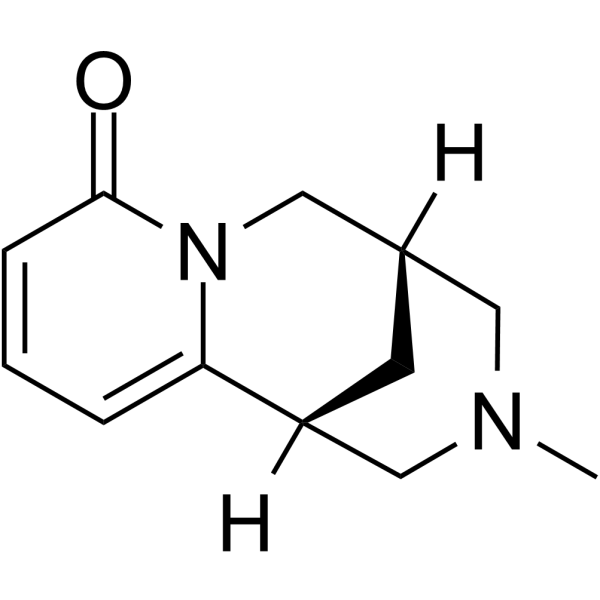
N-Methylcytisine (Caulophylline), a tricyclic quinolizidine alkaloid, exerts hypoglycaemic, analgesic and anti-inflammatory activities. N-methylcytisine is a selective ligand of nicotinic receptors of acetylcholine in the central nervous system and has a high affinity (Kd = 50 nM) to nicotinic acetylcholine receptors (nAChR) from squid optical ganglia .
|
-
-
- HY-B1482A
-
|
TPS-23
|
Potassium Channel
|
Neurological Disease
|
|
Mesoridazine (TPS-23) , a metabolite of Thioridazine (HY-B0965A), acts as an orally active phenothiazine antipsychotic agent. Mesoridazine is a potent and rapid open-channel blocker of human ether-a-go-go related gene (hERG) channels and blocks hERG currents with an IC50 of 550 nM (at 0 mV) in human embryonic kidney 293 cells .Mesoridazine can be used for the research of schizophrenia, as well as certain other psychiatric disorders .
|
-
-
- HY-128777
-
|
|
VDAC
Apoptosis
|
Cancer
|
|
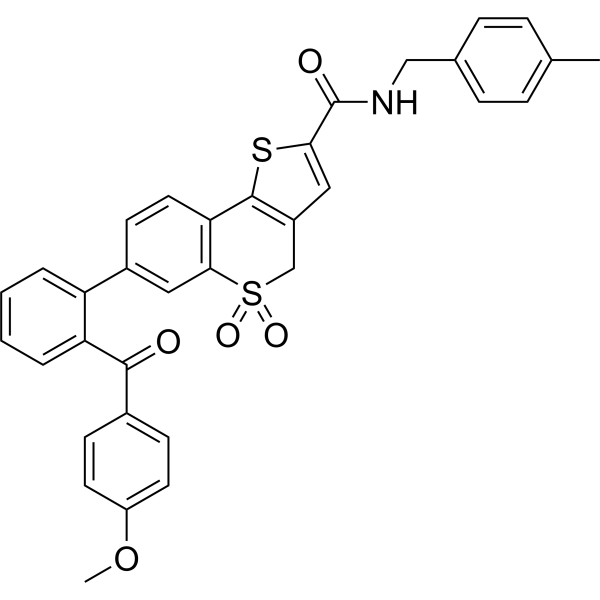
WEHI-9625 is a tricyclic sulfone, first-in-class inhibitor of apoptosis with an EC50 of 69 nM. WEHI-9625 binds to VDAC2 and promotes its ability to inhibit apoptosis driven by mouse BAK. WEHI-9625 is completely inactive against both human BAK and the closely related apoptosis effector BAX .
|
-
-
- HY-12388A
-
|
Desmethylclomipramine hydrochloride; Norclomipramine hydrochloride
|
Drug Metabolite
|
Neurological Disease
|
|
N-Desmethyl Clomipramine hydrochloride (Desmethylclomipramine hydrochloride) is a primary plasma N-desmethyl metabolite of Clomipramine. Clomipramine is a tricyclic antidepressant .
|
-
-
- HY-N7363
-
|
(-)-Isolongifolene
|
Environmental Pollutants
Apoptosis
|
Neurological Disease
Inflammation/Immunology
Cancer
|
|
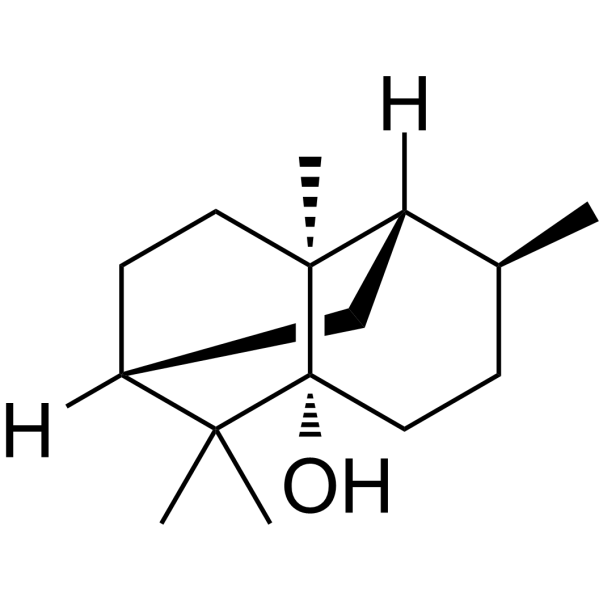
Isolongifolene ((-)-Isolongifolene) is a tricyclic sesquiterpene isolated from Murraya koenigii. Isolongifolene attenuates Rotenone-induced oxidative stress, mitochondrial dysfunction and apoptosis through the regulation of PI3K/AKT/GSK-3β signaling pathways. Isolongifolene has antioxidant, anti-inflammatory, anticancer and neuroprotective properties .
|
-
-
- HY-100646A
-
|
|
Drug Metabolite
|
Neurological Disease
|
|
(Z)-10-Hydroxynortriptyline is a metabolite of Nortriptyline. Nortriptyline is a tricyclic antidepressant and the main active metabolite of Amitriptyline, and is used to relieve the symptoms of depression .
|
-
-
- HY-B1417S
-
|
Desmethylamitriptyline-d3 hydrochloride; Desitriptilina-d3 hydrochloride
|
Isotope-Labeled Compounds
Autophagy
Apoptosis
Drug Metabolite
|
Neurological Disease
Cancer
|
|
Nortriptyline-d3 (hydrochloride) is the deuterium labeled Nortriptyline hydrochloride. Nortriptyline hydrochloride (Desmethylamitriptyline hydrochloride) is a tricyclic antidepressant and the main active metabolite of Amitriptyline, and used to relieve the symptoms of depression .
|
-
-
- HY-B0725A
-
|
|
mTOR
PI3K
Akt
|
Neurological Disease
Cancer
|
|
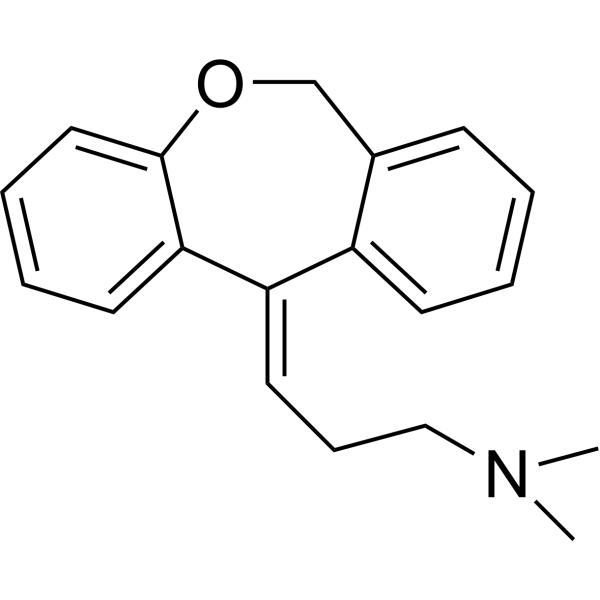
Doxepin inhibits reuptake of serotonin and norepinephrine as a tricyclic antidepressant. Doxepin has therapeutic effects in atopic dermatitis,chronic urticarial,can improve cognitive processes, protect central nervous system. Doxepin has also been proposed as a protective factor against oxidative stress .
|
-
-
- HY-100046
-
|
Desmethyldoxepin hydrochloride
|
Drug Metabolite
|
Neurological Disease
|
|
Nordoxepin hydrochloride is the major metabolite of Doxepin. Doxepin is a tricyclic antidepressant that is widely prescribed for the research of mild depression .
|
-
-
- HY-78509
-
|
|
Biochemical Assay Reagents
Drug Intermediate
|
Neurological Disease
|
|
Dibenzosuberone belongs to the family of tricyclic antidepressant drugs, commonly referred to as Tricyclic antidepressants (TCAs), and is widely used in research on migraine, tension headaches, anxiety disorders, and schizophrenia. Dibenzosuberone is also a key intermediate in the synthesis of various active pharmaceutical ingredients (APIs), such as Amitriptyline (HY-B0527), Nortriptyline (HY-118620), Noxiptiline or Cyproheptadine (HY-B1622) .
|
-
-
- HY-B0457R
-
|
Chlorimipramine hydrochloride (Standard); G-34586 hydrochloride (Standard); NSC-169865 hydrochloride (Standard)
|
Reference Standards
Serotonin Transporter
|
Neurological Disease
|
|
Clomipramine (hydrochloride) (Standard) is the analytical standard of Clomipramine (hydrochloride). This product is intended for research and analytical applications. Clomipramine (Chlorimipramine) hydrochloride is a potent 5-HT reuptake blocker with the IC50 value of 1.5 nM. Clomipramine hydrochloride is a tricyclic antidepressant that can be used for the research of depression and obsessive compulsive disorder (OCD) .
|
-
-
- HY-12392
-
|
|
Opioid Receptor
|
Neurological Disease
|
|
Iprindole, an opioid receptor agonist, is a tricyclic antidepressant. Iprindole shortens the immobility time in mice forced swimming test, which can be reversed by the opiate antagonist Naloxone (HY-17417A). Iprindole induces lamellar body formation but devoid of lamellar bodies. Iprindole can be used for the research of depression .
|
-
-
- HY-149828
-
-
-
- HY-116780A
-
|
|
Cytochrome P450
|
Neurological Disease
|
|
Prothipendyl hydrochloride is a tricyclic azaphenothiazine neuroleptic agent. Prothipendyl hydrochloride is a substrate of the CYP isozymes CYP1A2, CYP2D6, CYP2C19 and CYP3A4. Prothipendyl hydrochloride has sedating and psychomotorically damping effects. Prothipendyl hydrochloride can be used for psychomotoric agitation, sleep disorder and anxiety research .
|
-
-
- HY-30151S
-
|
8-Methoxypsoralen-d3; Xanthotoxin-d3; 8-MOP-d3
|
Cytochrome P450
|
Inflammation/Immunology
|
|
Methoxsalen-d3 is the deuterium labeled Methoxsalen[1]. Methoxsalen (8-Methoxypsoralen) is a potent tricyclic furocoumarin suicide inhibitor of CYP (cytochrome P-450), is an agent used to treat psoriasis, eczema, vitiligo and some cutaneous Lymphomas in conjunction with exposing the skin to sunlight[2].
|
-
-
- HY-B1417R
-
|
Desmethylamitriptyline hydrochloride (Standard); Desitriptilina hydrochloride (Standard)
|
Reference Standards
Autophagy
Drug Metabolite
Apoptosis
|
Neurological Disease
Cancer
|
|
Nortriptyline (hydrochloride) (Standard) is the analytical standard of Nortriptyline (hydrochloride). This product is intended for research and analytical applications. Nortriptyline (Desmethylamitriptyline) hydrochloride, the main active metabolite of Amitriptyline, is a tricyclic antidepressant. Nortriptyline hydrochloride is a potent autophagy inhibitor and has anticancer effects .
|
-
-
- HY-19773
-
|
|
Beta-lactamase
Bacterial
|
Infection
|
|
β-Lactamase-IN-1 is an inhibitor of β-Lactamase extracted from patent WO2016027249A1, page 77. β-Lactamase-IN-1 can be used to prepare of tricyclic nitrogen containing compound. β-Lactamase-IN-1 can be used for the research of neisseria gonorrhea infection .
|
-
-
- HY-B0725S
-
|
|
Histamine Receptor
Cytochrome P450
|
Neurological Disease
|
|
Doxepin-d3 (hydrochloride) is a deuterium labeled Doxepin Hydrochloride. Doxepin hydrochloride is an orally active tricyclic antidepressant. Doxepin hydrochloride is a potent and selective histamine receptor H1 antagonist. Doxepin hydrochloride is also a potent CYP450 inhibitor and significantly inhibits CYP450 2C19 and 1A2 .
|
-
-
- HY-151500C
-
|
|
Amine N-methyltransferase
|
Metabolic Disease
|
JBSNF-00002 is an orally active small molecule inhibitor of the tricyclic nicotinamide N-methyltransferase (NNMT) with IC50 values for human, mouse and monkey sources of NNMT of 33, 210 and 190 nM respectively. JBSNF-00002 can reduce endogenous MNA levels in U2OS osteosarcoma cells, with its EC50 being 2.5 μM. JBSNF-00002 exhibits significant anti-obesity and anti-diabetic activities in the diet-induced obesity (DIO) model. JBSNF-00002 can be used for the study of metabolic diseases such as obesity, type 2 diabetes and non-alcoholic fatty liver disease .
|
-
-
- HY-P3193A
-
|
|
Biochemical Assay Reagents
|
Others
|
|
Cyclic nona-L-arginine hydrochloride, a nonaarginine peptide used for drug delivery, translocates faster than their linear counterparts .
|
-
-
- HY-133771AS
-
|
Desmethyldoxepin-d3 hydrochloride
|
Drug Metabolite
|
Neurological Disease
|
|
Nordoxepin-d3 (hydrochloride) is the deuterium labeled Nordoxepin hydrochloride. Nordoxepin hydrochloride is an active metabolite of Doxepin hydrochloride (HY-B0725), which is an orally active tricyclic antidepressant .
|
-
-
- HY-100651
-
|
|
Drug Metabolite
|
Neurological Disease
|
|
Desmethylnortriptyline is a metabolite of Nortriptyline (HY-118620). Nortriptyline is a tricyclic antidepressant and the main active metabolite of Amitriptyline (HY-B0527) , and is used to relieve the symptoms of depression .
|
-
-
- HY-A0175
-
|
Butriptylene
|
5-HT Receptor
|
Neurological Disease
|
|
Butriptyline (Butriptylene) is an orally active tricyclic antidepressant that slightly enhances central 5-HT effects. Butriptyline does not inhibit brain norepinephrine uptake. Butriptyline can be used for depression research .
|
-
-
- HY-162663
-
|
ML253
|
mAChR
|
Neurological Disease
|
|
VU0448088 (ML253) is a potent and cross the blood-brain barrier tricyclic muscarinic acetylcholine receptor subtype 4 (M4) positive allosteric modulator with EC50 values of 56, 176 nM for human and rat, respectively. VU0448088 has the potential for the research of psychotic .
|
-
-
- HY-134039
-
|
5-Hydroxyxanthotoxin
|
Drug Metabolite
|
Inflammation/Immunology
|
|
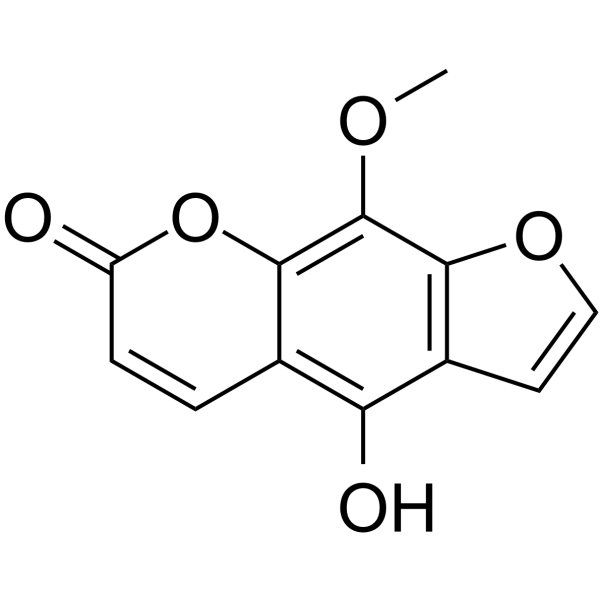
5-Hydroxy-8-methoxypsoralen (5-Hydroxyxanthotoxin) is a metabolite of Xanthotoxin. Xanthotoxin is a potent tricyclic furocoumarin suicide inhibitor of CYP (cytochrome P-450), is an agent used to treat psoriasis, eczema, vitiligo and some cutaneous Lymphomas in conjunction with exposing the skin to sunlight .
|
-
-
- HY-161164
-
|
|
DNA Stain
|
Others
|
|
Tricyclic cytosine tC is a fluorescent base analogue that can be used as a fluorescent probe in nucleic acid-containing systems. The excitation wavelength is 385 nm and the emission wavelength is 505 nm .
|
-
-
- HY-149828A
-
-
-
- HY-161878
-
|
|
Deubiquitinase
|
Cancer
|
|
USP1-IN-10 (compound 2) is a potent tricyclic USP1 inhibitor with an IC50 of 7.6 nM. USP1-IN-10 inhibits MDA-MB-436 viability (IC50=21.58 nM). USP1-IN-10 has the potential for cancers research .
|
-
-
- HY-121778
-
|
Melitracene; N 7001; Trausabun
|
5-HT Receptor
|
Neurological Disease
|
|
Melitracen (Melitracene) is an orally active tricyclic antidepressant and it is also a bipolar thymoleptic with activating properties. Melitracen inhibits 3H-5-HT and 14H-5-HT with IC50s of 670 nM and 5500 nM, respectively. Melitracen can be used for the research of depression and anxiety .
|
-
-
- HY-153114
-
|
|
FXR
|
Inflammation/Immunology
|
|
HEC96719 is a selective and orally active tricyclic farnesoid X receptor (FXR) agonist with EC50 values of 1.37 and 1.55 nM by time-resolved fluorescence energy transfer (TR-FRET) and luciferase reporter assays, respectively. HEC96719 significantly improves non-alcoholic steatohepatitis (NASH) and liver fibrosis with favorable tissue distribution in liver and intestine. HEC96719 can be used for the research of non-alcoholic steatohepatitis .
|
-
-
- HY-D1274
-
|
|
Fluorescent Dye
|
Inflammation/Immunology
|
|
Sulfo-cyanine3 azide is an azide cyanine dye and fluorescent probe (Ex/Em=548/563 nm). Sulfo-cyanine3 azide can be involved in synthesis of fused tricyclic heterocycles, produces immunostimulatory agents . It contains an azide group and can undergo copper-catalyzed azide-alkyne cycloaddition (CuAAc) with molecules containing alkyne groups. It can also undergo ring strain-promoted alkyne-azide cycloaddition (SPAAC) with molecules containing DBCO or BCN groups.
|
-
-
- HY-D1274A
-
|
|
Fluorescent Dye
|
Others
|
|
Sulfo-cyanine3 azide sodium a water-soluble azide cyanine dye and fluorescent probe (Ex/Em=548/563 nm). Sulfo-cyanine3 azide sodium can be involved in synthesis of fused tricyclic heterocycles, produces immunostimulatory agents . It contains an azide group and can undergo copper-catalyzed azide-alkyne cycloaddition (CuAAc) with molecules containing alkyne groups. It can also undergo ring strain-promoted alkyne-azide cycloaddition (SPAAC) with molecules containing DBCO or BCN groups.
|
-
-
- HY-120923
-
|
|
HSP
NF-κB
HIV
Apoptosis
Caspase
|
Infection
Cancer
|
|
GUT-70, a tricyclic coumarin, is a Hsp90 inhibitor. GUT-70 activates the caspase 2, 3, 8 and 9, and induces the apoptosis in leukemic cells. GUT-70 inhibits HIV-1 replication in chronically infected cells via suppression of the NF-κB pathway. GUT-70 can be used for the study of leukemic, mantle cell lymphoma (MCL) and HIV-1 infection .
|
-
-
- HY-151609
-
|
|
PARP
|
Cancer
|
|
PARP7-IN-12 is a potent PARP7 Inhibitor with an IC50 value of 7.836 nM. PARP7-IN-12 can be used in research of cancer .
|
-
-
- HY-B0949A
-
|
|
Cholinesterase (ChE)
Amyloid-β
|
Neurological Disease
|
|
Protriptyline is a potent tricyclic antidepressant (TCA). Protriptyline inhibits AChE activity with an IC50 value of 0.06 mM and inhibits Aβ self-assembly. Protriptyline can be used for the study of depression and Alzheimers disease .
|
-
-
- HY-B0457S1
-
|
Chlorimipramine-d6 hydrochloride; G-34586-d6 hydrochloride; NSC-169865-d6 hydrochloride
|
Isotope-Labeled Compounds
Serotonin Transporter
|
Neurological Disease
|
|
Clomipramine-d6 (hydrochloride) is the deuterium labeled Clomipramine hydrochloride. Clomipramine (Chlorimipramine) hydrochloride is a potent 5-HT reuptake blocker with the IC50 value of 1.5 nM. Clomipramine hydrochloride is a tricyclic antidepressant that can be used for the research of depression and obsessive compulsive disorder (OCD) .
|
-
- HY-B2074
-
|
|
SARS-CoV
|
Neurological Disease
|
|
Demexiptiline is a tricyclic antidepressant. Demexiptiline is a norepinephrine reuptake inhibitor. Demexiptiline has a binding affinity with SARS-CoV-2 3CL protease of 8.14 kcal/mol. Demexiptiline can also be studied in research on melancholic states .
|
-
- HY-12388AS
-
|
Desmethylclomipramine-d3 hydrochloride; Norclomipramine-d3 hydrochloride
|
Drug Metabolite
|
Neurological Disease
|
|
N-Desmethyl Clomipramine-d3 (hydrochloride) is the deuterium labeled N-Desmethyl Clomipramine. N-Desmethyl Clomipramine hydrochloride (Desmethylclomipramine hydrochloride) is a primary plasma N-desmethyl metabolite of Clomipramine
|
-
- HY-B1482
-
|
TPS-23 benzenesulfonate
|
Potassium Channel
|
Neurological Disease
|
|
Mesoridazine (TPS-23) benzenesulfonate, a metabolite of Thioridazine (HY-B0965A), acts as an orally active phenothiazine antipsychotic agent. Mesoridazine benzenesulfonate is a potent and rapid open-channel blocker of human ether-a-go-go related gene (hERG) channels and blocks hERG currents with an IC50 of 550 nM (at 0 mV) in human embryonic kidney 293 cells .Mesoridazine benzenesulfonate can be used for the research of schizophrenia, as well as certain other psychiatric disorders .
|
-
- HY-N0763R
-
|
Isopsoralen (Standard)
|
Reference Standards
Apoptosis
Virus Protease
|
Cancer
|
|
Angelicin (Standard) is the analytical standard of Angelicin. This product is intended for research and analytical applications. Angelicin is a natural tricyclic aromatic hydrocarbon compound that is structurally related to psoralen and has anti-cancer, anti-inflammatory, anti-viral and other activities. Cytotoxic, IC50: 49.56 μM; inhibits MHV-68, IC50: 5.39 μg/ml (28.95 μM).
|
-
- HY-100046R
-
|
Desmethyldoxepin hydrochloride (Standard)
|
Reference Standards
Drug Metabolite
|
Neurological Disease
|
|
Nordoxepin (hydrochloride) (Standard) is the analytical standard of Nordoxepin (hydrochloride). This product is intended for research and analytical applications. Nordoxepin hydrochloride is the major metabolite of Doxepin. Doxepin is a tricyclic antidepressant that is widely prescribed for the research of mild depression .
|
-
- HY-118620R
-
|
Desmethylamitriptyline (Standard); Desitriptilina (Standard)
|
Reference Standards
Autophagy
Drug Metabolite
Apoptosis
|
Neurological Disease
Cancer
|
|
Nortriptyline (Standard) is the analytical standard of Nortriptyline. This product is intended for research and analytical applications. Nortriptyline (Desmethylamitriptyline), the main active metabolite of Amitriptyline, is a tricyclic antidepressant. Nortriptyline is a potent autophagy inhibitor and has anticancer effects .
N
|
-
- HY-175194
-
|
|
5-HT Receptor
|
Neurological Disease
|
|
5-HT2C agonist-6 (Compound 13), a tricyclic psychedelic psychoplastogen, is a 5-HT2C agonist with an EC50 of 13.8 nM. 5-HT2C agonist-6 can be used for neurological diseases research .
|
-
- HY-143656
-
|
|
Autophagy
|
Endocrinology
|
|
SH379 is the derivative of 2-methylpyrimidine-fused tricyclic diterpene. SH379 is a potent and orally active anti-late-onset hypogonadism agent. SH379 significantly promotes the expression of the key testosterone synthesis-related enzymes StAR and 3β-HSD. SH379 stimulates autophagy through regulating AMPK/mTOR signaling pathway .
|
-
- HY-116780
-
|
|
Cytochrome P450
|
Neurological Disease
|
|
Prothipendyl is a tricyclic azaphenothiazine neuroleptic agent. Prothipendyl is a substrate of the CYP isozymes CYP1A2, CYP2D6, CYP2C19 and CYP3A4. Prothipendyl has sedating and psychomotorically damping effects. Prothipendyl can be used for psychomotoric agitation, sleep disorder and anxiety research .
|
-
- HY-D1274B
-
|
|
Fluorescent Dye
|
Inflammation/Immunology
|
|
Sulfo-cyanine3 azide TEA is an azide cyanine dye and fluorescent probe (Ex/Em=548/563 nm). Sulfo-cyanine3 azide TEA can be involved in synthesis of fused tricyclic heterocycles, produces immunostimulatory agents . It contains an azide group and can undergo copper-catalyzed azide-alkyne cycloaddition (CuAAc) with molecules containing alkyne groups. It can also undergo ring strain-promoted alkyne-azide cycloaddition (SPAAC) with molecules containing DBCO or BCN groups.
|
-
- HY-12392R
-
|
|
Reference Standards
Opioid Receptor
|
Neurological Disease
|
|
Iprindole (Standard) is the analytical standard of Iprindole. This product is intended for research and analytical applications. Iprindole, an opioid receptor agonist, is a tricyclic antidepressant. Iprindole shortens the immobility time in mice forced swimming test, which can be reversed by the opiate antagonist Naloxone (HY-17417A). Iprindole induces lamellar body formation but devoid of lamellar bodies. Iprindole hydrochloride can be used for the research of depression .
|
-
- HY-106079
-
-
- HY-N13178
-
|
|
Others
|
Others
|
Multiflorin is a tricyclic monoterpene lactone compound that can be isolated from plants of the jasmine genus .
|
-
- HY-101684A
-
|
CIBA 2330Go hydrochloride
|
Serotonin Transporter
|
Neurological Disease
|
|
Nitroxazepine hydrochloride is a tricyclic antidepressant (TCA) for the study of depression. Nitroxazepine acts as a serotonin-norepinephrine reuptake inhibitor.
|
-
- HY-101684
-
|
CIBA 2330Go
|
Serotonin Transporter
|
Neurological Disease
|
|
Nitroxazepine is a tricyclic antidepressant (TCA) for the research of depression. Nitroxazepine acts as a serotonin-norepinephrine reuptake inhibitor.
|
-
- HY-P10672
-
-
- HY-105774
-
|
|
Serotonin Transporter
|
Neurological Disease
|
|
Oxaflozane is a non-tricyclic antidepressant with serotoninergic action. Oxaflozane has anti-cataleptic and anti-aggressive actions with a weak potentiation of the stereotypes provoked by Amphetamin .
|
-
- HY-106456
-
|
GP 31406
|
Cholinesterase (ChE)
|
Neurological Disease
|
|
Depramine (GP 31406) is a tricyclic antidepressant with pharmacologically activity. Depramine inhibits acetylcholinesterase,Mg 2+-ATPase,and Na+/K+ ATPase activity .
|
-
- HY-100646
-
|
|
Drug Metabolite
|
Neurological Disease
|
|
(E)-10-Hydroxynortriptyline maleate is a metabolite of Nortriptyline. Nortriptyline is a tricyclic antidepressant and the main active metabolite of Amitriptyline, and is used to relieve the symptoms of depression .
|
-
- HY-18900
-
|
|
RIP kinase
|
Inflammation/Immunology
|
|
Nec-4, a tricyclic derivative, is a potent receptor interacting protein 1 (RIP1) inhibitor, with an IC50 of 2.6 μM, Ki of 0.46 μM.
|
-
- HY-101753
-
|
Cyanimipramine; Ro 11-2465
|
5-HT Receptor
|
Neurological Disease
|
|
Cianopramine (Cyanimipramine) is a tricyclic antidepressant, and a potent inhibitor of neuronal serotonin (5-HT) uptake. Cianopramine blocks central and peripheral 5-HT receptors .
|
-
- HY-N0207R
-
|
|
Reference Standards
Bacterial
|
Infection
Inflammation/Immunology
Cancer
|
|
Patchouli alcohol (Standard) is the analytical standard of Patchouli alcohol. This product is intended for research and analytical applications. Patchouli alcohol is a natural tricyclic sesquiterpene, exhibits anti-Helicobacter pylori, anti-inflammatory and antioxidant properties .
|
-
- HY-121203A
-
|
|
Serotonin Transporter
|
Neurological Disease
|
|
Citalopram oxalate is a serotonin uptake inhibitor that serves as an antidepressant, effectively reducing ethanol uptake in alcoholics and offering a preferable option for depressed patients experiencing tardive dyskinesia compared to tricyclic antidepressants, which may worsen this condition.
|
-
- HY-N11977
-
|
|
Others
|
Others
|
|
Stenophyllol B (compound 4) is a trimeric stilbene with bicyclic and bridged tricyclic skeletons. Stenophyllol B was first discovered in the dipterocarps plant and has been found in many species of Hopea, Neobalanocarpus, Shorea, Stemonoporus and Vateri .
|
-
- HY-12388AR
-
|
Desmethylclomipramine hydrochloride (Standard); Norclomipramine hydrochloride (Standard)
|
Reference Standards
Drug Metabolite
|
Neurological Disease
|
|
N-Desmethyl Clomipramine (hydrochloride) (Standard) is the analytical standard of N-Desmethyl Clomipramine (hydrochloride). This product is intended for research and analytical applications. N-Desmethyl Clomipramine hydrochloride (Desmethylclomipramine hydrochloride) is a primary plasma N-desmethyl metabolite of Clomipramine. Clomipramine is a tricyclic antidepressant .
|
-
- HY-136596R
-
|
|
Reference Standards
Drug Metabolite
|
Cancer
|
|
Nortriptyline (Standard) is the analytical standard of Nortriptyline. This product is intended for research and analytical applications. Nortriptyline (Desmethylamitriptyline), the main active metabolite of Amitriptyline, is a tricyclic antidepressant. Nortriptyline is a potent autophagy inhibitor and has anticancer effects .
N
|
-
- HY-B0725R
-
|
|
Reference Standards
Histamine Receptor
Cytochrome P450
|
Neurological Disease
Cancer
|
|
Doxepin (Hydrochloride) (Standard) is the analytical standard of Doxepin (Hydrochloride). This product is intended for research and analytical applications. Doxepin hydrochloride is an orally active tricyclic antidepressant agent. Doxepin hydrochloride is a potent and selective histamine receptor H1 antagonist. Doxepin hydrochloride is also a potent CYP450 inhibitor and significantly inhibits CYP450 2C19 and 1A2 . Doxepin inhibits reuptake of serotonin and norepinephrine as a tricyclic antidepressant .. Doxepin has therapeutic effects in atopic dermatitis,chronic urticarial,can improve cognitive processes, protect central nervous system .. Doxepin has also been proposed as a protective factor against oxidative stress ..
|
-
- HY-118901A
-
|
Ensidon dihydrochloride; G-33040 dihydrochloride
|
Sigma Receptor
|
Neurological Disease
|
|
Opipramol (Ensidon) is an atypical tricyclic antidepressant (TCA). Opipramol acts primarily as a sigma (σ) receptor agonist and can potently interact with sigma recognition sites with a Ki value of 50 nM. Opipramol can be used for the research of generalized anxiety disorder (GAD) .
|
-
- HY-B0457AR
-
|
Chlorimipramine (Standard); G-34586 (Standard); NSC-169865 (Standard)
|
Reference Standards
Serotonin Transporter
|
Neurological Disease
|
|
Clomipramine (Standard) is the analytical standard of Clomipramine. This product is intended for research and analytical applications. Clomipramine (Chlorimipramine) is a potent 5-HT reuptake blocker with the IC50 value of 1.5 nM. Clomipramine is a tricyclic antidepressant that can be used for the research of depression and obsessive compulsive disorder (OCD) .
|
-
- HY-B0949S
-
|
|
Isotope-Labeled Compounds
Cholinesterase (ChE)
|
Neurological Disease
|
|
Protriptyline (N-methyl-d3) (hydrochloride) is the deuterium labeled Protriptyline hydrochloride. Protriptyline hydrochloride is a tricyclic antidepressant (TCA), specifically a secondary amine, for the treatment of depression and ADHD. Unique among the TCAs, protriptyline tends to be energizing instead of sedating, used for narcolepsy to achieve a wakefulness-promoting effect .
|
-
- HY-107031
-
|
19560 RP
|
iGluR
|
Others
|
|
Metapramine (19560 RP) is an antidepressant agent, belonging to the class of tricyclic compounds . Metapramine inhibits norepinephrine reuptake, without affecting the reuptake of serotonin or dopamine . Metapramine is a low-affinity antagonist of the N-methyl-D-aspartic acid (NMDA) receptor complex channel .
|
-
- HY-U00050S
-
|
E-10-OH-NT-d3
|
Isotope-Labeled Compounds
Drug Metabolite
|
Neurological Disease
|
|
(E)-10-Hydroxynortriptyline-d3 is a deuterium labeled (E)-10-Hydroxy Nortriptyline. (E)-10-Hydroxy Nortriptyline is a metabolite of Nortriptyline. Nortriptyline is a tricyclic antidepressant and the main active metabolite of Amitriptyline, and is used to relieve the symptoms of depression .
|
-
- HY-B0457S2
-
|
Chlorimipramine-13C,d3 hydrochloride; G-3458613C,d3 hydrochloride; NSC-169865-13C,d3 hydrochloride
|
Isotope-Labeled Compounds
Serotonin Transporter
|
Neurological Disease
|
|
Clomipramine- 13C,d3 (hydrochloride) is the 13C- and deuterium labeled Clomipramine (hydrochloride). Clomipramine (Chlorimipramine) hydrochloride is a potent 5-HT reuptake blocker with the IC50 value of 1.5 nM. Clomipramine hydrochloride is a tricyclic antidepressant that can be used for the research of depression and obsessive compulsive disorder (OCD) .
|
-
- HY-114604
-
|
|
Bacterial
|
Others
|
|
Propioxatin B is a tricyclic sesquiterpenoid compound isolated from the root of vetiver grass. It has anti-tuberculosis activity and inhibitory effects on a variety of drug-resistant mutants of Mycobacterium tuberculosis. In computer simulation docking studies, it showed binding affinity with bacterial DNA gyrase and has a certain safety in vivo.
|
-
- HY-W278582
-
|
|
Topoisomerase
Apoptosis
|
Cancer
|
|
Topoisomerase II inhibitor 14 is a potent topoisomerase II inhibtor. Topoisomerase II inhibitor 14 induces apoptosis and arrests cell cycle at S phase and G2-M phases. Topoisomerase II inhibitor 14 exhibits antioxidant effect and decreases the level of GSH, MDA, and NO. Topoisomerase II inhibitor 14 can be used for the study of neck squamous cell carcinoma (HNSCC) .
|
-
- HY-B0949AS
-
|
|
Cholinesterase (ChE)
Isotope-Labeled Compounds
Amyloid-β
|
Neurological Disease
|
|
Protriptyline-d3 is deuterium labeled Protriptyline (HY-B0949). Protriptyline is a potent tricyclic antidepressant (TCA). Protriptyline inhibits AChE activity with an IC50 value of 0.06 mM and inhibits Aβ self-assembly. Protriptyline can be used for the study of depression and Alzheimers disease .
|
-
- HY-100646AS
-
|
|
Drug Metabolite
|
Neurological Disease
|
|
(Z)-10-Hydroxynortriptyline-d3 is the deuterium labeled (Z)-10-Hydroxynortriptyline (HY-100646A). (Z)-10-Hydroxynortriptyline is a metabolite of Nortriptyline (HY-118620). Nortriptyline is a tricyclic antidepressant and the main active metabolite of Amitriptyline, and is used to relieve the symptoms of depression .
|
-
- HY-B0949R
-
|
|
Reference Standards
Cholinesterase (ChE)
Amyloid-β
|
Neurological Disease
|
|
Protriptyline hydrochloride (Standard) is the analytical standard of Protriptyline hydrochloride (HY-B0949). This product is intended for research and analytical applications. Protriptyline hydrochloride is a potent tricyclic antidepressant (TCA). Protriptyline hydrochloride inhibits AChE activity with an IC50 value of 0.06 mM and inhibits Aβ self-assembly. Protriptyline hydrochloride can be used for the study of depression and Alzheimers disease .
|
-
- HY-118901R
-
|
Ensidon (Standard); G-33040 (Standard)
|
Reference Standards
Sigma Receptor
|
Neurological Disease
|
|
Opipramol (Standard) is the analytical standard of Opipramol. This product is intended for research and analytical applications. Opipramol (Ensidon) is an atypical tricyclic antidepressant (TCA). Opipramol acts primarily as a sigma (σ) receptor agonist and can potently interact with sigma recognition sites with a Ki value of 50 nM. Opipramol can be used for the research of generalized anxiety disorder (GAD) .
|
-
- HY-108256R
-
|
|
5-HT Receptor
Reference Standards
|
Neurological Disease
|
|
Melitracen (hydrochloride) (Standard) is the analytical standard of Melitracen (hydrochloride). This product is intended for research and analytical applications. Melitracen hydrochloride is an orally active biphasic antidepressant and antianxiety agent. Melitracen hydrochloride can inhibit the uptake of Norepinephrine and 5-HT (serotonin) through the presynaptic membrane inducing the increase of monoamine transmitters in synaptic space .
|
-
- HY-115159
-
|
|
Bacterial
|
Infection
|
|
Ro 14-9578 is a tricyclic quinolone analog with antibacterial activity. Ro 14-9578 inhibits DNA biosynthesis (IC50=117 μM) and DNA supercoiling (IC50=66.8 μM) in Escherichia coli. Furthermore, Ro 14-9578 exhibits inhibitory effects against various Gram-negative bacteria and Staphylococcus aureus .
|
-
- HY-A0157A
-
|
Dimetotiazine mesylate; Fonazine mesylate
|
Histamine Receptor
5-HT Receptor
|
Neurological Disease
|
|
Dimethothiazine mesylate is an orally active tricyclic anti-histamine, anti-5-HT agent with a high activity against decerebrate rigidity, a little sedative activity and little soporific action. Dimethothiazine mesylate can reduce or abolish the effects of both static and dynamic fusimotor activity on the muscle spindle in decerebrate cat. Dimethothiazine mesylate can be used to research hemicrania and spasticity .
|
-
- HY-A0157B
-
|
Dimetotiazine hydrochloride; Fonazine hydrochloride
|
Histamine Receptor
5-HT Receptor
|
Neurological Disease
|
|
Dimethothiazine hydrochloride is an orally active tricyclic anti-histamine, anti-5-HT agent with a high activity against decerebrate rigidity, a little sedative activity and little soporific action. Dimethothiazine hydrochloride can reduce or abolish the effects of both static and dynamic fusimotor activity on the muscle spindle in decerebrate cat. Dimethothiazine hydrochloride can be used to research hemicrania and spasticity .
|
-
- HY-167672
-
-
- HY-142122R
-
|
|
Reference Standards
Drug Metabolite
|
Neurological Disease
|
|
Imipramine N-oxide (Standard) is the analytical standard of Imipramine N-oxide. This product is intended for research and analytical applications. Imipramine N-oxide is the metabolite of Imipramine. Imipramine is a tertiary amine tricyclic antidepressant[1][2].
|
-
- HY-N19814
-
|
3'-Deacetyl-FC A
; Fusicoccin C
|
Others
|
Others
|
|
3'-Deacetylfusicoccin A (3'-Deacetyl-FC A; Fusicoccin C) is a fusicoccin that belongs to the 5-8-5 tricyclic diterpenoid glycosides. It can be isolated from the culture filtrate of the Niigata 2-A isolate of Phomopsis amygdali .
|
-
- HY-12392A
-
|
|
Opioid Receptor
|
Neurological Disease
|
|
Iprindole hydrochloride, an opioid receptor agonist, is a tricyclic antidepressant. Iprindole hydrochloride shortens the immobility time in mice forced swimming test, which can be reversed by the opiate antagonist Naloxone (HY-17417A). Iprindole hydrochloride induces lamellar body formation but devoid of lamellar bodies. Iprindole hydrochloride can be used for the research of depression .
|
-
- HY-12391A
-
-
- HY-A0175A
-
|
Butriptylene hydrochloride
|
5-HT Receptor
|
Neurological Disease
|
|
Butriptyline (Butriptylene) hydrochloride is an orally active tricyclic antidepressant that slightly enhances central 5-HT effects. Butriptyline hydrochloride does not inhibit brain norepinephrine uptake. Butriptyline hydrochloride can be used for depression research .
|
-
- HY-106604
-
|
LM 1404
|
Monoamine Transporter
|
Neurological Disease
Metabolic Disease
|
|
Lortalamine (LM 1404) is a selective norepinephrine transporter inhibitor with an IC50 of <1 nM. Lortalamine is a non-tricyclic antidepressant. Lortalamine antagonises Reserpine (HY-N0480)-induced ptosis and hypothermia. Lortalamine inhibits norepinephrine uptake .
|
-
- HY-W609889
-
|
|
5-HT Receptor
|
Neurological Disease
|
|
5-HT2A receptor agonist-14 (Compound I-23) is a tricyclic 5-HT2A receptor agonist with a pEC50 value ≥ 6. 5-HT2A receptor agonist-14 can be used in research related to depression, anxiety, substance abuse and headache .
|
-
- HY-P10027A
-
|
|
Antibiotic
Bacterial
|
Infection
|
|
Clovibactin TFA is the TFA salt form of Clovibactin (HY-P10027). Clovibactin TFA is an antibiotic for drug-resistant bacterial pathogens without detectable resistance. Clovibactin TFA inihibits cell wall synthesis by targeting pyrophosphate of peptidoglycan precursors .
|
-
- HY-P10027
-
|
|
Antibiotic
Bacterial
|
Infection
|
|
Clovibactin is an antibiotic for drug-resistant bacterial pathogens without detectable resistance. Clovibactin TFA inihibits cell wall synthesis by targeting pyrophosphate of peptidoglycan precursors .
|
-
- HY-W005308
-
|
|
Amino Acid Derivatives
|
Cancer
|
|
N-BOC-DL-serine methyl ester is a Serine derivative. N-BOC-DL-serine methyl ester is used for the synthesis of α,β-dehydro-α-amino acid. N-BOC-DL-serine methyl ester is also used for the synthesis of anti-cancer agent, such as quinazolinone derivative that inhibits PI3K activity, and tricyclic pyrolopyranopyridines that inhibits protein kinase activity .
|
-
- HY-A0157
-
|
Dimetotiazine; Fonazine
|
Histamine Receptor
5-HT Receptor
|
Neurological Disease
|
|
Dimethothiazine (Dimetotiazine; Fonazine) is an orally active tricyclic anti-histamine, anti-5-HT agent with a high activity against decerebrate rigidity, a little sedative activity and little soporific action. Dimethothiazine can reduce or abolish the effects of both static and dynamic fusimotor activity on the muscle spindle in decerebrate cat. Dimethothiazine can be used to research hemicrania and spasticity .
|
-
- HY-N0443R
-
|
Caulophylline (Standard)
|
Reference Standards
nAChR
|
Inflammation/Immunology
|
|
N-Methylcytisine (Standard) is the analytical standard of N-Methylcytisine. This product is intended for research and analytical applications. N-Methylcytisine (Caulophylline), a tricyclic quinolizidine alkaloid, exerts hypoglycaemic, analgesic and anti-inflammatory activities. N-methylcytisine is a selective ligand of nicotinic receptors of acetylcholine in the central nervous system and has a high affinity (Kd = 50 nM) to nicotinic acetylcholine receptors (nAChR) from squid optical ganglia .
|
-
- HY-110028
-
|
|
Cannabinoid Receptor
Fatty Acid Synthase (FASN)
Androgen Receptor
|
Endocrinology
Cancer
|
|
Leelamine hydrochloride is a tricyclic diterpene molecule that is extracted from the bark of pine trees . Leelamine hydrochloride is a cannabinoid receptor type 1 (CB1) agonist and a inhibitor of SREBP1-regulated fatty acid/lipid synthesis in prostate cancer cells that is not affected by androgen receptor status. Leelamine hydrochloride suppresses transcriptional activity of androgen receptor, which is known to regulate fatty acid synthesis [2,3].
|
-
- HY-117822
-
|
|
GSK-3
|
Neurological Disease
Metabolic Disease
Cancer
|
|
BRD0209 is a potent, selective and dual inhibitor of GSK3α/β inhibitor (GSK3α IC50 = 19 nM; GSK3β IC50 = 5 nM). BRD0209 is also a reversible ATP-competitive inhibitor with fast-off kinetics (Ki = 4.2 nM, respectively). BRD0209 is a tricyclic pyrazolotetrahydroquinolinone compound. BRD0209 has the potential for the research of mood disorder diseases .
|
-
- HY-12390S
-
|
|
Isotope-Labeled Compounds
|
Neurological Disease
|
|
Lofepramine-d3 (Lopramine-d3) is the deuterium labeled Lofepramine. Lofepramine (Lopramine) is a potent tricyclic antidepressant and is extensively metabolised to Desipramine. The antidepressant activity of Lofepramine stems from the facilitation of noradrenergic neurotransmission by uptake inhibition. Lofepramine may also potentiate serotoninergic neurotransmission by inhibition of the neuronal uptake of serotonin and the enzyme tryptophan pyrrolase. Lofepramine has significant anxiolytic efficacy in addition to its antidepressant properties .
|
-
- HY-147333
-
|
|
Drug Metabolite
|
Neurological Disease
|
|
Trimipramine N-oxide is an active metabolite of the tricyclic antidepressant trimipramine. Trimipramine N-oxide inhibits the human monoamine transporters for noradrenaline (hNAT), serotonin (hSERT), dopamine (hDAT) and the human organic cation transporters (hOCT1 and hOCT2) with IC50s of 11.7, 3.59, 9.4, 9.35 and 27.4 nM, respectively. Trimipramine N-oxide can be used for the research of depression and anxiety .
|
-
- HY-B1490AS1
-
|
|
Serotonin Transporter
Isotope-Labeled Compounds
Apoptosis
Autophagy
|
Others
|
|
Imipramine-d4 is deuterium labeled Imipramine. Imipramine is an orally active tertiary amine tricyclic antidepressant. Imipramine is a Fascin1 inhibitor with antitumor activities. Imipramine also inhibits serotonin transporter with an IC50 value of 32 nM. Imipramine stimulates U-87MG glioma cells autophagy and induces HL-60 cell apoptosis. Imipramine shows neuroprotective and immunomodulatory effects .
|
-
- HY-B1490AS
-
|
|
Isotope-Labeled Compounds
Serotonin Transporter
|
Neurological Disease
Inflammation/Immunology
Cancer
|
|
Imipramine-d6 is the deuterium labeled Imipramine hydrochloride. Imipramine is an orally active tertiary amine tricyclic antidepressant. Imipramine is a Fascin1 inhibitor with antitumor activities. Imipramine also inhibits serotonin transporter with an IC50 value of 32 nM. Imipramine stimulates U-87MG glioma cells autophagy and induces HL-60 cell apoptosis. Imipramine shows neuroprotective and immunomodulatory effects .
|
-
- HY-W014120
-
|
|
Biochemical Assay Reagents
Parasite
|
Infection
|
|
Thianthrene is a potent and orally active inhibitor of Leishmania donovani pteridine reductase 1 (PTR1). Thianthrene is a sulfur-containing tricyclic molecule distributed widely within the macro-structure of hydrocarbon fossil fuels. Thianthrene inhibits the intracellular amastigotes of Leishmania donovani (IC50 = 23 μM). Thianthrene has a moderate anthelmintic activity. Thianthrene appears to inhibit RNA function and subsequent protein production. Thianthrene can stimulate liver regeneration in vivo .
|
-
- HY-B1490S1
-
-
- HY-B1490S
-
|
|
Serotonin Transporter
Apoptosis
Autophagy
|
Neurological Disease
Inflammation/Immunology
Cancer
|
|
Imipramine-d4 (hydrochloride) is the deuterium labeled Imipramine hydrochloride. Imipramine hydrochloride is an orally active tertiary amine tricyclic antidepressant. Imipramine hydrochloride is a Fascin1 inhibitor with antitumor activities. Imipramine hydrochloride also inhibits serotonin transporter with an IC50 value of 32 nM. Imipramine hydrochloride stimulates U-87MG glioma cells autophagy and induces HL-60 cell apoptosis. Imipramine hydrochloride shows neuroprotective and immunomodulatory effects .
|
-
- HY-143306
-
|
|
Isocitrate Dehydrogenase (IDH)
|
Cancer
|
|
IDH1 Inhibitor 5 (compound 2) is an IDH1 (isocitrate dehydrogenase 1) inhibitor. IDH1 Inhibitor 5 inhibits MOG cells and wild-type IDH1 glioma cells with expressing exogenous mutant IDH1 R132H protein with IC50s of 64.4 and 34.9 nM, respectively .
|
-
- HY-P1206
-
CH 275
1 Publications Verification
|
Somatostatin Receptor
|
Neurological Disease
|
|
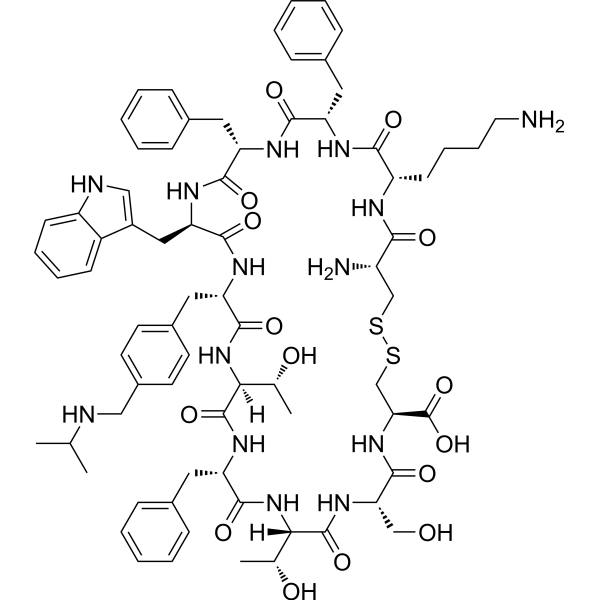
CH 275 is a peptide analog of somatostatin and binds preferably to somatostatin receptor 1 (sst1) with a Ki of 52 nM . CH 275 acts as a potent and selective sst1 agonist (IC50=30.9 nM) and also displays IC50 values of 345 nM, >1 μM, >10 μM, >10 μM for human sst3, sst4, sst2 and sst5, respectively . CH 275 can be used for the research of alzheimer’s disease .
|
-
- HY-B1490AR
-
|
|
Serotonin Transporter
Autophagy
Apoptosis
Reference Standards
|
Neurological Disease
Inflammation/Immunology
Cancer
|
|
Imipramine (Standard) is the analytical standard of Imipramine. This product is intended for research and analytical applications. Imipramine is an orally active tertiary amine tricyclic antidepressant. Imipramine is a Fascin1 inhibitor with antitumor activities. Imipramine also inhibits serotonin transporter with an IC50 value of 32 nM. Imipramine stimulates U-87MG glioma cells autophagy and induces HL-60 cell apoptosis. Imipramine shows neuroprotective and immunomodulatory effects .
|
-
- HY-B1490AS3
-
-
- HY-B1490R
-
|
|
Reference Standards
Serotonin Transporter
Apoptosis
Autophagy
|
Neurological Disease
Inflammation/Immunology
Cancer
|
|
Imipramine (hydrochloride) (Standard) is the analytical standard of Imipramine (hydrochloride). This product is intended for research and analytical applications. Imipramine hydrochloride is an orally active tertiary amine tricyclic antidepressant. Imipramine hydrochloride is a Fascin1 inhibitor with antitumor activities. Imipramine hydrochloride also inhibits serotonin transporter with an IC50 value of 32 nM. Imipramine hydrochloride stimulates U-87MG glioma cells autophagy and induces HL-60 cell apoptosis. Imipramine hydrochloride shows neuroprotective and immunomodulatory effects .
|
-
- HY-12390
-
|
Lopramine
|
5-HT Receptor
Adrenergic Receptor
|
Neurological Disease
|
|
Lofepramine (Lopramine) is a modified tricyclic and orally active antidepressant. Lofepramine inhibits the uptake of Noradrenaline (NA) (HY-13715) and 5-hydroxytryptamine (5-HT) with IC50s of 2.7 μM and 11 μM, respectively. Lofepramine exerts its antidepressant activity by promoting noradrenergic neurotransmission. Lofepramine also enhances serotonergic neurotransmission by inhibiting neuronal uptake of 5-HT and tryptophan pyrrolase. Lofepramine exhibits significant anxiolytic properties. .
|
-
- HY-12390A
-
|
Lopramine hydrochloride
|
5-HT Receptor
Adrenergic Receptor
|
Neurological Disease
|
|
Lofepramine (Lopramine) is a modified tricyclic and orally active antidepressant. Lofepramine inhibits the uptake of Noradrenaline (NA) (HY-13715) and 5-hydroxytryptamine (5-HT) with IC50s of 2.7 μM and 11 μM, respectively. Lofepramine exerts its antidepressant activity by promoting noradrenergic neurotransmission. Lofepramine also enhances serotonergic neurotransmission by inhibiting neuronal uptake of 5-HT and tryptophan pyrrolase. Lofepramine exhibits significant anxiolytic properties. .
|
-
- HY-D1274C
-
|
|
Fluorescent Dye
|
Inflammation/Immunology
|
|
Sulfo-cyanine3 azide potassium is an azide cyanine dye and fluorescent probe (Ex/Em=548/563 nm). Sulfo-cyanine3 azide potassium can be used for synthesis of fused tricyclic heterocycles, producing immunostimulatory agents . It contains an azide group and can undergo copper-catalyzed azide-alkyne cycloaddition (CuAAc) with molecules containing alkyne groups. It can also undergo ring strain-promoted alkyne-azide cycloaddition (SPAAC) with molecules containing DBCO or BCN groups.
|
-
- HY-W014120R
-
|
|
Biochemical Assay Reagents
Reference Standards
Parasite
|
Infection
|
|
Thianthrene (Standard) is the analytical standard of Thianthrene. This product is intended for research and analytical applications. Thianthrene is a potent and orally active inhibitor of Leishmania donovani pteridine reductase 1 (PTR1). Thianthrene is a sulfur-containing tricyclic molecule distributed widely within the macro-structure of hydrocarbon fossil fuels. Thianthrene inhibits the intracellular amastigotes of Leishmania donovani (IC50 = 23 μM). Thianthrene has a moderate anthelmintic activity. Thianthrene appears to inhibit RNA function and subsequent protein production. Thianthrene can stimulate liver regeneration in vivo .
|
-
- HY-W010649
-
|
|
HSP
Epigenetic Reader Domain
ATP-binding cassette (ABC) transporters
Bacterial
Fungal
Antibiotic
|
Infection
Metabolic Disease
Inflammation/Immunology
Cancer
|
|
Isoxazole is a member of the five-membered heterocycle drug scaffold. Isoxazole has been used as a BET bromodomain inhibitor and can improve β-cell function in a diabetic mouse model. Isoxazole and its derivatives exhibit broad biological activities (such as antimicrobial, antibacterial, antifungal, antiviral, anticancer, anti-inflammatory, immunomodulatory, analgesic, anti-tuberculosis, and anti-diabetic effects). For example, the bicyclic Isoxazole can act as an HSP90 inhibitor, and the tricyclic Isoxazole is promising as a selective multidrug resistance protein (MRP1) inhibitor .
|
-
- HY-B1272A
-
-
- HY-B1272
-
-
- HY-12390R
-
|
Lopramine (Standard)
|
5-HT Receptor
Adrenergic Receptor
Reference Standards
|
Neurological Disease
|
|
Lofepramine (Standard) is the analytical standard of Lofepramine. This product is intended for research and analytical applications. Lofepramine (Lopramine) is a modified tricyclic and orally active antidepressant. Lofepramine inhibits the uptake of Noradrenaline (NA) (HY-13715) and 5-hydroxytryptamine (5-HT) with IC50s of 2.7 μM and 11 μM, respectively. Lofepramine exerts its antidepressant activity by promoting noradrenergic neurotransmission. Lofepramine also enhances serotonergic neurotransmission by inhibiting neuronal uptake of 5-HT and tryptophan pyrrolase. Lofepramine exhibits significant anxiolytic properties. .
|
-
- HY-N6693
-
|
NSC 122023
|
Apoptosis
Antibiotic
Autophagy
Fungal
|
Infection
Others
Cancer
|
|
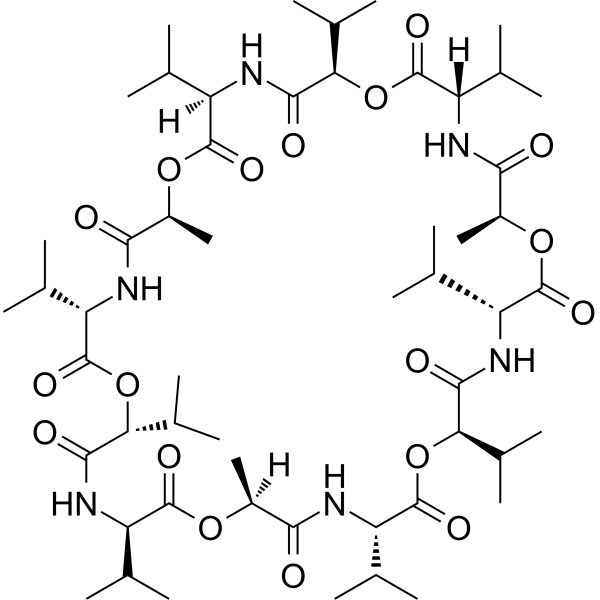
Valinomycin is a potassium-specific ionophore, the valinomycin-K + complex can be incorporated into biological bilayer membranes with the hydrophobic surface of valinomycin, destroys the normal K + gradient across the membrane, and as a result kills the cells, incorporating into liposomes can significantly reduces the cytotoxicity and enhances the targeting effect. Valinomycin exhibits antibiotic, antifungal, antiviral, antitumor and insecticidal efficacy, thus can be used for relevant research .
|
-
- HY-125598
-
|
|
Drug Intermediate
|
Others
|
|
Secologanin is an iridoid monoterpenoid glucoside found in the leaves of Lonicera tatarica and a key precursor for thousands of natural monoterpenoid alkaloids .
|
-
- HY-B1272AS
-
-
- HY-B1272AS1
-
-
- HY-151500B
-
|
|
Amine N-methyltransferase
|
Metabolic Disease
|
JBSNF-00002 hydrochloride is an orally active small molecule inhibitor of the tricyclic nicotinamide N-methyltransferase (NNMT) with IC50 values for human, mouse and monkey sources of NNMT of 33, 210 and 190 nM respectively. JBSNF-00002 hydrochloride can reduce endogenous MNA levels in U2OS osteosarcoma cells, with its EC50 being 2.5 μM. JBSNF-00002 hydrochloride exhibits significant anti-obesity and anti-diabetic activities in the diet-induced obesity (DIO) model. JBSNF-00002 hydrochloride can be used for the study of metabolic diseases such as obesity, type 2 diabetes and non-alcoholic fatty liver disease .
|
-
- HY-115929
-
|
|
DNA/RNA Synthesis
|
Infection
|
|
DENV-IN-4 is a potent DENV inhibitor (DENV EC50=4.79 μM, Vero CC50>100 μM, SI>20.9). DENV-IN-4 can inhibit the expression level of DENV2 with concentration-dependence and reduce RNA-dependent RNA polymerase (RdRp) enzymatic activity. DENV-IN-4 has antiviral effect .
|
-
- HY-179275
-
|
|
Toll-like Receptor (TLR)
|
Cancer
|
|
TLR7 agonist 33 (Compound 141) is a potent TLR7 activator with an EC50 of 1 nM. TLR7 agonist 33 can be used for cancer research .
|
-
- HY-B1272R
-
|
|
Reference Standards
Adrenergic Receptor
ERK
JNK
p38 MAPK
NF-κB
AP-1
Apoptosis
Reactive Oxygen Species (ROS)
Mitochondrial Metabolism
TNF Receptor
|
Neurological Disease
Inflammation/Immunology
Cancer
|
|
Desipramine hydrochloride (Standard) is the analytical standard of Desipramine hydrochloride (HY-B1272). This product is intended for research and analytical applications. Desipramine hydrochloride is a first-generation tricyclic antidepressant. Desipramine hydrochloride selectively binds to norepinephrine transporter and blocks neuronal norepinephrine reuptake. Desipramine hydrochloride activates MAPK signaling via ERK1/2, JNK, and p38, represses NF-κB and AP-1 activity, and induces apoptosis via ROS elevation, mitochondrial membrane potential reduction, and intracellular calcium increase. Desipramine hydrochloride also shows anyi-inflammatory activity, inhibiting TNF-α production. Desipramine hydrochloride can be used for the research of hepatocellular cancer, inflammation, and neurological diseases .
|
-
- HY-151500A
-
|
|
Amine N-methyltransferase
|
Metabolic Disease
|
JBSNF-00002 TFA is an orally active small molecule inhibitor of the tricyclic nicotinamide N-methyltransferase (NNMT) with IC50 values for human, mouse and monkey sources of NNMT of 33, 210 and 190 nM respectively. JBSNF-00002 TFA can reduce endogenous MNA levels in U2OS osteosarcoma cells, with its EC50 being 2.5 μM. JBSNF-00002 TFA exhibits significant anti-obesity and anti-diabetic activities in the diet-induced obesity (DIO) model. JBSNF-00002 TFA can be used for the study of metabolic diseases such as obesity, type 2 diabetes and non-alcoholic fatty liver disease .
|
-
- HY-151500
-
|
|
Amine N-methyltransferase
|
Metabolic Disease
|
JBSNF-00002 free base is an orally active small molecule inhibitor of the tricyclic nicotinamide N-methyltransferase (NNMT) with IC50 values for human, mouse and monkey sources of NNMT of 33, 210 and 190 nM respectively. JBSNF-00002 free base can reduce endogenous MNA levels in U2OS osteosarcoma cells, with its EC50 being 2.5 μM. JBSNF-00002 free base exhibits significant anti-obesity and anti-diabetic activities in the diet-induced obesity (DIO) model. JBSNF-00002 free base can be used for the study of metabolic diseases such as obesity, type 2 diabetes and non-alcoholic fatty liver disease .
|
-
- HY-P2200
-
|
BMY-29304
|
HIV
Antibiotic
|
Infection
Inflammation/Immunology
|
|
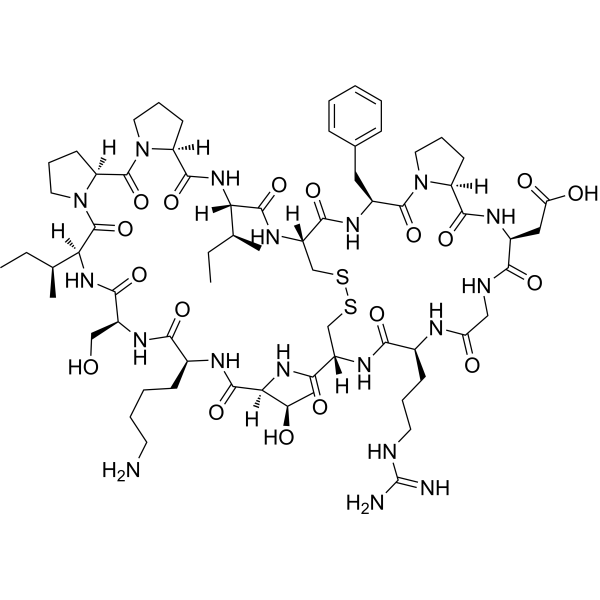
Siamycin I (BMY-29304), a 21-residue tricyclic peptide, is a secondary metabolite in actinomycetes. Siamycin I is a HIV fusion inhibitor with ED50s of 0.05 to 5.7 μM for acute HIV type 1 (HIV-1) and HIV-2 infections. Siamycin I inhibits the gelatinase and gelatinase biosynthesis-activating pheromone (GBAP) signaling via the FsrC-FsrA two-component regulatory system in a noncompetitive manner. Siamycin I suppresses the expression of both fsrBDC and gelE-sprE transcripts. Siamycin I, a lasso peptide, interacts with lipid II and inhibits cell wall biosynthesis. Siamycin I, an antibiotic, has the potential for enterococcal infections research .
|
-
- HY-129481
-
|
|
5-HT Receptor
|
Neurological Disease
|
|
LY 178210 (Compound 24) is a selective partial agonist of the 5-HT1A receptor, with Ki values of 0.67 and 380 nM for the 5-HT1A and 5-HT1D receptors, respectively. LY 178210 has almost no activity against α₂-adrenergic receptors, 5-HT₂, and other neurotransmitter receptors. LY 178210 inhibits Foscolin-stimulated cyclase activity, but its maximum potency is lower than that of the full agonist 8-OH-DPAT (HY-112061). LY 178210 significantly reduces 5-hydroxyindoleacetic acid (5-HIAA) levels in the greater hypothalamus and increases serum corticosterone concentrations .
|
-
- HY-B0527A
-
|
|
Serotonin Transporter
5-HT Receptor
mAChR
Histamine Receptor
Adrenergic Receptor
Trk Receptor
Sodium Channel
Potassium Channel
Dopamine Transporter
Apoptosis
|
Neurological Disease
Inflammation/Immunology
Endocrinology
|
|
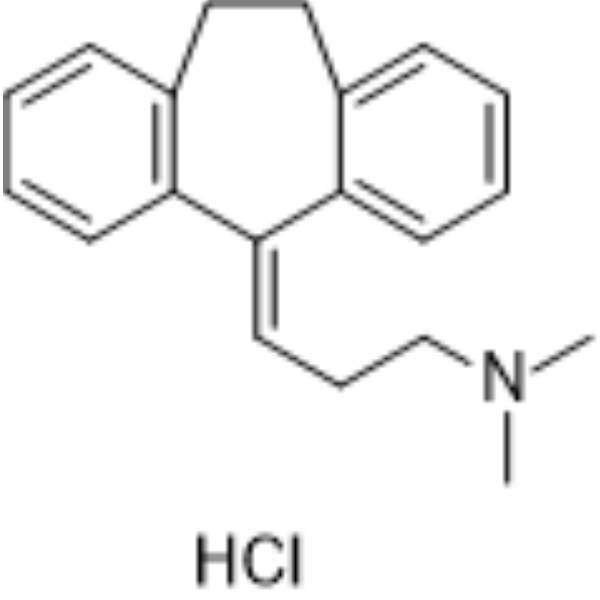
Amitriptyline hydrochloride is an orally active tricyclic antidepressant (TCA). Amitriptyline hydrochloride mainly exerts its antidepressant effect by blocking SERT (Ki = 3.45 nM) and NET (Ki = 13.3 nM), thereby increasing the concentrations of 5-hydroxytryptamine (5-HT) and norepinephrine (NE) in the synaptic cleft. Amitriptyline hydrochloride is also an agonist at α2A and TrkA/TrkB receptors, thereby exerting analgesic and neurotrophic activities (inhibiting cell apoptosis). Amitriptyline hydrochloride can reduce inflammation, angiogenesis and fibrosis. Amitriptyline hydrochloride binds to DAT (with Ki = 2.58 μM). Amitriptyline hydrochloride has high affinity for a series of receptors and can antagonize muscarinic cholinergic receptors (M1/M2/M3/M4/M5 receptors) (Ki = 11-24 nM), H1 receptors (Ki = 0.5-1.1 nM), adrenergic α1 receptors (Ki = 4.4 nM), etc., resulting in a series of side effects. Amitriptyline hydrochloride can block sodium channels and hERG potassium channel (IC50 = 4.78 μM) and it has cardiotoxicity .
|
-
- HY-B0527
-
|
|
Serotonin Transporter
Trk Receptor
Sodium Channel
5-HT Receptor
Histamine Receptor
Adrenergic Receptor
mAChR
Potassium Channel
Dopamine Transporter
Apoptosis
|
Neurological Disease
Inflammation/Immunology
Endocrinology
|
|
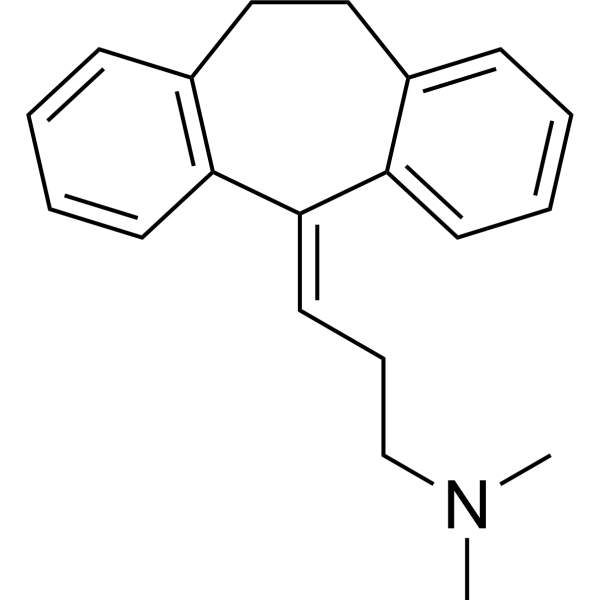
Amitriptyline is an orally active tricyclic antidepressant (TCA). Amitriptyline mainly exerts its antidepressant effect by blocking SERT (Ki = 3.45 nM) and NET (Ki = 13.3 nM), thereby increasing the concentrations of 5-hydroxytryptamine (5-HT) and norepinephrine (NE) in the synaptic cleft. Amitriptyline is also an agonist at α2A and TrkA/TrkB receptors, thereby exerting analgesic and neurotrophic activities (inhibiting cell apoptosis). Amitriptyline can reduce inflammation, angiogenesis and fibrosis. Amitriptyline binds to DAT (with Ki = 2.58 μM). Amitriptyline has high affinity for a series of receptors and can antagonize muscarinic cholinergic receptors (M1/M2/M3/M4/M5 receptors) (Ki = 11-24 nM), H1 receptors (Ki = 0.5-1.1 nM), adrenergic α1 receptors (Ki = 4.4 nM), etc., resulting in a series of side effects. Amitriptyline can block sodium channels and hERG potassium channel (IC50 = 4.78 μM) and it has cardiotoxicity .
|
-
- HY-B0527AS
-
|
|
Isotope-Labeled Compounds
Serotonin Transporter
5-HT Receptor
Histamine Receptor
mAChR
Adrenergic Receptor
Trk Receptor
Sodium Channel
Potassium Channel
Dopamine Transporter
Apoptosis
|
Neurological Disease
Inflammation/Immunology
Endocrinology
|
|
Amitriptyline-d6 hydrochloride is the deuterium labeled Amitriptyline hydrochloride (HY-B0527A). Amitriptyline hydrochloride is an orally active tricyclic antidepressant (TCA). Amitriptyline hydrochloride mainly exerts its antidepressant effect by blocking SERT (Ki = 3.45 nM) and NET (Ki = 13.3 nM), thereby increasing the concentrations of 5-hydroxytryptamine (5-HT) and norepinephrine (NE) in the synaptic cleft. Amitriptyline hydrochloride is also an agonist at α2A and TrkA/TrkB receptors, thereby exerting analgesic and neurotrophic activities (inhibiting cell apoptosis). Amitriptyline hydrochloride can reduce inflammation, angiogenesis and fibrosis. Amitriptyline hydrochloride binds to DAT (with Ki = 2.58 μM). Amitriptyline hydrochloride has high affinity for a series of receptors and can antagonize muscarinic cholinergic receptors (M1/M2/M3/M4/M5 receptors) (Ki = 11-24 nM), H1 receptors (Ki = 0.5-1.1 nM), adrenergic α1 receptors (Ki = 4.4 nM), etc., resulting in a series of side effects. Amitriptyline hydrochloride can block sodium channels and hERG potassium channel (IC50 = 4.78 μM) and it has cardiotoxicity.
|
-
- HY-B0527AR
-
|
|
Reference Standards
Serotonin Transporter
5-HT Receptor
Histamine Receptor
mAChR
Adrenergic Receptor
Trk Receptor
Sodium Channel
Potassium Channel
Dopamine Transporter
Apoptosis
|
Neurological Disease
Inflammation/Immunology
Endocrinology
|
|
Amitriptyline hydrochloride (Standard) is the analytical standard of Amitriptyline hydrochloride (HY-B0527A). This product is intended for research and analytical applications. Amitriptyline hydrochloride is an orally active tricyclic antidepressant (TCA). Amitriptyline hydrochloride mainly exerts its antidepressant effect by blocking SERT (Ki = 3.45 nM) and NET (Ki = 13.3 nM), thereby increasing the concentrations of 5-hydroxytryptamine (5-HT) and norepinephrine (NE) in the synaptic cleft. Amitriptyline hydrochloride is also an agonist at α2A and TrkA/TrkB receptors, thereby exerting analgesic and neurotrophic activities (inhibiting cell apoptosis). Amitriptyline hydrochloride can reduce inflammation, angiogenesis and fibrosis. Amitriptyline hydrochloride binds to DAT (with Ki = 2.58 μM). Amitriptyline hydrochloride has high affinity for a series of receptors and can antagonize muscarinic cholinergic receptors (M1/M2/M3/M4/M5 receptors) (Ki = 11-24 nM), H1 receptors (Ki = 0.5-1.1 nM), adrenergic α1 receptors (Ki = 4.4 nM), etc., resulting in a series of side effects. Amitriptyline hydrochloride can block sodium channels and hERG potassium channel (IC50 = 4.78 μM) and it has cardiotoxicity.
|
-
-
- HY-D1274C
-
|
|
Fluorescent Dyes
|
|
Sulfo-cyanine3 azide potassium is an azide cyanine dye and fluorescent probe (Ex/Em=548/563 nm). Sulfo-cyanine3 azide potassium can be used for synthesis of fused tricyclic heterocycles, producing immunostimulatory agents . It contains an azide group and can undergo copper-catalyzed azide-alkyne cycloaddition (CuAAc) with molecules containing alkyne groups. It can also undergo ring strain-promoted alkyne-azide cycloaddition (SPAAC) with molecules containing DBCO or BCN groups.
|
-
- HY-D1274
-
|
|
Fluorescent Dyes
|
|
Sulfo-cyanine3 azide is an azide cyanine dye and fluorescent probe (Ex/Em=548/563 nm). Sulfo-cyanine3 azide can be involved in synthesis of fused tricyclic heterocycles, produces immunostimulatory agents . It contains an azide group and can undergo copper-catalyzed azide-alkyne cycloaddition (CuAAc) with molecules containing alkyne groups. It can also undergo ring strain-promoted alkyne-azide cycloaddition (SPAAC) with molecules containing DBCO or BCN groups.
|
-
- HY-D1274A
-
|
|
Fluorescent Dyes
|
|
Sulfo-cyanine3 azide sodium a water-soluble azide cyanine dye and fluorescent probe (Ex/Em=548/563 nm). Sulfo-cyanine3 azide sodium can be involved in synthesis of fused tricyclic heterocycles, produces immunostimulatory agents . It contains an azide group and can undergo copper-catalyzed azide-alkyne cycloaddition (CuAAc) with molecules containing alkyne groups. It can also undergo ring strain-promoted alkyne-azide cycloaddition (SPAAC) with molecules containing DBCO or BCN groups.
|
-
- HY-D1274B
-
|
|
Fluorescent Dyes
|
|
Sulfo-cyanine3 azide TEA is an azide cyanine dye and fluorescent probe (Ex/Em=548/563 nm). Sulfo-cyanine3 azide TEA can be involved in synthesis of fused tricyclic heterocycles, produces immunostimulatory agents . It contains an azide group and can undergo copper-catalyzed azide-alkyne cycloaddition (CuAAc) with molecules containing alkyne groups. It can also undergo ring strain-promoted alkyne-azide cycloaddition (SPAAC) with molecules containing DBCO or BCN groups.
|
| Cat. No. |
상품명 |
Target |
Research Area |
-
- HY-N6693
-
|
NSC 122023
|
Apoptosis
Antibiotic
Autophagy
Fungal
|
Infection
Others
Cancer
|
|
Valinomycin is a potassium-specific ionophore, the valinomycin-K + complex can be incorporated into biological bilayer membranes with the hydrophobic surface of valinomycin, destroys the normal K + gradient across the membrane, and as a result kills the cells, incorporating into liposomes can significantly reduces the cytotoxicity and enhances the targeting effect. Valinomycin exhibits antibiotic, antifungal, antiviral, antitumor and insecticidal efficacy, thus can be used for relevant research .
|
-
- HY-P10033
-
|
|
Ser/Thr Protease
|
Others
|
|
SFTI-1 is a cyclic peptide trypsin inhibitor consisting of 14 amino acid residues. SFTI-1 belongs to the Bowman-Birk class of inhibitors. Characterized by its small size, high stability, and potent activity, SFTI-1 can be used for research on peptide drug design platforms .
|
-
- HY-P1206
-
CH 275
1 Publications Verification
|
Somatostatin Receptor
|
Neurological Disease
|
|
CH 275 is a peptide analog of somatostatin and binds preferably to somatostatin receptor 1 (sst1) with a Ki of 52 nM . CH 275 acts as a potent and selective sst1 agonist (IC50=30.9 nM) and also displays IC50 values of 345 nM, >1 μM, >10 μM, >10 μM for human sst3, sst4, sst2 and sst5, respectively . CH 275 can be used for the research of alzheimer’s disease .
|
-
- HY-P4102
-
|
|
Peptides
|
Cancer
|
|
Cyclic PSAP peptide is a cyclic pentapeptide (DWLPK). Cyclic PSAP peptide exhibits agent-like properties and could inhibit metastatic spread and restrain tumor development in general in vivo .
|
-
- HY-W005308
-
|
|
Amino Acid Derivatives
|
Cancer
|
|
N-BOC-DL-serine methyl ester is a Serine derivative. N-BOC-DL-serine methyl ester is used for the synthesis of α,β-dehydro-α-amino acid. N-BOC-DL-serine methyl ester is also used for the synthesis of anti-cancer agent, such as quinazolinone derivative that inhibits PI3K activity, and tricyclic pyrolopyranopyridines that inhibits protein kinase activity .
|
-
- HY-P2200
-
|
BMY-29304
|
HIV
Antibiotic
|
Infection
Inflammation/Immunology
|
|
Siamycin I (BMY-29304), a 21-residue tricyclic peptide, is a secondary metabolite in actinomycetes. Siamycin I is a HIV fusion inhibitor with ED50s of 0.05 to 5.7 μM for acute HIV type 1 (HIV-1) and HIV-2 infections. Siamycin I inhibits the gelatinase and gelatinase biosynthesis-activating pheromone (GBAP) signaling via the FsrC-FsrA two-component regulatory system in a noncompetitive manner. Siamycin I suppresses the expression of both fsrBDC and gelE-sprE transcripts. Siamycin I, a lasso peptide, interacts with lipid II and inhibits cell wall biosynthesis. Siamycin I, an antibiotic, has the potential for enterococcal infections research .
|
-
- HY-P3193A
-
|
|
Biochemical Assay Reagents
|
Others
|
|
Cyclic nona-L-arginine hydrochloride, a nonaarginine peptide used for drug delivery, translocates faster than their linear counterparts .
|
-
- HY-P10027A
-
|
|
Antibiotic
Bacterial
|
Infection
|
|
Clovibactin TFA is the TFA salt form of Clovibactin (HY-P10027). Clovibactin TFA is an antibiotic for drug-resistant bacterial pathogens without detectable resistance. Clovibactin TFA inihibits cell wall synthesis by targeting pyrophosphate of peptidoglycan precursors .
|
-
- HY-P10027
-
|
|
Antibiotic
Bacterial
|
Infection
|
|
Clovibactin is an antibiotic for drug-resistant bacterial pathogens without detectable resistance. Clovibactin TFA inihibits cell wall synthesis by targeting pyrophosphate of peptidoglycan precursors .
|
-
- HY-P3193
-
|
|
Peptides
|
Others
|
|
Cyclic nona-L-arginine TFA, a nonaarginine peptide used for drug delivery, translocates faster than their linear counterparts .
|
-
- HY-P10672
-
| Cat. No. |
상품명 |
Category |
Target |
Chemical Structure |
| Cat. No. |
상품명 |
Chemical Structure |
-
- HY-B1417S
-
|
|
|
Nortriptyline-d3 (hydrochloride) is the deuterium labeled Nortriptyline hydrochloride. Nortriptyline hydrochloride (Desmethylamitriptyline hydrochloride) is a tricyclic antidepressant and the main active metabolite of Amitriptyline, and used to relieve the symptoms of depression .
|
-
-
- HY-30151S
-
|
|
|
Methoxsalen-d3 is the deuterium labeled Methoxsalen[1]. Methoxsalen (8-Methoxypsoralen) is a potent tricyclic furocoumarin suicide inhibitor of CYP (cytochrome P-450), is an agent used to treat psoriasis, eczema, vitiligo and some cutaneous Lymphomas in conjunction with exposing the skin to sunlight[2].
|
-
-
- HY-B0527AS
-
|
|
|
Amitriptyline-d6 hydrochloride is the deuterium labeled Amitriptyline hydrochloride (HY-B0527A). Amitriptyline hydrochloride is an orally active tricyclic antidepressant (TCA). Amitriptyline hydrochloride mainly exerts its antidepressant effect by blocking SERT (Ki = 3.45 nM) and NET (Ki = 13.3 nM), thereby increasing the concentrations of 5-hydroxytryptamine (5-HT) and norepinephrine (NE) in the synaptic cleft. Amitriptyline hydrochloride is also an agonist at α2A and TrkA/TrkB receptors, thereby exerting analgesic and neurotrophic activities (inhibiting cell apoptosis). Amitriptyline hydrochloride can reduce inflammation, angiogenesis and fibrosis. Amitriptyline hydrochloride binds to DAT (with Ki = 2.58 μM). Amitriptyline hydrochloride has high affinity for a series of receptors and can antagonize muscarinic cholinergic receptors (M1/M2/M3/M4/M5 receptors) (Ki = 11-24 nM), H1 receptors (Ki = 0.5-1.1 nM), adrenergic α1 receptors (Ki = 4.4 nM), etc., resulting in a series of side effects. Amitriptyline hydrochloride can block sodium channels and hERG potassium channel (IC50 = 4.78 μM) and it has cardiotoxicity.
|
-
-
- HY-B0725S
-
|
|
|
Doxepin-d3 (hydrochloride) is a deuterium labeled Doxepin Hydrochloride. Doxepin hydrochloride is an orally active tricyclic antidepressant. Doxepin hydrochloride is a potent and selective histamine receptor H1 antagonist. Doxepin hydrochloride is also a potent CYP450 inhibitor and significantly inhibits CYP450 2C19 and 1A2 .
|
-
-
- HY-133771AS
-
|
|
|
Nordoxepin-d3 (hydrochloride) is the deuterium labeled Nordoxepin hydrochloride. Nordoxepin hydrochloride is an active metabolite of Doxepin hydrochloride (HY-B0725), which is an orally active tricyclic antidepressant .
|
-
-
- HY-B0457S1
-
|
|
|
Clomipramine-d6 (hydrochloride) is the deuterium labeled Clomipramine hydrochloride. Clomipramine (Chlorimipramine) hydrochloride is a potent 5-HT reuptake blocker with the IC50 value of 1.5 nM. Clomipramine hydrochloride is a tricyclic antidepressant that can be used for the research of depression and obsessive compulsive disorder (OCD) .
|
-
-
- HY-12388AS
-
|
|
|
N-Desmethyl Clomipramine-d3 (hydrochloride) is the deuterium labeled N-Desmethyl Clomipramine. N-Desmethyl Clomipramine hydrochloride (Desmethylclomipramine hydrochloride) is a primary plasma N-desmethyl metabolite of Clomipramine
|
-
-
- HY-B1490AS
-
|
|
|
Imipramine-d6 is the deuterium labeled Imipramine hydrochloride. Imipramine is an orally active tertiary amine tricyclic antidepressant. Imipramine is a Fascin1 inhibitor with antitumor activities. Imipramine also inhibits serotonin transporter with an IC50 value of 32 nM. Imipramine stimulates U-87MG glioma cells autophagy and induces HL-60 cell apoptosis. Imipramine shows neuroprotective and immunomodulatory effects .
|
-
-
- HY-B1490S1
-
|
|
|
Imipramine-d3 (hydrochloride) is deuterium labeled Imipramine (hydrochloride). Imipramine is an orally active tertiary amine tricyclic antidepressant. Imipramine is a Fascin1 inhibitor with antitumor activities. Imipramine also inhibits serotonin transporter with an IC50 value of 32 nM. Imipramine stimulates U-87MG glioma cells autophagy and induces HL-60 cell apoptosis. Imipramine shows neuroprotective and immunomodulatory effects .
|
-
-
- HY-B0949S
-
|
|
|
Protriptyline (N-methyl-d3) (hydrochloride) is the deuterium labeled Protriptyline hydrochloride. Protriptyline hydrochloride is a tricyclic antidepressant (TCA), specifically a secondary amine, for the treatment of depression and ADHD. Unique among the TCAs, protriptyline tends to be energizing instead of sedating, used for narcolepsy to achieve a wakefulness-promoting effect .
|
-
-
- HY-U00050S
-
|
|
|
(E)-10-Hydroxynortriptyline-d3 is a deuterium labeled (E)-10-Hydroxy Nortriptyline. (E)-10-Hydroxy Nortriptyline is a metabolite of Nortriptyline. Nortriptyline is a tricyclic antidepressant and the main active metabolite of Amitriptyline, and is used to relieve the symptoms of depression .
|
-
-
- HY-B0457S2
-
|
|
|
Clomipramine- 13C,d3 (hydrochloride) is the 13C- and deuterium labeled Clomipramine (hydrochloride). Clomipramine (Chlorimipramine) hydrochloride is a potent 5-HT reuptake blocker with the IC50 value of 1.5 nM. Clomipramine hydrochloride is a tricyclic antidepressant that can be used for the research of depression and obsessive compulsive disorder (OCD) .
|
-
-
- HY-B0949AS
-
|
|
|
Protriptyline-d3 is deuterium labeled Protriptyline (HY-B0949). Protriptyline is a potent tricyclic antidepressant (TCA). Protriptyline inhibits AChE activity with an IC50 value of 0.06 mM and inhibits Aβ self-assembly. Protriptyline can be used for the study of depression and Alzheimers disease .
|
-
-
- HY-100646AS
-
|
|
|
(Z)-10-Hydroxynortriptyline-d3 is the deuterium labeled (Z)-10-Hydroxynortriptyline (HY-100646A). (Z)-10-Hydroxynortriptyline is a metabolite of Nortriptyline (HY-118620). Nortriptyline is a tricyclic antidepressant and the main active metabolite of Amitriptyline, and is used to relieve the symptoms of depression .
|
-
-
- HY-12390S
-
|
|
|
Lofepramine-d3 (Lopramine-d3) is the deuterium labeled Lofepramine. Lofepramine (Lopramine) is a potent tricyclic antidepressant and is extensively metabolised to Desipramine. The antidepressant activity of Lofepramine stems from the facilitation of noradrenergic neurotransmission by uptake inhibition. Lofepramine may also potentiate serotoninergic neurotransmission by inhibition of the neuronal uptake of serotonin and the enzyme tryptophan pyrrolase. Lofepramine has significant anxiolytic efficacy in addition to its antidepressant properties .
|
-
-
- HY-B1490S
-
|
|
|
Imipramine-d4 (hydrochloride) is the deuterium labeled Imipramine hydrochloride. Imipramine hydrochloride is an orally active tertiary amine tricyclic antidepressant. Imipramine hydrochloride is a Fascin1 inhibitor with antitumor activities. Imipramine hydrochloride also inhibits serotonin transporter with an IC50 value of 32 nM. Imipramine hydrochloride stimulates U-87MG glioma cells autophagy and induces HL-60 cell apoptosis. Imipramine hydrochloride shows neuroprotective and immunomodulatory effects .
|
-
-
- HY-B1490AS1
-
|
|
|
Imipramine-d4 is deuterium labeled Imipramine. Imipramine is an orally active tertiary amine tricyclic antidepressant. Imipramine is a Fascin1 inhibitor with antitumor activities. Imipramine also inhibits serotonin transporter with an IC50 value of 32 nM. Imipramine stimulates U-87MG glioma cells autophagy and induces HL-60 cell apoptosis. Imipramine shows neuroprotective and immunomodulatory effects .
|
-
-
- HY-B1490AS3
-
|
|
|
Imipramine-d4-1 is the deuterium labeled Imipramine (HY-W010179). Imipramine is an orally active tertiary amine tricyclic antidepressant. Imipramine is a Fascin1 inhibitor with antitumor activities. Imipramine also inhibits serotonin transporter with an IC50 value of 32 nM. Imipramine stimulates U-87MG glioma cells autophagy and induces HL-60 cell apoptosis. Imipramine shows neuroprotective and immunomodulatory effects .
|
-
-
- HY-B1272AS
-
|
|
|
Desipramine-d4 is the deuterium labeled Desipramine (HY-B1272A). Desipramine is a first-generation tricyclic antidepressant. Desipramine selectively binds to norepinephrine transporter and blocks neuronal norepinephrine reuptake. Desipramine activates MAPK signaling via ERK1/2, JNK, and p38, represses NF-κB and AP-1 activity, and induces apoptosis via ROS elevation, mitochondrial membrane potential reduction, and intracellular calcium increase. Desipramine also shows anyi-inflammatory activity, inhibiting TNF-α production. Desipramine can be used for the research of hepatocellular cancer, inflammation, and neurological diseases .
|
-
-
- HY-B1272AS1
-
|
|
|
Desipramine-d3 is the deuterium labeled Desipramine (HY-B1272A). Desipramine is a first-generation tricyclic antidepressant. Desipramine selectively binds to norepinephrine transporter and blocks neuronal norepinephrine reuptake. Desipramine activates MAPK signaling via ERK1/2, JNK, and p38, represses NF-κB and AP-1 activity, and induces apoptosis via ROS elevation, mitochondrial membrane potential reduction, and intracellular calcium increase. Desipramine also shows anyi-inflammatory activity, inhibiting TNF-α production. Desipramine can be used for the research of hepatocellular cancer, inflammation, and neurological diseases .
|
-
| Cat. No. |
상품명 |
|
Classification |
-
- HY-D1274C
-
|
|
|
Azide
|
|
Sulfo-cyanine3 azide potassium is an azide cyanine dye and fluorescent probe (Ex/Em=548/563 nm). Sulfo-cyanine3 azide potassium can be used for synthesis of fused tricyclic heterocycles, producing immunostimulatory agents . It contains an azide group and can undergo copper-catalyzed azide-alkyne cycloaddition (CuAAc) with molecules containing alkyne groups. It can also undergo ring strain-promoted alkyne-azide cycloaddition (SPAAC) with molecules containing DBCO or BCN groups.
|
-
- HY-D1274
-
|
|
|
Azide
|
|
Sulfo-cyanine3 azide is an azide cyanine dye and fluorescent probe (Ex/Em=548/563 nm). Sulfo-cyanine3 azide can be involved in synthesis of fused tricyclic heterocycles, produces immunostimulatory agents . It contains an azide group and can undergo copper-catalyzed azide-alkyne cycloaddition (CuAAc) with molecules containing alkyne groups. It can also undergo ring strain-promoted alkyne-azide cycloaddition (SPAAC) with molecules containing DBCO or BCN groups.
|
-
- HY-D1274A
-
|
|
|
Labeling and Fluorescence Imaging
Azide
|
|
Sulfo-cyanine3 azide sodium a water-soluble azide cyanine dye and fluorescent probe (Ex/Em=548/563 nm). Sulfo-cyanine3 azide sodium can be involved in synthesis of fused tricyclic heterocycles, produces immunostimulatory agents . It contains an azide group and can undergo copper-catalyzed azide-alkyne cycloaddition (CuAAc) with molecules containing alkyne groups. It can also undergo ring strain-promoted alkyne-azide cycloaddition (SPAAC) with molecules containing DBCO or BCN groups.
|
-
- HY-D1274B
-
|
|
|
Azide
|
|
Sulfo-cyanine3 azide TEA is an azide cyanine dye and fluorescent probe (Ex/Em=548/563 nm). Sulfo-cyanine3 azide TEA can be involved in synthesis of fused tricyclic heterocycles, produces immunostimulatory agents . It contains an azide group and can undergo copper-catalyzed azide-alkyne cycloaddition (CuAAc) with molecules containing alkyne groups. It can also undergo ring strain-promoted alkyne-azide cycloaddition (SPAAC) with molecules containing DBCO or BCN groups.
|
Your information is safe with us. * Required Fields.
Inquiry Information
- 상품명:
- Cat. No.:
- 수량:
- MCE Japan Authorized Agent:

