

1. Search Result
Search Result
Results for "

weakness

" in MedChemExpress (MCE) Product Catalog:

14

Inhibitors & Agonists

1

Peptides

2

Inhibitory Antibodies

5

Natural
Products

Cat. No. Product Name Target Research Areas Chemical Structure
  • HY-P99355
    Bimagrumab
    3 Publications Verification

    Anti-ACVR2B Reference Antibody; BYM338

    TGF-β Receptor Metabolic Disease
    Bimagrumab (Anti-ACVR2B Reference Antibody) is a human monoclonal antibody that blocks activin type II receptor (ActRII), with KDs of 1.7 pM and 434 pM for human ActRIIB and ActRIIA, respectively. Bimagrumab can be used for the research of pathological muscle loss and weakness .
    Bimagrumab
  • HY-P3502

    RA101495; RA3193

    Complement System Inflammation/Immunology
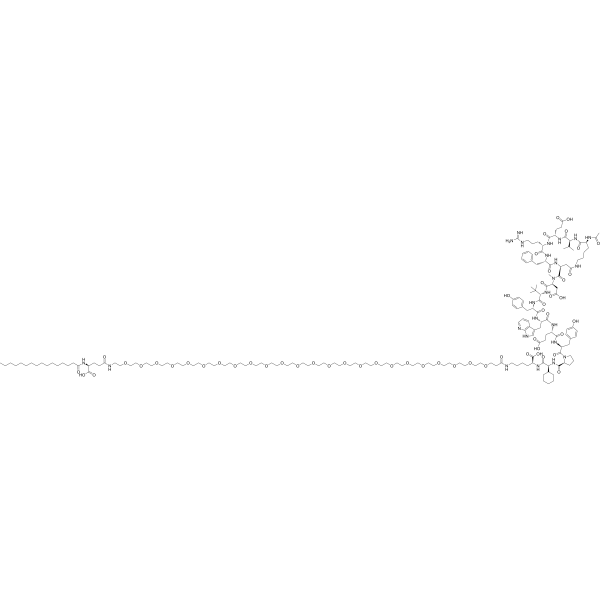
    Zilucoplan (RA101495), a 15-amino acid macrocyclic peptide, is a potent complement component 5 (C5) inhibitor. Zilucoplan can be used in research of immune-mediated necrotising myopathy (IMNM) .
    Zilucoplan
  • HY-N1502
    Carboxyatractyloside tripotassium
    2 Publications Verification

    Gummiferin tripotassium

    Mitochondrial Metabolism Reactive Oxygen Species (ROS) Calcium Channel Neurological Disease
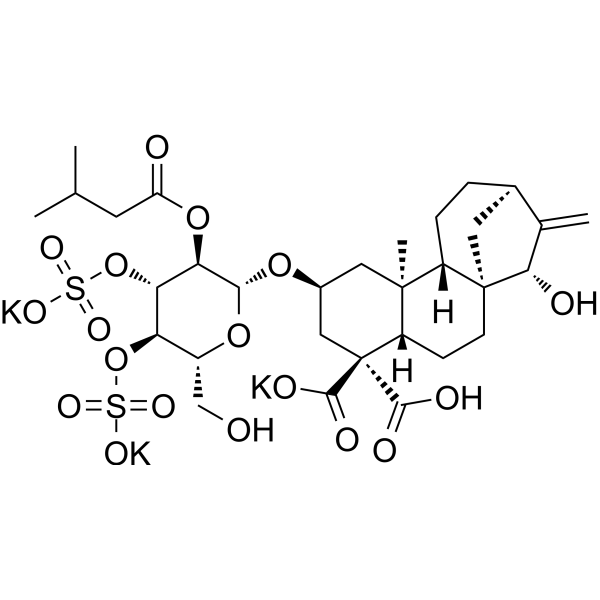
    Carboxyatractyloside tripotassium is a diterpenoid. Carboxyatractyloside tripotassium can be isolated from plants of the genus Xanthium. Carboxyatractyloside tripotassium is an ADP/ATP carrier inhibitor, inhibiting mitochondrial ADP/ATP transport. Carboxyatractyloside tripotassium promotes ROS production, induces Ca 2+ release, and leads to mitochondrial dysfunction. Carboxyatractyloside tripotassium induces lethargy, weakness, and epileptic seizures in rats .
    Carboxyatractyloside tripotassium
  • HY-N2522
    Carboxyatractyloside dipotassium
    2 Publications Verification

    Gummiferin dipotassium

    Mitochondrial Metabolism Calcium Channel Reactive Oxygen Species (ROS) Neurological Disease
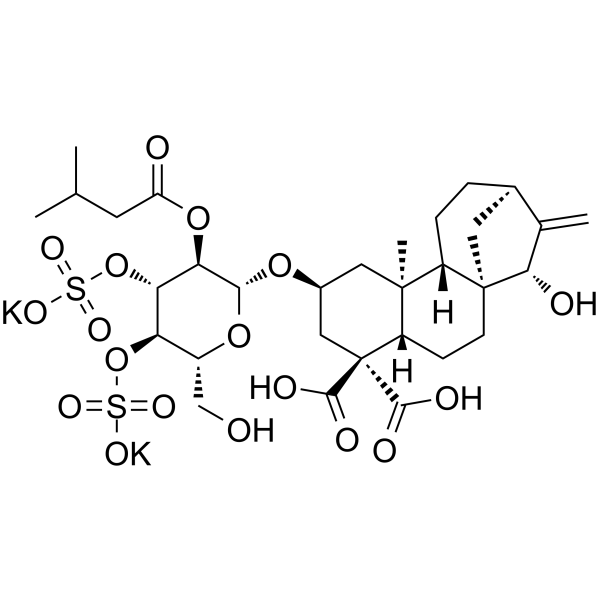
    Carboxyatractyloside dipotassium is a diterpenoid. Carboxyatractyloside dipotassium can be isolated from plants of the genus Xanthium. Carboxyatractyloside dipotassium is an ADP/ATP carrier inhibitor, inhibiting mitochondrial ADP/ATP transport. Carboxyatractyloside dipotassium promotes ROS production, induces Ca 2+ release, and leads to mitochondrial dysfunction. Carboxyatractyloside dipotassium induces lethargy, weakness, and epileptic seizures in rats .
    Carboxyatractyloside dipotassium
  • HY-100186
    GSK-2881078
    5 Publications Verification

    Androgen Receptor Cardiovascular Disease Others Metabolic Disease Inflammation/Immunology Endocrinology Cancer
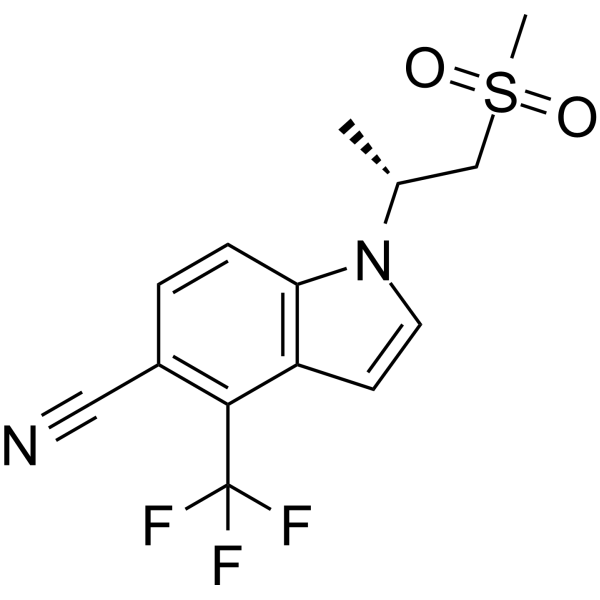
    GSK-2881078 is an orally active and nonsteroidal selective androgen receptor modulator (SARM) which act as partial AR agonists in androgenic tissues while mainly as complete AR agonists in synthetic metabolic tissues,induces AR-mediated transcriptional activation in PC3(AR)2 cells (EC50 = 3.99 nM) and the effect can be inhibited by the non-steroidal AR antagonist Bicalutamide. GSK-2881078 can be used in research of muscle weakness and cachexia associated with both chronic and acute illness .
    GSK-2881078
  • HY-W011602

    Environmental Pollutants Biochemical Assay Reagents Neurological Disease
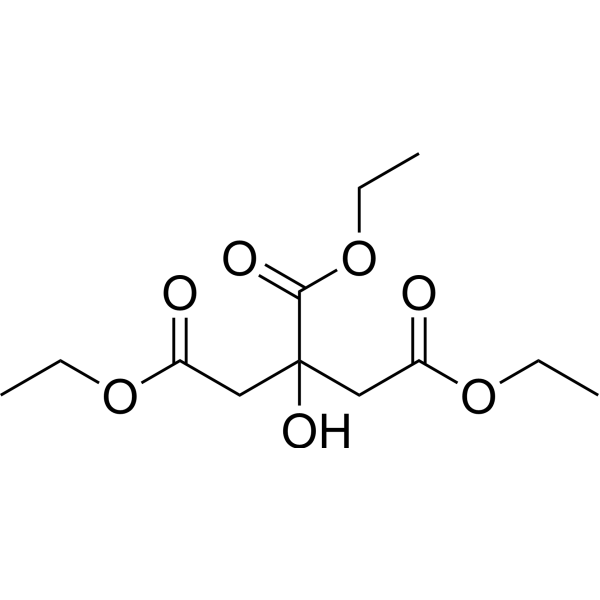
    Triethyl citrate is an orally active citrate compound. Triethyl citrate induces acute toxic effects, including weakness, depression, ataxia, hyperexcitability, restlessness, dripping urine, and irregular, labored breathing. Triethyl citrate can be used in research on plasticizers for food packaging materials .
    Triethyl citrate
  • HY-15344
    Ketone monoester
    2 Publications Verification

    Biochemical Assay Reagents Neurological Disease Metabolic Disease
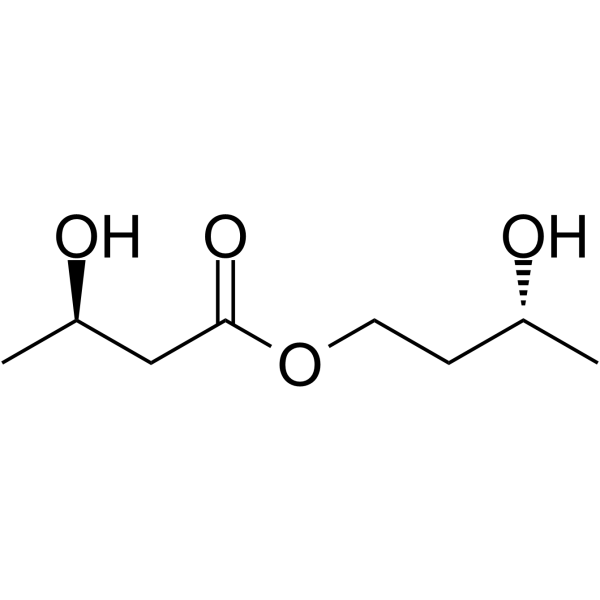
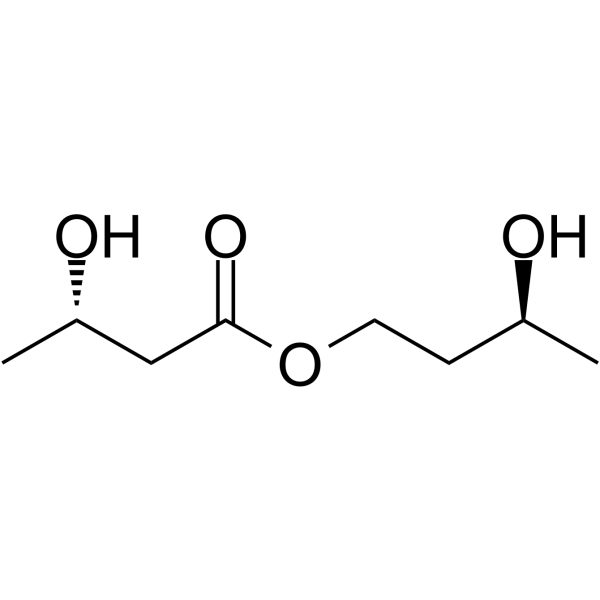
    Ketone monoester is an orally available ketone monoester that serves as a source of nutritional ketones. Ketone monoester increases plasma beta-hydroxybutyrate, acetoacetate, blood glucose, blood sodium, and blood creatinine levels in mouse models. Ketone monoester has the potential to improve athletic performance and endurance in animals. Ketone monoester partially prevents myasthenia in septic mice. Ketone monoester may also be used to study Parkinson's disease or diabetes .
    Ketone monoester
  • HY-158183

    Chloride Channel Neurological Disease
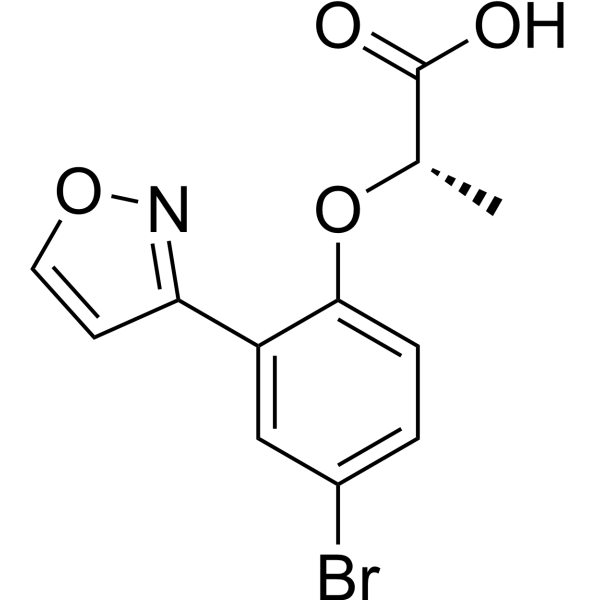
    NMD670 is an orally active inhibitor of skeletal muscle specific chloride channel ClC-1 with an EC50 of 1.6 μM. NMD670 enhances neuromuscular transmission and improves muscle contraction and strength. NMD670 can be used in the study of muscle weakness and muscle fatigue .
    NMD670
  • HY-114081A

    HC-3 chloride

    Choline Kinase Neurological Disease
    Hemicholinium chloride (HC-3) is a choline kinase (ChoK) inhibitor. Hemicholinium chloride Hemicholinium chloride induces ataxia and muscular weakness .
    Hemicholinium chloride
  • HY-N6609

    nAChR Others
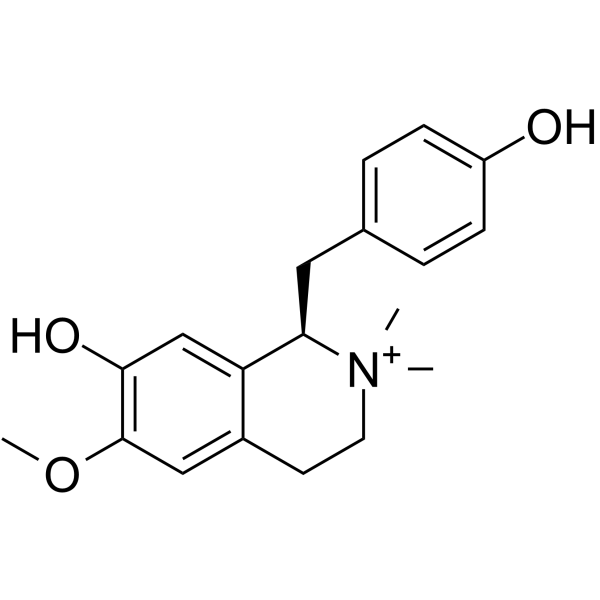
    Magnocurarine is a neuromuscular junction blocker that inhibits muscle contraction by functionally blocking signal transmission without directly damaging nerve or muscle tissues. In frog, mouse and rabbit models, Magnocurarine exerts a dose-dependent paralytic effect, which progresses gradually from limb weakness and loss of righting reflex to respiratory depression and even cardiac arrest. Although high doses cause complete cessation of movement, Magnocurarine does not affect the spinal multineuronal reflex in frogs. Magnocurarine exhibits biological activity similar to that of tubocurarine (HY-125901) in various animal models .
    Magnocurarine
  • HY-N2522R

    Gummiferin dipotassium (Standard)

    Reference Standards Mitochondrial Metabolism Calcium Channel Reactive Oxygen Species (ROS) Neurological Disease
    Carboxyatractyloside (dipotassium) (Standard) is the analytical standard of Carboxyatractyloside dipotassium (HY-N2522). This product is intended for research and analytical applications. Carboxyatractyloside dipotassium is a diterpenoid. Carboxyatractyloside dipotassium can be isolated from plants of the genus Xanthium. Carboxyatractyloside dipotassium is an ADP/ATP carrier inhibitor, inhibiting mitochondrial ADP/ATP transport. Carboxyatractyloside dipotassium promotes ROS production, induces Ca 2+ release, and leads to mitochondrial dysfunction. Carboxyatractyloside dipotassium induces lethargy, weakness, and epileptic seizures in rats .
    Carboxyatractyloside dipotassium (Standard)
  • HY-15344A

    Drug Isomer Neurological Disease
    (S,S)-Ketone monoester is a (S,S)-enantiomer of Ketone monoester (HY-15344). Ketone monoester elevates the AcAc and acetone levels, thereby produces sustained ketosis and significantly delays central nervous system oxygen toxicity (CNS-OT) seizures .
    (S,S)-Ketone monoester
  • HY-182773

    Melanocortin Receptor Metabolic Disease
    MC4R Antagonist-1 (compound 1) is an MC4R-selective antagonist (IC50<10 nM). MC4R Antagonist-1 can be used for the research of cachexia, anorexia, anorexia nervosa, involuntary weight loss, failure to thrive, sarcopenia, muscle wasting, muscle weakness, frailty, osteoporosis .
    MC4R Antagonist-1
  • HY-N6609B

    nAChR Cardiovascular Disease
    Magnocurarine chloride is a neuromuscular junction blocker that inhibits muscle contraction by functionally blocking signal transmission without directly damaging nerve or muscle tissues. In frog, mouse and rabbit models, Magnocurarine chloride exerts a dose-dependent paralytic effect, which progresses gradually from limb weakness and loss of righting reflex to respiratory depression and even cardiac arrest. Although high doses cause complete cessation of movement, Magnocurarine chloride does not affect the spinal multineuronal reflex in frogs. Magnocurarine chloride exhibits biological activity similar to that of tubocurarine (HY-125901) in various animal models .
    Magnocurarine chloride

Inquiry Online

Your information is safe with us. * Required Fields.

Salutation


Country or Region *

Applicant Name *


Organization Name *

Department *


Email Address *


Product Name *

Cat. No.


Requested quantity *

Phone Number *


Remarks

Inquiry Online

Inquiry Information

Product Name:
Cat. No.:
Quantity:
MCE Japan Authorized Agent:

