1. Search Result
Search Result
Results for "

xerosis ,skin

" in MedChemExpress (MCE) Product Catalog:

1034

Inhibitors & Agonists

4

Screening Libraries

6

Fluorescent Dyes

73

Biochemical Assay Reagents

141

Peptides

1

MCE Kits

18

Inhibitory Antibodies

250

Natural
Products

3

Recombinant Proteins

66

Isotope-Labeled Compounds

8

Antibodies

2

Click Chemistry

16

Oligonucleotides

2

GMP Molecules

Cat. No. Product Name Target Research Areas Chemical Structure
  • HY-N0543
    Allantoin
    2 Publications Verification

    5-Ureidohydantoin

    Environmental Pollutants Endogenous Metabolite Imidazoline Receptor Inflammation/Immunology Cancer
    Allantoin is a skin conditioning agent that promotes healthy skin, stimulates new and healthy tissue growth.
    Allantoin
  • HY-W009326
    Laurocapram
    1 Publications Verification

    Environmental Pollutants Biochemical Assay Reagents Infection
    Laurocapram is a chemical penetration enhancer that increases the permeability of compounds through the skin and mucous membranes, thereby improving their local or systemic efficacy. Laurocapram improves the skin permeability of a variety of hydrophilic and lipophilic compounds .
    Laurocapram
  • HY-W015967
    Glycolic acid
    1 Publications Verification

    Hydroxyethanoic acid

    Environmental Pollutants Endogenous Metabolite Tyrosinase Metabolic Disease
    Glycolic acid is an inhibitor of tyrosinase, suppressing melanin formation and lead to a lightening of skin colour.
    Glycolic acid
  • HY-Y1365L

    Biochemical Assay Reagents Others
    Porcine skin Gelatin,suitable for cell culture(high gel strength) can be used to coat cells to improve cell attachment .
    Porcine skin Gelatin,suitable for cell culture(high gel strength)
  • HY-B2170A
    Octenidine dihydrochloride
    3 Publications Verification

    Bacterial Infection
    Octenidine dihydrochloride is an effective antiseptic compound for skin mucous membranes and wounds.
    Octenidine dihydrochloride
  • HY-113008
    Urocanic acid
    2 Publications Verification

    Endogenous Metabolite Cancer
    Urocanic acid, produced in the upper layers of mammalian skin, is a major absorber of ultraviolet radiation (UVR).
    Urocanic acid
  • HY-P10533

    Tyrosinase Others
    Cysteine peptide is a tyrosinase inhibitor with skin-whitening, antioxidant and multi-regulatory activities. Cysteine peptide inhibits enzyme activity and blocks melanin transport, effectively reducing UV-B-induced skin erythema and pigmentation. Cysteine peptide synergistically maintains skin health by quenching ROS, resisting oxidative stress and promoting pheomelanin production. Cysteine peptide safely prevents daily ultraviolet damage and supports moderate sun exposure for vitamin D synthesis. Cysteine peptide also acts as a plant signaling factor to regulate vegetative growth, development and stress resistance responses .
    Cysteine peptide
  • HY-108036

    Hydroxypropyl tetrahydropyrantriol (30% in water)

    Biochemical Assay Reagents Metabolic Disease
    Pro-xylane (30% in water) (Hydroxypropyl tetrahydropyrantriol) is a bioactive C-glycoside that targets the biosynthesis pathway of glycosaminoglycans/mucopolysaccharides (GAGs) in the skin matrix and can be absorbed transdermally. Pro-xylane (30% in water) stimulates the biosynthesis of GAGs in fibroblasts, enhances the structural stability of the skin extracellular matrix, improves skin elasticity and moisturizing ability, and delays wrinkle formation. Pro-xylane (30% in water) can effectively promote the synthesis of collagen fibers and hyaluronic acid in the dermis. Pro-xylane (30% in water) is used in the field of anti-aging cosmetics to improve skin hydration and elasticity. Pro-xylane (30% in water) is eco-friendly and biodegradable .
    Pro-xylane (30% in water)
  • HY-111940

    Raf p38 MAPK ERK Inflammation/Immunology
    LUT014 is a topical inhibitor targeting BRAF that cannot pass through the blood-brain barrier. LUT014 inhibits BRAF kinase and abnormally activates the MAPK/ERK signaling pathway, promoting the proliferation of epidermal keratinocytes, repairing skin barrier damage caused by radiation damage, and alleviating inflammatory responses. LUT014 is independent of RAS signaling and accelerates the repair and regeneration of damaged skin cells. LUT014 can be used to study radiation dermatitis, especially skin damage caused by breast cancer radiotherapy .
    LUT014
  • HY-126573

    Endogenous Metabolite Biochemical Assay Reagents Cardiovascular Disease Metabolic Disease Cancer
    Trilaurin is an orally active triglyceride. Trilaurin inhibits DMBA-induced, croton oil-promoted skin tumor formation in Swiss Webster mice. Trilaurin increases plasma high-density lipoprotein cholesterol and apolipoprotein A-I concentrations. Trilaurin is used as an occlusive skin conditioning agent and/or non-aqueous thickener in cosmetics .
    Trilaurin
  • HY-N1416
    Pogostone
    2 Publications Verification

    Bacterial Apoptosis Autophagy Infection Inflammation/Immunology Cancer
    Pogostone is isolated from patchouli oil with anti-bacterial and anti-cancer activities. Pogostone inhibits both gram negative and gram positive bacteria, also show inhibitory effect on corynebacterium xerosis with a MIC value of 0.098 µg/ml . Pogostone induces cell apoptosis and autophagy .
    Pogostone
  • HY-NP175

    Biochemical Assay Reagents Integrin Discoidin Domain Receptor Others
    Collagen (bovine skin) is a three-dimensional cell culture matrix and morphoregulator extracted from bovine skin, which binds to integrins (such as α1β1, α2β1, α11β1) and discoidin domain receptors (DDR1 and DDR2). Collagen (bovine skin) can be reconstituted into a three-dimensional fibrous network to mimic the in vivo tissue environment. It can not only be modified through cross-linking or concentration adjustment, but also interact with fibronectin to enhance matrix-associated cellular activities. Collagen (bovine skin) mediates the proliferation, aggregation, durotactic migration and differentiation of fibroblasts, regulates the synthesis, remodeling and contraction of extracellular matrix, and modulates the expression, activation of MMP as well as cell apoptosis, etc. Collagen (bovine skin) can be used in studies related to the mechanisms of cancer occurrence and development .
    Collagen (bovine skin)
  • HY-125809

    Biochemical Assay Reagents Others
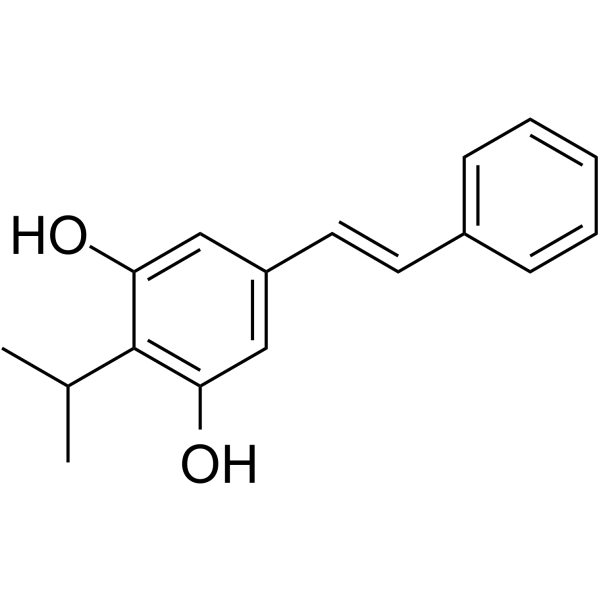
    4-(1-Phenylethyl)resorcinol is a skin lightening agent used in cosmetics. It works by inhibiting the production of melanin, the pigment that gives skin its color. This helps reduce the appearance of dark spots, hyperpigmentation and uneven skin tone. 4-(1-Phenylethyl)resorcinol is considered safe for cosmetic use and is approved for use in several countries.
    4-(1-Phenylethyl)resorcinol
  • HY-N7132

    L-Menthyl acetate

    Biochemical Assay Reagents Drug Derivative Others
    (-)-Menthyl acetate (L-Menthyl acetate) is a derivative of L-menthol and also a skin penetration enhancer for 5-aminolevulinic acid (ALA). (-)-Menthyl acetate exhibits strong ALA skin penetration-enhancing activity .
    (-)-Menthyl acetate
  • HY-P5225

    PGC-1α Others
    Acetyl hexapeptide-38 is a tissue repair promoter that targets fibroblasts in the dermis of the skin. It works by promoting collagen synthesis in the dermis and thickening of subcutaneous fat. Acetyl hexapeptide-38 can activate the skin repair mechanism, increase the collagen content in the dermis, improve the skin tissue structure, and has the activity of promoting local tissue repair. Acetyl hexapeptide-38 can be used in the field of cosmetic medicine to repair congenital soft tissue defects, reduce tear grooves and nasolabial folds, eliminate postoperative scars, and conduct micro-plastic surgery of skin tissue .
    Acetyl hexapeptide-38
  • HY-108036B

    Hydroxypropyl tetrahydropyrantriol

    Biochemical Assay Reagents Metabolic Disease
    Pro-xylane (Hydroxypropyl tetrahydropyrantriol) is a bioactive C-glycoside that targets the biosynthesis pathway of glycosaminoglycans/mucopolysaccharides (GAGs) in the skin matrix and can be absorbed transdermally. Pro-xylane stimulates the biosynthesis of GAGs in fibroblasts, enhances the structural stability of the skin extracellular matrix, improves skin elasticity and moisturizing ability, and delays wrinkle formation. Pro-xylane can effectively promote the synthesis of collagen fibers and hyaluronic acid in the dermis. Pro-xylane is used in the field of anti-aging cosmetics to improve skin hydration and elasticity. Pro-xylane is eco-friendly and biodegradable .
    Pro-xylane
  • HY-N0543S

    5-Ureidohydantoin-13C2,15N4

    Imidazoline Receptor Endogenous Metabolite Cancer
    Allantoin- 13C2, 15N4 is the 13C and 15N labeled Allantoin . Allantoin is a skin conditioning agent that promotes healthy skin, stimulates new and healthy tissue growth .
    Allantoin-13C2,15N4
  • HY-B1695

    Nicotinic acid methyl ester

    Others Cardiovascular Disease Inflammation/Immunology
    Methyl nicotinate (Nicotinic acid methyl ester) is an orally active vasodilator. Methyl nicotinate has analgesic activity. Methyl nicotinate causes local skin erythema when applied topically to the skin. Methyl nicotinate is used as an active ingredient in over-the-counter topical preparations for the study of muscle and joint pain .
    Methyl nicotinate
  • HY-P0095

    Angiotensin-converting Enzyme (ACE) Others
    Acetyl tetrapeptide-5 inhibits glycosylation and ACE-1 activity. Acetyl tetrapeptide-5 reduces edema and relieves vascular pressure by improving the vascular system and strengthening the skin under the eyes. Acetyl tetrapeptide-5 can be used in the research of Antioxidant, anti-aging skin care .
    Acetyl tetrapeptide-5
  • HY-B0485

    Glucocorticoid Receptor Inflammation/Immunology Endocrinology
    Fluocinonide (Vanos) is a potent glucocorticoid steroid used topically as anti-inflammatory agent for the treatment of skin disorders.
    Fluocinonide
  • HY-130187A
    Sapienic acid sodium
    1 Publications Verification

    Bacterial Infection
    Sapienic acid sodium is a fatty acid commonly found on the skin and in mucosa. Sapienic acid sodium has variable antimicrobial activities against Gram-positive and Gram-negative bacteria found on the skin and in the oral cavity. Sapienic acid sodium is active against Streptococcus sanguinis, Streptococcus mitis and Fusobacterium nucleatum with MBC values of 31.3 μg/mL, 375.0 μg/mL and 93.8 μg/mL, respectively .
    Sapienic acid sodium
  • HY-Y1365E

    Biochemical Assay Reagents Others
    Porcine skin Gelatin, suitable for cell culture (medium gel strength) can be used to coat cells to improve cell attachment .
    Porcine skin Gelatin,suitable for cell culture(medium gel strength)
  • HY-P0104

    Collagen Metabolic Disease
    Palmitoyl tripeptide-38 is a lipopeptide that increases the production of dermal and epidermal collagen, fibronectin, and hyaluronic acid. Palmitoyl tripeptide-38 is used in research related to skin aging (fine lines, wrinkles, reduced skin elasticity, decreased skin water content, uneven skin tone) .
    Palmitoyl tripeptide-38
  • HY-Y1106

    Environmental Pollutants Biochemical Assay Reagents Bacterial Infection
    Tripotassium phosphate is a Bactericid with bactericidal activity primarily against Gram-negative bacteria. Tripotassium phosphate reduces the population counts of Enterobacteriaceae and Campylobacter in poultry skin rinsates. Tripotassium phosphate fails to reduce the population count of Enterococcus in poultry skin rinsates .
    Tripotassium phosphate
  • HY-108036A

    (S)-Hydroxypropyl tetrahydropyrantriol

    Biochemical Assay Reagents Metabolic Disease
    (S)-Pro-xylane ((S)-Hydroxypropyl tetrahydropyrantriol) is a bioactive C-glycoside that targets the biosynthesis pathway of glycosaminoglycans/mucopolysaccharides (GAGs) in the skin matrix and can be absorbed transdermally. (S)-Pro-xylane stimulates the biosynthesis of GAGs in fibroblasts, enhances the structural stability of the skin extracellular matrix, improves skin elasticity and moisturizing ability, and delays wrinkle formation. (S)-Pro-xylane can effectively promote the synthesis of collagen fibers and hyaluronic acid in the dermis. (S)-Pro-xylane is used in the field of anti-aging cosmetics to improve skin hydration and elasticity. (S)-Pro-xylane is eco-friendly and biodegradable .
    (S)-Pro-xylane
  • HY-17570
    Desoximetasone
    1 Publications Verification

    Glucocorticoid Receptor Interleukin Related Cytochrome P450 Inflammation/Immunology
    Desoximetasone is a corticosteroid and a substrate of cytochrome P450 3A4. Desoximetasone has anti-inflammatory, anti-allergic, and immunosuppressive effects. Desoximetasone can be used in the research of various skin diseases, such as skin allergies, atopic dermatitis, and psoriasis .
    Desoximetasone
  • HY-P3452

    Tyrosinase Inflammation/Immunology
    Tetrapeptide-30 is a skin-brightening peptide consisting of four amino acids. Tetrapeptide-30 can act as a tyrosinase inhibitor, lightening hyperpigmentation and evening out skin tone by reducing the amount of tyrosinase and inhibiting melanocyte activation .
    Tetrapeptide-30
  • HY-U00058

    Fungal Bacterial Infection Inflammation/Immunology
    Diflucortolone valerate is a powerful corticosteroid used topically for the research of various skin diseases .
    Diflucortolone valerate
  • HY-B1013
    Flurandrenolide
    1 Publications Verification

    Fludroxycortide; Flurandrenolone

    Glucocorticoid Receptor Inflammation/Immunology
    Fludroxycortide is a synthetic topical steroid with anti-inflammatory effects and has potential for use in skin irritation.
    Flurandrenolide
  • HY-141579

    Others Neurological Disease
    Sphingosine (d17:1) is a 17-carbon sphingosine found in human skin .
    Sphingosine (d17:1)
  • HY-B1530

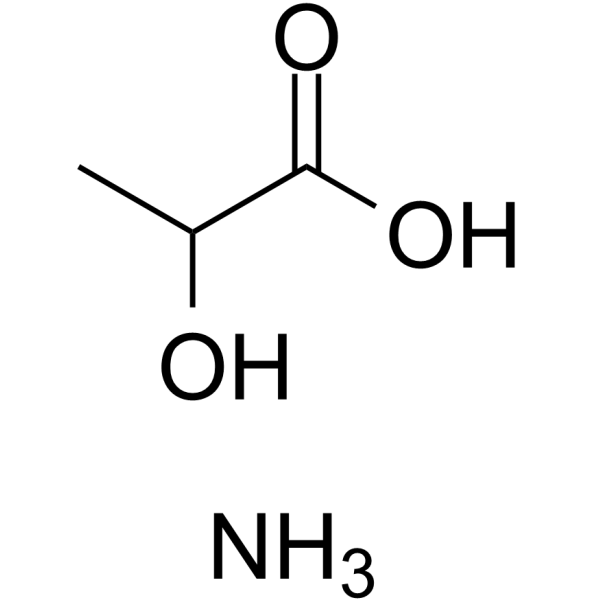
    (±)-Ammonium lactate

    Environmental Pollutants Bacterial Infection
    Ammonium lactate is the ammonium salt of lactic acid, with mild anti-bacterial properties. Ammonium lactate can be used for the research of xerosis .
    Ammonium lactate (60%w/w in water)
  • HY-B1555

    Liposome Cardiovascular Disease
    Benzyl nicotinate is a vasodilator that increases skin oxygenation levels by increasing skin blood flow .
    Benzyl nicotinate
  • HY-N10496

    Others Inflammation/Immunology
    Sericoside is a triterpenoid with anti-inflammatory activity, can be isolated form Terminalia. Sericoside has a strong lipolytic activity. Sericoside can also reduce skin wrinkles and ameliorating skin texture .
    Sericoside
  • HY-Y1129

    Photosensitizer Apoptosis Inflammation/Immunology
    3-Hydroxypyridine is a compound that can be isolated from bamboo grass. As an endogenous photosensitizer present in human skin, 3-hydroxypyridine can mediate oxidative stress, proliferation inhibition and apoptosis of skin cells through UVA/UVB excitation .
    3-Hydroxypyridine
  • HY-Y0683A

    Biochemical Assay Reagents Infection Inflammation/Immunology
    Petrolatum (white) is mainly composed of hydrocarbons, possesses strong water resistance and moisturizing properties, and is commonly used as a pharmaceutical excipient. Petrolatum (white) penetrates into stratum corneum cells, improves skin barrier function, repairs epidermal structure, and reduces transepidermal water loss and the risk of skin damage. Petrolatum (white) induces the expression of antimicrobial peptides, innate immune genes, filaggrin and loricrin. Petrolatum (white) is used in research on atopic dermatitis and post-operative skin infections .
    Petrolatum (white)
  • HY-W040996

    Environmental Pollutants Others
    2-Octyldodecanol can enhance the skin permeation of formoterol fumarate (HY-B0010) .
    2-Octyldodecanol
  • HY-Y1809

    Stearyl alcohol

    Environmental Pollutants Biochemical Assay Reagents Inflammation/Immunology
    1-Hydroxyoctadecane (Stearyl alcohol) is a long-chain fatty alcohol and excipient. 1-Hydroxyoctadecane forms a closed oil film, thereby reducing transepidermal water loss (TEWL) and promoting skin moisturization. 1-Hydroxyoctadecane improves Imiquimod (HY-B0180)-induced psoriatic skin inflammation in mice .
    1-Hydroxyoctadecane
  • HY-NP101

    Bovine Type I collagen, immunization grade

    Biochemical Assay Reagents Inflammation/Immunology
    Highly purified Type I collagen, from bovine skin (Bovine Type I collagen, immunization grade) plays an important role in the structure and function of skin, bone, tendons, and many others. Type I collagen potently stimulates angiogenesis in vitro and in vivo. Highly purified Type I collagen, from bovine skin is an immunization grade that can be used for immunization to generate antibodies .
    Highly purified Type I collagen, from bovine skin
  • HY-NP109

    Mouse Type I collagen, immunization grade

    MMP Inflammation/Immunology
    Highly purified type I collagen, from mouse skin (Mouse Type I collagen, immunization grade) is an immune grade collagen derived from mouse skin, which can stimulate the animal's immune system to produce specific antibodies against this collagen. Collagen is also a substrate for hydrolysis by MMPs .
    Highly purified type I collagen, from mouse skin
  • HY-N0543R

    5-Ureidohydantoin (Standard)

    Reference Standards Imidazoline Receptor Endogenous Metabolite Inflammation/Immunology Cancer
    Allantoin (Standard) is the analytical standard of Allantoin. This product is intended for research and analytical applications. Allantoin is a skin conditioning agent that promotes healthy skin, stimulates new and healthy tissue growth.
    Allantoin (Standard)
  • HY-W250145

    Nigrosine

    Biochemical Assay Reagents Others
    Acid Black 2 (Nigrosine) is an alcohol-soluble absorber used to mimic skin pigmentation in tissue-mimicking phantoms. Acid Black 2 acts as an absorber in silicone-based thin tissue phantoms to simulate varying melanosome volume fractions in skin .
    Acid Black 2
  • HY-P5237

    Collagen Others
    Tetrapeptide-4 is a synthetic tetrapeptide. Tetrapeptide-4 upregulates hyaluronic acid synthetase, and collagen production in human dermal fibroblasts. Tetrapeptide-4 reduces skin aging, improves skin firmness, elasticity, and appearance, and benefits hair .
    Tetrapeptide-4
  • HY-132818

    P-1037

    Sodium Channel Others
    Idrevloride, an epithelial sodium channel (ENaC) inhibitor (WO2016133967), can be used for the research of skin disorders .
    Idrevloride
  • HY-130187
    Sapienic acid
    1 Publications Verification

    Bacterial Infection
    Sapienic acid is a fatty acid commonly found on the skin and in mucosa. Sapienic acid has variable antimicrobial activities against Gram-positive and Gram-negative bacteria found on the skin and in the oral cavity. Sapienic acid is active against Streptococcus sanguinis, Streptococcus mitis and Fusobacterium nucleatum with MBC values of 31.3 μg/mL, 375.0 μg/mL and 93.8 μg/mL, respectively .
    Sapienic acid
  • HY-133027

    Tetradecyl nicotinate

    Biochemical Assay Reagents Cancer
    Myristyl nicotinate (Tetradecyl nicotinate) is an ester proagent and a lipophilic derivative of Nicotinic acid. Myristyl nicotinate is being developed for delivery of Nicotinic acid into the skin for prevention of actinic keratosis and its progression to skin cancer. Myristyl nicotinate shows to stimulate epidermal differentiation in photodamaged skin, increasing skin NAD content and strengthening the skin barrier .
    Myristyl nicotinate
  • HY-164066

    Biochemical Assay Reagents Others
    Sodium Acetylated Hyaluronate is an acetylated hyaluronic acid derivative with anti-wrinkle and deep skin penetration properties, which can be used in skin aging research and cosmetic development .
    Sodium Acetylated Hyaluronate
  • HY-W591838

    PFPeS

    Biochemical Assay Reagents Phosphatase Metabolic Disease
    Perfluoropentanesulfonic acid (PFPeS) is a per- and polyfluoroalkyl substance. Perfluoropentanesulfonic acid increases alkaline phosphatase (ALKP). Perfluoropentanesulfonic acid induces systemic toxicity in mouse models and alters the expression of genes related to fatty acid metabolism, inflammation and skin integrity in the liver and skin .
    Perfluoropentanesulfonic acid
  • HY-W009051

    Environmental Pollutants Biochemical Assay Reagents Others
    Decamethylcyclopentasiloxane (D5), an organosilicon compound that is used as a skin emollient in cosmetics and personal products .
    Decamethylcyclopentasiloxane
  • HY-NP103

    Bovine Type III collagen, immunization grade

    MMP Inflammation/Immunology
    Highly purified Type III collagen, from bovine skin (Bovine Type III collagen, immunization grade) is an immune grade collagen derived from bovine skin, which can stimulate the animal's immune system to produce specific antibodies against this collagen. Collagen is also a substrate for hydrolysis by MMPs .
    Highly purified Type III collagen, from bovine skin
  • HY-106647

    Interleukin Related Inflammation/Immunology
    Abacavir hydroxyacetate is an orally active inhibitor of IL-20 and PRINS. Abacavir hydroxyacetate reduces proliferation rate of skin in psoriasis as an immune modulator. Abacavir hydroxyacetate can be used for the research of inflammatory skin problems .
    Abacavir hydroxyacetate

Inquiry Online

Your information is safe with us. * Required Fields.

Salutation


Country or Region *

Applicant Name *


Organization Name *

Department *


Email Address *


Product Name *

Cat. No.


Requested quantity *

Phone Number *


Remarks

Inquiry Online

Inquiry Information

Product Name:
Cat. No.:
Quantity:
MCE Japan Authorized Agent:

