



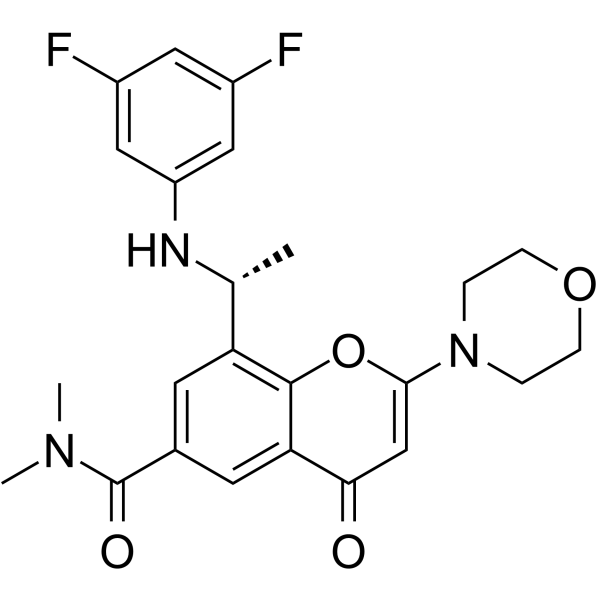
AZD8186
Based on 10 publication(s) in Google Scholar
AZD8186 is a PI3K inhibitor, which potently inhibits PI3Kβ (IC50=4 nM) and PI3Kδ (IC5050=12 nM) with selectivity over PI3Kα (IC50=35 nM) and PI3Kγ (IC50=675 nM).
For research use only. We do not sell to patients.
- Purity : 99.98%
- CAS No.: 1627494-13-6
- Formula: C24H25F2N3O4
- Molecular Weight:457.47
-
Storage:Powder -20°C, 3 years , 4°C, 2 years ; In solvent -80°C, 2 years , -20°C, 1 year

To place orders, for customer services and technical support, please contact: MedChemExpress USA
Tel: 609-228-6898 E-mail: [email protected] [email protected]


-
 Biological Activity
-
Chemical Information
-
Solvent & Solubility
- Protocol
- Purity & Documentation
- References
-
 Help & FAQs


-
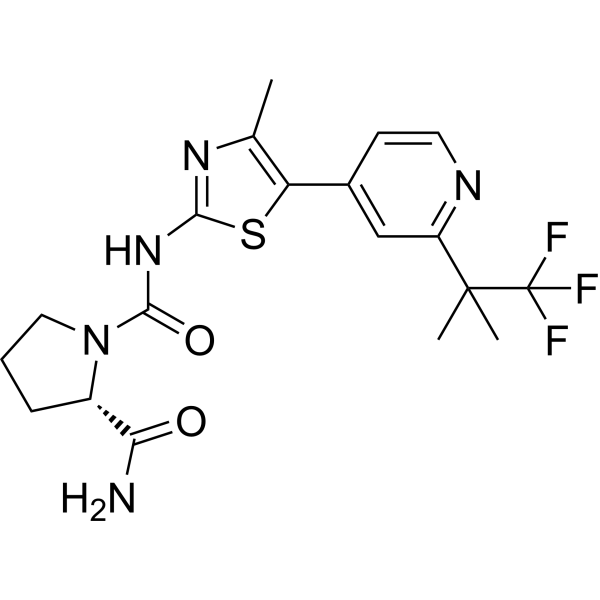
HY-15244
AlpelisibPI3Kα Inhibitor -
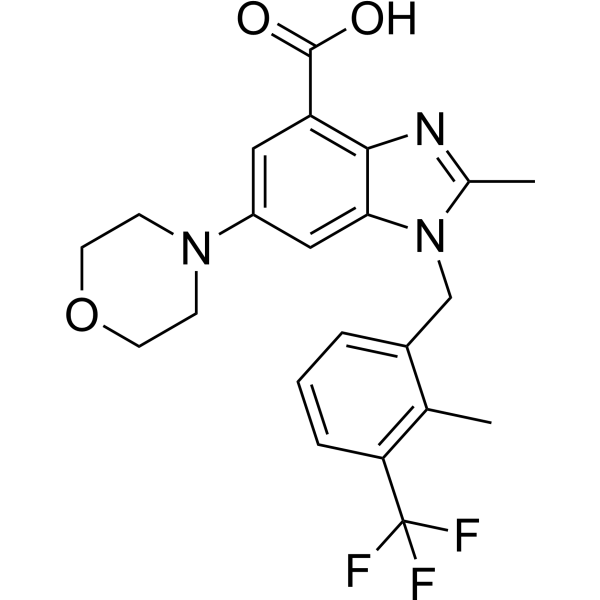
HY-15245
GSK2636771PI3Kβ Inhibitor -
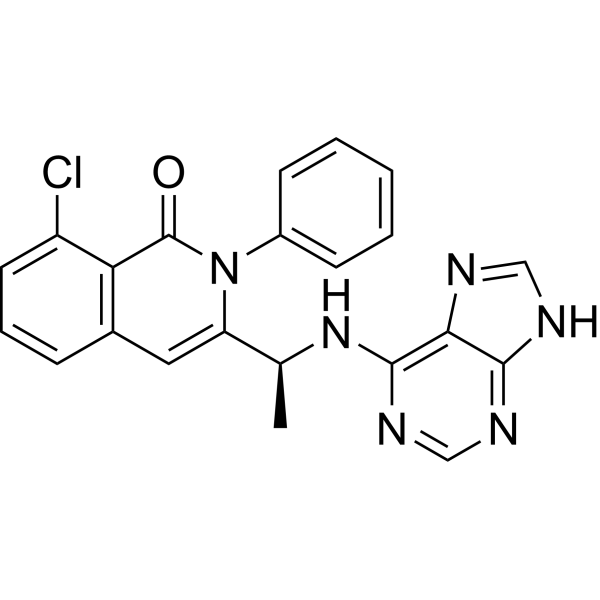
HY-17044
DuvelisibPI3Kδ Inhibitor -
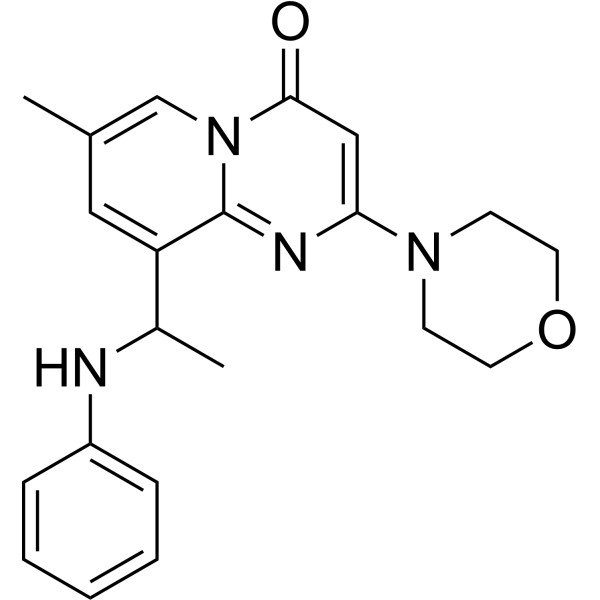
HY-10114
TGX-221Keap1-Nrf2 Interaction Inhibitor -
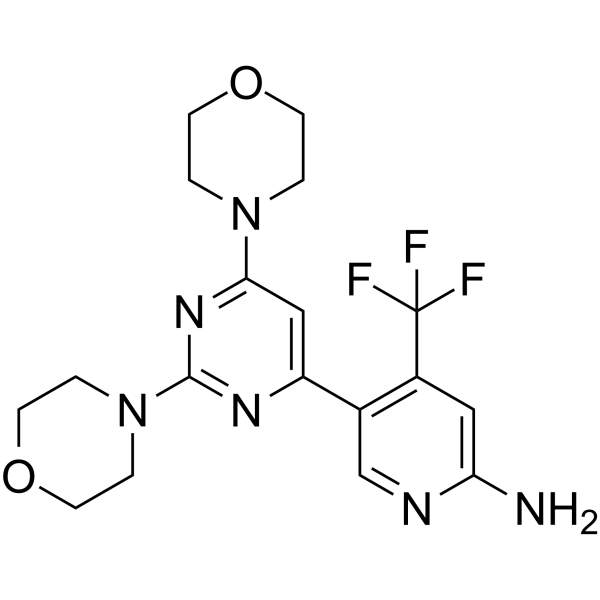
HY-70063
BuparlisibPI3K Inhibitor -
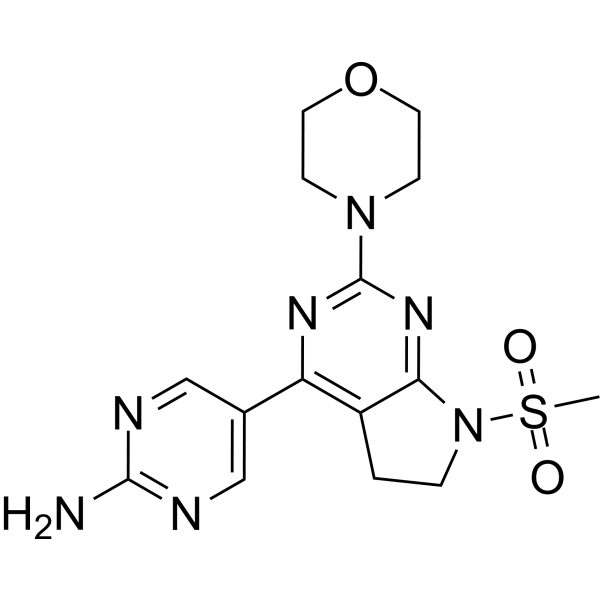
HY-15466
IzorlisibClass I PI3K Inhibitor -
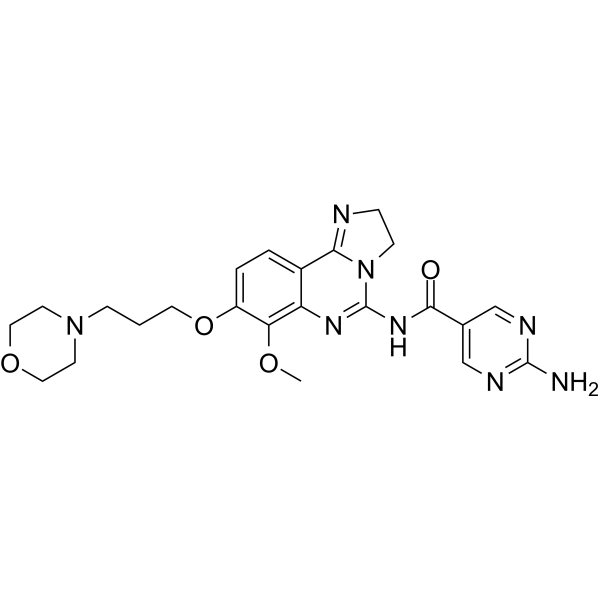
HY-15346
CopanlisibPI3K Inhibitor -
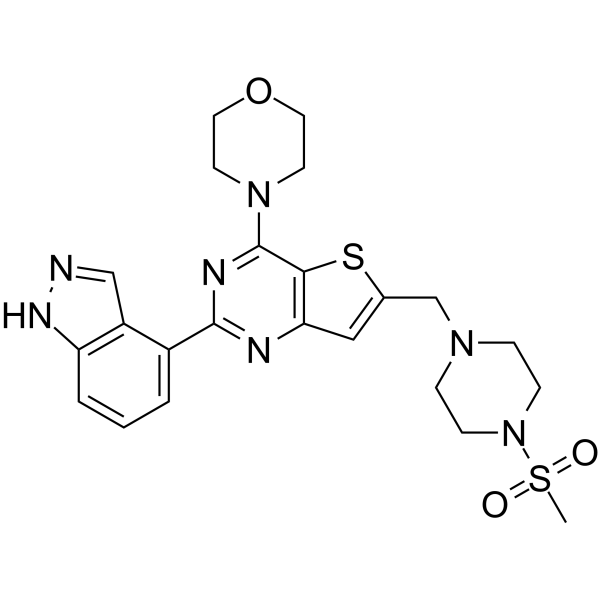
HY-50094
PictilisibPI3Kα/δ Inhibitor -
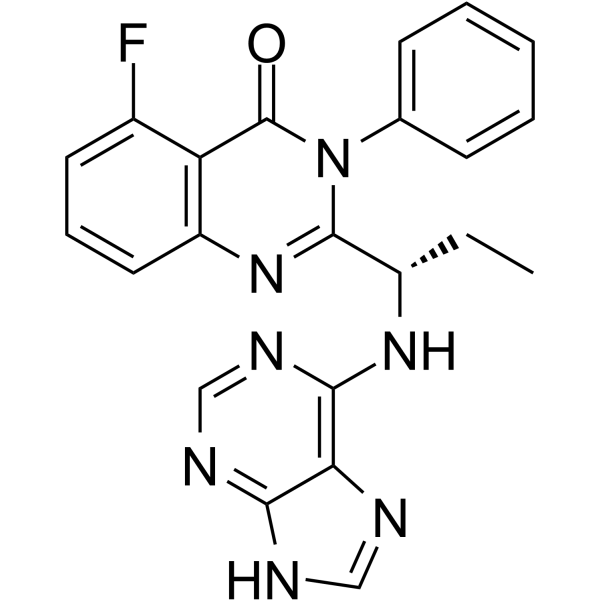
HY-13026
IdelalisibPI3Kδ Inhibitor -
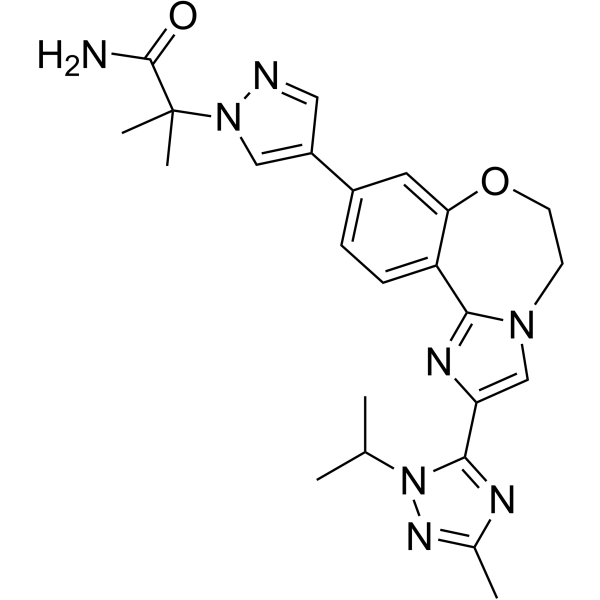
HY-13898
TaselisibPIK3CA Inhibitor -
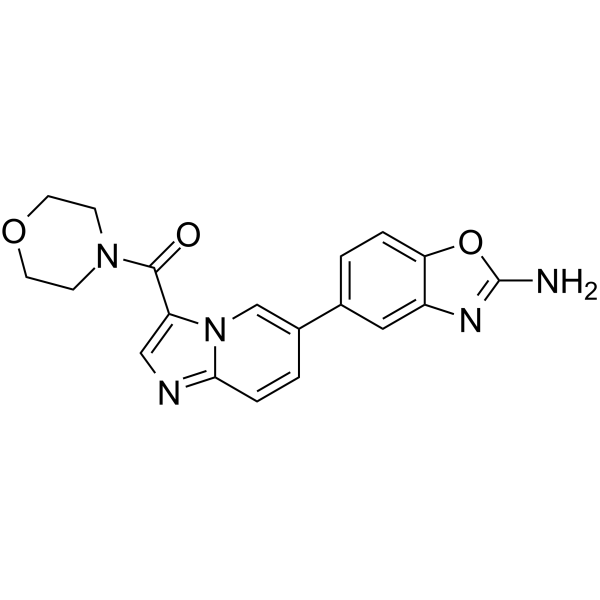
HY-12285
Serabelisibp110α Inhibitor -
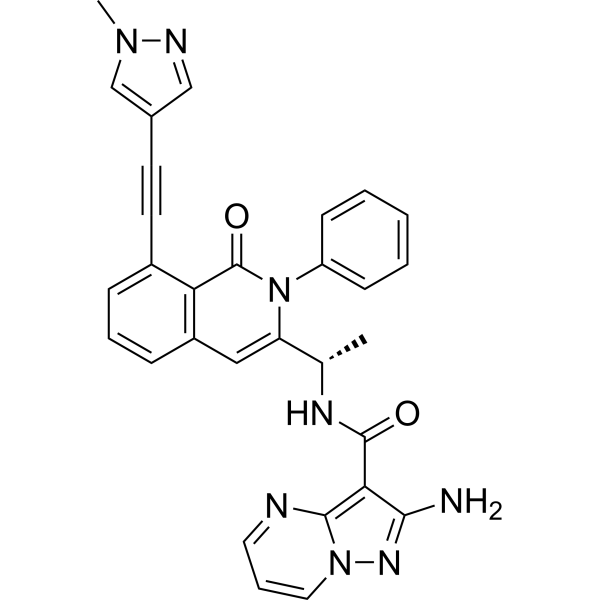
HY-100716
EganelisibPI3Kγ Inhibitor
Publications Citing Use of MedChemExpress (MCE) AZD8186
More- Blood. 2019 Jan 3;133(1):70-80. [Abstract]
- Sci Transl Med. 2018 Jul 18;10(450):eaaq1093. [Abstract]
- Cell Death Dis. 2025 Mar 20;16(1):194. [Abstract]
- Diabetes. 2021 Oct 21:db210240. [Abstract]
- Sci Rep. 2025 Feb 20;15(1):6265. [Abstract]
- Discov Oncol. 2024 Nov 19;15(1):678. [Abstract]
- bioRxiv. 2026 Jan 18.
- bioRxiv. 2024 Nov 6:2024.11.04.621884. [Abstract]
- Oncotarget. 2020 Nov 3;11(44):3921-3932. [Abstract]
- bioRxiv. 2019 Oct.


Biological Activity
Description
IC50 & Target
[1]|
PI3Kβ 4 nM (IC50) |
PI3Kδ 12 nM (IC50) |
PI3Kα 35 nM (IC50) |
PI3Kγ 675 nM (IC50) |
Cellular Effect
|
Cell Line

|
Type | Value | Description | References |
|---|---|---|---|---|
| BT-474 | IC50 |
0.752 μM
Compound: 13
|
Inhibition of PI3Kalpha mutant human BT474 cells assessed as inhibition of Akt phosphorylation at Tyr-308 after 2 hrs
Inhibition of PI3Kalpha mutant human BT474 cells assessed as inhibition of Akt phosphorylation at Tyr-308 after 2 hrs
|
[PMID: 25514658] |
| MDA-MB-231 | IC50 |
6.985 μM
Compound: 1, AZD8186
|
Antiproliferative activity against human MDA-MB-231 cells assessed as inhibition of cell growth incubated for 72 hrs by SRB assay
Antiproliferative activity against human MDA-MB-231 cells assessed as inhibition of cell growth incubated for 72 hrs by SRB assay
|
[PMID: 34990979] |
| MDA-MB-468 | IC50 |
0.003 μM
Compound: 13
|
Inhibition of PI3Kbeta in PTEN-null human MDA-MB-468 cells assessed as inhibition of Akt phosphorylation after 2 hrs
Inhibition of PI3Kbeta in PTEN-null human MDA-MB-468 cells assessed as inhibition of Akt phosphorylation after 2 hrs
|
[PMID: 25514658] |
| Sf21 | IC50 |
3 nM
Compound: AZD8186
|
Inhibition of recombinant human full-length N-terminal His6-tagged p110beta/human recombinant full-length untagged p85alpha expressed in baculovirus infected Sf21 insect cells using PIP2 as substrate after 30 mins in presence of ATP at 2xKm concentration
Inhibition of recombinant human full-length N-terminal His6-tagged p110beta/human recombinant full-length untagged p85alpha expressed in baculovirus infected Sf21 insect cells using PIP2 as substrate after 30 mins in presence of ATP at 2xKm concentration
|
[PMID: 32551006] |
In Vitro
AZD8186 is a potent inhibitor of PI3Kβ with additional activity versus the PI3Kδ isoform. Tight-binding kinetics of AZD8186 means biochemical assays underestimate the absolute selectivity profile for PI3Ks. In a broad panel of protein and lipid kinase assays selectivity for PI3Kβ and δ is >100-fold versus 74 protein and lipid kinases. At 10 μM, AZD8186 had no significant binding to 442 other kinases in a KinomeScan screen. AZD8186 shows selectivity for PI3K family kinases, no other off-target activity is detected. In the PTEN-null line, MDA-MB-468 AZD8186 inhibits PI3Kβ-dependent activation of pAKT (Ser473) with an IC50 value of 3 nM. Potency in the PIK3CA-mutant line BT474c is 752 nM demonstrating selectivity for PI3Kβ over PI3Kα. IgM mediated stimulation of B cells results in phosphorylation of AKT through activation of PI3Kδ. AZD8186 inhibits IgM-stimulated phosphorylation of pAKT (Ser473) activation in JEKO cells with an IC50 value of 17 nM. In cell proliferation assays, AZD8186 inhibits proliferation of MDA-MB-468 cells with a GI50 value of 65 nM, IgM stimulated JEKO cell growth with an IC50 value of 228 nM. It only inhibited BT474c cell growth with an IC50 value of 1.981 μM consistent with its selectivity for PI3Kβ over PI3Kα[1].
MedChemExpress (MCE) has not independently confirmed the accuracy of these methods. They are for reference only.
In Vivo
MedChemExpress (MCE) has not independently confirmed the accuracy of these methods. They are for reference only.
Clinical Trial
| NCT Number | Sponsor | Condition | Start Date |
Phase
|
|---|---|---|---|---|
| NCT01329991 | Plexxikon| | 2011-05 | PHASE1 |


Chemical Information
-
CAS No. 1627494-13-6
-
Appearance Solid
-
Molecular Weight 457.47
-
Formula C24H25F2N3O4
-
Color White to off-white
-
SMILES
O=C(C1=CC([C@H](NC2=CC(F)=CC(F)=C2)C)=C3C(C(C=C(N4CCOCC4)O3)=O)=C1)N(C)C
-
Shipping
Room temperature in continental US; may vary elsewhere.
-
Storage
Powder -20°C 3 years 4°C 2 years In solvent -80°C 2 years -20°C 1 year


Publications (10)
-
Journal Impact Factor
-
Most Recent
-
Blood
Targeted inhibition of PI3Kα/δ is synergistic with BCL-2 blockade in genetically defined subtypes of DLBCL. [Abstract]2019 Jan 3;133(1):70-80. PMID: 30322870 -
Sci Transl Med
PP2A inhibition is a druggable MEK inhibitor resistance mechanism in KRAS-mutant lung cancer cells. [Abstract]2018 Jul 18;10(450):eaaq1093. PMID: 30021885 -
Cell Death Dis
Novel selective strategies targeting the BCL-2 family to enhance clinical efficacy in ALK-rearranged non-small cell lung cancer. [Abstract]2025 Mar 20;16(1):194. PMID: 40113795 -
Diabetes
Hepatic P38 Activation Modulates Systemic Metabolism Through Fgf21-Mediated Interorgan Communication. [Abstract]2021 Oct 21:db210240. PMID: 34675006 -
Sci Rep
PI3Kα-specific inhibitor BYL-719 synergizes with cisplatin in vitro in PIK3CA-mutated ovarian cancer cells. [Abstract]2025 Feb 20;15(1):6265. PMID: 39979449 -
Discov Oncol
Aberrant expression of MRAS and HEG1 as the biomarkers for osimertinib resistance in LUAD. [Abstract]2024 Nov 19;15(1):678. PMID: 39560891 -
-
bioRxiv
PAIRWISE: Deep Learning-based Prediction of Effective Personalized Drug Combinations in Cancer. [Abstract]2024 Nov 6:2024.11.04.621884. PMID: 39574568 -
Oncotarget
2020 Nov 3;11(44):3921-3932. PMID: 33216841 -


Solvent & Solubility
In Vitro:
DMSO : ≥ 35 mg/mL (76.51 mM; Hygroscopic DMSO has a significant impact on the solubility of product, please use newly opened DMSO)
* "≥" means soluble, but saturation unknown.
Please refer to the solubility information to select the appropriate solvent. Once prepared, please aliquot and store the solution to prevent product inactivation from repeated freeze-thaw cycles.
Storage method and period of stock solution: -80°C, 2 years; -20°C, 1 year. When stored at -80°C, please use it within 2 years. When stored at -20°C, please use it within 1 year.
Please refer to the solubility information to select the appropriate solvent. Once prepared, please aliquot and store the solution to prevent product inactivation from repeated freeze-thaw cycles.
Storage method and period of stock solution: -80°C, 2 years; -20°C, 1 year. When stored at -80°C, please use it within 2 years. When stored at -20°C, please use it within 1 year.
Concentration (start) × Volume (start) = Concentration (final) × Volume (final)
In Vivo:
Select the appropriate dissolution method based on your experimental animal and administration route.
- For the following dissolution methods, please ensure to first prepare a clear stock solution using an In Vitro approach and then sequentially add co-solvents:
- To ensure reliable experimental results, the clarified stock solution can be appropriately stored based on storage conditions. As for the working solution for In Vivo experiments, it is recommended to prepare freshly and use it on the same day.
- The percentages shown for the solvents indicate their volumetric ratio in the final prepared solution. If precipitation or phase separation occurs during preparation, heat and/or sonication can be used to aid dissolution.
Add each solvent one by one: 10% DMSO 60% Triethylene glycol 30% Water
Solubility: 15 mg/mL (32.79 mM); Clear solution; Need ultrasonic
Add each solvent one by one: 10% DMSO 40% PEG300 5% Tween-80 45% Saline
Solubility: ≥ 2.08 mg/mL (4.55 mM); Clear solution
This protocol yields a clear solution of ≥ 2.08 mg/mL (saturation unknown).
Taking 1 mL working solution as an example, add 100 μL DMSO stock solution (20.8 mg/mL) to 400 μL PEG300, and mix evenly; then add 50 μL Tween-80 and mix evenly; then add 450 μL Saline to adjust the volume to 1 mL.
Preparation of Saline: Dissolve 0.9 g sodium chloride in ddH₂O and dilute to 100 mL to obtain a clear Saline solution.
Add each solvent one by one: 10% DMSO 90% (20% SBE-β-CD in Saline)
Solubility: ≥ 2.08 mg/mL (4.55 mM); Clear solution
This protocol yields a clear solution of ≥ 2.08 mg/mL (saturation unknown).
Taking 1 mL working solution as an example, add 100 μL DMSO stock solution (20.8 mg/mL) to 900 μL 20% SBE-β-CD in Saline, and mix evenly.
Preparation of 20% SBE-β-CD in Saline (4°C, storage for one week): 2 g SBE-β-CD powder is dissolved in 10 mL Saline, completely dissolve until clear.
In Vivo Dissolution Calculator
Please enter the basic information of animal experiments:
-
-
-
-
Recommended: Prepare an additional quantity of animals to account for potential losses during experiments.
Please enter your animal formula composition:
-
%DMSO +
Recommended: Keep the proportion of DMSO in working solution below 2% if your animal is weak.
-
%+
-
+%Tween-80 + +
-
%Saline +
The co-solvents required include: DMSO, . All of co-solvents are available by MedChemExpress (MCE). , Tween 80. All of co-solvents are available by MedChemExpress (MCE).
Working solution concentration: 0.22 mg/mL
Method for preparing stock solution: mg drug dissolved in μL DMSO. Stock solution concentration: mg/mL.
1. Take μL DMSO stock solution;
2. Add μL .
μL , mix evenly;
3. Then add μL Tween 80, mix evenly;
4. Then add μL
Please ensure that the stock solution in the first step is dissolved to a clear state, and add co-solvents in sequence. You can use ultrasonic heating (ultrasonic cleaner, recommended frequency 20-40 kHz), vortexing, etc. to assist dissolution.

Protocol
Cell Assay[1]
Cells are exposed to AZD8186 at concentrations ranging from 3 to 0.01 μM for 2 hours. Cells are then lysed on ice with a buffer containing 25 mM Tris/HCL pH6.8, 3 mM EDTA, 3 mM EGTA, 50 mM NaF, 2 mM sodium orthovanadate, 270 mM sucrose, 10 mM β-glycerophosphate, 5 mM sodium pyrophosphate, and 0.5% Triton X-100 and protease and phosphatase inhibitors. Lysates are diluted with sample loading buffer, separated on 4% to 12% Bis-Tris Novex gels, transferred onto nitrocellulose membranes, and probed with primary antibodies overnight. After a washing step, membranes are incubated with HRP-tagged secondary antibodies and visualized[1].
MedChemExpress (MCE) has not independently confirmed the accuracy of these methods. They are for reference only.
Animal Administration[1]
Mice[1]
The female CB17 SCID mice ages 6 to 8 weeks are used. HID28 in vivo experiments are performed under contract by Xentech, HID28 tumor fragments (approximately 40 mm3) from donor animals are aseptically implanted subcutaneously in at the level of the interscapular region. Outbred athymic (nu/nu) male mice (HSD: Athymic Nude-Foxn1nu) weighing 18 to 25 g. For all animals studies groups are powered with a minimum of 8 animals per group. AZD8186 is generally formulated once weekly as a suspension in HPMC/Tween and dosed once or twice daily (0 and 6-8 hours). AZD8186 is formulated once weekly either alone in 10% DMSO/60% tri-ethylene glycol (TEG)/30% water for injection (WFI) or in the presence of ABT at 10 mg/mL. For twice daily dosing (0 and 6-8 hours), AZD8186 is co-dosed with ABT at 0 hours and administered alone as the single formulation at 6 to 8 hours. RP-56976 is formulated fresh in physiologic saline at 1.5 mg/mL and dosed as a single i.v. bolus dose at a rate of 0.1 mL/10 g on day 0, 24 hours before the administration of AZD8186.
MedChemExpress (MCE) has not independently confirmed the accuracy of these methods. They are for reference only.


Purity & Documentation
-
Data Sheet (284 KB)
-
SDS (393 KB)
- English - EN (393 KB)
- Français - FR (393 KB)
- Deutsch - DE (393 KB)
- Norwegian - NO (393 KB)
- Español - ES (393 KB)
- Swedish - SV (393 KB)
- Italian - IT (393 KB)
- Korean - KR (393 KB)
- Portuguese - PT (393 KB)
-
Handling Instructions (2659 KB)
References


Complete Stock Solution Preparation Table
Please refer to the solubility information to select the appropriate solvent. Once prepared, please aliquot and store the solution to prevent product inactivation from repeated freeze-thaw cycles.
Storage method and period of stock solution: -80°C, 2 years; -20°C, 1 year. When stored at -80°C, please use it within 2 years. When stored at -20°C, please use it within 1 year.
| Optional Solvent | Concentration Solvent Mass | 1 mg | 5 mg | 10 mg | 25 mg |
|---|---|---|---|---|---|
| DMSO | 1 mM | 2.1859 mL | 10.9297 mL | 21.8594 mL | 54.6484 mL |
| 5 mM | 0.4372 mL | 2.1859 mL | 4.3719 mL | 10.9297 mL | |
| 10 mM | 0.2186 mL | 1.0930 mL | 2.1859 mL | 5.4648 mL | |
| 15 mM | 0.1457 mL | 0.7286 mL | 1.4573 mL | 3.6432 mL | |
| 20 mM | 0.1093 mL | 0.5465 mL | 1.0930 mL | 2.7324 mL | |
| 25 mM | 0.0874 mL | 0.4372 mL | 0.8744 mL | 2.1859 mL | |
| 30 mM | 0.0729 mL | 0.3643 mL | 0.7286 mL | 1.8216 mL | |
| 40 mM | 0.0546 mL | 0.2732 mL | 0.5465 mL | 1.3662 mL | |
| 50 mM | 0.0437 mL | 0.2186 mL | 0.4372 mL | 1.0930 mL | |
| 60 mM | 0.0364 mL | 0.1822 mL | 0.3643 mL | 0.9108 mL |


AZD8186 Related Classifications
HY-12330 Related Classifications
 Powered by Bioz