



Stapokibart

Based on 1 Customer Validation
Stapokibart (CM310) is a humanized monoclonal antibody targeting IL-4Rα (KD values of 0.25 nM, 1.50 nM, and 2.75 nM for human, cynomolgus monkey, and rat IL-4Rα, respectively). Stapokibart effectively blocks the interaction of cytokines IL-4 and IL-13 with their co-receptor subunit IL-4Rα. Stapokibart reduces IL-4 and IL-13 mRNA, inhibits CD23 upregulation, and inhibits IL-4 and IL-13-induced STAT6 activation. Stapokibart improves inflammation (airway inflammation, rhinitis, dermatitis).
For research use only. We do not sell to patients.
- Purity : 99.37%
- CAS No.: 2734715-10-5
- Molecular Weight:144.3 kDa
-
Storage:
Please store the product under the recommended conditions in the Certificate of Analysis.

To place orders, for customer services and technical support, please contact: MedChemExpress USA
Tel: 609-228-6898 E-mail: [email protected] [email protected]


-
 Biological Activity
-
Chemical Information
- Protocols
- Purity & Documentation
- References
-
 Help & FAQs









Biological Activity
Description
Isotype
Human IgG4 kappa
Recommend Isotype Controls
Species Reactivity
Human
IC50 & Target
[2]|
STAT6 |
IL-13 |
IL-4 |
In Vitro
Stapokibart binds to IL-4Rα from human, cynomolgus monkey, and rat with KD values of 0.25 nM, 1.50 nM, and 2.75 nM, respectively[2].
Stapokibart blocks the interaction of IL-4 with IL-4Rα with an IC50 of 0.40 nM[2].
Stapokibart inhibits IL-4-induced STAT6 activation with an IC50 of 0.039 nM and IL-13-induced STAT6 activation with an IC50 of 0.041 nM[2].
Stapokibart inhibits IL-4-induced TF-1 cell proliferation with an IC50 of 1.75 nM and IL-13-induced proliferation with an IC50 of 0.13 nM[2].
Stapokibart suppresses IL-4-induced CD23 upregulation on Ramos cells with an IC50 of 0.53 nM[2].
MedChemExpress (MCE) has not independently confirmed the accuracy of these methods. They are for reference only. Further protocols information, click here.
In Vivo
Stapokibart (25-100 mg/kg; s.c.) improves Ovalbumin-induced rhinitis and AD-like dermatitis in rats[2].
MedChemExpress (MCE) has not independently confirmed the accuracy of these methods. They are for reference only.
-
Animal Model:Sprague-Dawley (SD) rats (male, 6-8 weeks old) + OVA-induced rhinitis model[2]
-
Dosage:25 mg/kg, 50 mg/kg, 100 mg/kg
-
Administration:Subcutaneous injection; on days 0, 3, 5, 7, 10, 14, 17, 21, 23, 25, and 27
-
Result:Reduced rubbing frequency and sneezing counts on days 23, 25, and 27 (dose-dependent).
Decreased eosinophils and macrophages in nasal mucosa.
Lowered eotaxin levels in NALF and serum total IgE/OVA-specific IgE,
Reduced mRNA levels of IL-4, IL-13, IL-5, and MUC5AC in nasal tissues.
Alleviated nasal mucosa eosinophil infiltration, goblet cell metaplasia, and mast cell degranulation.
Clinical Trial
| NCT Number | Sponsor | Condition | Start Date |
Phase

|
|---|---|---|---|---|
| NCT01329991 | Plexxikon| | 2011-05 | PHASE1 |
Gene ID
Accession
Conjugated
Unconjugated
Reconsititution
The product can be reconstituted/diluted with sterile PBS or saline.
Format
-
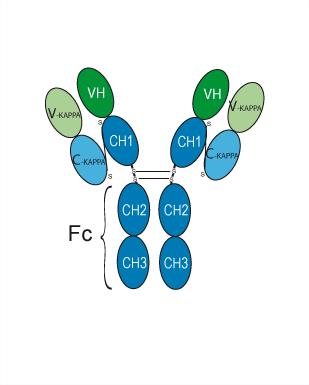
Human IgG4 kappa
Application
ELISA, FACS, Functional assay
Verified Bioactivity
-
 Flow Cytometry analysis of Daudi cells labelling IL-4Ra (red) with Stapokibart (anti-IL-4Ra) (HY-P990093). Cells were stained with the primary antibody at 1/200 dilution for an hour at 4℃. Goat Anti-Human IgG H&L (AF488) (HY-P83776) was used as the secondary antibody at 1/1,000 dilution for 30 minutes at 4℃. Human IgG4 kappa (HY-P99993, blue) was used as the isotype control.


Chemical Information
-
CAS No. 2734715-10-5
-
Appearance Liquid
-
Molecular Weight 144.3 kDa
-
Color Colorless to light yellow
-
SMILES
[Stapokibart]
-
Synonyms
CM310
-
Shipping
Shipping with dry ice.
-
Formulation
Please refer to the lot-specific COA for specific buffer information.
-
Storage
Please store the product under the recommended conditions in the Certificate of Analysis.

Protocols
-
RNA extraction experimental
By lysing cells, releasing RNA, and removing impurities such as proteins and DNA, high-purity RNA products are finally obtained. The commonly used traditional method is the guanidine isothiocyanate/phenol/chloroform method (Trizol), which is suitable for a variety of animal materials including animal tissues, microorganisms, cultured cells, etc., and most plant materials.
-
TPA/Croton Oil Ear Edema and Dermatitis
The TPA (12-O-tetradecanoylphorbol-13-acetate) and croton oil-induced mouse ear edema model is a well-established acute cutaneous inflammation system used to evaluate topical anti-inflammatory activity by measuring edema formation, neutrophil infiltration, vascular permeability, and cytokine-mediated skin responses in vivo. The inflammatory response is triggered by topical application of phorbol esters (TPA) or croton oil constituents, leading to rapid activation of protein kinase C signaling, leukocyte recruitment, and increased vascular permeability, which can be quantified by ear thickness, weight, dye extravasation, and biochemical markers such as myeloperoxidase (MPO) activity and pro-inflammatory mediators in ear tissue homogenates. This model is widely used for screening anti-inflammatory agents, where reductions in edema and inflammatory biomarkers reflect suppression of acute dermal inflammation and immune cell infiltration. Histological evaluation typically confirms epidermal
-
Research Protocol for Inflammation-related Diseases
The NLRP3 inflammasome is a cytosolic innate immune signaling platform that integrates priming signals and danger-signal activation to promote caspase-1 activation, maturation of IL-1β and IL-18, and gasdermin D-mediated pyroptotic cell death. The core experimental logic is to determine whether inflammatory disease phenotypes are driven by increased NLRP3 expression, ASC-containing inflammasome assembly, caspase-1 cleavage, GSDMD cleavage, and extracellular release of IL-1β/IL-18 rather than by nonspecific cell injury alone. The pathway is strongly linked to inflammation-related disease phenotypes because monosodium urate crystals activate NALP3/NLRP3 inflammasome signaling in gout-like crystal inflammation, cholesterol crystals activate NLRP3 inflammasomes in atherogenesis models, and DSS-induced intestinal inflammation has been reported to involve NLRP3 inflammasome activity. However, experimental colitis studies also show context-dependent protective effects of NLRP3 inflammasome co


Purity & Documentation
-
Data Sheet (261 KB)
-
SDS (251 KB)
- English - EN (251 KB)
- Français - FR (251 KB)
- Deutsch - DE (251 KB)
- Norwegian - NO (251 KB)
- Español - ES (251 KB)
- Swedish - SV (251 KB)
- Italian - IT (251 KB)
- Korean - KR (251 KB)
- Portuguese - PT (251 KB)
-
Inhibitory Antibodies User Guide (603 KB)
References
[1]. Yuan Zhang, et al. Efficacy and safety of CM310 in severe eosinophilic chronic rhinosinusitis with nasal polyps (CROWNS-1): a multicentre, randomised, double-blind, placebo-controlled phase 2 clinical trial. EClinicalMedicine. 2023 Jul 5:61:102076. [Content Brief]
[2]. Liu W, et al. Stapokibart (CM310) targets IL-4Rα for the treatment of type 2 inflammation. iScience. 2024 Aug 13;27(9):110721. [Content Brief]

Calculators
Concentration (start) × Volume (start) = Concentration (final) × Volume (final)


Stapokibart Related Classifications
HY-P990093 Related Classifications
 Powered by Bioz