



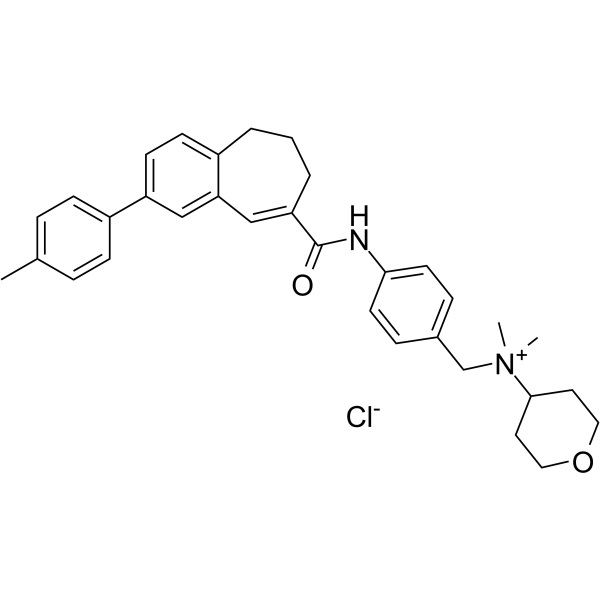
TAK-779
Based on 13 publication(s) in Google Scholar
TAK-779 is a potent and selective nonpeptide antagonist of CCR5 and CXCR3, with a Ki of 1.1 nM for CCR5, and effectively and selectively inhibits R5 HIV-1, with EC50 and EC90 of 1.2 nM and 5.7 nM, respectively, in MAGI-CCR5 cells.
For research use only. We do not sell to patients.
- Purity: 99.50%
- CAS No.: 229005-80-5
- Formula: C33H39ClN2O2
- Molecular Weight:531.13
-
Storage:
-20°C, sealed storage, away from moisture
* In solvent : -80°C, 2 years; -20°C, 1 year (sealed storage, away from moisture)

To place orders, for customer services and technical support, please contact: MedChemExpress USA
Tel: 609-228-6898 E-mail: [email protected] [email protected]


-
 Biological Activity
-
Chemical Information
-
Solvent & Solubility
- Protocol
- Purity & Documentation
- References
-
 Help & FAQs


Publications Citing Use of MedChemExpress (MCE) TAK-779
More- Nature. 2025 Oct;646(8083):171-179. [Abstract]
- Immunity. 2025 Sep 9;58(9):2320-2335.e9. [Abstract]
- Redox Biol. 2026 Apr:91:104093. [Abstract]
- Adv Sci (Weinh). 2025 Oct 28:e16569. [Abstract]
- Sci Adv. 2026 Feb 6;12(6):eaeb0455. [Abstract]
- Cell Death Dis. 2025 May 30;16(1):424. [Abstract]
- Front Pharmacol. 2024 Feb 21:15:1351655. [Abstract]
- J Cell Mol Med. 2021 Jun;25(12):5457-5469. [Abstract]
- J Virol. 2026 May 11.
- Front Biosci (Landmark Ed). 2025 Oct 31;30(10):45931. [Abstract]
- Albert Einstein College of Medicine. 2026.
- bioRxiv. 2025 Oct 28:2025.10.28.685002. [Abstract]
- bioRxiv. 2025 May 22:2025.05.22.655571. [Abstract]
 Customer Validation & Images

-
RT-PCR
-
Cell Imaging/Staining
-
Cell Migration/Invasion Assay
-
Histological Imaging/Staining
-
Histological Imaging/Staining


Biological Activity
|
MIP-1α-CCR5 1 nM (IC50, in CHO/CCR5 cells) |
MIP-1β-CCR5 1 nM (IC50, in CHO/CCR5 cells) |
RANTES-CCR5 1.4 nM (IC50, in CHO/CCR5 cells) |
MCP-1-CCR2b 27 nM (IC50, in CHO/CCR5 cells) |
R5 HIV-1 (Ba-L) 1.2 nM (EC50, in MAGI-CCR5 cells) |
R5 HIV-1 (KK) 1.6 nM (EC50, in PBMCs) |
R5 HIV-1 (HHA) 3.2 nM (EC50, in PBMCs) |
R5 HIV-1 (CTV) 3.5 nM (EC50, in PBMCs) |
R5 HIV-1 (Ba-L) 3.7 nM (EC50, in PBMCs) |
R5 HIV-1 (Ba-L) 5.7 nM (EC90, in MAGI-CCR5 cells) |
R5 HIV-1 (HHA) 7.5 nM (EC90, in PBMCs) |
R5 HIV-1 (Ba-L) 12.8 nM (EC90, in PBMCs) |
R5 HIV-1 (KK) 20.8 nM (EC90, in PBMCs) |
R5 HIV-1 (CTV) 27 nM (EC90, in PBMCs) |
mCXCR3 369 nM (IC50, in PBMCs) |
|
Cell Line

|
Type | Value | Description | References |
|---|---|---|---|---|
| CHO | IC50 |
>10 μM
Compound: 1r, TAK-779
|
Inhibitory effect on the binding of [125I]- eotaxin to C-C chemokine receptor type 3- expressing CHO cells
Inhibitory effect on the binding of [125I]- eotaxin to C-C chemokine receptor type 3- expressing CHO cells
|
[PMID: 10821717] |
| CHO | IC50 |
>10 μM
Compound: 1r, TAK-779
|
Inhibitory effect on the binding of [125I]RANTES to C-C chemokine receptor type 1-expressing CHO cells
Inhibitory effect on the binding of [125I]RANTES to C-C chemokine receptor type 1-expressing CHO cells
|
[PMID: 10821717] |
| CHO | IC50 |
>10 μM
Compound: 1r, TAK-779
|
Inhibitory effect on the binding of [125I]TARC to C-C chemokine receptor type 4-expressing CHO cells
Inhibitory effect on the binding of [125I]TARC to C-C chemokine receptor type 4-expressing CHO cells
|
[PMID: 10821717] |
| CHO | IC50 |
0.027 μM
Compound: 1r, TAK-779
|
Inhibitory effect on the binding of [125I]- MCP-1 to C-C chemokine receptor type 2-expressing CHO cells
Inhibitory effect on the binding of [125I]- MCP-1 to C-C chemokine receptor type 2-expressing CHO cells
|
[PMID: 10821717] |
| CHO | IC50 |
1.4 nM
Compound: 1
|
Displacement of [125I]RANTES from CCR5 expressed in CHO cells
Displacement of [125I]RANTES from CCR5 expressed in CHO cells
|
[PMID: 16539392] |
| CHO | IC50 |
1.4 nM
Compound: 2
|
Inhibition of [125I]RANTES association with CCR5 expressed in CHO cells at 100 nM
Inhibition of [125I]RANTES association with CCR5 expressed in CHO cells at 100 nM
|
[PMID: 11931608] |
| CHO | IC50 |
1.4 nM
Compound: TAK-779
|
Inhibition of CCL5 binding to CCR5 expressed in CHO cells
Inhibition of CCL5 binding to CCR5 expressed in CHO cells
|
[PMID: 21820898] |
| CHO | IC50 |
28 nM
Compound: 1, TAK-779
|
Displacement of [125I]hMCP1 from human CCR2 receptor expressed in CHO cells
Displacement of [125I]hMCP1 from human CCR2 receptor expressed in CHO cells
|
[PMID: 19237282] |
| CHO-K1 | IC50 |
0.03 nM
Compound: TAK-779
|
Displacement of [125I]MCP1 from CCR2/CXCR4 expressed in CHOK1 cells
Displacement of [125I]MCP1 from CCR2/CXCR4 expressed in CHOK1 cells
|
[PMID: 17715128] |
| CHO-K1 | IC50 |
0.08 nM
Compound: TAK-779
|
Displacement of [125I]SDF1alpha from CCR2/CXCR4 expressed in CHOK1 cells
Displacement of [125I]SDF1alpha from CCR2/CXCR4 expressed in CHOK1 cells
|
[PMID: 17715128] |
| CHO-K1 | IC50 |
0.25 nM
Compound: TAK-779
|
Displacement of [125I]MCP1 from CCR2 expressed in CHOK1 cells
Displacement of [125I]MCP1 from CCR2 expressed in CHOK1 cells
|
[PMID: 17715128] |
| COS-7 | IC50 |
1.4 nM
Compound: 1
|
Inhibition of membrane fusion between HIV1 JR-FL Env-expressing COS7 cells and MOLT4/CCR5
Inhibition of membrane fusion between HIV1 JR-FL Env-expressing COS7 cells and MOLT4/CCR5
|
[PMID: 16539392] |
| HEK-293T | EC50 |
7 nM
Compound: 1; TAK-779
|
Positive allosteric modulation of human CCR5 expressed in HEK293T cells co-expressing CAMYEL assessed as increase in CCL4-induced inhibition of forskolin-stimulated cAMP accumulation after 10 mins by BRET assay
Positive allosteric modulation of human CCR5 expressed in HEK293T cells co-expressing CAMYEL assessed as increase in CCL4-induced inhibition of forskolin-stimulated cAMP accumulation after 10 mins by BRET assay
|
[PMID: 28463783] |
| MOLT-4 | IC50 |
7.9 nM
Compound: TAK-779
|
Antagonist activity at human CCR5 receptor expressed in MOLT4/CCR5 cells assessed as inhibition of CCL5-induced intracellular calcium mobilization by spectrophotometry
Antagonist activity at human CCR5 receptor expressed in MOLT4/CCR5 cells assessed as inhibition of CCL5-induced intracellular calcium mobilization by spectrophotometry
|
[PMID: 21820898] |
| PC-3 | IC50 |
37.85 μM
Compound: 2, TAK-779
|
Antiproliferative activity against human PC3 cells after 72 hrs by WST-1 assay
Antiproliferative activity against human PC3 cells after 72 hrs by WST-1 assay
|
[PMID: 24731275] |
| U2OS | IC50 |
23 μM
Compound: TAK779
|
Antagonist activity against mouse CCR2B expressed in human U2OS cells co-expressing beta-arrestin assessed as inhibition of mouse CCL2-induced beta-arrestin recruitment pre-incubated for 10 mins before mouse CCL2 stimulation for 90 mins by luminescence ba
Antagonist activity against mouse CCR2B expressed in human U2OS cells co-expressing beta-arrestin assessed as inhibition of mouse CCL2-induced beta-arrestin recruitment pre-incubated for 10 mins before mouse CCL2 stimulation for 90 mins by luminescence ba
|
[PMID: 25766632] |
| U2OS | IC50 |
6 nM
Compound: TAK-779
|
Antagonist activity at human TEV cleavage site-linked CCR5 expressed in human U2OS cells harboring beta-lactamase reporter gene assessed as inhibition of CCL3-induced beta-arrestin recruitment incubated for 30 mins followed by CCL3 stimulation and measure
Antagonist activity at human TEV cleavage site-linked CCR5 expressed in human U2OS cells harboring beta-lactamase reporter gene assessed as inhibition of CCL3-induced beta-arrestin recruitment incubated for 30 mins followed by CCL3 stimulation and measure
|
[PMID: 31742400] |
TAK-779 is a potent and selective nonpeptide antagonist of CCR5, with a Ki of 1.1 nM, and effectively and selectively inhibits R5 HIV-1, with EC50 and EC90 of 1.2 nM and 5.7 nM, respectively, in MAGI-CCR5 cells. TAK-779 less potently blocks the binding of [125I]-monocyte chemotactic protein 1 to CCR2b in CHO/CCR2b cells, with an IC50 for CCR2b of 27 nM. TAK-779 also completely inhibits the binding of [125I]-RANTES to CHO/CCR5 cells with an IC50 of 1.4 nM. TAK-779 (20 nM) selectively inhibits CCR5-mediated Ca2+-signaling. In addition, TAK-779 shows no inhibition on X4 HIV-1 strains[1]. TAK-779 is an antagonist of CXCR3, and inhibits the migration of T cells but not T cell proliferation[2].
MedChemExpress (MCE) has not independently confirmed the accuracy of these methods. They are for reference only.
MedChemExpress (MCE) has not independently confirmed the accuracy of these methods. They are for reference only.


Chemical Information
-
CAS No. 229005-80-5
-
Appearance Solid
-
Molecular Weight 531.13
-
Formula C33H39ClN2O2
-
Color White to off-white
-
SMILES
C[N+](C)(CC1=CC=C(NC(C2=CC3=CC(C4=CC=C(C)C=C4)=CC=C3CCC2)=O)C=C1)C5CCOCC5.[Cl-]
-
Synonyms
Takeda 779
-
Shipping
Room temperature in continental US; may vary elsewhere.
-
Storage
-20°C, sealed storage, away from moisture
* In solvent : -80°C, 2 years; -20°C, 1 year (sealed storage, away from moisture)


Publications (13)
-
Journal Impact Factor
-
Most Recent
-
Nature
2025 Oct;646(8083):171-179. PMID: 40770101
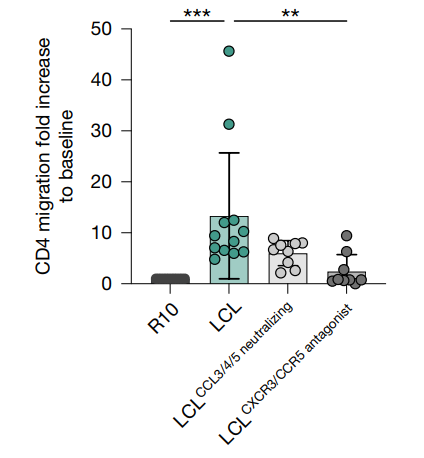
TAK-779 purchased from MedChemExpress. Usage Cited in: Nature. 2025 Oct;646(8083):171-179. [Abstract]
Transwell migration assays with supernatant from LCLs with CCL3, CCL4 and CCL5 neutralizing antibodies or a CXCR3 and CCR5 antagonist (TAK-779: 3 μM).
-
Immunity
Spatiotemporal dynamics of CXCL10 encode contextual immune information revealed by the genetically encoded fluorescent sensor. [Abstract]2025 Sep 9;58(9):2320-2335.e9. PMID: 40818452 -
Redox Biol
PP4 modulates macrophage-neutrophil crosstalk to restrict CCL5 -driven NETosis in sepsis. [Abstract]2026 Apr:91:104093. PMID: 41723906 -
Adv Sci (Weinh)
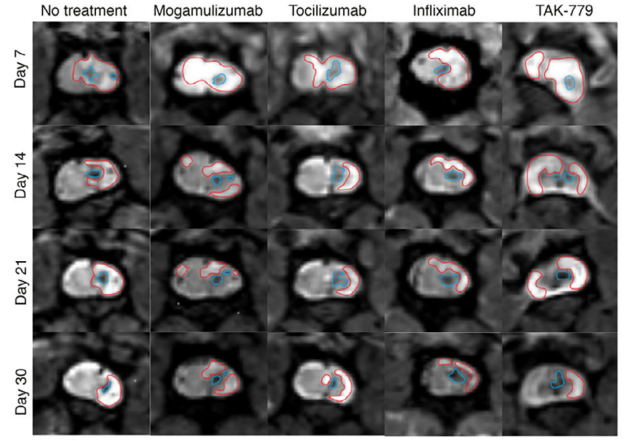
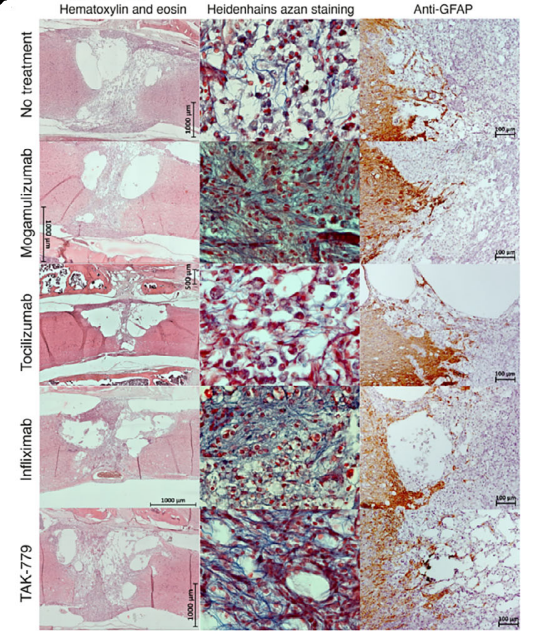
Repurposing of Chemokine Antagonists for Combined Phase-Resolved Spinal Cord Injury Treatment. [Abstract]2025 Oct 28:e16569. PMID: 41147460
TAK-779 purchased from MedChemExpress. Usage Cited in: Adv Sci (Weinh). 2025 Oct 28:e16569. [Abstract]
TAK-779 (2 mg/kg). Representative spinal cord MRI images of the injured segments in SD rats from the treated and untreated groups. High-signal and low-signal areas are indicated in red and blue, respectively.
TAK-779 purchased from MedChemExpress. Usage Cited in: Adv Sci (Weinh). 2025 Oct 28:e16569. [Abstract]
TAK-779 (2 mg/kg). Representative histological structures of spinal cord injury sites in SD rats treated with the specified therapy were assessed using hematoxylin-eosin staining, hedenhain staining, and anti-GFAP staining, and compared with untreated SD rats.
-
Sci Adv
Overcoming host restrictions to enable continuous passaging of GII.3 human norovirus in human intestinal enteroids. [Abstract]2026 Feb 6;12(6):eaeb0455. PMID: 41637508
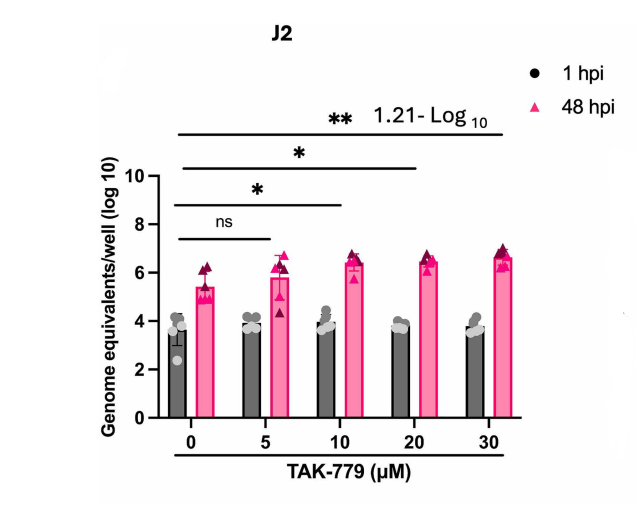
TAK-779 purchased from MedChemExpress. Usage Cited in: Sci Adv. 2026 Feb 6;12(6):eaeb0455. [Abstract]
HIEs were pretreated for 3 hours with the indicated concentrations of TAK-779 and then infected with GII.3 HuNoV (2.9 × 10⁵ GEs per well) in the absence or presence of the same concentrations of TAK-779. After washing, the cells were cultured for 48 hours at 37°C in the absence or presence of TAK-779. Viral GEs at 1 and 48 hours postinfection were quantified by RT-qPCR.
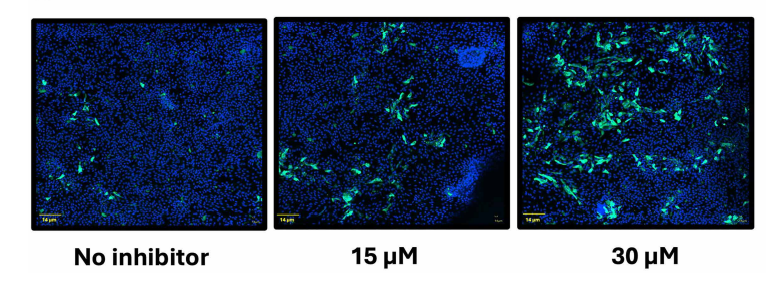
TAK-779 purchased from MedChemExpress. Usage Cited in: Sci Adv. 2026 Feb 6;12(6):eaeb0455. [Abstract]
TAK-779 (15/30 μM). Monolayers of cells were fixed with methanol at 24 and 48 hours post-infection. GII.3 positive cells (green) were detected using guinea pig anti-human norovirus VLP antibody (green), and cell nuclei were detected using DAPI (blue). Representative images of each group at 48 hours post-infection are shown.
-
Cell Death Dis
2025 May 30;16(1):424. PMID: 40447617 -
Front Pharmacol
CCR5/CXCR3 antagonist TAK-779 prevents diffuse alveolar damage of the lung in the murine model of the acute respiratory distress syndrome. [Abstract]2024 Feb 21:15:1351655. PMID: 38449806 -
J Cell Mol Med
HIF-1α is necessary for activation and tumour-promotion effect of cancer-associated fibroblasts in lung cancer. [Abstract]2021 Jun;25(12):5457-5469. PMID: 33943003 -
-
Front Biosci (Landmark Ed)
A Comparative Study of the Effects of Nine CXCR3 Antagonists on Macrophage Function and the Treatment of Acute Lung Injury. [Abstract]2025 Oct 31;30(10):45931. PMID: 41198562 -
-
bioRxiv
Glypican-1 upregulation elicited in response to a cell-impermeable kinase inhibitor and its overexpression enhance HIV-1 infection. [Abstract]2025 Oct 28:2025.10.28.685002. PMID: 41278678 -
bioRxiv
Overcoming host restrictions to enable continuous passaging of human noroviruses in human intestinal enteroids. [Abstract]2025 May 22:2025.05.22.655571. PMID: 40661516


Solvent & Solubility
DMSO : ≥ 25 mg/mL (47.07 mM; Hygroscopic DMSO has a significant impact on the solubility of product, please use newly opened DMSO)
H2O : 5 mg/mL (9.41 mM; ultrasonic and warming and heat to 60°C)
* "≥" means soluble, but saturation unknown.
Please refer to the solubility information to select the appropriate solvent. Once prepared, please aliquot and store the solution to prevent product inactivation from repeated freeze-thaw cycles.
Storage method and period of stock solution: -80°C, 2 years; -20°C, 1 year (sealed storage, away from moisture). When stored at -80°C, please use it within 2 years. When stored at -20°C, please use it within 1 year.
* Note: If you choose water as the stock solution, please dilute it to the working solution, then filter and sterilize it with a 0.22 μm filter before use.
Please refer to the solubility information to select the appropriate solvent. Once prepared, please aliquot and store the solution to prevent product inactivation from repeated freeze-thaw cycles.
Storage method and period of stock solution: -80°C, 2 years; -20°C, 1 year (sealed storage, away from moisture). When stored at -80°C, please use it within 2 years. When stored at -20°C, please use it within 1 year.
* Note: If you choose water as the stock solution, please dilute it to the working solution, then filter and sterilize it with a 0.22 μm filter before use.
Concentration (start) × Volume (start) = Concentration (final) × Volume (final)
Select the appropriate dissolution method based on your experimental animal and administration route.
- For the following dissolution methods, please ensure to first prepare a clear stock solution using an In Vitro approach and then sequentially add co-solvents:
- To ensure reliable experimental results, the clarified stock solution can be appropriately stored based on storage conditions. As for the working solution for In Vivo experiments, it is recommended to prepare freshly and use it on the same day.
- The percentages shown for the solvents indicate their volumetric ratio in the final prepared solution. If precipitation or phase separation occurs during preparation, heat and/or sonication can be used to aid dissolution.
Add each solvent one by one: 10% DMSO 40% PEG300 5% Tween-80 45% Saline
Solubility: ≥ 2.58 mg/mL (4.86 mM); Clear solution
This protocol yields a clear solution of ≥ 2.58 mg/mL (saturation unknown).
Taking 1 mL working solution as an example, add 100 μL DMSO stock solution (25.8 mg/mL) to 400 μL PEG300, and mix evenly; then add 50 μL Tween-80 and mix evenly; then add 450 μL Saline to adjust the volume to 1 mL.
Preparation of Saline: Dissolve 0.9 g sodium chloride in ddH₂O and dilute to 100 mL to obtain a clear Saline solution.
Add each solvent one by one: 10% DMSO 90% (20% SBE-β-CD in Saline)
Solubility: ≥ 2.58 mg/mL (4.86 mM); Clear solution
This protocol yields a clear solution of ≥ 2.58 mg/mL (saturation unknown).
Taking 1 mL working solution as an example, add 100 μL DMSO stock solution (25.8 mg/mL) to 900 μL 20% SBE-β-CD in Saline, and mix evenly.
Preparation of 20% SBE-β-CD in Saline (4°C, storage for one week): 2 g SBE-β-CD powder is dissolved in 10 mL Saline, completely dissolve until clear.
For the following dissolution methods, please prepare the working solution directly:
It is recommended to prepare fresh solutions and use them promptly within a short period of time.
The percentages shown for the solvents indicate their volumetric ratio in the final prepared solution. If precipitation or phase separation occurs during preparation, heat and/or sonication can be used to aid dissolution.
Add each solvent one by one: PBS
Solubility: 50 mg/mL (94.14 mM); Clear solution; Need ultrasonic
Please enter the basic information of animal experiments:
-
-
-
-
Recommended: Prepare an additional quantity of animals to account for potential losses during experiments.
Please enter your animal formula composition:
-
%DMSO +
Recommended: Keep the proportion of DMSO in working solution below 2% if your animal is weak.
-
%+
-
+%Tween-80 + +
-
%Saline +
The co-solvents required include: DMSO, . All of co-solvents are available by MedChemExpress (MCE). , Tween 80. All of co-solvents are available by MedChemExpress (MCE).
Working solution concentration: 0.22 mg/mL
Method for preparing stock solution: mg drug dissolved in μL DMSO. Stock solution concentration: mg/mL. * In solvent : -80°C, 2 years; -20°C, 1 year (sealed storage, away from moisture)
1. Take μL DMSO stock solution;
2. Add μL .
μL , mix evenly;
3. Then add μL Tween 80, mix evenly;
4. Then add μL
Please ensure that the stock solution in the first step is dissolved to a clear state, and add co-solvents in sequence. You can use ultrasonic heating (ultrasonic cleaner, recommended frequency 20-40 kHz), vortexing, etc. to assist dissolution.

Protocol
The anti-HIV-1 activities of the test compounds (TAK-779, etc.) are based on the inhibition of virus-induced infectious focus formation in MAGI-CCR5 cells and the reduction of p24 antigen production in PBMCs. In brief, MAGI-CCR5 cells (1 × 10⁴ cells per well) are cultured in a microtiter tray. After a 24-h incubation at 37°C, the culture supernatants are replaced with fresh culture media containing the virus (≈300 focus forming units per well) and various concentrations of the test compounds (TAK-779, etc.). After a 2-day incubation, the cells are fixed and stained with 5-bromo-4-chloro-3-indolyl-β-d-galactosidase. The number of infected (blue) cells is counted microscopically. For the PBMC assays, phytohemagglutinin-stimulated PBMCs (2.5 × 10⁵ cells per 500 μl) are infected with HIV-1 in the presence of various concentrations of the test compounds (TAK-779, etc.). The amounts of the virus used for infection are, depending on the replicability of each strain, generally 1-10 ng of p24 per 2.5 × 10⁵ cells. After an overnight incubation at 37°C, the cells are washed extensively to remove unadsorbed viral particles and are incubated further with culture media containing the same concentrations of the compounds as those used during viral adsorption. On day 6 after viral infection, the culture supernatants are collected and determined for their p24 antigen levels with a sandwich ELISA kit. The cytotoxicities of the compounds are evaluated in parallel with their antiviral activities. They are based on the viability and proliferation of mock-infected cells[1].
MedChemExpress (MCE) has not independently confirmed the accuracy of these methods. They are for reference only.
Mice[3]
The mice are immunized with MOG and are treated s.c. with TAK-779 or vehicle. The mice (N= 10) are injected s.c. with 150 µg TAK-779 (dissolved in 5% mannitol solution) in a volume of 100 µL, once daily after MOG immunization. TAK-779 injection is started from day 0 after immunization and continued once daily for 22 days. The dose of 150 µg is determined based on the observations in prior experiments that the dose of 50 µg per mouse can not produce inhibition, and a dose of more than 100 µg per mouse is required to produce significant inhibition. The dose of 150 µg per mouse has also been used in other mouse experimental models, and approximately the same dose is used in allograft rejection and asthma models. As a control, an equal volume of PBS containing 5% mannitol is injected daily in the control mice (N= 10)[3].
MedChemExpress (MCE) has not independently confirmed the accuracy of these methods. They are for reference only.


Purity & Documentation
-
Data Sheet (283 KB)
-
SDS (252 KB)
- English - EN (252 KB)
- Français - FR (252 KB)
- Deutsch - DE (252 KB)
- Norwegian - NO (252 KB)
- Español - ES (252 KB)
- Swedish - SV (252 KB)
- Italian - IT (252 KB)
- Korean - KR (252 KB)
- Portuguese - PT (252 KB)
-
Handling Instructions (2659 KB)
References
[1]. Baba M, et al. A small-molecule, nonpeptide CCR5 antagonist with highly potent and selective anti-HIV-1 activity. Proc Natl Acad Sci U S A. 1999 May 11;96(10):5698-703. [Content Brief]
[2]. Takama Y, et al. Effects of a calcineurin inhibitor, FK506, and a CCR5/CXCR3 antagonist, TAK-779, in a rat small intestinal transplantation model. Transpl Immunol. 2011 Jul;25(1):49-55. [Content Brief]
[3]. Ni J, et al. The chemokine receptor antagonist, TAK-779, decreased experimental autoimmune encephalomyelitis by reducing inflammatory cell migration into the central nervous system, without affecting T cell function. Br J Pharmacol. 2009 Dec;158(8):2046-56. [Content Brief]
[4]. Gao P, et al. The unique target specificity of a nonpeptide chemokine receptor antagonist: selective blockade of two Th1 chemokine receptors CCR5 and CXCR3. J Leukoc Biol. 2003 Feb;73(2):273-80. [Content Brief]


Complete Stock Solution Preparation Table
Please refer to the solubility information to select the appropriate solvent. Once prepared, please aliquot and store the solution to prevent product inactivation from repeated freeze-thaw cycles.
Storage method and period of stock solution: -80°C, 2 years; -20°C, 1 year (sealed storage, away from moisture). When stored at -80°C, please use it within 2 years. When stored at -20°C, please use it within 1 year.
| Optional Solvent | Concentration Solvent Mass | 1 mg | 5 mg | 10 mg | 25 mg |
|---|---|---|---|---|---|
| H2O / DMSO | 1 mM | 1.8828 mL | 9.4139 mL | 18.8278 mL | 47.0695 mL |
| 5 mM | 0.3766 mL | 1.8828 mL | 3.7656 mL | 9.4139 mL | |
| DMSO | 10 mM | 0.1883 mL | 0.9414 mL | 1.8828 mL | 4.7069 mL |
| 15 mM | 0.1255 mL | 0.6276 mL | 1.2552 mL | 3.1380 mL | |
| 20 mM | 0.0941 mL | 0.4707 mL | 0.9414 mL | 2.3535 mL | |
| 25 mM | 0.0753 mL | 0.3766 mL | 0.7531 mL | 1.8828 mL | |
| 30 mM | 0.0628 mL | 0.3138 mL | 0.6276 mL | 1.5690 mL | |
| 40 mM | 0.0471 mL | 0.2353 mL | 0.4707 mL | 1.1767 mL |
* Note: If you choose water as the stock solution, please dilute it to the working solution, then filter and sterilize it with a 0.22 μm filter before use.


TAK-779 Related Classifications
HY-13406 Related Classifications
 Powered by Bioz