



Tectoridin (Standard)

Based on 1 Customer Validation
Tectoridin (Standard) is the analytical standard of Tectoridin. This product is intended for research and analytical applications. Tectoridin is a isoflavone isolated from Maackia amurensis. Tectoridin is a phytoestrogen and activates estrogen and thyroid hormone receptors. Tectoridin exerts the estrogenic effects via ER-dependent genomic pathway and GPR30-dependent nongenomic pathway.
For research use only. We do not sell to patients.
- Purity : 99.56%
- CAS No.: 611-40-5
- Formula: C22H22O11
- Molecular Weight:462.40
-
Storage:
Please store the product under the recommended conditions in the Certificate of Analysis.


To place orders, for customer services and technical support, please contact: MedChemExpress USA
Tel: 609-228-6898 E-mail: [email protected] [email protected]


-
 Product Information
-
Chemical Information
- Purity & Documentation
-
 Help & FAQs


-
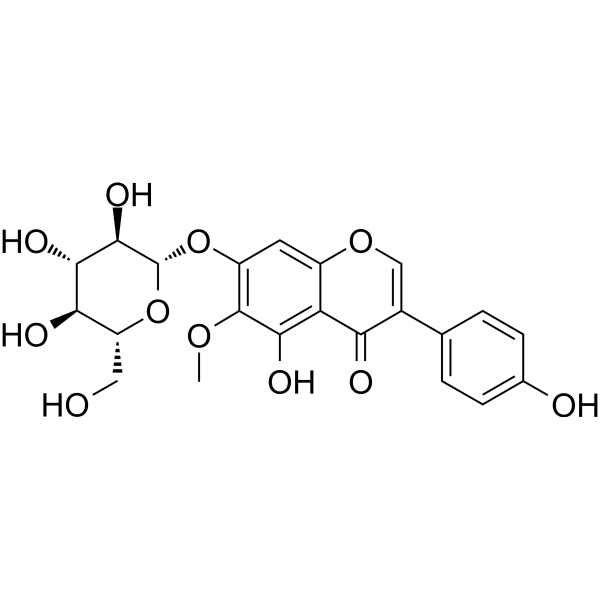
HY-N0791
TectoridinPhytoestrogen -
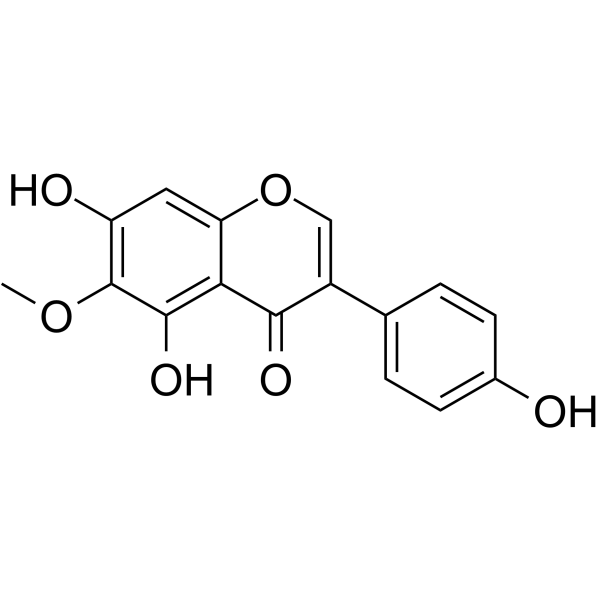
HY-N0792
TectorigeninPlant Isoflavonoid -
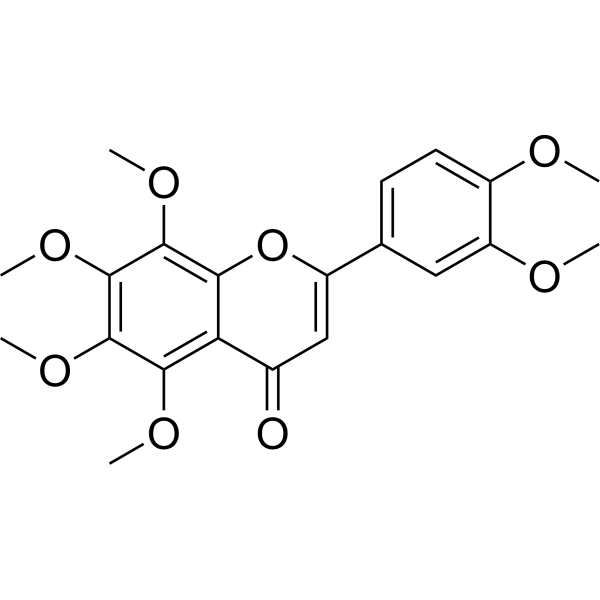
HY-N0155
NobiletinROR Agonist -

HY-N0792R
Tectorigenin (Standard)Plant Isoflavonoid -
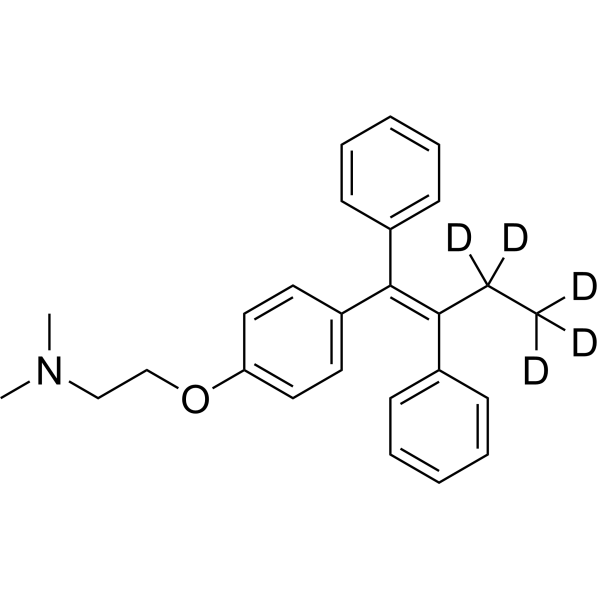
HY-13757AS
Tamoxifen-d5Stable Isotope -
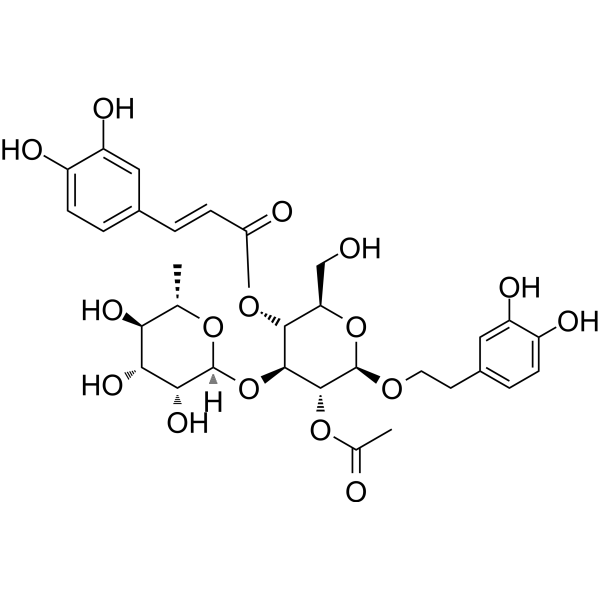
HY-N0026
2'-AcetylacteosideNatural Compound -

HY-W319094
4′-HydroxyflavoneAldose Reductase Inhibitors -

HY-N0155R
Nobiletin (Standard)ROR Agonist -

HY-N0026R
2'-Acetylacteoside (Standard)Natural Product


Product Information
Information
Application
The compound is the grade of analytical standard, which is the reference standard supplied assay. It is commonly used in qualitative, quantitative and methodological research experiments in HPLC, GC and MS.


Chemical Information
-
CAS No. 611-40-5
-
Appearance Solid
-
Molecular Weight 462.40
-
Formula C22H22O11
-
Color White to off-white
-
SMILES
O=C(C(C1=CC=C(O)C=C1)=COC2=CC(O[C@@H]([C@@H]([C@@H](O)[C@@H]3O)O)O[C@@H]3CO)=C4OC)C2=C4O
-
Structure Classification
-
Initial Source
-
Shipping
Room temperature in continental US; may vary elsewhere.
-
Storage
Please store the product under the recommended conditions in the Certificate of Analysis.


Purity & Documentation
-
SDS (252 KB)
- English - EN (252 KB)
- Français - FR (252 KB)
- Deutsch - DE (252 KB)
- Norwegian - NO (252 KB)
- Español - ES (252 KB)
- Swedish - SV (252 KB)
- Italian - IT (252 KB)
- Korean - KR (252 KB)
- Portuguese - PT (252 KB)
-
Handling Instructions (2659 KB)
References
[1]. Shim M, et al. Tectoridin from Maackia amurensis modulates both estrogen and thyroid receptors.Phytomedicine. 2014 Apr 15;21(5):602-6. [Content Brief]
[2]. Kang K, et al. Tectoridin, a poor ligand of estrogen receptor alpha, exerts its estrogenic effects via an ERK-dependent pathway.Mol Cells. 2009 Mar 31;27(3):351-7. [Content Brief]

Calculators
Concentration (start) × Volume (start) = Concentration (final) × Volume (final)


Tectoridin (Standard) Related Classifications
HY-N0791R Related Classifications
 Powered by Bioz