



Tetradecanenitrile
Tetradecanenitrile is a nitrogen-containing saturated long-chain aliphatic nitrile that can be found in Pseudomonas veronii R02. Tetradecanenitrile can be used for the research of multiresistant Staphylococcus aureus infection.
Nos produits utilisent uniquement pour la recherche. Nous ne vendons pas aux patients.
- CAS No.: 629-63-0
- Formule: C14H27N
- Masse moléculaire:209.38
-
Stockage:
Please store the product under the recommended conditions in the Certificate of Analysis.


To place orders, for customer services and technical support, please contact: MedChemExpress USA
Tel: 609-228-6898 E-mail: [email protected] [email protected]


-
 Activité biologique
-
Chemical Information
- Protocole
- Pureté et documentation
- Références
-
 Help & FAQs


-
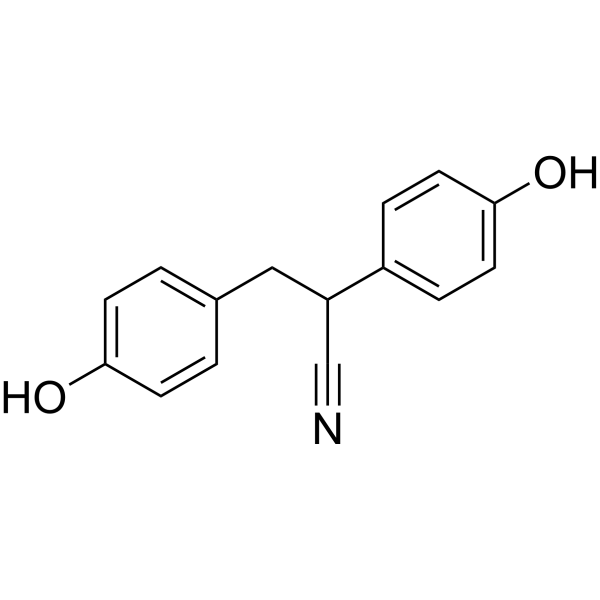
HY-12452
DPNERβ Agonist -
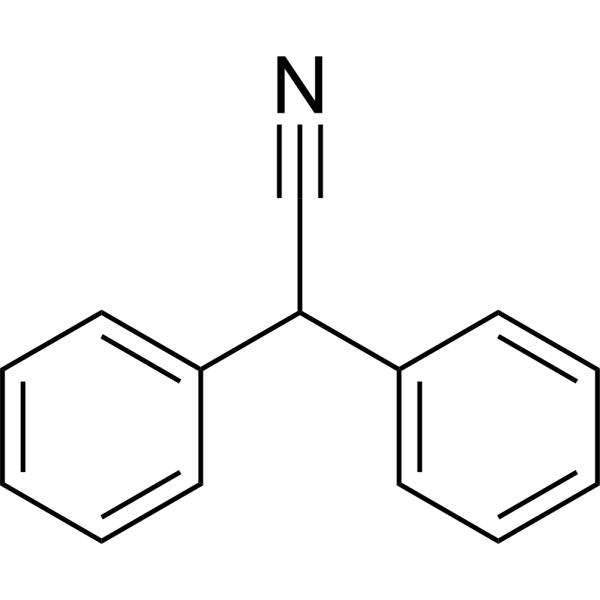
HY-W015052
DiphenylacetonitrileBiochemical Reagent -

HY-B1987
2,6-Dichlorobenzonitrile -

HY-79638
4-(2-Bromoacetyl)benzonitrile -
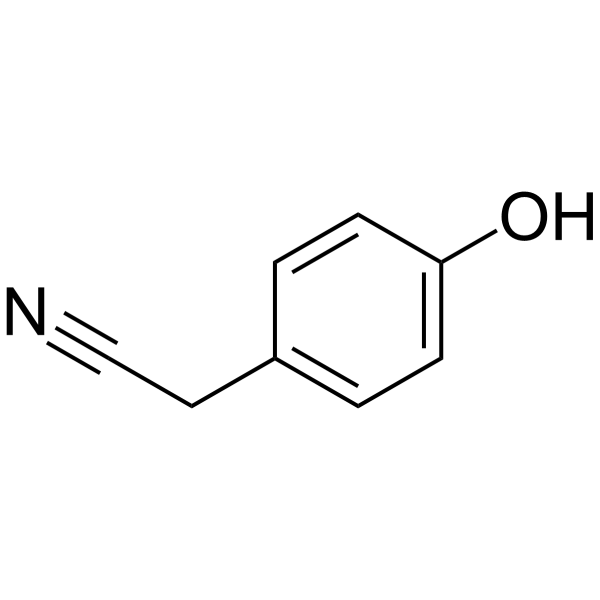
HY-W015823
4-Hydroxybenzyl cyanideAromatic Nitrile -
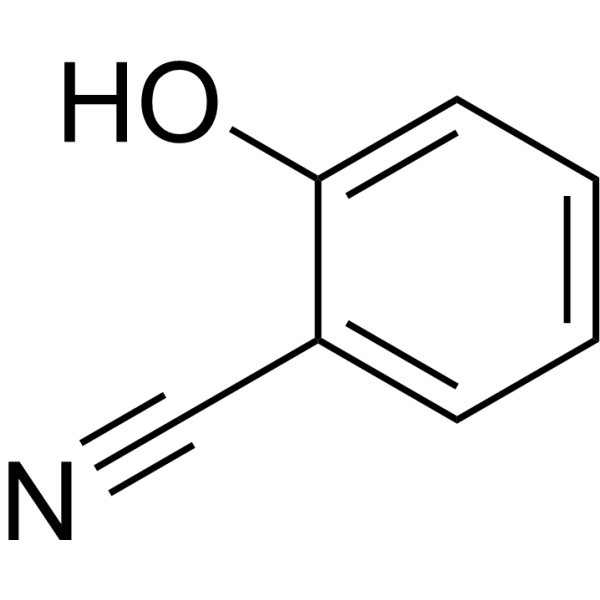
HY-W012869
2-HydroxybenzonitrileBiochemical Reagent -
![4'-Methyl-[1,1'-biphenyl]-2-carbonitrile (Standard)](https://file.medchemexpress.com/product_pic/hy-w015048r.gif)
HY-W015048R
4'-Methyl-[1,1'-biphenyl]-2-carbonitrile (Standard) -

HY-W012882
2-AminobenzonitrileDrug Intermediate -

HY-W017601
2-ChlorobenzonitrileAntimalarial Agent -

HY-W011418R
4-Bromo-2,2-diphenylbutyronitrile (Standard) -

HY-W102345
Ketoprofen impurity 8Drug Impurity
Voir tous les produits spécifiques à Isoform Endogenous Metabolite
More

Activité biologique
Description
IC50 & Target
[1]|
Microbial Metabolite |
In Vitro
Tetradecanenitrile is produced and emitted by Pseudomonas veronii R02 as a saturated C14 long-chain aliphatic nitrile volatile natural product[1].
MedChemExpress (MCE) has not independently confirmed the accuracy of these methods. They are for reference only.


Chemical Information
-
CAS No. 629-63-0
-
Masse moléculaire 209.38
-
Formule C14H27N
-
SMILES
N#CCCCCCCCCCCCCC
-
Initial Source
-
Livraison
Room temperature in continental US; may vary elsewhere.
-
Stockage
Please store the product under the recommended conditions in the Certificate of Analysis.


Pureté et documentation
Références

Calculators
Concentration (start) × Volume (start) = Concentration (final) × Volume (final)


Tetradecanenitrile Related Classifications
HY-135015 Related Classifications
 Powered by Bioz