



AZD1080
Based on 6 publication(s) in Google Scholar
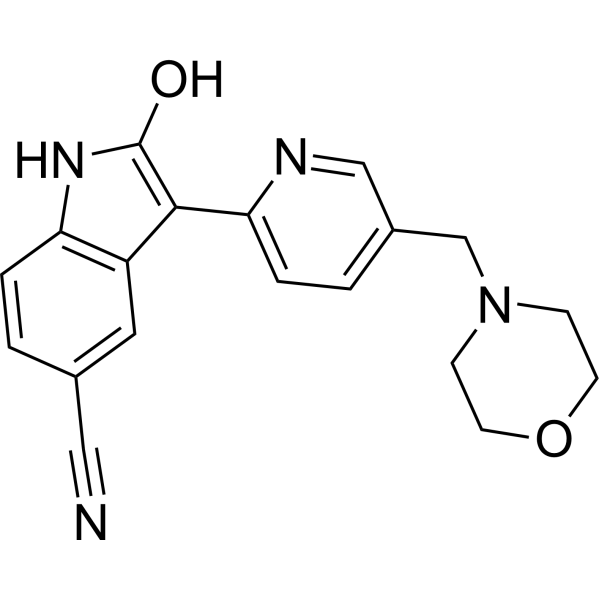
AZD1080 is a potent and selective GSK3 inhibitor. AZD1080 inhibits recombinant human GSK3α and GSK3β with pKi (IC50) of 8.2 (6.9 nM) and 7.5 (31 nM), respectively.
For research use only. We do not sell to patients.
- Purity : 99.16%
- CAS No.: 612487-72-6
- Formula: C19H18N4O2
- Molecular Weight:334.37
-
Storage:Powder -20°C, 3 years , 4°C, 2 years ; In solvent -80°C, 6 months , -20°C, 1 month

To place orders, for customer services and technical support, please contact: MedChemExpress USA
Tel: 609-228-6898 E-mail: [email protected] [email protected]


-
 Biological Activity
-
Chemical Information
-
Solvent & Solubility
- Purity & Documentation
- References
-
 Help & FAQs


-
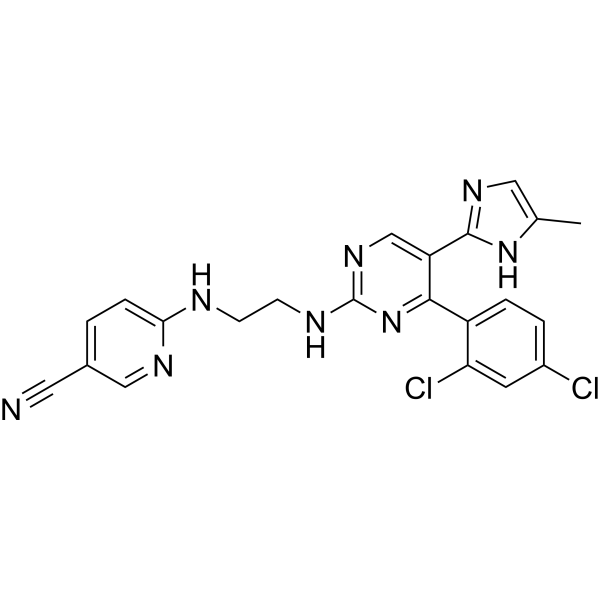
HY-10182
LaduviglusibGSK-3 Inhibitor -
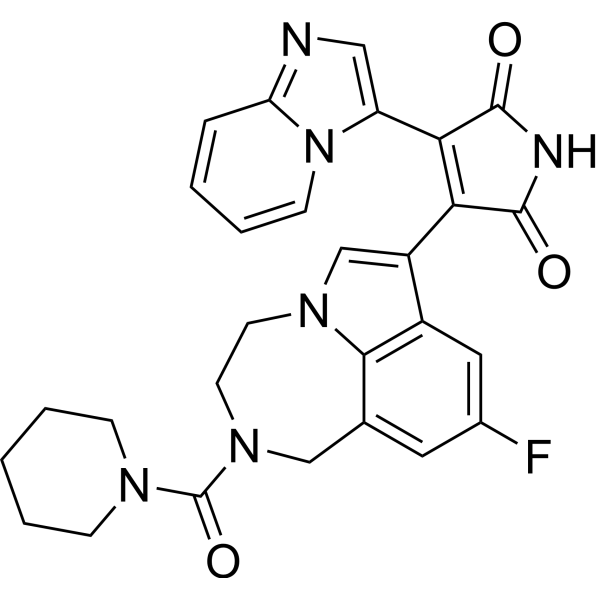
HY-16294
LY2090314GSK-3 Inhibitor -
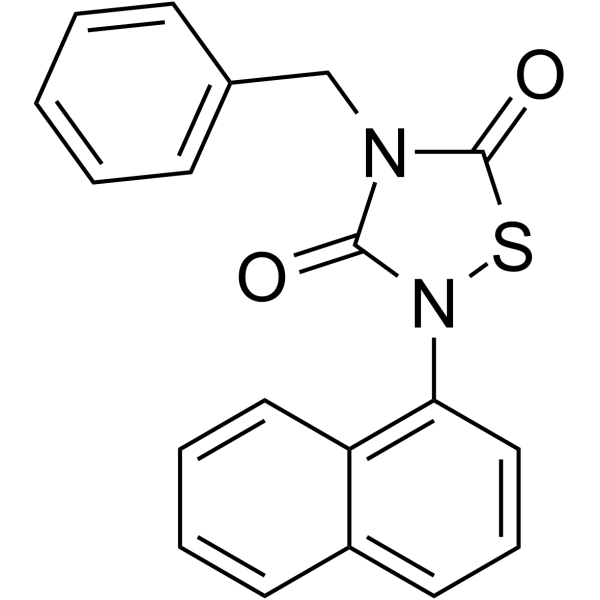
HY-14872
TideglusibGSK-3 Inhibitor -
HY-12012
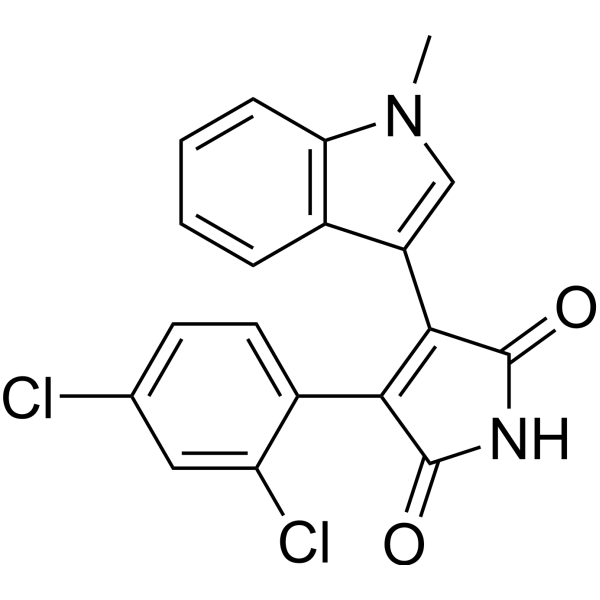
SB 216763Autophagy Inducer -
HY-13076
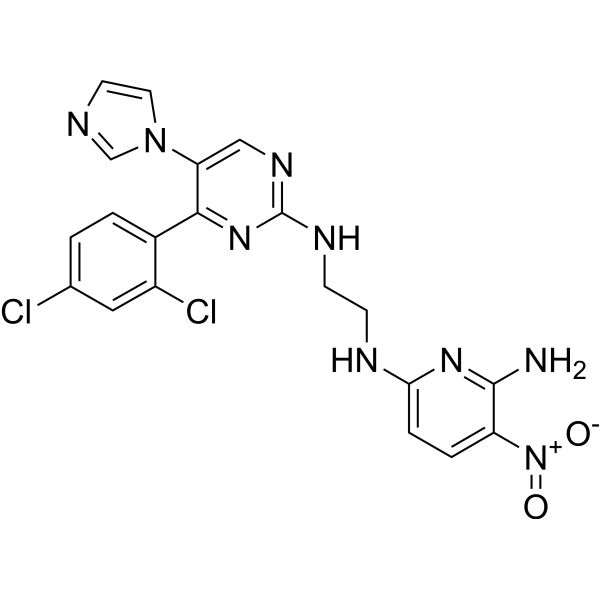
CHIR-98014GSK-3 Inhibitor -
HY-59090
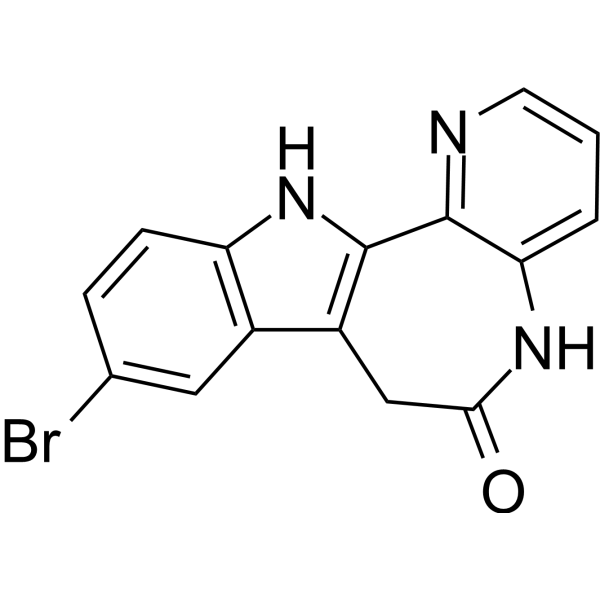
1-AzakenpaulloneGSK-3 Inhibitor -
HY-10590
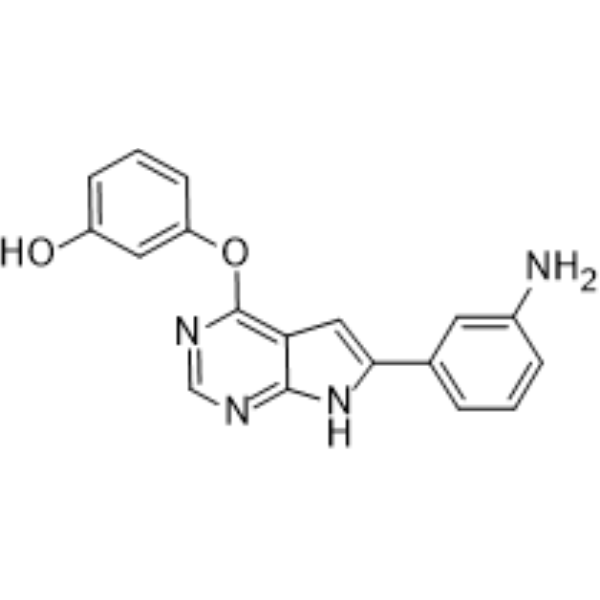
TWS119GSK-3β Inhibitor -
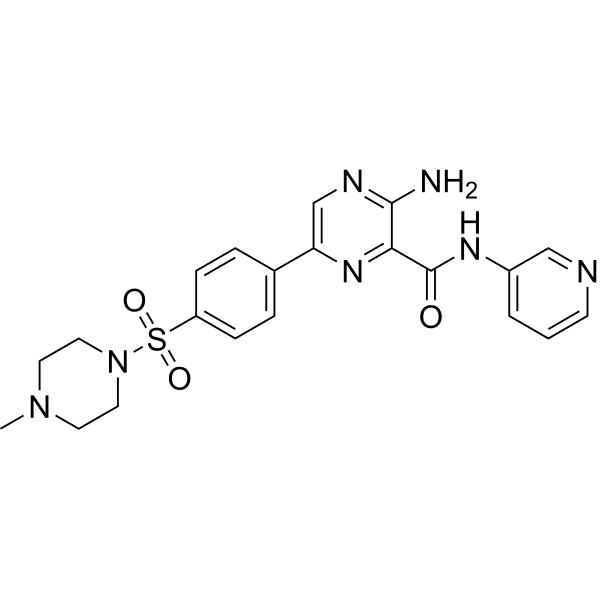
HY-15761
AZD2858GSK-3 Inhibitor -
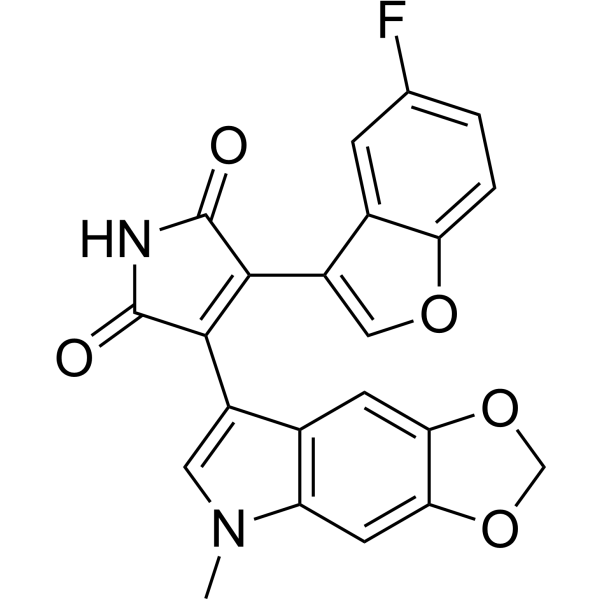
HY-113914
9-ING-41GSK-3β Inhibitor -
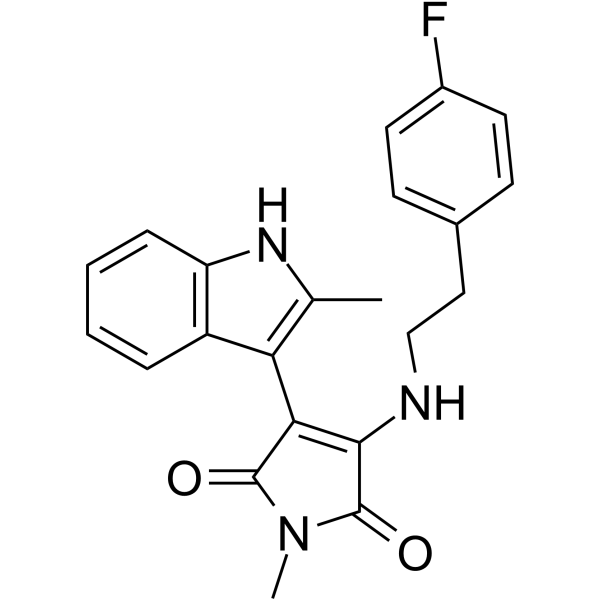
HY-12292
IM-12GSK-3β Inhibitor -
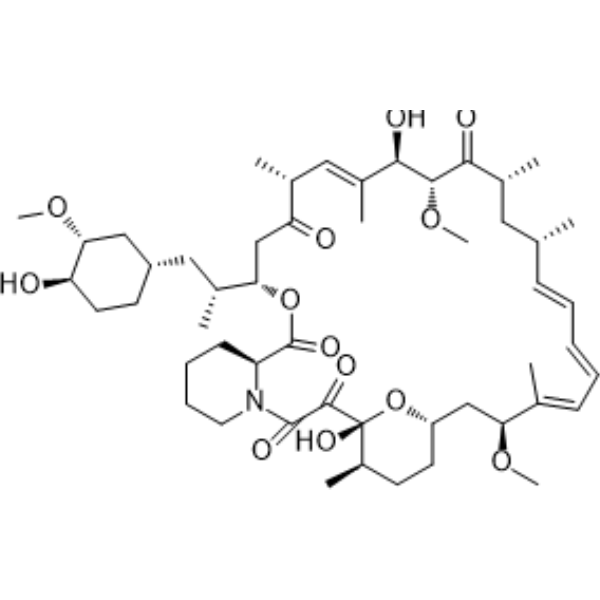
HY-10219
RapamycinmTOR Inhibitor -
HY-100207
CP21R7GSK-3β Inhibitor
Publications Citing Use of MedChemExpress (MCE) AZD1080
More

Biological Activity
Description
IC50 & Target
[1]|
GSK-3α 8.2 (pKi) |
GSK-3β 7.5 (pKi) |
cdk5 6.4 (pKi) |
cdk2 5.9 (pKi) |
cdk1 5.7 (pKi) |
In Vitro
AZD1080 shows selectivity against cdk2 (pKi=5.9; 1150 nM; 37-fold), cdk5 (pKi=6.4; 429 nM; 14-fold), cdk1 (pKi=5.7; 1980 nM; 64-fold) and Erk2 (pKi< 5; >10 μM; >323-fold). AZD1080 (at 10 μM) is also evaluated for pan-kinase selectivity and showed good overall selectivity versus 23 kinases, as well as against 65 different receptors, enzymes and ion channels in MDS Pharma screen (< 50% effect at 10 μM AZD1080). Concentration-dependent inhibition of tau phosphorylation is observed for AZD1080 (IC50=324 nM) and the non-selective reference GSK3 inhibitor LiCl (IC50=1.5 mM) indicating that AZD1080 is several orders of magnitude more potent than LiCl[1].
MedChemExpress (MCE) has not independently confirmed the accuracy of these methods. They are for reference only.
In Vivo
MedChemExpress (MCE) has not independently confirmed the accuracy of these methods. They are for reference only.


Chemical Information
-
CAS No. 612487-72-6
-
Appearance Solid
-
Molecular Weight 334.37
-
Formula C19H18N4O2
-
Color Light yellow to orange
-
SMILES
OC(N1)=C(C2=CC=C(CN3CCOCC3)C=N2)C4=C1C=CC(C#N)=C4
-
Shipping
Room temperature in continental US; may vary elsewhere.
-
Storage
Powder -20°C 3 years 4°C 2 years In solvent -80°C 6 months -20°C 1 month


Publications (6)
-
Journal Impact Factor
-
Most Recent
-
Sci Transl Med
PP2A inhibition is a druggable MEK inhibitor resistance mechanism in KRAS-mutant lung cancer cells. [Abstract]2018 Jul 18;10(450):eaaq1093. PMID: 30021885 -
Br J Cancer
Transcriptome analysis of newly established carboplatin-resistant ovarian cancer cell model reveals genes shared by drug resistance and drug-induced EMT. [Abstract]2023 Mar;128(7):1344-1359. PMID: 36717670 -
Biochem Biophys Res Commun
Evidence for investigating GSK-3 inhibitors as potential therapeutics for severe COVID-19. [Abstract]2022 May 21;605:171-176. PMID: 35367865 -
-
-


Solvent & Solubility
In Vitro:
DMSO : 50 mg/mL (149.53 mM; Need ultrasonic; Hygroscopic DMSO has a significant impact on the solubility of product, please use newly opened DMSO)
Please refer to the solubility information to select the appropriate solvent. Once prepared, please aliquot and store the solution to prevent product inactivation from repeated freeze-thaw cycles.
Storage method and period of stock solution: -80°C, 6 months; -20°C, 1 month. When stored at -80°C, please use it within 6 months. When stored at -20°C, please use it within 1 month.
Please refer to the solubility information to select the appropriate solvent. Once prepared, please aliquot and store the solution to prevent product inactivation from repeated freeze-thaw cycles.
Storage method and period of stock solution: -80°C, 6 months; -20°C, 1 month. When stored at -80°C, please use it within 6 months. When stored at -20°C, please use it within 1 month.
Concentration (start) × Volume (start) = Concentration (final) × Volume (final)
In Vivo:
Select the appropriate dissolution method based on your experimental animal and administration route.
- For the following dissolution methods, please ensure to first prepare a clear stock solution using an In Vitro approach and then sequentially add co-solvents:
- To ensure reliable experimental results, the clarified stock solution can be appropriately stored based on storage conditions. As for the working solution for In Vivo experiments, it is recommended to prepare freshly and use it on the same day.
- The percentages shown for the solvents indicate their volumetric ratio in the final prepared solution. If precipitation or phase separation occurs during preparation, heat and/or sonication can be used to aid dissolution.
Add each solvent one by one: 10% DMSO 40% PEG300 5% Tween-80 45% Saline
Solubility: ≥ 2.5 mg/mL (7.48 mM); Clear solution
This protocol yields a clear solution of ≥ 2.5 mg/mL (saturation unknown).
Taking 1 mL working solution as an example, add 100 μL DMSO stock solution (25.0 mg/mL) to 400 μL PEG300, and mix evenly; then add 50 μL Tween-80 and mix evenly; then add 450 μL Saline to adjust the volume to 1 mL.
Preparation of Saline: Dissolve 0.9 g sodium chloride in ddH₂O and dilute to 100 mL to obtain a clear Saline solution.
Add each solvent one by one: 10% DMSO 90% (20% SBE-β-CD in Saline)
Solubility: ≥ 2.5 mg/mL (7.48 mM); Clear solution
This protocol yields a clear solution of ≥ 2.5 mg/mL (saturation unknown).
Taking 1 mL working solution as an example, add 100 μL DMSO stock solution (25.0 mg/mL) to 900 μL 20% SBE-β-CD in Saline, and mix evenly.
Preparation of 20% SBE-β-CD in Saline (4°C, storage for one week): 2 g SBE-β-CD powder is dissolved in 10 mL Saline, completely dissolve until clear.
In Vivo Dissolution Calculator
Please enter the basic information of animal experiments:
-
-
-
-
Recommended: Prepare an additional quantity of animals to account for potential losses during experiments.
Please enter your animal formula composition:
-
%DMSO +
Recommended: Keep the proportion of DMSO in working solution below 2% if your animal is weak.
-
%+
-
+%Tween-80 + +
-
%Saline +
The co-solvents required include: DMSO, . All of co-solvents are available by MedChemExpress (MCE). , Tween 80. All of co-solvents are available by MedChemExpress (MCE).
Working solution concentration: 0.22 mg/mL
Method for preparing stock solution: mg drug dissolved in μL DMSO. Stock solution concentration: mg/mL.
1. Take μL DMSO stock solution;
2. Add μL .
μL , mix evenly;
3. Then add μL Tween 80, mix evenly;
4. Then add μL
Please ensure that the stock solution in the first step is dissolved to a clear state, and add co-solvents in sequence. You can use ultrasonic heating (ultrasonic cleaner, recommended frequency 20-40 kHz), vortexing, etc. to assist dissolution.


Purity & Documentation
-
Data Sheet (287 KB)
-
SDS (396 KB)
- English - EN (396 KB)
- Français - FR (396 KB)
- Deutsch - DE (396 KB)
- Norwegian - NO (396 KB)
- Español - ES (396 KB)
- Swedish - SV (396 KB)
- Italian - IT (396 KB)
- Korean - KR (396 KB)
- Portuguese - PT (396 KB)
-
Handling Instructions (2659 KB)
References


Complete Stock Solution Preparation Table
Please refer to the solubility information to select the appropriate solvent. Once prepared, please aliquot and store the solution to prevent product inactivation from repeated freeze-thaw cycles.
Storage method and period of stock solution: -80°C, 6 months; -20°C, 1 month. When stored at -80°C, please use it within 6 months. When stored at -20°C, please use it within 1 month.
| Optional Solvent | Concentration Solvent Mass | 1 mg | 5 mg | 10 mg | 25 mg |
|---|---|---|---|---|---|
| DMSO | 1 mM | 2.9907 mL | 14.9535 mL | 29.9070 mL | 74.7675 mL |
| 5 mM | 0.5981 mL | 2.9907 mL | 5.9814 mL | 14.9535 mL | |
| 10 mM | 0.2991 mL | 1.4953 mL | 2.9907 mL | 7.4767 mL | |
| 15 mM | 0.1994 mL | 0.9969 mL | 1.9938 mL | 4.9845 mL | |
| 20 mM | 0.1495 mL | 0.7477 mL | 1.4953 mL | 3.7384 mL | |
| 25 mM | 0.1196 mL | 0.5981 mL | 1.1963 mL | 2.9907 mL | |
| 30 mM | 0.0997 mL | 0.4984 mL | 0.9969 mL | 2.4922 mL | |
| 40 mM | 0.0748 mL | 0.3738 mL | 0.7477 mL | 1.8692 mL | |
| 50 mM | 0.0598 mL | 0.2991 mL | 0.5981 mL | 1.4953 mL | |
| 60 mM | 0.0498 mL | 0.2492 mL | 0.4984 mL | 1.2461 mL | |
| 80 mM | 0.0374 mL | 0.1869 mL | 0.3738 mL | 0.9346 mL | |
| 100 mM | 0.0299 mL | 0.1495 mL | 0.2991 mL | 0.7477 mL |


AZD1080 Related Classifications
HY-13862 Related Classifications
 Powered by Bioz