



Antimalarial agent 8
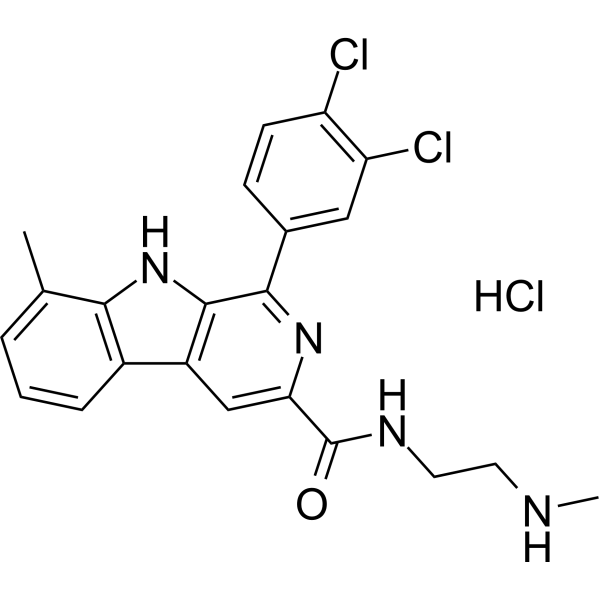
Antimalarial agent 8 (Compound 7e) is a novel orally active class of antimalarials. Antimalarial agent 8 is potent in vitro against P. falciparum and is orally efficacious (40 mg/kg) in an in vivo mouse model of malaria.
For research use only. We do not sell to patients.
- CAS No.: 2715222-97-0
- Formula: C22H21Cl3N4O
- Molecular Weight:463.79
-
Storage:
Please store the product under the recommended conditions in the Certificate of Analysis.

To place orders, for customer services and technical support, please contact: MedChemExpress USA
Tel: 609-228-6898 E-mail: [email protected] [email protected]


-
 Biological Activity
-
Chemical Information
- Protocols
- Purity & Documentation
- References
-
 Help & FAQs


All Parasite Isoforms
More

Biological Activity
Description
IC50 & Target
|
Plasmodium |
Cellular Effect
|
Cell Line

|
Type | Value | Description | References |
|---|---|---|---|---|
| HEK293 | CC50 |
32 μM
Compound: 7e.HCl
|
Cytotoxicity against human HEK293 cells by resazurin based cell viability assay
Cytotoxicity against human HEK293 cells by resazurin based cell viability assay
|
[PMID: 35300096] |
| Hepatocyte | CC50 |
8500 nM
Compound: 7e.HCl
|
Cytotoxicity against human hepatocytes measured after 96 hrs by DAPI staining based fluroscence assay
Cytotoxicity against human hepatocytes measured after 96 hrs by DAPI staining based fluroscence assay
|
[PMID: 35300096] |


Chemical Information
-
CAS No. 2715222-97-0
-
Molecular Weight 463.79
-
Formula C22H21Cl3N4O
-
SMILES
O=C(C1=CC2=C(NC3=C2C=CC=C3C)C(C4=CC(Cl)=C(Cl)C=C4)=N1)NCCNC.Cl
-
Shipping
Room temperature in continental US; may vary elsewhere.
-
Storage
Please store the product under the recommended conditions in the Certificate of Analysis.


Purity & Documentation
References

Calculators
Concentration (start) × Volume (start) = Concentration (final) × Volume (final)


Antimalarial agent 8 Related Classifications
HY-145704 Related Classifications
 Powered by Bioz