



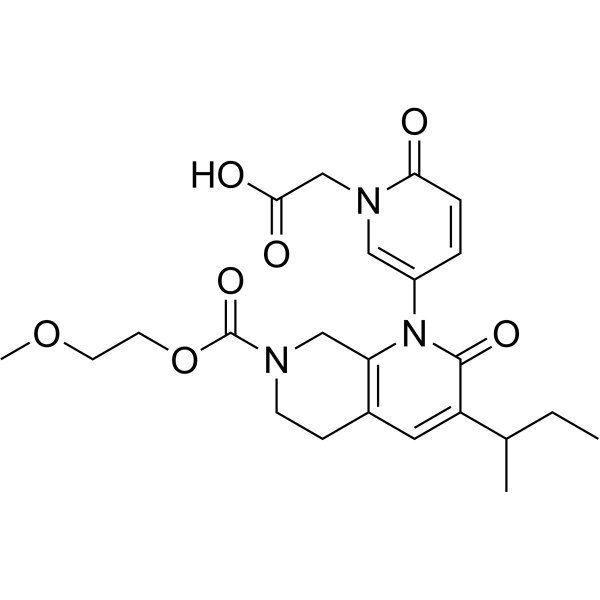
KDRLKZ-1
KDRLKZ-1 (8SGE) is a small-molecule ligand of KLHDC2 E3 ligase (Kd = 0.36 μM), with an IC50 of 0.21 μM and 0.31 μM in alphaLISA and TR-FRET assays, respectively. KDRLKZ-1 binds to the substrate-binding pocket of the KLHDC2 kelch domain, mimics the interaction of natural substrates and displaces them. KDRLKZ-1 acts as an oligomer disruptor, regulates the oligomerization of the KLHDC2-EloB-EloC complex, and induces the dissociation of tetramers into smaller components. KDRLKZ-1 can be used in scaffold ligand research for PROTAC degraders targeting KLHDC2.
For research use only. We do not sell to patients.
- Formula: C23H29N3O7
- Molecular Weight:459.49
-
Storage:
Please store the product under the recommended conditions in the Certificate of Analysis.

To place orders, for customer services and technical support, please contact: MedChemExpress USA
Tel: 609-228-6898 E-mail: [email protected] [email protected]


-
 Biological Activity
-
Chemical Information
- Protocols
- Purity & Documentation
- References
-
 Help & FAQs




Biological Activity
Description
IC50 & Target
[1]|
KLHDC2 0.36 μM (Kd) |
In Vitro
KDRLKZ-1 binds to the purified KLHDC2 kelch domain, with a Kd value of 0.36 µM, a 1:1 binding mode, and a half-life of 76 seconds[1].
KDRLKZ-1 (15 min) can specifically displace the SelK peptide substrate from the purified KLHDC2 kelch domain, with an IC50 of 0.21 µM, and shows no activity against VHL[1].
KDRLKZ-1 (80 min) displaces the SelK peptide substrate from the purified KLHDC2 kelch domain in TR-FRET assays, with an IC50 of 0.31 µM[1].
Excessive KDRLKZ-1 competes with the natural USP1 peptide substrate for binding to the purified full-length KLHDC2-EloB-EloC complex, thereby inhibiting the ubiquitination modification of USP1[1].
KDRLKZ-1 induces the dissociation of purified full-length KLHDC2-EloB-EloC tetramers into smaller oligomers[1].
Excessive KDRLKZ-1 competitively inhibits the interaction between endogenous KLHDC2 and biotin-conjugated KLHDC2 ligand in HEK293 cell extracts[1].
MedChemExpress (MCE) has not independently confirmed the accuracy of these methods. They are for reference only. Further protocols information, click here.


Chemical Information
-
Molecular Weight 459.49
-
Formula C23H29N3O7
-
SMILES
O=C(O)CN1C=C(N2C(C(CC(C)C)=CC3=C2CN(C(OCCOC)=O)CC3)=O)C=CC1=O
-
Synonyms
8SGE
-
Shipping
Room temperature in continental US; may vary elsewhere.
-
Storage
Please store the product under the recommended conditions in the Certificate of Analysis.

Protocols
-
Cell Cytotoxicity Assay
Cytotoxicity assays are usually based on the assessment of cell membrane damage, which can also be indirectly detected by measuring cell viability. Detection methods include MTT assay, CKK-8 assay, LDH assay and ATP assay, etc.


Purity & Documentation
References

Calculators
Concentration (start) × Volume (start) = Concentration (final) × Volume (final)


KDRLKZ-1 Related Classifications
HY-157558 Related Classifications
 Powered by Bioz