



Propantheline bromide

Based on 1 Customer Validation
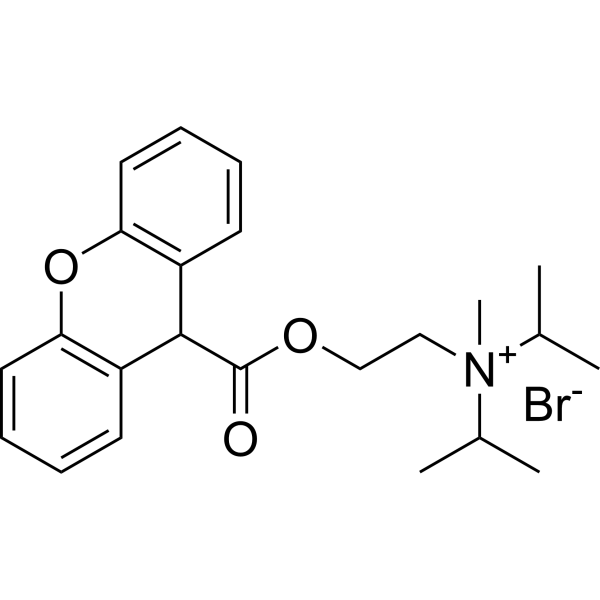
Propantheline bromide is an orally active mAChR antagonist. Propantheline bromide can be used in the research of smooth muscle dysfunction, excessive sweating, cramps or spasms of the stomach, intestines or bladder, and involuntary urination. Propantheline bromide can hardly cross the blood-brain barrier.
For research use only. We do not sell to patients.
- Purity : 97.38%
- CAS No.: 50-34-0
- Formula: C23H30BrNO3
- Molecular Weight:448.39
-
Storage:
4°C, sealed storage, away from moisture
* In solvent : -80°C, 6 months; -20°C, 1 month (sealed storage, away from moisture)

To place orders, for customer services and technical support, please contact: MedChemExpress USA
Tel: 609-228-6898 E-mail: [email protected] [email protected]


-
 Biological Activity
-
Chemical Information
-
Solvent & Solubility
- Purity & Documentation
- References
-
 Help & FAQs


-
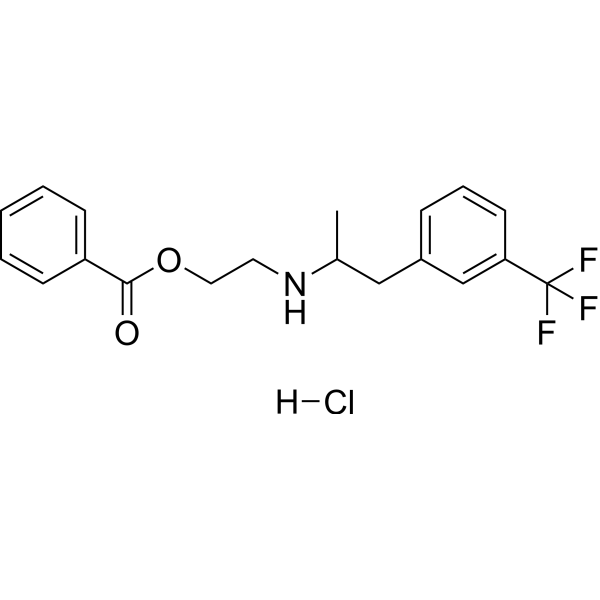
HY-B1058
Benfluorex hydrochlorideHNF4α Activator -
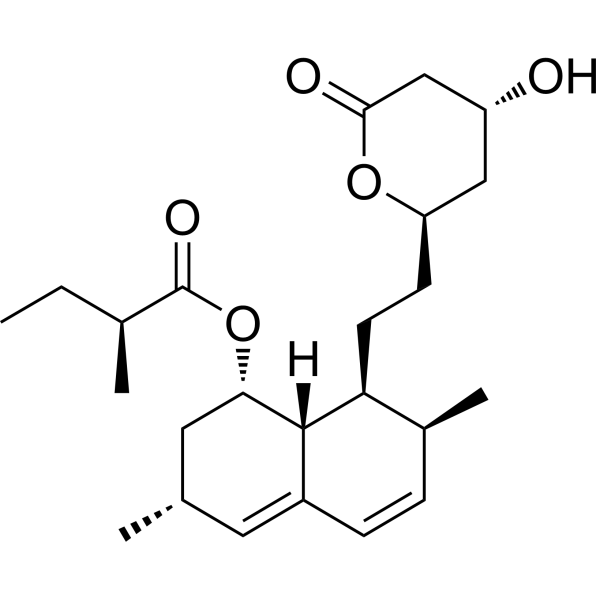
HY-N0504
LovastatinHMG-CoA Inhibitor -
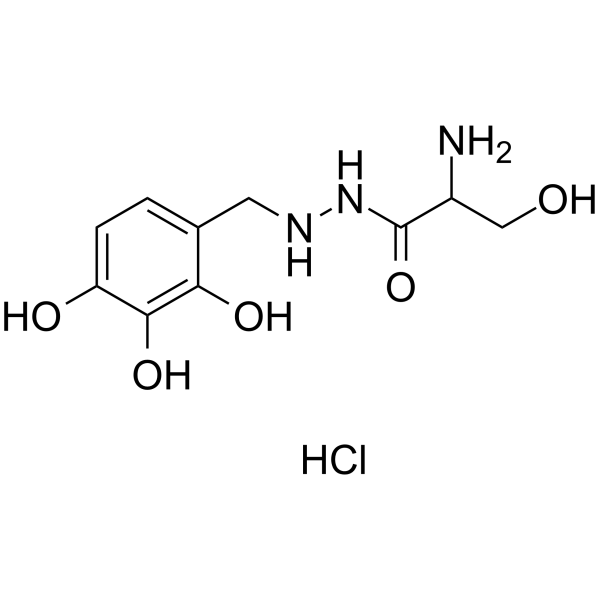
HY-B0404A
Benserazide hydrochlorideAADC/PKM2 Inhibitor -
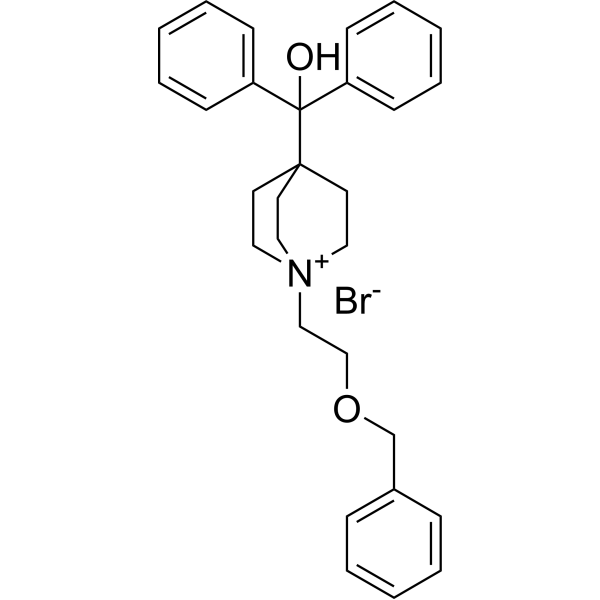
HY-12100
Umeclidinium bromidemAChR Antagonist -

HY-B1188R
Propantheline bromide (Standard)mAChR Antagonist -
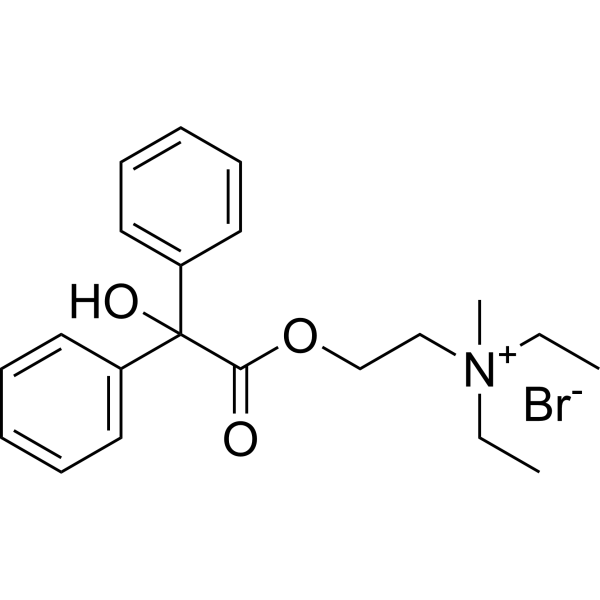
HY-B2070
Methylbenactyzium BromidemAChR Inhibitor


Biological Activity
Description
IC50 & Target
mAChR[1]
In Vitro
Propantheline bromide (10 μM-1 mM) decreases urinary bladder smooth muscle reactivity to Acetylcholine[1].
MedChemExpress (MCE) has not independently confirmed the accuracy of these methods. They are for reference only. .
In Vivo
Propantheline bromide, when administered alone, has no central activity (does not affect memory impairment in mice with cerebral ischemia) and has no effect on AChE activity in the brain[4].
Therefore, propantheline bromide can be used in combination with cholinesterase inhibitors to suppress the peripheral side effects (such as gastrointestinal reactions) of this series of inhibitors without affecting their central regulatory activity (such as improving cognitive and memory impairment)[4].
MedChemExpress (MCE) has not independently confirmed the accuracy of these methods. They are for reference only.
-
Animal Model:Restraint stress-induced bowel dysfunction models in rats[3]
-
Dosage:10-300 mg/kg
-
Administration:Oral administration
-
Result:Decreased the fecal pellet count with ED50 values of 41 mg/kg.
Dose-dependently decreased the incidences of diarrhea with ED50 values of 64 mg/kg.
Clinical Trial
| NCT Number | Sponsor | Condition | Start Date |
Phase

|
|---|---|---|---|---|
| NCT01329991 | Plexxikon| | 2011-05 | PHASE1 |


Chemical Information
-
CAS No. 50-34-0
-
Appearance Solid
-
Molecular Weight 448.39
-
Formula C23H30BrNO3
-
Color White to off-white
-
SMILES
CC([N+](C(C)C)(C)CCOC(C1C2=C(OC3=C1C=CC=C3)C=CC=C2)=O)C.[Br-]
-
Shipping
Room temperature in continental US; may vary elsewhere.
-
Storage
4°C, sealed storage, away from moisture
* In solvent : -80°C, 6 months; -20°C, 1 month (sealed storage, away from moisture)


Solvent & Solubility
In Vitro:
DMSO : ≥ 100 mg/mL (223.02 mM; Hygroscopic DMSO has a significant impact on the solubility of product, please use newly opened DMSO)
H2O : 50 mg/mL (111.51 mM; Need ultrasonic)
* "≥" means soluble, but saturation unknown.
Please refer to the solubility information to select the appropriate solvent. Once prepared, please aliquot and store the solution to prevent product inactivation from repeated freeze-thaw cycles.
Storage method and period of stock solution: -80°C, 6 months; -20°C, 1 month (sealed storage, away from moisture). When stored at -80°C, please use it within 6 months. When stored at -20°C, please use it within 1 month.
* Note: If you choose water as the stock solution, please dilute it to the working solution, then filter and sterilize it with a 0.22 μm filter before use.
Please refer to the solubility information to select the appropriate solvent. Once prepared, please aliquot and store the solution to prevent product inactivation from repeated freeze-thaw cycles.
Storage method and period of stock solution: -80°C, 6 months; -20°C, 1 month (sealed storage, away from moisture). When stored at -80°C, please use it within 6 months. When stored at -20°C, please use it within 1 month.
* Note: If you choose water as the stock solution, please dilute it to the working solution, then filter and sterilize it with a 0.22 μm filter before use.
Concentration (start) × Volume (start) = Concentration (final) × Volume (final)
In Vivo:
Select the appropriate dissolution method based on your experimental animal and administration route.
- For the following dissolution methods, please ensure to first prepare a clear stock solution using an In Vitro approach and then sequentially add co-solvents:
- To ensure reliable experimental results, the clarified stock solution can be appropriately stored based on storage conditions. As for the working solution for In Vivo experiments, it is recommended to prepare freshly and use it on the same day.
- The percentages shown for the solvents indicate their volumetric ratio in the final prepared solution. If precipitation or phase separation occurs during preparation, heat and/or sonication can be used to aid dissolution.
Add each solvent one by one: 10% DMSO 40% PEG300 5% Tween-80 45% Saline
Solubility: ≥ 2.5 mg/mL (5.58 mM); Clear solution
This protocol yields a clear solution of ≥ 2.5 mg/mL (saturation unknown).
Taking 1 mL working solution as an example, add 100 μL DMSO stock solution (25.0 mg/mL) to 400 μL PEG300, and mix evenly; then add 50 μL Tween-80 and mix evenly; then add 450 μL Saline to adjust the volume to 1 mL.
Preparation of Saline: Dissolve 0.9 g sodium chloride in ddH₂O and dilute to 100 mL to obtain a clear Saline solution.
Add each solvent one by one: 10% DMSO 90% (20% SBE-β-CD in Saline)
Solubility: ≥ 2.5 mg/mL (5.58 mM); Clear solution
This protocol yields a clear solution of ≥ 2.5 mg/mL (saturation unknown).
Taking 1 mL working solution as an example, add 100 μL DMSO stock solution (25.0 mg/mL) to 900 μL 20% SBE-β-CD in Saline, and mix evenly.
Preparation of 20% SBE-β-CD in Saline (4°C, storage for one week): 2 g SBE-β-CD powder is dissolved in 10 mL Saline, completely dissolve until clear.
For the following dissolution methods, please prepare the working solution directly:
It is recommended to prepare fresh solutions and use them promptly within a short period of time.
The percentages shown for the solvents indicate their volumetric ratio in the final prepared solution. If precipitation or phase separation occurs during preparation, heat and/or sonication can be used to aid dissolution.
Add each solvent one by one: PBS
Solubility: 130 mg/mL (289.93 mM); Clear solution; Need ultrasonic
In Vivo Dissolution Calculator
Please enter the basic information of animal experiments:
-
-
-
-
Recommended: Prepare an additional quantity of animals to account for potential losses during experiments.
Working solution concentration: 0.22 mg/mL
This product has good water solubility, please refer to the measured solubility data in water/PBS/Saline for details.


Purity & Documentation
-
Data Sheet (275 KB)
-
SDS (392 KB)
- English - EN (392 KB)
- Français - FR (392 KB)
- Deutsch - DE (392 KB)
- Norwegian - NO (392 KB)
- Español - ES (392 KB)
- Swedish - SV (392 KB)
- Italian - IT (392 KB)
- Korean - KR (392 KB)
- Portuguese - PT (392 KB)
-
Handling Instructions (2659 KB)
References
[1]. J Mokry, et al. Propantheline and in vitro reactivity of urinary bladder smooth muscle in guinea pigs. Bratisl Lek Listy. 2005;106(4-5):151-4. [Content Brief]
[3]. S Kobayashi, et al. Effects of YM905, a novel muscarinic M3-receptor antagonist, on experimental models of bowel dysfunction in vivo. Jpn J Pharmacol. 2001 Jul;86(3):281-8. [Content Brief]


Complete Stock Solution Preparation Table
Please refer to the solubility information to select the appropriate solvent. Once prepared, please aliquot and store the solution to prevent product inactivation from repeated freeze-thaw cycles.
Storage method and period of stock solution: -80°C, 6 months; -20°C, 1 month (sealed storage, away from moisture). When stored at -80°C, please use it within 6 months. When stored at -20°C, please use it within 1 month.
| Optional Solvent | Concentration Solvent Mass | 1 mg | 5 mg | 10 mg | 25 mg |
|---|---|---|---|---|---|
| H2O / DMSO | 1 mM | 2.2302 mL | 11.1510 mL | 22.3020 mL | 55.7550 mL |
| 5 mM | 0.4460 mL | 2.2302 mL | 4.4604 mL | 11.1510 mL | |
| 10 mM | 0.2230 mL | 1.1151 mL | 2.2302 mL | 5.5755 mL | |
| 15 mM | 0.1487 mL | 0.7434 mL | 1.4868 mL | 3.7170 mL | |
| 20 mM | 0.1115 mL | 0.5576 mL | 1.1151 mL | 2.7878 mL | |
| 25 mM | 0.0892 mL | 0.4460 mL | 0.8921 mL | 2.2302 mL | |
| 30 mM | 0.0743 mL | 0.3717 mL | 0.7434 mL | 1.8585 mL | |
| 40 mM | 0.0558 mL | 0.2788 mL | 0.5576 mL | 1.3939 mL | |
| 50 mM | 0.0446 mL | 0.2230 mL | 0.4460 mL | 1.1151 mL | |
| 60 mM | 0.0372 mL | 0.1859 mL | 0.3717 mL | 0.9293 mL | |
| 80 mM | 0.0279 mL | 0.1394 mL | 0.2788 mL | 0.6969 mL | |
| 100 mM | 0.0223 mL | 0.1115 mL | 0.2230 mL | 0.5576 mL |
* Note: If you choose water as the stock solution, please dilute it to the working solution, then filter and sterilize it with a 0.22 μm filter before use.


Propantheline bromide Related Classifications
HY-B1188 Related Classifications
 Powered by Bioz