



Dihydromyricetin
Based on 26 publication(s) in Google Scholar
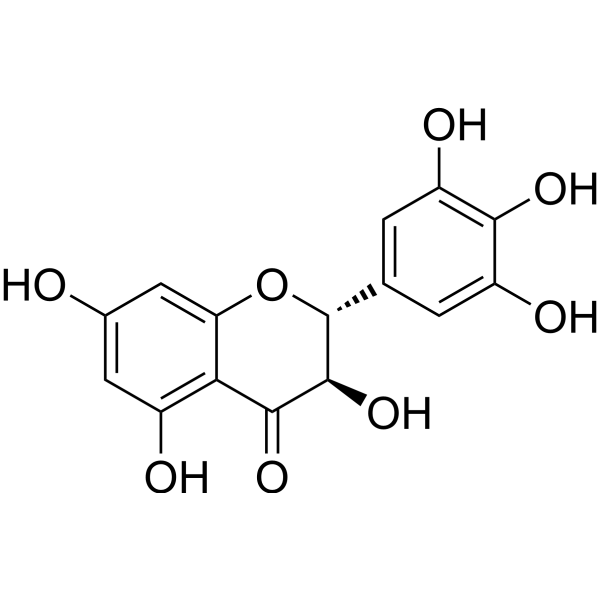
Dihydromyricetin is a potent inhibitor with an IC50 of 48 μM on dihydropyrimidinase. Dihydromyricetin can activate autophagy through inhibiting mTOR signaling. Dihydromyricetin suppresses the formation of mTOR complexes (mTORC1/2). Dihydromyricetin is also a potent influenza RNA-dependent RNA polymerase inhibitor with an IC50 of 22 μM.
For research use only. We do not sell to patients.
- Purity : 99.73%
- CAS No.: 27200-12-0
- Formula: C15H12O8
- Molecular Weight:320.25
-
Storage:Powder -20°C, 3 years , 4°C, 2 years ; In solvent -80°C, 1 year , -20°C, 6 months

To place orders, for customer services and technical support, please contact: MedChemExpress USA
Tel: 609-228-6898 E-mail: [email protected] [email protected]


-
 Biological Activity
-
Chemical Information
-
Solvent & Solubility
- Protocols
- Purity & Documentation
- References
-
 Help & FAQs


-
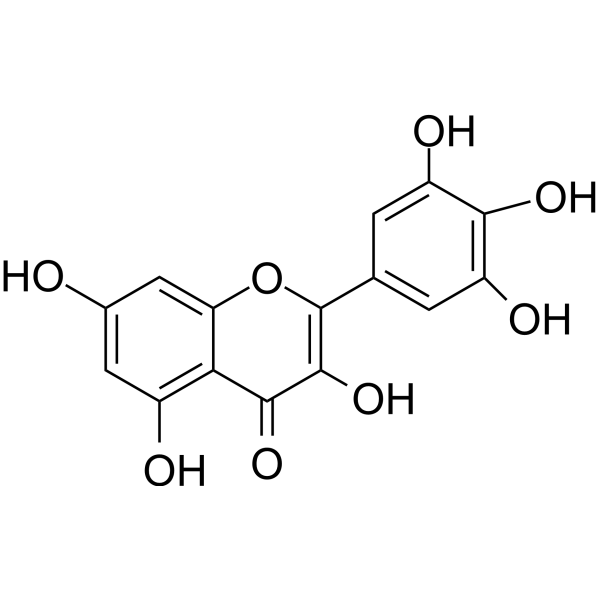
HY-15097
MyricetinAutophagy Inducer -
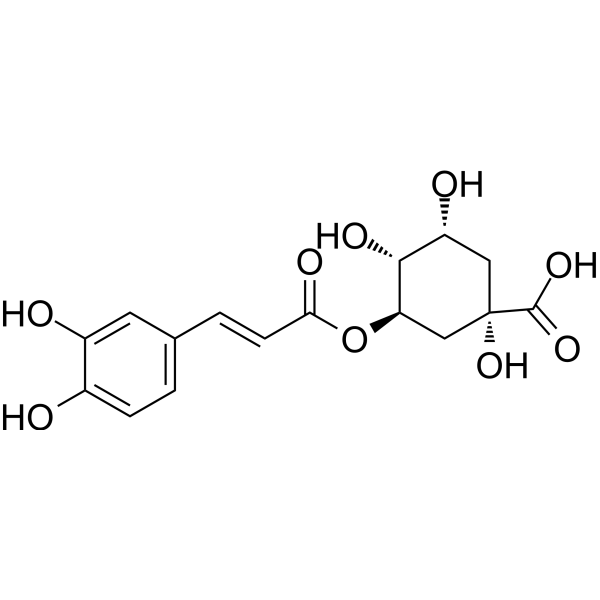
HY-N0055
Chlorogenic acidAntioxidant -
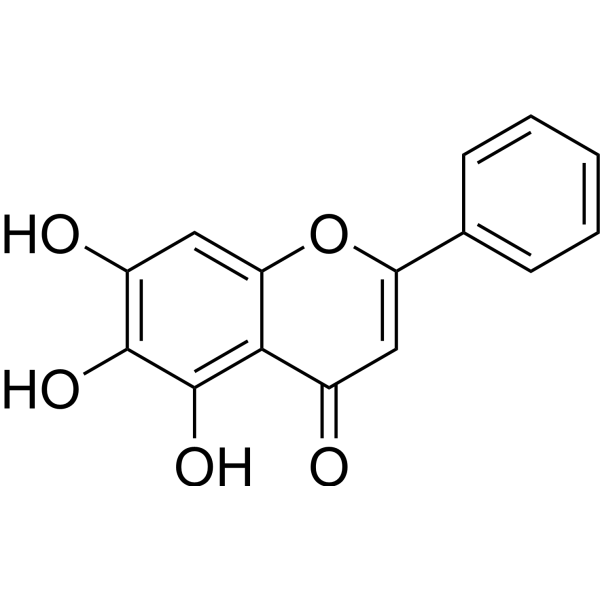
HY-N0196
BaicaleinXanthine Oxidase Inhibitor -
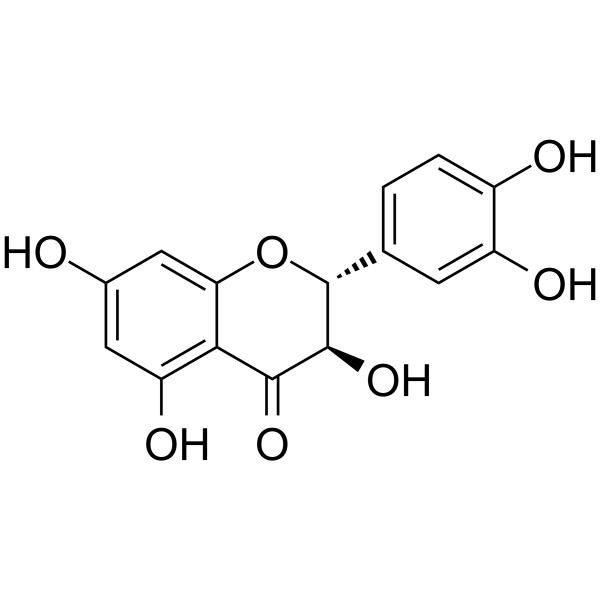
HY-N0136
TaxifolinAntifibrotic Agent -
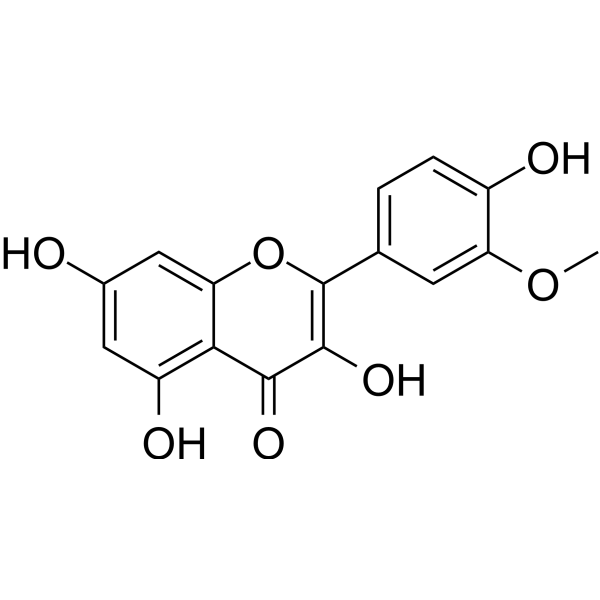
HY-N0776
IsorhamnetinEndogenous Metabolite -
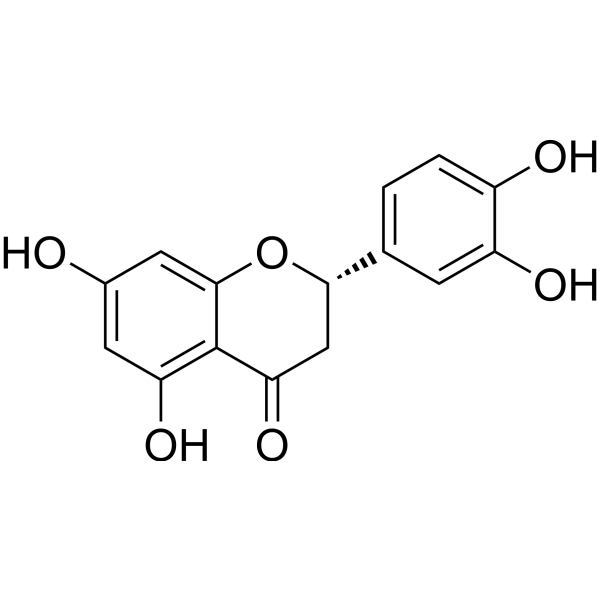
HY-N0637
EriodictyolEndogenous Metabolite -
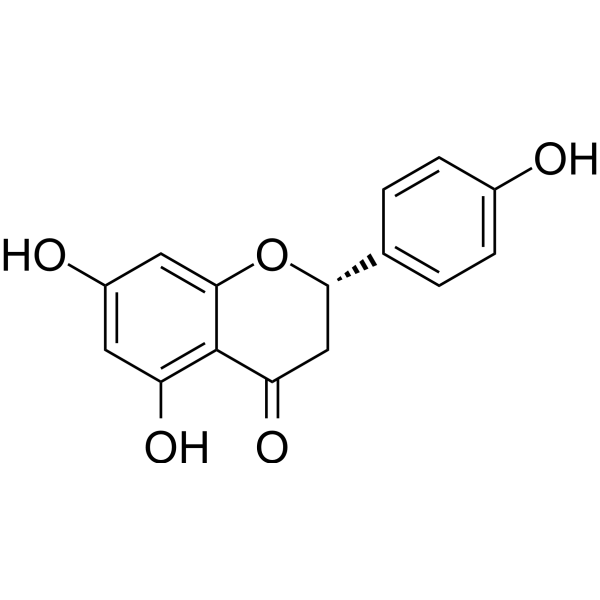
HY-N0100
NaringeninFlavonoid -
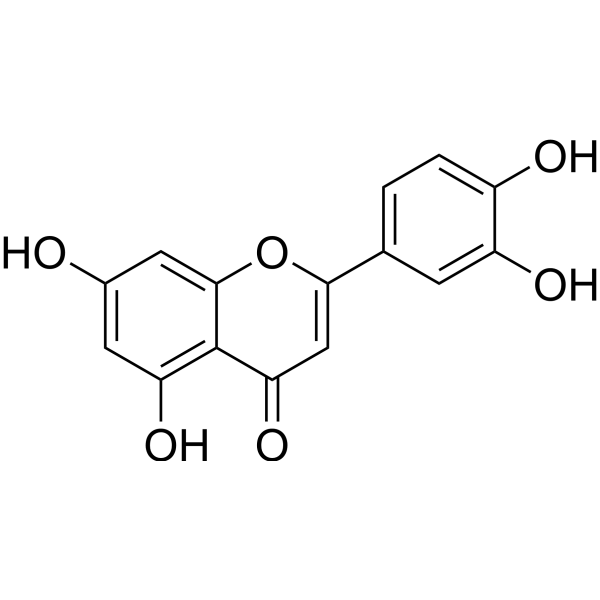
HY-N0162
LuteolinNrf2 Inhibitor -
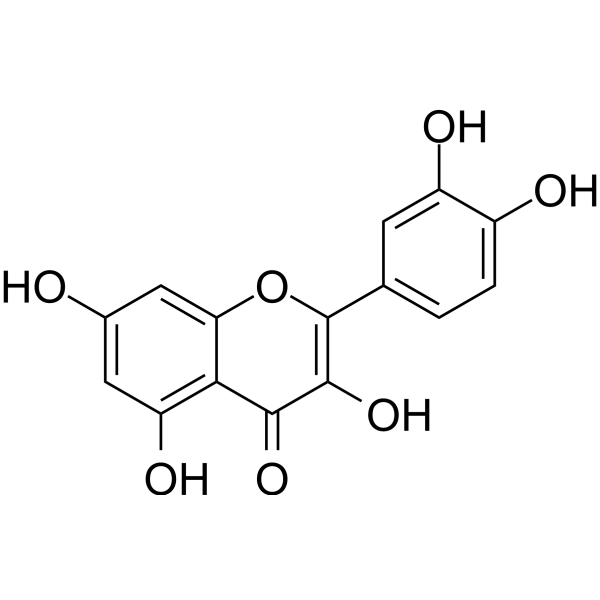
HY-18085
QuercetinFlavonoid Antioxidant -

HY-N0112R
Dihydromyricetin (Standard)Autophagy Inducer -
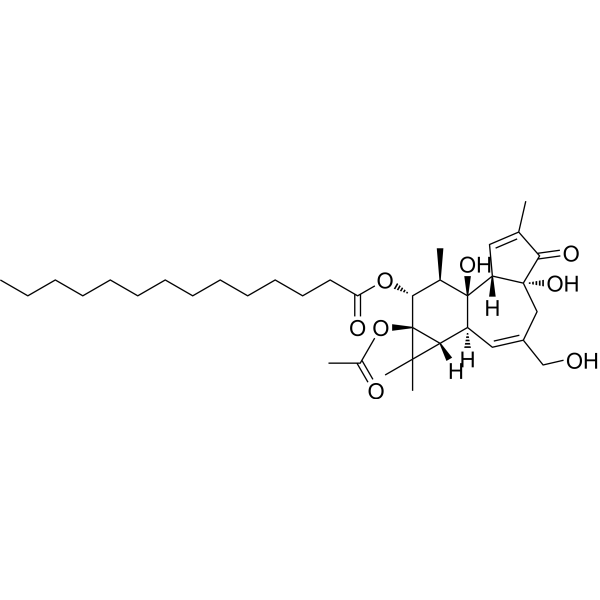
HY-18739
Phorbol 12-myristate 13-acetatePKC Activator -
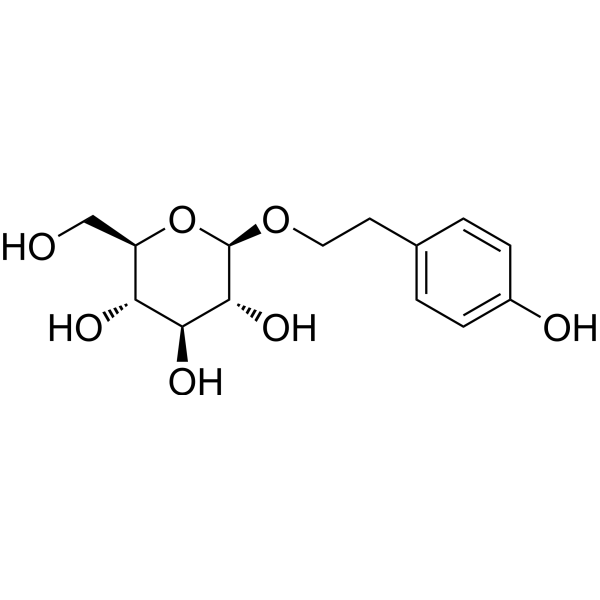
HY-N0109
SalidrosideProlyl Endopeptidase Inhibitor
Publications Citing Use of MedChemExpress (MCE) Dihydromyricetin
More- Metabolism. 2026 Jul:180:156622. [Abstract]
- Acta Pharm Sin B. 2021 Jan;11(1):143-155. [Abstract]
- Mol Ther. 2019 May 8;27(5):1051-1065. [Abstract]
- Phytomedicine. 2023 Jul 26;119:154997. [Abstract]
- Phytomedicine. 2023 Jul:115:154756. [Abstract]
- Phytomedicine. 2022 May:99:154027. [Abstract]
- Mater Today Bio. 2026 Feb 16:37:102934. [Abstract]
- Food Chem. 2025 Dec 30:497:146992. [Abstract]
- Food Chem. 2025 Oct 15:489:144992. [Abstract]
- Clin Sci. 2021 Nov 12;135(21):2483-2502. [Abstract]
- Eur J Med Chem. 2020 Dec 15:208:112754. [Abstract]
- Biochem Pharmacol. 2020 May:175:113888. [Abstract]
- Ind Crops Prod. 2025 Dec 11;239:122458.
- Eur J Pharmacol. 2025 Aug 5:1000:177703. [Abstract]
- Eur J Pharmacol. 2025 Jul 5:998:177501. [Abstract]
- Int J Mol Sci. 2026 Feb 5;27(3):1576. [Abstract]
- Front Pharmacol. 2020 Nov 11:11:580407. [Abstract]
- Philos Trans R Soc Lond B Biol Sci. 2023 Nov 20;378(1890):20220248. [Abstract]
- Food Sci Nutr. 2024 Feb 20;12(6):3893-3909. [Abstract]
- Cardiovasc Toxicol. 2025 Feb;25(2):294-305. [Abstract]
- Exp Eye Res. 2026 Feb:263:110761. [Abstract]
- Vet Microbiol. 2026 May:316:110992. [Abstract]
- Clin Exp Pharmacol Physiol. 2024 Sep;51(9):e13912. [Abstract]
- Biochem Biophys Res Commun. 2018 Sep 3;503(1):297-303. [Abstract]
- SSRN. 2026 May 3.
- Biomed Pharmacother. 2024 Oct:179:117309. [Abstract]
 Customer Validation & Images

-
Histological Imaging/Staining
-
WB
-
IF
-
RT-PCR
-
WB
All DNA/RNA Synthesis Isoforms
More

Biological Activity
Description
|
RNA Polymerase |
Dihydropyrimidinase 48 μM (IC50) |
mTORC1 |
mTORC2 |
Autophagy |
Cellular Effect
|
Cell Line

|
Type | Value | Description | References |
|---|---|---|---|---|
| A549 | IC50 |
>10 μM
Compound: 13
|
Cytotoxicity against human A549 cells after 48 hrs by SRB assay
Cytotoxicity against human A549 cells after 48 hrs by SRB assay
|
[PMID: 28165740] |
| BT-549 | IC50 |
>10 μM
Compound: 13
|
Cytotoxicity against human BT549 cells after 48 hrs by SRB assay
Cytotoxicity against human BT549 cells after 48 hrs by SRB assay
|
[PMID: 28165740] |
| BV-2 | IC50 |
32.66 μM
Compound: 13
|
Antiinflammatory activity in mouse BV2 cells assessed as inhibition of LPS-induced nitrite production after 24 hrs by Griess assay
Antiinflammatory activity in mouse BV2 cells assessed as inhibition of LPS-induced nitrite production after 24 hrs by Griess assay
|
[PMID: 28165740] |
| RAW264.7 | IC50 |
6.25 μg/mL
Compound: 115
|
Antiinflammatory activity in mouse RAW264.7 cells assessed as reduction in LPS-induced COX-2 expression after 24 hrs by Western blot analysis
Antiinflammatory activity in mouse RAW264.7 cells assessed as reduction in LPS-induced COX-2 expression after 24 hrs by Western blot analysis
|
[PMID: 37683361] |
| RAW264.7 | IC50 |
6.25 μg/mL
Compound: 115
|
Antiinflammatory activity in mouse RAW264.7 cells assessed as reduction in LPS-induced iNOS expression after 24 hrs by Western blot analysis
Antiinflammatory activity in mouse RAW264.7 cells assessed as reduction in LPS-induced iNOS expression after 24 hrs by Western blot analysis
|
[PMID: 37683361] |
| SK-MEL-2 | IC50 |
>10 μM
Compound: 13
|
Cytotoxicity against human SK-MEL-2 cells after 48 hrs by SRB assay
Cytotoxicity against human SK-MEL-2 cells after 48 hrs by SRB assay
|
[PMID: 28165740] |
| SK-OV-3 | IC50 |
>10 μM
Compound: 13
|
Cytotoxicity against human SKOV3 cells after 48 hrs by SRB assay
Cytotoxicity against human SKOV3 cells after 48 hrs by SRB assay
|
[PMID: 28165740] |
| Vero C1008 | CC50 |
>200 μM
Compound: 88
|
Cytotoxicity against African green monkey Vero E6 cells assessed as reduction in cell growth incubated for 24 hrs by WST-8 assay
Cytotoxicity against African green monkey Vero E6 cells assessed as reduction in cell growth incubated for 24 hrs by WST-8 assay
|
[PMID: 37597436] |
In Vitro
Dihydromyricetin, a flavonol, significantly inhibits the catalytic activities of dihydropyrimidinase toward both the natural substrate dihydrouracil and xenobiotic substrate 5-propyl-hydantoin. Dihydromyricetin exhibits a significant inhibitory effect on the activities of dihydropyrimidinase for both substrates, even more than Myricetin does. The IC50 values of Dihydromyricetin for dihydropyrimidinase determined from the titration curves using Dihydrouracil and 5-propyl-hydantoin are 48±2 and 40±2 μM, respectively[1].
Dihydromyricetin (DHM) supplementation significantly reverses the increased phosphorylation of mTOR at Ser2448 (p-mTOR) during D-gal administration, which suggests that Dihydromyricetin can activate autophagy through inhibiting mTOR signaling[2].
MedChemExpress (MCE) has not independently confirmed the accuracy of these methods. They are for reference only. Further protocols information, click here.
In Vivo
MedChemExpress (MCE) has not independently confirmed the accuracy of these methods. They are for reference only.
Clinical Trial
| NCT Number | Sponsor | Condition | Start Date |
Phase
|
|---|---|---|---|---|
| NCT01329991 | Plexxikon| | 2011-05 | PHASE1 |


Chemical Information
-
CAS No. 27200-12-0
-
Appearance Solid
-
Molecular Weight 320.25
-
Formula C15H12O8
-
Color White to off-white
-
SMILES
O=C1[C@H](O)[C@@H](C2=CC(O)=C(O)C(O)=C2)OC3=CC(O)=CC(O)=C13
-
Synonyms
Ampelopsin; Ampeloptin
-
Structure Classification
-
Initial Source
-
Shipping
Room temperature in continental US; may vary elsewhere.
-
Storage
Powder -20°C 3 years 4°C 2 years In solvent -80°C 1 year -20°C 6 months


Publications (26)
-
Journal Impact Factor
-
Most Recent
-
Metabolism
2026 Jul:180:156622. PMID: 41997496 -
Acta Pharm Sin B
Chrysin serves as a novel inhibitor of DGK α/FAK interaction to suppress the malignancy of esophageal squamous cell carcinoma (ESCC). [Abstract]2021 Jan;11(1):143-155. PMID: 33532186 -
Mol Ther
MicroRNA-34a Promotes Renal Fibrosis by Downregulation of Klotho in Tubular Epithelial Cells. [Abstract]2019 May 8;27(5):1051-1065. PMID: 30853453
Dihydromyricetin purchased from MedChemExpress. Usage Cited in: Mol Ther. 2019 May 8;27(5):1051-1065. [Abstract]
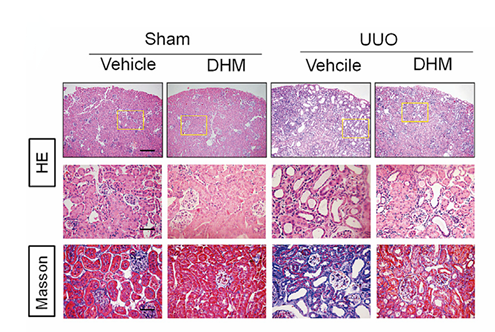
DHM (500 mg/kg/day) was suspended in 0.9% saline and intragastrically administered to C57BL/6J mice 7 days before UUO surgery and continued until the end of the experiment. Representative micrographs of H&E and Masson trichrome staining of mouse kidney sections at 14 days after UUO surgery were shown.
Dihydromyricetin purchased from MedChemExpress. Usage Cited in: Mol Ther. 2019 May 8;27(5):1051-1065. [Abstract]
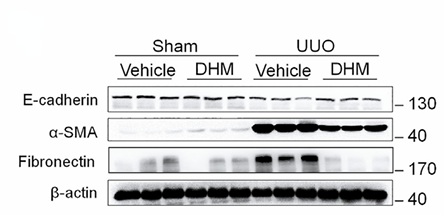
DHM (500 mg/kg/day) was suspended in 0.9% saline and intragastrically administered to C57BL/6J mice 7 days before UUO surgery and continued until the end of the experiment. Western blotting analysis was performed to assess E-cadherin, $\alpha$-SMA, and fibronectin protein levels in UUO mice at 14 days after surgery.
Dihydromyricetin purchased from MedChemExpress. Usage Cited in: Mol Ther. 2019 May 8;27(5):1051-1065. [Abstract]
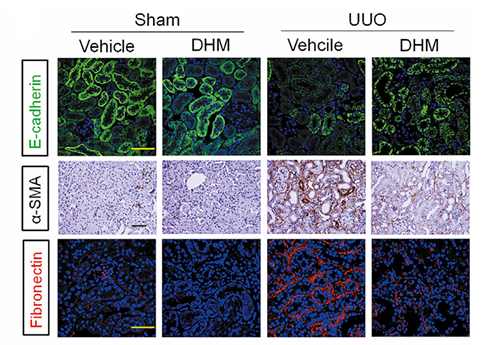
Representative immunostaining of E-cadherin, $\alpha$-SMA, and fibronectin in the obstructed kidneys at 14 days after UUO surgery. E-cadherin (green), fibronectin (red), and DAPI (blue) were shown. The scale bars corresponded to 50 μm. DHM (500 mg/kg/day) was suspended in 0.9% saline and intragastrically administered to C57BL/6J mice 7 days before UUO surgery and continued until the end of the experiment.
Dihydromyricetin purchased from MedChemExpress. Usage Cited in: Mol Ther. 2019 May 8;27(5):1051-1065. [Abstract]
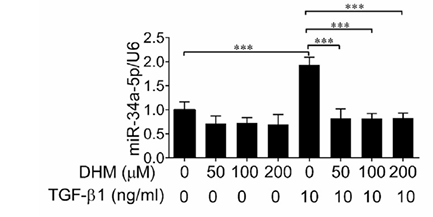
qRT-PCR analysis of miR-34a expression in HK-2 cells pretreated with different concentrations of DHM for 24 h followed by incubation with 10 ng/mL TGF-β1 for 24 or 48 h.
Dihydromyricetin purchased from MedChemExpress. Usage Cited in: Mol Ther. 2019 May 8;27(5):1051-1065. [Abstract]
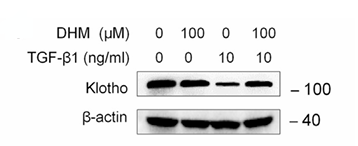
Western blotting analysis of Klotho in HK-2 cells pretreated with DHM (100 mM) for 24 h followed by incubation with 10 ng/mL TGF-β1 for 48 h.
-
Phytomedicine
Dihydromyricetin confers cerebroprotection against subarachnoid hemorrhage via the Nrf2-dependent Prx2 signaling cascade. [Abstract]2023 Jul 26;119:154997. PMID: 37523836 -
Phytomedicine
Dihydromyricetin attenuates intracerebral hemorrhage by reversing the effect of LCN2 via the system Xc- pathway. [Abstract]2023 Jul:115:154756. PMID: 37130481 -
Phytomedicine
Dihydromyricetin protects against Doxorubicin-induced cardiotoxicity through activation of AMPK/mTOR pathway. [Abstract]2022 May:99:154027. PMID: 35278898 -
Mater Today Bio
Orchestrating diabetic wound repair via mitochondria-targeted delivery of dihydromyricetin with tailored ADSC-derived biohybrid nanovesicles. [Abstract]2026 Feb 16:37:102934. PMID: 41756529 -
Food Chem
Effects of sun drying combined with baking processes on the flavor quality of Chongqing Tuocha raw tea. [Abstract]2025 Dec 30:497:146992. PMID: 41285060 -
Food Chem
Flavonoid-mediated metabolic underpinning quality variation in red bud-sport pear mutants. [Abstract]2025 Oct 15:489:144992. PMID: 40466530 -
Clin Sci
Dihydromyricetin ameliorates vascular calcification in chronic kidney disease by targeting AKT signaling. [Abstract]2021 Nov 12;135(21):2483-2502. PMID: 34643227 -
Eur J Med Chem
Unraveling the anti-influenza effect of flavonoids: Experimental validation of luteolin and its congeners as potent influenza endonuclease inhibitors. [Abstract]2020 Dec 15:208:112754. PMID: 32883638 -
Biochem Pharmacol
Dihydromyricetin alleviates doxorubicin-induced cardiotoxicity by inhibiting NLRP3 inflammasome through activation of SIRT1. [Abstract]2020 May:175:113888. PMID: 32112883 -
-
Eur J Pharmacol
Dihydromyricetin restores mucus hypersecretion in Air-Liquid interface cultures in COPD by targeting the SRC-MAPK signaling pathway. [Abstract]2025 Aug 5:1000:177703. PMID: 40348325 -
Eur J Pharmacol
Dihydromyricetin attenuates intervertebral disc degeneration by inhibiting NLRP3 inflammasome activation via the Keap1/Nrf2/HO-1 pathway. [Abstract]2025 Jul 5:998:177501. PMID: 40058758 -
Int J Mol Sci
Dual Targeting of HIF-1α and DLL4 by Isoxanthohumol Potentiates Immune Checkpoint Blockade. [Abstract]2026 Feb 5;27(3):1576. PMID: 41683994 -
Front Pharmacol
CC-223, NSC781406, and BGT226 Exerts a Cytotoxic Effect Against Pancreatic Cancer Cells via mTOR Signaling. [Abstract]2020 Nov 11:11:580407. PMID: 33343350 -
Philos Trans R Soc Lond B Biol Sci
2023 Nov 20;378(1890):20220248. PMID: 37778388 -
Food Sci Nutr
2024 Feb 20;12(6):3893-3909. PMID: 38873488 -
Cardiovasc Toxicol
Dihydromyricetin Protects Against Hypoxia/Reoxygenation Injury in Cardiomyocytes by Activating miR-34a-Mediated Notch1 Pathway. [Abstract]2025 Feb;25(2):294-305. PMID: 39864044 -
Exp Eye Res
Dihydromyricetin mitigates oxidative damage induced by mixed phthalates via Nrf2 activation in experimental models of glaucoma. [Abstract]2026 Feb:263:110761. PMID: 41270819 -
Vet Microbiol
The Chinese medicine monomer Schisandrin C inhibits PRRSV infection by regulating the OGT-PI3K/AKT/mTOR signaling pathway. [Abstract]2026 May:316:110992. PMID: 41865607 -
Clin Exp Pharmacol Physiol
Dihydromyricetin protects sevoflurane-induced mitochondrial dysfunction in HT22 hippocampal cells. [Abstract]2024 Sep;51(9):e13912. PMID: 39103220 -
Biochem Biophys Res Commun
Effects of intracellular iron overload on cell death and identification of potent cell death inhibitors. [Abstract]2018 Sep 3;503(1):297-303. PMID: 29890135 -
-
Biomed Pharmacother
Berbamine promotes ferroptosis of esophageal squamous cell carcinoma by facilitating USP51-mediated GPX4 ubiquitination and degradation. [Abstract]2024 Oct:179:117309. PMID: 39151312


Solvent & Solubility
In Vitro:
DMSO : ≥ 100 mg/mL (312.26 mM; Hygroscopic DMSO has a significant impact on the solubility of product, please use newly opened DMSO)
* "≥" means soluble, but saturation unknown.
Please refer to the solubility information to select the appropriate solvent. Once prepared, please aliquot and store the solution to prevent product inactivation from repeated freeze-thaw cycles.
Storage method and period of stock solution: -80°C, 1 year; -20°C, 6 months. When stored at -80°C, please use it within 1 year. When stored at -20°C, please use it within 6 months.
Please refer to the solubility information to select the appropriate solvent. Once prepared, please aliquot and store the solution to prevent product inactivation from repeated freeze-thaw cycles.
Storage method and period of stock solution: -80°C, 1 year; -20°C, 6 months. When stored at -80°C, please use it within 1 year. When stored at -20°C, please use it within 6 months.
Concentration (start) × Volume (start) = Concentration (final) × Volume (final)
In Vivo:
Select the appropriate dissolution method based on your experimental animal and administration route.
- For the following dissolution methods, please ensure to first prepare a clear stock solution using an In Vitro approach and then sequentially add co-solvents:
- To ensure reliable experimental results, the clarified stock solution can be appropriately stored based on storage conditions. As for the working solution for In Vivo experiments, it is recommended to prepare freshly and use it on the same day.
- The percentages shown for the solvents indicate their volumetric ratio in the final prepared solution. If precipitation or phase separation occurs during preparation, heat and/or sonication can be used to aid dissolution.
Add each solvent one by one: 10% DMSO 40% PEG300 5% Tween-80 45% Saline
Solubility: ≥ 2.5 mg/mL (7.81 mM); Clear solution
This protocol yields a clear solution of ≥ 2.5 mg/mL (saturation unknown).
Taking 1 mL working solution as an example, add 100 μL DMSO stock solution (25.0 mg/mL) to 400 μL PEG300, and mix evenly; then add 50 μL Tween-80 and mix evenly; then add 450 μL Saline to adjust the volume to 1 mL.
Preparation of Saline: Dissolve 0.9 g sodium chloride in ddH₂O and dilute to 100 mL to obtain a clear Saline solution.
Add each solvent one by one: 10% DMSO 90% (20% SBE-β-CD in Saline)
Solubility: ≥ 2.5 mg/mL (7.81 mM); Clear solution
This protocol yields a clear solution of ≥ 2.5 mg/mL (saturation unknown).
Taking 1 mL working solution as an example, add 100 μL DMSO stock solution (25.0 mg/mL) to 900 μL 20% SBE-β-CD in Saline, and mix evenly.
Preparation of 20% SBE-β-CD in Saline (4°C, storage for one week): 2 g SBE-β-CD powder is dissolved in 10 mL Saline, completely dissolve until clear.
In Vivo Dissolution Calculator
Please enter the basic information of animal experiments:
-
-
-
-
Recommended: Prepare an additional quantity of animals to account for potential losses during experiments.
Please enter your animal formula composition:
-
%DMSO +
Recommended: Keep the proportion of DMSO in working solution below 2% if your animal is weak.
-
%+
-
+%Tween-80 + +
-
%Saline +
The co-solvents required include: DMSO, . All of co-solvents are available by MedChemExpress (MCE). , Tween 80. All of co-solvents are available by MedChemExpress (MCE).
Working solution concentration: 0.22 mg/mL
Method for preparing stock solution: mg drug dissolved in μL DMSO. Stock solution concentration: mg/mL.
1. Take μL DMSO stock solution;
2. Add μL .
μL , mix evenly;
3. Then add μL Tween 80, mix evenly;
4. Then add μL
Please ensure that the stock solution in the first step is dissolved to a clear state, and add co-solvents in sequence. You can use ultrasonic heating (ultrasonic cleaner, recommended frequency 20-40 kHz), vortexing, etc. to assist dissolution.

Protocols
-
Cell Cytotoxicity Assay
Cytotoxicity assays are usually based on the assessment of cell membrane damage, which can also be indirectly detected by measuring cell viability. Detection methods include MTT assay, CKK-8 assay, LDH assay and ATP assay, etc.
-
Autophagy
Autophagy is a process in which eukaryotic cells use lysosomes to degrade their own cytoplasmic proteins and damaged organelles under the regulation of autophagy related gene (Atg). Microtubule-associated proteins light chain 3 (LC3) is recognized as autophagy marker, which transfers from cytoplasmic LC3 (LC3-I) to membrane type (LC3-II). LC3-II/I ratio could be detected by Western Blot and fluorescence microscopy.
-
Lysosome and acidic-vesicle live-cell staining
Lysosome and acidic-vesicle live-cell staining detects acidic intracellular compartments by using membrane-permeant acidotropic probes that accumulate in low-pH vesicles, including lysosomes, late endosomes, autolysosomes, and acidic phagosomes. LysoTracker staining is commonly used as an intensity-based readout of acidic lysosomal compartment abundance or enlargement, while acridine orange produces green fluorescence in less concentrated compartments and red fluorescence after concentration-dependent accumulation in acidic vesicular organelles. Loss or reduction of acridine-orange red signal can be used as a readout of lysosomal membrane permeabilization or reduced acidic-vesicle integrity. This protocol is designed for live cultured cells and can be adapted for fluorescence microscopy, high-content imaging, plate-reader readout, or flow cytometry when the selected literature supports the readout. Because these dyes report acidotropic accumulation rather than lysosome identity alone,
-
Macroautophagy Solutions
Macroautophagy is a conserved lysosome-dependent degradation pathway in which cytoplasmic material is sequestered into double-membrane autophagosomes and delivered to lysosomes for degradation and recycling. The pathway supports cellular homeostasis during nutrient limitation, organelle stress, protein-aggregate accumulation, infection, differentiation, and tissue remodeling by coupling cargo sequestration, autophagosome maturation, lysosomal fusion, and degradation of cargo-derived macromolecules. The core molecular sequence includes initiation by nutrient- and stress-regulated autophagy machinery, autophagosome nucleation, LC3/ATG8-family conjugation to autophagosomal membranes, cargo selection through receptors such as SQSTM1/p62, autophagosome-lysosome fusion, and lysosomal degradation. LC3 was identified as a mammalian homolog of yeast Atg8 that localizes to autophagosomal membranes after processing, and p62/SQSTM1 was shown to connect ubiquitinated cargo with autophagic degradati


Purity & Documentation
-
Data Sheet (284 KB)
-
SDS (393 KB)
- English - EN (393 KB)
- Français - FR (393 KB)
- Deutsch - DE (393 KB)
- Norwegian - NO (393 KB)
- Español - ES (393 KB)
- Swedish - SV (393 KB)
- Italian - IT (393 KB)
- Korean - KR (393 KB)
- Portuguese - PT (393 KB)
-
Handling Instructions (2659 KB)
References
[1]. Huang CY. Inhibition of a Putative Dihydropyrimidinase from Pseudomonas aeruginosa PAO1 by Flavonoids and Substrates of Cyclic Amidohydrolases. PLoS One. 2015 May 19;10(5):e0127634. [Content Brief]
[2]. Chang H, et al. Ampelopsin suppresses breast carcinogenesis by inhibiting the mTOR signalling pathway. Carcinogenesis. 2014 Aug;35(8):1847-54. [Content Brief]
[3]. Kou X, et al. Ampelopsin attenuates brain aging of D-gal-induced rats through miR-34a-mediated SIRT1/mTORsignal pathway. Oncotarget. 2016 Nov 15;7(46):74484-74495. [Content Brief]


Complete Stock Solution Preparation Table
Please refer to the solubility information to select the appropriate solvent. Once prepared, please aliquot and store the solution to prevent product inactivation from repeated freeze-thaw cycles.
Storage method and period of stock solution: -80°C, 1 year; -20°C, 6 months. When stored at -80°C, please use it within 1 year. When stored at -20°C, please use it within 6 months.
| Optional Solvent | Concentration Solvent Mass | 1 mg | 5 mg | 10 mg | 25 mg |
|---|---|---|---|---|---|
| DMSO | 1 mM | 3.1226 mL | 15.6128 mL | 31.2256 mL | 78.0640 mL |
| 5 mM | 0.6245 mL | 3.1226 mL | 6.2451 mL | 15.6128 mL | |
| 10 mM | 0.3123 mL | 1.5613 mL | 3.1226 mL | 7.8064 mL | |
| 15 mM | 0.2082 mL | 1.0409 mL | 2.0817 mL | 5.2043 mL | |
| 20 mM | 0.1561 mL | 0.7806 mL | 1.5613 mL | 3.9032 mL | |
| 25 mM | 0.1249 mL | 0.6245 mL | 1.2490 mL | 3.1226 mL | |
| 30 mM | 0.1041 mL | 0.5204 mL | 1.0409 mL | 2.6021 mL | |
| 40 mM | 0.0781 mL | 0.3903 mL | 0.7806 mL | 1.9516 mL | |
| 50 mM | 0.0625 mL | 0.3123 mL | 0.6245 mL | 1.5613 mL | |
| 60 mM | 0.0520 mL | 0.2602 mL | 0.5204 mL | 1.3011 mL | |
| 80 mM | 0.0390 mL | 0.1952 mL | 0.3903 mL | 0.9758 mL | |
| 100 mM | 0.0312 mL | 0.1561 mL | 0.3123 mL | 0.7806 mL |


Dihydromyricetin Related Classifications
HY-N0112 Related Classifications
 Powered by Bioz