



Cancer Immunotherapy
Cancer immunotherapy (CIT) is a type of biological therapy, aiming to improve anti-tumor immune responses with fewer off-target effects than chemotherapy. Several types of immunotherapy include: oncolytic virus therapies, cancer vaccines, cytokine therapies, adoptive cell transfer (ACT), and immune checkpoint inhibitors (ICIs). In particular, ICIs and ACT have obtained immense clinical response, but their efficacy varies from person to person. Immune cells can be harnessed to eliminate tumor cells, such as T cells, B cells, NK cells, and myeloid cells. T cells have potent tumor-killing capability, therefore, a plethora of cancer immunotherapy research have focused on inducing T-cell-mediated anti-tumor responses. CTLA-4 and PD-1 are found on the cell surface of T cells as co-inhibitory receptors. The breakthrough in cancer immunotherapy results from the identification and subsequent targeting of checkpoint mechanisms in T cells with monoclonal antibodies against CTLA-4 and programmed death-ligand 1/programmed death-1 (PD-L1/PD-1).
Several types of cancers (e.g., melanoma, mismatch repair-deficient cancers, bladder cancer, and non-small cell lung cancer) have achieved significant clinical responses in T-cell checkpoint blockade therapies. However, single-mode immunotherapy faces challenges such as low immune response, low tumor infiltration, and complex immunosuppressive tumor microenvironment. Recently, combined therapies based on tumor immunity have received extensive attention in the research of enhancing tumor cells immunogenicity and inhibiting their growth. For example, anti CTLA-4 and PD-1, immune checkpoint blockade (ICB) combined with chemotherapy, anti-angiogenic drugs and kinase inhibitors.
-
Tubulin/MMP-IN-3
 0 ImagesCat. No.: HY-172088
Tubulin/MMP-IN-3 (Compound 15j) is the dual inhibitor for tubulin polymerization and MMP, and inhibits MMP-2 and MMP-9 with IC50 of 21.13 μM and 19.24 μM. Tubulin/MMP-IN-3 inhibits NF-κB signaling pathway, causes mitochondrial dysfunction and the apoptosis through a mitochondrial-dependent pathway. Tubulin/MMP-IN-3 exhibits antiproliferative activity in a variety of cancer cells, arrests the cell cycle at G2/M phase, and exhibits antitumor efficacy in mouse models.
-
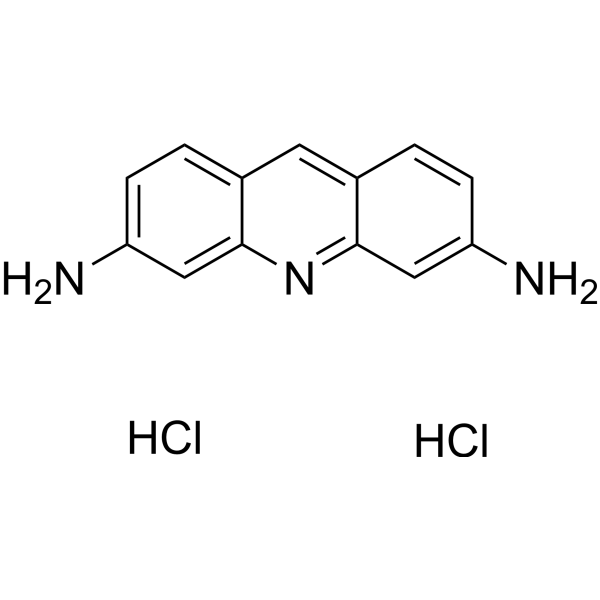
3,6-Diaminoacridine dihydrochloride
 0 Images
3,6-Diaminoacridine dihydrochloride is a versatile acridine compound. 3,6-Diaminoacridine dihydrochloride exerts antibacterial activity by intercalating into bacterial DNA, interfering with replication and transcription, and inducing bacterial lysis. 3,6-Diaminoacridine dihydrochloride is an acridine dye and also a DNA intercalator.
-
Q11 peptide
 0 ImagesCat. No.: HY-P10701CAS No.: 581799-39-5
Q11 peptide is a β-sheet-forming peptide that plays an important role in self-assembly and targeted applications. As a scaffold peptide, Q11 peptide can display immunogenic epitopes and is widely used in peptide-based immune vaccine research. Additionally, Q11 peptide can be conjugated with MUC1 glycopeptides for the study of self-assembling, adjuvant-free MUC1 glycopeptide vaccines. Q11 peptide holds great potential for research in the field of cancer immunology.
-
Antitumor agent-182
 0 ImagesCat. No.: HY-159149
Antitumor agent-182 (Compound 12a) decreases mitochondrial membrane potential (MMP) and enhances ROS levels. Antitumor agent-182 arrests the cell cycle at G0/G1 phase, induces apoptosis in HeLa. Antitumor agent-182 inhibits the proliferation of HeLa, PC-3 and HCT-15 with IC50s of 8.83, 10.07 and 7.84 μM, respectively.
-
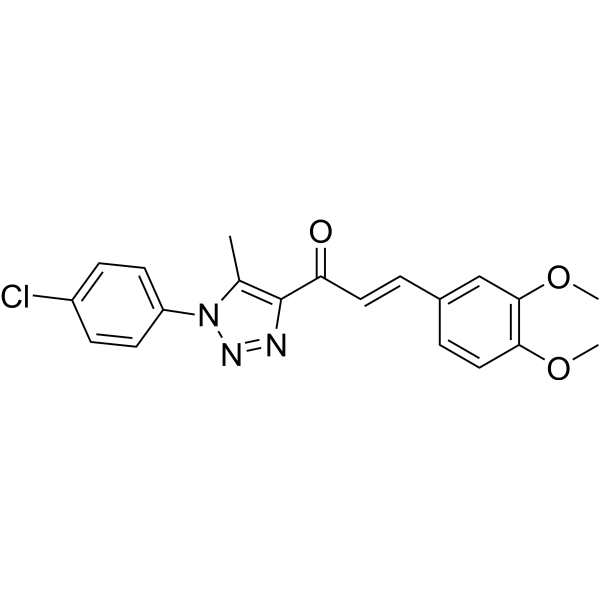
Anticancer agent 56
 0 ImagesCat. No.: HY-146444CAS No.: 2241915-59-1
Anticancer agent 56 (compound 4d) is a potent anti-cancer agent with agent-likeness properties, possessing anticancer activity against several cancer cell lines (IC50<3 μM). Anticancer agent 56 induces cell cycle arrest at G2/M phase and triggers mitochondrial apoptosis pathway. Anticancer agent 56 acts by accumulation of ROS, up regulation of BAX, down regulation of Bcl-2 and activation of caspases 3, 7, 9.
-
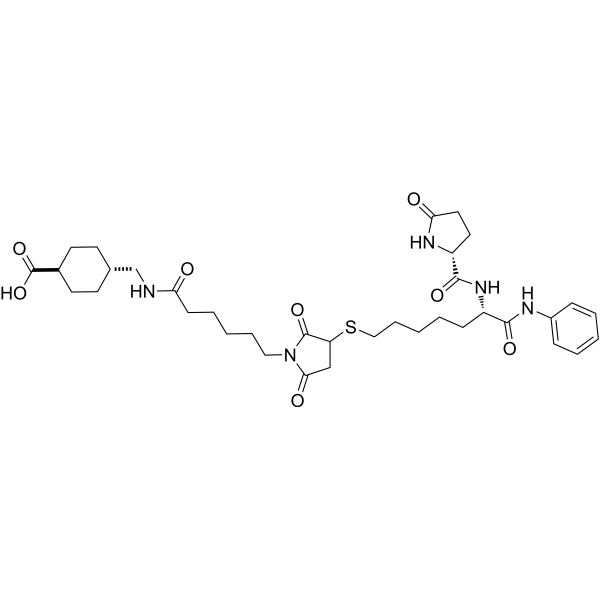
ST8154AA1
 0 ImagesCat. No.: HY-112805CAS No.: 2247025-59-6
ST8154AA1 is a part of antibody agent conjugates (ADCs) charged with HDAC inhibitor by a linker, shows antitumor activity.
-
Isosteviol (Standard)
 0 ImagesCat. No.: HY-N0872RCAS No.: 27975-19-5Synonyms: (-)-Isosteviol (Standard); iso-Steviol (Standard)
Isosteviol (Standard) is the analytical standard of Isosteviol. This product is intended for research and analytical applications. Isosteviol ((-)-Isosteviol) is a derivative of Stevioside through acid catalyzed hydrolysis of Stevioside. Isosteviol inhibits DNA polymerase and DNA topoisomerase and has antibacterial, anticancer and anti-tuberculosis effects.
-
mTOR-IN-29
 0 ImagesCat. No.: HY-183307
mTOR-IN-29 (Compound 4k) is an mTOR inhibitor with a IC50 of ~120 nM. mTOR-IN-29 inhibits mTOR kinase activity without affecting the phosphorylation of STAT3. mTOR-IN-29 acts as a cytotoxic agent against proliferating and senescent cells. mTOR-IN-29 can be used in studies related to glioblastoma.
-
OX118
 0 ImagesCat. No.: HY-P992435Purity: 99.22%
OX118 is a fully human, ADCC-enhanced monoclonal antibody targeting OX40L, the recommended isotype control is HY-P99001. OX118 blocks OX40L, suppresses effector T-cell proliferation, expands regulatory T-cell populations, and reduces bystander activation across natural killer cells, B cells, and CD14+ monocytes. OX118 can be used for the research of graft-versus-host disease.

-
NF-κB-IN-19
 0 ImagesCat. No.: HY-172201
NF-κB-IN-19 (Compound 8) is an NF-κB inhibitor. NF-κB-IN-19 effectively induces DNA damage, promotes the generation of ROS, and induces autophagy and apoptosis through the NF-κB signaling pathway in tumor cells. In addition, NF-κB-IN-19 can inhibit the levels of VEGF and HIF-1α, and exert antiproliferative activity in tumor cells through the PI3K/AKT and STAT-3 pathways. NF-κB-IN-19 can effectively overcome cisplatin resistance and has anti-tumor activity.
-
Dehydrodicatechin A
 0 ImagesCat. No.: HY-N21753CAS No.: 36048-23-4
Dehydrodicatechin A is a biflavan catechin dimer and antioxidant. Dehydrodicatechin A is isolated from the roots of Hagenia abyssinica, the stem bark of Choerospondias axillaries, the stems of Entada phaseoloides, and Calligonum comosum. Dehydrodicatechin A exhibits ABTS+ radical cation, DPPH, ABTS, and superoxide anion radical scavenging activities, as well as ferric reducing/antioxidant power. Dehydrodicatechin A inhibits Lipase. Dehydrodicatechin A is used in studies on polycystic ovary syndrome, Ehrlich ascites, and Doxorubicin (HY-15142)-induced cardiotoxicity.
-
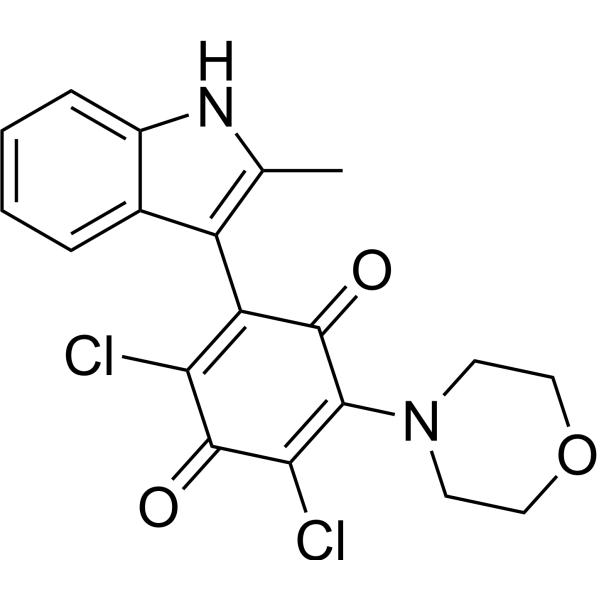
Anticancer agent 42
 0 ImagesCat. No.: HY-146516CAS No.: 2687265-18-3
Anticancer agent 42 (compound 10d) is an orally active anticancer agent, and shows a potent antitumor activity against MDA-MB-231 cell with an IC50 of 0.07 μM. Anticancer agent 42 can exert its anticancer activity by activating apoptotic pathway and p53 expression. Anticancer agent 42 can be used to study metastatic breast cancer.
-
Lixadesiran sodium
 0 ImagesCat. No.: HY-177643A
-
Agmatine-d8 hydrochloride
 0 ImagesCat. No.: HY-101238SA
Agmatine-d8 hydrochloride is the deuterated-labeled Agmatine-d8 hydrochloride. Agmatine hydrochloride exerts modulatory action at multiple molecular targets, such as neurotransmitter systems, ion channels and nitric oxide synthesis. It is an endogenous agonist at imidazoline receptor and a NO synthase inhibitor.
-
SHP1-IN-2
 0 ImagesCat. No.: HY-186140
SHP1‑IN‑2 is a selective and orally active SHP1 inhibitor. SHP1‑IN‑2 covalently binds to Cys480 of SHP1. SHP1‑IN‑2 elicits potent antitumor immunity and suppresses syngeneic tumor growth. SHP1‑IN‑2 blocks tumor progression in a svngeneic cancer model by activating natural killer cells and cytotoxic CD8+ T cells, along with reduced T cel l. SHP1‑IN‑2 can be used for cancer‑related research.

-
YSY01A
 0 ImagesCat. No.: HY-162885CAS No.: 1194235-46-5
YSY01A is a proteasome inhibitor that can suppress cancer cell survival by inducing apoptosis (Apoptosis). Its IC50 values are 51.0 nM for HEK293T, 9.2 nM for A549, 5.2 nM for MCF-7, 8.9 nM for MGC-803, and 35.4 nM for PC-3M cells. Additionally, YSY01A eliminates constitutive STAT3 signaling by downregulating gp130 and JAK2 in human A549 lung cancer cells. YSY01A holds promise for research in the field of cancer therapy.
-
Thapsigargin (Standard)
 0 ImagesCat. No.: HY-13433RCAS No.: 67526-95-8
Thapsigargin (Standard) is the analytical standard of Thapsigargin (HY-13433). This product is intended for research and analytical applications. Thapsigargin, an endoplasmic reticulum (ER) stress inducer, is an inhibitor of microsomal Ca2+-ATPase. Thapsigargin efficiently inhibits coronavirus (HCoV-229E, MERS-CoV, SARS-CoV-2) replication in different cell types.
-
GRK6-IN-4
 0 ImagesCat. No.: HY-128231CAS No.: 300731-73-1
GRK6-IN-4 is a G protein coupled receptor 6 kinase (GRK6) inhibitor with an IC50 of 1.56 μM. GRK6-IN-4 can be utilized in research related to hematological malignancies, inflammatory diseases, and autoimmune disorders.



