



Cancer Immunotherapy
Cancer immunotherapy (CIT) is a type of biological therapy, aiming to improve anti-tumor immune responses with fewer off-target effects than chemotherapy. Several types of immunotherapy include: oncolytic virus therapies, cancer vaccines, cytokine therapies, adoptive cell transfer (ACT), and immune checkpoint inhibitors (ICIs). In particular, ICIs and ACT have obtained immense clinical response, but their efficacy varies from person to person. Immune cells can be harnessed to eliminate tumor cells, such as T cells, B cells, NK cells, and myeloid cells. T cells have potent tumor-killing capability, therefore, a plethora of cancer immunotherapy research have focused on inducing T-cell-mediated anti-tumor responses. CTLA-4 and PD-1 are found on the cell surface of T cells as co-inhibitory receptors. The breakthrough in cancer immunotherapy results from the identification and subsequent targeting of checkpoint mechanisms in T cells with monoclonal antibodies against CTLA-4 and programmed death-ligand 1/programmed death-1 (PD-L1/PD-1).
Several types of cancers (e.g., melanoma, mismatch repair-deficient cancers, bladder cancer, and non-small cell lung cancer) have achieved significant clinical responses in T-cell checkpoint blockade therapies. However, single-mode immunotherapy faces challenges such as low immune response, low tumor infiltration, and complex immunosuppressive tumor microenvironment. Recently, combined therapies based on tumor immunity have received extensive attention in the research of enhancing tumor cells immunogenicity and inhibiting their growth. For example, anti CTLA-4 and PD-1, immune checkpoint blockade (ICB) combined with chemotherapy, anti-angiogenic drugs and kinase inhibitors.
-
HSP110-IN-1
 0 ImagesCat. No.: HY-184162CAS No.: 2991567-27-0
HSP110-IN-1 is a HSP110 inhibitor. HSP110-IN-1 binds to HSP110, inhibits the activity of STAT3, and downregulates the expression of downstream genes VEGF, MMP7 and MMP9. HSP110-IN-1 abrogates IL-6-induced epithelial-mesenchymal transition and inhibits the proliferation of colorectal cancer cells. HSP110-IN-1 remodels the tumor microenvironment by inducing a pro-inflammatory phenotype, regulates macrophages, induces PD-L1 expression, and enhances anti-PD-L1 antibody-mediated tumor regression. HSP110-IN-1 can be used in studies related to colorectal cancer.
-
Desloratadine (Standard)
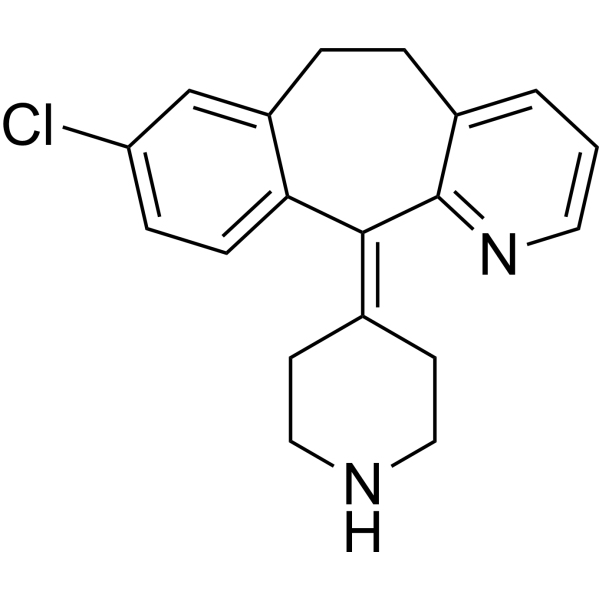 0 ImagesSynonyms: Sch34117 (Standard)
Desloratadine (Standard) is the analytical standard of Desloratadine. This product is intended for research and analytical applications. Desloratadine (Sch34117) is the orally active major metabolite of the nonsedating H1-antihistamine Loratadine. Desloratadine is a selective H1-receptor antagonist that has anti-allergic and anti-inflammatory activities.
-
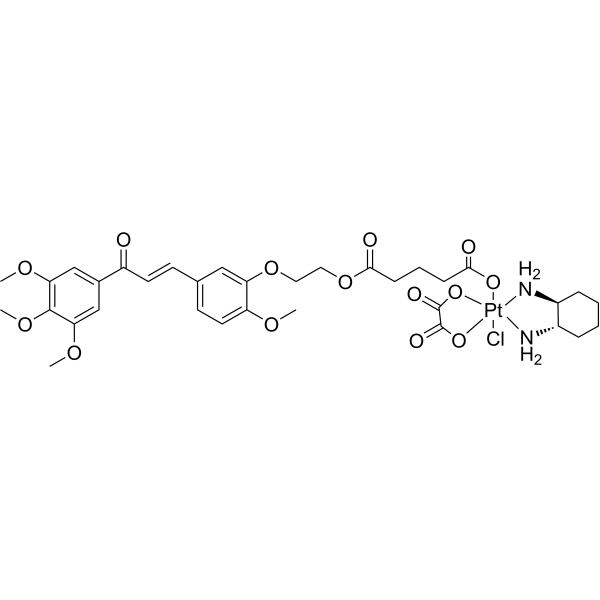
PD-1/PD-L1-IN-57
 0 ImagesCat. No.: HY-175702
PD-1/PD-L1-IN-57 (Compound J29) is a PD-1/PD-L1 inhibitor with an IC50 of 5.5 nM. PD-1/PD-L1-IN-57 has a strong immunoregulatory activity, effectively promotes T-cell proliferation and restores the killing ability of tumor cells. PD-1/PD-L1-IN-57 can be used for tumor immunotherapy research.
-
HBT-CUR
 0 ImagesCat. No.: HY-189294CAS No.: 2894038-40-3
HBT-CUR is a lysosome-targeted and polarity-responsive tumor photosensitizer. HBT-CUR generates singlet oxygen under light irradiation. HBT-CUR induces photodynamic apoptosis through oxidative stress. As a polarity-sensitive NIR fluorescent probe, HBT-CUR distinguishes tumor cells and tissues from normal ones. HBT-CUR enables tumor-specific in vivo fluorescence imaging with rapid response and long-lasting duration. HBT-CUR is used for breast cancer research.
-
ALLANHEELFQTGGGSC
 0 ImagesCat. No.: HY-P11937
ALLANHEELFQTGGGSC is a Glypican-3 (GPC3) targeting peptide that can be conjugated to fluorescent dyes via cysteine residues. ALLANHEELFQTGGGSC consists of a 12-amino-acid GPC3-binding peptide (ALLANHEELFQT) and a C-terminal GGGSC linker. ALLANHEELFQTGGGSC dose-dependently competes with and inhibits the binding of GPC3-targeting fluorescent probes to Hep3B hepatocellular carcinoma cells. ALLANHEELFQTGGGSC can be used for the construction of GPC3-targeted molecular probes and hepatocellular carcinoma-related research.
-
ortho-Topolin riboside
 0 ImagesCat. No.: HY-131496CAS No.: 50868-58-1
ortho-Topolin riboside is a naturally occurring cytokinin secreted from Populus x robusta leaves after sunrise. ortho-Topolin riboside has shown unique cytotoxic activity against NCI60 cell lines compared with the activity of other cytokinins.ortho-Topolin riboside induced differentiation through inhibition of STAT3 signaling in acute myeloid leukemia HL-60 cells.
-
Cedrol (Standard)
 0 ImagesSynonyms: (+)-Cedrol (Standard); α-Cedrol (Standard)
Cedrol (Standard) is the analytical standard of Cedrol. This product is intended for research and analytical applications. Cedrol is a potent competitive inhibitor of cytochrome P-450(CYP) enzyme. Cedrol plays an anticancer role by inducing cell cycle arrest and Caspase-dependent apoptosis. Cedrol acts as a neutrophil agonist that can desensitize cells to subsequent stimulation of N-formyl peptides. Cedrol prevents neuropathic pain caused by chronic contractile injury by inhibiting oxidative stress and inflammation. In addition, Cedrol has antibacterial, hair loss prevention and anti-anxiety properties.
-
JAK2-IN-15
 0 ImagesCat. No.: HY-178936CAS No.: 3094174-82-7
JAK2-IN-15 is an orally active, potent, selective JAK2 inhibitor (IC50 = 1.17 nM). JAK2-IN-15 can inhibit the AK2-STAT signaling pathway. JAK2-IN-15 significantly improves key pathological indicators such as hematocrit and splenomegaly in an Epoetin beta (HY-114134) (rhEPO)-induced mouse model. JAK2-IN-15 can be used for the study of Polycythemia Vera (PV).
-
Demethoxycurcumin-d7
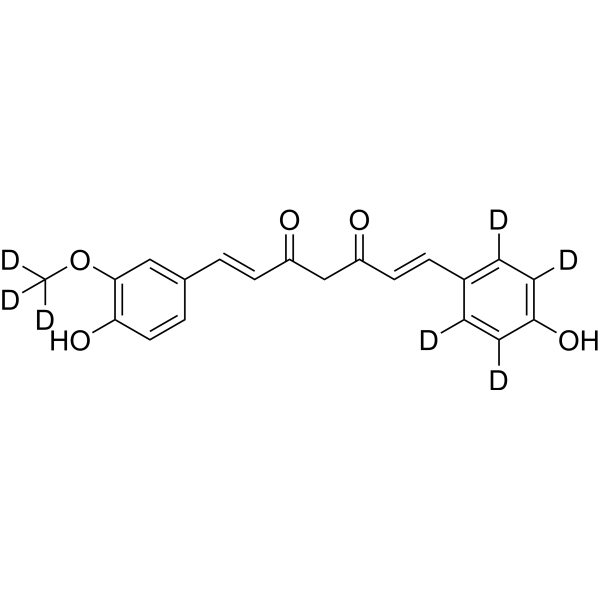 0 ImagesCat. No.: HY-N0006SCAS No.: 2470243-19-5Synonyms: Curcumin II-d7; Desmethoxycurcumin-d7; Monodemethoxycurcumin-d7
-
Cephaeline hydrochloride
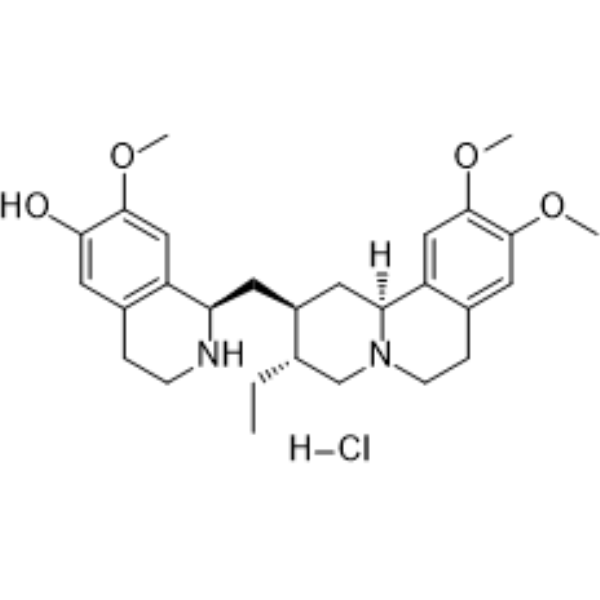 0 ImagesSynonyms: (-)-Cephaeline hydrochloride; NSC 32944 monohydrochloride
Cephaeline hydrochloride ((-)-Cephaeline (hydrochloride); NSC 32944 (monohydrochloride)) is a ferroptosis inducer, with broad-spectrum anticancer and antiviral activities. Cephaeline hydrochloride induces Ferroptosis by upregulating p53, inhibiting NRF2, activating ULK3, downregulating the expressions of SLC7A11 and GPX4 in a p53-dependent manner, reducing GSH and mitochondrial membrane potential, and increasing lipid peroxidation and iron accumulation. Cephaeline hydrochloride inhibits cancer cell proliferation, migration and tumor growth. Cephaeline hydrochloride inhibits Ebola virus (EBOV) VLP entry and infection, with IC50 values of 3.27 μM and 22.18 μM respectively; it also inhibits Zika virus (ZIKV) NS5 RdRp activity (IC50 = 976 nM), and binds to severe acute respiratory syndrome coronavirus 2 (SARS-CoV-2) RdRp and N protein, with Kd values of 8.9 μM and 53.8 μM respectively. Cephaeline hydrochloride can be used in studies related to breast cancer, lung cancer, COVID-19, EBOV and ZIKV infections.
-
CC-1069
 0 ImagesCat. No.: HY-171468CAS No.: 167887-03-8
-
ABHD antagonist 1
 0 ImagesCat. No.: HY-158338CAS No.: 3034510-10-3
ABHD antagonist 1 possesses ABHD6 (α/β-Hydrolase domain containing 6) inhibitory activity, involving the regulation of biochemical pathways involved in ABHD6, thereby affecting cell function and inflammatory response. ABHD antagonist 1 can be used in pain, neuropathic diseases, inflammatory diseases. Autoimmune diseases, metabolic diseases, and cancer research.
-
MC-Phe-Lys(MMT)-PAB-PNP
 0 ImagesCat. No.: HY-153216CAS No.: 159857-66-6
MC-Phe-Lys(MMT)-PAB-PNP (Compound 27) is an intermediate. MC-Phe-Lys(MMT)-PAB-PNP can be used in the research of cancer, autoimmune diseases, or infectious diseases.
-
Deltazinone 1
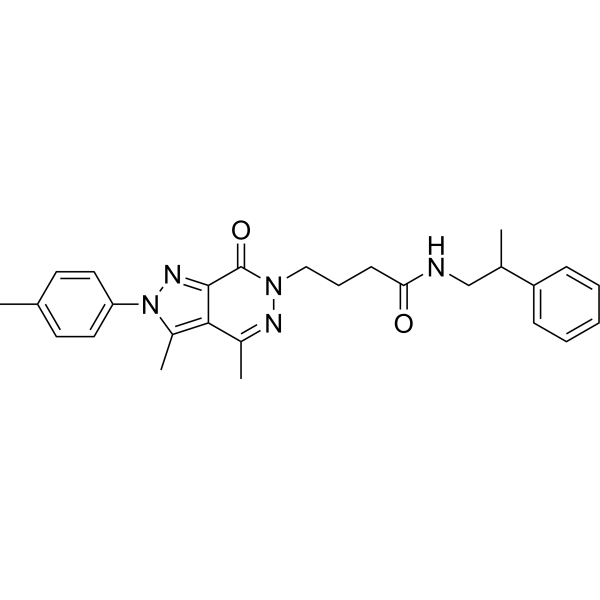 0 Images
Deltazinone 1, a pyrazolopyridazinone, is a highly selective PDEδ inhibitor with a KD of 8 nM. Deltazinone 1 inhibits the PDEδ-Ras interaction. Deltazinone 1 shows a dose-dependent inhibitory response on proliferation in oncogenic KRas-dependent cell lines.
-
Topoisomerase I-IN-20
 0 ImagesCat. No.: HY-181725
Topoisomerase I-IN-20 is a Topoisomerase I inhibitor. Topoisomerase I-IN-20 disrupts DNA synthesis and transcription, thereby inhibiting the proliferation and migration of cancer cells. Topoisomerase I-IN-20 induces S-phase cell cycle arrest and mitochondria-mediated Apoptosis in cancer cells, which is characterized by upregulated expression of p53, Bax, caspase-3 and caspase-9, along with downregulated expression of Bcl-2. Topoisomerase I-IN-20 increases intracellular ROS levels. Topoisomerase I-IN-20 is applicable to lung cancer-related research.
-
Bacopasaponin C (Standard)
 0 ImagesCat. No.: HY-N6015RCAS No.: 178064-13-6
Bacopasaponin C (Standard) is the analytical standard of Bacopasaponin C (HY-N6015). This product is intended for research and analytical applications. Bacopasaponin C is an orally active natural glycoside. Bacopasaponin C can be isolated from Bacopa monniera. Bacopasaponin C inhibits Verapamil (HY-14275)-stimulated P-gp ATPase activity with an IC50 of 57.83 μg/mL. Bacopasaponin C has antitumor activity against sarcomas. Bacopasaponin C has antiparasitic activity against Leishmania donovani.
-
EGFR-IN-214
 0 ImagesCat. No.: HY-184311CAS No.: 3077316-17-4
EGFR-IN-214 is an orally active EGFR inhibitor with an EC50 of 3.353 μM. EGFR-IN-214 blocks the downstream PI3K/Akt signaling pathway, induces intracellular ROS accumulation and Caspase-dependent apoptosis. EGFR-IN-214 exhibits antiproliferative activity in cancer cells and inhibits tumor growth in xenograft models. EGFR-IN-214 can be used in studies related to hepatocellular carcinoma.
-
Tamoxifen-d2
 0 ImagesCat. No.: HY-13757AS2CAS No.: 3047060-10-3Synonyms: ICI 47699-d2; (Z)-Tamoxifen-d2; trans-Tamoxifen-d2
Tamoxifen-d2 (ICI 47699-d2) is the deuterium labeled Tamoxifen (HY-13757A). Tamoxifen (ICI 47699) is an orally active, selective estrogen receptor modulator (SERM) which blocks estrogen action in breast cells and can activate estrogen activity in other cells, such as bone, liver, and uterine cells. Tamoxifen is a potent Hsp90 activator and enhances the Hsp90 molecular chaperone ATPase activity. Tamoxifen also potent inhibits infectious EBOV Zaire and Marburg (MARV) with IC50 of 0.1 μM and 1.8 μM, respectively. Tamoxifen activates autophagy and induces apoptosis. Tamoxifen can also be dissolved in corn oil (HY-Y1888) for use in inducing gene knockout in CreER transgenic mice. Tamoxifen has better solubility in corn oil compared to Tamoxifen Citrate (HY-13757).
-
Aspirin calcium
 0 Images
Aspirin calcium is an orally active, potent and irreversible inhibitor of cyclooxygenase COX-1 and COX-2, with IC50 values of 5 and 210 μg/mL, respectively. Aspirin calcium induces apoptosis. Aspirin calcium inhibits the activation of NF-κB. Aspirin calcium also inhibits platelet prostaglandin synthetase, and can prevent coronary artery and cerebrovascular thrombosis.



