



Cancer Targeted Therapy
Cancer targeted therapy is the foundation of precision medicine; it uses drugs or other substances to target specific genes and proteins that control cancer cells’ growth, division and spreading. Compared to traditional chemotherapy drugs, targeted-drugs can specifically act on cancer cells with high efficacy without damaging normal cells. Drugs used in cancer targeted therapy mainly includes small molecules and macromolecules (e.g., monoclonal antibodies), which can target cancer cells and constituents in the tumor microenvironment to activate the immune system. Anti-angiogenesis drugs, such as those targeting vascular endothelial growth factor (VEGF), epidermal growth factor receptor (EGFR), transforming growth factor (TGF)-α, TGF-β, Tumor necrosis factor (TNF)-α, and platelet-derived endothelial growth factor (PDGFR) inhibit the proliferation and metastasis of cancer cells. In recent years, the proportion of antibody drugs in cancer treatment has gradually become prominent. Antibody-drug conjugates (ADCs) are a new type of targeted drugs that are composed of monoclonal antibody, cytotoxic drug and linker. ADCs can deliver drugs to tumor cells and minimize the toxicity to normal tissues. Proteolysis-targeting chimera (PROTAC) is a useful technology for targeted protein degradation. PROTAC exploits the ubiquitin-proteasome system and forms a ternary complex with a hijacked E3 ubiquitin ligase and target protein, leading to polyubiquitination and degradation of the target protein.
Targeted therapy is a useful strategy in treatment of cancer either alone or in combination with standard chemotherapy. At present, targeted therapy has proved significant clinical success in the treatment of many types of cancer, including breast cancer, colorectal cancer, leukemia, ovarian cancer and lung cancer.
-
Myosin light chain kinase fragment 11-19 amide
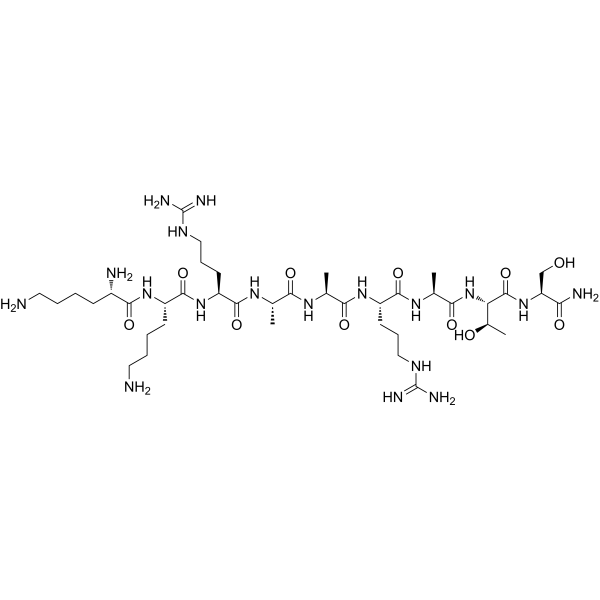 0 ImagesCat. No.: HY-P3214CAS No.: 119386-39-9Synonyms: MLCK(11-19) amide
Myosin light chain kinase fragment 11-19 amide (MLCK(11-19) amide) is a substrate-specific peptide inhibitor of MLCK. Myosin light chain kinase fragment 11-19 amide inhibits hypotonicity-induced Ca2+ entry. Myosin light chain kinase fragment 11-19 amide can be used in the research of human cervical cancer.
-
hsa-miR-4468 inhibitor
 0 ImagesCat. No.: HY-RI01072
hsa-miR-4468 inhibitors are chemically-modified oligonucleotides that hybridize with mature miRNAs. The miRNA inhibitors have full-length nucleotide 2'-methoxy modification. The miRNA inhibitors strongly compete with mature miRNAs to prevent the complementary pairing of miRNAs and their target genes, thereby inhibiting miRNAs from functioning.
-
hsa-miR-548m antagomir
 0 ImagesCat. No.: HY-RI01692A
hsa-miR-548m antagomirs are chemically-modified oligonucleotides that hybridize with mature miRNAs. The miRNA antagomirs have 2 phosphorothioates at the 5' end, 4 phosphorothioates at the 3' end, 1 cholesterol group at the 3' end, and full-length nucleotide 2'-methoxy modification. The miRNA antagomirs strongly compete with mature miRNAs to prevent the complementary pairing of miRNAs and their target genes, thereby inhibiting miRNAs from functioning. Stability of miRNA antagomirs appears to be significantly higher than miRNA inhibitors, they exhibits enhanced cellular uptake, stability and regulatory activity in vivo.
-
eCF506-d5
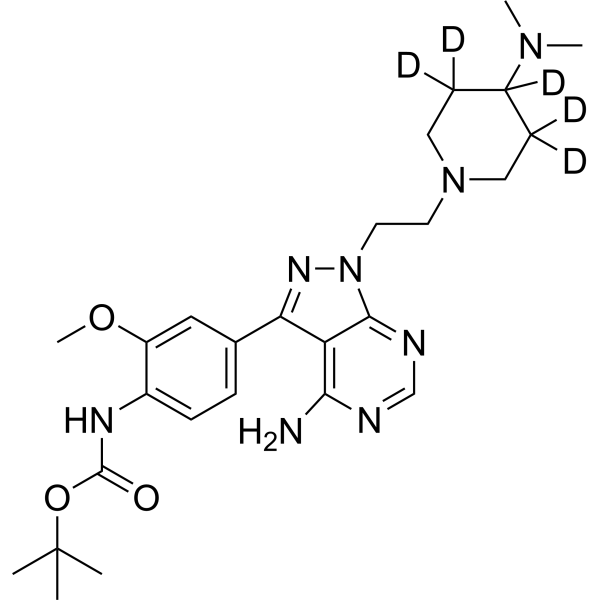 0 ImagesCat. No.: HY-112096SSynonyms: NXP900-d5
eCF506-d5 (NXP900-d5) is deuterated labeled eCF506 (HY-112096). eCF506 is a highly potent and orally active YES1/SRC kinase inhibitor with an IC50 of 0.47 nM. eCF506 locks its target into its native “closed” conformation, thereby inhibiting both kinase activity and complex formation with protein partners. eCF506 can be used for the study of esophageal squamous cancer and breast cancer.
-
N-(3-Methylbutyl)adenosine
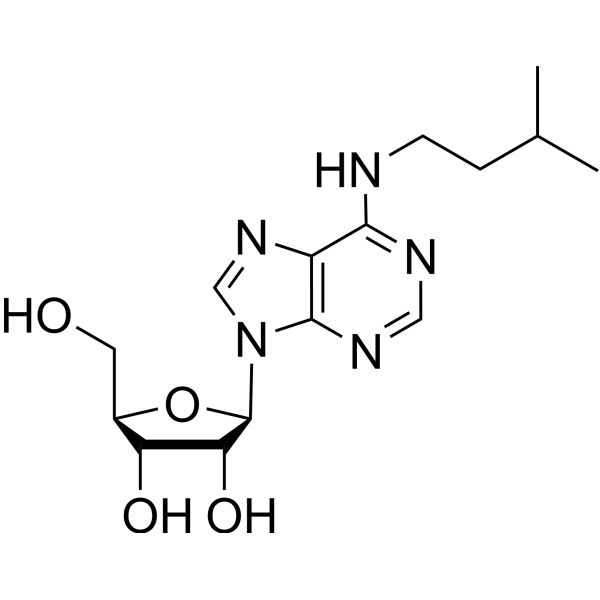 0 ImagesCat. No.: HY-152309CAS No.: 17659-78-8
N-(3-Methylbutyl)adenosine is an adenosine analog. Adenosine analogs mostly act as smooth muscle vasodilators and have also been shown to inhibit cancer progression. Its popular products are adenosine phosphate, Acadesine (HY-13417), Clofarabine (HY-A0005), Fludarabine phosphate (HY-B0028) and Vidarabine (HY-B0277).
-
mmu-miR-499-3p inhibitor
 0 ImagesCat. No.: HY-RI03231
mmu-miR-499-3p inhibitors are chemically-modified oligonucleotides that hybridize with mature miRNAs. The miRNA inhibitors have full-length nucleotide 2'-methoxy modification. The miRNA inhibitors strongly compete with mature miRNAs to prevent the complementary pairing of miRNAs and their target genes, thereby inhibiting miRNAs from functioning.
-
mmu-miR-7056-5p antagomir
 0 ImagesCat. No.: HY-RI03856A
mmu-miR-7056-5p antagomirs are chemically-modified oligonucleotides that hybridize with mature miRNAs. The miRNA antagomirs have 2 phosphorothioates at the 5' end, 4 phosphorothioates at the 3' end, 1 cholesterol group at the 3' end, and full-length nucleotide 2'-methoxy modification. The miRNA antagomirs strongly compete with mature miRNAs to prevent the complementary pairing of miRNAs and their target genes, thereby inhibiting miRNAs from functioning. Stability of miRNA antagomirs appears to be significantly higher than miRNA inhibitors, they exhibits enhanced cellular uptake, stability and regulatory activity in vivo.
-
rno-miR-463-3p inhibitor
 0 ImagesCat. No.: HY-RI04477
rno-miR-463-3p inhibitors are chemically-modified oligonucleotides that hybridize with mature miRNAs. The miRNA inhibitors have full-length nucleotide 2'-methoxy modification. The miRNA inhibitors strongly compete with mature miRNAs to prevent the complementary pairing of miRNAs and their target genes, thereby inhibiting miRNAs from functioning.
-
SBP-5147
 0 ImagesCat. No.: HY-181815CAS No.: 1884222-37-0
SBP-5147 is an orally active ULK1/ULK2 inhibitor, with an IC50 of 2 nM against ULK1 and an IC50 of 53 nM against ULK2. SBP-5147 inhibits the phosphorylation of Beclin-1 and Vps34, reduces autophagy flux, downregulates the expression of ATG13 and ATG101, upregulates the expression of MHC-I, induces caspase-dependent apoptosis, and decreases the viability of non-small cell lung cancer cells. SBP-5147 is applicable to research related to non-small cell lung cancer[1].
-
mmu-miR-1943-3p inhibitor
 0 ImagesCat. No.: HY-RI02759
mmu-miR-1943-3p inhibitors are chemically-modified oligonucleotides that hybridize with mature miRNAs. The miRNA inhibitors have full-length nucleotide 2'-methoxy modification. The miRNA inhibitors strongly compete with mature miRNAs to prevent the complementary pairing of miRNAs and their target genes, thereby inhibiting miRNAs from functioning.
-
mmu-miR-6373 antagomir
 0 ImagesCat. No.: HY-RI03379A
mmu-miR-6373 antagomirs are chemically-modified oligonucleotides that hybridize with mature miRNAs. The miRNA antagomirs have 2 phosphorothioates at the 5' end, 4 phosphorothioates at the 3' end, 1 cholesterol group at the 3' end, and full-length nucleotide 2'-methoxy modification. The miRNA antagomirs strongly compete with mature miRNAs to prevent the complementary pairing of miRNAs and their target genes, thereby inhibiting miRNAs from functioning. Stability of miRNA antagomirs appears to be significantly higher than miRNA inhibitors, they exhibits enhanced cellular uptake, stability and regulatory activity in vivo.
-
mmu-miR-7234-3p inhibitor
 0 ImagesCat. No.: HY-RI04005
mmu-miR-7234-3p inhibitors are chemically-modified oligonucleotides that hybridize with mature miRNAs. The miRNA inhibitors have full-length nucleotide 2'-methoxy modification. The miRNA inhibitors strongly compete with mature miRNAs to prevent the complementary pairing of miRNAs and their target genes, thereby inhibiting miRNAs from functioning.
-
BRM/BRG1 ATP-IN-7
 0 ImagesCat. No.: HY-178488CAS No.: 2468048-19-1
BRM/BRG1 ATP-IN-7 (Compound Cpd69) is a selective dual BRM (SMARCA2) and BRG1 (SMARCA4) inhibitor with IC50 values of 12 nM and 8 nM, respectively. BRM/BRG1 ATP-IN-7 is promising for research of BRM/BRG1-dependent cancers (e.g., non-small cell lung cancer, Ewing sarcoma) and virus-associated diseases (e.g., HPV infection).
-
Aspergillusidone D
 0 ImagesCat. No.: HY-N16402CAS No.: 1454585-77-3
Aspergillusidone D (Compound 1), a brominated depsidone, is a Aromatase inhibitor with an IC50 of 0.8 μM. Aspergillusidone D can be isolated from fungus Aspergillus unguis cultured in KBr medium. Aspergillusidone D has potent cytotoxicity against cancers cells, such as MOLT-3 cells. Aspergillusidone D can be used for cancers like breast cancer research.
-
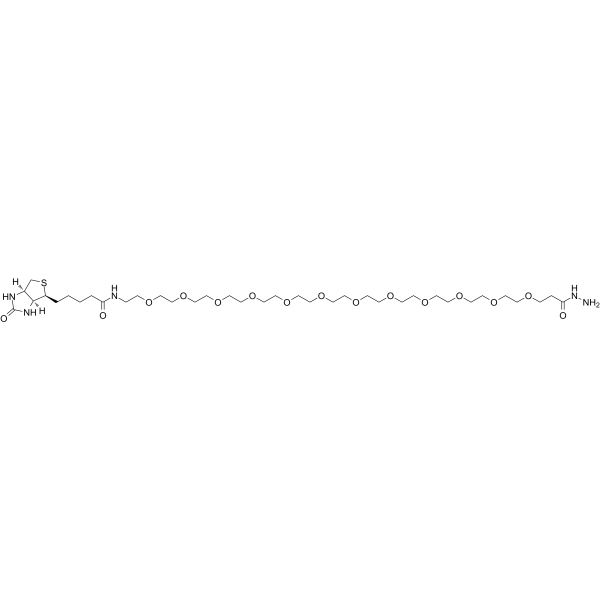
Hydroxy-PEG24-Boc
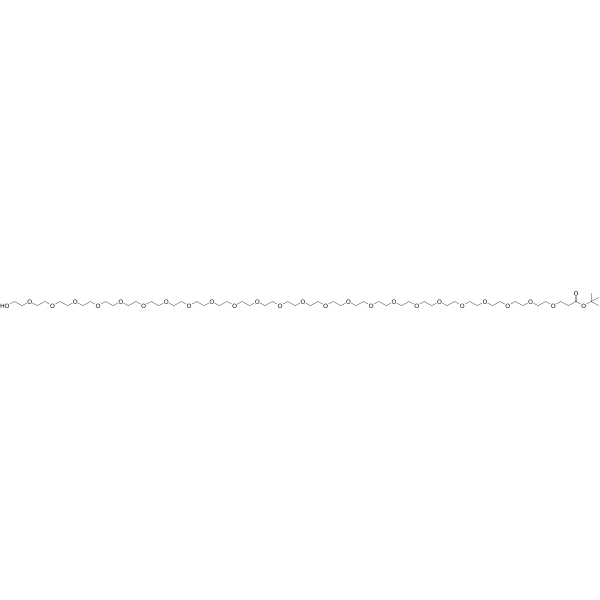 0 ImagesCat. No.: HY-130834CAS No.: 2490419-62-8
-
SRE-II
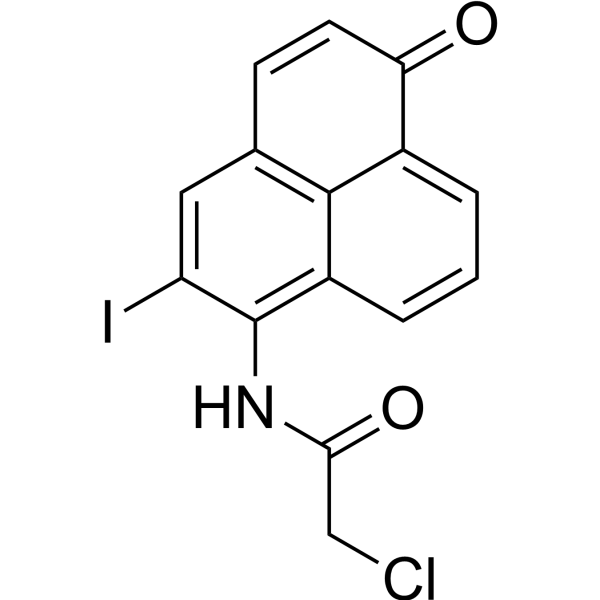 0 ImagesCat. No.: HY-155070
SRE-II, an amide derivative, is an activatable photosensitizer for photodynamic cancer research with decreased fluorescence and photosensitizing capabilities. SRE-II can be further converted into the active photosensitizer SDU Red via carboxylesterase-catalyzed amide bond cleavage. SRE-II induces DNA damage and cell apoptosis in the presence of light. SRE-II can act as a promising theranostic agent for triple-negative breast cancer.
-
SH-E4A-66
 0 ImagesCat. No.: HY-161910
SH-E4A-66 is a C2-COUPLr (COvalent Protein Ligator) with carbazole scaffold barring heterogeneous cysteine reactive warheads (acrylamide and chloroacetamide). SH-E4A-66 is capable of coupling with EML4-ALK (EC50=1.5 μM) and inhibiting the activity of EML4-ALK kinase (IC50=2.3 μM).
-
KST012174 hydrochloride
 0 ImagesCat. No.: HY-165413CAS No.: 1392224-35-9
KST012174 hydrochloride is a potent HIF-1α-p300/CBP interaction inhibitor with an IC50 of 107 μM. KST012174 hydrochloride completely blocks the binding of HIF-1α to p300 protein at a concentration of 100 μM, without affecting the expression stability of HIF-1α protein itself. By directly interfering with the binding between the C-terminal transactivation domain (C-TAD) of HIF-1α and the CH1 domain of p300, KST012174 inhibits the transcriptional activation function of HIF-1α, thereby significantly downregulating the mRNA expression level of its downstream target gene VEGF and exerting core activity in inhibiting tumor angiogenesis. KST012174 hydrochloride is applicable for research on cancer occurrence and development as well as hypoxia pathway-targeted strategies.
-
Scr-IN-1
 0 ImagesCat. No.: HY-170958
Scr-IN-1 (Compound 4e) is a Tyrosine kinase inhibitor. Scr-IN-1 inhibits HCT-116 cells and MIA-PaCa-2 cells with IC50s of 0.16 μM and 1.16 μM, respectively. Scr-IN-1 displays selectivity profile on HCT-116 cells and MIA-PaCa-2 cells with SI > 625 and SI > 86, respectively. Scr-IN-1 induces Apoptosis in HCT-116 colon cancer cell and does not cause any change in the rate of necrotic cells. Scr-IN-1 is a novel SRC kinase inhibitor candidate for HCT-116 cells. Scr-IN-1 is potential for cancer research.



