



Cancer Targeted Therapy
Cancer targeted therapy is the foundation of precision medicine; it uses drugs or other substances to target specific genes and proteins that control cancer cells’ growth, division and spreading. Compared to traditional chemotherapy drugs, targeted-drugs can specifically act on cancer cells with high efficacy without damaging normal cells. Drugs used in cancer targeted therapy mainly includes small molecules and macromolecules (e.g., monoclonal antibodies), which can target cancer cells and constituents in the tumor microenvironment to activate the immune system. Anti-angiogenesis drugs, such as those targeting vascular endothelial growth factor (VEGF), epidermal growth factor receptor (EGFR), transforming growth factor (TGF)-α, TGF-β, Tumor necrosis factor (TNF)-α, and platelet-derived endothelial growth factor (PDGFR) inhibit the proliferation and metastasis of cancer cells. In recent years, the proportion of antibody drugs in cancer treatment has gradually become prominent. Antibody-drug conjugates (ADCs) are a new type of targeted drugs that are composed of monoclonal antibody, cytotoxic drug and linker. ADCs can deliver drugs to tumor cells and minimize the toxicity to normal tissues. Proteolysis-targeting chimera (PROTAC) is a useful technology for targeted protein degradation. PROTAC exploits the ubiquitin-proteasome system and forms a ternary complex with a hijacked E3 ubiquitin ligase and target protein, leading to polyubiquitination and degradation of the target protein.
Targeted therapy is a useful strategy in treatment of cancer either alone or in combination with standard chemotherapy. At present, targeted therapy has proved significant clinical success in the treatment of many types of cancer, including breast cancer, colorectal cancer, leukemia, ovarian cancer and lung cancer.
-
Napabucasin analogue
 0 ImagesCat. No.: HY-159573CAS No.: 1133287-34-9
Napabucasin analogue is a PROTAC target protein ligand (Ligands for Target Protein for PROTACs). Napabucasin analogue can be used in synthesis Napabucasin (HY-13919).
-
GPX4-IN-11
 0 ImagesCat. No.: HY-162717CAS No.: 951570-56-2
GPX4-IN-11 (compound I14) is a potent inhibitor of GPX4, with the KD of 45.7 μM. GPX4-IN-11 plays an important role in ferroptosis research.

-
Jaceidin
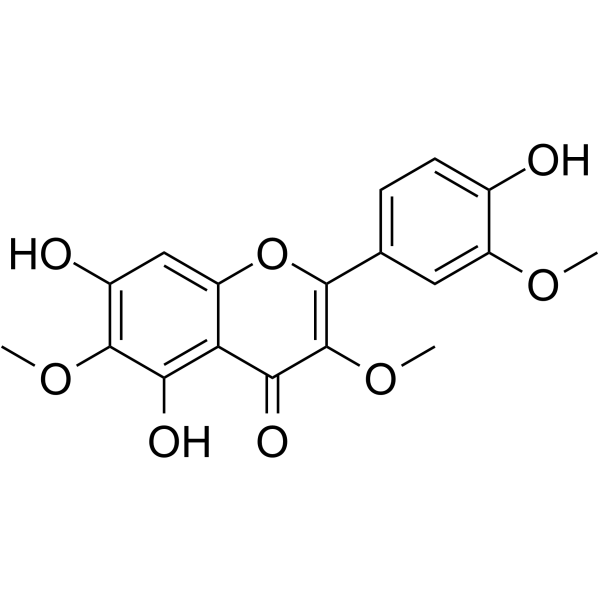 0 ImagesCat. No.: HY-114535CAS No.: 10173-01-0
Jaceidin is a promising lead molecule for potent VEGFR inhibitor with excellent membrane permeability and oral bioavailability. Jaceidin exhibits anti-tumor activities.
-
Hydroxy-PEG24-Boc
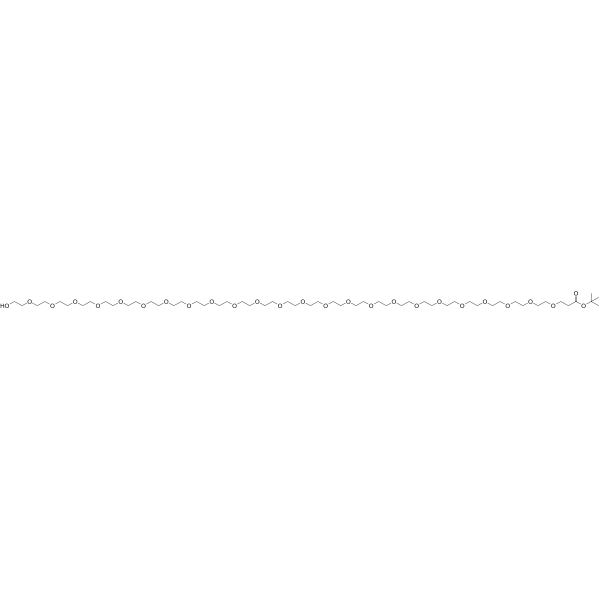 0 ImagesCat. No.: HY-130834CAS No.: 2490419-62-8
-
hsa-miR-548f-5p antagomir
 0 ImagesCat. No.: HY-RI01684A
hsa-miR-548f-5p antagomirs are chemically-modified oligonucleotides that hybridize with mature miRNAs. The miRNA antagomirs have 2 phosphorothioates at the 5' end, 4 phosphorothioates at the 3' end, 1 cholesterol group at the 3' end, and full-length nucleotide 2'-methoxy modification. The miRNA antagomirs strongly compete with mature miRNAs to prevent the complementary pairing of miRNAs and their target genes, thereby inhibiting miRNAs from functioning. Stability of miRNA antagomirs appears to be significantly higher than miRNA inhibitors, they exhibits enhanced cellular uptake, stability and regulatory activity in vivo.
-
Sodium acetate trihydrate, United States Pharmacopeia (USP) Reference Standard
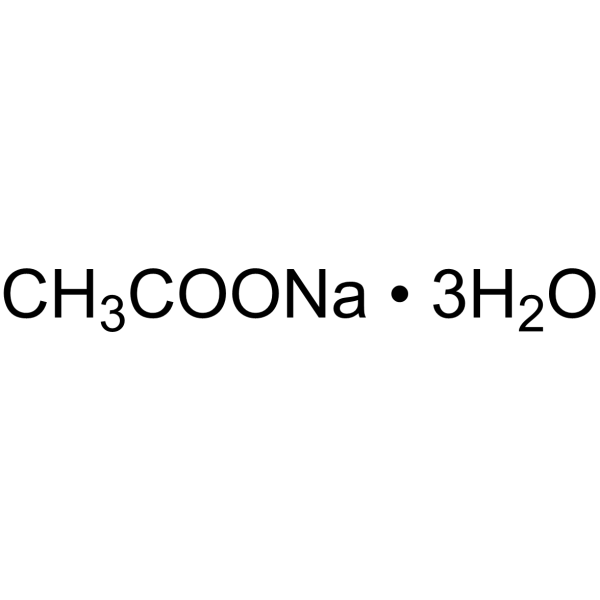 0 ImagesSynonyms: Sodium acetate trihydrate (Pharmaceutical primary standard, USP)
Sodium acetate trihydrate, United States Pharmacopeia (USP) Reference Standard (Sodium acetate trihydrate (Pharmaceutical primary standard, USP)) is a carboxylic acid and short-chain fatty acid (SCFAs). Sodium acetate trihydrate activates AMPK, increases ROS, cleaved caspase 9, PPARα, downregulates SREBP-1c, ChREBP expression. Sodium acetate trihydrate exhibits antifungal activity against Saccharomyces cerevisiae W303-1A. Sodium acetate trihydrate regulates energy metabolism. Sodium acetate trihydrate has anticancer activity against gastric cancer. Sodium acetate trihydrate induces writhing reaction and ulcerative colitis. Sodium acetate trihydrate can be used in the researches for gastric cancer, ulcerative colitis, hepatic steatosis, and pain.
-
ZYJ-34v
 0 ImagesCat. No.: HY-139796CAS No.: 1450662-32-4
ZYJ-34v is an orally active histone deacetylase inhibitor. ZYJ-34v has antitumor activity.
-
N-(Biotin-PEG4)-N-bis(PEG4-Boc)
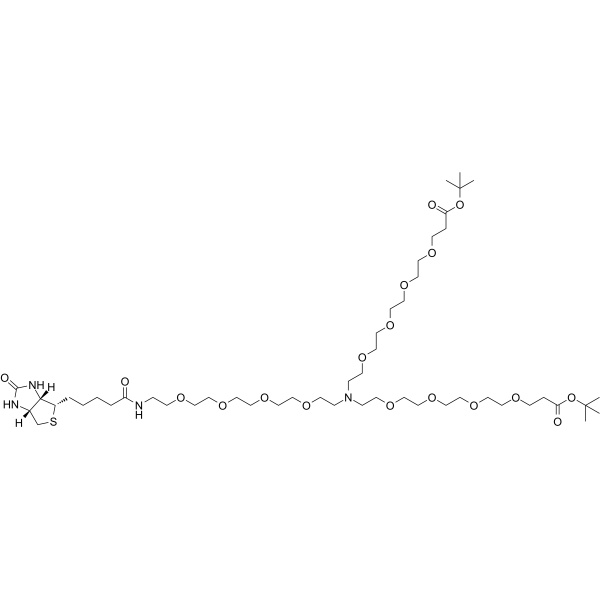 0 ImagesCat. No.: HY-141288CAS No.: 2112730-79-5
-
hsa-miR-3158-5p inhibitor
 0 ImagesCat. No.: HY-RI00611
hsa-miR-3158-5p inhibitors are chemically-modified oligonucleotides that hybridize with mature miRNAs. The miRNA inhibitors have full-length nucleotide 2'-methoxy modification. The miRNA inhibitors strongly compete with mature miRNAs to prevent the complementary pairing of miRNAs and their target genes, thereby inhibiting miRNAs from functioning.
-
Bis-methacrylate-PEG5
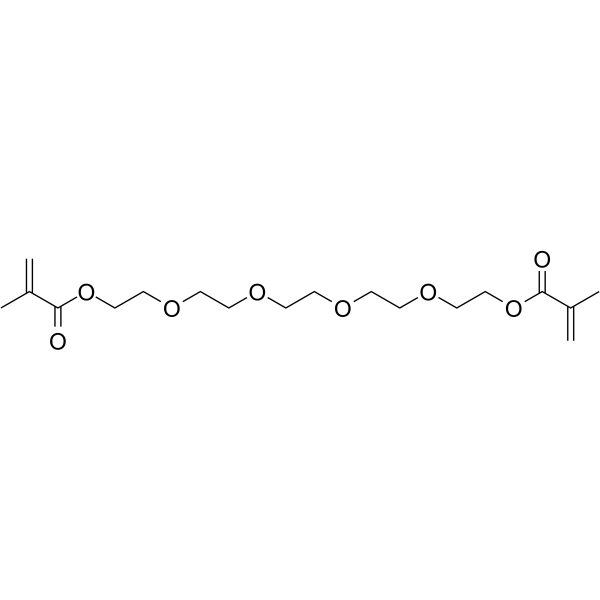 0 ImagesCat. No.: HY-W096161CAS No.: 13497-24-0
-
DSPE-PEG1000-SP94
 0 ImagesCat. No.: HY-172499
DSPE-PEG1000-Mal-CLPLIPTHIISFS is a PEG compound composed of DSPE and the liver cancer targeting peptide SP94 (HY-P11050A) (sequence SFSIIHTPILPL). SP94 exhibits specific binding to hepatocellular carcinoma (HCC) cells. DSPE-PEG1000-Mal-CLPLIPTHIISFS can be used to prepare lipid nanoparticles to form liver cancer-targeting nanocarriers.
-
UNPD139734
 0 ImagesCat. No.: HY-181140CAS No.: 116764-24-0
UNPD139734 is a CDK-1 inhibitor and PARP-1 inhibitor that forms stable complexes with each target protein. UNPD139734 serves as a lead compound for structural optimization to develop dual-target anticancer agents targeting CDK-1 and PARP-1. UNPD139734 can be used for the research of breast cancer.
-
MC-AcLys-GDEVD-PABC-Exatecan
 0 ImagesCat. No.: HY-185101
MC-AcLys-GDEVD-PABC-Exatecan (MC-AcLys-GDEVD-PABC-DX8951) is a agent-linker conjugate for ADC. MC-AcLys-GDEVD-PABC-Exatecan is a DX8951 (a DNA topoisomerase I inhibitor) derivative with a novel caspase-3 cleavable peptide linker MC-AcLys-GDEVD-PABC linker. MC-AcLys-GDEVD-PABC-Exatecan can be used to prepare DX8951 antibody conjugate (ADC), and it exhibites significant bystander effect mediated by the caspase-3-triggered extracellular cleavage of the linker, enhancing payload release into the tumor microenvironment.
-
mmu-miR-3971 inhibitor
 0 ImagesCat. No.: HY-RI03135
mmu-miR-3971 inhibitors are chemically-modified oligonucleotides that hybridize with mature miRNAs. The miRNA inhibitors have full-length nucleotide 2'-methoxy modification. The miRNA inhibitors strongly compete with mature miRNAs to prevent the complementary pairing of miRNAs and their target genes, thereby inhibiting miRNAs from functioning.
-
mmu-miR-7013-3p inhibitor
 0 ImagesCat. No.: HY-RI03760
mmu-miR-7013-3p inhibitors are chemically-modified oligonucleotides that hybridize with mature miRNAs. The miRNA inhibitors have full-length nucleotide 2'-methoxy modification. The miRNA inhibitors strongly compete with mature miRNAs to prevent the complementary pairing of miRNAs and their target genes, thereby inhibiting miRNAs from functioning.
-
rno-miR-3544 inhibitor
 0 ImagesCat. No.: HY-RI04381
rno-miR-3544 inhibitors are chemically-modified oligonucleotides that hybridize with mature miRNAs. The miRNA inhibitors have full-length nucleotide 2'-methoxy modification. The miRNA inhibitors strongly compete with mature miRNAs to prevent the complementary pairing of miRNAs and their target genes, thereby inhibiting miRNAs from functioning.
-
SDR-04
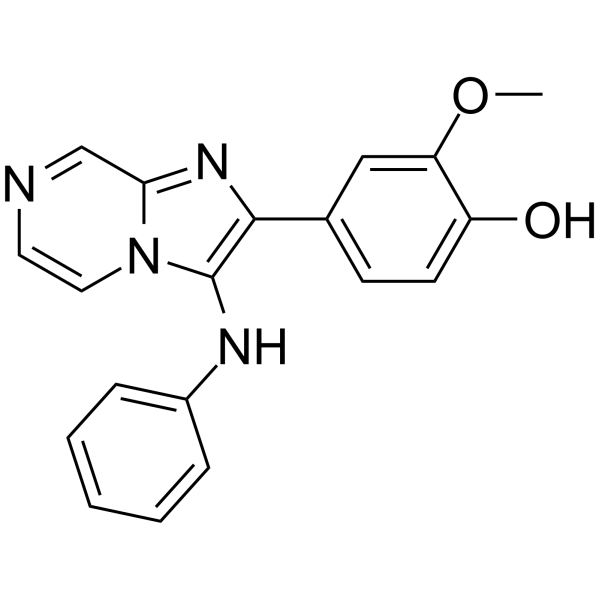 0 ImagesCat. No.: HY-146741CAS No.: 879593-54-1
-
XF056-132
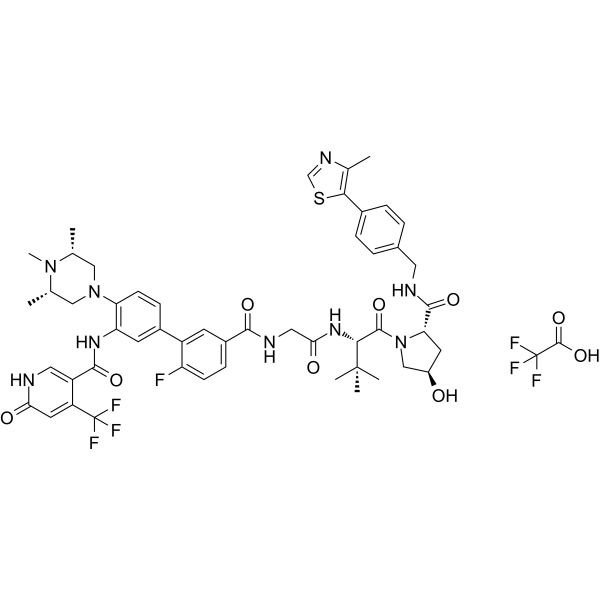 0 ImagesCat. No.: HY-150400ACAS No.: 2694057-55-9Synonyms: MS132N TFA
XF056-132 (MS132N TFA) is an inactive WDR5 PROTAC degrader with a Kd value of 106 nM against human targets, and exhibits no significant binding to the VHL complex, serves as a negative control for MS132. XF056-132 binds to WDR5, does not induce WDR5 degradation in pancreatic cancer cells, and exerts no inhibitory effect on adenocarcinoma cells. XF056-132 can be used in the research of pancreatic ductal adenocarcinoma.
-
5’-O-Benzoyl-2’,3’-di-O-acetyl-4’-C-fluoromethyluridine
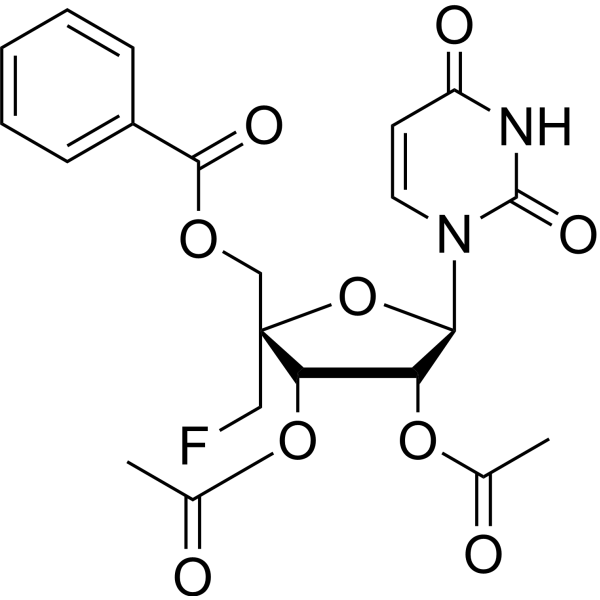 0 ImagesCat. No.: HY-154023
5’-O-Benzoyl-2’,3’-di-O-acetyl-4’-C-fluoromethyluridine is a purine nucleoside analog. Purine nucleoside analogs have broad antitumor activity targeting indolent lymphoid malignancies. Anticancer mechanisms in this process rely on inhibition of DNA synthesis, induction of apoptosis, etc.



