



Cancer Targeted Therapy
Cancer targeted therapy is the foundation of precision medicine; it uses drugs or other substances to target specific genes and proteins that control cancer cells’ growth, division and spreading. Compared to traditional chemotherapy drugs, targeted-drugs can specifically act on cancer cells with high efficacy without damaging normal cells. Drugs used in cancer targeted therapy mainly includes small molecules and macromolecules (e.g., monoclonal antibodies), which can target cancer cells and constituents in the tumor microenvironment to activate the immune system. Anti-angiogenesis drugs, such as those targeting vascular endothelial growth factor (VEGF), epidermal growth factor receptor (EGFR), transforming growth factor (TGF)-α, TGF-β, Tumor necrosis factor (TNF)-α, and platelet-derived endothelial growth factor (PDGFR) inhibit the proliferation and metastasis of cancer cells. In recent years, the proportion of antibody drugs in cancer treatment has gradually become prominent. Antibody-drug conjugates (ADCs) are a new type of targeted drugs that are composed of monoclonal antibody, cytotoxic drug and linker. ADCs can deliver drugs to tumor cells and minimize the toxicity to normal tissues. Proteolysis-targeting chimera (PROTAC) is a useful technology for targeted protein degradation. PROTAC exploits the ubiquitin-proteasome system and forms a ternary complex with a hijacked E3 ubiquitin ligase and target protein, leading to polyubiquitination and degradation of the target protein.
Targeted therapy is a useful strategy in treatment of cancer either alone or in combination with standard chemotherapy. At present, targeted therapy has proved significant clinical success in the treatment of many types of cancer, including breast cancer, colorectal cancer, leukemia, ovarian cancer and lung cancer.
-
Propargyl-PEG8-SH
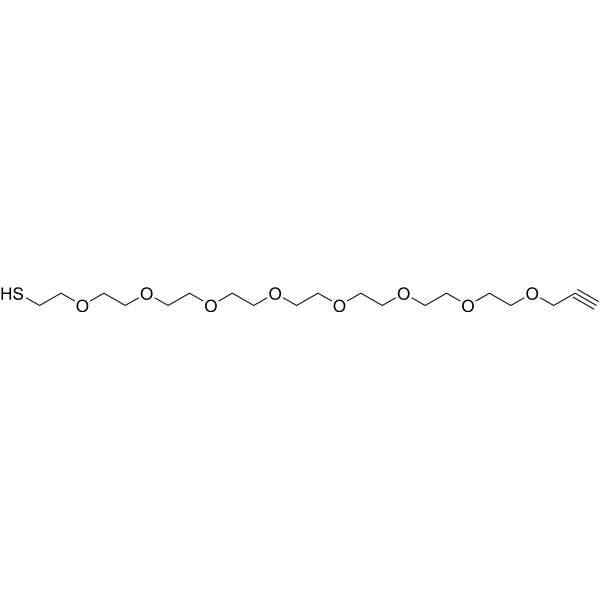 0 ImagesCat. No.: HY-130910CAS No.: 1422540-92-8
-
Multi-kinase-IN-12
 0 ImagesCat. No.: HY-18692CAS No.: 597544-21-3
Multi-kinase-IN-12 is a non-selective multi-target inhibitor, with IC50 values against human targets as follows: Flt3 < 0.001 μM, c-Src 0.002 μM, KDR 0.004 μM, Eph-A2, MNK-1 and Flt1 0.011 μM, Lck 0.016 μM, Rsk1 0.21 μM, and α2 subunit of AMPK 0.041 μM. Multi-kinase-IN-12 can be used in research related to solid tumors.
-
VH 032 amide-alkylC6-acid
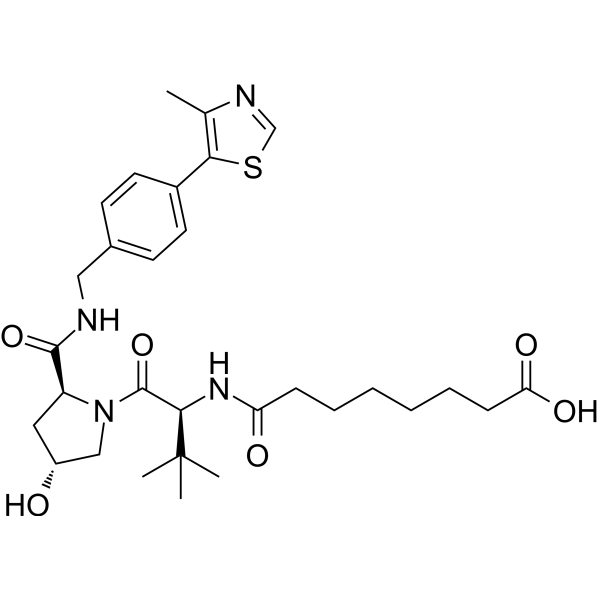 0 ImagesCat. No.: HY-44630CAS No.: 2172819-75-7Synonyms: (S,R,S)-AHPC-CO-C6-COOH
VH 032 amide-alkylC6-acid ((S,R,S)-AHPC-CO-C6-COOH) is a VH032 analog that acts as a ligand for VHL, recruiting von Hippel-Lindau (VHL) protein. VH 032 amide-alkylC6-acid can be used in the synthesis of PROTACs.
-
mmu-miR-483-5p antagomir
 0 ImagesCat. No.: HY-RI03214A
mmu-miR-483-5p antagomirs are chemically-modified oligonucleotides that hybridize with mature miRNAs. The miRNA antagomirs have 2 phosphorothioates at the 5' end, 4 phosphorothioates at the 3' end, 1 cholesterol group at the 3' end, and full-length nucleotide 2'-methoxy modification. The miRNA antagomirs strongly compete with mature miRNAs to prevent the complementary pairing of miRNAs and their target genes, thereby inhibiting miRNAs from functioning. Stability of miRNA antagomirs appears to be significantly higher than miRNA inhibitors, they exhibits enhanced cellular uptake, stability and regulatory activity in vivo.
-
mmu-miR-7048-5p antagomir
 0 ImagesCat. No.: HY-RI03839A
mmu-miR-7048-5p antagomirs are chemically-modified oligonucleotides that hybridize with mature miRNAs. The miRNA antagomirs have 2 phosphorothioates at the 5' end, 4 phosphorothioates at the 3' end, 1 cholesterol group at the 3' end, and full-length nucleotide 2'-methoxy modification. The miRNA antagomirs strongly compete with mature miRNAs to prevent the complementary pairing of miRNAs and their target genes, thereby inhibiting miRNAs from functioning. Stability of miRNA antagomirs appears to be significantly higher than miRNA inhibitors, they exhibits enhanced cellular uptake, stability and regulatory activity in vivo.
-
rno-miR-421-3p antagomir
 0 ImagesCat. No.: HY-RI04460A
rno-miR-421-3p antagomirs are chemically-modified oligonucleotides that hybridize with mature miRNAs. The miRNA antagomirs have 2 phosphorothioates at the 5' end, 4 phosphorothioates at the 3' end, 1 cholesterol group at the 3' end, and full-length nucleotide 2'-methoxy modification. The miRNA antagomirs strongly compete with mature miRNAs to prevent the complementary pairing of miRNAs and their target genes, thereby inhibiting miRNAs from functioning. Stability of miRNA antagomirs appears to be significantly higher than miRNA inhibitors, they exhibits enhanced cellular uptake, stability and regulatory activity in vivo.
-
Cucurbitacin I (Standard)
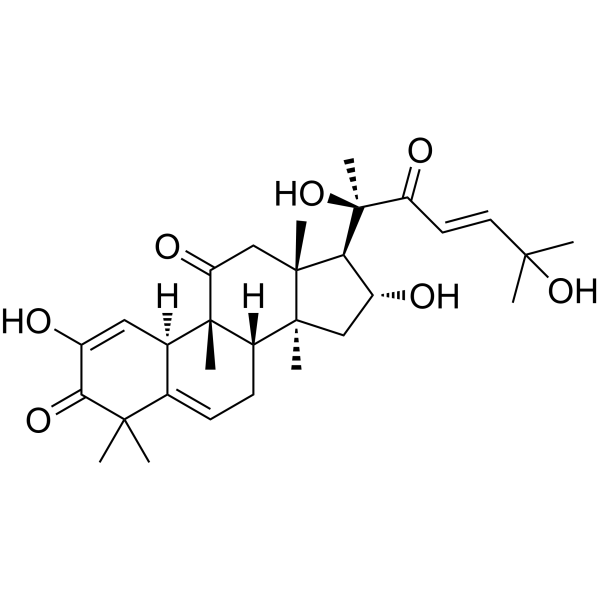 0 ImagesSynonyms: Elatericin B (Standard); JSI-124 (Standard); NSC-521777 (Standard)
Cucurbitacin I (Standard) is the analytical standard of Cucurbitacin I. This product is intended for research and analytical applications. Cucurbitacin I is a natural selective inhibitor of JAK2/STAT3, with potent anti-cancer activity.
-
BRD4-IN-4
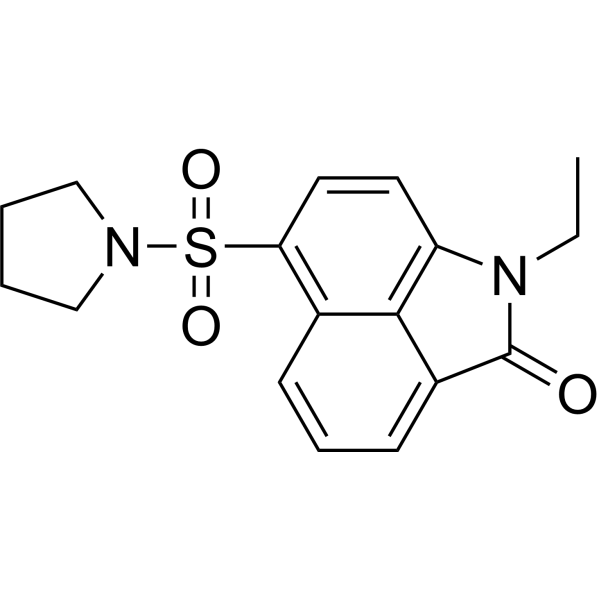 0 ImagesCat. No.: HY-153751CAS No.: 304685-40-3
BRD4-IN-4 (Compound 1) is a BRD4 inhibitor (IC50=6.83 μM). BRD4-IN-4 selectively inhibits MV4-11 cell line proliferation and arrests cell at G1 phase. BRD4-IN-4 can be used for research of MLL leukemia.
-
Pyrene-PEG5-alcohol
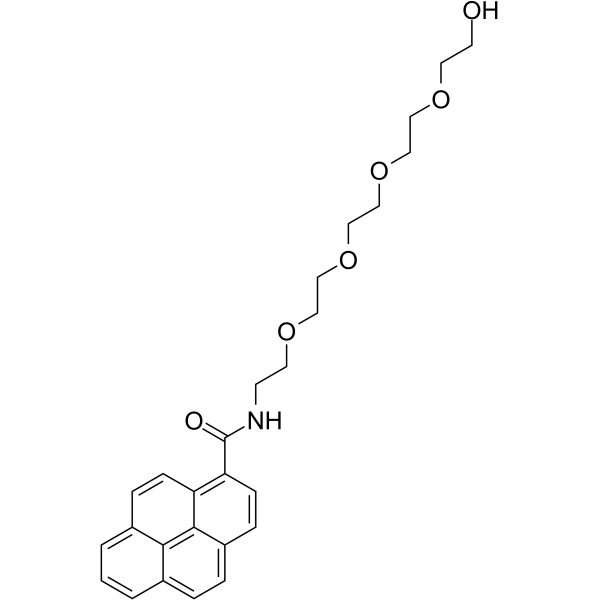 0 ImagesCat. No.: HY-141093CAS No.: 1817735-44-6
-
SMU-037
 0 ImagesCat. No.: HY-178391
SMU-037 is an orally active and selective ROS1 inhibitor that demonstrates potent activity (IC₅₀ = 6.8 nM) and possesses the ability to penetrate the blood-brain barrier. SMU-037 shows ~25-fold selectivity over ALK, and superior sensitivity against the G2032R mutation. SMU-037 attenuates phosphorylation of ROS1 and downstream MAPK-ERK signaling pathway, leading to cell cycle arrest and apoptosis. SMU-037 effectively suppresses tumor progression in both xenograft and intracranial mouse models. SMU-037 can be used for non-small cell lung cancer (NSCLC) research.
-
Tubulin-IN-66
 0 ImagesCat. No.: HY-182753CAS No.: 3110538-32-1
Tubulin-IN-66 is a tubulin (tubulin) and P-gp inhibitor with antiproliferative activity against cancer cells. Tubulin-IN-66 covalently binds to the Colchicine (HY-16569)-binding site at Cys239 of the β-tubulin subunit, inhibits tubulin polymerization and disrupts the microtubule network. Tubulin-IN-66 inhibits P-gp function to overcome multidrug resistance. Tubulin-IN-66 arrests the cell cycle at the G2/M phase and induces apoptosis (apoptosis). Tubulin-IN-66 inhibits colony formation and migration of cancer cells. Tubulin-IN-66 can be used in the research of tumors such as breast cancer.
-
hsa-miR-29c-5p antagomir
 0 ImagesCat. No.: HY-RI00514A
hsa-miR-29c-5p antagomirs are chemically-modified oligonucleotides that hybridize with mature miRNAs. The miRNA antagomirs have 2 phosphorothioates at the 5' end, 4 phosphorothioates at the 3' end, 1 cholesterol group at the 3' end, and full-length nucleotide 2'-methoxy modification. The miRNA antagomirs strongly compete with mature miRNAs to prevent the complementary pairing of miRNAs and their target genes, thereby inhibiting miRNAs from functioning. Stability of miRNA antagomirs appears to be significantly higher than miRNA inhibitors, they exhibits enhanced cellular uptake, stability and regulatory activity in vivo.
-
DMG-PEG2000-APRPG
 0 ImagesCat. No.: HY-187910ASynonyms: DMG-PEG2000-Mal-Cys-APRPG
DMG-PEG2000-APRPG (DMG-PEG2000-Mal-Cys-APRPG) is a functionalized PEGylated phospholipid conjugate composed of three modular components: dimyristoylglycerol (DMG) as a lipid anchoring group, a 2000 Da polyethylene glycol (PEG) spacer arm, and an APRPG peptide as a terminal targeting/functional ligand. DMG-PEG2000-APRPG can be used in research on tumor angiogenesis-targeted drug delivery.
-
hsa-miR-4516 antagomir
 0 ImagesCat. No.: HY-RI01135A
hsa-miR-4516 antagomirs are chemically-modified oligonucleotides that hybridize with mature miRNAs. The miRNA antagomirs have 2 phosphorothioates at the 5' end, 4 phosphorothioates at the 3' end, 1 cholesterol group at the 3' end, and full-length nucleotide 2'-methoxy modification. The miRNA antagomirs strongly compete with mature miRNAs to prevent the complementary pairing of miRNAs and their target genes, thereby inhibiting miRNAs from functioning. Stability of miRNA antagomirs appears to be significantly higher than miRNA inhibitors, they exhibits enhanced cellular uptake, stability and regulatory activity in vivo.
-
hsa-miR-567 inhibitor
 0 ImagesCat. No.: HY-RI01756
hsa-miR-567 inhibitors are chemically-modified oligonucleotides that hybridize with mature miRNAs. The miRNA inhibitors have full-length nucleotide 2'-methoxy modification. The miRNA inhibitors strongly compete with mature miRNAs to prevent the complementary pairing of miRNAs and their target genes, thereby inhibiting miRNAs from functioning.
-
hsa-miR-7151-5p antagomir
 0 ImagesCat. No.: HY-RI02376A
hsa-miR-7151-5p antagomirs are chemically-modified oligonucleotides that hybridize with mature miRNAs. The miRNA antagomirs have 2 phosphorothioates at the 5' end, 4 phosphorothioates at the 3' end, 1 cholesterol group at the 3' end, and full-length nucleotide 2'-methoxy modification. The miRNA antagomirs strongly compete with mature miRNAs to prevent the complementary pairing of miRNAs and their target genes, thereby inhibiting miRNAs from functioning. Stability of miRNA antagomirs appears to be significantly higher than miRNA inhibitors, they exhibits enhanced cellular uptake, stability and regulatory activity in vivo.
-
mmu-miR-1929-3p antagomir
 0 ImagesCat. No.: HY-RI02741A
mmu-miR-1929-3p antagomirs are chemically-modified oligonucleotides that hybridize with mature miRNAs. The miRNA antagomirs have 2 phosphorothioates at the 5' end, 4 phosphorothioates at the 3' end, 1 cholesterol group at the 3' end, and full-length nucleotide 2'-methoxy modification. The miRNA antagomirs strongly compete with mature miRNAs to prevent the complementary pairing of miRNAs and their target genes, thereby inhibiting miRNAs from functioning. Stability of miRNA antagomirs appears to be significantly higher than miRNA inhibitors, they exhibits enhanced cellular uptake, stability and regulatory activity in vivo.
-
mmu-miR-6357 inhibitor
 0 ImagesCat. No.: HY-RI03363
mmu-miR-6357 inhibitors are chemically-modified oligonucleotides that hybridize with mature miRNAs. The miRNA inhibitors have full-length nucleotide 2'-methoxy modification. The miRNA inhibitors strongly compete with mature miRNAs to prevent the complementary pairing of miRNAs and their target genes, thereby inhibiting miRNAs from functioning.
-
mmu-miR-7225-5p antagomir
 0 ImagesCat. No.: HY-RI03988A
mmu-miR-7225-5p antagomirs are chemically-modified oligonucleotides that hybridize with mature miRNAs. The miRNA antagomirs have 2 phosphorothioates at the 5' end, 4 phosphorothioates at the 3' end, 1 cholesterol group at the 3' end, and full-length nucleotide 2'-methoxy modification. The miRNA antagomirs strongly compete with mature miRNAs to prevent the complementary pairing of miRNAs and their target genes, thereby inhibiting miRNAs from functioning. Stability of miRNA antagomirs appears to be significantly higher than miRNA inhibitors, they exhibits enhanced cellular uptake, stability and regulatory activity in vivo.
-
AR antagonist 4
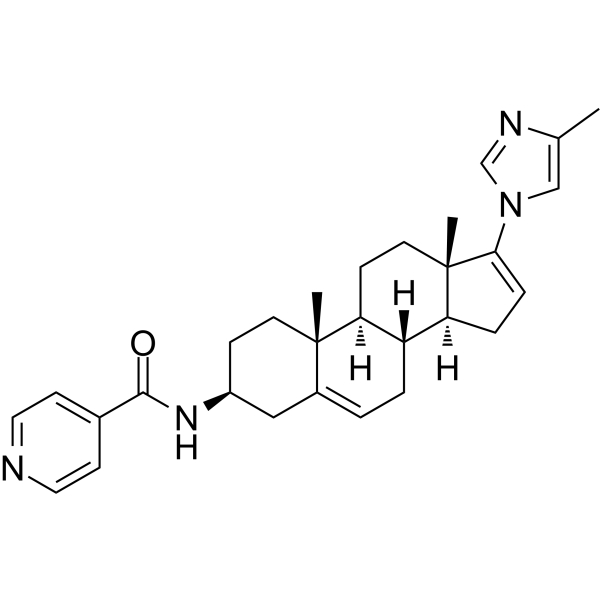 0 ImagesCat. No.: HY-151266CAS No.: 2883447-45-6
AR antagonist 4 is an orally active androgen receptor (AR) antagonist with a DC50 of 2.84 μM in LNCaP human prostate cancer cells. AR antagonist 4 inhibits dihydrotestosterone-induced AR transcriptional activity, promotes proteasome-dependent AR degradation, and dose-dependently promotes AR-V7 degradation. AR antagonist 4 can be used for the research of metastatic castration-resistant prostate cancer.



