



Cancer Targeted Therapy
Cancer targeted therapy is the foundation of precision medicine; it uses drugs or other substances to target specific genes and proteins that control cancer cells’ growth, division and spreading. Compared to traditional chemotherapy drugs, targeted-drugs can specifically act on cancer cells with high efficacy without damaging normal cells. Drugs used in cancer targeted therapy mainly includes small molecules and macromolecules (e.g., monoclonal antibodies), which can target cancer cells and constituents in the tumor microenvironment to activate the immune system. Anti-angiogenesis drugs, such as those targeting vascular endothelial growth factor (VEGF), epidermal growth factor receptor (EGFR), transforming growth factor (TGF)-α, TGF-β, Tumor necrosis factor (TNF)-α, and platelet-derived endothelial growth factor (PDGFR) inhibit the proliferation and metastasis of cancer cells. In recent years, the proportion of antibody drugs in cancer treatment has gradually become prominent. Antibody-drug conjugates (ADCs) are a new type of targeted drugs that are composed of monoclonal antibody, cytotoxic drug and linker. ADCs can deliver drugs to tumor cells and minimize the toxicity to normal tissues. Proteolysis-targeting chimera (PROTAC) is a useful technology for targeted protein degradation. PROTAC exploits the ubiquitin-proteasome system and forms a ternary complex with a hijacked E3 ubiquitin ligase and target protein, leading to polyubiquitination and degradation of the target protein.
Targeted therapy is a useful strategy in treatment of cancer either alone or in combination with standard chemotherapy. At present, targeted therapy has proved significant clinical success in the treatment of many types of cancer, including breast cancer, colorectal cancer, leukemia, ovarian cancer and lung cancer.
-
Cromolyn-d5
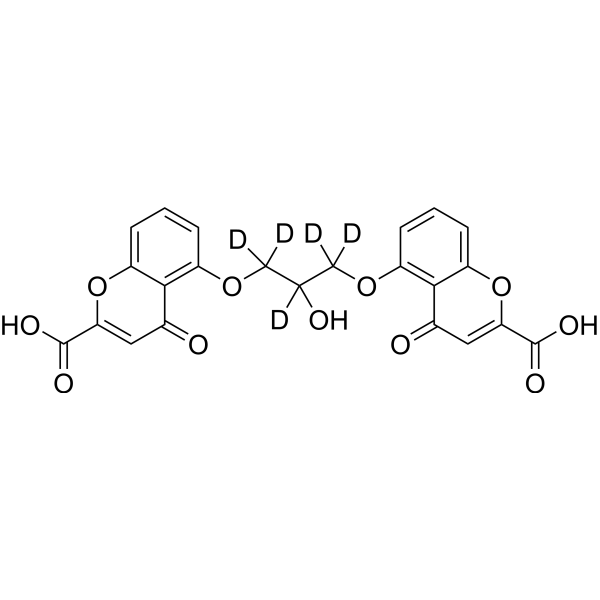 0 ImagesCat. No.: HY-B1619SCAS No.: 2140317-08-2Synonyms: Cromoglycate-d5; Cromoglicic acid-d5; FPL-670-d5 free acid
Cromolyn-d5 (Cromoglycate-d5) is the deuterium labeled Cromolyn (HY-B1619). Cromolyn (Cromoglycate) is an orally active GSK-3β inhibitor with an IC50 of 2.0 μM. Cromolyn is also a mast cell stabilizer that can inhibit the release of mediators from mast cells, regulate reflex bronchoconstriction, and reduce non-specific bronchial hyperreactivity, and Cromolyn can be used in the research of bronchial asthma. In addition, Cromolyn has multiple activities such as anti-inflammatory, anti-allergic, anti-histamine, anti-cancer, and neuroprotective effects.
-
(2S,3S)-Dimethyl 2,3-dihydroxysuccinate
 0 ImagesCat. No.: HY-W016629CAS No.: 13171-64-7
-
Flurbiprofen (Standard)
 0 Images
Flurbiprofen (Standard) is the analytical standard of Flurbiprofen. This product is intended for research and analytical applications. Flurbiprofen (dl-Flurbiprofen) is a potent, orally active nonsteroidal anti-inflammatory agent (NSAIA/NSAID), with antipyretic and analgesic activities. Flurbiprofen is commonly used for the research of inflammatory diseases, including osteoarthritis and rheumatoid arthritis. Flurbiprofen is a non-selective cyclooxygenase (COX) inhibitor that can be used for the research of colorectal cancer.

-
5-Vinyl-uridine
 0 ImagesCat. No.: HY-W416298CAS No.: 55520-64-4
5-Vinyl-uridine is a fluorescent probe that can be used for intracellular RNA imaging, cell division stage imaging, and in vivo tumor imaging in mice. The detection mechanism of 5-Vinyl-uridine relies on metabolic incorporation into cellular RNA during RNA synthesis; after incorporation, it undergoes a bioorthogonal Diels-Alder reaction with Biotin (HY-B0511)-tetrazine. When paired with Streptavidin (HY-P3152)-Alexa Fluor 488, 5-Vinyl-uridine has an Ex/Em = 488/500-550 nm; when using Biotin-tetrazine, the emission peak is at approximately 510 nm, with the excitation/emission filter settings of 450-490/500-550 nm. 5-Vinyl-uridine can be used in tumor-related research.
-
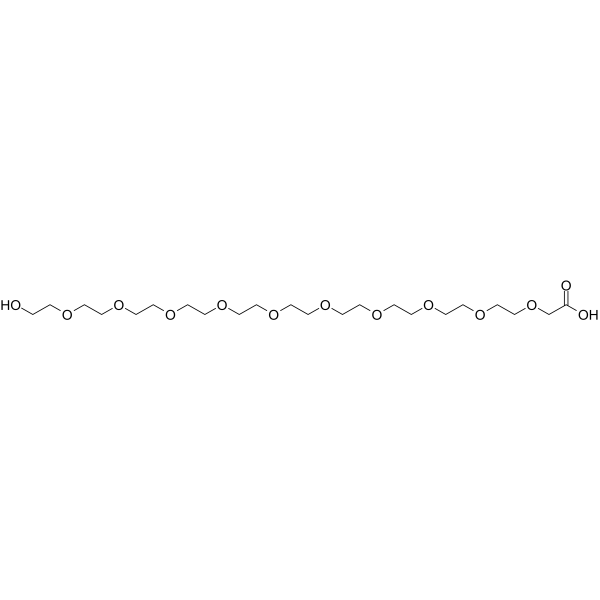
CRBN ligand-884
 0 ImagesCat. No.: HY-W886311CAS No.: 1531527-98-6
-
PD-1/PD-L1-IN-29 intermediate-2
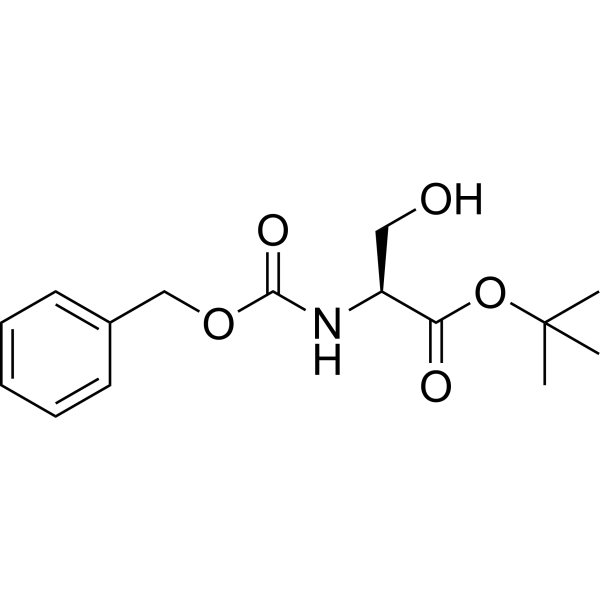 0 ImagesCat. No.: HY-W457085CAS No.: 59859-77-7
PD-1/PD-L1-IN-29 intermediate-2 is an intermediate of PD-1/PD-L1 inhibitors and can be used to synthesize Antibody-Drug Conjugates (ADCs).
-
BAY 61-3606
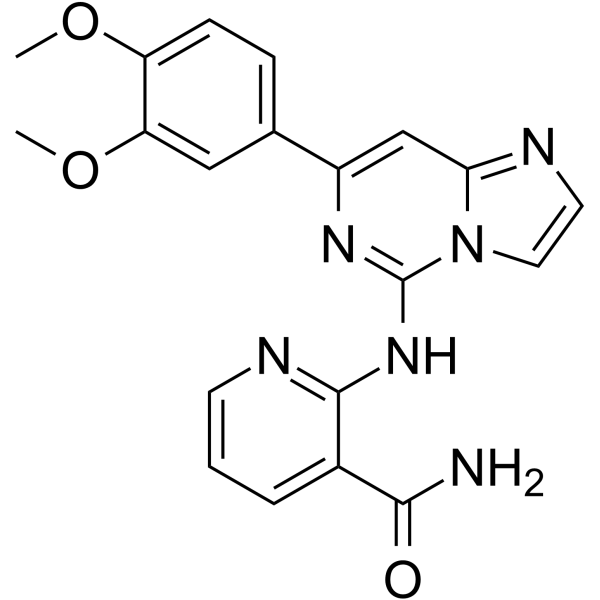 0 ImagesCat. No.: HY-76474CAS No.: 732983-37-8
BAY 61-3606 is an orally available, ATP-competitive, reversible and highly selective Syk inhibitor with a Ki of 7.5 nM and an IC50 of 10 nM. BAY 61-3606 reduces ERK1/2 and Akt phosphorylation in neuroblastoma cell. BAY 61-3606 induces a large decrease of Syk phosphorylation in K-rn cell lysates. Bay 61-3606 sensitizes TRAIL-induced apoptosis by downregulating Mcl-1 in breast cancer cells.
-
CBB1007
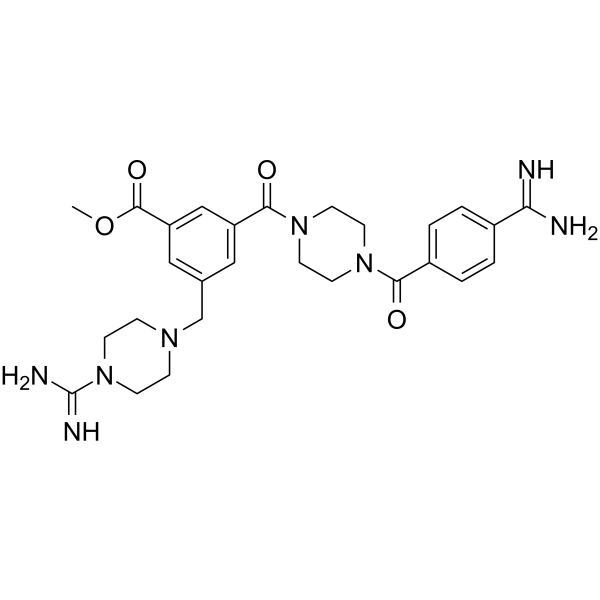 0 ImagesCat. No.: HY-15313CAS No.: 1379573-92-8
CBB1007 is a reversible and selective LSD1 inhibitor with an IC50 of 5.27 µM for human LSD1. CBB1007 significantly blocks the demethylase activity of LSD1 on H3K4Me2 and H3K4Me. CBB1007 shows selectivity for LSD1 over LSD2 or JARID1A, and induces differentiation-related genes in pluripotent cells. CBB1007 is studied in non-pluripotent cancer research, targeting teratocarcinoma, embryonic carcinoma, and seminoma.
-
8-((tert-Butoxycarbonyl)amino)octyl 4-methylbenzenesulfonate
 0 ImagesCat. No.: HY-W109273CAS No.: 1472656-81-7
-
Cbz-NH-PEG3-CH2COOH
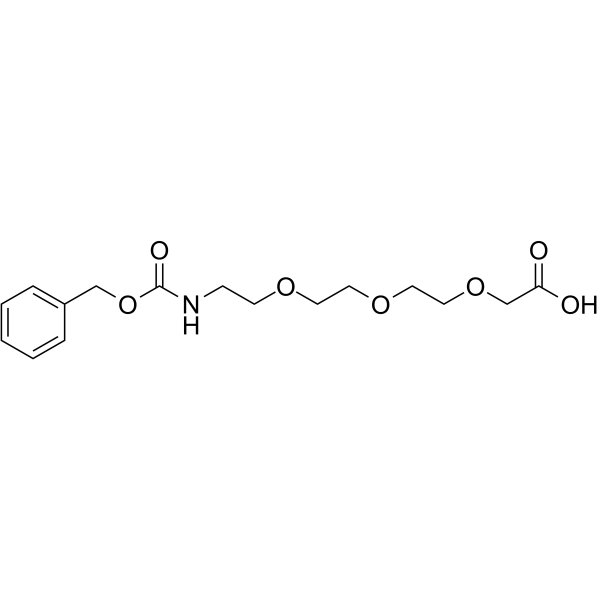 0 ImagesCat. No.: HY-135913CAS No.: 462100-05-6
-
Sgc8c-M
 0 ImagesCat. No.: HY-177571Purity: 98.40%Synonyms: Sgc8c-VcMMAE
Sgc8c-M is a PTK7-targeted aptamer-drug conjugate (ApDC). Sgc8c-M is composed of the classic PTK7-specific aptamer Sgc8c, a cathepsin B (CTSB)-cleavable valine-citrulline (VC)-based linker, and the potent antimitotic agent Monomethyl auristatin E (MMAE) (HY-15162) as the payload. Sgc8c-M inhibits the growth of PTK7-overexpressing cancer cells. Sgc8c-M can be used for the study of PTK7-expressing advanced solid tumors.
-
Filgotinib (Standard)
 0 ImagesSynonyms: GLPG0634 (Standard)

-
DBCO-SS-PEG4-Biotin
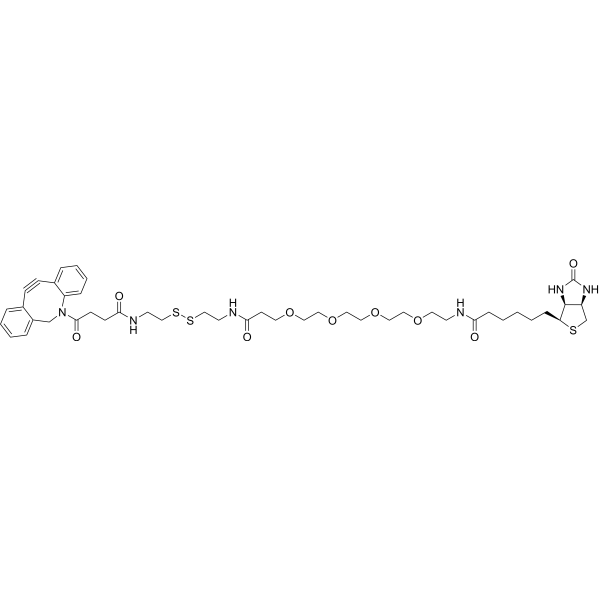 0 ImagesCat. No.: HY-135979
DBCO-SS-PEG4-Biotin is a cleavable 4 unit PEG ADC linker used in the synthesis of antibody-drug conjugates (ADCs). DBCO-SS-PEG4-Biotin is a click chemistry reagent, it contains a DBCO group that can undergo strain-promoted alkyne-azide cycloaddition (SPAAC) with molecules containing Azide groups.
-
Nicardipine hydrochloride (Standard)
 0 ImagesSynonyms: YC-93 (Standard)
Nicardipine (hydrochloride) (Standard) is the analytical standard of Nicardipine (hydrochloride). This product is intended for research and analytical applications. Nicardipine hydrochloride (YC-93) is a calcium channel blocker with an IC50 of 1 μM for blocking cardiac calcium channels. Nicardipine hydrochloride acts as an agent for chronic stable angina and for controlling blood pressure.

-
Lumivatamig
 0 ImagesCat. No.: HY-P991700CAS No.: 3035406-55-1
Lumivatamig is an H-γ1_L-κ-scFvhl dimer-type bispecific antibody targeting CLDN18.2 & CD3E.



