Others
-
Others Related Products (76625)
Related Products (76625)

-
1-Methylcyclohexene
 0 ImagesCat. No.: HY-W004338CAS No.: 591-49-1
1-Methylcyclohexene is a male insect sex pheromone.
-
Bicinchoninic acid
 0 Images
Bicinchoninic acid is a chelating agent targeting CuI. Bicinchoninic acid forms a water-soluble complex with CuI at a 2:1 stoichiometric ratio, which not only inhibits its oxidation and disproportionation reactions, but also mediates the CuI-catalyzed azide-alkyne cycloaddition click chemistry reaction to achieve bioconjugation of fluorophores or biotin with functionalized proteins. Bicinchoninic acid chelates Cu+ from proteins that reduce Cu2+, forming a purple compound detectable by colorimetry, and thus is used to determine the total protein concentration in solution. Bicinchoninic acid is a potential small-molecule candidate for AHAS inhibitors.
-
β-D-Galactosamine pentaacetate
 0 ImagesCat. No.: HY-W005729CAS No.: 3006-60-8
β-D-Galactosamine pentaacetate is an intermediate in the synthesis of triantennary N-Acetylgalactosamine ligands. β-D-Galactosamine pentaacetate can be studied in liver-targeted delivery of siRNA research.
-
Dimethyl 4-chloropyridine-2,6-dicarboxylate
 0 ImagesCat. No.: HY-W006713CAS No.: 5371-70-0
Dimethyl 4-chloropyridine-2,6-dicarboxylate is a drug intermediate for synthesis of various active compounds.
-
CN128 hydrochloride
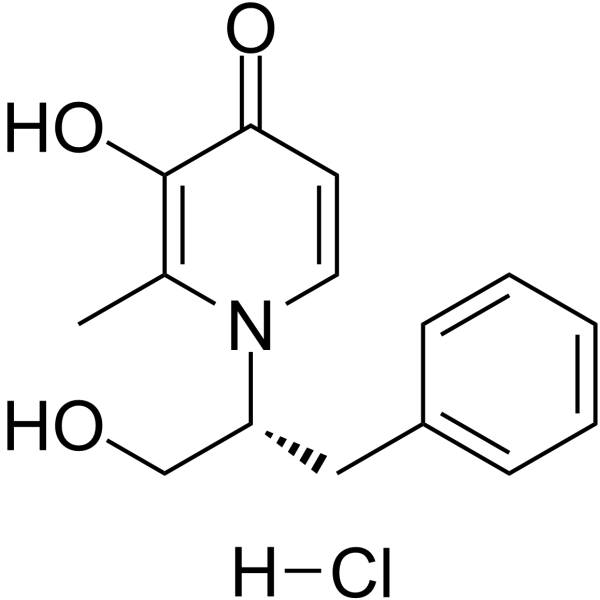 0 ImagesSynonyms: CN328
CN128 hydrochloride (CN328) is an orally active and selective iron chelator. CN128 is used for the research of β-thalassemia.
-
DLin-K-C3-DMA
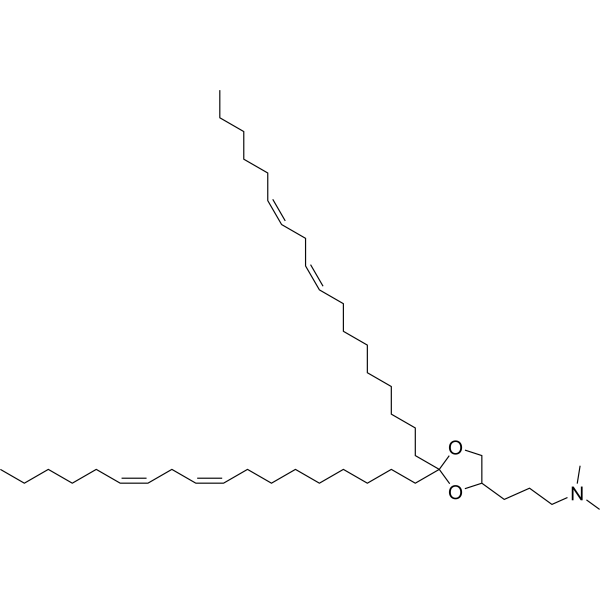 0 Images
DLin-K-C3-DMA, a cationic lipid, can be used in the synthesis of nucleic acid-lipid particle to delivery of nucleic acid.
-
Rhodamine 800
 0 Images
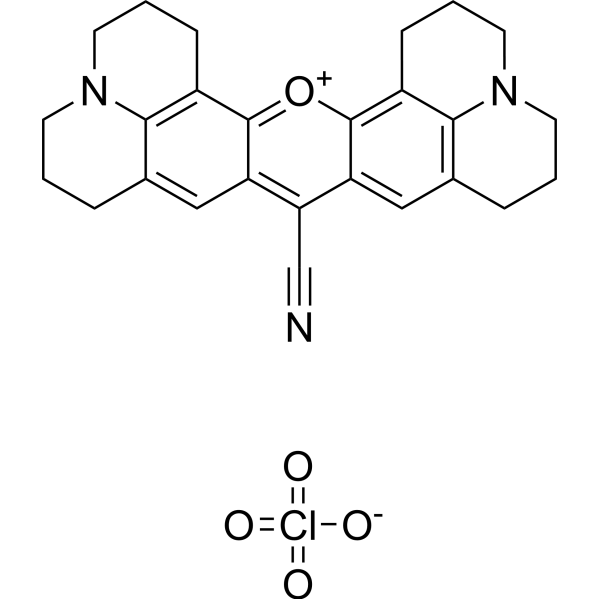
Rhodamine dyes are membrane-permeable cationic fluorescent probes that specifically recognize mitochondrial membrane potentials, thereby attaching to mitochondria and producing bright fluorescence, and at certain concentrations, rhodamine dyes have low toxicity to cells, so they are commonly used to detect mitochondria in animal cells, plant cells, and microorganisms.
-
Dihydrofluorescein diacetate
 0 Images
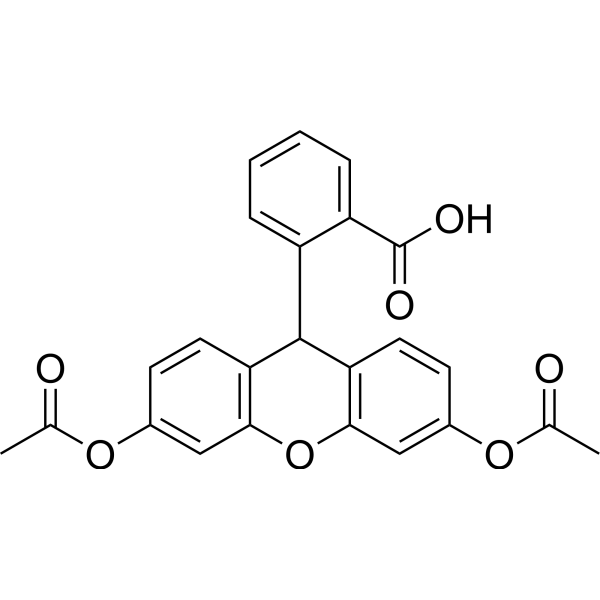
Dihydrofluorescein diacetate is a fluorimetric probe mainly used for oxidative stress measurements, in both cell-free systems and cellular models.
-
Thymidine-d3
 0 ImagesSynonyms: DThyd-d3; NSC 21548-d3
-
Vitronectin (367-378)
 0 Images
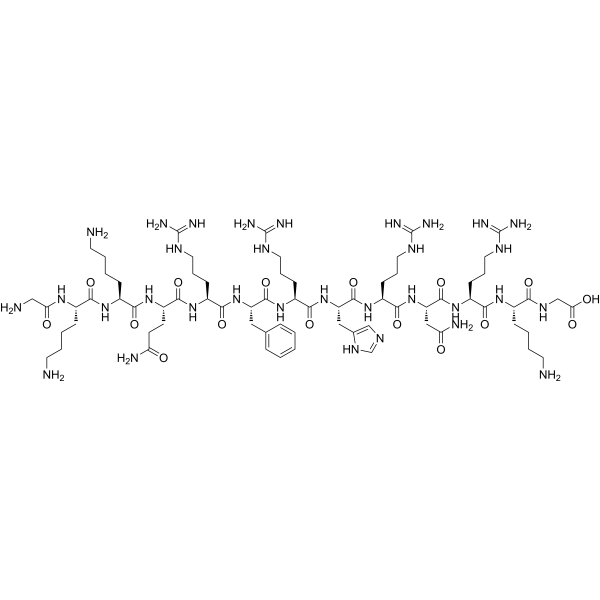
Vitronectin (367-378) corresponds to the 367-378 residue fragment of Vitronectin and is a heparin/glycosaminoglycan-binding peptide. Vitronectin (367-378) acts on cell surface glycosaminoglycans and does not directly bind integrins. Vitronectin (367-378) supports pluripotent stem cell adhesion, proliferation, long-term self-renewal, pluripotency markers, normal karyotype, and undifferentiated culture. Vitronectin (367-378) facilitates the differentiation of human pluripotent stem cells into definitive endoderm and mesoderm. Vitronectin (367-378) can be used in research related to stem cell fate regulation.
-
Rabdosiin
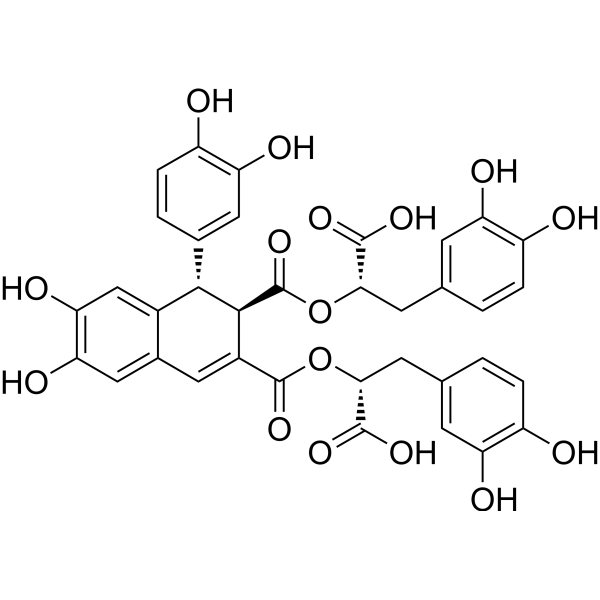 0 ImagesSynonyms: (+)-Rabdosiin
Rabdosiin ((+)-Rabdosiin) is a Caffeic acid (HY-N0172) tetramer. Rabdosiin can be isolated from Macrotomia euchroma.
-
(-)-Menthone
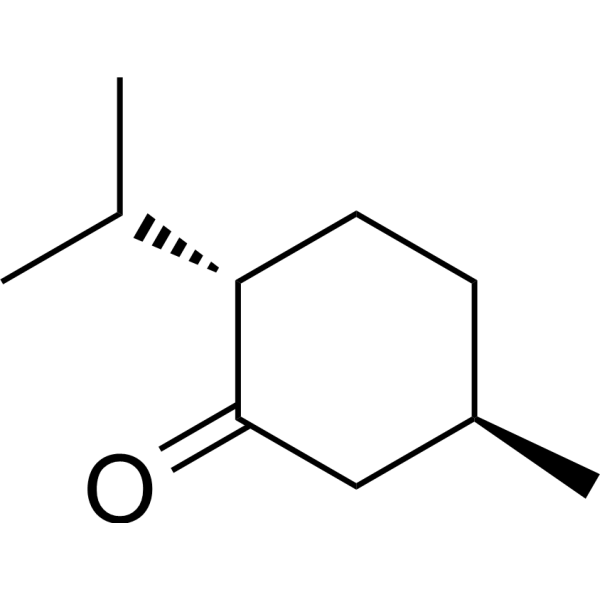 0 ImagesSynonyms: L-Menthone
(-)-Menthone is a monoterpene component of the essential oil of maturing peppermint. (+)-Neomenthyl-β-d-glucoside is a metabolite of (-)-Menthone.Mortality of two biological forms of Anopheles stephensi(larvae) exposed to about 45 ppm (-)-Menthone is 27.67% and 94.92%.

-
VPM-p15
 0 ImagesCat. No.: HY-P10365Purity: 98.25%
Vmm-p15 is a peptide agonist optimized for the adhesion G protein-coupled receptor GPR64 (also known as ADGRG2 or HE6). The affinity of VPM-p15 with GPR64 is significantly higher than that of the original p15 peptide. The cAMP level induced by VMM-P15 increased significantly, activated GPR64, and triggered downstream Gs, Gq, and G12/13 signaling. VPM-p15 can be used to study the activation mechanism of adherent GPCR family members.
-
Motilin (26-47), human, porcine
 0 ImagesCat. No.: HY-P1037CAS No.: 52906-92-0
Motilin (26-47), human, porcine is an endogenous motilin receptor ligand with Ki and EC50 of 2.3 nM and 0.3 nM in a Chinese hamster ovary cell line.
-
BIMAX2 acetate
 0 ImagesCat. No.: HY-P10600APurity: 98.66%
BIMAX2 acetate is a high affinity nuclear localization signal (NLS) peptide. BIMAX2 acetate can mimic the activity of the classical nuclear localization signal (cNLS) and competitively bind to importin α, thereby inhibiting the binding of cNLS-cargo proteins to importin α. BIMAX2 acetate can be used to study the role of RBBP4 in regulating nuclear import efficiency and cell senescence.
-
[Sar1, Ile8]-Angiotensin II TFA
![[Sar1, Ile8]-Angiotensin II TFA](https://file.medchemexpress.com/product_pic/hy-p1564a.gif "Click to View [Sar1, Ile8]-Angiotensin II TFA Product Detail") 0 Images
0 Images[Sar1, Ile8]-Angiotensin II (TFA) is a peptide that has multiple effects on vascular smooth muscle, including contraction of normal arteries and hypertrophy or hyperplasia of cultured cells or diseased vessels.
-
Transdermal Peptide Disulfide TFA
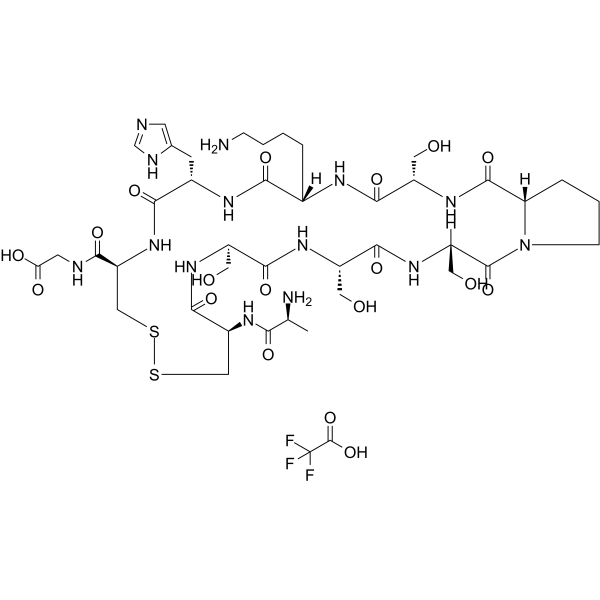 0 ImagesCat. No.: HY-P1565APurity: 99.95%Synonyms: TD 1 Disulfide(peptide) TFA
Transdermal Peptide Disulfide TFA (TD 1 Disulfide(peptide) TFA) is a 11-amino acid peptide, binds to Na+/K+-ATPase beta-subunit (ATP1B1), and mainly interacts with the C-terminus of ATP1B1. Transdermal Peptide Disulfide TFA can enhance the transdermal delivery of many macromolecules.