



AChE
Acetylcholinesterase (AChE) is the principal cholinergic enzyme that rapidly hydrolyzes acetylcholine at cholinergic synapses and neuromuscular junctions, thereby terminating neurotransmission and maintaining synaptic signaling fidelity[1]. Mechanistically, AChE regulates cholinergic pathway activity through efficient acetylcholine clearance, a process that is essential for normal neuronal communication and neuromuscular function[1]. Beyond its catalytic role, AChE displays multiple molecular forms and has been implicated in cellular interactions, neuronal activity modulation, and pathological states, supporting broader biological functions outside classical neurotransmission[1]. In neurodegenerative disease models, particularly Alzheimer’s disease (AD), altered cholinergic signaling is closely associated with cognitive impairment, and cholinesterase inhibition remains a major symptomatic therapeutic strategy[2][3]. Compared with the related isoform butyrylcholinesterase (BChE), AChE is the predominant cholinesterase in the brain and plays a primary role in synaptic acetylcholine hydrolysis, whereas BChE may compensate when AChE activity is reduced and exhibits distinct pathological changes during AD progression[3][4]. For experimental and translational applications, reversible and dual AChE/BChE inhibitors, including rivastigmine, are widely used to enhance cholinergic neurotransmission and investigate mechanisms underlying neurodegeneration and cognitive dysfunction[2][3].
References:
- [1]. Massoulié J, et al. Structure and functions of acetylcholinesterase and butyrylcholinesterase. Prog Brain Res. 1993;98:139-46. [Content Brief]
- [2]. Walczak-Nowicka ŁJ, et al. Acetylcholinesterase Inhibitors in the Treatment of Neurodegenerative Diseases and the Role of Acetylcholinesterase in their Pathogenesis. Int J Mol Sci. 2021 Aug 27;22(17):9290. [Content Brief]
- [3]. Nordberg A, et al. A review of butyrylcholinesterase as a therapeutic target in the treatment of Alzheimer's disease. Prim Care Companion CNS Disord. 2013;15(2):PCC.12r01412. [Content Brief]
- [4]. Geula C, et al. Butyrylcholinesterase, cholinergic neurotransmission and the pathology of Alzheimer's disease. Drugs of Today (Barcelona, Spain : 1998). 2004 Aug;40(8):711-721. [Content Brief]
-
AChE Related Products (458)
Related Products (458)

-
AChE-IN-94
 0 ImagesCat. No.: HY-175758AChE-IN-94 is an orally active and blood-brain barrier penetrable AChE inhibitor with an IC50 of 0.40 μM and Ki of 0.28 μM. AChE-IN-94 prevents self-induced and AChE-mediated Aβ1-42 aggregation. AChE-IN-94 alleviates cognitive/memory deficits in Scopolamine (HY-N0296)-induced amnesic model. AChE-IN-94 can be used for the study of Alzheimer's disease (AD).
-
AChE-IN-22
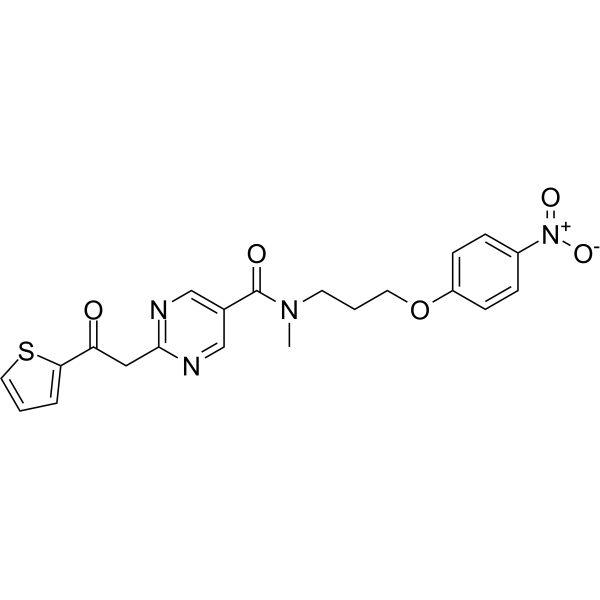 0 ImagesCat. No.: HY-150728CAS No.: 3032264-62-0AChE-IN-22 (compound 10q) is a selective acetylcholinesterase (AChE) inhibitor against AChE and BuChE with the IC50 values of 0.88 μM and 10 μM, respectively. AChE-IN-22 can bind to both the CAS (catalytic active site) and PAS (peripheral anionic site) of AChE and has the potential for the research of Alzheimer's disease.
-
BChE/MAO-B-IN-2
 0 ImagesCat. No.: HY-175524BChE/MAO-B-IN-2 is a dual inhibitor of BChE (IC50 = 0.05 μM, Ki = 0.01 μM) and MAO-B (IC50 = 0.45 μM, Ki = 0.08 μM) with good blood-brain barrier permeability. BChE/MAO-B-IN-2 exhibits antioxidant activity, including DPPH radical scavenging, CUPRAC copper ion reduction, and superoxide anion scavenging. BChE/MAO-B-IN-2 can be used for the study of Alzheimer's disease (AD).
-
eeAChE-IN-2
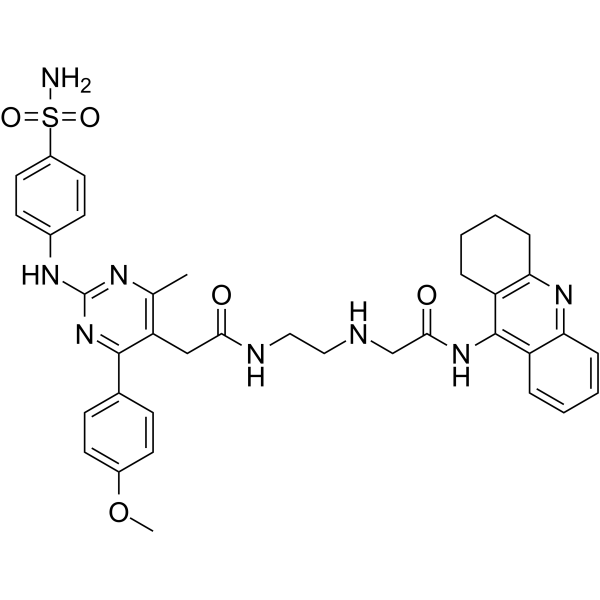 0 ImagesCat. No.: HY-132904CAS No.: 2763366-33-0eeAChE-IN-2 is a potent eeAChE inhibitor with an IC50 value of 2 nM.
-
AChE/BChE-IN-16
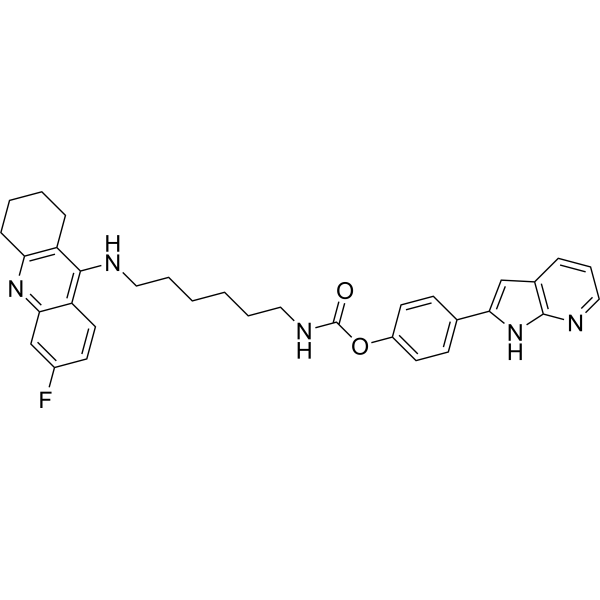 0 ImagesCat. No.: HY-157437CAS No.: 3038810-09-9AChE/BChE-IN-16 (compound C7) is a potent cholinesterase (ChE) inhibitor with IC50s of 30 nM and 48 nM for human acetylcholinesterase (hAChE) and human butyrylcholinesterase (hBChE), respectively. AChE/BChE-IN-16 exhibits a remarkable capacity to safeguard PC12 cells against H2O2-induced apoptosis and effectively suppresses the production of reactive oxygen species (ROS).
-
Anti-Candida auris β-1, 3 glucans Antibody (2G8)
 0 ImagesCat. No.: HY-P992076Anti-Candida auris β-1,3-glucans Antibody (2G8) is an antibody targeting Candida auris β-1,3-glucans, and also acts as an inhibitor of AChE and TGF-β receptor 2. Anti-Candida auris β-1,3-glucans Antibody (2G8) also targets fungal cell wall components, effectively inhibits fungal growth and interferes with capsule formation, thereby significantly reducing the fungal load in mouse tissues. Anti-Candida auris β-1,3-glucans Antibody (2G8) not only blocks TGF-β receptor binding to inhibit the Smad signaling pathway, reduces fibroblast activation and collagen deposition, but also induces epithelial differentiation of tumor cells and reduces pancreatic tumor metastasis. Anti-Candida auris β-1,3-glucans Antibody (2G8) specifically binds to the conserved N-linked glycoepitope on AChE to inhibit its activity without interfering with BChE, and can be used in studies of cryptococcosis and related tumor mechanisms.The isotype control is Human IgG1 kappa, Isotype Control (HY-P99001).
-
AChE-IN-116
 0 ImagesCat. No.: HY-183303AChE-IN-116 is a selective acetylcholinesterase (AChE) inhibitor with an electric eel AChE IC50 of 1.60 μM and Ki of 1.72 μM. AChE-IN-116 exhibits weak ability to scavenge DPPH radical. AChE-IN-116 can be used for the research of Alzheimer's disease.
-
hAChE/Aβ1-42-IN-1
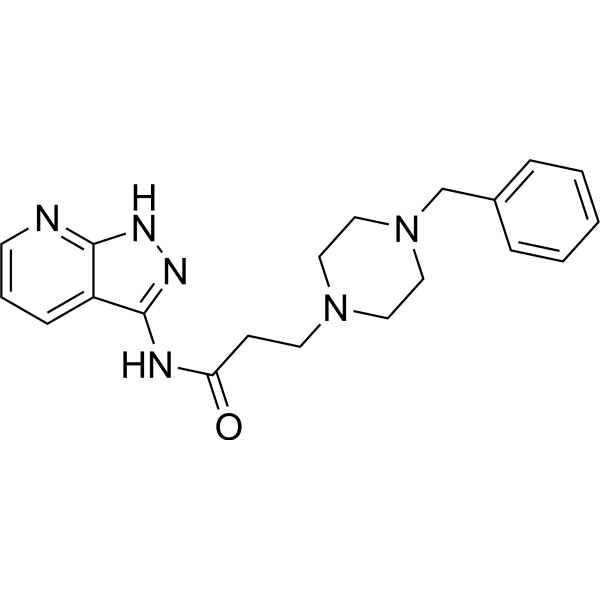 0 ImagesCat. No.: HY-144389CAS No.: 2761149-17-9hAChE/Aβ1-42-IN-1 (Compound 16) is a potent inhibitor of hAChE and Aβ1-42 aggregation. hAChE/Aβ1-42-IN-1 shows acceptable relative safety upon hepG2 cell line and excellent BBB penetration with wide safety margin. hAChE/Aβ1-42-IN-1 has the potential for the research of Alzheimer disease (AD).
-
Protriptyline
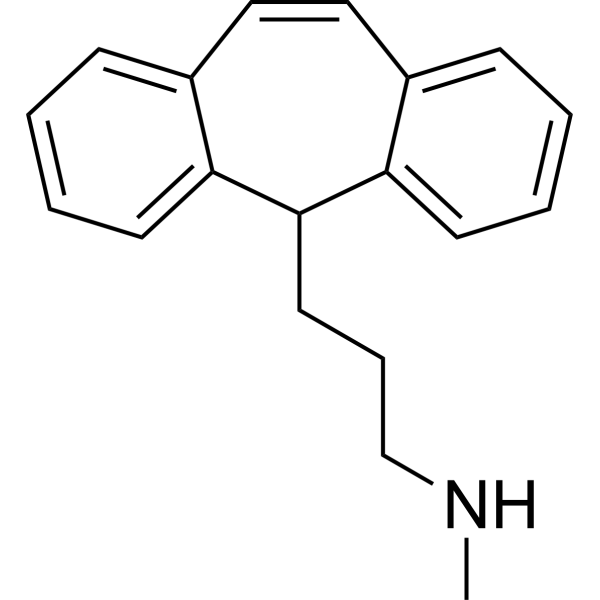 0 ImagesProtriptyline is a potent tricyclic antidepressant (TCA). Protriptyline inhibits AChE activity with an IC50 value of 0.06 mM and inhibits Aβ self-assembly. Protriptyline can be used for the study of depression and Alzheimers disease.
-
AChE/hCA I-IN-1
 0 ImagesCat. No.: HY-170560CAS No.: 155140-19-5AChE/hCA I-IN-1 (Compound L3) is the inhibitor for acetylcholinesterase (AChE) and carbonic anhydrase (CA), that inhibits AChE, hCA I and hCA II with IC50 of 302, 265 and 283 nM, respectively.
-
MAO-B-IN-7
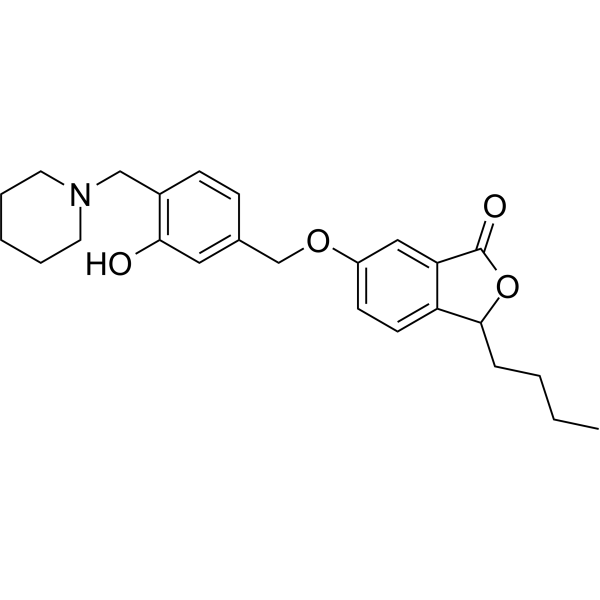 0 ImagesCat. No.: HY-146762CAS No.: 2851012-65-0
-
Zifrosilone
 0 ImagesCat. No.: HY-106440CAS No.: 132236-18-1Zifrosilone is an orally active acetylcholinesterase (AChE) inhibitor with a mean maximum inhibition of 20.9% at 10 mg. Zifrosilone can be used for the research of neurological disease.
-
AChE/Aβ-IN-3
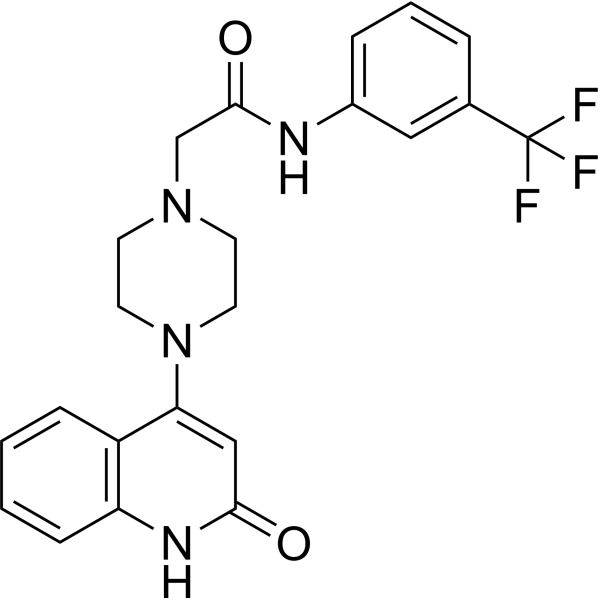 0 ImagesCat. No.: HY-157440AChE/Aβ-IN-3 (compound AM5) is a dual inhibitor of AChE and Amyloid-β aggregation with IC50<.sub> values of 1.29 and 4.93 μM, respectively. AChE/Aβ-IN-3 has antioxidant properties that scavenge ROS and restore their normal levels. AChE/Aβ-IN-3 can be used in the study of neurological diseases, such as Alzheimer's disease.
-
K027
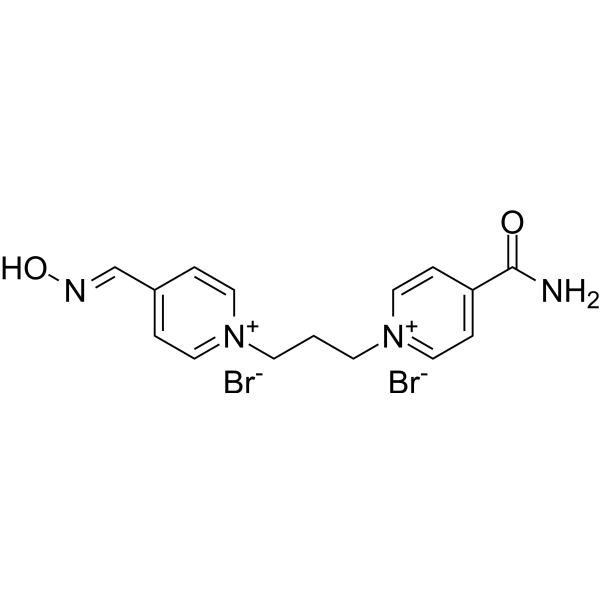 0 ImagesK027 is a potent reactivator of Organophosphates (OP)-inhibited acetylcholinesterase (AChE). K027 can be used for the research of Alzheimer's disease.
-
hAChE/hBuChE/GSK-3β-IN-1
 0 ImagesCat. No.: HY-170417hAChE/hBuChE/GSK-3β-IN-1 (Compound 6c) is a BBB-penetrable and multi-target anti-Alzheimer's disease compound. hAChE/hBuChE/GSK-3β-IN-1 is the inhibitors of hAChE (IC50: 28.88 nM), hBuChE (IC50: 131.90 nM) and GSK-3β (IC50: 51.42 nM). hAChE/hBuChE/GSK-3β-IN-1 is the tau and Aβ protein aggregation inhibitors.
-
Dyclonine-d9 hydrochloride
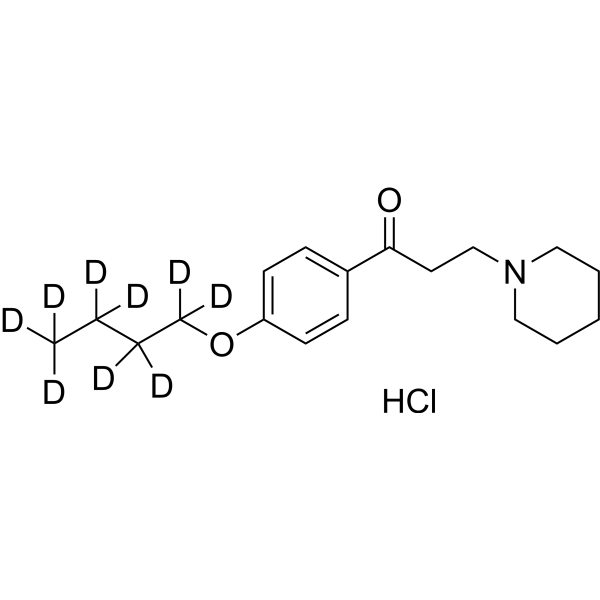 0 ImagesCat. No.: HY-B0364ASSynonyms: Dyclocaine-d9 hydrochlorideDyclonine-d9 hydrochloride (Dyclocaine-d9 hydrochloride) is the deuterated-labeled Dyclonine hydrochloride (HY-B0364A). Dyclonine hydrochloride (Dyclocaine hydrochloride) is an orally active, blood-brain barrier-permeable piperidine phenylacetone small molecule commonly used as a local anesthetic. Dyclonine hydrochloride acts as a highly selective allosteric antagonist of TRPV3; it also reversibly inhibits G9a, ALDH2 and ALDH3A1, non-competitively blocks AChE. Dyclonine hydrochloride activates the Nrf2/ARE pathway, relieves the epigenetic silencing of FXN, blocks Aβ42 aggregation, and promotes remyelination and reparative polarization of microglia. Dyclonine hydrochloride alleviates pruritus via TRPV3 inhibition; it is used in studies of neurodegenerative disease models based on its AChE inhibitory, antioxidant and remyelinating effects; it sensitizes drug-resistant tumors through ALDH inhibition, and combined use with protease inhibitors induces more tumor cell apoptosis; it inhibits Candida albicans in vitro. Dyclonine hydrochloride can be used for research on multiple diseases including neurodegenerative diseases, cancer and pruritic dermatitis.
-
Bis-(-)-8-demethylmaritidine
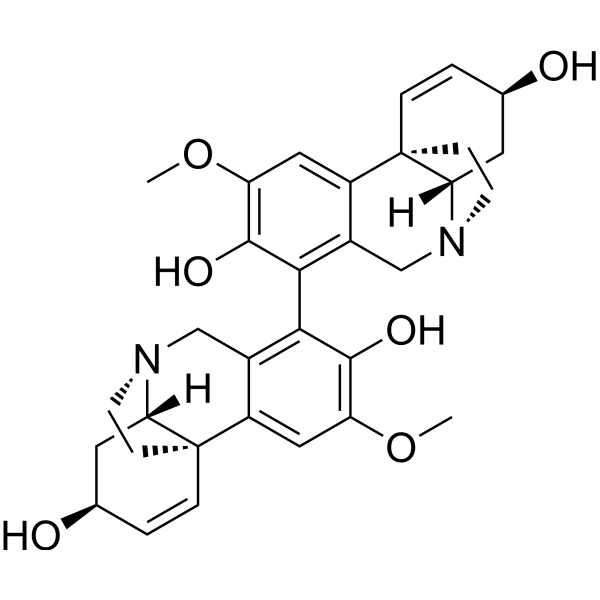 0 ImagesCat. No.: HY-N12423Bis-(-)-8-demethylmaritidine, a natural alkaloid, is a potent acetylcholinesterase (AChE) inhibitor. Bis-(-)-8-demethylmaritidine can be used for Alzheimer's disease research.
-
Carbonic anhydrase/AChE-IN-1
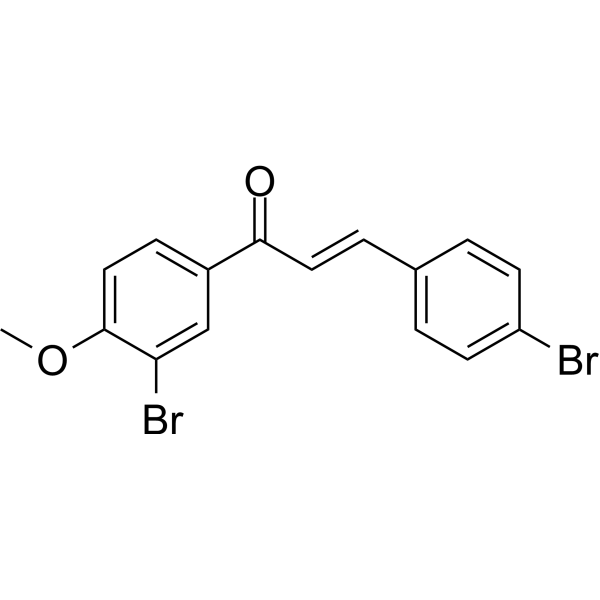 0 ImagesCat. No.: HY-161142CAS No.: 3029817-10-2Carbonic anhydrase/AChE-IN-1 (compound 16) is a carbonic anhydrase and AChE inhibitor with Kis of 24.42 nM, 19.95 nM, and 5.07 nM for hCA I, hCA II, and AChE, respectively.
-
5α-Epoxyalantolactone
 0 ImagesCat. No.: HY-N21980CAS No.: 65563-75-95α-Epoxyalantolactone is an orally active, blood-brain barrier-permeable ANXA2 inhibitor. 5α-Epoxyalantolactone binds to ANXA2, blocks the formation of ANXA2-S100A10 heterotetramers, inhibits the membrane trafficking of E-cadherin, and prevents metastasis of breast cancer cells as well as proliferation of breast cancer stem cells. 5α-Epoxyalantolactone improves cognitive and memory impairments by inhibiting the iNOS/COX-2/NF-κB pathway and reducing the activity of cerebral AChE. 5α-Epoxyalantolactone can be used in studies related to Alzheimer's disease and triple-negative breast cancer.



