



COX
Cyclooxygenase
Cyclooxygenase (COX), officially known as prostaglandin-endoperoxide synthase (PTGS), is an enzyme that is responsible for formation of important biological mediators called prostanoids, including prostaglandins, prostacyclin and thromboxane. Pharmacological inhibition of COX can provide relief from the symptoms of inflammation and pain. Drugs, like Aspirin, that inhibit cyclooxygenase activity have been available to the public for about 100 years. Two cyclooxygenase isoforms have been identified and are referred to as COX-1 and COX-2. Under many circumstances the COX-1 enzyme is produced constitutively (i.e., gastric mucosa) whereas COX-2 is inducible (i.e., sites of inflammation). Non-steroidal anti-inflammatory drugs (NSAID), such as aspirin and ibuprofen, exert their effects through inhibition of COX. The main COX inhibitors are the non-steroidal anti-inflammatory drugs (NSAIDs).
COX Isoform Specific Products
All Product Categories
-
COX Related Products (1306)
Related Products (1306)

-
Antibodies (6)
-
COX Isoform Comparison
-
LY150310 free base
 0 ImagesCat. No.: HY-117019CAS No.: 103294-47-9LY150310 inhibits thromboxane synthase, cyclooxygenase, and thrombin activation. LY150310 inhibits spontaneous lung metastasis in a dose-dependent manner.
-
COX-2-IN-12
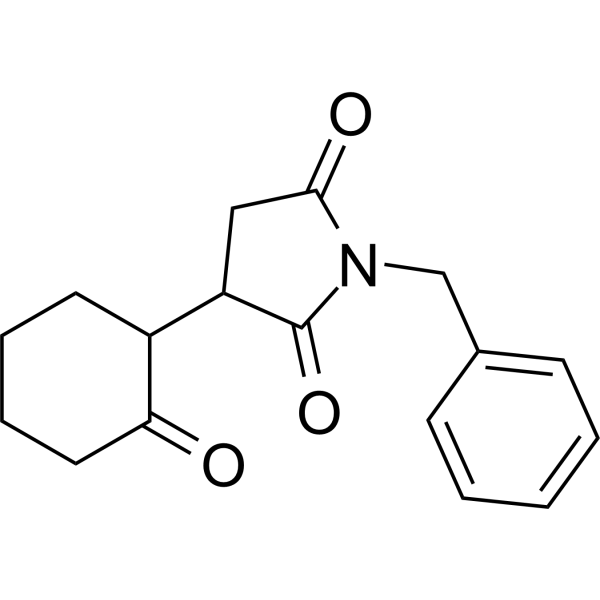 0 ImagesCat. No.: HY-146370CAS No.: 2986222-50-6COX-2-IN-12 (compound 3b) is a potent and selective inhibitor of COX-2 with an IC50 of 19.98 μM. COX-2-IN-12 is an anti-inflammatory agent. COX-2-IN-12 shows safety in-vivo acute toxicity study.
-
Anti-inflammatory agent 71
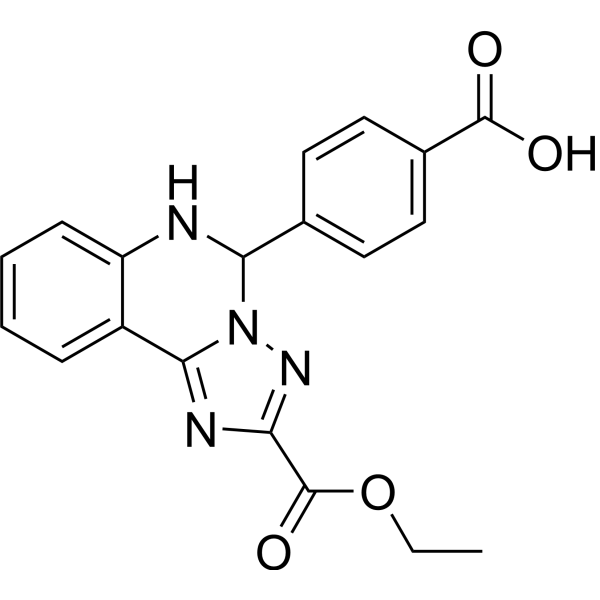 0 ImagesCat. No.: HY-162168CAS No.: 3048402-15-6
-
Anti-inflammatory agent 8
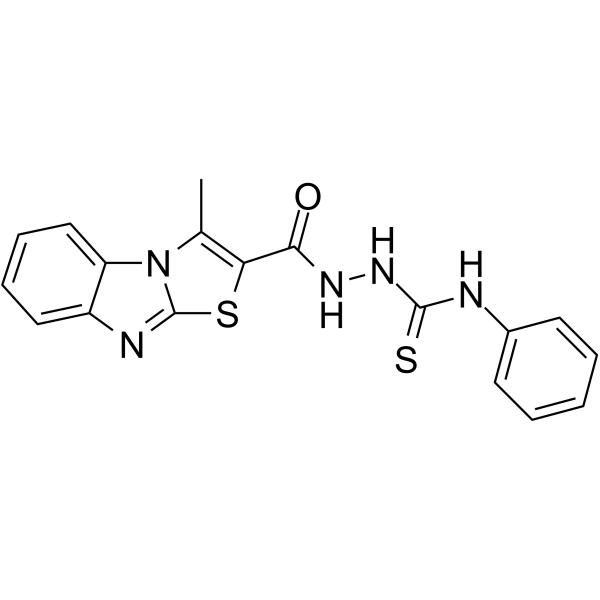 0 ImagesCat. No.: HY-115920CAS No.: 1103920-19-9
-
NLRP3-IN-69
 0 ImagesCat. No.: HY-170836CAS No.: 3027608-60-9
-
Sabialimon P
 0 ImagesCat. No.: HY-159516CAS No.: 2267333-96-8

-
(+)-Catechin pentaacetate
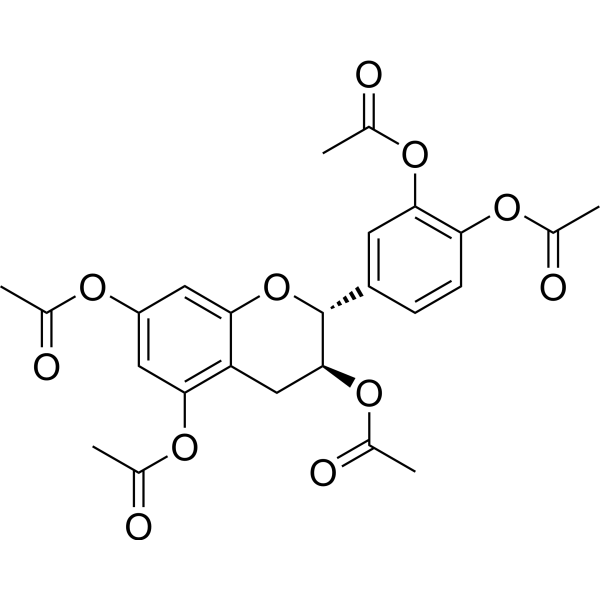 0 ImagesCat. No.: HY-N3555CAS No.: 16198-01-9
-
Anti-inflammatory agent 20
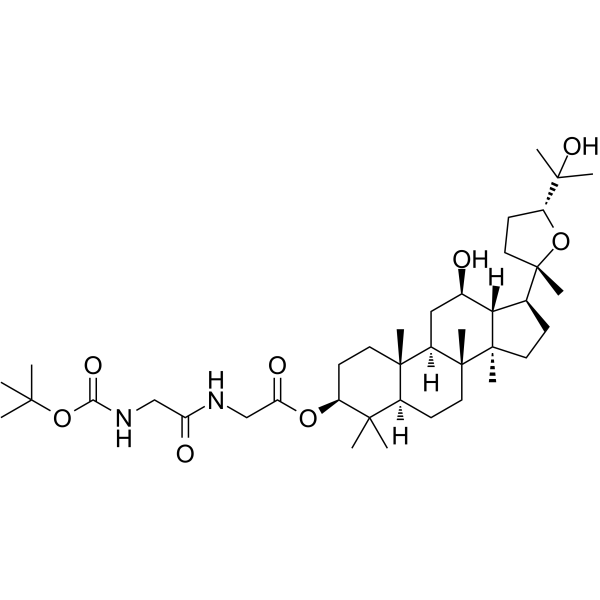 0 ImagesCat. No.: HY-146419CAS No.: 2127403-65-8Anti-inflammatory agent 20 (compound 5a) is a potent inhibitor of NO activity. Anti-inflammatory agent 20 shows anti-inflammatory activity. Anti-inflammatory agent 20 suppresses LPS-induced inflammation via inhibiting the activation of NF-κB and MAPK signaling and thereby reducing IL-6, TNF-α, iNOS, and COX-2 upregulation.
-
Pelubiprofen-13C,d3
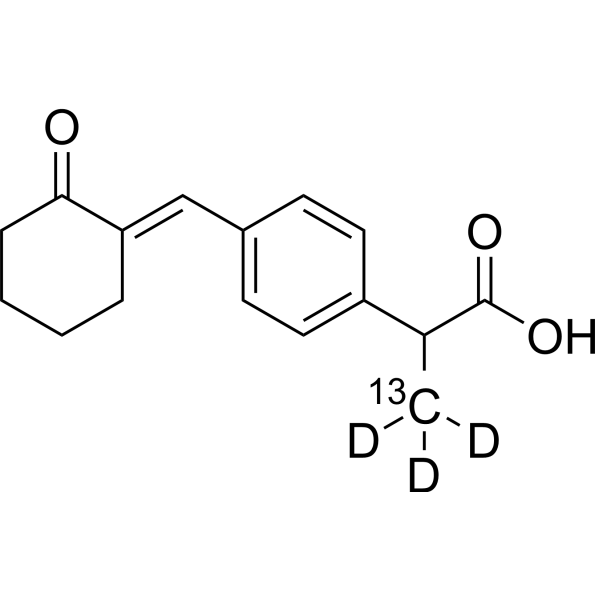 0 ImagesCat. No.: HY-12383SPelubiprofen-13C,d3 is the 13C- and deuterium labeled Pelubiprofen. Pelubiprofen, an orally active and non-steroidal anti-inflammatory drug, is a member of the 2-arylpropionic acid family and has relatively selective effects on COX-2 activity. Pelubiprofen inhibits COX activity and the transforming growth factor-β activated kinase 1-IκB kinase β-NF-κB pathway, and has significant anti-inflammatory and analgesic effects.
-
COX-2-IN-50
 0 ImagesCat. No.: HY-121679CAS No.: 1242169-24-9COX-2-IN-50 is a water-soluble COX-2 inhibitor with significant analgesic activity. The solubility of COX-2-IN-50 in water reaches 20.3 mg/mL, far exceeding the 1.6 μg/mL of its precursor compound PC407. COX-2-IN-50 demonstrates good biocompatibility and is suitable for the development of injectable dosage forms. COX-2-IN-50 has proven its analgesic effect in vivo and shows potential application value.
-
Tilomisole
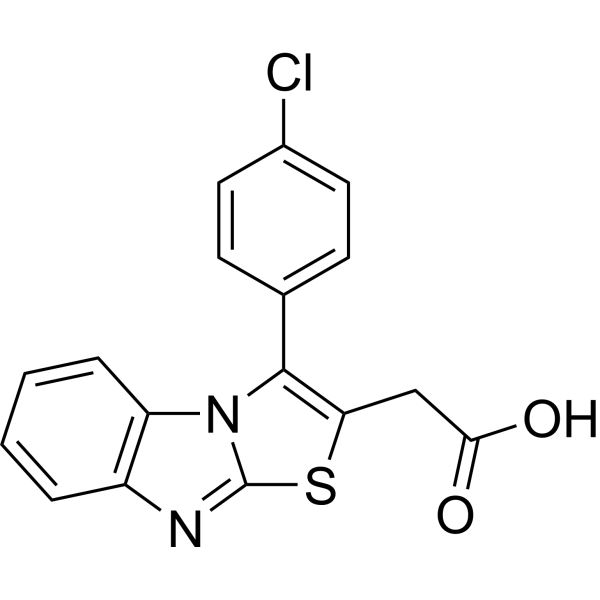 0 ImagesCat. No.: HY-106050CAS No.: 58433-11-7Synonyms: Wy 18251Tilomisole (Wy 18251) is a benzimidazothiazole experimental agent with anti-inflammatory activity. Tilomisole causes less agranulocytosis than levamisole, but retains immunomodulating capabilities. Tilomisole is orally active. Tilomisole has the potential for the research of cancer and inflammation.
-
Diclofenac deanol
 0 ImagesCat. No.: HY-15036BCAS No.: 81811-14-5Synonyms: DDNLDiclofenac deanol (DDNL) is a nonsteroidal anti-inflammatory drug with anti-inflammatory, analgesic and antipyretic activities. Diclofenac deanol has a more potent inhibitory effect on cyclooxygenase (COX)-2 than on COX-1. The solubility of diclofenac deanol is significantly higher than that of other diflunisal salts reported earlier. Diclofenac deanol has a wide range of potential applications in the medical field due to its biological activity and high water solubility.
-
CXT29
 0 ImagesCat. No.: HY-179246CXT29 is an orally active COX-2 inhibitor and a thromboxane A2 receptor (TP) antagonist. CXT29 exhibits COX inhibitory activity and selectivity, with IC50 values of 13 and 722 nM for COX-2 and COX-1 respectively. CXT29 inhibits platelet aggregation induced by U-46619 (HY-108566) (a TP agonist), with an IC50 of 96 nM. CXT29 effectively inhibits the production of TXB₂ and PGE₂, significantly reducing platelet aggregation and inflammatory pain in mice. CXT29 can be used for research on inflammatory pain and cardiovascular diseases.
-
EGFR-IN-206
 0 ImagesCat. No.: HY-182064EGFR-IN-206 is an orally active EGFR inhibitor. EGFR-IN-206 inhibits the phosphorylation of the key tumor growth protein EGFR, and suppresses the proliferation, migration and invasion of EGFR triple-mutant tumor cell lines. EGFR-IN-206 downregulates the expression of inflammation-related proteins iNOS, COX-2 and NF-κB (p65). EGFR-IN-206 promotes the secretion of NO. EGFR-IN-206 reduces the secretion of IL-6. EGFR-IN-206 induces apoptosis (apoptosis) of EGFR triple-mutant tumor cells. EGFR-IN-206 exerts antitumor activity in EGFR triple-mutant mice. EGFR-IN-206 is applicable to the research of non-small cell lung cancer.
-
Zaltoprofen sulfoxide
 0 ImagesCat. No.: HY-180952CAS No.: 134085-79-3Zaltoprofen sulfoxide (Compound M2) is the main metabolite of Zaltoprofen (HY-B0619). Zaltoprofen sulfoxide is an efficient and selective COX-2 inhibitor (IC50 = 45.38 nM) and a PPAR-γ activator. Zaltoprofen sulfoxide effectively inhibits NF-κB and MAPK inflammatory signaling pathways and alleviates acute lung injury induced by LPS (HY-D1056B3). Zaltoprofen sulfoxide can be used for the study of acute lung injury.
-
(±)-Catechin-13C3
 0 ImagesCat. No.: HY-B1890SCAS No.: 1261254-33-4Synonyms: rel-Cianidanol-13C3; rel-Catechuic acid-13C3(±)-Catechin-13C3 (rel-Cianidanol-13C3) is the 13C-labeled (±)-Catechin (HY-B1890). (±)-Catechin (rel-Cianidanol) is the racemate of the green tea polyphenol Catechin. Catechin has anticancer activity and induces apoptosis. (±)-Catechin has two forms, (+)-Catechin and its enantiomer (-)-Catechin. (+)-Catechin inhibits cyclooxygenase-1 (COX-1) with an IC50 of 1.4 μM. (-)-Catechin can effectively promote hBM-MSC adipocyte differentiation and increase adiponectin and PPARγ levels. (±)-Catechin has anti-tumor, anti-obesity, anti-diabetic, anti-cardiovascular, anti-infectious, hepatoprotective and neuroprotective effects.
-
COX-2-IN-20
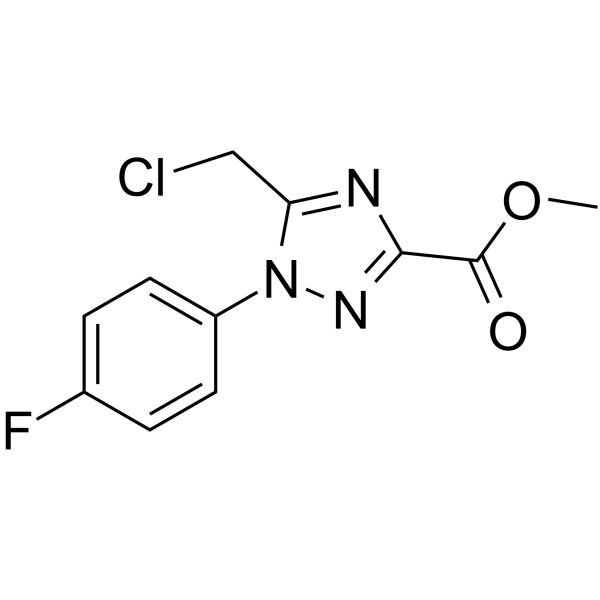 0 ImagesCat. No.: HY-147809CAS No.: 2529451-43-0COX-2-IN-20 (Compound 5d) is a selective and orally active COX-2 inhibitor with an IC50 of 17.9 nM. COX-2-IN-20 shows anti-inflammatory activity.
-
Etofenamate-d4
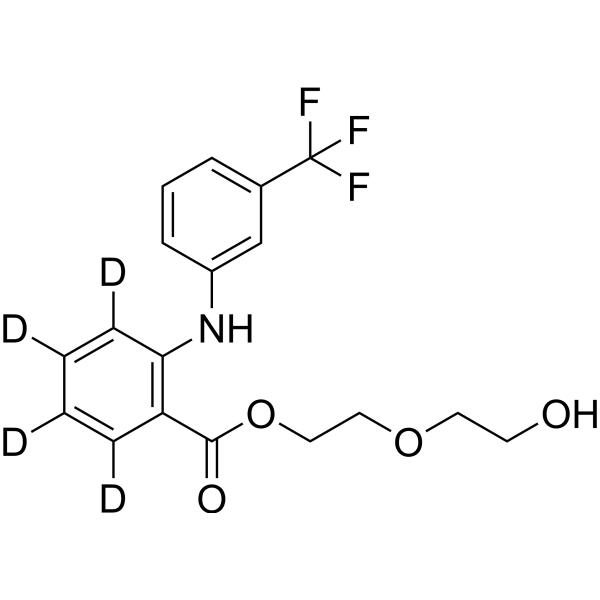 0 ImagesCat. No.: HY-17361SCAS No.: 1329837-73-1Etofenamate-d4 is the deuterium labeled Etofenamate. Etofenamate, a non-steroid anti-inflammatory agent (NSAID) and a non-selective COX inhibitor, possesses analgesic, anti-rheumatic, antipyretic and anti-inflammatory properties. Etofenamate is used in the research for osteoarthritis, arthritis and other inflammatory diseases.




