



E1/E2/E3 Enzyme Degrader
- 1
-
XMU-MP-8
 0 ImagesSynonyms: SKPer1
XMU-MP-8 (SKPer1) is a potent molecular glue degrader that targets the oncoprotein SKP2. XMU-MP-8 simultaneously binds to the F-box domain of SKP2 (Kd ≈ 36 μM) and the N-terminal TPR domain of the E3 ligase STUB1 (Kd ≈ 2.5 μM), forming a stable SKP2-SKPer1-STUB1 ternary complex (Kd ≈ 8.9 nM) that induces SKP2 ubiquitination and proteasomal degradation. XMU-MP-8 selectively eliminates SKP2-expressing cancer cells. XMU-MP-8 exhibits substantial tumour suppression with good safety profiles in vivo. XMU-MP-8 can be used for cancer research, such as non-small cell lung adenocarcinoma (NSCLC) and prostatic adenocarcinoma.
-
CRBN-6-5-5-VHL
 0 Images
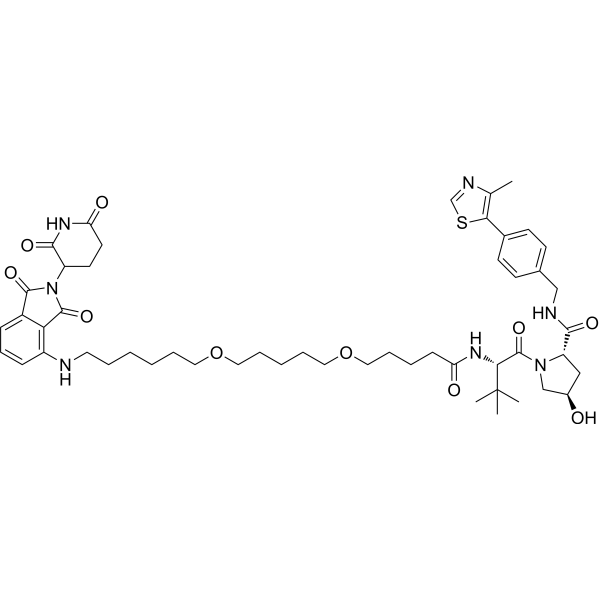
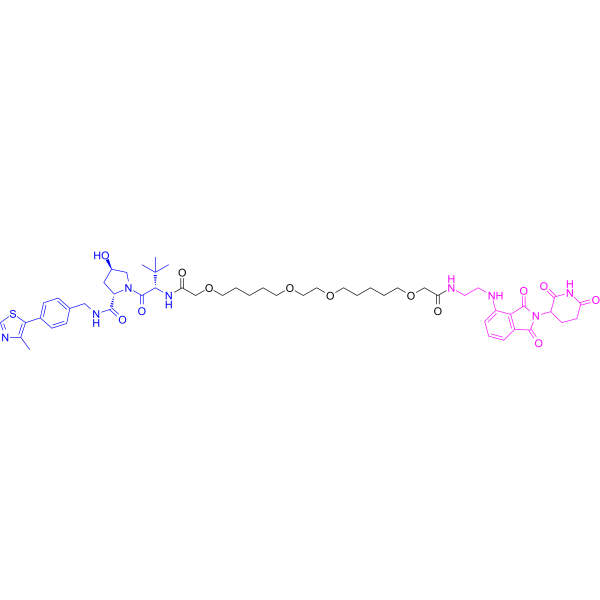
CRBN-6-5-5-VHL is a potent and selective VHL E3 ligand-based Cereblon (CRBN) PROTAC degrader with a DC50 value of 1.5 nM. CRBN-6-5-5-VHL forms a heterotrimeric complex with CRBN and VHL E3 ligase, thereby promoting CRBN ubiquitination and proteasomal degradation without inducing VHL degradation. CRBN-6-5-5-VHL protects myeloma from the toxic effects of IMiDs. CRBN-6-5-5-VHL can be used in the research of multiple myeloma.
-
MS181
 0 Images
MS181 is a BMI1 and RING1B degrader with antiproliferative activity. MS181 induces degradation via an EED-, CRBN-, and ubiquitin-proteosome system-dependent pathway, with preferential targeting over PRC2 components. MS181 acts in VHL-defective cancer cells. MS181 serves as a chemical biology tool to study PRC1 roles in cancer. MS181 can be used for the research of myelogenous leukemia, renal cell carcinoma, metastatic prostate cancer, triple negative breast cancer.
-
PROTAC SKP2 Degrader-1
 0 Images
PROTAC SKP2 Degrader-1 is a PROTAC degrader targeting SKP2, with a Kd value of 6.28 μM. PROTAC SKP2 Degrader-1 induces targeted degradation of SKP2 via the ubiquitin-proteasome system. PROTAC SKP2 Degrader-1 stabilizes the expression of SOCS1 and regulates the expression of immunoproteasomes through the JAK/STAT pathway, thereby inhibiting tumor cell proliferation. PROTAC SKP2 Degrader-1 is applicable for cancer-related research.
-
RNF5-IN-1
 0 Images
RNF5-IN-1 is a selective small-molecule inhibitor and degrader of the E3 ubiquitin ligase RNF5. RNF5-IN-1 directly binds to the N-terminal cytosolic domain of RNF5 with a KD of 594 nM, inhibits the E3 ubiquitin ligase activity of RNF5, and exhibits selectivity over Hrd1 and Praja1. RNF5-IN-1 promotes the degradation of RNF5 via the p97/VCP-dependent endoplasmic reticulum-associated degradation (ERAD) and proteasome pathway. RNF5-IN-1 inhibits the retrotranslocation of misfolded proteins. RNF5-IN-1 is applicable for research on mechanisms related to cystic fibrosis.
-
PROTAC RNF4 degrader-1
 0 ImagesCat. No.: HY-181692Purity: 98.09%
PROTAC RNF4 degrader-1 is a RNF4 PROTAC degrader (Kd = 64.5 nM) that degrades RNF4 via the ubiquitin-proteasome system. PROTAC RNF4 degrader-1 induces DNA damage, apoptosis, and exhibits antiproliferative activity in cancer cells. PROTAC RNF4 degrader-1 displays antitumor activity with no obvious side effects in mouse models. PROTAC RNF4 degrader-1 is applicable to the research of hepatocellular carcinoma.
-
MRT-31619
 0 ImagesCat. No.: HY-180538
MRT-31619 is a selective CRBN Molecular glue degrader, with an IC50 of 14 nM and an EC50 of 72 nM. MRT-31619 triggers ubiquitination and proteasomal degradation of CRBN. MRT-31619 serves as a chemical knockout tool for CRBN depletion to evaluate the dependence of other molecular glues on CRBN. MRT-31619 is applicable to the research of CRBN-related disease models.
-
PROTAC BET Degrader-13
 0 ImagesCat. No.: HY-175354
PROTAC BET Degrader-13 is a BET PROTAC degrader that recruits TRIM21. PROTAC BET Degrader-13 utilizes wild-type TRIM21 to mediate the degradation of PML-eGFP-BRD4 (BD2) fusion protein aggregates, with an EC50 of 1.4 μM in A549 cells expressing TRIM21-FLAG. PROTAC BET Degrader-13 can be used for research on targeted protein degradation and protein aggregate clearance.


-
Americanin A
 0 ImagesCat. No.: HY-N18301CAS No.: 69506-79-2
Americanin A is a Neolignan. Americanin A can be isolated from the seeds of Phytolacca americana. Americanin A activates ATM and ATR, initiating the subsequent signal transduction cascades that include Chk1, Chk2, and tumor suppressor p53. Americanin A targets selectively Skp2 for degradation and thereby stabilizes p27. Americanin A suppresses the activity of Cyclin B1 and its partner cdc2 to prevent entry into Mitosis. Americanin A induces Apoptosis by producing excessive ROS. Americanin A has anti-cancer activity against colorectal cancer.
-
MRT-31619 formate
 0 ImagesCat. No.: HY-180538APurity: 99.28%
MRT-31619 formate is a molecular gel degrader (MGD) targeting CRBN. MRT-31619 formate drives the self-dimerization of the E3 ligase by mimicking the degradation subunit, and promotes its rapid, effective and selective degradation through the ubiquitin-proteasome system.
- 1



