



MicroRNA
miRNA
MicroRNAs (miRNAs) are a naturally occurring class of small (approximately 22 nucleotides long) non-coding RNAs that regulate post-transcriptional gene expression to control cellular processes, development, cell differentiation, and homeostasis. MicroRNAs are essential for embryo, cell, and tissue development, regulating cell differentiation, proliferation, and apoptosis, hence their importance in human reproduction. Meanwhile, abnormal expression or function of miRNAs are found to be closely associated with the occurrence or development of various human diseases, including cancers. In light of their significant roles in physiology and pathology, miRNAs are emerging as novel biomolecular targets for chemical-biological studies, including regulation and detection.
Multiple steps are involved in the generation of miRNAs. Most miRNAs are produced by the canonical biogenesis pathway, which involves transcription by RNA polymerase II to make a primary transcript (pri-miRNA) and cleavage by the microprocessor complex to yield a hairpin precursor miRNA (pre-miRNA) in the nucleus. The pre-miRNA is then exported into the cytoplasm, where cleavage by the enzyme Dicer creates a double-stranded RNA duplex. Only a single strand from the double-stranded RNA duplex forms the mature miRNA and is incorporated into the RNA-induced silencing complex (RISC), which guides the binding of Argonaute (AGO) proteins in the RISC to the 3’untranslated region (UTR) to either repress protein translation or promote mRNA degradation. In addition to canonical miRNA biogenesis pathways, non-canonical microprocessor-independent or Dicer-independent miRNA biogenesis pathways also exist. Despite miRNAs being mostly involved in the down-regulation of gene expression, there are reports of miRNAs promoting gene expression. In addition, relationships between miRNAs and their targets are not always one-to-one in a specific cell type. In fact, a single miRNA may regulate many mRNA targets, and conversely, a single mRNA target also can be regulated by many miRNAs.
All Product Categories
-
MicroRNA Related Products (18553)
Related Products (18553)

-
Antibodies (1)
-
RJW100
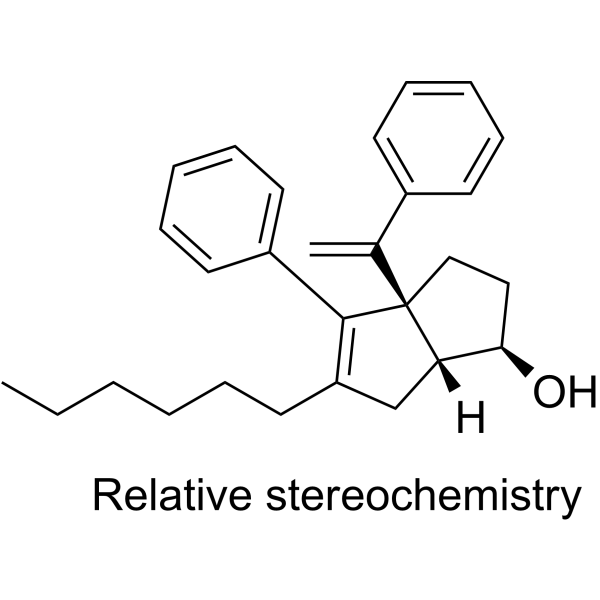 0 ImagesRJW100 is a potent liver receptor homolog 1 (LRH-1, NR5A2) and steroidogenic factor-1 (SF-1, NR5A1) agonist with pEC50s of 6.6 and 7.5, respectively. RJW100 also causes strong activation of the miR-200c (miRNA-200c, microRNA-200c) promoter.

-
Enoxacin hydrate
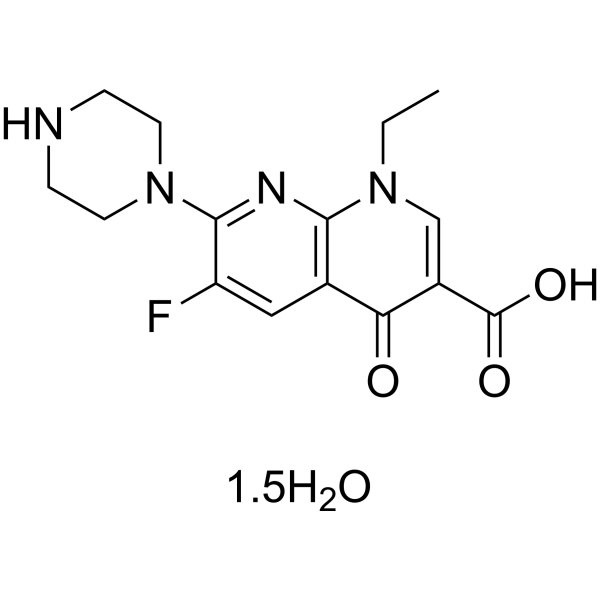 0 ImagesSynonyms: Enoxacin sesquihydrate; AT-2266 hydrate; CI-919 hydrateEnoxacin hydrate (Enoxacin sesquihydrate), a fluoroquinolone, interferes with DNA replication and inhibits bacterial DNA gyrase (IC50=126 µg/ml) and topoisomerase IV (IC50=26.5 µg/ml). Enoxacin hydrate is a miRNA processing activator and enhances siRNA-mediated mRNA degradation and promotes the biogenesis of endogenous miRNAs. Enoxacin hydrate has potent activities against gram-positive and -negative bacteria. Enoxacin hydrate is a cancer-specific growth inhibitor that acts by enhancing TAR RNA-binding protein 2 (TRBP)-mediated microRNA processing.

-
PIN1 inhibitor API-1
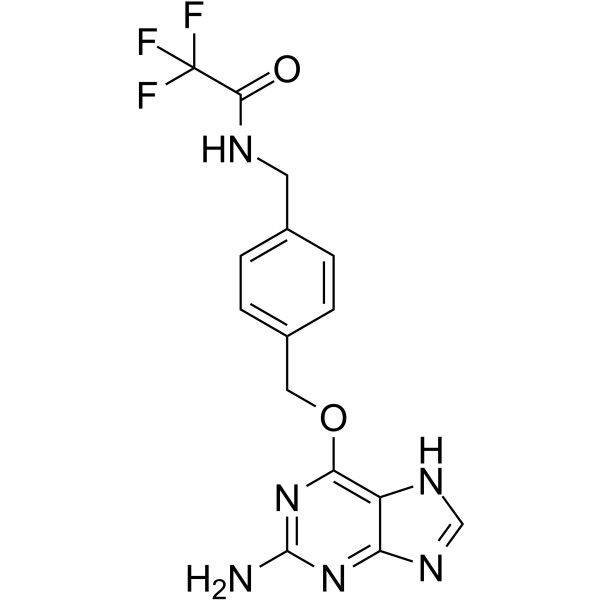 0 ImagesPIN1 inhibitor API-1 is a specific Pin1 (peptidyl-prolyl cis-trans isomerase NIMA-interacting 1) inhibitor (API-1) with an IC50 of 72.3 nM. PIN1 inhibitor API-1 directly and specifically binds to the Pin1 peptidyl-prolyl isomerase (PPIase) domain and potently inhibits Pin1 cis-trans isomerizing activity. PIN1 inhibitor API-1 retains the active conformation of pXPO5 and restores the ability of pXPO5 to transport pre-miRNAs from nucleus to cytoplasm, thus up-regulating the anticancer miRNA biogenesis to suppress both in vitro and in vivo hepatocellular carcinoma development.
-
hsa-miR-21-5p antagomir
 0 ImagesCat. No.: HY-RI00449APurity: 99.28%hsa-miR-21-5p antagomirs are chemically-modified oligonucleotides that hybridize with mature miRNAs. The miRNA antagomirs have 2 phosphorothioates at the 5' end, 4 phosphorothioates at the 3' end, 1 cholesterol group at the 3' end, and full-length nucleotide 2'-methoxy modification. The miRNA antagomirs strongly compete with mature miRNAs to prevent the complementary pairing of miRNAs and their target genes, thereby inhibiting miRNAs from functioning. Stability of miRNA antagomirs appears to be significantly higher than miRNA inhibitors, they exhibits enhanced cellular uptake, stability and regulatory activity in vivo.



-
FAM-MicroRNA Mimic Negative Control
 0 ImagesCat. No.: HY-R04602FFAM-MicroRNA Mimic Negative Control is a FAM labeled FAM-MicroRNA Mimic Negative Control (HY-R04602). MicroRNA Mimic Negative Control is a miRNA mimic of 21-nucleotides, and can be used as a negative control. The sequence of MicroRNA Mimic Negative Control is derived from cel-mir-239b. It has minimal sequence identity with miRNAs in human, mouse, and rat.
-
hsa-miR-17-5p inhibitor
 0 ImagesCat. No.: HY-RI00326Purity: 99.58%hsa-miR-17-5p inhibitors are chemically-modified oligonucleotides that hybridize with mature miRNAs. The miRNA inhibitors have full-length nucleotide 2'-methoxy modification. The miRNA inhibitors strongly compete with mature miRNAs to prevent the complementary pairing of miRNAs and their target genes, thereby inhibiting miRNAs from functioning.


-
Enoxacin
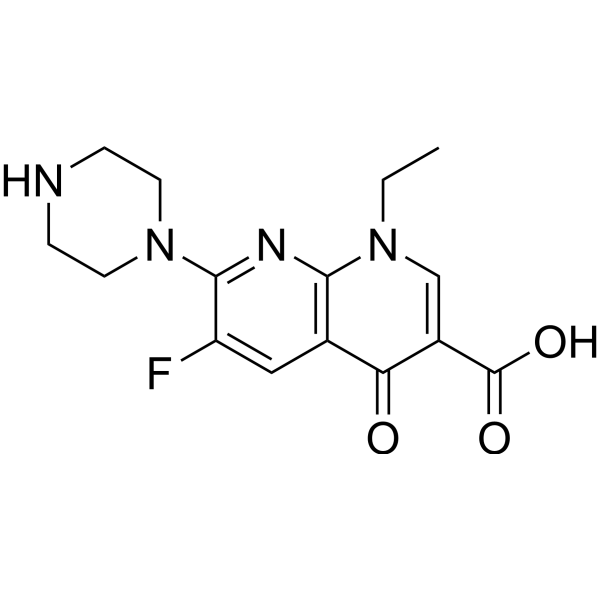 0 ImagesSynonyms: AT 2266; CI 919Enoxacin (AT 2266), a fluoroquinolone, interferes with DNA replication and inhibits bacterial DNA gyrase (IC50=126 µg/ml) and topoisomerase IV (IC50=26.5 µg/ml). Enoxacin is a miRNA processing activator and enhances siRNA-mediated mRNA degradation and promotes the biogenesis of endogenous miRNAs. Enoxacin has potent activities against gram-positive and -negative bacteria. Enoxacin is a cancer-specific growth inhibitor that acts by enhancing TAR RNA-binding protein 2 (TRBP)-mediated microRNA processing.
-
hsa-miR-27b-3p inhibitor
 0 ImagesCat. No.: HY-RI00500hsa-miR-27b-3p inhibitors are chemically-modified oligonucleotides that hybridize with mature miRNAs. The miRNA inhibitors have full-length nucleotide 2'-methoxy modification. The miRNA inhibitors strongly compete with mature miRNAs to prevent the complementary pairing of miRNAs and their target genes, thereby inhibiting miRNAs from functioning.
-
RGLS4326 sodium
 0 ImagesCat. No.: HY-139290APurity: 99.67%Synonyms: RG4326 sodiumRGLS4326 sodium is a first-in-class, short oligonucleotide inhibitor of microRNA-17 (miR-17). RGLS4326 sodium can be used for the research of autosomal dominant polycystic kidney disease (ADPKD). RGLS4326 sodium inhibits miR-17 function in HeLa cells with an EC50 value of 28.3 nM.

-
hsa-miR-9-5p inhibitor
 0 ImagesCat. No.: HY-RI02536hsa-miR-9-5p inhibitors are chemically-modified oligonucleotides that hybridize with mature miRNAs. The miRNA inhibitors have full-length nucleotide 2'-methoxy modification. The miRNA inhibitors strongly compete with mature miRNAs to prevent the complementary pairing of miRNAs and their target genes, thereby inhibiting miRNAs from functioning.




