



Myosin
Myosins are mechanoenzymes that interact with actin filaments and hydrolyse ATP to generate movement and force. This enables myosins to propel the sliding of actin filaments, to produce tension on actin filaments and to walk along these filaments. As a result, myosins can regulate the structure and dynamics of the actin cytoskeleton and affect the localization and transport of cellular components. The different myosins are grouped into classes on the basis of their motor domains. There are 35 known classes of myosin, and humans have 40 myosin genes that fall into 13 classes (I, II, III, V, VI, VII, IX, X, XV, XVI, XVIII, XIX and XXXV).
Myosins are actin-dependent motors that participate in a diverse range of crucial activities, including muscle contraction, intracellular trafficking, cell division, motility, actin cytoskeletal organisation and cell signaling. Myosin malfunction has been implicated in a variety of disorders including deafness, hypertrophic cardiomyopathy, Usher syndrome, Griscelli syndrome and cancer.
Myosin light chain kinase (MLCK) is an enzyme that activates the myosin light chain to exert its function related to cytoskeleton contraction and tight junction regulation. In most cells, MLCK is a transducer for signalling MLC phosphorylation in response to Ca2+ binding to MLCK-associated calmodulin. MLCK-mediated MLC phosphorylation and actomyosin contractility is important in muscle contraction, cell migration, and endo/exocytic processes, and is recognized for its central role in signalling endothelial cell-cell adhesion and barrier function.
Myosin Isoform Specific Products
All Product Categories
-
Myosin Related Products (105)
Related Products (105)

-
Antibodies (20)
-
Myosin Isoform Comparison
-
Chrysosplenol C
 0 ImagesCat. No.: HY-N13747CAS No.: 23370-16-3Chrysosplenol C is a type of flavonoid compound. Chrysosplenol C selectively activates cardiac myosin ATPase, with its EC50 being 45 µM. Chrysosplenol C enhances the release of intracellular calcium ions by activating protein kinase C (PKC), thereby increasing the contractility of rat ventricular muscle cells. Chrysosplenol C can be used in the research of heart failure.
-
Kemptamide
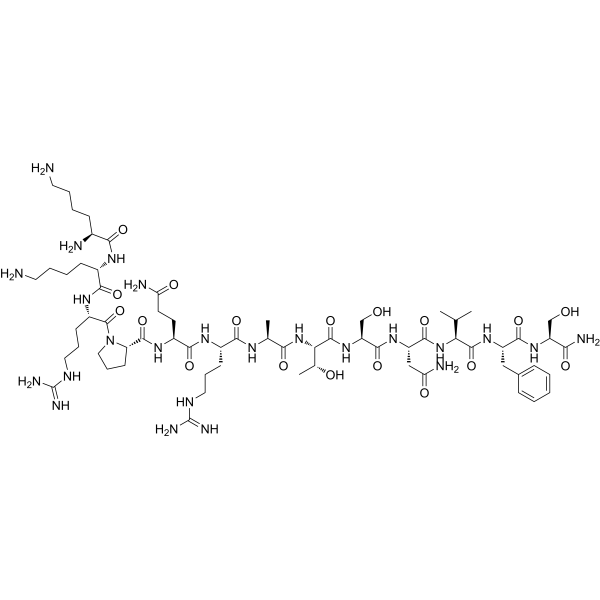 0 ImagesCat. No.: HY-P2162CAS No.: 89315-28-6
-
Myosin-IN-5
 0 ImagesMyosin-IN-5 (example 3) is a selective cardiac myosin inhibitor with an IC50 of 1.5 μM. Myosin-IN-5 shows much less effective in inhibiting skeletal myofibril activity (IC50 of 43.4 μM). Myosin-IN-5 can be used for the study of hypertrophic cardiomyopathy (HCM) and cardiac diseases.
-
Phenamacril
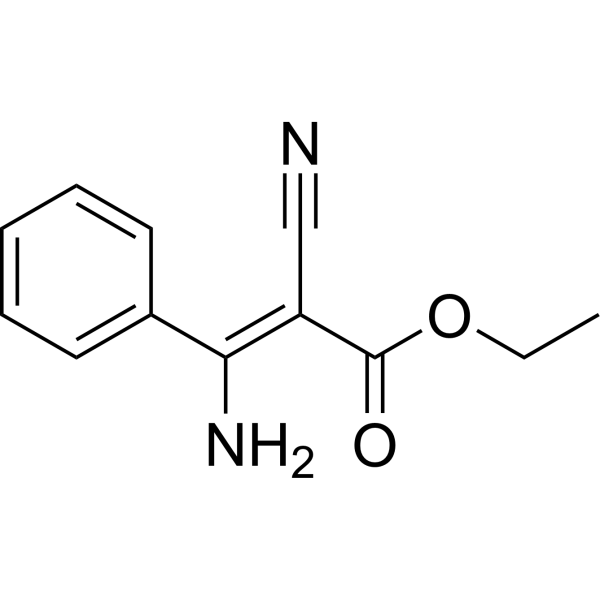 0 ImagesCat. No.: HY-122200CAS No.: 39491-78-6Synonyms: JS399-19Phenamacril (JS399-19) inhibits activity of myosin I non-competitively with an IC50 of 360 nM through suppression of the ATPase activity, exhibits therefore an antifungal efficacy towards Fusarium species.
-
Myosin-IN-3
 0 ImagesCat. No.: HY-176914CAS No.: 3103487-72-2Myosin-IN-3 (Compound 4-1) is a pyrimidine ketone derivative. Myosin-IN-3 exhibits significant anti ferroptotic activity (IC50 = 3.11 μM) while possessing myosin (IC50 = 3.09 μM) inhibitory activity and antioxidant activity (DPPH EC50 = 23.17 μM; MDA EC50 = 55.34 μM). Myosin-IN-3 can be used for research on heart conditions such as hypertrophic cardiomyopathy.
-
(S)-3'-Aminoblebbistatin
 0 ImagesCat. No.: HY-123634CAS No.: 2097141-18-7(S)-3'-Aminoblebbistatin is the derivative of Blebbistatin (HY-13813). (S)-3'-Aminoblebbistatin exhibits inhibitory activity against myosin II with an IC50 of 14.1 µM.
-
1α-Hydroxyvitamin D5
 0 ImagesCat. No.: HY-13692CAS No.: 187935-17-7Synonyms: CARD-0241α-Hydroxyvitamin D5 (CARD-024) is a vitamin D analog with extremely low hypercalcemic effects. 1α-Hydroxyvitamin D5 effectively attenuates the pro-fibrotic response of colonic myofibroblasts to TGFβ and high-stiffness substrates by inhibiting the expression of αSMA, the phosphorylation of FAK, and the gene expression of MLCK and ET-1, while activating the anti-inflammatory pathway of IL-1β/COX-2. 1α-Hydroxyvitamin D5 can be used in research related to intestinal fibrosis associated with Crohn's disease.
-
JB002
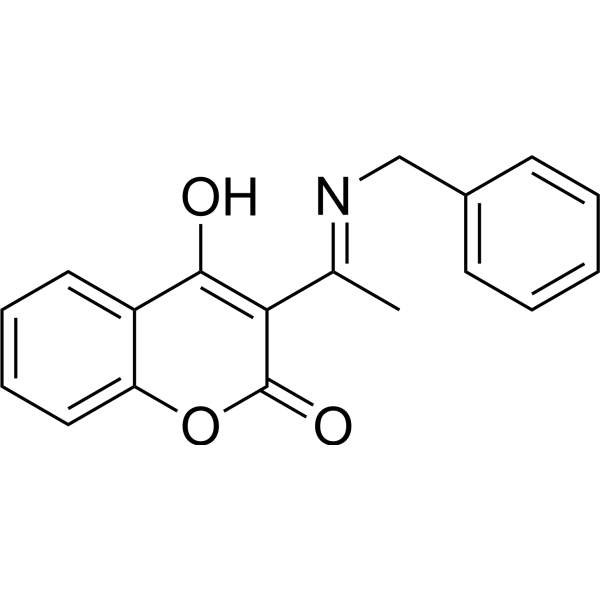 0 ImagesJB002 is a myosin II inhibitor, with an IC50 of ≤10 μM. JB002 can be used for the research of muscle spasticity, chronic musculoskeletal pain, and hypertrophic cardiomyopathy.
-
α-Myosin (614-643)
 0 ImagesCat. No.: HY-P11373CAS No.: 176373-77-6α-Myosin (614-643) is a segment of polypeptide of the heavy chain of cardiac α-myosin. α-Myosin has a strong ability to induce autoimmune myocarditis.
-
MT-134
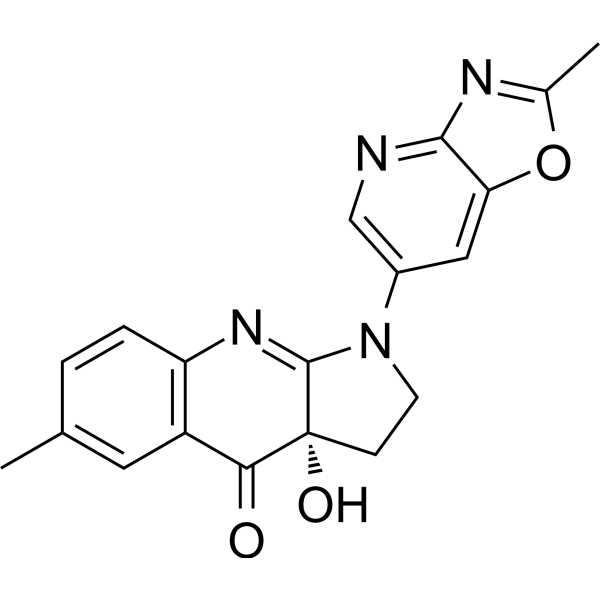 0 ImagesCat. No.: HY-141810CAS No.: 2968308-52-1MT-134 is a SkMII-specific inhibitor and has excellent exposure in muscles.
-
HA-100 hydrochloride
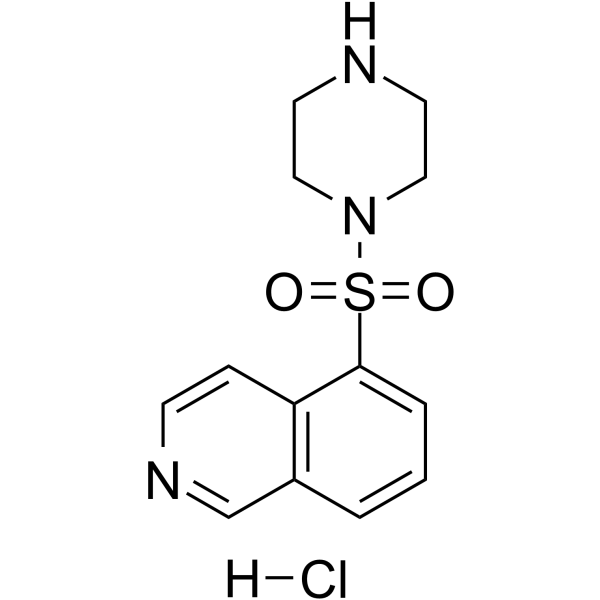 0 ImagesCat. No.: HY-100984ACAS No.: 141543-63-7
-
CK-571
 0 ImagesCat. No.: HY-180792CAS No.: 1119536-89-8CK-571 is a potent and selective inhibitor of smooth muscle myosin-2 (SMM), with an IC50 value of 86 nM. CK-571 exhibits IC50 values for cardiac muscle myosin (CMM), skeletal muscle myosin (SKM), and non-muscle myosin-2A (NMM-2A) of 2.3, 42, and 0.58 μM, respectively. CK-571 can be used for research on asthma, chronic obstructive pulmonary disease, and other smooth muscle-related diseases.
-
Myosin I-IN-1
 0 ImagesCat. No.: HY-189346Myosin I-IN-1 is an Antifungal agent and Myosin I inhibitor with a Kd of 0.14 μM for FgMyoI. Myosin I-IN-1 inhibits mycelial growth, sporulation, spore germination, and Deoxynivalenol (HY-N6684) biosynthesis. Myosin I-IN-1 disrupts cell wall and cell membrane integrity and induces hyphal morphological changes. Myosin I-IN-1 exhibits broad-spectrum antifungal activity against plant pathogenic fungi. Myosin I-IN-1 shows protective efficacy against Fusarium head blight in wheat and maize. Myosin I-IN-1 can be used for research on Fusarium head blight.
-
Myosin-IN-4
 0 ImagesCat. No.: HY-17680CAS No.: 2823425-92-7Myosin-IN-4 (Compound 3), a pyridine-2,4-dione derivative, is a myocardial myosin inhibitor. Myosin-IN-4 has a strong inhibitory activity against cardiac myosin ATPase with an IC50 value of 0.73 μM. Myosin-IN-4 exert a negative inotropic effect by inhibiting myocardial contraction. Myosin-IN-4 can be used for the research on cardiovascular diseases related to cardiac myosin.
-
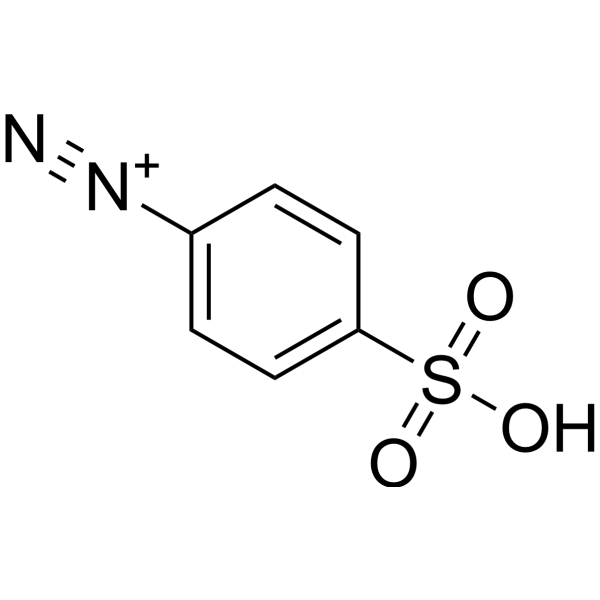
(-)-Blebbistatin (GMP)
 0 ImagesCat. No.: HY-13441GCAS No.: 856925-71-8(-)-Blebbistatin (GMP) is (-)-Blebbistatin (HY-13441) produced by using GMP guidelines. (-)-Blebbistatin (GMP) is a selective inhibitor of the ATPase activity of non-muscle myosin II.
-
HA-100 dihydrochloride
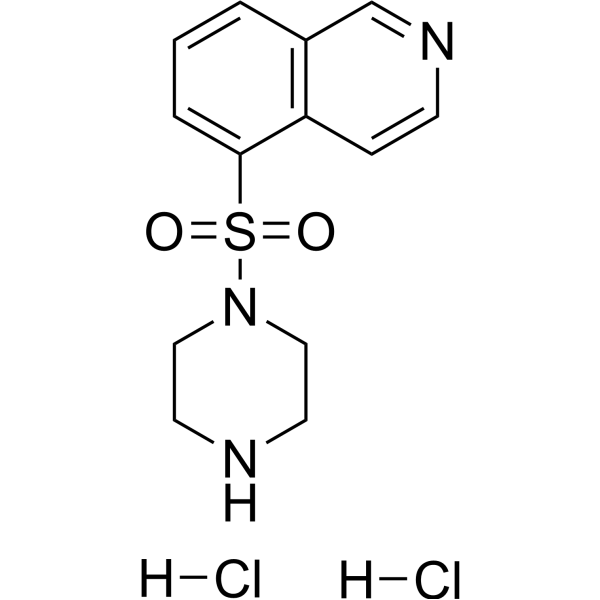 0 ImagesCat. No.: HY-12880CAS No.: 210297-47-5
-
Myosin modulator 1
 0 ImagesCat. No.: HY-161608CAS No.: 3034189-56-2
-
Myokinasib-II
 0 ImagesCat. No.: HY-169183Myokinasib-II is a MLCK1 inhibitor with an IC50 of 4.4 μM. Myokinasib-II induces cell cortex softening, impairs cell migration capacity, induces multinucleation, reduces cell stiffness, alters membrane tether dynamics, decreases actomyosin tension and changes nuclear morphology. Myokinasib-II is a MLCK1 chemical biology probe with a unique structure that does not depolymerize tubulin and maintains cell viability even under high-concentration treatment in fibroblasts.
-
Myosin modulator 2
 0 ImagesCat. No.: HY-161609CAS No.: 3034189-87-9




