



Collagen IV
Collagen IV forms a basement membrane scaffold that maintains matrix integrity under mechanical demand while early basement membrane deposition can proceed without the major α1(IV)2α2(IV) isoform[1]. Mechanistically, collagen IV integrates laminins, nidogens, and perlecan into supramolecular basement membrane architecture, therefore supporting structural barriers and cell-matrix interactions[1]. Six α chains, α1(IV) to α6(IV), assemble into three characteristic heterotrimers, creating isoform-specific basement membrane networks rather than one uniform collagen IV molecule[2]. In developing mouse eyes, α1(IV) and α2(IV) showed ubiquitous co-localization, whereas α3(IV) and α4(IV) showed more spatially and temporally restricted co-localization[2]. Disease relevance follows this isoform logic because defects in type IV collagen are implicated in Alport syndrome and Goodpasture syndrome[3]. In experimental models, Col4a1/2- embryos reached E9.5 but died between E10.5 and E11.5 after basement membrane structural failure[1]. Compared with structural isoforms, collagen IV-derived NC1 fragments provide functional research tools: arresten, canstatin, and tumstatin act as type IV collagen-derived angiogenesis inhibitors[4]. Tumstatin, the α3(IV) NC1 domain, induces apoptosis of proliferating endothelial cells and suppresses pathological angiogenesis and tumor growth[5]. - Key distinction: collagen IV isoforms differ by α-chain composition, tissue distribution, and disease relevance. - Research application: NC1-derived fragments support angiogenesis, tumor-growth, and biomarker-focused experimental designs.
References:
- [1]. Pöschl E, et al. Collagen IV is essential for basement membrane stability but dispensable for initiation of its assembly during early development. Development. 2004 Apr;131(7):1619-28. [Content Brief]
- [2]. Bai X, et al. Developmental distribution of collagen IV isoforms and relevance to ocular diseases. Matrix Biol. 2009 May;28(4):194-201. [Content Brief]
- [3]. Hudson BG, et al. Alport's syndrome, Goodpasture's syndrome, and type IV collagen. N Engl J Med. 2003 Jun 19;348(25):2543-56. [Content Brief]
- [4]. Mundel TM, et al. Type IV collagen-derived angiogenesis inhibitors. Microvasc Res. 2007 Sep-Nov;74(2-3):85-9. [Content Brief]
- [5]. Hamano Y, et al. Tumstatin, the NC1 domain of alpha3 chain of type IV collagen, is an endogenous inhibitor of pathological angiogenesis and suppresses tumor growth. Biochem Biophys Res Commun. 2005 Jul 29;333(2):292-8. [Content Brief]
All Product Categories
-
Collagen IV Related Products (4)
Related Products (4)

-
NSC 90469
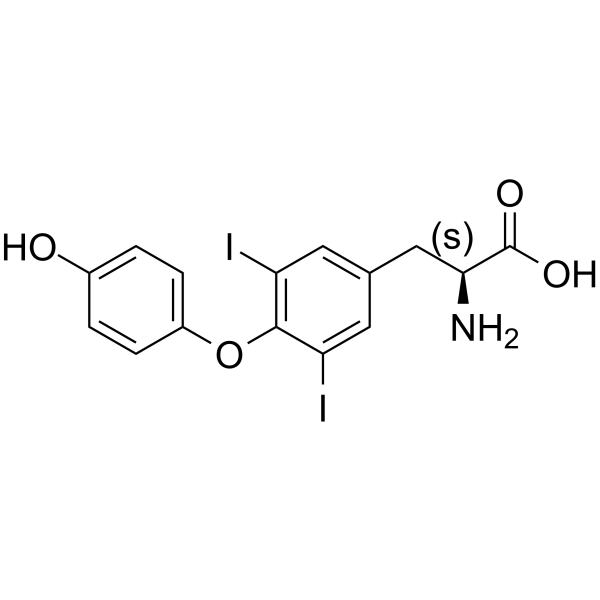 0 ImagesNSC 90469 (3,5-Diiodo-L-thyronine) is an orally active thyroid hormone derivative. NSC 90469 inhibits JNK phosphorylation and NF-κB acetylation, blocks SIRT1 protein expression, induces elevated PGC-1α levels, and stimulates COX activity. NSC 90469 enhances UCP1-mediated thermogenesis, increases hepatic Dio1 activity, inhibits TSH levels and hypothalamic-pituitary-thyroid axis function, enhances lipid metabolism, and regulates energy metabolism via the mitochondrial pathway. NSC 90469 prevents blood glucose reduction, reduces urinary albumin excretion, inhibits renal matrix expansion, decreases TGF-β1 expression, and reduces renal fibronectin and type Ⅳ collagen deposition. NSC 90469 also increases energy expenditure and prevents diet-induced overweight. NSC 90469 can be used in studies related to diabetic nephropathy, hypothyroidism, non-alcoholic fatty liver disease, and diet-induced obesity.
-
4'-Acetoxy resveratrol
 0 Images4'-Acetoxy resveratrol is a Resveratrol (HY-16561) derivative. 4'-Acetoxy resveratrol upregulates gene expression of elastin, collagen types III and IV, superoxide dismutase (SOD), and catalase (CAT), while downregulating interleukins (IL-1A, IL-1R2, IL-6, IL-8) and cyclooxygenase-2 (COX-2) in human skin models. 4'-Acetoxy resveratrol can be used for skin reasearch.
-
PST3.1a
 0 ImagesPST3.1a is an orally active and brain-penetrant N-acetylglucosamine glycosyltransferase (MGAT5) inhibitor with a human IC50 of 2 µM. PST3.1a inhibits TGFβR and FAK signaling pathway activity. PST3.1a alters β1,6-GlcNAc N-glycans and microtubule/microfilament integrity, increases OLIG2 expression, and inhibits proliferation, migration, invasiveness, and clonogenic capacities of glioblastoma initiating cells. PST3.1a reduces invasive and proliferative capacity of glioblastoma initiating cells in orthotopic graft models, increases overall survival of orthotopic graft model mice. PST3.1a blunts MGAT5 overexpression, decreases renal fibrosis via collagen 1, collagen 4, and galectin 3 downregulation in a rat chronic kidney disease model. PST3.1a can be used for the research of glioblastoma multiforme and chronic kidney disease.
-
LM9
 0 ImagesCat. No.: HY-180336CAS No.: 2249864-11-5LM9 is a potent, orally active MyD88 inhibitor. LM9 blocks TLR4/MyD88 binding, MyD88 homodimer formation, and TLR4/MyD88/NF-κB signaling pathway activation. LM9 prevents atherosclerosis by regulating inflammatory responses and oxidative stress in macrophages. LM9 efficiently mitigates inflammatory responses and fibrosis in obesity-induced cardiomyopathy. LM9 can be used for fibrosis and atherosclerosis research.



