



Organoid
The term ‘organoid’ has been used to encompass all 3D organotypic cultures derived from primary tissues, pluripotent stem cells (PSCs), including embryonic stem cells (ESCs) and induced pluripotent stem cells (iPSCs), established cell lines, as well as whole or segmented organs such as organ explants consisting of multiple tissue types. Organoid model is a major technological breakthrough that acts as a valuable model for the study of tissue development, disease modeling, drug screening, personalized medicine and cell therapy.
-
Organoid Related Products (80)
Related Products (80)

-
Laduviglusib (Standard)
 0 ImagesSynonyms: CHIR-99021 (Standard); CT99021 (Standard)Laduviglusib (Standard) is the analytical standard of Laduviglusib. Laduviglusib (CHIR-99021) is a potent, selective and orally active GSK-3α/β inhibitor with IC50s of 10 nM and 6.7 nM. Laduviglusib shows >500-fold selectivity for GSK-3 over CDC2, ERK2 and other protein kinases. Laduviglusib is also a potent Wnt/β-catenin signaling pathway activator. Laduviglusib enhances mouse and human embryonic stem cells self-renewal. Laduviglusib induces autophagy.
-
IDE 2
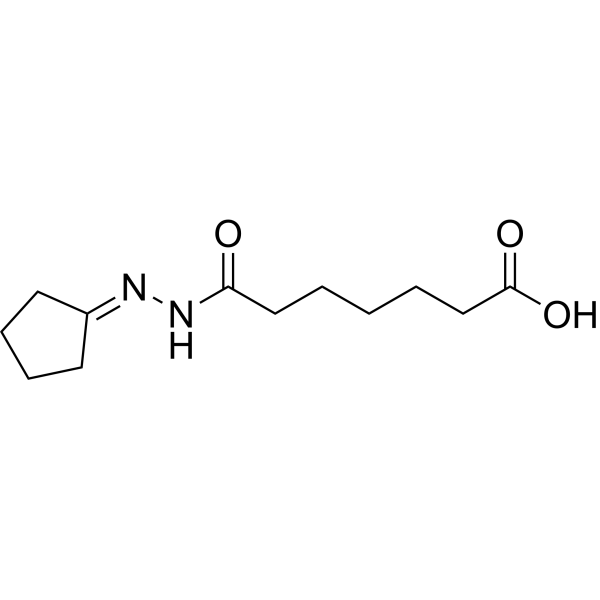 0 ImagesIDE2 is a small molecule cell-permeable inducer of definitive endoderm formation in mouse and human embryonic stem cells (ESCs) by activating the TGF-βsignaling pathway.
-
LDN193189 (GMP)
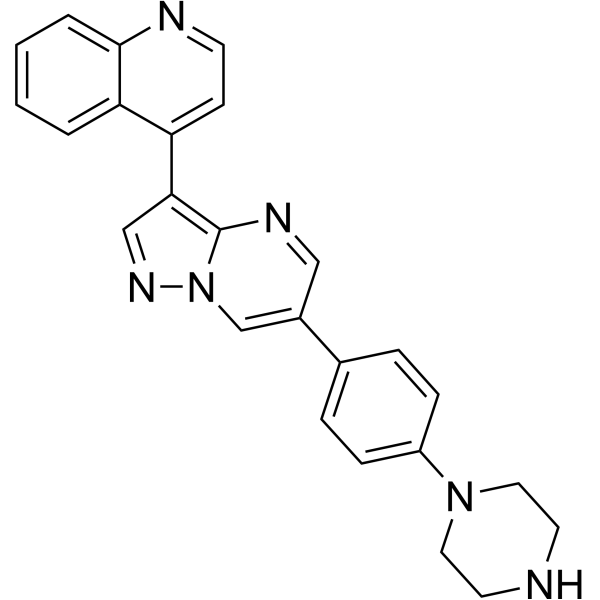 0 ImagesCat. No.: HY-12071GCAS No.: 1062368-24-4Synonyms: DM-3189 (GMP)LDN193189 GMP is LDN193189 (HY-12071) produced by using GMP guidelines. GMP small molecules works appropriately as an auxiliary reagent for cell therapy manufacture. LDN193189 (DM-3189) is a potent selective BMP type I receptor (BMP I) inhibitor. LDN193189 efficiently inhibits transcriptional activity of the BMP type I receptors ALK2 and ALK3 with IC50 values of 5 nM and 30 nM, respectively. LDN193189 can be used for the research of bone morphogenetic protein signalling, such as fibrodysplasia ossificans progressiva.
-
5-Azacytidine (Standard)
 0 ImagesSynonyms: Azacitidine (Standard); 5-AzaC (Standard); Ladakamycin (Standard)5-Azacytidine (Standard) is the analytical standard of 5-Azacytidine. This product is intended for research and analytical applications. 5-Azacytidine (Azacitidine; 5-AzaC; Ladakamycin) is a nucleoside analogue of cytidine that specifically inhibits DNA methylation. 5-Azacytidine is incorporated into DNA to covalently trap DNA methyltransferases and contributes to reverse epigenetic changes. 5-Azacytidine induces cell autophagy.
-
Valproic acid (Standard)
 0 ImagesSynonyms: VPA (Standard); 2-Propylpentanoic acid (Standard); Dipropylacetic acid (Standard)Valproic acid (Dipropylacetic Acid) (Standard) is an analytical standard for valproic acid. This product is intended for research and analytical applications. Valproic acid is an orally active HDAC inhibitor (IC50=0.5-2 mM), inhibits the activity of HDAC1 (IC50=400 μM), and induces the degradation of HDAC2. Valproic acid activates Notch1 signaling and inhibits the proliferation of small cell lung cancer (SCLC) cells. Valproic acid is used in the study of epilepsy, bipolar disorder, metabolic diseases, HIV infection, and migraine.
-
LDN193189 hydrochloride
 0 ImagesSynonyms: DM-3189 hydrochlorideLDN193189 (DM-3189) hydrochloride is a potent selective BMP type I receptor (BMP I) inhibitor. LDN193189 efficiently inhibits transcriptional activity of the BMP type I receptors ALK2 and ALK3 with IC50 values of 5 nM and 30 nM, respectively. LDN193189 can be used for the research of bone morphogenetic protein signalling, such as fibrodysplasia ossificans progressiva.

-
Adezmapimod hydrochloride (Standard)
 0 ImagesSynonyms: SB 203580 hydrochloride (Standard); RWJ 64809 hydrochloride (Standard)Adezmapimod (hydrochloride) (Standard) is the analytical standard of Adezmapimod (hydrochloride). This product is intended for research and analytical applications. Adezmapimod (SB 203580; RWJ 64809) hydrochloride is a selective and ATP-competitive p38 MAPK inhibitor with IC50s of 50 nM and 500 nM for SAPK2a/p38 and SAPK2b/p38β2, respectively. Adezmapimod hydrochloride inhibits LCK, GSK3β and PKBα with IC50s of 100-500-fold higher than that for SAPK2a/p38. Adezmapimod hydrochloride does not disrupt JNK activity and is an autophagy and mitophagy activator.
-
Adezmapimod (Standard)
 0 ImagesSynonyms: SB 203580 (Standard); RWJ 64809 (Standard)Adezmapimod (Standard) is the analytical standard of Adezmapimod. This product is intended for research and analytical applications. Adezmapimod (SB 203580) is a selective and ATP-competitive p38 MAPK inhibitor with IC50s of 50 nM and 500 nM for SAPK2a/p38 and SAPK2b/p38β2, respectively. Adezmapimod inhibits LCK, GSK3β and PKBα with IC50s of 100-500-fold higher than that for SAPK2a/p38. Adezmapimod can inhibit p38 MAPK and lead to the inhibition of downstream HSP27 phosphorylation. Adezmapimod does not disrupt JNK activity and is an autophagy and mitophagy activator.
-
Valproic acid sodium (Standard)
 0 ImagesSynonyms: Sodium Valproate (Standard); VPA sodium (Standard); 2-Propylpentanoic acid sodium (Standard)Valproic acid (sodium) (Standard) is the analytical standard of Valproic acid (sodium). This product is intended for research and analytical applications. Valproic acid (Sodium Valproate) sodium is an orally active HDAC inhibitor, with IC50 in the range of 0.5 and 2 mM, also inhibits HDAC1 (IC50, 400 μM), and induces proteasomal degradation of HDAC2. Valproic acid sodium activates Notch1 signaling and inhibits proliferation in small cell lung cancer (SCLC) cells. Valproic acid sodium is used in the treatment of epilepsy, bipolar disorder, metabolic disease, HIV infection and prevention of migraine headaches.
-
Nicotinamide-13C,15N
 0 ImagesCat. No.: HY-B0150S4Purity: 98.71%Synonyms: Niacinamide-13C,15N; Nicotinic acid amide-13C,15NNicotinamide-13C,15N (Niacinamide-13C,15N) is the 13C- and 15N-labeled Nicotinamide (HY-B0150). Nicotinamide is a form of vitamin B3 or niacin. Nicotinamide Hydrochloride inhibits SIRT2 activity (IC50: 2 μM). Nicotinamide also inhibits SIRT1. Nicotinamide increases cellular NAD+, ATP, ROS levels. Nicotinamide inhibits tumor growth and improves survival. Nicotinamide also has anti-HBV activity.
-
Laduviglusib dihydrochloride
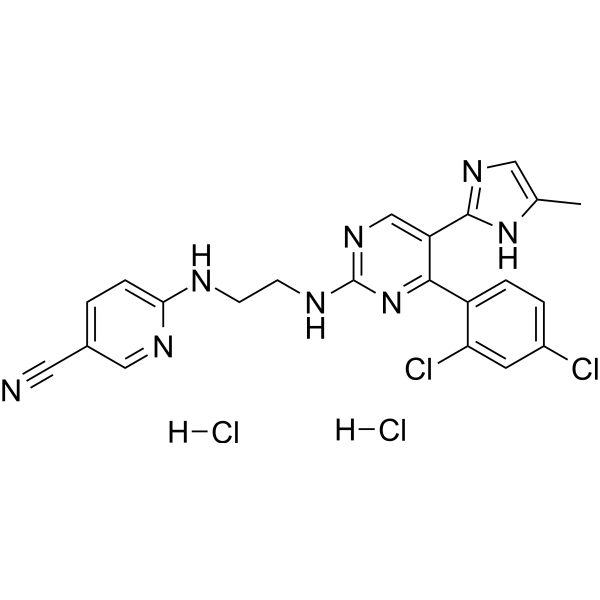 0 ImagesCat. No.: HY-10182CCAS No.: 2109414-84-6Synonyms: CHIR-99021 dihydrochloride; CT99021 dihydrochlorideLaduviglusib dihydrochloride (CHIR-99021 dihydrochloride; CT99021 dihydrochloride) is a potent, selective and orally active GSK-3α/β inhibitor with IC50s of 10 nM and 6.7 nM. Laduviglusib dihydrochloride shows >500-fold selectivity for GSK-3 over CDC2, ERK2 and other protein kinases. Laduviglusib dihydrochloride is also a potent Wnt/β-catenin signaling pathway activator. Laduviglusib dihydrochloride enhances mouse and human embryonic stem cells self-renewal. Laduviglusib dihydrochloride induces autophagy.
-
Trichostatin A (Standard)
 0 ImagesCat. No.: HY-15144RCAS No.: 58880-19-6Synonyms: TSA (Standard)Trichostatin A (Standard) is the analytical standard of Trichostatin A (HY-15144). This product is intended for research and analytical applications. Trichostatin A (TSA) is a potent and specific inhibitor of HDAC class I/II, with an IC50 value of 1.8 nM for HDAC.
-
Wortmannin (Standard)
 0 ImagesSynonyms: SL-2052 (Standard); KY-12420 (Standard)Wortmannin (Standard) is the analytical standard of Wortmannin. This product is intended for research and analytical applications. Wortmannin (SL-2052; KY-12420) is a potent, selective and irreversible PI3K inhibitor with an IC50 of 3 nM. Wortmannin also blocks autophagy formation, and potently inhibits Polo-like kinase 1 (PlK1) and Plk3 with IC50s of 5.8 and 48 nM, respectively.
-
9-cis-Retinal (Standard)
 0 ImagesCat. No.: HY-W009310RCAS No.: 514-85-2Mebrofenin (Standard) is the analytical standard of Mebrofenin. This product is intended for research and analytical applications. Mebrofenin (SQ 26962) is a type of iminodiacetic acid (IDA). Mebrofenin is available as a ready to use the kit for radio-labeling with Tc-99m. Tc-99m Mebrofenin, a diagnostic agent, is used for hepatobiliary imaging. Tc-99m Mebrofenin is the radiopharmaceutical of choice for the evaluation of hepatic function.
-
Valproic acid sodium (GMP)
 0 ImagesCat. No.: HY-10585AGCAS No.: 1069-66-5Synonyms: Sodium Valproate (GMP); VPA sodium (GMP); 2-Propylpentanoic acid sodium (GMP)Valproic acid (Sodium Valproate) sodium is an orally active HDAC inhibitor, with IC50 in the range of 0.5 and 2 mM, also inhibits HDAC1 (IC50, 400 μM), and induces proteasomal degradation of HDAC2. Valproic acid sodium activates Notch1 signaling and inhibits proliferation in small cell lung cancer (SCLC) cells. Valproic acid sodium is used in the treatment of epilepsy, bipolar disorder, metabolic disease, HIV infection and prevention of migraine headaches.
-
Valproic acid magnesium
 0 ImagesCat. No.: HY-W794759CAS No.: 62959-43-7Synonyms: Magnesium valproate; VPA magnesium; 2-Propylpentanoic acid magnesiumValproic acid magnesium (Magnesium valproate) is an orally active HDAC inhibitor, with IC50 in the range of 0.5 and 2 mM. Valproic acid magnesium inhibits HDAC1 (IC50, 400 μM), and induces proteasomal degradation of HDAC2. Valproic acid magnesium activates Notch1 signaling and inhibits proliferation in small cell lung cancer (SCLC) cells. Valproic acid magnesium is used in the epilepsy, bipolar disorder, metabolic disease, HIV infection and prevention of migraine headaches.
-
Ipatasertib tosylate
 0 ImagesCat. No.: HY-15186CCAS No.: 1491138-24-9Synonyms: GDC-0068 tosylate; RG7440 tosylateIpatasertib (GDC-0068) tosylate is an orally active, highly selective and ATP-competitive pan-Akt inhibitor with IC50 values of 5, 18, 8 nM for Akt1/2/3, respectively. Ipatasertib tosylate synchronously activates FoxO3a and NF-κB through inhibition of Akt leading to p53-independent activation of PUMA. Ipatasertib tosylate also induces apoptosis in cancer cells and inhibits tumor growth in xenograft mouse models.
-
IWR-1 (GMP)
 0 ImagesCat. No.: HY-12238GCAS No.: 1127442-82-3Synonyms: endo-IWR 1 (GMP); IWR-1-endo (GMP)IWR-1 (IWR-1-endo) (GMP) is the IWR-1 (HY-12238) produced by using GMP guidelines. GMP small molecules work appropriately as an auxiliary reagent for cell therapy manufacture. IWR-1 (IWR-1-endo) is a tankyrase inhibitor targeting Wnt/β-catenin (IC50 = 180 nM). IWR-1 compromises critical steps of the canonical Wnt signaling, namely translocation of β-catenin to the nucleus and subsequent TCF/LEF activation and expression of Wnt/β-catenin downstream targets. IWR-1 promotes β-catenin phosphorylation by promoting stability of Axin-scaffolded destruction complexes. IWR-1 can be studied in research for anti-tumor purposes, and diseases such as osteosarcoma, colorectal cancer and psoriasis.
-
LY-411575 (Standard)
 0 ImagesCat. No.: HY-50752RCAS No.: 209984-57-6



