



PINK1
PINK1 (PTEN-induced kinase 1) is a mitochondrial serine/threonine kinase that functions as a sensor of mitochondrial damage and a central regulator of mitochondrial quality control mechanisms.[1] Upon mitochondrial depolarization, PINK1 accumulates on the outer mitochondrial membrane rather than undergoing constitutive turnover, thereby marking dysfunctional mitochondria for selective removal.[2][3] Mechanistically, stabilized PINK1 phosphorylates both ubiquitin and the E3 ubiquitin ligase Parkin, initiating a ubiquitin-dependent mitophagy pathway that promotes recruitment of autophagic machinery to damaged mitochondria.[3][4] Through this PINK1-Parkin signaling axis, cells maintain mitochondrial homeostasis, limit accumulation of dysfunctional organelles, and support neuronal survival under cellular stress conditions.[1][3][5] The PINK1-mediated mitophagy pathway is strongly linked to neurodegenerative disease biology, particularly Parkinson’s disease, where mutations in PINK1 represent an established cause of autosomal recessive early-onset Parkinsonism.[6][7] Experimental studies further demonstrate that impaired PINK1-Parkin signaling results in defective mitochondrial clearance and accumulation of damaged mitochondria, whereas restoration of pathway activity promotes mitophagy and protects neurons from apoptosis in disease models.[5][8] Compared with related mitochondrial quality-control regulators, PINK1 is distinguished by its kinase-dependent damage-sensing function and its highly specific phosphorylation of ubiquitin, a critical upstream event required for efficient Parkin activation.[4] For experimental applications, genetic modulation of PINK1 expression and pharmacological enhancement of PINK1-Parkin-mediated mitophagy are widely used to investigate mitochondrial dysfunction, neurodegeneration, and mitochondrial quality-control mechanisms.[5][9]
References:
- [1]. Uniprotkb.
- [2]. Jones N. PINK1 targets dysfunctional mitochondria for autophagy in Parkinson disease. Nat Rev Neurol. 2010 Apr;6(4):181. doi: 10.1038/nrneurol.2010.19. PMID: 20383881. et al. PINK1 targets dysfunctional mitochondria for autophagy in Parkinson disease. Nat Rev Neurol. 2010 Apr;6(4):181. [Content Brief]
- [3]. Pickrell AM, et al. The roles of PINK1, parkin, and mitochondrial fidelity in Parkinson's disease. Neuron. 2015 Jan 21;85(2):257-73. [Content Brief]
- [4]. Sauvé V, et al. Phosphorylated ubiquitin: a new shade of PINK1 in Parkin activation. Cell Res. 2014 Sep;24(9):1025-6. [Content Brief]
- [5]. Li J, et al. PINK1-parkin-mediated neuronal mitophagy deficiency in prion disease. Cell Death Dis. 2022 Feb 18;13(2):162. [Content Brief]
- [6]. Wang S, et al. The mitophagy pathway and its implications in human diseases. Signal Transduct Target Ther. 2023 Aug 16;8(1):304. [Content Brief]
- [7]. Masaldan S, et al. Therapeutic targeting of mitophagy in Parkinson's disease. Biochem Soc Trans. 2022 Apr 29;50(2):783-797. [Content Brief]
- [8]. Deas E, et al. Mitophagy and Parkinson's disease: the PINK1-parkin link. Biochim Biophys Acta. 2011 Apr;1813(4):623-33. [Content Brief]
- [9]. O'Callaghan B, et al. PINK1: From Parkinson's disease to mitophagy and back again. PLoS Biol. 2023 Jun 29;21(6):e3002196. [Content Brief]
All Product Categories
-
PINK1 Related Products (3)
Related Products (3)

-
MG 149
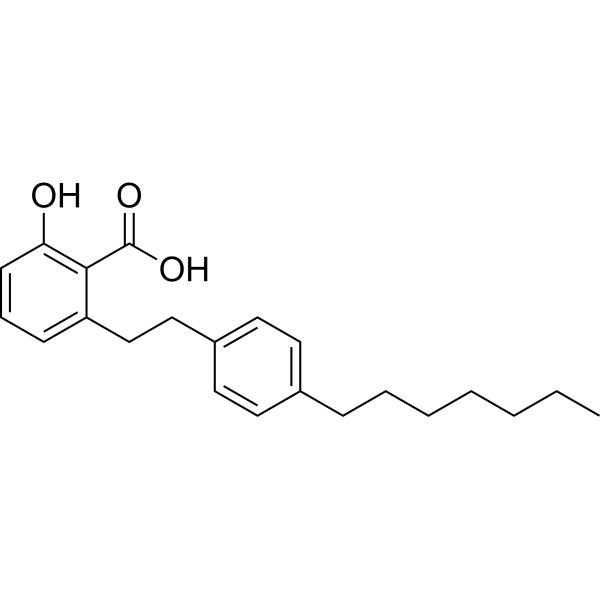 0 ImagesSynonyms: Tip60 HAT inhibitorMG149 (Tip60 HAT inhibitor) is a selective and potent Tip60 inhibitor with IC50 of 74 uM, similar potentcy for MOF (IC50 = 47 uM); little potent for PCAF and p300 (IC50 >200 uM). MG 149 inhibits KAT8 and blocks PINK1 kinase activity. MG149 inhibits the phosphorylation of Parkin and ubiquitin, thereby suppressing the initiation of PINK1-dependent mitophagy. MG 149 can reverse chronic restraint stress (CRS) induced hypertension and related molecular changes. MG 149 commonly used in research on diseases such as hypertension and Parkinson's disease.
-
Dexpramipexole
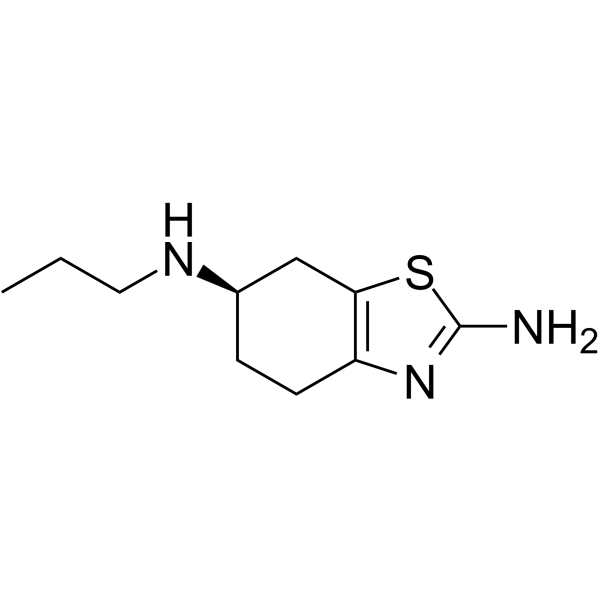 0 ImagesSynonyms: (R)-Pramipexole; R-(+)-Pramipexole; KNS-760704Dexpramipexole ((R)-Pramipexole) is an orally active, blood-brain barrier permeable mitochondrial protective agent. Dexpramipexole upregulates the expression of Parkin, PINK1, GPX4 and FSP1; binds to mitochondrial F1/Fo-ATP synthase; blocks the Nav1.8 sodium channel; and inhibits the activation of the NLRP3 inflammasome. Dexpramipexole induces mitophagy, inhibits ferroptosis, pyroptosis, apoptosis, neuroinflammation and eosinophilopoiesis; maintains mitochondrial function and redox homeostasis; reduces reactive oxygen species production; and decreases myocardial infarct size. Dexpramipexole is applicable to studies on eosinophilic asthma, myocardial ischemia/reperfusion injury, sepsis-associated encephalopathy, analgesia, and more.
-
Isopimaric acid
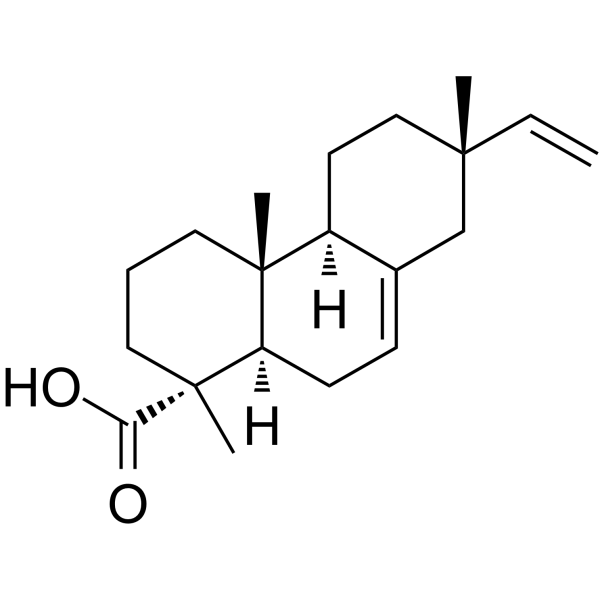 0 ImagesIsopimaric acid is a coniferous tree defense compound. Isopimaric acid binds to AKT and inhibits mTOR phosphorylation, thereby regulating the AKT/mTOR pathway. Isopimaric acid inhibits oxidative stress, inflammation, microglial migration, apoptosis, autophagic flux, ornithine decarboxylase activity, breast cancer proliferation and metastasis, and fungal spore germination. Isopimaric acid also induces M2 microglial polarization, mitochondrial damage, ROS accumulation, starvation-induced colon cancer cell apoptosis, and breast cancer cell cycle arrest. Isopimaric acid activates potassium channels, regulates sodium channels and calcium channels, reduces myocardial excitability, and improves arrhythmia. Isopimaric acid acts as an oxidative substrate for CYP6BW1/3, down-regulates PINK1/Parkin, and regulates calcium homeostasis, oxidative phosphorylation, EMT, and the Wnt pathway. Isopimaric acid exhibits activity against drug-resistant Staphylococcus aureus, repels feeding, and promotes the growth of rice seedlings. Isopimaric acid is suitable for research related to epilepsy, tumors, drug-resistant bacterial infections, atrial fibrillation, hypertension, hyperlipidemia, pulmonary tuberculosis, etc.



