



SOD
Superoxide Dismutase
SOD (Superoxide dismutase), an antioxidant enzyme, are a group of metalloenzymes that defenses against reactive oxygen species (ROS)-mediated injury. SOD can catalyze the dismutation of superoxide radicals (O2˙-) into hydrogen peroxide (H2O2) and oxygen (O2). The chemical moiety of SOD contains some metal ions such as Cu2+, Zn2+, Mn2+, and Fe2+ in the active site, which mediates the dismutation process. On the basis of these metallic cofactors, SOD can be classified into three distinct types, SOD1 (Cu/Zn-SOD), SOD2 (Mn-SOD), and SOD3 (Fe-SOD)[1][2].
References:
- [1]. Younus H. Therapeutic potentials of superoxide dismutase. Int J Health Sci (Qassim). 2018 May-Jun;12(3):88-93. [Content Brief]
- [2]. Saurav Suman, et al. Chapter 14 - Biotic stresses on plants: reactive oxygen species generation and antioxidant mechanism. Frontiers in Plant-Soil Interaction. Molecular Insights Into Plant Adaptation. 2021, 381-411.
All Product Categories
-
SOD Related Products (233)
Related Products (233)

-
Antibodies (4)
-
Zinc picolinate
 0 ImagesCat. No.: HY-W459577CAS No.: 17949-65-4Zinc picolinate is an orally effective zinc supplement. Zinc picolinate reduces the expression of Hsp70, inhibits oxidative DNA damage, increases serum ALP activity, decreases MDA concentration, elevates SOD levels, and raises zinc concentrations in serum, whole body and plasma. Zinc picolinate does not alter copper and manganese contents in rainbow trout. Zinc picolinate exerts a protective effect against Acetic acid (HY-Y0319)-induced experimental colitis in Sprague Dawley rats. Zinc picolinate reduces uterine fibroid volume, alleviates colonic oxidative damage, relieves colonic inflammation, and enhances intestinal barrier integrity. Zinc picolinate can be used in research related to uterine fibroids, ulcerative colitis and chronic obstructive pulmonary disease.
-
Kinetin (Standard)
 0 ImagesSynonyms: 6-Furfuryladenine (Standard); N6-Furfuryladenine (Standard)Kinetin (Standard) is the analytical standard of Kinetin. This product is intended for research and analytical applications. Kinetin (N6-furfuryladenine) belongs to the family of N6-substituted adenine derivatives known as cytokinins, which are plant hormones involved in cell division, differentiation and other physiological processes. Kinetin has anti-aging effects.
-
4-Acetylaminoantipyrine
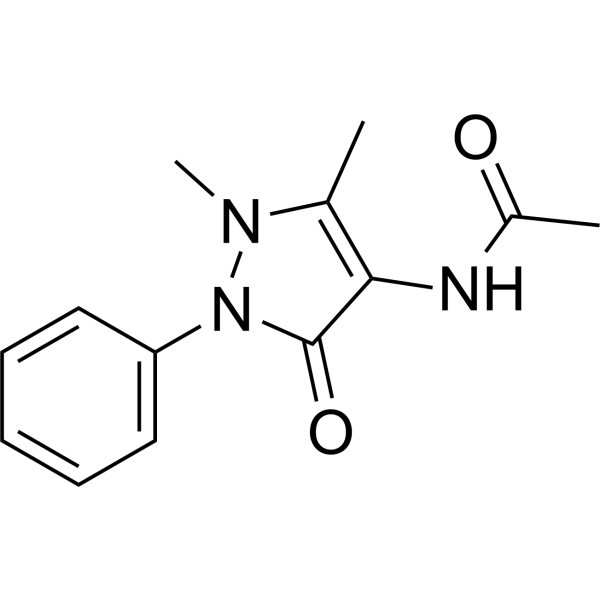 0 Images4-Acetylaminoantipyrine (4-AA) is a derivative of antipyrine (HY-B0171). 4-Acetylaminoantipyrine acts as a PGE2-dependent blocker and inhibitor of cyclooxygenase (COX). 4-Acetylaminoantipyrine can inhibit Cu/ZnSOD. 4-Acetylaminoantipyrine can spontaneously bind with bovine serum albumin (BSA) and alter its conformation.
-
Spirotetramat
 0 ImagesCat. No.: HY-120253CAS No.: 203313-25-1Synonyms: BY-108330Spirotetramat (BY-108330) is an orally active Insecticide and lipid biosynthesis inhibitor. Spirotetramat regulates the activities of superoxide dismutase (SOD) and glutathione peroxidase (GSH-Px), with short-term exposure increasing their activities and long-term exposure altering their activities. Spirotetramat induces the activity and mRNA expression of carboxylesterase (CarE). Spirotetramat induces oxidative stress and lipid peroxidation in tadpoles. Spirotetramat is toxic to amphibian tadpoles and exhibits sublethal/non-lethal toxicity to amphibians. Spirotetramat causes death in immature psyllids, aphids, scale insects, mealybugs, whiteflies and thrips, and shows a high lethal rate against Cacopsylla pyri nymphs. Spirotetramat reduces the fecundity of Aphis gossypii. Spirotetramat induces tolerance in the offspring of exposed Aphis gossypii, and acts on Myzus persicae, Bemisia tabaci and Tetranychus urticae.
-
Ethylenediaminetetraacetic acid sodium hydrate
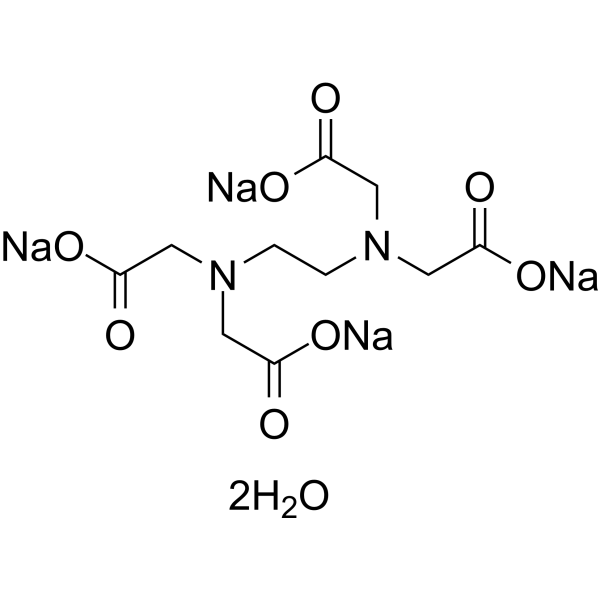 0 ImagesSynonyms: EDTA sodium hydrateEthylenediaminetetraacetic acid (EDTA) sodium hydrate is a kind of metal chelating agent (binds to bivalent and trivalent metal cations, including calcium). Ethylenediaminetetraacetic acid sodium hydrate has antibacterial, anti-inflammatory, antioxidant, anti-hypercalcemia and anticoagulant activities. Ethylenediaminetetraacetic acid sodium hydrate decreases the metal ion-catalyzed oxidative damage to proteins, and allows maintenance of reducing environment during protein purification. Ethylenediaminetetraacetic acid sodium hydrate can alleviate the liver fibrosis. Ethylenediaminetetraacetic acid sodium hydrate can be used for coronary artery disease and neural system disease research.
-
DHICA (Standard)
 0 ImagesCat. No.: HY-W018158RCAS No.: 4790-08-3Synonyms: 5,6-Dihydroxyindole-2-carboxylic acid (Standard)DHICA (Standard) is an analytical standard of DHICA (HY-W018158). This product is for research and analytical applications. DHICA (5,6-Dihydroxyindole-2-carboxylic acid) is an eumelanin building block, GPR35 agonist and melanin synthesis intermediate. DHICA activates GPR35, triggering dynamic mass redistribution and β-arrestin translocation. DHICA interacts with DNA and interferes with Fpg activity. DHICA promotes the generation of single-strand breaks in plasmid DNA. DHICA increases the activity and expression levels of SOD and Catalase. DHICA is applicable to research related to skin cancer and colon cancer.
-
Carminic acid (Standard)
 0 ImagesCarminic acid (Standard) is the analytical standard of Carminic acid (HY-N8407). This product is intended for research and analytical applications. Carminic acid is a widely used and orally active natural red pigment that can be used in industries such as food, cosmetics, and pharmaceuticals. In addition, carminic acid has anti-inflammatory and antioxidant activities.
-
Diallyl Trisulfide (Standard)
 0 ImagesCat. No.: HY-117235RCAS No.: 2050-87-5Diallyl Trisulfide (Standard) is the analytical standard of Diallyl Trisulfide. This product is intended for research and analytical applications. Diallyl Trisulfide is an orally active anticancer agent that can be isolated from garlic. Diallyl Trisulfide has the ability to induce apoptosis and exhibits anticancer, anti-inflammatory, antioxidant, and antibacterial activities. Diallyl Trisulfide can be used to study a variety of cancers, including liver, colon and prostate cancer[1][2][3][4].
-
Clofibric acid-d4
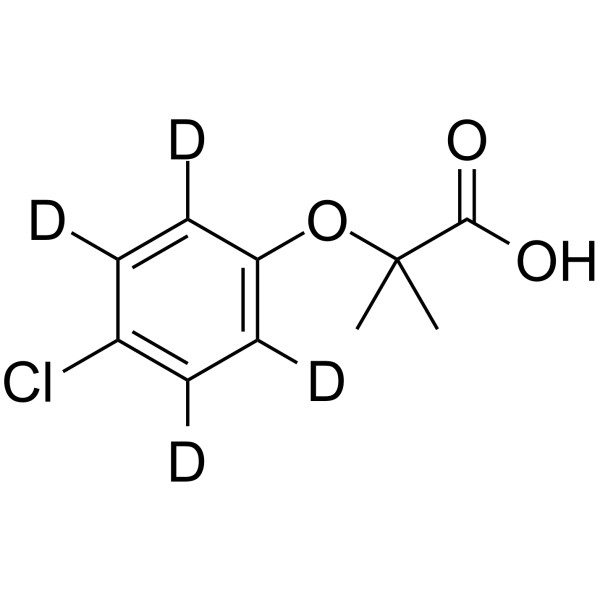 0 ImagesCat. No.: HY-B1415SCAS No.: 1184991-14-7Synonyms: Chlorofibrinic acid-d4Clofibric acid-d4 is the deuterium labeled Clofibric acid (HY-B1415). Clofibric acid also is an herbicideClofibric acid (Chlorofibrinic acid) is an orally active PPARα agonist. Clofibric acid inhibits the fimbriation of Escherichia coli. Clofibric acid increases SOD activity. Clofibric acid lowers blood lipids and prevents experimental pyelonephritis. Clofibric acid has anticancer activity against ovarian cancer. Clofibric acid is also a herbicide. Clofibric acid is used in ovarian cancer, liver cancer, obesity, and urinary tract infection research.
-
Ethylenediaminetetraacetic acid-13C4
 0 ImagesCat. No.: HY-W777365CAS No.: 1215408-17-5Synonyms: EDTA-13C4Ethylenediaminetetraacetic acid-13C4 (EDTA-13C4) is the 13C-labeled Ethylenediaminetetraacetic acid (HY-Y0682). Ethylenediaminetetraacetic acid (EDTA) is a kind of metal chelating agent (binds to bivalent and trivalent metal cations, including calcium). Ethylenediaminetetraacetic acid has antibacterial, anti-inflammatory, antioxidant, anti-hypercalcemia and anticoagulant activities. Ethylenediaminetetraacetic acid decreases the metal ion-catalyzed oxidative damage to proteins, and allows maintenance of reducing environment during protein purification. Ethylenediaminetetraacetic acid can alleviate the liver fibrosis. Ethylenediaminetetraacetic acid can be used for coronary artery disease and neural system disease research.
-
Ethylenediaminetetraacetic acid (Standard)
 0 ImagesEthylenediaminetetraacetic acid (Standard) is the analytical standard of Ethylenediaminetetraacetic acid. This product is intended for research and analytical applications. Ethylenediaminetetraacetic acid (EDTA) is a kind of metal chelating agent (binds to bivalent and trivalent metal cations, including calcium). Ethylenediaminetetraacetic acid has antibacterial, anti-inflammatory, antioxidant, anti-hypercalcemia and anticoagulant activities. Ethylenediaminetetraacetic acid decreases the metal ion-catalyzed oxidative damage to proteins, and allows maintenance of reducing environment during protein purification. Ethylenediaminetetraacetic acid can alleviate the liver fibrosis. Ethylenediaminetetraacetic acid can be used for coronary artery disease and neural system disease research[4].
-
Clofibric acid (Standard)
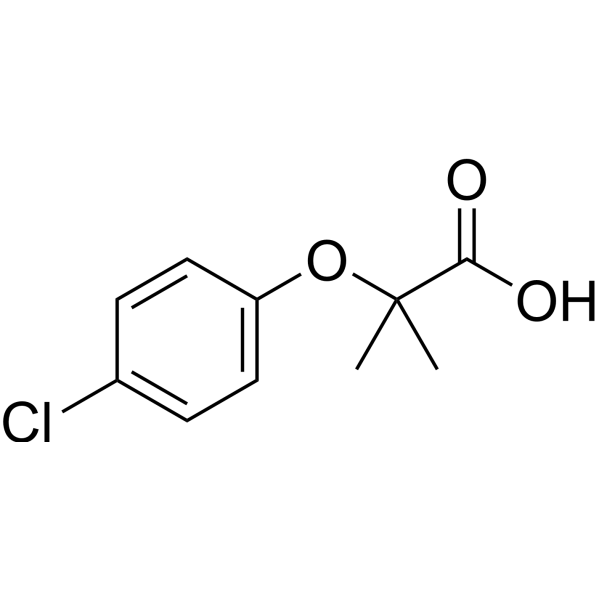 0 ImagesClofibric acid (Standard) is the analytical standard of Clofibric acid (HY-B1415). This product is intended for research and analytical applications. Clofibric acid (Chlorofibrinic acid) is an orally active PPARα agonist. Clofibric acid inhibits the fimbriation of Escherichia coli. Clofibric acid increases SOD activity. Clofibric acid lowers blood lipids and prevents experimental pyelonephritis. Clofibric acid has anticancer activity against ovarian cancer. Clofibric acid is also a herbicide. Clofibric acid is used in ovarian cancer, liver cancer, obesity, and urinary tract infection research.
-
GGW
 0 ImagesCat. No.: HY-187115CAS No.: 20762-32-7GGW is a tripeptide with neuroprotective activity. GGW blocks the mitochondria-mediated apoptosis pathway, reverses glutamate-induced upregulation of the pro-apoptotic protein Bax and downregulation of the anti-apoptotic protein Bcl-2. GGW reduces ROS production, reverses the depletion of SOD and Glutathione Peroxidase, decreases intracellular calcium concentration, and reverses the collapse of mitochondrial membrane potential. GGW can be used in studies related to memory impairment induced by sleep deprivation.
-
Niazirin
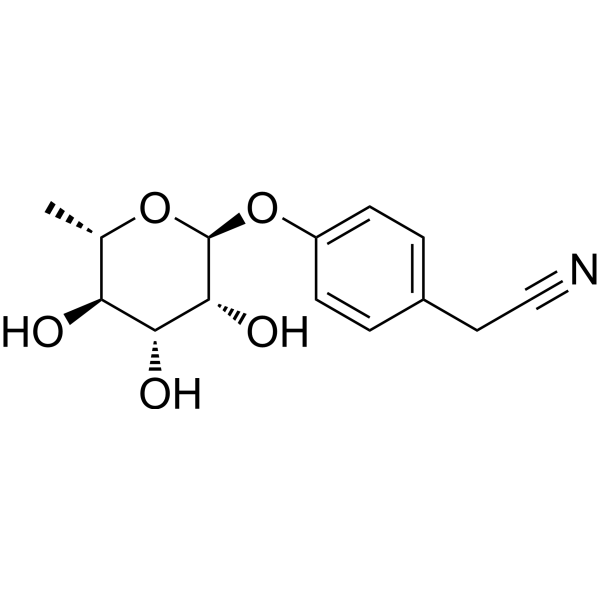 0 ImagesNiazirin is an orally active antioxidant. Niazirin can be isolated from Moringa oleifera Lam. Niazirin reduces the production levels of ROS and MDA, while increasing the levels of superoxide dismutase SOD and glutathione peroxidase GPx. Niazirin also abolishes high glucose-induced PKCζ activation and inhibits Nox4 protein expression. Niazirin exhibits excellent free radical scavenging activity. Niazirin significantly inhibits high glucose-induced proliferation of vascular smooth muscle cells. Niazirin can be used in the research of diabetic atherosclerosis.
-
Superoxide Dismutase, Roxburgh
 0 ImagesCat. No.: HY-129064DSuperoxide Dismutase, Roxburgh (EC 1.15.1.1) catalyzes the dismutation of superoxide radicals to hydrogen peroxide and molecular oxygen. Superoxide Dismutase plays a critical role in the defense of cells against the toxic effects of oxygen radicals. Superoxide Dismutase competes with nitric oxide (NO) for superoxide anion (which reacts with NO to form peroxynitrite), thereby Superoxide Dismutase promotes the activity of NO.
-
Superoxide Dismutase, Bovine
 0 ImagesCat. No.: HY-129064CSuperoxide Dismutase, Bovine (EC 1.15.1.1) catalyzes the dismutation of superoxide radicals to hydrogen peroxide and molecular oxygen. Superoxide Dismutase plays a critical role in the defense of cells against the toxic effects of oxygen radicals. Superoxide Dismutase competes with nitric oxide (NO) for superoxide anion (which reacts with NO to form peroxynitrite), thereby Superoxide Dismutase promotes the activity of NO.
-
EDTA dihydrate tripotassium
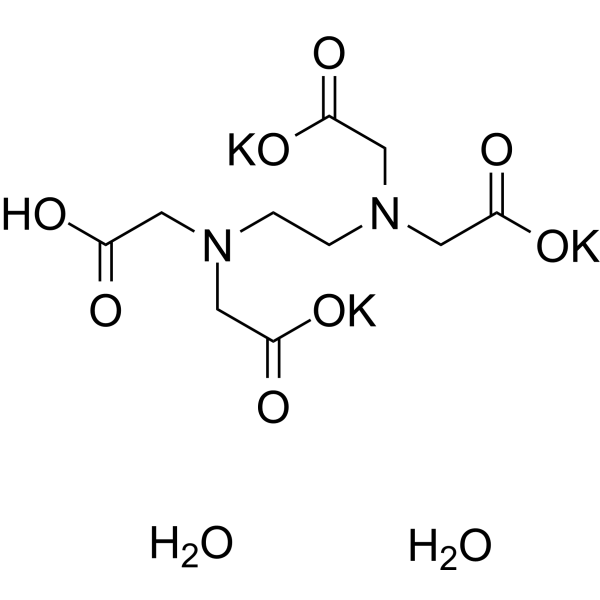 0 ImagesCat. No.: HY-W087947CAS No.: 65501-24-8Synonyms: Ethylenediaminetetraacetic acid dihydrate tripotassiumEDTA dihydrate tripotassium (Ethylenediaminetetraacetic acid dihydrate tripotassium) is a kind of metal chelating agent (binds to bivalent and trivalent metal cations, including calcium). EDTA dihydrate tripotassium has antibacterial, anti-inflammatory, antioxidant, anti-hypercalcemia and anticoagulant activities. EDTA dihydrate tripotassium decreases the metal ion-catalyzed oxidative damage to proteins, and allows maintenance of reducing environment during protein purification. EDTA dihydrate tripotassium can alleviate the liver fibrosis. EDTA dihydrate tripotassium can be used for coronary artery disease and neural system disease research.
-
t9,t11,c15-CLNA
 0 ImagesCat. No.: HY-171837ACAS No.: 678138-44-8t9,t11,c15-CLNA is a conjugated linolenic acid (CLNA) isomer produced by Lactobacillus plantarum ZS2058. t9,t11,c15-CLNA has the main activities of anti-inflammatory, antioxidant and improving intestinal barrier function. The regulatory mechanism of t9,t11,c15-CLNA includes upregulation of tight junction proteins, inhibition of pro-inflammatory cytokines (such as TNF-α, IL-6) and activation of antioxidant enzymes (such as SOD, CAT). t9,t11,c15-CLNA can be used in the study of inflammatory bowel diseases (such as colitis).
-
2,5-Dimethylcyclohexanol
 0 Images2,5-Dimethylcyclohexanol, a volatile organic compound, is a fatty acid that can be isolated from Amphora sp.. 2,5-Dimethylcyclohexanol has significant antineoplastic and antiviral activities with inhibition of SARS-CoV-2 Mpro. 2,5-Dimethylcyclohexanol also has potent antifungal activity against Pseudogymnoascus destructans. 2,5-Dimethylcyclohexanol compromises cell wall and membrane integrity while perturbing energy metabolism, increases the levels of ROS, ATP, Superoxide anion and GSH, and decreases CAT and SOD activities. And 2,5-Dimethylcyclohexanol alters virulence ribosomal genes expression, and disrupts the MAPK signaling pathways, inducing fungal cell apoptosis.
-
Fenitrothion-d6
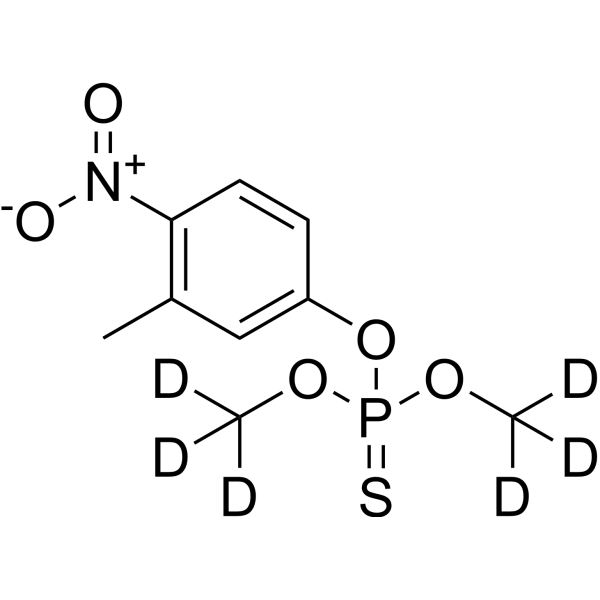 0 ImagesCat. No.: HY-B1885SCAS No.: 203645-59-4Fenitrothion-d6 is the deuterium labeled Fenitrothion (HY-B1885). Fenitrothion is a broad-spectrum and orally active insecticide/acaricide. Fenitrothion inhibits cholinesterase, AMPKα and IRS1/PI3K/AKT. Fenitrothion causes Apoptosis, reduces SOD activity. Fenitrothion shows insecticidal effect against Rhyzopertha dominica and Tribolium castaneum adults. Fenitrothion is widely used in cotton crops, vegetable crops, fruit crops and field crops, especially rice. Fenitrothion can be used for brain and spleen toxicology studies.




