



SOD
Superoxide Dismutase
SOD (Superoxide dismutase), an antioxidant enzyme, are a group of metalloenzymes that defenses against reactive oxygen species (ROS)-mediated injury. SOD can catalyze the dismutation of superoxide radicals (O2˙-) into hydrogen peroxide (H2O2) and oxygen (O2). The chemical moiety of SOD contains some metal ions such as Cu2+, Zn2+, Mn2+, and Fe2+ in the active site, which mediates the dismutation process. On the basis of these metallic cofactors, SOD can be classified into three distinct types, SOD1 (Cu/Zn-SOD), SOD2 (Mn-SOD), and SOD3 (Fe-SOD)[1][2].
References:
- [1]. Younus H. Therapeutic potentials of superoxide dismutase. Int J Health Sci (Qassim). 2018 May-Jun;12(3):88-93. [Content Brief]
- [2]. Saurav Suman, et al. Chapter 14 - Biotic stresses on plants: reactive oxygen species generation and antioxidant mechanism. Frontiers in Plant-Soil Interaction. Molecular Insights Into Plant Adaptation. 2021, 381-411.
All Product Categories
-
SOD Related Products (233)
Related Products (233)

-
Antibodies (4)
-
Insect repellent M 3535 (Standard)
 0 ImagesSynonyms: Ethyl butylacetylaminopropionate (Standard); IR-3535 (Standard)Insect repellent M 3535 (Ethyl butylacetylaminopropionate) Standard is the analytical standard of Insect repellent M 3535 (HY-W099479). This product is intended for research and analytical applications. Insect repellent M 3535 (Ethyl butylacetylaminopropionate) is a broad-spectrum, mild insect repellent based on the structure of β-alanine. Insect repellent M 3535 exerts repellent effects by interfering with the olfaction of mosquitoes, but it poses risks of developmental and cardiac toxicity to aquatic organisms such as zebrafish embryos in aquatic environments, and can activate oxidative stress responses.

-
4'-Acetoxy resveratrol
 0 Images4'-Acetoxy resveratrol is a Resveratrol (HY-16561) derivative. 4'-Acetoxy resveratrol upregulates gene expression of elastin, collagen types III and IV, superoxide dismutase (SOD), and catalase (CAT), while downregulating interleukins (IL-1A, IL-1R2, IL-6, IL-8) and cyclooxygenase-2 (COX-2) in human skin models. 4'-Acetoxy resveratrol can be used for skin reasearch.
-
Tomentosin
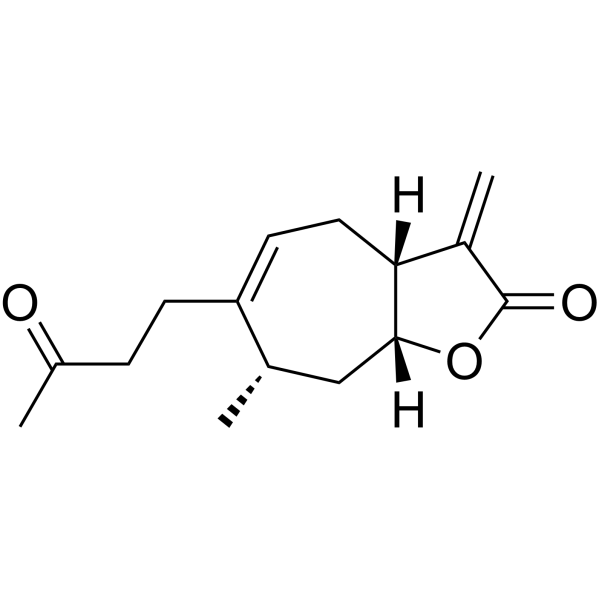 0 ImagesTomentosin is an orally active natural sesquiterpenoid lactone. Tomentosin exhibits multiple activities such as anti-tumor, anti-fungal, anti-inflammatory, anti-oxidant and neuroprotective effects. Tomentosin can inhibit tumor cell proliferation, migration and invasion, and induce apoptosis. Tomentosin can be used in the research of tumors, inflammation and nervous system diseases.
-
1,3-Diphenylguanidine (Standard)
 0 Images1,3-Diphenylguanidine (Standard) is the analytical standard of 1,3-Diphenylguanidine (HY-W014332). This product is intended for research and analytical applications. 1,3-Diphenylguanidine is a widely used accelerator in rubber vulcanization. 1,3-Diphenylguanidine increases ROS activity and decreases SOD and CAT activity. 1,3-Diphenylguanidine accelerates the vulcanization process. 1,3-Diphenylguanidine impairs the reproduction and growth of Moina macrocopa[1] [2] [3] .
-
Fluorene-d8
 0 ImagesCat. No.: HY-W026772S1CAS No.: 35782-21-9Fluorene-d8 is the deuterium labeled Fluorene (HY-W026772). Fluorene is an orally active polycyclic aromatic hydrocarbon (PAH) and a precursor to other fluorene-based compounds. Fluorene and its derivatives serve as dye precursors for fluorene synthesis. In A549 cells, Fluorene induces oxidative stress and inflammatory responses by increasing ROS and SOD generation, exacerbating lipid peroxidation, modulating antioxidant enzyme activity, and upregulating the expression of pro-inflammatory factors TNF-α and IL-6. In vivo, Fluorene exhibits anxiolytic activity. Fluorene holds potential for research in inflammation and neurological disorders.
-
Benzbromarone (Standard)
 0 ImagesBenzbromarone (Standard) is the analytical standard of Benzbromarone. This product is intended for research and analytical applications. Benzbromarone is an orally active anti-gout agent. Benzbromarone has anti-infammatory, anti-oxidative stress and nephroprotective effects. Benzbromarone can be used for the research of hyperuricemia and gout.
-
Hawthorn Extract
 0 ImagesCat. No.: HY-N13250Hawthorn Extract is an orally active hawthorn extract. Hawthorn Extract decreases Bax expression and increases Bcl-2 expression in the aorta. Hawthorn Extract regulates the AMPK signaling pathway, induces apoptosis, enhances the hepatic antioxidant system, and ameliorates symptoms of liver injury, inflammation and cancer. Hawthorn Extract reduces plasma levels of pro-inflammatory factors, increases plasma levels of anti-inflammatory adiponectin, and alleviates atherosclerotic plaque lesions in the aorta. Hawthorn Extract improves symptoms associated with chronic heart failure. Hawthorn Extract inhibits FMLP-induced superoxide anion production, Elastase release, ILB4 generation and calcium signaling in neutrophils, and also reduces LPS-induced cytokine production in neutrophils. Hawthorn Extract induces autophagy and inhibits the proliferation of intestinal stem cells. Hawthorn Extract can be used in research related to atherosclerosis, hepatitis, alcoholic liver disease, non-alcoholic fatty liver disease, hepatocellular carcinoma, chronic heart failure and hypotension.
-
IR-775 chloride
 0 ImagesCat. No.: HY-W248590CAS No.: 199444-11-6IR-775 chloride is a cyanine dye with near-infrared absorption (Ex/Em = 775/795 nm). IR-775 chloride acts as a photosensitizer or photothermal agent, and induces apoptosis via generating ROS or exerting photothermal effects upon irradiation; its combination with 2-methoxyestradiol (HY-12033) inhibits SOD2 to enhance photodynamic therapy (PDT) efficacy, and its liposomal encapsulation enables phytotherapy-photothermal therapy (PTT) synergy. IR-775 chloride is applicable for investigating PDT/PTT and near-infrared fluorescence imaging in ovarian cancer and breast cancer.
-
SOD1-Derlin-1 inhibitor-1
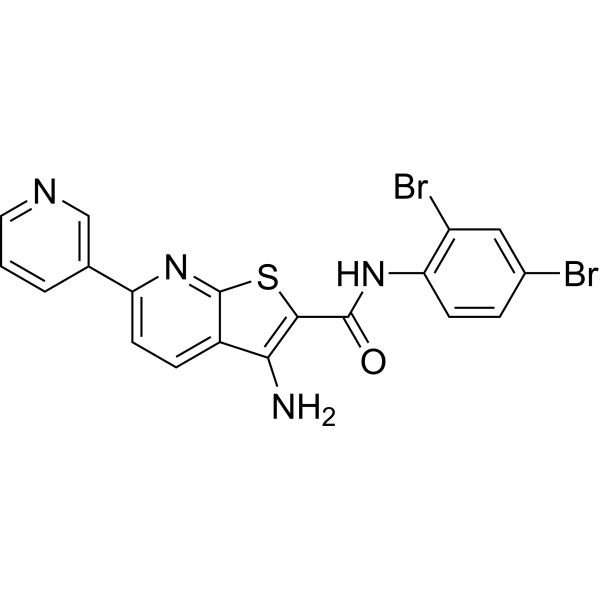 0 ImagesSOD1-Derlin-1 inhibitor-1 (compound 56-20) is an inhibitor of SOD1-Derlin-1 interaction. SOD1-Derlin-1 inhibitor-1 inhibits SOD1G93A-Derlin-1 complex with an IC50 value of 7.11 μM. SOD1-Derlin-1 inhibitor-1 can be used for the research of amyotrophic lateral sclerosis.
-
Lathosterol (Standard)
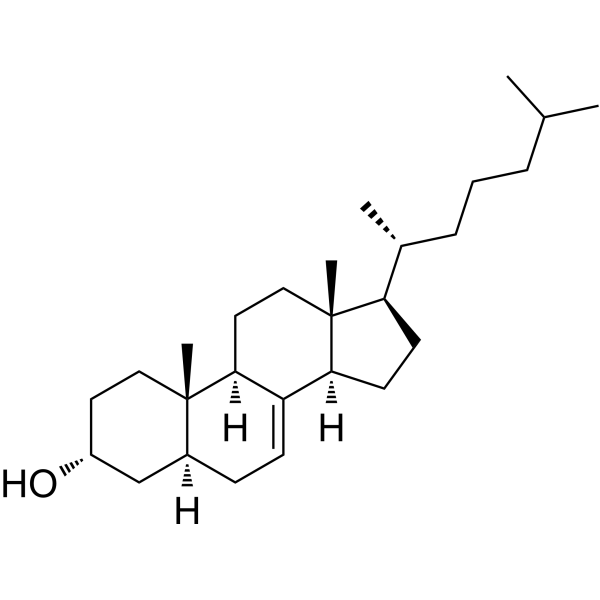 0 ImagesCat. No.: HY-113486RCAS No.: 80-99-9Lathosterol (Standard) is the analytical standard of Lathosterol (HY-113486). This product is intended for research and analytical applications. Lathosterol is a plant sterol and cholesterol-like molecule. Lathosterol increases antioxidant enzymes (such as SOD, CAT, and GSH) and decreases LDH. Lathosterol has a hepatoprotective effect on mice with acetaminophen (HY-66005)-induced liver injury[1].
-
Nurr1 agonist 14
 0 ImagesCat. No.: HY-175352Purity: 99.42%Nurr1 agonist 14 (Compound 32) is a Nurr1 agonist with an EC50 of 0.09 μM for Nurr1. Nurr1 agonist 14 has significant neuroprotective activity with no influence of residual DHODH inhibition. Nurr1 agonist 14 upregulates neuroprotective genes including SOD2, SESN3, BIRC5, XIAP, FLRT2 and CRMP4 in dopaminergic neurons. Nurr1 agonist 14 can be used for neurodegenerative diseases such as Alzheimer′s disease (AD), Parkinson′s disease (PD) and multiple sclerosis (MS) research.
-
Shinpterocarpin
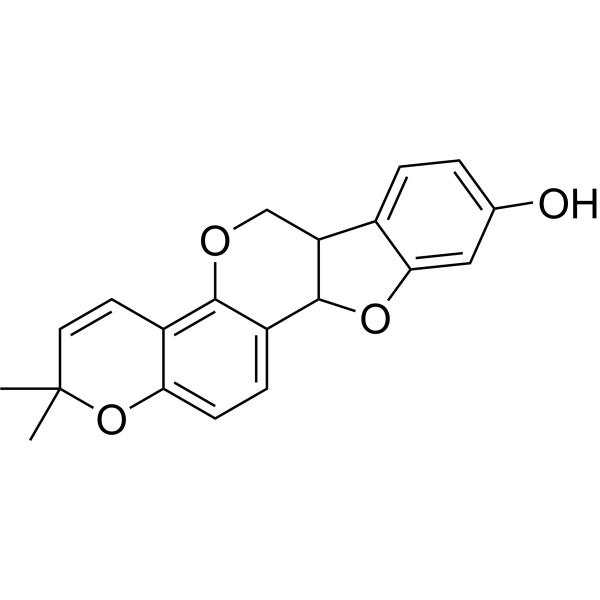 0 ImagesCat. No.: HY-N10144CAS No.: 157414-04-5Shinpterocarpin is a flavonoid compound. Shinpterocarpin can be isolated from the air-dried roots of Glycyrrhiza glabra L. and Xuanshen Decoction. Shinpterocarpin binds to the targets PI3K, AKT, Nrf2, Bcl-2, Bax, CAT and SOD. Shinpterocarpin enhances immunity and exerts antioxidant effects by reducing the production of ROS.
-
Superoxide dismutase PEG
 0 ImagesCat. No.: HY-129064BSuperoxide dismutase PEG (EC 1.15.1.1) is a mimetic of superoxide dismutase (SOD) and powerful free radical scavenger acts by reducing superoxide anions.
-
SOD1-Derlin-1 inhibitor-2
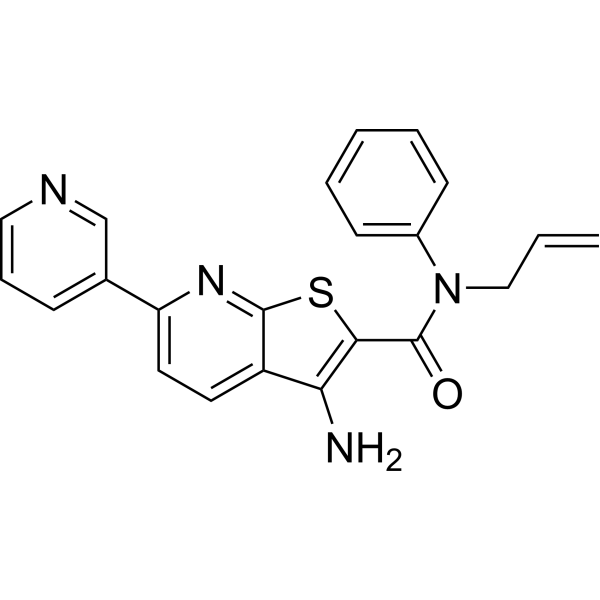 0 ImagesSOD1-Derlin-1 inhibitor-2 (compound 56-59) is an inhibitor of SOD1-Derlin-1 interaction. SOD1-Derlin-1 inhibitor-2 attenuates the interactions between Derlin-1 and SOD1mut. SOD1-Derlin-1 inhibitor-2 can be used for the research of amyotrophic lateral sclerosis (ALS).
-
Aminoadipic acid (Standard)
 0 ImagesAminoadipic acid (Standard) is the analytical standard of Aminoadipic acid. This product is intended for research and analytical applications. Aminoadipic acid is an orally active lysine oxide derivative. Aminoadipic acid induces ROS generation, increases free Ca2+, decreases SOD, and activates TXNIP/NLRP3 pathway. Aminoadipic acid has pro-inflammatory effects. Aminoadipic acid can be used in atherosclerosis research[1][2][3][4].
-
β-Cyfluthrin
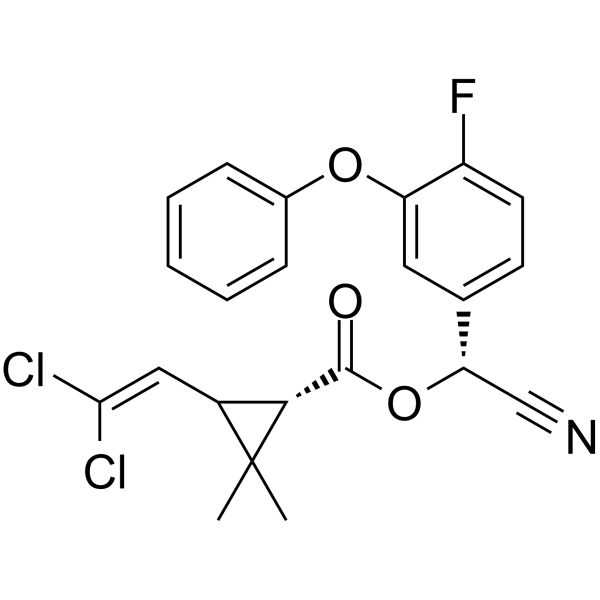 0 ImagesSynonyms: beta-Cyfluthrinβ-Cyfluthrin (beta-Cyfluthrin) is a type II synthetic pyrethroid and also an active ingredient of many insecticide products used for pestsin agriculture. β-Cyfluthrin is a neurotoxicant and affects calcium concentration in nervous tissue by inhibiting Ca2+ ATPase involved in calcium transport.
-
4'-Methoxyflavonol
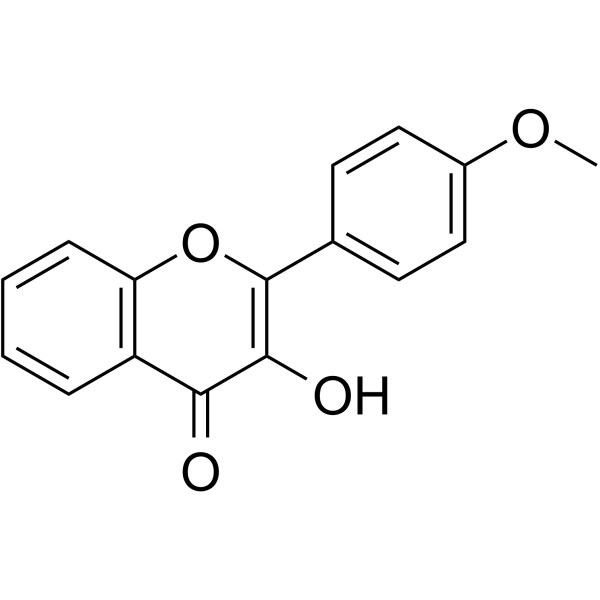 0 Images4'-Methoxyflavonol is a flavonol. 4'-Methoxyflavonol reduces androgen receptor and increases SOD. 4'-Methoxyflavonol reduces plasma glucose, cholesterol, and triglycerides. 4'-Methoxyflavonol has anti-stress and antioxidant activities. 4'-Methoxyflavonol can be used in prostate cancer research.
-
Parishin C (Standard)
 0 ImagesParishin C (Standard) is the analytical standard of Parishin C (HY-N2125). This product is intended for research and analytical applications. Parishin C is a brain-penetrant major bioactive component found in Gastrodia elata Blume. Parishin C is a 5-HT1A receptor agonist with an EC50 of 34 nM. Parishin C has antipsychotic and neuroprotective effects. Parishin C protects against Aβ-induced long-term potentiation damage and NMDA receptor current impairment. Parishin C reduces oxidative stress, pro-inflammatory cytokine levels, caspase activity, brain water content, and cerebral infarct volume; increases antioxidant enzyme activity and BDNF levels; improves nerve function and histopathological brain damage. Parishin C attenuates phencyclidine-induced immobility time increases, sociability deficits, and visual recognition memory impairment. Parishin C can be used for the research of ischemic stroke, Alzheimer's disease, and schizophrenia-like psychosis.




